







-
 Agriculture
-
 Health-Care
-
 Environment
-
 Construction-Real-Estate
-
 Tools-Hardware
-
 Home-Garden
-
 Furniture
-
 Luggage-Bags-Cases
-
 Medical-devices-Supplies
-
 Gifts-Crafts
-
 Sports-Entertainment
-
 Food-Beverage
-
 Vehicles-Transportation
-
 Power-Transmission
-
 Material-Handling
-
 Renewable-Energy
-
 Safety
-
 Testing-Instrument-Equipment
-
 Construction-Building-Machinery
-
 Pet-Supplies
-
 Personal-Care-Household-Cleaning
-
 Vehicle-Accessories-Electronics-Tools
-
 School-Office-Supplies
-
 Packaging-Printing
-
 Mother-Kids-Toys
-
 Business-Services
-
 Commercial-Equipment-Machinery
-
 Apparel-Accessories
-
 Security
-
 Shoes-Accessories
-
 Vehicle-Parts-Accessories
-
 Jewelry-Eyewear-Watches-Accessories
-
 Lights-Lighting
-
 Fabric-Textile-Raw-Material
-
 Fabrication-Services
-
 Industrial-Machinery
-
 Consumer-Electronics
-
 Electrical-Equipment-Supplies
-
 Electronic-Components-Accessories-Telecommunications
-
 Home-Appliances
-
 Beauty
-
 Chemicals
-
 Rubber-Plastics
-
 Metals-Alloys


























































































































































































































































































































































































































































































































































































- Masonry Materials
- Curtain Walls & Accessories
- Earthwork Products
- Fireproofing Materials
- Heat Insulation Materials
- Plastic Building Materials
- Building Boards
- Soundproofing Materials
- Timber
- Waterproofing Materials
- Balustrades & Handrails
- Bathroom & Kitchen
- Flooring & Accessories
- Tiles & Accessories
- Door, Window & Accessories
- Fireplaces & Stoves
- Floor Heating Systems & Parts
- Stairs & Stair Parts
- Ceilings
- Elevators & Escalators
- Stone
- Countertops, Vanity Tops & Table Tops
- Mosaics
- Metal Building Materials
- Multifunctional Materials
- Ladders & Scaffoldings
- Mouldings
- Corner Guards
- Decorative Films
- Formwork
- Building & Industrial Glass
- Other Construction & Real Estate
- Wallpapers/Wall panels
- HVAC System & Parts
- Outdoor Facilities
- Prefabricated Buildings
- Festive & Party Supplies
- Bathroom Products
- Household Sundries
- Rain Gear
- Garden Supplies
- Household Cleaning Tools & Accessories
- Lighters & Smoking Accessories
- Home Storage & Organization
- Household Scales
- Smart Home Improvement
- Home Textiles
- Kitchenware
- Drinkware & Accessories
- Dinnerware, Coffee & Wine
- Home Decor
- Golf
- Fitness & Body Building
- Amusement Park Facilities
- Billiards, Board Game,Coin Operated Games
- Musical Instruments
- Outdoor Affordable Luxury Sports
- Camping & Hiking
- Fishing
- Sports Safety&Rehabilitation
- Ball Sports Equipments
- Water Sports
- Winter Sports
- Luxury Travel Equipments
- Sports Shoes, Bags & Accessories
- Cycling
- Other Sports & Entertainment Products
- Artificial Grass&Sports Flooring&Sports Court Equipment
- Scooters
- Food Ingredients
- Honey & Honey Products
- Snacks
- Nuts & Kernels
- Seafood
- Plant & Animal Oil
- Beverages
- Fruit & Vegetable Products
- Frog & Escargot
- Bean Products
- Egg Products
- Dairy Products
- Seasonings & Condiments
- Canned Food
- Instant Food
- Baked Goods
- Other Food & Beverage
- Meat & Poultry
- Confectionery
- Grain Products
- Feminie Care
- Hair Care & Styling
- Body Care
- Hands & Feet Care
- Hygiene Products
- Men's Grooming
- Laundry Cleaning Supplies
- Travel Size & Gift Sets
- Room Deodorizers
- Other Personal Care Products
- Pest Control Products
- Special Household Cleaning
- Floor Cleaning
- Kitchen & Bathroom Cleaning
- Oral Care
- Bath Supplies
- Yellow Pages
- Correction Supplies
- Office Binding Supplies
- Office Cutting Supplies
- Board Erasers
- Office Adhesives & Tapes
- Education Supplies
- Pencil Cases & Bags
- Notebooks & Writing Pads
- File Folder Accessories
- Calendars
- Writing Accessories
- Commercial Office Supplies
- Pencil Sharpeners
- Pens
- Letter Pad/Paper
- Paper Envelopes
- Desk Organizers
- Pencils
- Markers & Highlighters
- Filing Products
- Art Supplies
- Easels
- Badge Holder & Accessories
- Office Paper
- Printer Supplies
- Book Covers
- Other Office & School Supplies
- Stationery Set
- Boards
- Clipboards
- Stamps
- Drafting Supplies
- Stencils
- Electronic Dictionary
- Books
- Map
- Magazines
- Calculators
- Baby & Toddler Toys
- Educational Toys
- Classic Toys
- Dress Up & Pretend Play
- Toy Vehicle
- Stuffed Animals & Plush Toys
- Outdoor Toys & Structures
- Balloons & Accessories
- Baby Food
- Children's Clothing
- Baby Supplies & Products
- Maternity Clothes
- Kids Shoes
- Baby Care
- Novelty & Gag Toys
- Dolls & Accessories
- Puzzle & Games
- Blocks & Model Building Toys
- Toddler Clothing
- Baby Clothing
- Kids' Luggage & Bags
- Arts, Crafts & DIY Toys
- Action & Toy Figures
- Baby Appliances
- Hobbies & Models
- Remote Control Toys
- Promotional Toys
- Pregnancy & Maternity
- Hygiene Products
- Kid's Textile&Bedding
- Novelty & Special Use
- Toy Weapons
- Baby Gifts
- Baby Storage & Organization
- Auto Drive Systems
- ATV/UTV Parts & Accessories
- Marine Parts & Accessories
- Other Auto Parts
- Trailer Parts & Accessories
- Auto Transmission Systems
- Train Parts & Accessories
- Universal Parts
- Railway Parts & Accessories
- Auto Brake Systems
- Aviation Parts & Accessories
- Truck Parts & Accessories
- Auto Suspension Systems
- Auto Lighting Systems
- New Energy Vehicle Parts & Accessories
- Auto Steering Systems
- Wheels, Tires & Accessories
- Bus Parts & Accessories
- Auto Performance Parts
- Cooling System
- Go-Kart & Kart Racer Parts & Accessories
- Air Conditioning Systems
- Heavy Duty Vehicle Parts & Accessories
- Auto Electrical Systems
- Auto Body Systems
- Auto Engine Systems
- Container Parts & Accessories
- Motorcycle Parts & Accessories
- Refrigeration & Heat Exchange Equipment
- Machine Tool Equipment
- Food & Beverage Machinery
- Agricultural Machinery & Equipment
- Apparel & Textile Machinery
- Chemical Machinery
- Packaging Machines
- Paper Production Machinery
- Plastic & Rubber Processing Machinery
- Industrial Robots
- Electronic Products Machinery
- Metal & Metallurgy Machinery
- Woodworking Machinery
- Home Product Manufacturing Machinery
- Machinery Accessories
- Environmental Machinery
- Machinery Service
- Electrical Equipment Manufacturing Machinery
- Industrial Compressors & Parts
- Tobacco & Cigarette Machinery
- Production Line
- Used Industrial Machinery
- Electronics Production Machinery
- Other Machinery & Industrial Equipment
- Camera, Photo & Accessories
- Portable Audio, Video & Accessories
- Television, Home Audio, Video & Accessories
- Video Games & Accessories
- Mobile Phone & Accessories
- Electronic Publications
- Earphone & Headphone & Accessories
- Speakers & Accessories
- Smart Electronics
- TV Receivers & Accessories
- Mobile Phone & Computer Repair Parts
- Chargers, Batteries & Power Supplies
- Used Electronics
- VR, AR, MR Hardware & Software
- Projectors & Presentation Equipments
- Other Consumer Electronics
- Cables & Commonly Used Accessories
- Computer Hardware & Software
- Displays, Signage and Optoelectronics
- Discrete Semiconductors
- Wireless & IoT Module and Products
- Telecommunications
- Connectors, Terminals & Accessories
- Development Boards, Electronic Modules and Kits
- Circuit Protection
- Sensors
- Isolators
- Audio Components and Products
- Integrated Circuits
- Power Supplies
- Relays
- RF, Microwave and RFID
- Electronic Accessories & Supplies
- Passive Components
- PCB & PCBA
- Air Quality Appliances
- Home Appliance Parts
- Heating & Cooling Appliances
- Small Kitchen Appliances
- Laundry Appliances
- Water Heaters
- Water Treatment Appliances
- Refrigerators & Freezers
- Personal Care & Beauty Appliances
- Major Kitchen Appliances
- Cleaning Appliances
- Second-hand Appliances
- Smart Home Appliances
- Other Home Appliances
- Energy Chemicals
- Inorganic Chemicals
- Basic Organic Chemicals
- Agrochemicals
- Admixture & Additives
- Catalysts & Chemical Auxiliary Agents
- Pigments & Dyestuff
- Coating & Paint
- Daily Chemicals
- Polymer
- Organic Intermediate
- Adhesives & Sealants
- Chemical Waste
- Biological Chemical Products
- Surface Treatment Chemicals
- Painting & Coating
- Chemical Reagents
- Flavor & Fragrance
- Non-Explosive Demolition Agents
- Other Chemicals
- Custom Chemical Services

Acceptable Aluminum Extrusion Tolerances for Furniture Assembly Components
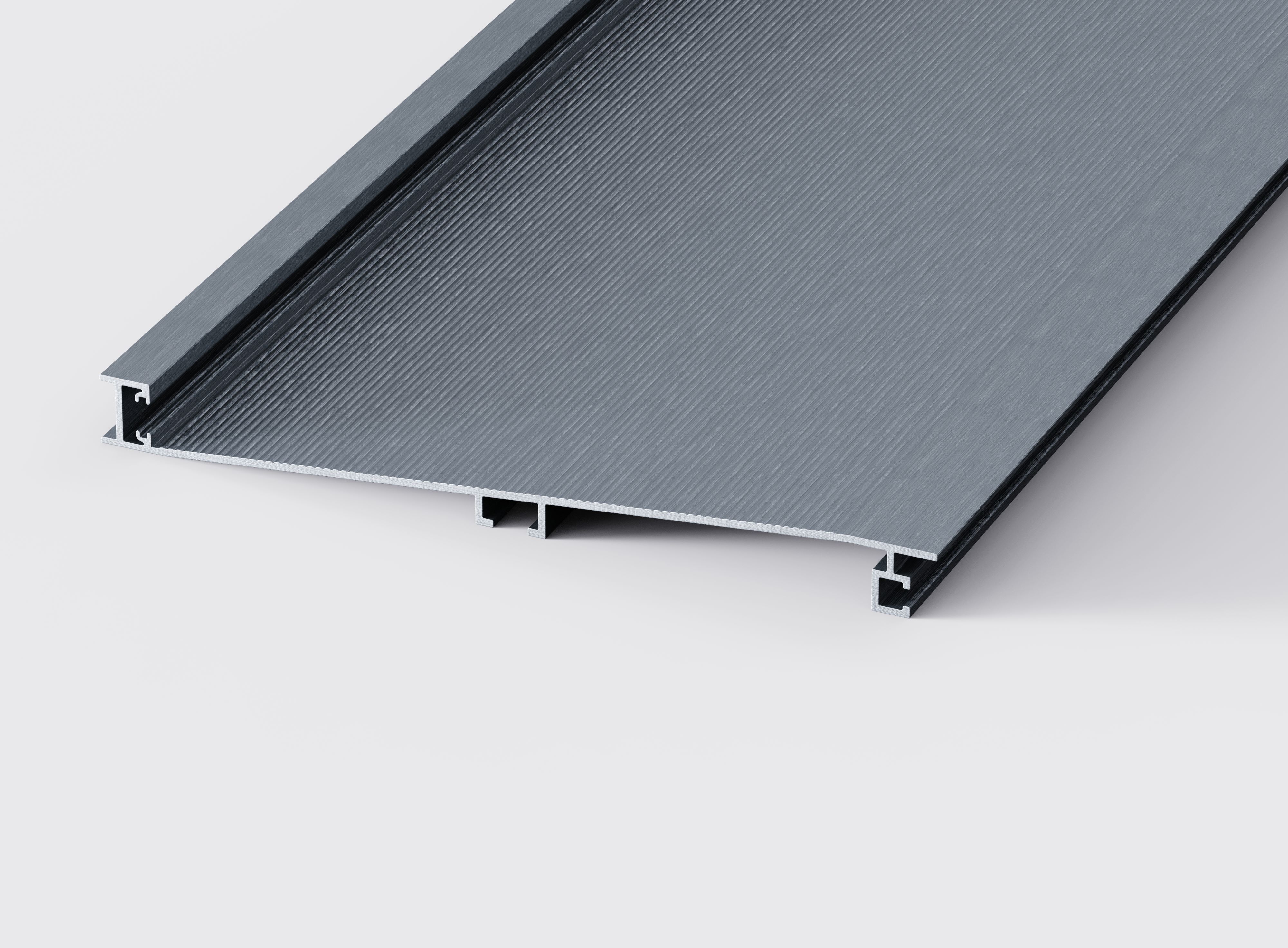
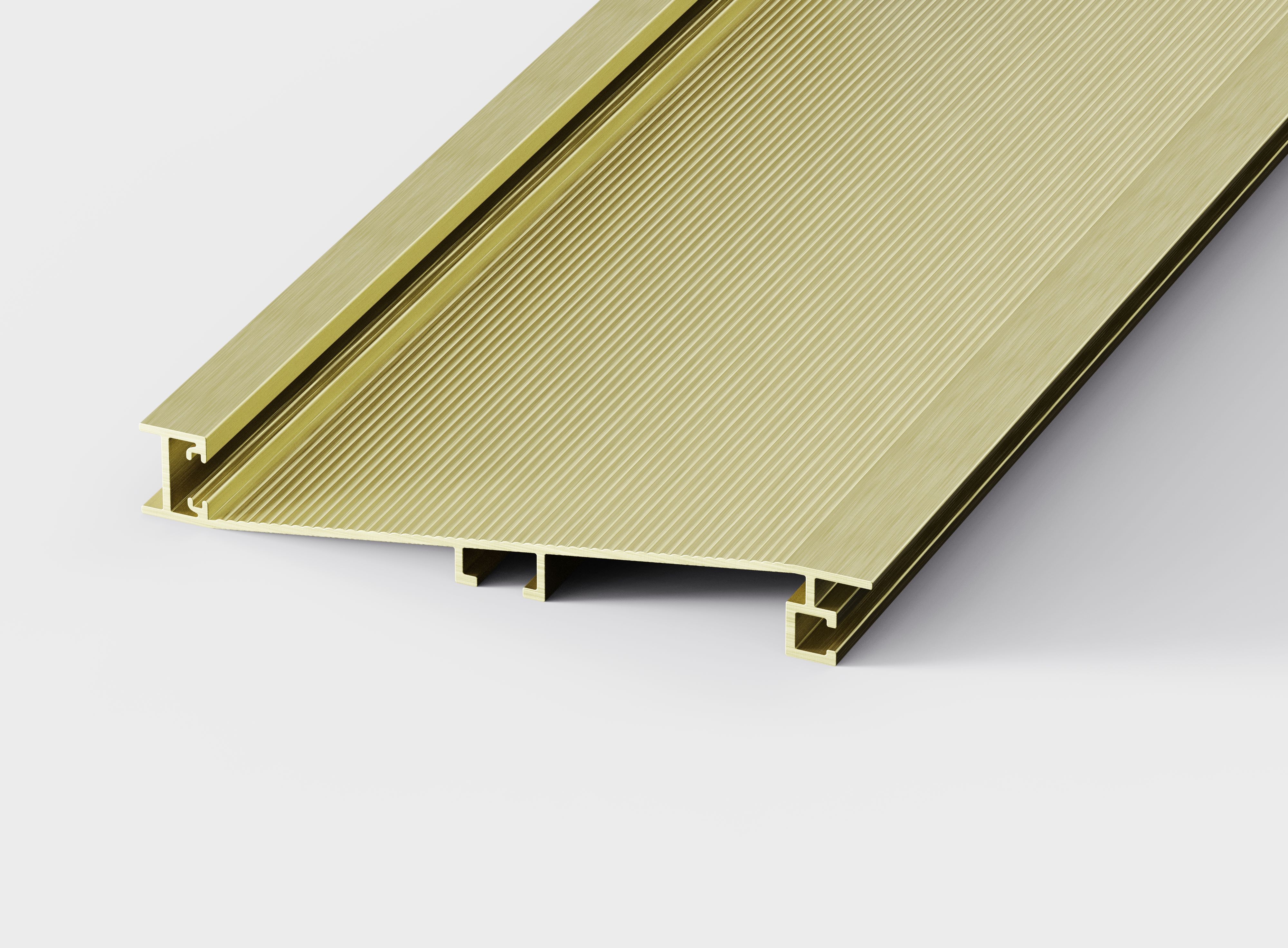
Aluminum extrusion tolerances for furniture assembly components should be established from the approved drawing, the connection design, and the functional fit between parts. Although the listed tile trim profile uses 6063 T5 aluminum, that alloy and temper designation does not define a specific dimensional tolerance. Numeric limits must be confirmed with the manufacturer before production begins.
Why Tolerance Matters in Furniture Profiles
Extruded aluminum profiles are often used in cabinet frames, doors, decorative trims, sliding systems, and hardware assemblies. In these applications, dimensional variation can influence panel alignment, joint appearance, hardware installation, sliding performance, and repeatable assembly. A tolerance that is suitable for a non-critical decorative surface may be unacceptable for a profile that locates a glass panel or aligns a cabinet door.
For this reason, acceptable tolerance is not a universal figure. It depends on which profile features affect the final assembly and how those features are measured during production.
Key Requirements for Defining an Acceptable Tolerance
- Specify tolerances for all dimensions that affect assembly, including cross-section geometry, overall length, cut angle, hole location, and machined features.
- Use the approved part drawing or technical specification as the source of dimensional requirements.
- Do not assume a tolerance range based only on the 6063 T5 material designation.
- Review the interface between the aluminum trim and adjacent panels, cabinet frames, hardware, or finished surfaces.
- Confirm inspection procedures and production sample approval before mass manufacturing.
6063 T5 Aluminum and Dimensional Control
The product information identifies 6063 T5 as the material condition for the aluminum tile trim profiles. This designation describes the alloy and temper, but it does not provide allowable limits for width, height, wall thickness, straightness, length, or cut accuracy. Each of these requirements must be separately documented when they are relevant to furniture assembly.
Critical dimensions commonly include profile width and depth, channel openings, visible edge alignment, mating faces, finished cut lengths, drilled holes, and mounting positions. Where a component must align precisely with another part, tighter requirements may be necessary. Decorative dimensions that do not influence fit or function can often use less restrictive limits, provided the finished appearance remains acceptable.
Coordinate Extrusion, Finishing, and CNC Processing
Mebel-alu lists aluminum extrusion, anodizing, brushing, mechanical polishing, and high-precision CNC machining among its manufacturing capabilities. These processes should be considered together when preparing a furniture profile specification. For example, an extrusion may meet its sectional requirements but still require accurate CNC cutting or machining to achieve the final assembly fit.
Before releasing an order, confirm whether the profile requires precision cutting, drilling, slotting, end machining, or other CNC operations. The technical review should define the tolerance for each finished feature, the inspection method, reference surfaces, sample requirements, and acceptance criteria. This approach helps ensure that extrusion accuracy and secondary processing support the same assembly objective.
Technical Review Checklist
A complete furniture assembly review should include the profile drawing, 6063 T5 material requirement, surface finish, mating-part details, critical dimensions, cut-length specifications, allowable visual variation, inspection frequency, and first-sample approval status. It should also identify whether the profile is used for alignment, sliding movement, visible joints, decorative edging, or hardware attachment.
Without these inputs, it is not possible to determine whether a proposed tolerance is appropriate. The final requirement should be agreed by the buyer and manufacturer as part of the approved technical documentation.
Available Product and Order Information
| Specification area | Available information and recommended action |
|---|---|
| Material | 6063 T5 is specified for the aluminum tile trim profile. |
| Extrusion tolerance | No numeric range is provided; include required values on the approved drawing or specification. |
| Precision machining | High-precision CNC machining is listed; verify the required cutting and machining scope before order confirmation. |
| Assembly performance | Review mating components, joint design, alignment requirements, and inspection criteria. |
| Order conditions | The stated FOB arrangement includes a 12,000 KG MOQ, a 40-day lead time, EU export markets, and 6,000 T monthly capacity. |
Frequently Asked Questions
Does 6063 T5 determine the tolerance of an aluminum furniture profile?
No. 6063 T5 identifies the aluminum alloy and temper, not the allowable dimensional variation. Tolerances must be defined according to the part drawing, assembly function, and quality-control method.
Which profile features need the closest control?
Features that affect fit, alignment, movement, visible gaps, panel engagement, hardware mounting, hole position, cut length, and mating surfaces should be identified as critical dimensions. The exact requirements depend on the final furniture design.
Can CNC machining be used for precise furniture assembly parts?
Mebel-alu states that it offers high-precision CNC machining and precision-finished products. Buyers should confirm the required CNC operations, tolerance limits, inspection plan, and production sample approval requirements before placing an order.
Conclusion
An acceptable tolerance for aluminum extrusion used in furniture assembly cannot be determined from the 6063 T5 designation alone. The correct approach is to define critical dimensions on the approved drawing, evaluate the relationship with mating parts, and verify the result through sample inspection before full production. Mebel-alu reports extrusion and high-precision CNC capabilities, operates under an FOB model, and holds a Quality Management System Certificate. For technical support or detailed solutions, contact us at mebel@mebel-alu.com.
About Us
Mebel-Alu Furniture Profile (Hong Kong) Co., Ltd has specialized since 2008 in precision-engineered aluminum profile systems for modern interiors, including aluminum glass door systems, sliding wardrobe systems, kitchen cabinet frames, and decorative tile trims. Its in-house capabilities cover aluminum extrusion, anodizing, brushing, mechanical polishing, and high-precision CNC machining. The company states a monthly production capacity of 5,000 tons of aluminum profiles, along with 60,000 units of precision-finished handles and CNC precision-cut products. Its research and development work covers trend forecasting for home furnishing, cabinet, and door products, plus aluminum profile accessories and hardware package solutions.
Relevant credentials include the Occupational Health and Safety Management System Certificate, certificate number 00225S21748R1M, and the Quality Management System Certificate, certificate number 00224Q22942R5M.

REPORT