







-
 Agriculture
-
 Health-Care
-
 Environment
-
 Construction-Real-Estate
-
 Tools-Hardware
-
 Home-Garden
-
 Furniture
-
 Luggage-Bags-Cases
-
 Medical-devices-Supplies
-
 Gifts-Crafts
-
 Sports-Entertainment
-
 Food-Beverage
-
 Vehicles-Transportation
-
 Power-Transmission
-
 Material-Handling
-
 Renewable-Energy
-
 Safety
-
 Testing-Instrument-Equipment
-
 Construction-Building-Machinery
-
 Pet-Supplies
-
 Personal-Care-Household-Cleaning
-
 Vehicle-Accessories-Electronics-Tools
-
 School-Office-Supplies
-
 Packaging-Printing
-
 Mother-Kids-Toys
-
 Business-Services
-
 Commercial-Equipment-Machinery
-
 Apparel-Accessories
-
 Security
-
 Shoes-Accessories
-
 Vehicle-Parts-Accessories
-
 Jewelry-Eyewear-Watches-Accessories
-
 Lights-Lighting
-
 Fabric-Textile-Raw-Material
-
 Fabrication-Services
-
 Industrial-Machinery
-
 Consumer-Electronics
-
 Electrical-Equipment-Supplies
-
 Electronic-Components-Accessories-Telecommunications
-
 Home-Appliances
-
 Beauty
-
 Chemicals
-
 Rubber-Plastics
-
 Metals-Alloys


























































































































































































































































































































































































































































































































































































- Masonry Materials
- Curtain Walls & Accessories
- Earthwork Products
- Fireproofing Materials
- Heat Insulation Materials
- Plastic Building Materials
- Building Boards
- Soundproofing Materials
- Timber
- Waterproofing Materials
- Balustrades & Handrails
- Bathroom & Kitchen
- Flooring & Accessories
- Tiles & Accessories
- Door, Window & Accessories
- Fireplaces & Stoves
- Floor Heating Systems & Parts
- Stairs & Stair Parts
- Ceilings
- Elevators & Escalators
- Stone
- Countertops, Vanity Tops & Table Tops
- Mosaics
- Metal Building Materials
- Multifunctional Materials
- Ladders & Scaffoldings
- Mouldings
- Corner Guards
- Decorative Films
- Formwork
- Building & Industrial Glass
- Other Construction & Real Estate
- Wallpapers/Wall panels
- HVAC System & Parts
- Outdoor Facilities
- Prefabricated Buildings
- Festive & Party Supplies
- Bathroom Products
- Household Sundries
- Rain Gear
- Garden Supplies
- Household Cleaning Tools & Accessories
- Lighters & Smoking Accessories
- Home Storage & Organization
- Household Scales
- Smart Home Improvement
- Home Textiles
- Kitchenware
- Drinkware & Accessories
- Dinnerware, Coffee & Wine
- Home Decor
- Golf
- Fitness & Body Building
- Amusement Park Facilities
- Billiards, Board Game,Coin Operated Games
- Musical Instruments
- Outdoor Affordable Luxury Sports
- Camping & Hiking
- Fishing
- Sports Safety&Rehabilitation
- Ball Sports Equipments
- Water Sports
- Winter Sports
- Luxury Travel Equipments
- Sports Shoes, Bags & Accessories
- Cycling
- Other Sports & Entertainment Products
- Artificial Grass&Sports Flooring&Sports Court Equipment
- Scooters
- Food Ingredients
- Honey & Honey Products
- Snacks
- Nuts & Kernels
- Seafood
- Plant & Animal Oil
- Beverages
- Fruit & Vegetable Products
- Frog & Escargot
- Bean Products
- Egg Products
- Dairy Products
- Seasonings & Condiments
- Canned Food
- Instant Food
- Baked Goods
- Other Food & Beverage
- Meat & Poultry
- Confectionery
- Grain Products
- Feminie Care
- Hair Care & Styling
- Body Care
- Hands & Feet Care
- Hygiene Products
- Men's Grooming
- Laundry Cleaning Supplies
- Travel Size & Gift Sets
- Room Deodorizers
- Other Personal Care Products
- Pest Control Products
- Special Household Cleaning
- Floor Cleaning
- Kitchen & Bathroom Cleaning
- Oral Care
- Bath Supplies
- Yellow Pages
- Correction Supplies
- Office Binding Supplies
- Office Cutting Supplies
- Board Erasers
- Office Adhesives & Tapes
- Education Supplies
- Pencil Cases & Bags
- Notebooks & Writing Pads
- File Folder Accessories
- Calendars
- Writing Accessories
- Commercial Office Supplies
- Pencil Sharpeners
- Pens
- Letter Pad/Paper
- Paper Envelopes
- Desk Organizers
- Pencils
- Markers & Highlighters
- Filing Products
- Art Supplies
- Easels
- Badge Holder & Accessories
- Office Paper
- Printer Supplies
- Book Covers
- Other Office & School Supplies
- Stationery Set
- Boards
- Clipboards
- Stamps
- Drafting Supplies
- Stencils
- Electronic Dictionary
- Books
- Map
- Magazines
- Calculators
- Baby & Toddler Toys
- Educational Toys
- Classic Toys
- Dress Up & Pretend Play
- Toy Vehicle
- Stuffed Animals & Plush Toys
- Outdoor Toys & Structures
- Balloons & Accessories
- Baby Food
- Children's Clothing
- Baby Supplies & Products
- Maternity Clothes
- Kids Shoes
- Baby Care
- Novelty & Gag Toys
- Dolls & Accessories
- Puzzle & Games
- Blocks & Model Building Toys
- Toddler Clothing
- Baby Clothing
- Kids' Luggage & Bags
- Arts, Crafts & DIY Toys
- Action & Toy Figures
- Baby Appliances
- Hobbies & Models
- Remote Control Toys
- Promotional Toys
- Pregnancy & Maternity
- Hygiene Products
- Kid's Textile&Bedding
- Novelty & Special Use
- Toy Weapons
- Baby Gifts
- Baby Storage & Organization
- Auto Drive Systems
- ATV/UTV Parts & Accessories
- Marine Parts & Accessories
- Other Auto Parts
- Trailer Parts & Accessories
- Auto Transmission Systems
- Train Parts & Accessories
- Universal Parts
- Railway Parts & Accessories
- Auto Brake Systems
- Aviation Parts & Accessories
- Truck Parts & Accessories
- Auto Suspension Systems
- Auto Lighting Systems
- New Energy Vehicle Parts & Accessories
- Auto Steering Systems
- Wheels, Tires & Accessories
- Bus Parts & Accessories
- Auto Performance Parts
- Cooling System
- Go-Kart & Kart Racer Parts & Accessories
- Air Conditioning Systems
- Heavy Duty Vehicle Parts & Accessories
- Auto Electrical Systems
- Auto Body Systems
- Auto Engine Systems
- Container Parts & Accessories
- Motorcycle Parts & Accessories
- Refrigeration & Heat Exchange Equipment
- Machine Tool Equipment
- Food & Beverage Machinery
- Agricultural Machinery & Equipment
- Apparel & Textile Machinery
- Chemical Machinery
- Packaging Machines
- Paper Production Machinery
- Plastic & Rubber Processing Machinery
- Industrial Robots
- Electronic Products Machinery
- Metal & Metallurgy Machinery
- Woodworking Machinery
- Home Product Manufacturing Machinery
- Machinery Accessories
- Environmental Machinery
- Machinery Service
- Electrical Equipment Manufacturing Machinery
- Industrial Compressors & Parts
- Tobacco & Cigarette Machinery
- Production Line
- Used Industrial Machinery
- Electronics Production Machinery
- Other Machinery & Industrial Equipment
- Camera, Photo & Accessories
- Portable Audio, Video & Accessories
- Television, Home Audio, Video & Accessories
- Video Games & Accessories
- Mobile Phone & Accessories
- Electronic Publications
- Earphone & Headphone & Accessories
- Speakers & Accessories
- Smart Electronics
- TV Receivers & Accessories
- Mobile Phone & Computer Repair Parts
- Chargers, Batteries & Power Supplies
- Used Electronics
- VR, AR, MR Hardware & Software
- Projectors & Presentation Equipments
- Other Consumer Electronics
- Cables & Commonly Used Accessories
- Computer Hardware & Software
- Displays, Signage and Optoelectronics
- Discrete Semiconductors
- Wireless & IoT Module and Products
- Telecommunications
- Connectors, Terminals & Accessories
- Development Boards, Electronic Modules and Kits
- Circuit Protection
- Sensors
- Isolators
- Audio Components and Products
- Integrated Circuits
- Power Supplies
- Relays
- RF, Microwave and RFID
- Electronic Accessories & Supplies
- Passive Components
- PCB & PCBA
- Air Quality Appliances
- Home Appliance Parts
- Heating & Cooling Appliances
- Small Kitchen Appliances
- Laundry Appliances
- Water Heaters
- Water Treatment Appliances
- Refrigerators & Freezers
- Personal Care & Beauty Appliances
- Major Kitchen Appliances
- Cleaning Appliances
- Second-hand Appliances
- Smart Home Appliances
- Other Home Appliances
- Energy Chemicals
- Inorganic Chemicals
- Basic Organic Chemicals
- Agrochemicals
- Admixture & Additives
- Catalysts & Chemical Auxiliary Agents
- Pigments & Dyestuff
- Coating & Paint
- Daily Chemicals
- Polymer
- Organic Intermediate
- Adhesives & Sealants
- Chemical Waste
- Biological Chemical Products
- Surface Treatment Chemicals
- Painting & Coating
- Chemical Reagents
- Flavor & Fragrance
- Non-Explosive Demolition Agents
- Other Chemicals
- Custom Chemical Services

Transporting

Can a 23-Seat Bus Sample Be Tested Under Load Before Approval?
Yes, a 23-seat bus sample can be assessed before approval through factory inspection and road testing. However, the available information does not confirm that either procedure includes a defined passenger or cargo load. It also does not provide the loading amount, test conditions, pass criteria, or formal approval steps. Therefore, any loaded-condition evaluation should be documented and agreed with the supplier before the sample is accepted.
Recommended Approval Approach
- Record the intended load in writing, including passengers, cargo, weight distribution, route, surface, test duration, and acceptance requirements.
- Use the manufacturer's inspection-line and road-testing procedures as the initial verification framework, while confirming whether the requested load is included.
- For shuttle operations, evaluate the sample under conditions that reflect its planned environment, such as passenger capacity, operating terrain, and stop-and-go service.
- Keep the sample configuration, test results, corrective actions, and final approval decision in a traceable record.
What the Available Testing Information Shows
The supplied product information states that every vehicle passes 100% inspection-line testing and road testing before shipment. Only vehicles that meet the applicable requirements are released. This establishes a general quality-control baseline, but it does not specifically confirm a loaded test for a 23-seat bus sample.
A buyer requesting loaded-condition approval should distinguish standard factory verification from application-based validation. The test plan should identify the exact bus model, seating arrangement, battery or powertrain configuration, applied load, road surface, route, speed, and operating observations. Braking, handling, climbing performance, stability, range, suspension response, and thermal behavior may also be included where relevant.
Model-Specific Information and Certification
The LQF1024S 1ton truck record lists a high-strength steel chassis with electrophoresis and powder coating, a composite body, front MacPherson suspension, and rear integral suspension. These specifications belong to that truck model and should not be automatically applied to a 23-seat bus. The buyer should request model-specific technical documents before using them in an approval decision.
Guangzhou Langqing Electric Car CO., LTD. reports CE certification for electric golf carts, electric sightseeing buses, and electric trucks. Its referenced project experience includes a 131-unit museum shuttle project in Egypt, more than 3,500 shuttle buses in Cuba, and a 20-unit airport shuttle project in Argentina. These project references demonstrate application experience, but the supplied records do not describe the loaded-test methods or approval criteria used for those samples.

Pre-Approval Requirement Comparison
| Approval item | Information currently available | Recommended buyer action |
|---|---|---|
| Factory inspection-line test | Reported for every vehicle | Request the inspection record for the specific sample and configuration. |
| Road test | Reported for every vehicle | Confirm the route, surface, operating conditions, measured results, and intended-use relevance. |
| Loaded-condition assessment | No defined procedure is provided | Agree the load, distribution, test method, pass criteria, and supporting evidence before testing. |
| Sample purchase | Minimum order quantity is 1 unit | Confirm the 23-seat bus model and include the testing requirements in the order documentation. |
Frequently Asked Questions
Does the available information prove that a 23-seat bus sample will be tested under load?
No. It confirms general inspection-line testing and road testing for each vehicle, but it does not identify a defined loaded test for a 23-seat bus.
Which details should be agreed before loaded approval?
The parties should define the bus configuration, passenger or cargo load, weight distribution, route or test surface, weather and operating conditions, measurements, acceptance criteria, and documents required for final approval.
Can CE certification replace a loaded-condition test?
No. CE certification and a project reference do not, by themselves, establish that the sample has passed the buyer's application-specific loaded test. The applicable certification scope and test evidence should be reviewed separately.
Conclusion and Practical Recommendation
A 23-seat bus sample can undergo the supplier's standard inspection and road-testing process before shipment, but approval under loaded conditions requires an additional, clearly written test plan. Before production or acceptance, confirm the selected configuration, loading method, operating scenario, acceptance thresholds, and required records with Guangzhou Langqing.
Guangzhou Langqing states that it supports industry and trade integration, accepts a minimum order of one unit, offers an indicated delivery period of 15 to 30 days, carries out double inspection through equipment and manual checks, and provides a one-year whole-vehicle warranty. CE certification is documented for its electric sightseeing bus products. For technical clarification or testing support, contact crystalhuang@langqing.cn.
About Guangzhou Langqing
Guangzhou Langqing Electric Car CO., LTD. was founded in Guangzhou in 2000 and focuses on the development, manufacture, sales, and service of electric vehicles. Its stated product portfolio includes electric golf carts, electric sightseeing buses, and electric trucks. The company reports a 30-person research and development team, a 10-person testing team, and monthly production capacity of 1,000 units. It also reports CE certification for its listed electric vehicle products and experience serving customers in several industries and markets.


How Digital Customs Tools Simplify DDP Shipping to South America
Digital customs technology is making DDP Shipping South America easier to manage by connecting shipment planning, customs processing, transportation, and final delivery in one coordinated workflow. Real-time tracking, online order management, compliance reviews, transit monitoring, and exception handling help shippers understand cargo status and control cross-border operations more effectively.
DDP Shipping South America: Main Benefits
- A complete DDP solution can include cargo pickup, export declaration, ocean or air transportation, destination customs clearance, duty payment, and door-to-door delivery.
- Digital logistics systems provide shipment visibility through real-time tracking, order control, transit updates, compliance checks, and delivery confirmation.
- The service is suitable for general merchandise, e-commerce products, FCL cargo, and LCL cargo, with a minimum order of one shipment or one FCL.
- Cross-border e-commerce sellers, manufacturers, trading businesses, and B2B companies can use the service for South American shipments and other supported destinations.
How the Digital DDP Logistics Process Works
DDP Shipping South America combines several logistics stages under one service structure. After the cargo is collected, the process moves through export customs declaration, international transportation, destination customs clearance, import duty payment, and final delivery. By coordinating these steps through one logistics provider, shippers can reduce communication gaps between separate agents and service providers.
A digital management layer supports the physical logistics process. Users can review order information, monitor cargo movement, check shipment progress, and receive updates when exceptions occur. Pre-loading inspection, customs compliance verification, in-transit monitoring, and last-mile delivery confirmation create control points from origin to destination.
Transportation and Customs Coordination
Local customs clearance teams and delivery networks support operations in major countries and regions. Both sea freight and air freight are available, while the actual delivery schedule depends on the selected route, cargo type, and customs conditions. The stated reference transit times are approximately 3-14 days for air freight and 15-50 days for sea freight.
Shippingwell's wider logistics network covers trucking, land transportation, ocean freight, express services, and air freight. Available trade terms include EXW, FOB, CIF, DDU, DAP, DDP, and LDP. Overseas warehouses in the United States, Germany, France, the United Kingdom, and Australia provide services such as drop shipping, inventory replenishment during transit, return labeling, and container unpacking with delivery.
Compliance, Network Coverage, and Service Experience
Shippingwell holds NOVCC certificate GD202104273385, which applies to sea freight services involving the United States, European Union, and United Kingdom. The company also holds the Record Filing Form for International Freight Forwarders, number 10043003, covering logistics activities connected with China, North America, Europe, Southeast Asia, the Middle East, and Africa.
One documented example involved a Canadian trading company that used full-chain DDP sea freight for more than 100 FCL shipments each year. The arrangement included pickup, export declaration, ocean transportation, Canadian customs clearance, tax payment, and delivery to the final address. Reported advantages included more consistent transit times, clearer pricing, shipment visibility, and dedicated account assistance.
Digital Functions Used in DDP Shipping South America
| Digital or Logistics Function | Purpose in the DDP Process | Availability |
|---|---|---|
| Real-time cargo tracking | Shows shipment location and status during transportation | Supported |
| Order management and shipment monitoring | Organizes shipment records and follows operational progress | Supported |
| Customs compliance review | Helps assess documentation and compliance requirements | Supported |
| In-transit monitoring | Tracks cargo between departure and destination delivery | Supported |
| Exception management | Supports response to delays or operational issues | Supported |
| Last-mile delivery confirmation | Records completion of the final delivery stage | Supported |
Frequently Asked Questions
Which digital tools are available for DDP Shipping South America?
The solution includes real-time cargo tracking, digital order management, shipment monitoring, in-transit updates, customs compliance checks, exception handling, and final delivery confirmation.
What stages are included in a DDP shipment?
A full-chain DDP service may cover origin pickup, export customs declaration, international sea or air transport, destination customs clearance, import duty payment, and door-to-door delivery.
What kinds of cargo can be shipped?
The service supports general cargo, e-commerce goods, full-container-load shipments, and less-than-container-load shipments. The minimum order is one shipment or one FCL.
Practical Recommendations for Shippers
Companies planning DDP Shipping South America should select air or sea freight according to delivery urgency, cargo characteristics, and budget. They should also confirm documentation and customs requirements before loading. A full-chain DDP model is particularly useful when the shipper needs one provider to coordinate import clearance, duty payment, and delivery to the consignee.
SPW Supply Chain supports full payment, installment payment, T/T, PayPal, and other compliant cross-border payment methods. For technical guidance or service support, contact Sales@shippingwell.com.
About Us
Guangdong Shippingwell Supply Chain Limited, also known as SPW Supply Chain, is headquartered in Dongguan and provides international logistics and overseas warehousing services. Founded in 2021, the company serves North America, South America, Europe, the Middle East, Africa, and Southeast Asia. Its international logistics operations team includes professionals with more than 20 years of industry experience, and its services cover customs clearance, transportation, overseas warehousing, and last-mile delivery.
The company holds the NOVCC certificate and the Record Filing Form for International Freight Forwarders, and has supported customers across a range of industries.

Evaluating Solar Charging and Electric Golf Cart Operating Costs
Adding solar charging to an electric golf cart fleet may reduce the amount of grid electricity purchased, but the available information does not establish a specific saving, installation price, or return-on-investment period. A dependable cost comparison must be based on the site, vehicle workload, solar-system design, battery requirements, maintenance needs, and local electricity tariffs.
Solar Charging Cost Considerations
The financial impact of solar charging depends on the relationship between the system’s added costs and the electricity expenses it may replace. Solar panels, inverters, mounting equipment, installation, maintenance, and optional battery storage all contribute to the investment. The potential benefit comes from generating energy for routine golf cart charging and reducing grid consumption.
Because no solar capacity, charging efficiency, installation quotation, storage configuration, energy consumption, or electricity rate is provided, the available data cannot be used to calculate total savings or a payback period. Solar charging should therefore be treated as a project-specific decision rather than assigned a universal percentage reduction in operating cost.
What Determines the Total Operating Cost?
- Energy demand: Daily mileage, operating hours, passenger or cargo loads, and charging frequency determine how much electricity the fleet requires.
- Solar investment: Equipment, engineering, installation, and possible energy-storage costs must be included in the initial budget.
- Ongoing expenses: Solar-system servicing, battery replacement, vehicle maintenance, and charging equipment upkeep affect long-term ownership cost.
- Local electricity pricing: Higher grid electricity rates may increase the value of solar-generated charging energy, while lower rates can extend the recovery period.
- Operating schedule: The timing of vehicle use and solar production determines whether energy can be used directly or must be stored.
Application Context for Electric Golf Carts
Langqing identifies golf courses, gated communities, resorts, and hotels as application environments for its electric golf carts. These locations may have different travel distances, terrain, passenger requirements, and daily usage patterns. A cart used continuously for guest transportation may consume considerably more energy than one operated only for occasional short trips, although the supplied information does not quantify these differences.
For a meaningful comparison, operators should record the fleet’s daily distance, energy use per charging cycle, number of charging events, grid electricity price, available solar resource, and any storage requirement. These figures can then be used to compare conventional charging with a solar-assisted charging design over the intended service period.
Company and Product Information
Langqing’s stated product range includes electric golf carts, electric sightseeing buses, and electric trucks. The company describes a quality process involving advanced equipment, manual production work, and double inspection. Its LQF1024FM truck information also refers to 100% inspection-line testing and road testing. These details may support a vehicle procurement review, but they do not verify solar charging output, energy savings, or solar-specific performance.
The company reports CE certification for its electric golf carts, electric sightseeing buses, and electric trucks for the European Union. Its cooperation examples include museum shuttle vehicles in Egypt, a municipal sanitation project in Singapore, shuttle buses in Cuba, and an airport shuttle project in Argentina. These cases indicate experience in various transport and municipal applications, but they do not provide measured results for solar charging economics.
Solar and Conventional Charging Comparison
| Evaluation item | Solar-assisted charging | Conventional grid charging |
|---|---|---|
| Electricity purchased | May decrease through on-site generation, but no reduction is quantified | Grid electricity is purchased; the applicable tariff is not supplied |
| Upfront infrastructure | Solar equipment, installation, and possible storage costs are not specified | Charging infrastructure costs are not specified |
| Maintenance and batteries | Solar, storage, vehicle, and battery maintenance requirements are not stated | Vehicle and charging maintenance costs are not stated |
| Financial return | Payback cannot be determined without site and pricing data | No comparative payback calculation is available |
| Best assessment method | Match solar production with actual fleet demand and operating schedules | Use measured electricity consumption and local grid rates |
Frequently Asked Questions
Can the current information confirm that solar charging is cheaper?
No. The information confirms electric golf cart applications but does not include solar-system pricing, output, electricity tariffs, maintenance expenses, or a financial model.
What information is required before choosing solar charging?
Operators should collect vehicle utilization, daily distance, charging frequency, electricity consumption, local power prices, solar equipment and installation quotations, maintenance assumptions, and any battery-storage costs.
Does Langqing list a standard solar charging package for its golf carts?
No standard solar charging configuration is identified in the supplied company or product information. The available material covers vehicle applications, quality controls, certifications, business terms, and warranty information.
Conclusion and Practical Recommendation
Solar charging can potentially lower the purchased-electricity portion of an electric golf cart’s operating cost, but its overall financial value depends on the complete project model. Compare the solar investment, installation, maintenance, and storage requirements with the grid energy that can realistically be displaced at the golf course, gated community, resort, or hotel.
Under its stated business model, Langqing supports orders starting at one unit, offers a general delivery window of 15–30 days, and provides a one-year whole-vehicle warranty. Its electric golf carts are identified as CE certified for the European Union. For technical guidance or a project-specific solution, contact crystalhuang@langqing.cn.
About Guangzhou Langqing Electric Car CO., LTD.
Guangzhou Langqing Electric Car CO., LTD. was founded in Guangzhou in 2000 and has developed an integrated operation covering research and development, manufacturing, sales, and service. The company reports a workforce of 160 employees and produces electric golf carts, electric sightseeing buses, and electric trucks. Its stated certifications include ISO9001, ISO14001, ISO 10012, ISO45001, and EU CE certifications, with customers across several industries.
Amazon FBA Barcode Compliance: A Practical Shipping Verification Guide
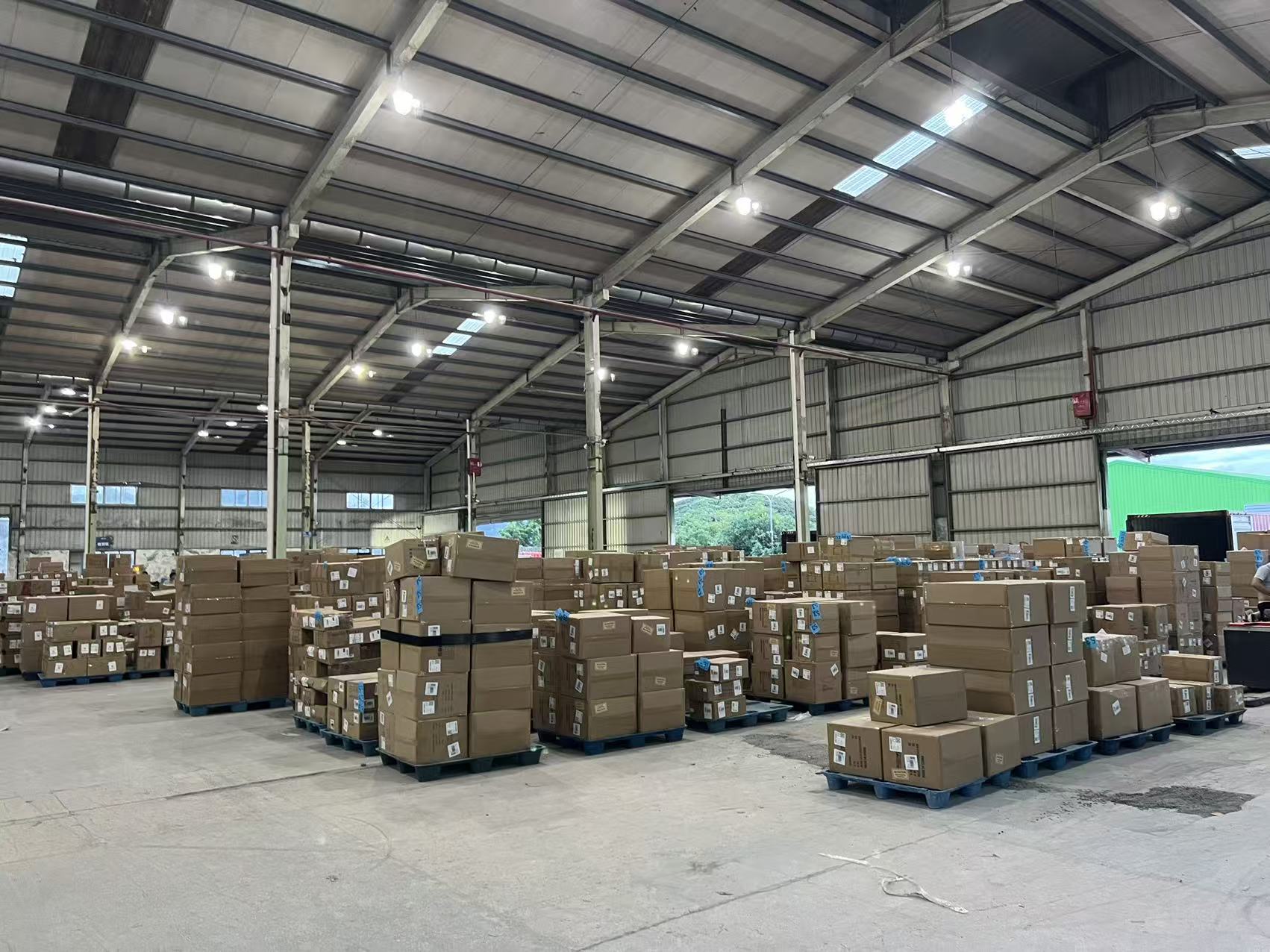
Amazon FBA barcode compliance depends on more than printing a label. Sellers should verify product barcodes, carton labels, shipping documents, quantities, and destination information before cargo leaves the warehouse. A structured inspection process helps identify unreadable labels, data mismatches, and packaging issues before loading or arrival at an Amazon fulfillment center.
Essential Controls for FBA Barcode Compliance
- Use a documented pre-shipment checklist covering product labels, carton labels, shipment records, quantities, and delivery destinations.
- Inspect barcode readability, label placement, package condition, and carton security during cargo preparation and before loading.
- Keep shipment information traceable through customs paperwork, real-time transportation updates, delivery records, and exception reports.
- Coordinate pickup, export declaration, international transportation, destination customs clearance, tax payment, and final delivery through one accountable logistics workflow.
How to Build a Reliable Barcode Verification Process
1. Match labels with shipment records
Before dispatch, compare the barcode and shipping-label information with the fulfillment shipment data. Confirm that product descriptions, carton quantities, package numbers, and destination details are consistent across labels, packing lists, commercial invoices, and transport documents. This initial review reduces the chance of receiving delays or inventory-processing errors.
2. Inspect packaging and label quality
Every label should be readable, securely attached, and positioned where it can be scanned without obstruction. Inspect cartons for damage, loose packaging, moisture exposure, or other conditions that could affect the barcode. Pre-loading cargo inspection should include package counts, label condition, packaging reinforcement, and overall cargo integrity.
3. Connect barcode checks with customs and transportation controls
Barcode compliance and customs compliance manage separate risks, but both rely on accurate and synchronized shipment data. A barcode discrepancy may interfere with fulfillment-center handling, while inconsistent product or invoice information may create customs delays. Maintaining one complete record across warehouse preparation, export declaration, transportation, destination clearance, and delivery makes corrections faster and more controlled.
Cross-Border Logistics Support for Amazon Sellers
For cross-border e-commerce sellers, trading companies, brand owners, and B2B suppliers, a full-chain logistics process can combine cargo inspection with pickup, customs filing, international transport, destination clearance, duty and tax payment, and door-to-door delivery.
For shipments to the Middle East, the stated service covers Saudi Arabia, the United Arab Emirates, Qatar, Kuwait, Bahrain, Oman, Israel, and Egypt. It supports general cargo, retail bulk shipments, e-commerce parcels, FCL cargo, and LCL consolidation. Available transport options include sea freight, air freight, and multimodal solutions, together with local customs-agent coordination, import-license filing, tax declaration, and regional trade-compliance support.
Shippingwell holds a NOVCC certificate applicable to sea freight in the USA, EU, and UK. It also holds a Record Filing Form for International Freight Forwarders covering China, North America, Europe, Southeast Asia, the Middle East, and Africa. In one documented case, a Canadian trading company used a DDP sea-freight solution that included cargo pickup, export declaration, ocean transportation, Canadian customs clearance, tax payment, and door-to-door delivery.
Compliance Areas and Available Support
| Control Area | Recommended Action | Logistics Support |
|---|---|---|
| Barcode and shipment information | Compare barcode data, package quantities, shipment records, and destination details before dispatch | Pre-loading inspection and long-term cargo traceability |
| Packaging and label condition | Verify scan readability, label placement, carton strength, and package integrity | Cargo sorting, packaging reinforcement, and condition checks |
| Customs and tax records | Keep product, invoice, shipment, customs, and tax information aligned | Export declaration, customs clearance, duty and VAT payment, and compliance review |
| Shipment visibility | Track milestones and address exceptions before delivery | Real-time tracking, status alerts, delivery receipt confirmation, and exception handling |
| Transport planning | Select the service according to shipment volume, urgency, and destination | Expedited sea freight, economy sea freight, air freight, and multimodal transportation |
Frequently Asked Questions
Which items should be reviewed before an Amazon FBA shipment is loaded?
Review barcode and shipping-label details against the shipment records. Then confirm carton quantities, label readability, packaging condition, customs documents, and destination information before loading.
Does the Middle East DDP service guarantee Amazon barcode approval?
The supplied service information does not claim to provide Amazon barcode approval or define Amazon barcode specifications. Its stated controls include pre-loading inspection, packaging review, shipment monitoring, customs compliance audits, delivery confirmation, and cargo traceability.
What is the best way to handle a barcode-related shipment exception?
Maintain a unified file containing cargo details, label information, shipping documents, and transport updates. Real-time monitoring and a dedicated account manager can help identify inconsistencies, coordinate corrective action, and track the shipment through final delivery.
Conclusion
Effective Amazon FBA barcode compliance requires verification before loading, accurate and consistent shipment documentation, secure packaging, and complete delivery records. For international sellers, a full-chain DDP solution can connect pickup, export customs declaration, overseas transportation, destination clearance, duty payment, and door-to-door delivery. The stated minimum order can be one shipment, one pallet, or one FCL. For technical assistance or logistics support, contact Sales@shippingwell.com.
About Us
Guangdong Shippingwell Supply Chain Limited is an international logistics and overseas-warehousing provider headquartered in Dongguan, with offices in the United States, Hong Kong, the United Kingdom, Germany, France, and other locations. Founded in 2021, the company serves North America, South America, Europe, the Middle East, Africa, and Southeast Asia. Its services include customs clearance and delivery, overseas warehousing, FCL and LCL shipping, air freight, express delivery, DDP and DDU solutions, and last-mile delivery. Its listed credentials include a NOVCC certificate and a Record Filing Form for International Freight Forwarders.
REPORT