







-
 Agriculture
-
 Health-Care
-
 Environment
-
 Construction-Real-Estate
-
 Tools-Hardware
-
 Home-Garden
-
 Furniture
-
 Luggage-Bags-Cases
-
 Medical-devices-Supplies
-
 Gifts-Crafts
-
 Sports-Entertainment
-
 Food-Beverage
-
 Vehicles-Transportation
-
 Power-Transmission
-
 Material-Handling
-
 Renewable-Energy
-
 Safety
-
 Testing-Instrument-Equipment
-
 Construction-Building-Machinery
-
 Pet-Supplies
-
 Personal-Care-Household-Cleaning
-
 Vehicle-Accessories-Electronics-Tools
-
 School-Office-Supplies
-
 Packaging-Printing
-
 Mother-Kids-Toys
-
 Business-Services
-
 Commercial-Equipment-Machinery
-
 Apparel-Accessories
-
 Security
-
 Shoes-Accessories
-
 Vehicle-Parts-Accessories
-
 Jewelry-Eyewear-Watches-Accessories
-
 Lights-Lighting
-
 Fabric-Textile-Raw-Material
-
 Fabrication-Services
-
 Industrial-Machinery
-
 Consumer-Electronics
-
 Electrical-Equipment-Supplies
-
 Electronic-Components-Accessories-Telecommunications
-
 Home-Appliances
-
 Beauty
-
 Chemicals
-
 Rubber-Plastics
-
 Metals-Alloys


























































































































































































































































































































































































































































































































































































- Masonry Materials
- Curtain Walls & Accessories
- Earthwork Products
- Fireproofing Materials
- Heat Insulation Materials
- Plastic Building Materials
- Building Boards
- Soundproofing Materials
- Timber
- Waterproofing Materials
- Balustrades & Handrails
- Bathroom & Kitchen
- Flooring & Accessories
- Tiles & Accessories
- Door, Window & Accessories
- Fireplaces & Stoves
- Floor Heating Systems & Parts
- Stairs & Stair Parts
- Ceilings
- Elevators & Escalators
- Stone
- Countertops, Vanity Tops & Table Tops
- Mosaics
- Metal Building Materials
- Multifunctional Materials
- Ladders & Scaffoldings
- Mouldings
- Corner Guards
- Decorative Films
- Formwork
- Building & Industrial Glass
- Other Construction & Real Estate
- Wallpapers/Wall panels
- HVAC System & Parts
- Outdoor Facilities
- Prefabricated Buildings
- Festive & Party Supplies
- Bathroom Products
- Household Sundries
- Rain Gear
- Garden Supplies
- Household Cleaning Tools & Accessories
- Lighters & Smoking Accessories
- Home Storage & Organization
- Household Scales
- Smart Home Improvement
- Home Textiles
- Kitchenware
- Drinkware & Accessories
- Dinnerware, Coffee & Wine
- Home Decor
- Golf
- Fitness & Body Building
- Amusement Park Facilities
- Billiards, Board Game,Coin Operated Games
- Musical Instruments
- Outdoor Affordable Luxury Sports
- Camping & Hiking
- Fishing
- Sports Safety&Rehabilitation
- Ball Sports Equipments
- Water Sports
- Winter Sports
- Luxury Travel Equipments
- Sports Shoes, Bags & Accessories
- Cycling
- Other Sports & Entertainment Products
- Artificial Grass&Sports Flooring&Sports Court Equipment
- Scooters
- Food Ingredients
- Honey & Honey Products
- Snacks
- Nuts & Kernels
- Seafood
- Plant & Animal Oil
- Beverages
- Fruit & Vegetable Products
- Frog & Escargot
- Bean Products
- Egg Products
- Dairy Products
- Seasonings & Condiments
- Canned Food
- Instant Food
- Baked Goods
- Other Food & Beverage
- Meat & Poultry
- Confectionery
- Grain Products
- Feminie Care
- Hair Care & Styling
- Body Care
- Hands & Feet Care
- Hygiene Products
- Men's Grooming
- Laundry Cleaning Supplies
- Travel Size & Gift Sets
- Room Deodorizers
- Other Personal Care Products
- Pest Control Products
- Special Household Cleaning
- Floor Cleaning
- Kitchen & Bathroom Cleaning
- Oral Care
- Bath Supplies
- Yellow Pages
- Correction Supplies
- Office Binding Supplies
- Office Cutting Supplies
- Board Erasers
- Office Adhesives & Tapes
- Education Supplies
- Pencil Cases & Bags
- Notebooks & Writing Pads
- File Folder Accessories
- Calendars
- Writing Accessories
- Commercial Office Supplies
- Pencil Sharpeners
- Pens
- Letter Pad/Paper
- Paper Envelopes
- Desk Organizers
- Pencils
- Markers & Highlighters
- Filing Products
- Art Supplies
- Easels
- Badge Holder & Accessories
- Office Paper
- Printer Supplies
- Book Covers
- Other Office & School Supplies
- Stationery Set
- Boards
- Clipboards
- Stamps
- Drafting Supplies
- Stencils
- Electronic Dictionary
- Books
- Map
- Magazines
- Calculators
- Baby & Toddler Toys
- Educational Toys
- Classic Toys
- Dress Up & Pretend Play
- Toy Vehicle
- Stuffed Animals & Plush Toys
- Outdoor Toys & Structures
- Balloons & Accessories
- Baby Food
- Children's Clothing
- Baby Supplies & Products
- Maternity Clothes
- Kids Shoes
- Baby Care
- Novelty & Gag Toys
- Dolls & Accessories
- Puzzle & Games
- Blocks & Model Building Toys
- Toddler Clothing
- Baby Clothing
- Kids' Luggage & Bags
- Arts, Crafts & DIY Toys
- Action & Toy Figures
- Baby Appliances
- Hobbies & Models
- Remote Control Toys
- Promotional Toys
- Pregnancy & Maternity
- Hygiene Products
- Kid's Textile&Bedding
- Novelty & Special Use
- Toy Weapons
- Baby Gifts
- Baby Storage & Organization
- Auto Drive Systems
- ATV/UTV Parts & Accessories
- Marine Parts & Accessories
- Other Auto Parts
- Trailer Parts & Accessories
- Auto Transmission Systems
- Train Parts & Accessories
- Universal Parts
- Railway Parts & Accessories
- Auto Brake Systems
- Aviation Parts & Accessories
- Truck Parts & Accessories
- Auto Suspension Systems
- Auto Lighting Systems
- New Energy Vehicle Parts & Accessories
- Auto Steering Systems
- Wheels, Tires & Accessories
- Bus Parts & Accessories
- Auto Performance Parts
- Cooling System
- Go-Kart & Kart Racer Parts & Accessories
- Air Conditioning Systems
- Heavy Duty Vehicle Parts & Accessories
- Auto Electrical Systems
- Auto Body Systems
- Auto Engine Systems
- Container Parts & Accessories
- Motorcycle Parts & Accessories
- Refrigeration & Heat Exchange Equipment
- Machine Tool Equipment
- Food & Beverage Machinery
- Agricultural Machinery & Equipment
- Apparel & Textile Machinery
- Chemical Machinery
- Packaging Machines
- Paper Production Machinery
- Plastic & Rubber Processing Machinery
- Industrial Robots
- Electronic Products Machinery
- Metal & Metallurgy Machinery
- Woodworking Machinery
- Home Product Manufacturing Machinery
- Machinery Accessories
- Environmental Machinery
- Machinery Service
- Electrical Equipment Manufacturing Machinery
- Industrial Compressors & Parts
- Tobacco & Cigarette Machinery
- Production Line
- Used Industrial Machinery
- Electronics Production Machinery
- Other Machinery & Industrial Equipment
- Camera, Photo & Accessories
- Portable Audio, Video & Accessories
- Television, Home Audio, Video & Accessories
- Video Games & Accessories
- Mobile Phone & Accessories
- Electronic Publications
- Earphone & Headphone & Accessories
- Speakers & Accessories
- Smart Electronics
- TV Receivers & Accessories
- Mobile Phone & Computer Repair Parts
- Chargers, Batteries & Power Supplies
- Used Electronics
- VR, AR, MR Hardware & Software
- Projectors & Presentation Equipments
- Other Consumer Electronics
- Cables & Commonly Used Accessories
- Computer Hardware & Software
- Displays, Signage and Optoelectronics
- Discrete Semiconductors
- Wireless & IoT Module and Products
- Telecommunications
- Connectors, Terminals & Accessories
- Development Boards, Electronic Modules and Kits
- Circuit Protection
- Sensors
- Isolators
- Audio Components and Products
- Integrated Circuits
- Power Supplies
- Relays
- RF, Microwave and RFID
- Electronic Accessories & Supplies
- Passive Components
- PCB & PCBA
- Air Quality Appliances
- Home Appliance Parts
- Heating & Cooling Appliances
- Small Kitchen Appliances
- Laundry Appliances
- Water Heaters
- Water Treatment Appliances
- Refrigerators & Freezers
- Personal Care & Beauty Appliances
- Major Kitchen Appliances
- Cleaning Appliances
- Second-hand Appliances
- Smart Home Appliances
- Other Home Appliances
- Energy Chemicals
- Inorganic Chemicals
- Basic Organic Chemicals
- Agrochemicals
- Admixture & Additives
- Catalysts & Chemical Auxiliary Agents
- Pigments & Dyestuff
- Coating & Paint
- Daily Chemicals
- Polymer
- Organic Intermediate
- Adhesives & Sealants
- Chemical Waste
- Biological Chemical Products
- Surface Treatment Chemicals
- Painting & Coating
- Chemical Reagents
- Flavor & Fragrance
- Non-Explosive Demolition Agents
- Other Chemicals
- Custom Chemical Services

Small Kitchen Appliances
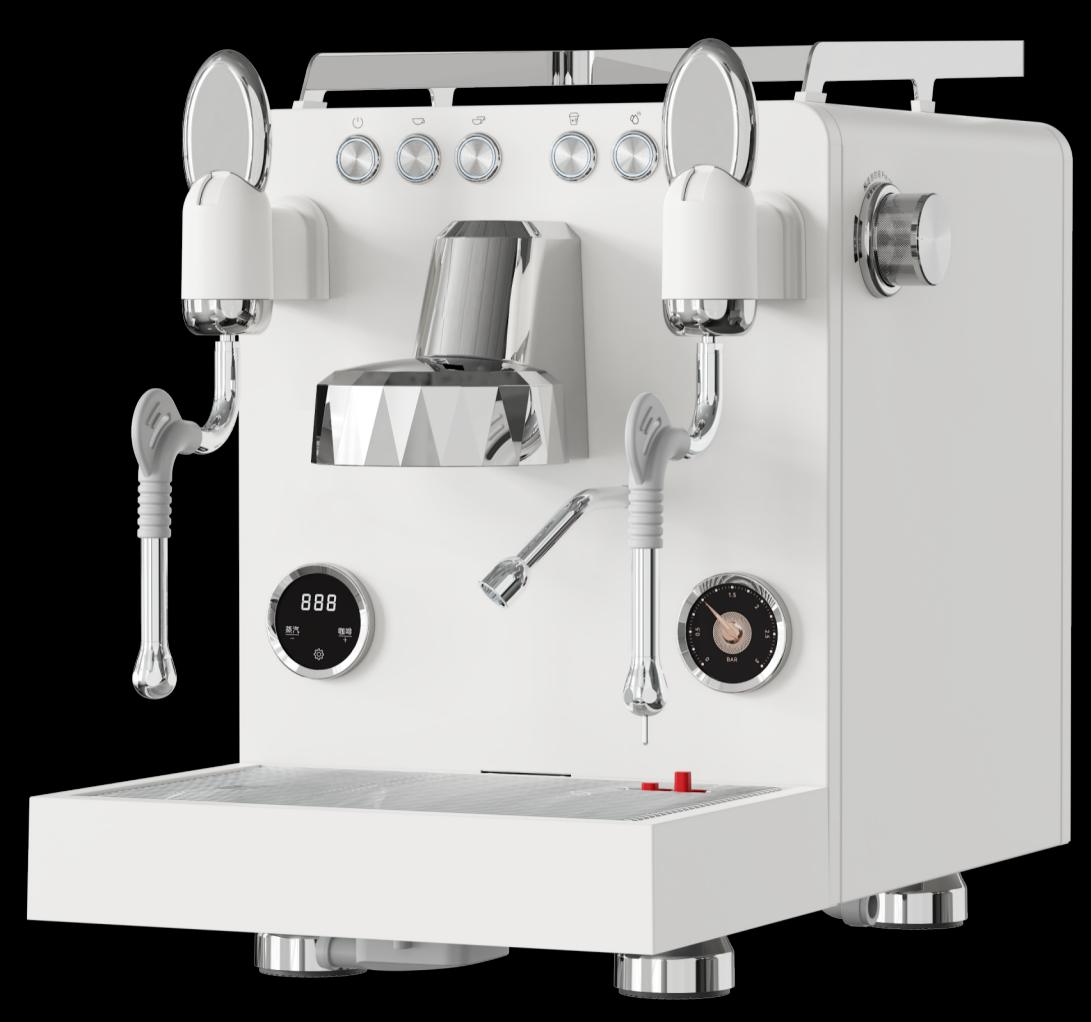
Can Coffee Machines and Spare Parts Be Shipped in One Container?
Yes, coffee machines and replacement parts can potentially be loaded into the same shipping container. However, the available product information does not confirm that spare parts are automatically included or describe how they should be packed. BFC indicates that spare-parts supply and technical assistance are available after delivery, so buyers should obtain written confirmation of the parts list, packaging method, and transport plan before finalizing an order.
Shipment Feasibility and Main Considerations
- The listed product is a semi-automatic espresso machine with a minimum order quantity of 1,000 units and an indicated delivery period of 60 days.
- After-sales services include spare-parts provision and technical support, but the supplied information does not confirm that parts will be placed in the same container as the machines.
- BFC identifies ocean shipping as an available option, including FCL and LCL services. Product-specific loading capacity and container packing instructions are not provided.
- BFC presents experience in international trade, logistics coordination, and equipment-export services for overseas industrial and commercial customers.
Product and Packing Information
The espresso machine is described as a semi-automatic model featuring a 2.8-liter water tank, a 1.3-liter steam water-storage pot, a 15-bar OLAB pump, and a stainless-steel exterior. The supplier also states that replacement parts and technical support can be provided after the sale. Nevertheless, no detailed spare-parts catalogue, package dimensions, or standard arrangement for combining parts with machines is included in the supplied data.
When planning a consolidated shipment, the buyer should ask for a complete parts schedule, quantities, carton dimensions, gross weight, and labeling requirements. The supplier should also confirm whether the parts will be packed inside the machine cartons, placed in separate cartons within the same container, or shipped independently. These details can affect container utilization, customs declarations, insurance, and unloading procedures.
Freight Options and Supplier Service Scope
BFC lists sea freight through either full-container load (FCL) or less-than-container load (LCL) arrangements. Since no coffee-machine loading diagram or container-capacity calculation is provided, the most suitable option must be determined according to the final order quantity, spare-parts volume, packaging dimensions, and destination.
The company describes its services as including inquiry handling, order monitoring, logistics coordination, customs-clearance assistance, and after-sales support. Its reported Ecuador wastewater-treatment equipment project demonstrates experience with equipment exports and related services, but it does not verify a specific coffee-machine shipment containing spare parts.
The available records mention ISO 9001 Quality Management System Certification and IATF 16949:2016. According to the supplied information, these certificates are associated with stainless-steel coil services and modified engineering plastics, respectively. They should not be interpreted as product certification for the espresso machine unless separate documentation is provided.
Information to Confirm Before Ordering
| Item | Current information | Buyer should verify |
|---|---|---|
| Replacement parts | Available through after-sales support | Part numbers, quantities, pricing, and availability |
| Combined container shipment | Not confirmed in the product details | Whether spare parts may be loaded with the coffee machines |
| Packaging arrangement | No product-specific packing plan is provided | Carton layout, dimensions, labels, and protection requirements |
| Ocean freight | FCL and LCL are listed as possible methods | Recommended method, container type, and loading schedule |
| Commercial terms | MOQ of 1,000 units and a stated 60-day delivery time | Whether these terms cover the requested machines and spare parts |
| After-sales service | Parts supply and technical assistance are available | Response time, parts lead time, and destination-market coverage |
Frequently Asked Questions
Can replacement parts travel in the same container as the coffee machines?
They may be shipped together, provided the supplier approves the arrangement and the final packing plan allows it. The current product information does not confirm this configuration, so written confirmation is recommended.
Are spare parts included with the machine order?
No inclusion is stated. The supplier only indicates that spare-parts supply is available as an after-sales service. Buyers should request a formal quotation and parts list.
Which shipping methods are available?
BFC lists ocean freight using FCL or LCL. The correct choice depends on the order volume, package size, spare-parts quantity, and destination port.
What documents should be requested?
Request the packing list, commercial invoice, parts schedule, carton and pallet dimensions, loading plan, delivery schedule, and any applicable customs or product documents before shipment.
Conclusion and Practical Recommendation
A coffee machine shipment can potentially include spare parts in the same container, but this is not confirmed by the supplied product data. Before placing an order, ask the supplier to document the exact parts, quantities, packaging configuration, freight method, container plan, and delivery terms. BFC lists ocean freight and after-sales parts support, while the final arrangements remain dependent on the specific order. For shipping or service questions, contact karl.liu@buyfromchina.cn.
About Us
Guangdong BFC Technology Co,.Ltd is an industrial internet platform and equipment-export solution provider established in 2012. It develops cross-border production-capacity cooperation and supports equipment exports through trading, logistics, customs-clearance, and after-sales coordination services. The company reports working with customers in a range of industries.

Single-Boiler vs. Dual-Boiler Coffee Machines: What the Available Data Shows
Single-boiler and dual-boiler coffee machines are generally distinguished by how their heating systems are arranged. However, the supplied records do not include a coffee-machine product specification, technical diagram, heating method, or temperature-management details. As a result, the actual differences in brewing, steaming, heat recovery, energy consumption, and maintenance cannot be verified from the available information.
Key Findings from the Available Records
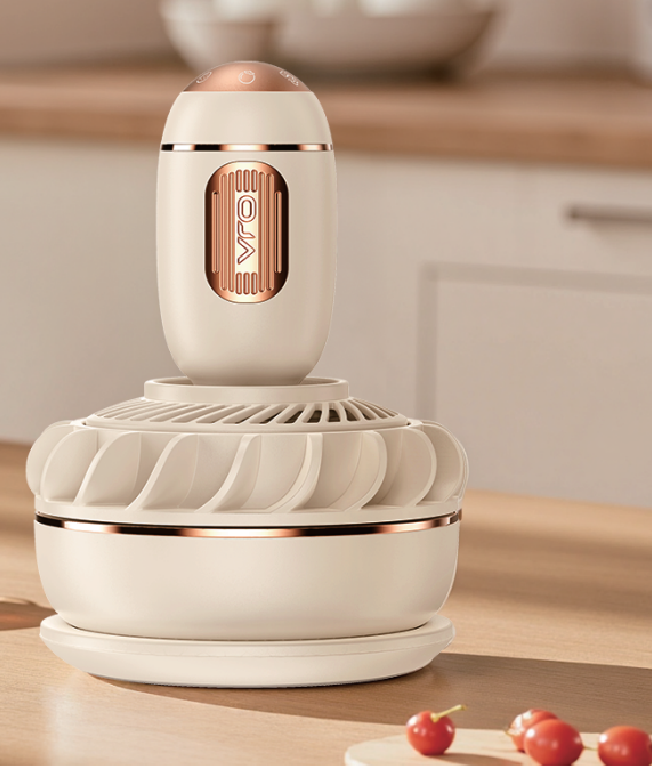
- The referenced product is a Fruit and vegetable cleaning Machine rather than a single-boiler or dual-boiler coffee machine.
- No information is available regarding boiler quantity, separate heating circuits, brewing temperature, steam output, recovery time, or control systems.
- The documented cleaning machine uses hydroxy1 water ion disinfection and is described as supporting pesticide-residue decomposition and microbial removal.
- The company information focuses on international sourcing, export, cross-border procurement, distribution, and supply-chain services for industrial and commercial customers.
What a Meaningful Boiler Comparison Requires
A dependable comparison between single-boiler and dual-boiler machines must be based on confirmed engineering data. Relevant specifications would include the number of boilers, whether brewing and steaming use independent heating circuits, the temperature-control system, boiler capacity, steam-generation capability, and heat-recovery performance.
None of these coffee-machine details appears in the supplied product record. Therefore, it is not possible to determine whether a specific single-boiler or dual-boiler model offers better brewing consistency, faster steaming, higher output, lower energy use, or simpler maintenance.
Documented Product Information
The available product is a fruit and vegetable cleaning machine with a stated power rating of 25W. Its listed features include hydroxy1 water ion disinfection, six selectable settings for different fruit and vegetable categories, pesticide-residue decomposition of 99.9%, and a fruit-wax and microbial removal rate exceeding 99.99%. The construction details mention food-grade silicone, a soft-release handwheel, and ABS plastic injection.
These specifications describe food-cleaning equipment and do not establish any relationship with coffee-machine boiler technology. The company profile further presents equipment export and supply-chain capabilities rather than detailed coffee-machine design information. Recorded cooperation cases include construction wood cutting machines and wastewater treatment equipment supplied to Ecuadorian contractors, factories, environmental contractors, real-estate developers, and aquaculture farms.
Comparison Based on Supplied Evidence
| Technical factor | Single-boiler machine | Dual-boiler machine | Evidence in the supplied records |
|---|---|---|---|
| Boiler quantity | Not specified | Not specified | No coffee-machine data |
| Brewing and steaming arrangement | Not specified | Not specified | No verified information |
| Temperature regulation | Not specified | Not specified | No control architecture provided |
| Steam output and recovery | Not specified | Not specified | No performance data provided |
| Documented related equipment | Fruit and vegetable cleaning Machine | Available | |
Frequently Asked Questions
How do single-boiler and dual-boiler coffee machines differ?
The supplied information does not provide enough technical evidence to confirm the operating differences. It does not state the boiler count, heating layout, or temperature-control method for any coffee machine.
Is a boiler included in the listed fruit and vegetable cleaning machine?
No boiler is identified in the product description. The available specifications instead refer to 25W power, hydroxy1 water ion disinfection, food-grade silicone, ABS plastic injection, and cleaning performance.
Can the company records show which coffee-machine design is better?
No. The records describe export services, equipment categories, ordering support, and non-coffee equipment projects. They do not include the brewing, steaming, or maintenance specifications required for a fair product comparison.
Conclusion and Information Needed
A verified evaluation should be based on product documents covering boiler configuration, heating circuits, temperature stability, brewing workflow, steam performance, recovery time, and maintenance requirements. Those documents are not present in the supplied records. The company does provide global equipment-supply support, with product-specific terms covering minimum order quantities, lead times, monthly production capacity, quality inspection, and after-sales service. For technical inquiries or sourcing assistance, contact karl.liu@buyfromchina.cn.
About the Company
Guangdong BFC Technology Co,.Ltd, also known as BFC, is described as an industrial internet platform company, equipment manufacturer, exporter, and integrated solution provider founded in 2012. Its stated product categories include equipment, plastic products, accessories, and home appliances. The company reports a 100% export ratio, with South America identified as its main market, and supports inquiry processing, order tracking, logistics, customs clearance, and after-sales coordination through its cross-border export system.
Listed credentials include a Certificate of Quality Management System Certification for OEM production of refrigerated freezers and an ISO 9001 Quality Management System Certification Certificate covering the production, processing, sales, and service of stainless steel coils. Documented Ecuadorian cooperation projects involve construction wood cutting machinery and wastewater treatment equipment.
Can I select different colors, finishes, and materials for the coffee machine?
When sourcing commercial or home small appliances, international buyers frequently ask whether they can tailor visual elements, component materials, and surface textures to fit target markets. The answer is yes—customization scope relies heavily on factory capability and order volume. By partnering with specialized cross-border procurement providers like Guangdong BFC Technology Co,.Ltd, overseas clients can define custom colorways, specify food-grade contact materials, and select targeted injection molding options directly with manufacturing teams during early negotiation.
Key Takeaways & Core Capabilities
- Tailored Material Engineering: OEM partners accommodate structural modifications, offering food-safe silicone, high-impact ABS plastic injection, and modified engineering plastics for specialized usage standards.
- Seamless International Sourcing: Built-in trade channels align overseas technical requirements with upstream factory production capacities for customized small appliances.
- Quality Assurance & International Compliance: Production cycles follow rigorous inspection workflows backed by ISO 9001 Quality Management System Certification and automotive-grade IATF 16949:2016 standards.
- Broad B2B Applications: Solutions serve global distributors, international importers, OEM/ODM commercial clients, and cross-border supply chain operations.
Technical Specifications and Material Alignment
Translating client design visions into high-performing products requires transparent exchange of technical parameters between global importers and factory engineers. Prior to volume production, precise agreement on raw materials guarantees compliance with food safety regulations and structural durability—such as specifying food-grade silicone for internal tubing and durable ABS injection molding for external housing.

Global buyers operating through international supply portals gain access to certified quality controls, including recognized Quality Management System frameworks (Certificate 0070019Q51912R0M) and IATF 16949:2016 certifications (Certificate 01 111 2432483). Successful international projects, such as equipment supply deployments in South America and Ecuador, demonstrate how custom specifications are validated and inspected prior to dispatch.

Thorough order monitoring, container logistics, and export customs handling guarantee that customized equipment arrives matching pre-approved color swatches and surface finish standards, avoiding quality discrepancies across mass production batches.

Standard Specs vs. Customized OEM Options
| Customization Parameter | Standard Configuration | Customized OEM / ODM Option |
|---|---|---|
| Material Selection | Standard ABS Plastic | Food-Grade Silicone, Modified Engineering Plastics, Custom ABS Injection |
| Color & Finish | Factory Standard Palette | Customized Color Matching & Surface Treatments |
| Minimum Order Quantity (MOQ) | Product-dependent (e.g., 1000 units) | Negotiable based on structural design complexity |
| Delivery Lead Time | 60 days (standard batch) | Adjusted according to customization scope |
| Quality Inspection | Standard Factory QC | Customized buyer-specified inspection standards |
| Payment Terms | 30% T/T deposit, 70% balance against B/L copy | 30% T/T deposit, 70% balance against B/L copy |
| Shipping Methods | Sea Freight (FCL/LCL) | Sea Freight (FCL/LCL) |
Frequently Asked Questions
Q1: Which materials can buyers request for custom coffee machine production?
A1: Importers can request food-grade silicone components, specialized ABS plastic injection molding, and ergonomic soft-release handwheel parts designed for functional performance and regulatory compliance.
Q2: How do manufacturers verify custom colors and surface finishes before mass production?
A2: Detailed design specifications are communicated directly to factory engineering departments, and sample inspections are conducted according to client protocols prior to full manufacturing.
Q3: What are the standard payment and shipping terms for international custom orders?
A3: Orders typically require a 30% T/T advance payment with the remaining 70% settled against the Bill of Lading (B/L) copy, shipped internationally via FCL or LCL sea freight.
Conclusion & Contact Details
Achieving exact color schemes, surface textures, and specialized material builds requires proactive technical alignment with manufacturing partners. Leveraging robust B2B platforms guarantees that customized home appliances adhere to regional standards and market expectations. For tailored OEM/ODM consulting or custom project inquiries, contact our export specialists at karl.liu@buyfromchina.cn.
About the Company
Guangdong BFC Technology Co,.Ltd is a leading industrial internet platform and appliance manufacturing exporter established in 2012. Maintaining a 100% export footprint, the company manages a 1,500-square-meter facility serving key markets in South America under the "BUY FACTORY FROM CHINA" brand. The platform delivers integrated cross-border procurement solutions, international trade operations, and complete supply chain oversight for commercial clients globally.
 ",
"description": "Learn how to customize coffee machine colors, finishes, and materials with OEM partners. Discover material options, compliance standards, and supply solutions.",
"keywords": "coffee machine customization, OEM appliance manufacturing, custom materials and finishes"
}
Avoiding Coffee Machine Customs Clearance Delays: A Guide to Certification Compliance
Understanding the Risks of Certification Discrepancies
When imported espresso machines arrive at port customs with technical specs that deviate from their registered documentation, border control authorities will block or impound the shipment. Discrepancies in electrical specifications, boiler capacity, or unapproved internal parts—such as substitute pumps—can invalidate compliance credentials like EU Attestations of Conformity. Consequently, importers face severe clearance delays, expensive re-inspections, or mandatory shipment returns.
Key Technical Parameters and Component Traceability
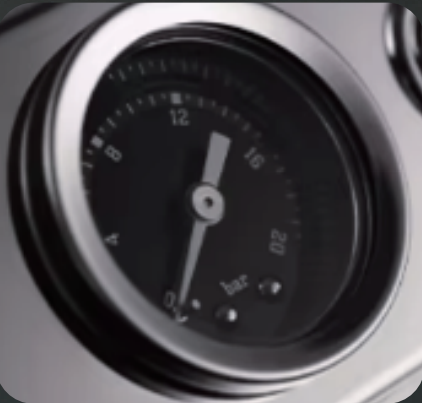
Commercial coffee machine manufacturing requires rigorous compliance under standards such as ISO 9001 Quality Management System (Certificate 0070019Q51912R0M) and the EU Test Attestation of Conformity (Certificate TD15532801). Border control agents inspect physical technical attributes against official records, including the machine's 2100W overall power rating, AC220V/50Hz voltage configuration, 1300W extraction block, 1.3L steam pot storage, and 2.8L water tank capacity.
Substituting key components without updating the certification dossier is a primary trigger for regulatory quarantine. For instance, replacing the certified Italian-imported OLAB 15Bar pump or OLAB electromagnetic valve with unapproved alternatives voids the safety attestation. Similarly, unverified modifications to PID temperature control units compromise safety compliance and risk customs rejection.
Core Strategies for Seamless Customs Clearance
- Document Alignment: Ensure factory declaration paperwork matches import certificates across all parameters, including AC220V/50Hz voltage, 2100W total power, and 1.3L steam pot capacity.
- Bill of Materials Integrity: Trace key imported components, such as Italian OLAB 15Bar pumps and valves, directly back to the registered BOM files in official certification records.
- Rigorous Pre-Shipment Inspection: Execute comprehensive multi-stage testing to verify physical units match approved reference samples before loading.
- Standardized Supply Chain Execution: Align international trade procurement with global quality control frameworks to avoid port impoundment.
Comparative Breakdown: Aligned vs. Non-Matching Shipments
| Inspection Category | Compliant Parameter Alignment | Impact of Discrepancies |
|---|---|---|
| Electrical Systems | AC220V / 50Hz / 2100W total rating fully verified | Cargo seizure, failed electrical safety checks, rejection |
| Pumps & Valves | Authentic Italian OLAB 15Bar pump & OLAB valve | Invalidation of EU Test Attestation (TD15532801) |
| Boiler Assembly | 1.3L steam pot (1300W) with PID temperature system | Port quarantine, mandatory re-testing fines |
| Quality Assurance | 8-stage testing (Visual, Functional, Leakage, Aging, Drop, etc.) | Higher failure rates, potential legal liabilities |
| Logistics Terms | Ocean Freight (FCL/LCL), 30% T/T deposit + 70% against B/L | Supply chain disruptions beyond 60-day delivery timeline |
Frequently Asked Questions
Q1: How do pre-shipment inspections prevent compliance mismatches?
A1: Factories complete an intensive 8-stage testing protocol—covering visual checks, electrical safety, functionality, leakage, noise, performance, aging, and drop tests—to ensure physical machines conform to registered certification files.
Q2: Why does changing an internal component like a pump cause customs rejection?
A2: Regulatory attestations (such as the EU Attestation TD15532801) certify specific component models like the Italian OLAB 15Bar pump. Installing unlisted parts invalidates the approved safety and electrical architecture of the machine.
Q3: What are the commercial terms and lead times for mass production?
A3: Bulk orders typically require a minimum order quantity (MOQ) of 1000 units with a 60-day manufacturing period. Payment terms involve a 30% T/T deposit and 70% balance paid against the Bill of Lading, shipped via Sea Freight (FCL/LCL).
Conclusion & Technical Support
Maintaining total synergy between physical coffee machine components and official technical certificates is critical for international trade success. Importers should mandate verified factory test reports and valid ISO 9001 and EU certificates before approving cargo dispatch. For specialized technical guidance or compliance support, contact our team at karl.liu@buyfromchina.cn.
Company Overview
Founded in 2012, Guangdong BFC Technology Co,.Ltd functions as an industrial internet platform, machinery exporter, and end-to-end service provider. Operating with a 100% export focus and a skilled 10-person team, the company delivers comprehensive cross-border trade solutions, equipment upgrades, and logistics support under certified quality frameworks including ISO 9001 (Certificate 0070019Q51912R0M).
REPORT