







-
 Agriculture
-
 Health-Care
-
 Environment
-
 Construction-Real-Estate
-
 Tools-Hardware
-
 Home-Garden
-
 Furniture
-
 Luggage-Bags-Cases
-
 Medical-devices-Supplies
-
 Gifts-Crafts
-
 Sports-Entertainment
-
 Food-Beverage
-
 Vehicles-Transportation
-
 Power-Transmission
-
 Material-Handling
-
 Renewable-Energy
-
 Safety
-
 Testing-Instrument-Equipment
-
 Construction-Building-Machinery
-
 Pet-Supplies
-
 Personal-Care-Household-Cleaning
-
 Vehicle-Accessories-Electronics-Tools
-
 School-Office-Supplies
-
 Packaging-Printing
-
 Mother-Kids-Toys
-
 Business-Services
-
 Commercial-Equipment-Machinery
-
 Apparel-Accessories
-
 Security
-
 Shoes-Accessories
-
 Vehicle-Parts-Accessories
-
 Jewelry-Eyewear-Watches-Accessories
-
 Lights-Lighting
-
 Fabric-Textile-Raw-Material
-
 Fabrication-Services
-
 Industrial-Machinery
-
 Consumer-Electronics
-
 Electrical-Equipment-Supplies
-
 Electronic-Components-Accessories-Telecommunications
-
 Home-Appliances
-
 Beauty
-
 Chemicals
-
 Rubber-Plastics
-
 Metals-Alloys


























































































































































































































































































































































































































































































































































































- Masonry Materials
- Curtain Walls & Accessories
- Earthwork Products
- Fireproofing Materials
- Heat Insulation Materials
- Plastic Building Materials
- Building Boards
- Soundproofing Materials
- Timber
- Waterproofing Materials
- Balustrades & Handrails
- Bathroom & Kitchen
- Flooring & Accessories
- Tiles & Accessories
- Door, Window & Accessories
- Fireplaces & Stoves
- Floor Heating Systems & Parts
- Stairs & Stair Parts
- Ceilings
- Elevators & Escalators
- Stone
- Countertops, Vanity Tops & Table Tops
- Mosaics
- Metal Building Materials
- Multifunctional Materials
- Ladders & Scaffoldings
- Mouldings
- Corner Guards
- Decorative Films
- Formwork
- Building & Industrial Glass
- Other Construction & Real Estate
- Wallpapers/Wall panels
- HVAC System & Parts
- Outdoor Facilities
- Prefabricated Buildings
- Festive & Party Supplies
- Bathroom Products
- Household Sundries
- Rain Gear
- Garden Supplies
- Household Cleaning Tools & Accessories
- Lighters & Smoking Accessories
- Home Storage & Organization
- Household Scales
- Smart Home Improvement
- Home Textiles
- Kitchenware
- Drinkware & Accessories
- Dinnerware, Coffee & Wine
- Home Decor
- Golf
- Fitness & Body Building
- Amusement Park Facilities
- Billiards, Board Game,Coin Operated Games
- Musical Instruments
- Outdoor Affordable Luxury Sports
- Camping & Hiking
- Fishing
- Sports Safety&Rehabilitation
- Ball Sports Equipments
- Water Sports
- Winter Sports
- Luxury Travel Equipments
- Sports Shoes, Bags & Accessories
- Cycling
- Other Sports & Entertainment Products
- Artificial Grass&Sports Flooring&Sports Court Equipment
- Scooters
- Food Ingredients
- Honey & Honey Products
- Snacks
- Nuts & Kernels
- Seafood
- Plant & Animal Oil
- Beverages
- Fruit & Vegetable Products
- Frog & Escargot
- Bean Products
- Egg Products
- Dairy Products
- Seasonings & Condiments
- Canned Food
- Instant Food
- Baked Goods
- Other Food & Beverage
- Meat & Poultry
- Confectionery
- Grain Products
- Feminie Care
- Hair Care & Styling
- Body Care
- Hands & Feet Care
- Hygiene Products
- Men's Grooming
- Laundry Cleaning Supplies
- Travel Size & Gift Sets
- Room Deodorizers
- Other Personal Care Products
- Pest Control Products
- Special Household Cleaning
- Floor Cleaning
- Kitchen & Bathroom Cleaning
- Oral Care
- Bath Supplies
- Yellow Pages
- Correction Supplies
- Office Binding Supplies
- Office Cutting Supplies
- Board Erasers
- Office Adhesives & Tapes
- Education Supplies
- Pencil Cases & Bags
- Notebooks & Writing Pads
- File Folder Accessories
- Calendars
- Writing Accessories
- Commercial Office Supplies
- Pencil Sharpeners
- Pens
- Letter Pad/Paper
- Paper Envelopes
- Desk Organizers
- Pencils
- Markers & Highlighters
- Filing Products
- Art Supplies
- Easels
- Badge Holder & Accessories
- Office Paper
- Printer Supplies
- Book Covers
- Other Office & School Supplies
- Stationery Set
- Boards
- Clipboards
- Stamps
- Drafting Supplies
- Stencils
- Electronic Dictionary
- Books
- Map
- Magazines
- Calculators
- Baby & Toddler Toys
- Educational Toys
- Classic Toys
- Dress Up & Pretend Play
- Toy Vehicle
- Stuffed Animals & Plush Toys
- Outdoor Toys & Structures
- Balloons & Accessories
- Baby Food
- Children's Clothing
- Baby Supplies & Products
- Maternity Clothes
- Kids Shoes
- Baby Care
- Novelty & Gag Toys
- Dolls & Accessories
- Puzzle & Games
- Blocks & Model Building Toys
- Toddler Clothing
- Baby Clothing
- Kids' Luggage & Bags
- Arts, Crafts & DIY Toys
- Action & Toy Figures
- Baby Appliances
- Hobbies & Models
- Remote Control Toys
- Promotional Toys
- Pregnancy & Maternity
- Hygiene Products
- Kid's Textile&Bedding
- Novelty & Special Use
- Toy Weapons
- Baby Gifts
- Baby Storage & Organization
- Auto Drive Systems
- ATV/UTV Parts & Accessories
- Marine Parts & Accessories
- Other Auto Parts
- Trailer Parts & Accessories
- Auto Transmission Systems
- Train Parts & Accessories
- Universal Parts
- Railway Parts & Accessories
- Auto Brake Systems
- Aviation Parts & Accessories
- Truck Parts & Accessories
- Auto Suspension Systems
- Auto Lighting Systems
- New Energy Vehicle Parts & Accessories
- Auto Steering Systems
- Wheels, Tires & Accessories
- Bus Parts & Accessories
- Auto Performance Parts
- Cooling System
- Go-Kart & Kart Racer Parts & Accessories
- Air Conditioning Systems
- Heavy Duty Vehicle Parts & Accessories
- Auto Electrical Systems
- Auto Body Systems
- Auto Engine Systems
- Container Parts & Accessories
- Motorcycle Parts & Accessories
- Refrigeration & Heat Exchange Equipment
- Machine Tool Equipment
- Food & Beverage Machinery
- Agricultural Machinery & Equipment
- Apparel & Textile Machinery
- Chemical Machinery
- Packaging Machines
- Paper Production Machinery
- Plastic & Rubber Processing Machinery
- Industrial Robots
- Electronic Products Machinery
- Metal & Metallurgy Machinery
- Woodworking Machinery
- Home Product Manufacturing Machinery
- Machinery Accessories
- Environmental Machinery
- Machinery Service
- Electrical Equipment Manufacturing Machinery
- Industrial Compressors & Parts
- Tobacco & Cigarette Machinery
- Production Line
- Used Industrial Machinery
- Electronics Production Machinery
- Other Machinery & Industrial Equipment
- Camera, Photo & Accessories
- Portable Audio, Video & Accessories
- Television, Home Audio, Video & Accessories
- Video Games & Accessories
- Mobile Phone & Accessories
- Electronic Publications
- Earphone & Headphone & Accessories
- Speakers & Accessories
- Smart Electronics
- TV Receivers & Accessories
- Mobile Phone & Computer Repair Parts
- Chargers, Batteries & Power Supplies
- Used Electronics
- VR, AR, MR Hardware & Software
- Projectors & Presentation Equipments
- Other Consumer Electronics
- Cables & Commonly Used Accessories
- Computer Hardware & Software
- Displays, Signage and Optoelectronics
- Discrete Semiconductors
- Wireless & IoT Module and Products
- Telecommunications
- Connectors, Terminals & Accessories
- Development Boards, Electronic Modules and Kits
- Circuit Protection
- Sensors
- Isolators
- Audio Components and Products
- Integrated Circuits
- Power Supplies
- Relays
- RF, Microwave and RFID
- Electronic Accessories & Supplies
- Passive Components
- PCB & PCBA
- Air Quality Appliances
- Home Appliance Parts
- Heating & Cooling Appliances
- Small Kitchen Appliances
- Laundry Appliances
- Water Heaters
- Water Treatment Appliances
- Refrigerators & Freezers
- Personal Care & Beauty Appliances
- Major Kitchen Appliances
- Cleaning Appliances
- Second-hand Appliances
- Smart Home Appliances
- Other Home Appliances
- Energy Chemicals
- Inorganic Chemicals
- Basic Organic Chemicals
- Agrochemicals
- Admixture & Additives
- Catalysts & Chemical Auxiliary Agents
- Pigments & Dyestuff
- Coating & Paint
- Daily Chemicals
- Polymer
- Organic Intermediate
- Adhesives & Sealants
- Chemical Waste
- Biological Chemical Products
- Surface Treatment Chemicals
- Painting & Coating
- Chemical Reagents
- Flavor & Fragrance
- Non-Explosive Demolition Agents
- Other Chemicals
- Custom Chemical Services

Machinery Accessories

How do I choose the right tolerance level for custom CNC components?
Choosing the right tolerance level for custom CNC components requires balancing application demands with manufacturing costs. Standard tolerances of ±0.1 mm suffice for general industrial machinery and structural parts, whereas high-precision applications in aerospace, medical devices, or valve systems demand precision tolerances up to ±0.03 mm to ensure proper fit and performance.
Core Solutions & Key Takeaways
- Align tolerances with specific application environments, such as Marine and Offshore Equipment, Food Processing Equipment, or Valve and Pipeline Systems, where precise fluid control is required.
- Evaluate material machinability; metals like Stainless Steel (304, 316) or Aluminum (6061, 7075) hold tight tolerances differently compared to engineering plastics like POM or PTFE.
- Standardize on standard tolerances (±0.1 mm) for non-critical dimensions to optimize production cycles, utilizing precision tolerances (±0.03 mm) only for critical mating interfaces.
- Select manufacturing partners certified under standards like ISO 9001 to guarantee dimensional consistency and quality compliance during bulk production.
Detailed Architectural/Principle Analysis
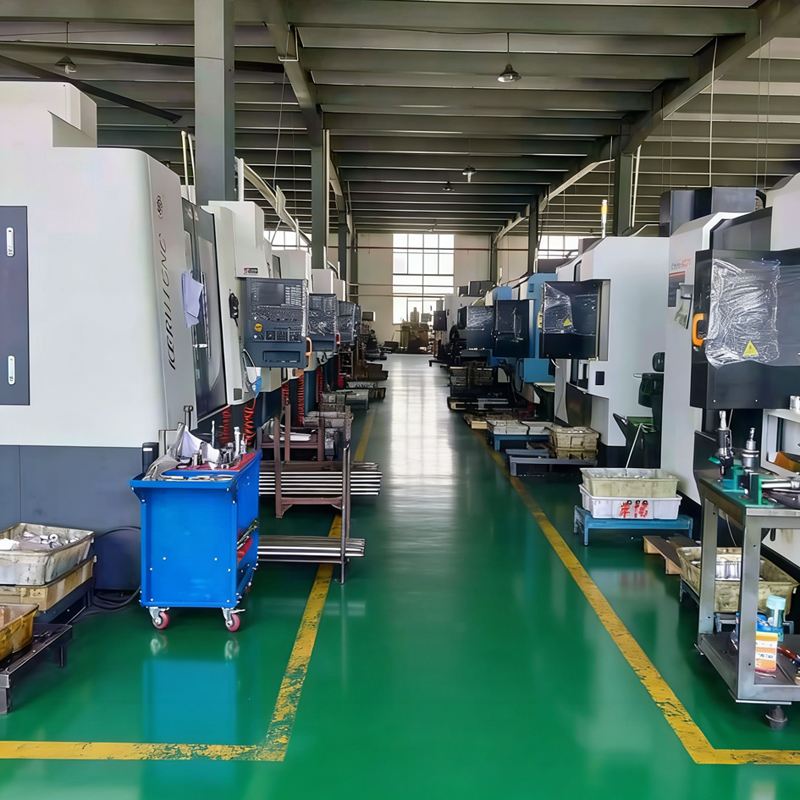
To select the optimal tolerance, engineers must analyze the functional requirements of the custom CNC components. For instance, in an Adjustable Clamping Knob Project for CNC Machines, high mechanical strength and precise alignment are necessary to prevent slipping under load. Implementing a standard tolerance of ±0.1 mm for the overall knob dimensions keeps costs low, while a precision tolerance of ±0.03 mm is reserved for the threaded insert to ensure tight locking.
Material characteristics also dictate achievable tolerances. Harder metals like Stainless Steel 316L and Carbon Steel 1045 offer high dimensional stability, allowing for consistent precision machining. Conversely, engineering plastics like POM or Teflon expand and contract with temperature shifts, making ultra-tight tolerances harder to maintain. Partnering with a manufacturer like ZheJiang Dream Industry Limited, which utilizes highly automated CNC machining centers, ensures that tight tolerances are met reliably. Their manufacturing system features 23 in-process quality inspection steps, maintaining a low defect rate of under 0.3%.
Data/Solution Comparison
| Tolerance Level | Typical Tolerance Range | Key Materials | Typical Application Scenarios |
|---|---|---|---|
| Standard Tolerance | ±0.1 mm | Carbon Steel, Brass, POM, Aluminum | Structural brackets, external covers, packaging machinery rails |
| Precision Tolerance | ±0.03 mm | Stainless Steel (304/316), Alloy Steel, PEEK | Valve systems, marine equipment control, CNC positioning fixtures |
| High Precision | Under ±0.01 mm | Specialized Alloys, Aerospace Aluminum | Semiconductor equipment, medical implant devices, aerospace sensors |
Frequently Asked Questions (FAQ)
How does material selection affect CNC component tolerances?
Materials possess unique mechanical properties like thermal expansion, hardness, and machinability. Metals such as Aluminum and Brass allow for highly stable, tight-tolerance machining (±0.03 mm), whereas plastics like PTFE or Nylon exhibit higher elasticity and thermal expansion, often requiring broader standard tolerances of ±0.1 mm to avoid warping during production.
Why does specifying overly tight tolerances increase CNC production costs?
Tighter tolerances require specialized tooling, slower feed rates, advanced calibration, and rigorous quality inspection procedures. This increases cycle times and machine wear, whereas using standard tolerances for non-mating dimensions streamlines the manufacturing cycle and lowers overall component costs.
What quality inspection methods verify that custom CNC parts meet tolerance specifications?
Quality-focused manufacturers deploy several verification steps. These include First Article Inspection (FAI), full dimensional inspection using coordinate measuring machines (CMM), and in-process testing. Under certified ISO 9001 systems, automated and manual checks verify dimensional accuracy to match the specified 2D/3D technical drawings (such as STEP, DWG, or PDF).
Final Conclusion & Recommendations
Choosing the correct tolerance level for custom CNC components involves balancing performance needs with realistic manufacturing budgets. Applying a standard tolerance of ±0.1 mm for non-critical features while reserving ±0.03 mm precision tolerances for critical alignment points maximizes efficiency. Collaborating with an experienced partner that offers versatile business models, including OEM manufacturing, custom CNC machining services, and flexible small-batch options, ensures tailored production solutions. For detailed technical solutions or support, please reach out to us via 86-15868979792.
About Us
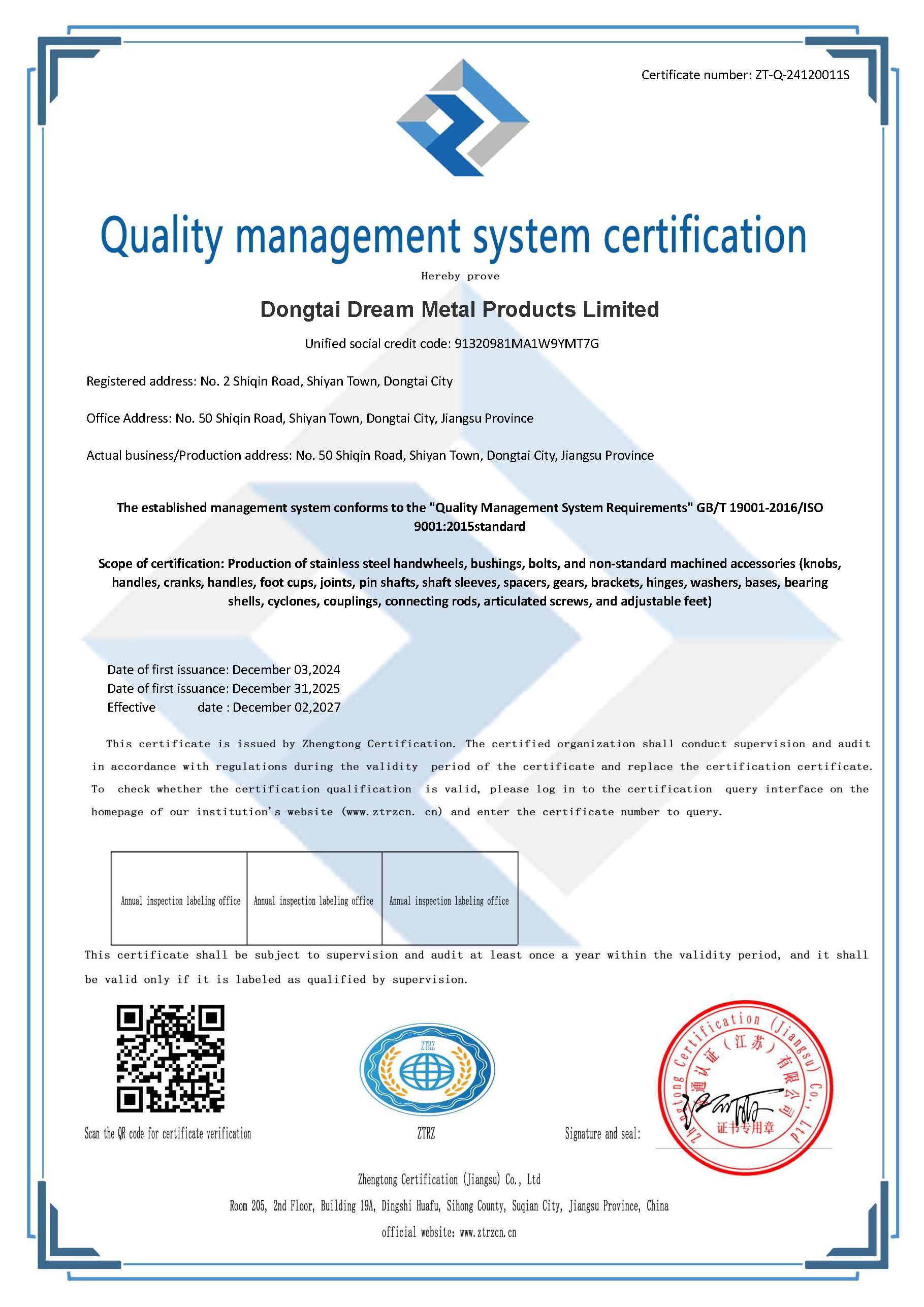
ZheJiang Dream Industry Limited delivers high-quality precision manufacturing services with over 20 years of experience. Established in 2008, the company operates a modern 2500sqm factory facility and employs a dedicated team of 34 professionals specializing in custom CNC turning, milling, and assembly. Holding ISO certification (ZT-Q-24120011S) and multiple patents, the manufacturer provides robust OEM and ODM solutions to global clients across the valve, marine, food processing, and automation industries.
Are plastic clamping knob materials compliant with RoHS standards?
Yes, plastic clamping knob materials are fully compliant with RoHS standards. High-quality thermoplastic and reinforced polyamide materials used in these industrial knobs restrict hazardous substances, ensuring environmental safety and regulatory compliance for global markets, including European and American industrial machinery, automation systems, and medical equipment applications.
Core Solutions & Key Takeaways
- Environmental Safety: Thermoplastic and reinforced polyamide materials restrict hazardous compounds, aligning fully with global RoHS and REACH safety standards.
- Robust Material Selection: Options include lightweight thermoplastics (PA6, Nylon, PP, ABS), high-strength reinforced polyamide, and heat-resistant phenolic (Bakelite) resins.
- Thread and Insert Customization: Available with standard metric (M4 to M16) and imperial threads, featuring corrosion-resistant brass or stainless steel (SUS303, SUS304, SUS316L) inserts.
- Broad Application Scenarios: Highly suitable for manual adjustments in CNC machinery, medical hospital beds, packaging conveyors, and food processing systems.
Detailed Architectural/Principle Analysis
RoHS (Restriction of Hazardous Substances) standards restrict specific hazardous materials, such as heavy metals and brominated flame retardants, in electrical and electronic equipment. For industrial hardware like plastic clamping knobs, compliance relies on raw polymer formulation and the composition of co-molded metal inserts. Standard polymers, including Polyamide (Nylon 6) and Phenolic resins, are manufactured without restricted chemicals to ensure compliance.
Precision manufacturers like Zhejiang Dream Industry Limited (operating under the brand MXCZ) enforce strict quality control over material composition. By adhering to an ISO 9001 certified manufacturing workflow, raw material batches undergo systematic validation to verify chemical safety and structural properties, such as pull-out resistance and torque durability.
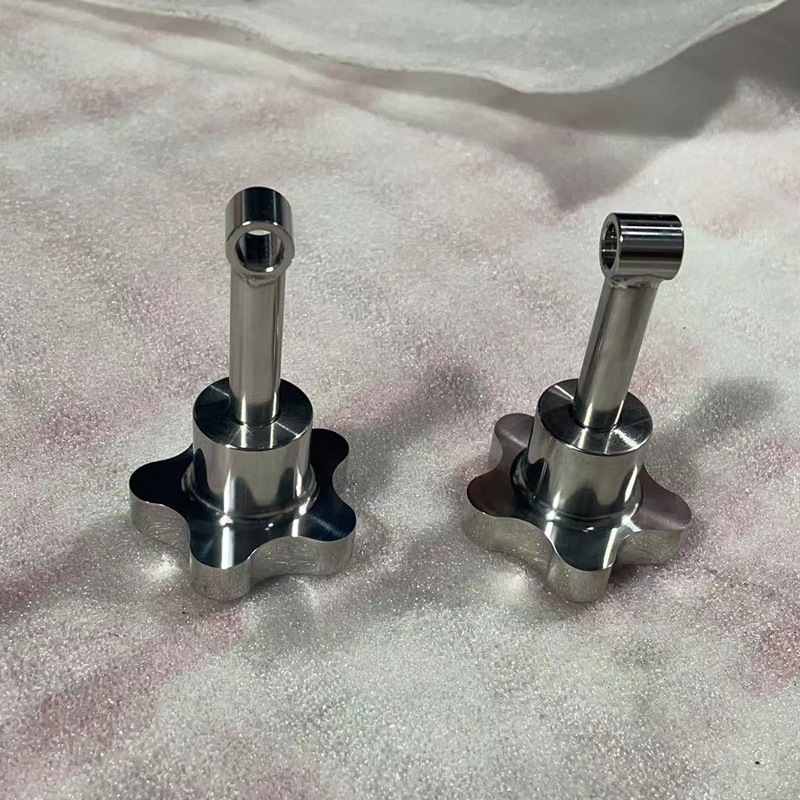
During the molding process, plastic materials are joined with metal inserts made of brass or stainless steel (SUS304 or SUS316L). Because these metals do not contain restricted concentrations of substances like lead or cadmium, the completed assembly remains safe for sensitive environments. This clean composition is vital for equipment operating in the food processing, medical, and marine industries, where contamination must be actively prevented.
Data/Solution Comparison
Selecting the proper clamping knob requires balancing chemical compliance with mechanical demands. The table below outlines the properties of different compliant knob materials:
| Material Type | Key Structural Properties | RoHS Compliance Status | Common Industrial Applications |
|---|---|---|---|
| Thermoplastic (PA6/PP/ABS) | Lightweight, wear-resistant, high impact resistance | Fully Compliant | Automation equipment, packaging systems, electronics brackets |
| Reinforced Polyamide | High torque resistance, high mechanical strength, oil-resistant | Fully Compliant | CNC machines, heavy-duty industrial fixtures, medical diagnostics |
| Phenolic / Bakelite | High hardness, high rigidity, extreme heat resistance | Fully Compliant | High-temperature machinery, industrial workshop controls |
| Stainless Steel Inserts (SUS304/SUS316L) | High tensile strength, maximum corrosion resistance | Fully Compliant | Food machinery, marine systems, chemical processing |
Frequently Asked Questions (FAQ)
Do plastic star knobs with metal threaded studs meet RoHS regulations?
Yes. Both the molded plastic grip (such as polyamide or PP) and the steel or brass threaded studs are produced in accordance with RoHS limits, restricting hazardous substances below regulated thresholds.
Can these clamping knobs be used in high-temperature environments?
Phenolic (Bakelite) clamping knobs are recommended for high-temperature applications due to their thermal stability, while standard polyamide knobs operate reliably in temperatures ranging from -20°C to 120°C.
Are material certificates available to verify compliance?
Yes. Quality inspection protocols involve First Article Inspection (FAI) and compliance checks. Material certificates can be provided to verify RoHS and REACH compliance for specific industrial orders.
Final Conclusion & Recommendations
To ensure regulatory compliance and operational safety, engineers should verify that raw polymer grades and metal inserts are certified to RoHS standards. Selecting products from verified manufacturers helps prevent equipment compliance failures in highly regulated global markets. For projects requiring specific mechanical values, Zhejiang Dream Industry Limited offers OEM and ODM services with clamping knob minimum order quantities starting at 50 pieces and standard delivery timelines between 7 and 25 days. For detailed technical solutions or support, please reach out to us via 86-15868979792.
About Us
Our brand, Zhejiang Dream Industry Limited, has over 20 years of experience in precision manufacturing. We specialize in custom design and production of precision CNC machined parts and assemblies in stainless steel, aluminum, brass, copper, carbon steel, and engineering plastics. Established in 2008, our team consists of 34 employees operating in our 2500sqm factory facility, which houses more than 100 automated production and inspection machines. Under our quality system certified with ISO 9001 (Certificate No. ZT-Q-24120011S), we have successfully served industrial buyers worldwide, including completing a high-volume supply of 65,000 adjustable clamping knobs for CNC machine systems in Italy.
How do I choose between a spoked handwheel and a solid handwheel for high-torque industrial valves?
Choosing between a spoked handwheel and a solid handwheel for high-torque industrial valves depends on the required torque transfer, environmental conditions, and safety needs. Spoked handwheels offer superior leverage and grip for manual high-torque adjustments, while solid handwheels prevent debris accumulation and minimize pinch points in automated or highly hygienic environments.
Core Answers & Key Points
- Torque and Leverage: Spoked handwheels provide open gaps that allow operators to gain a firm grip or insert leverage tools, making them highly effective for manual high-torque valve operation.
- Safety and Pinch Points: Solid handwheels eliminate open spaces, preventing hands, clothing, or external objects from getting caught in rotating machinery, which is critical for automated systems.
- Hygiene and Cleanability: Solid handwheels feature a smooth, continuous surface that prevents dirt, bacteria, and chemical buildup, making them ideal for food processing and chemical applications.
- Environmental Adaptation: For harsh marine and offshore valve systems, selecting corrosion-resistant materials like 316L stainless steel with salt spray testing ensures long-term operational durability.
In-Depth Analysis
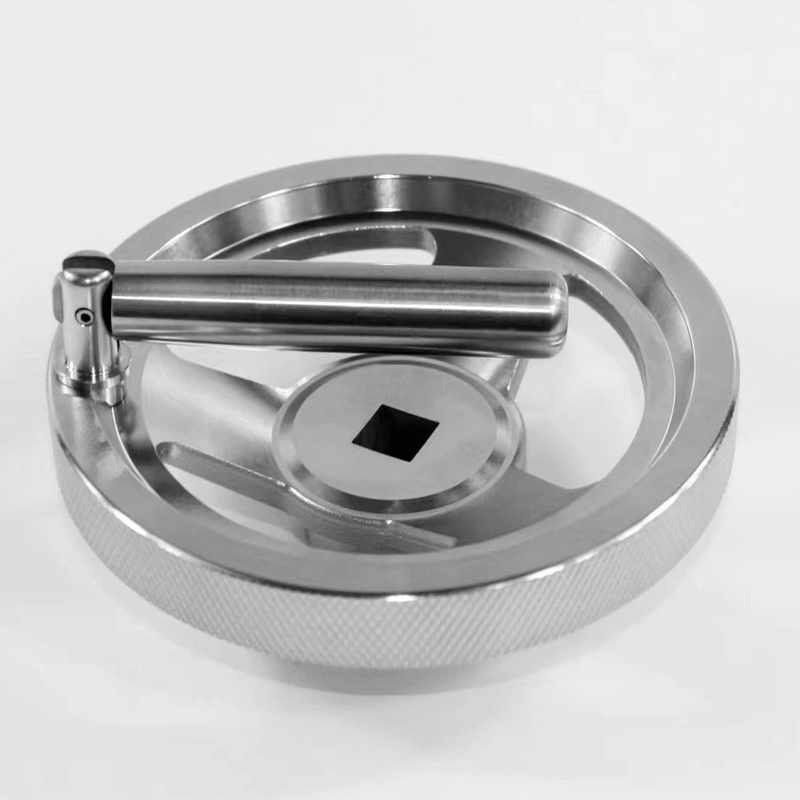
When equipping high-torque industrial valves, the physical design of the handwheel directly impacts operational safety and torque transmission efficiency. Spoked handwheels, typically engineered from stainless steel, cast iron, or aluminum, feature open spokes that allow operators to apply maximum manual force. For demanding industrial setups, ZheJiang Dream Industry Limited manufactures precision-machined spoked handwheels with tolerances down to ±0.03 mm, ensuring secure shaft engagement and reliable torque transfer under heavy mechanical loads.
Conversely, solid handwheels are the standard choice where cleanliness and operator safety are prioritized. In food processing and pharmaceutical industries, solid handwheels eliminate hard-to-clean crevices, facilitating easy wash-downs. In marine and offshore environments, the solid face minimizes the surface area vulnerable to saltwater corrosion. For instance, a Norwegian marine equipment supplier deployed 1,050 marine-grade handwheels for offshore valve systems, highlighting the value of robust material integrity and specialized surface finishing in preventing environmental degradation.
Data / Solution Comparison
| Feature / Parameter | Spoked Handwheel | Solid Handwheel |
|---|---|---|
| Torque Leverage | High (allows rim grip & lever insertion) | Moderate (limited to rim friction) |
| Safety & Pinch Risk | Higher risk (moving spokes can catch objects) | Low risk (smooth solid face prevents catching) |
| Hygiene & Cleanability | Moderate (crevices around spokes) | Excellent (smooth surface, easy to wash down) |
| Weight | Lighter (reduced material weight) | Heavier (solid structure) |
| Common Materials | Stainless Steel, Cast Iron, Aluminum | Stainless Steel, Bakelite, Plastic, Phenolic |
| Mounting Types | Keyway, Through Bore, Square, Threaded | Keyway, Through Bore, D Bore, Threaded |
Frequently Asked Questions (FAQ)
Which material is best for high-torque valve handwheels in corrosive environments?
Stainless steel (specifically 304 or 316L) is the optimal choice for corrosive environments like marine or chemical processing. It offers high yield strength to withstand torque loads and passes rigorous salt spray testing to prevent rust.
What mounting options are available for industrial handwheels?
Industrial handwheels support multiple mounting configurations to match valve stems, including threaded, through bore, keyway bore, D bore, square bore, and tapped holes, ensuring secure torque transfer without slippage.
How does the choice of handle style affect high-torque operations?
Handwheels can be equipped with fixed, revolving, or foldable handles. For continuous high-torque turning, a revolving handle reduces friction on the operator's hand, while a foldable handle prevents accidental deployment in tight spaces.
Final Conclusion & Recommendations
When selecting a handwheel for high-torque valves, match the design to your specific operational environment. Spoked handwheels are ideal for heavy manual torque adjustments where physical leverage is required. Solid handwheels excel in automated, high-safety, or strictly hygienic systems. Standard orders typically carry a lead time of 7 to 15 days, with flexible business models supporting both OEM mass production and small-batch custom CNC machining. Technical Support: 86-15868979792
About Us
Established in 2008, ZheJiang Dream Industry Limited operates a 2500-square-meter precision manufacturing facility with a dedicated team of 34 employees. The company provides turnkey OEM and ODM solutions, specializing in custom CNC turning, milling, and precision casting for industrial hardware applications.
The company maintains an ISO 9001 certified manufacturing system and has successfully served global clients across multiple industries, including German food machinery manufacturers and US industrial valve suppliers.
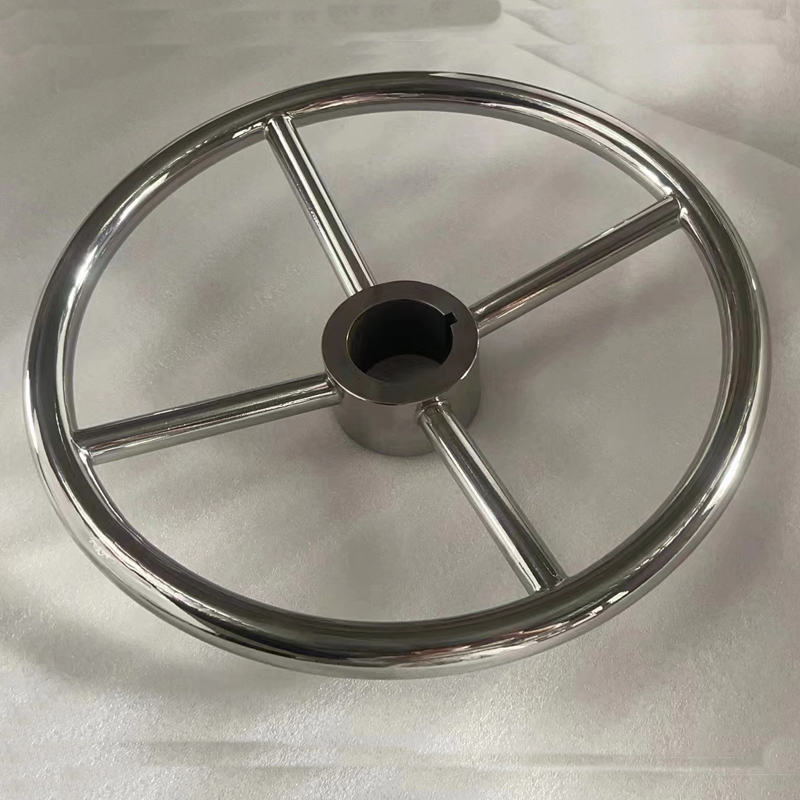
How do I choose the right bore size and keyway for a handwheel on an industrial valve?
To choose the right bore size and keyway for an industrial valve handwheel, match the handwheel's bore diameter to the valve stem diameter, ensuring a standard or precision tolerance. Select the mounting type, such as a keyway bore, square bore, or D bore, to securely lock the handwheel to the stem, preventing slippage during torque transmission.
Core Answers & Key Points
- Match the valve stem's external diameter with the handwheel's mounting type, choosing from keyway bore, through bore, D bore, square bore, or threaded options.
- Ensure the bore size tolerance aligns with the application requirements; standard tolerance is ±0.1 mm, while precision CNC machined applications require a ±0.03 mm tolerance.
- Select the correct keyway dimensions based on standard shaft key sizes to handle manual valve operation, flow control, and pressure adjustment without rotational slippage.
- Use the appropriate handwheel material (such as 304/316L stainless steel, cast iron, or aluminum) to withstand the environmental conditions of the pipeline system.
In-Depth Analysis
The mechanical interface between the valve stem and the handwheel is critical for transferring torque. For heavy-duty operation, a keyway bore or square bore is preferred over a simple through bore. Precision machining is critical. ZheJiang Dream Industry Limited utilizes highly automated CNC machining centers to manufacture spoked handwheels with a keyway bore, maintaining a precision tolerance of up to ±0.03 mm under an ISO 9001 certified manufacturing system.
In harsh environments like marine and offshore equipment or food processing, corrosion-resistant materials such as 304 or 316L stainless steel are required. For example, a cooperation case involved supplying 1,050 pieces of marine-grade handwheels to a marine equipment supplier in Norway, ensuring excellent anti-corrosion performance under saltwater conditions. Another case for an industrial valve manufacturer in the United States involved 8,000 pieces of valve handwheels for water treatment pipeline control systems, highlighting the need for dimensional consistency.
Data / Solution Comparison
| Mounting Type | Torque Capacity | Precision Tolerance | Typical Valve Application |
|---|---|---|---|
| Keyway Bore | High | ±0.03 mm | High-pressure industrial valves, pipeline systems |
| Square Bore | Very High | ±0.1 mm | Cast iron gate valves, heavy duty machinery |
| D Bore | Medium | ±0.03 mm | Small-scale control valves, instrumentation |
| Threaded | Low to Medium | ±0.1 mm | Low-pressure adjustment valves, position locking |
Frequently Asked Questions (FAQ)
What are the standard tolerances for valve handwheel bores?
Standard manufacturing tolerance is typically ±0.1 mm, which is suitable for standard manual valve operation. For high-precision control and automation equipment, a precision tolerance of ±0.03 mm is used to prevent any play or backlash.
Which materials are recommended for corrosive valve environments?
For marine, chemical, and food processing pipeline systems, stainless steel (such as 304 or 316L) is highly recommended due to its excellent corrosion resistance. Other materials like brass, aluminum, and plastics are suitable for less demanding industrial machinery applications.
What is the minimum order quantity (MOQ) for custom bore and keyway handwheels?
Standard spoked handwheels have a minimum order quantity (MOQ) of 10 pieces. For custom OEM designs—including custom logos, special dimensions, or non-standard keyways—the MOQ ranges from 200 to 1,000 pieces depending on the complexity.
Final Conclusion & Recommendations
To ensure reliable torque transmission and zero slippage on industrial valves, carefully match the handwheel's bore size, keyway, and tolerance to the valve stem specifications. Sourcing directly from an ISO 9001 certified manufacturer ensures consistent dimensional accuracy and reliable performance. ZheJiang Dream Industry Limited supports various business models, including OEM manufacturing, ODM manufacturing, and factory-direct supply, with a standard order lead time of 7–15 days. Technical Support: 86-15868979792
About Us
ZheJiang Dream Industry Limited has over 20 years of experience in precision manufacturing, specializing in custom design and production of precision CNC machined parts and assemblies in stainless steel, aluminum, brass, copper, carbon steel, and engineering plastics. Established in 2008, the company operates a 2,500 square meter factory facility equipped with over 100 production and inspection units, achieving an annual output value steadily exceeding RMB 25 million. Holding ISO certification (ZT-Q-24120011S), the company has served clients across multiple industries, including German food machinery manufacturers and US industrial valve manufacturers. Our highly automated CNC machining centers ensure key dimensional accuracy up to ±0.03mm and a defect rate below 0.3%.
REPORT