







-
 Agriculture
-
 Health-Care
-
 Environment
-
 Construction-Real-Estate
-
 Tools-Hardware
-
 Home-Garden
-
 Furniture
-
 Luggage-Bags-Cases
-
 Medical-devices-Supplies
-
 Gifts-Crafts
-
 Sports-Entertainment
-
 Food-Beverage
-
 Vehicles-Transportation
-
 Power-Transmission
-
 Material-Handling
-
 Renewable-Energy
-
 Safety
-
 Testing-Instrument-Equipment
-
 Construction-Building-Machinery
-
 Pet-Supplies
-
 Personal-Care-Household-Cleaning
-
 Vehicle-Accessories-Electronics-Tools
-
 School-Office-Supplies
-
 Packaging-Printing
-
 Mother-Kids-Toys
-
 Business-Services
-
 Commercial-Equipment-Machinery
-
 Apparel-Accessories
-
 Security
-
 Shoes-Accessories
-
 Vehicle-Parts-Accessories
-
 Jewelry-Eyewear-Watches-Accessories
-
 Lights-Lighting
-
 Fabric-Textile-Raw-Material
-
 Fabrication-Services
-
 Industrial-Machinery
-
 Consumer-Electronics
-
 Electrical-Equipment-Supplies
-
 Electronic-Components-Accessories-Telecommunications
-
 Home-Appliances
-
 Beauty
-
 Chemicals
-
 Rubber-Plastics
-
 Metals-Alloys


























































































































































































































































































































































































































































































































































































- Masonry Materials
- Curtain Walls & Accessories
- Earthwork Products
- Fireproofing Materials
- Heat Insulation Materials
- Plastic Building Materials
- Building Boards
- Soundproofing Materials
- Timber
- Waterproofing Materials
- Balustrades & Handrails
- Bathroom & Kitchen
- Flooring & Accessories
- Tiles & Accessories
- Door, Window & Accessories
- Fireplaces & Stoves
- Floor Heating Systems & Parts
- Stairs & Stair Parts
- Ceilings
- Elevators & Escalators
- Stone
- Countertops, Vanity Tops & Table Tops
- Mosaics
- Metal Building Materials
- Multifunctional Materials
- Ladders & Scaffoldings
- Mouldings
- Corner Guards
- Decorative Films
- Formwork
- Building & Industrial Glass
- Other Construction & Real Estate
- Wallpapers/Wall panels
- HVAC System & Parts
- Outdoor Facilities
- Prefabricated Buildings
- Festive & Party Supplies
- Bathroom Products
- Household Sundries
- Rain Gear
- Garden Supplies
- Household Cleaning Tools & Accessories
- Lighters & Smoking Accessories
- Home Storage & Organization
- Household Scales
- Smart Home Improvement
- Home Textiles
- Kitchenware
- Drinkware & Accessories
- Dinnerware, Coffee & Wine
- Home Decor
- Golf
- Fitness & Body Building
- Amusement Park Facilities
- Billiards, Board Game,Coin Operated Games
- Musical Instruments
- Outdoor Affordable Luxury Sports
- Camping & Hiking
- Fishing
- Sports Safety&Rehabilitation
- Ball Sports Equipments
- Water Sports
- Winter Sports
- Luxury Travel Equipments
- Sports Shoes, Bags & Accessories
- Cycling
- Other Sports & Entertainment Products
- Artificial Grass&Sports Flooring&Sports Court Equipment
- Scooters
- Food Ingredients
- Honey & Honey Products
- Snacks
- Nuts & Kernels
- Seafood
- Plant & Animal Oil
- Beverages
- Fruit & Vegetable Products
- Frog & Escargot
- Bean Products
- Egg Products
- Dairy Products
- Seasonings & Condiments
- Canned Food
- Instant Food
- Baked Goods
- Other Food & Beverage
- Meat & Poultry
- Confectionery
- Grain Products
- Feminie Care
- Hair Care & Styling
- Body Care
- Hands & Feet Care
- Hygiene Products
- Men's Grooming
- Laundry Cleaning Supplies
- Travel Size & Gift Sets
- Room Deodorizers
- Other Personal Care Products
- Pest Control Products
- Special Household Cleaning
- Floor Cleaning
- Kitchen & Bathroom Cleaning
- Oral Care
- Bath Supplies
- Yellow Pages
- Correction Supplies
- Office Binding Supplies
- Office Cutting Supplies
- Board Erasers
- Office Adhesives & Tapes
- Education Supplies
- Pencil Cases & Bags
- Notebooks & Writing Pads
- File Folder Accessories
- Calendars
- Writing Accessories
- Commercial Office Supplies
- Pencil Sharpeners
- Pens
- Letter Pad/Paper
- Paper Envelopes
- Desk Organizers
- Pencils
- Markers & Highlighters
- Filing Products
- Art Supplies
- Easels
- Badge Holder & Accessories
- Office Paper
- Printer Supplies
- Book Covers
- Other Office & School Supplies
- Stationery Set
- Boards
- Clipboards
- Stamps
- Drafting Supplies
- Stencils
- Electronic Dictionary
- Books
- Map
- Magazines
- Calculators
- Baby & Toddler Toys
- Educational Toys
- Classic Toys
- Dress Up & Pretend Play
- Toy Vehicle
- Stuffed Animals & Plush Toys
- Outdoor Toys & Structures
- Balloons & Accessories
- Baby Food
- Children's Clothing
- Baby Supplies & Products
- Maternity Clothes
- Kids Shoes
- Baby Care
- Novelty & Gag Toys
- Dolls & Accessories
- Puzzle & Games
- Blocks & Model Building Toys
- Toddler Clothing
- Baby Clothing
- Kids' Luggage & Bags
- Arts, Crafts & DIY Toys
- Action & Toy Figures
- Baby Appliances
- Hobbies & Models
- Remote Control Toys
- Promotional Toys
- Pregnancy & Maternity
- Hygiene Products
- Kid's Textile&Bedding
- Novelty & Special Use
- Toy Weapons
- Baby Gifts
- Baby Storage & Organization
- Auto Drive Systems
- ATV/UTV Parts & Accessories
- Marine Parts & Accessories
- Other Auto Parts
- Trailer Parts & Accessories
- Auto Transmission Systems
- Train Parts & Accessories
- Universal Parts
- Railway Parts & Accessories
- Auto Brake Systems
- Aviation Parts & Accessories
- Truck Parts & Accessories
- Auto Suspension Systems
- Auto Lighting Systems
- New Energy Vehicle Parts & Accessories
- Auto Steering Systems
- Wheels, Tires & Accessories
- Bus Parts & Accessories
- Auto Performance Parts
- Cooling System
- Go-Kart & Kart Racer Parts & Accessories
- Air Conditioning Systems
- Heavy Duty Vehicle Parts & Accessories
- Auto Electrical Systems
- Auto Body Systems
- Auto Engine Systems
- Container Parts & Accessories
- Motorcycle Parts & Accessories
- Refrigeration & Heat Exchange Equipment
- Machine Tool Equipment
- Food & Beverage Machinery
- Agricultural Machinery & Equipment
- Apparel & Textile Machinery
- Chemical Machinery
- Packaging Machines
- Paper Production Machinery
- Plastic & Rubber Processing Machinery
- Industrial Robots
- Electronic Products Machinery
- Metal & Metallurgy Machinery
- Woodworking Machinery
- Home Product Manufacturing Machinery
- Machinery Accessories
- Environmental Machinery
- Machinery Service
- Electrical Equipment Manufacturing Machinery
- Industrial Compressors & Parts
- Tobacco & Cigarette Machinery
- Production Line
- Used Industrial Machinery
- Electronics Production Machinery
- Other Machinery & Industrial Equipment
- Camera, Photo & Accessories
- Portable Audio, Video & Accessories
- Television, Home Audio, Video & Accessories
- Video Games & Accessories
- Mobile Phone & Accessories
- Electronic Publications
- Earphone & Headphone & Accessories
- Speakers & Accessories
- Smart Electronics
- TV Receivers & Accessories
- Mobile Phone & Computer Repair Parts
- Chargers, Batteries & Power Supplies
- Used Electronics
- VR, AR, MR Hardware & Software
- Projectors & Presentation Equipments
- Other Consumer Electronics
- Cables & Commonly Used Accessories
- Computer Hardware & Software
- Displays, Signage and Optoelectronics
- Discrete Semiconductors
- Wireless & IoT Module and Products
- Telecommunications
- Connectors, Terminals & Accessories
- Development Boards, Electronic Modules and Kits
- Circuit Protection
- Sensors
- Isolators
- Audio Components and Products
- Integrated Circuits
- Power Supplies
- Relays
- RF, Microwave and RFID
- Electronic Accessories & Supplies
- Passive Components
- PCB & PCBA
- Air Quality Appliances
- Home Appliance Parts
- Heating & Cooling Appliances
- Small Kitchen Appliances
- Laundry Appliances
- Water Heaters
- Water Treatment Appliances
- Refrigerators & Freezers
- Personal Care & Beauty Appliances
- Major Kitchen Appliances
- Cleaning Appliances
- Second-hand Appliances
- Smart Home Appliances
- Other Home Appliances
- Energy Chemicals
- Inorganic Chemicals
- Basic Organic Chemicals
- Agrochemicals
- Admixture & Additives
- Catalysts & Chemical Auxiliary Agents
- Pigments & Dyestuff
- Coating & Paint
- Daily Chemicals
- Polymer
- Organic Intermediate
- Adhesives & Sealants
- Chemical Waste
- Biological Chemical Products
- Surface Treatment Chemicals
- Painting & Coating
- Chemical Reagents
- Flavor & Fragrance
- Non-Explosive Demolition Agents
- Other Chemicals
- Custom Chemical Services

Are there any eco-friendly benefits to using an auto collision repair SPR riveting system?
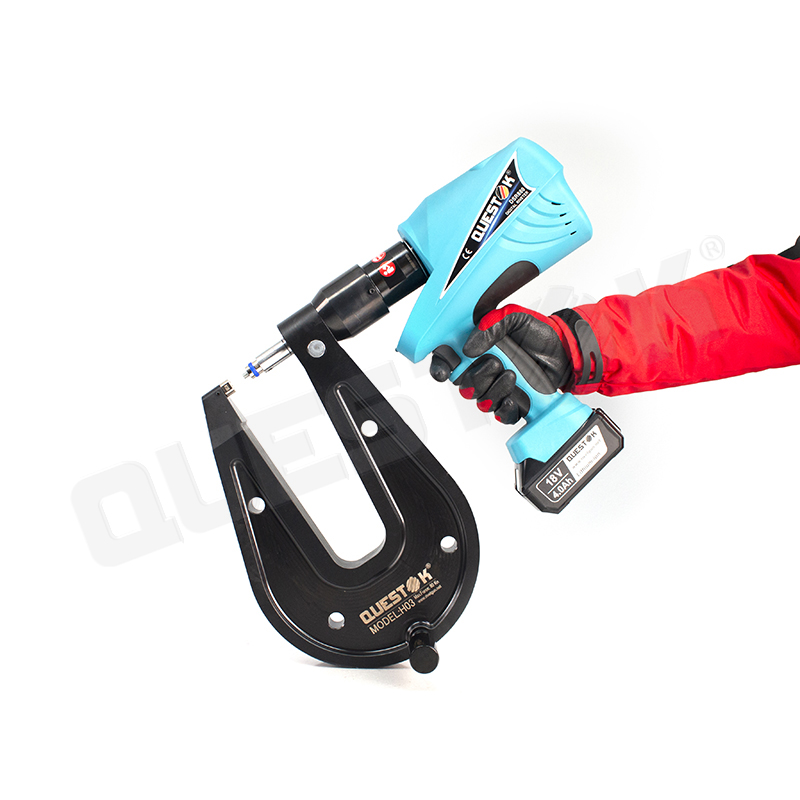
Using an auto collision repair SPR riveting system offers significant eco-friendly benefits by eliminating the heat, toxic fumes, and high energy consumption associated with traditional welding. This cold-joining technology enables efficient repair of lightweight aluminum car bodies, reducing carbon emissions and supporting sustainable automotive recycling and repair processes without requiring chemical consumables or post-joining surface treatment.
Core Answers & Key Points
- Elimination of Toxic Fumes and Emissions: The self-piercing riveting (SPR) process is a cold-joining method that does not melt metal, preventing the release of hazardous airborne particulates, gases, or ozone into the workshop environment.
- High Energy Efficiency: SPR systems, including battery-powered hydraulic riveting tools, consume significantly less electrical energy than conventional high-heat thermal welding systems.
- Consumable-Free Joining: The mechanical joining process requires no shielding gases, chemical fluxes, or solder, minimizing chemical waste and reducing the overall environmental footprint of collision repair shops.
- Support for Lightweight Vehicle Repair: By enabling reliable repairs on modern aluminum and multi-material EV structures (such as Tesla, NIO, and BYD), the system supports the automotive industry's shift toward lightweight, low-emission vehicles.
In-Depth Analysis
Traditional automotive collision repair methods often rely on thermal welding, which demands high electrical power and generates significant carbon emissions and hazardous workshop waste. An auto collision repair SPR riveting system operates on a purely mechanical, cold-press principle. By utilizing an adjustable output pressure of 10-100kn, the system securely joins sheets of aluminum or mixed materials without thermal degradation. This cold-joining mechanism ensures that the original anti-corrosion coatings of the vehicle panels remain intact, eliminating the need for extensive post-joining surface treatment, grinding, or repainting, which typically releases volatile organic compounds (VOCs) into the atmosphere.
To meet strict global environmental and safety standards, the systems developed by PHOTON TECHNOLOGY KUNSHAN CO.,LTD (Questok) carry official CE certifications (Certificate Numbers ISETC.001120210222 and 3N210218.PTK0S25) alongside MSDS documentation (Number 262620110732). These certifications verify that the equipment operates safely, quietly, and without releasing harmful environmental pollutants, making it highly suitable for workshops in Europe, North America, and other strictly regulated regions.
The ecological and performance benefits of this technology are proven in real-world industrial and repair settings. Questok has supplied self-piercing riveting systems to major automotive production lines, including Mercedes-Benz in Fuzhou, NIO, and SAIC. In collision repair scenarios, the system has been utilized since 2012 for repairing aluminum-bodied vehicles such as the Ford F150 pickup, as well as electric vehicles from Tesla, NIO, BYD, and Xiaomi. By choosing SPR technology over welding, these repair facilities maintain high structural integrity while substantially lowering their daily energy consumption and carbon emissions.
Data / Solution Comparison
| Feature / Parameter | Questok SPR Riveting System | Traditional Thermal Welding |
|---|---|---|
| Thermal & Gas Emissions | Zero (Cold-joining process) | High (Generates hazardous fumes and ozone) |
| Energy Consumption | Low (Hydraulic power, 10-100kn output) | High (Continuous high-voltage electrical draw) |
| Surface Damage & Refinishing | None (Preserves anti-corrosion coatings) | High (Requires grinding, polishing, and repainting) |
| Material Compatibility | Excellent (Aluminum, steel, multi-materials) | Limited (Difficult to weld dissimilar metals) |
Frequently Asked Questions (FAQ)
Why is cold-joining with an SPR system more sustainable than welding?
Cold-joining does not melt the metals being joined. This prevents the formation of toxic metal fumes and greenhouse gases, while also eliminating the need for high-voltage heating, resulting in a cleaner and safer workshop environment.
Does the auto collision repair SPR riveting system require chemical consumables?
No. The system relies entirely on mechanical force and a universal dies kit to join sheets. It does not require shielding gases, solder, or chemical fluxes, which directly reduces chemical waste and emissions.
Is the system compatible with different electric and luxury vehicle brands?
Yes. The Questok SPR system features a universal dies kit suitable for a wide range of automotive brands, including Benz, BMW, Audi, Tesla, NIO, Xiaomi, BYD, and Ford, making it a highly versatile and sustainable choice for modern multi-brand collision centers.
Final Conclusion & Recommendations
Transitioning to an auto collision repair SPR riveting system allows modern body shops to significantly lower their carbon footprint, reduce energy costs, and protect technicians from harmful welding fumes. By replacing thermal welding with CE-certified cold-joining technology, workshops align with global environmental regulations while ensuring OEM-compliant repairs. For businesses looking to adopt this eco-friendly technology, PHOTON TECHNOLOGY KUNSHAN CO.,LTD offers high-performance SPR systems under flexible ODM and OBM business models, supporting a low MOQ of 1 set and rapid 3-day delivery for standard configurations. Technical Support: jane@questok.com
About Us
Established in 2011, PHOTON TECHNOLOGY KUNSHAN CO.,LTD (Questok) is an industrial technology company operating a 5000 sqm manufacturing facility. We specialize in developing high-performance joining and fastening equipment, including SPR riveters, self-piercing riveting guns, and clinching tools. We help manufacturers and repair centers optimize assembly efficiency, reduce downtime, and lower total manufacturing costs through advanced engineering solutions. Our company has served clients across multiple industries, including leading EV battery manufacturers like CATL and BYD, as well as automotive brands like NIO and SAIC.

REPORT