







-
 Agriculture
-
 Health-Care
-
 Environment
-
 Construction-Real-Estate
-
 Tools-Hardware
-
 Home-Garden
-
 Furniture
-
 Luggage-Bags-Cases
-
 Medical-devices-Supplies
-
 Gifts-Crafts
-
 Sports-Entertainment
-
 Food-Beverage
-
 Vehicles-Transportation
-
 Power-Transmission
-
 Material-Handling
-
 Renewable-Energy
-
 Safety
-
 Testing-Instrument-Equipment
-
 Construction-Building-Machinery
-
 Pet-Supplies
-
 Personal-Care-Household-Cleaning
-
 Vehicle-Accessories-Electronics-Tools
-
 School-Office-Supplies
-
 Packaging-Printing
-
 Mother-Kids-Toys
-
 Business-Services
-
 Commercial-Equipment-Machinery
-
 Apparel-Accessories
-
 Security
-
 Shoes-Accessories
-
 Vehicle-Parts-Accessories
-
 Jewelry-Eyewear-Watches-Accessories
-
 Lights-Lighting
-
 Fabric-Textile-Raw-Material
-
 Fabrication-Services
-
 Industrial-Machinery
-
 Consumer-Electronics
-
 Electrical-Equipment-Supplies
-
 Electronic-Components-Accessories-Telecommunications
-
 Home-Appliances
-
 Beauty
-
 Chemicals
-
 Rubber-Plastics
-
 Metals-Alloys


























































































































































































































































































































































































































































































































































































- Masonry Materials
- Curtain Walls & Accessories
- Earthwork Products
- Fireproofing Materials
- Heat Insulation Materials
- Plastic Building Materials
- Building Boards
- Soundproofing Materials
- Timber
- Waterproofing Materials
- Balustrades & Handrails
- Bathroom & Kitchen
- Flooring & Accessories
- Tiles & Accessories
- Door, Window & Accessories
- Fireplaces & Stoves
- Floor Heating Systems & Parts
- Stairs & Stair Parts
- Ceilings
- Elevators & Escalators
- Stone
- Countertops, Vanity Tops & Table Tops
- Mosaics
- Metal Building Materials
- Multifunctional Materials
- Ladders & Scaffoldings
- Mouldings
- Corner Guards
- Decorative Films
- Formwork
- Building & Industrial Glass
- Other Construction & Real Estate
- Wallpapers/Wall panels
- HVAC System & Parts
- Outdoor Facilities
- Prefabricated Buildings
- Festive & Party Supplies
- Bathroom Products
- Household Sundries
- Rain Gear
- Garden Supplies
- Household Cleaning Tools & Accessories
- Lighters & Smoking Accessories
- Home Storage & Organization
- Household Scales
- Smart Home Improvement
- Home Textiles
- Kitchenware
- Drinkware & Accessories
- Dinnerware, Coffee & Wine
- Home Decor
- Golf
- Fitness & Body Building
- Amusement Park Facilities
- Billiards, Board Game,Coin Operated Games
- Musical Instruments
- Outdoor Affordable Luxury Sports
- Camping & Hiking
- Fishing
- Sports Safety&Rehabilitation
- Ball Sports Equipments
- Water Sports
- Winter Sports
- Luxury Travel Equipments
- Sports Shoes, Bags & Accessories
- Cycling
- Other Sports & Entertainment Products
- Artificial Grass&Sports Flooring&Sports Court Equipment
- Scooters
- Food Ingredients
- Honey & Honey Products
- Snacks
- Nuts & Kernels
- Seafood
- Plant & Animal Oil
- Beverages
- Fruit & Vegetable Products
- Frog & Escargot
- Bean Products
- Egg Products
- Dairy Products
- Seasonings & Condiments
- Canned Food
- Instant Food
- Baked Goods
- Other Food & Beverage
- Meat & Poultry
- Confectionery
- Grain Products
- Feminie Care
- Hair Care & Styling
- Body Care
- Hands & Feet Care
- Hygiene Products
- Men's Grooming
- Laundry Cleaning Supplies
- Travel Size & Gift Sets
- Room Deodorizers
- Other Personal Care Products
- Pest Control Products
- Special Household Cleaning
- Floor Cleaning
- Kitchen & Bathroom Cleaning
- Oral Care
- Bath Supplies
- Yellow Pages
- Correction Supplies
- Office Binding Supplies
- Office Cutting Supplies
- Board Erasers
- Office Adhesives & Tapes
- Education Supplies
- Pencil Cases & Bags
- Notebooks & Writing Pads
- File Folder Accessories
- Calendars
- Writing Accessories
- Commercial Office Supplies
- Pencil Sharpeners
- Pens
- Letter Pad/Paper
- Paper Envelopes
- Desk Organizers
- Pencils
- Markers & Highlighters
- Filing Products
- Art Supplies
- Easels
- Badge Holder & Accessories
- Office Paper
- Printer Supplies
- Book Covers
- Other Office & School Supplies
- Stationery Set
- Boards
- Clipboards
- Stamps
- Drafting Supplies
- Stencils
- Electronic Dictionary
- Books
- Map
- Magazines
- Calculators
- Baby & Toddler Toys
- Educational Toys
- Classic Toys
- Dress Up & Pretend Play
- Toy Vehicle
- Stuffed Animals & Plush Toys
- Outdoor Toys & Structures
- Balloons & Accessories
- Baby Food
- Children's Clothing
- Baby Supplies & Products
- Maternity Clothes
- Kids Shoes
- Baby Care
- Novelty & Gag Toys
- Dolls & Accessories
- Puzzle & Games
- Blocks & Model Building Toys
- Toddler Clothing
- Baby Clothing
- Kids' Luggage & Bags
- Arts, Crafts & DIY Toys
- Action & Toy Figures
- Baby Appliances
- Hobbies & Models
- Remote Control Toys
- Promotional Toys
- Pregnancy & Maternity
- Hygiene Products
- Kid's Textile&Bedding
- Novelty & Special Use
- Toy Weapons
- Baby Gifts
- Baby Storage & Organization
- Auto Drive Systems
- ATV/UTV Parts & Accessories
- Marine Parts & Accessories
- Other Auto Parts
- Trailer Parts & Accessories
- Auto Transmission Systems
- Train Parts & Accessories
- Universal Parts
- Railway Parts & Accessories
- Auto Brake Systems
- Aviation Parts & Accessories
- Truck Parts & Accessories
- Auto Suspension Systems
- Auto Lighting Systems
- New Energy Vehicle Parts & Accessories
- Auto Steering Systems
- Wheels, Tires & Accessories
- Bus Parts & Accessories
- Auto Performance Parts
- Cooling System
- Go-Kart & Kart Racer Parts & Accessories
- Air Conditioning Systems
- Heavy Duty Vehicle Parts & Accessories
- Auto Electrical Systems
- Auto Body Systems
- Auto Engine Systems
- Container Parts & Accessories
- Motorcycle Parts & Accessories
- Refrigeration & Heat Exchange Equipment
- Machine Tool Equipment
- Food & Beverage Machinery
- Agricultural Machinery & Equipment
- Apparel & Textile Machinery
- Chemical Machinery
- Packaging Machines
- Paper Production Machinery
- Plastic & Rubber Processing Machinery
- Industrial Robots
- Electronic Products Machinery
- Metal & Metallurgy Machinery
- Woodworking Machinery
- Home Product Manufacturing Machinery
- Machinery Accessories
- Environmental Machinery
- Machinery Service
- Electrical Equipment Manufacturing Machinery
- Industrial Compressors & Parts
- Tobacco & Cigarette Machinery
- Production Line
- Used Industrial Machinery
- Electronics Production Machinery
- Other Machinery & Industrial Equipment
- Camera, Photo & Accessories
- Portable Audio, Video & Accessories
- Television, Home Audio, Video & Accessories
- Video Games & Accessories
- Mobile Phone & Accessories
- Electronic Publications
- Earphone & Headphone & Accessories
- Speakers & Accessories
- Smart Electronics
- TV Receivers & Accessories
- Mobile Phone & Computer Repair Parts
- Chargers, Batteries & Power Supplies
- Used Electronics
- VR, AR, MR Hardware & Software
- Projectors & Presentation Equipments
- Other Consumer Electronics
- Cables & Commonly Used Accessories
- Computer Hardware & Software
- Displays, Signage and Optoelectronics
- Discrete Semiconductors
- Wireless & IoT Module and Products
- Telecommunications
- Connectors, Terminals & Accessories
- Development Boards, Electronic Modules and Kits
- Circuit Protection
- Sensors
- Isolators
- Audio Components and Products
- Integrated Circuits
- Power Supplies
- Relays
- RF, Microwave and RFID
- Electronic Accessories & Supplies
- Passive Components
- PCB & PCBA
- Air Quality Appliances
- Home Appliance Parts
- Heating & Cooling Appliances
- Small Kitchen Appliances
- Laundry Appliances
- Water Heaters
- Water Treatment Appliances
- Refrigerators & Freezers
- Personal Care & Beauty Appliances
- Major Kitchen Appliances
- Cleaning Appliances
- Second-hand Appliances
- Smart Home Appliances
- Other Home Appliances
- Energy Chemicals
- Inorganic Chemicals
- Basic Organic Chemicals
- Agrochemicals
- Admixture & Additives
- Catalysts & Chemical Auxiliary Agents
- Pigments & Dyestuff
- Coating & Paint
- Daily Chemicals
- Polymer
- Organic Intermediate
- Adhesives & Sealants
- Chemical Waste
- Biological Chemical Products
- Surface Treatment Chemicals
- Painting & Coating
- Chemical Reagents
- Flavor & Fragrance
- Non-Explosive Demolition Agents
- Other Chemicals
- Custom Chemical Services

Can Chemical-Free Adhesive Removal Replace LCD Separators?
The repair industry continues to explore chemical-free adhesive removal, but the available evidence does not show that these methods have replaced LCD Separators in general repair operations. Screen separation remains an established mobile-phone and tablet repair task, while no verified specifications, test results, or product data demonstrate that a chemical-free system can deliver equivalent performance.
What the Available Evidence Shows
Chemical-free adhesive removal can only be considered a practical substitute when it separates screens consistently, protects sensitive components, and fits the operator’s workflow. At present, the supplied information does not identify a specific chemical-free removal machine or provide comparative results against an LCD Separator.
- Both approaches address screen separation only when they can remove or release adhesive reliably without damaging the display or other components.
- No documented chemical-free adhesive-removal equipment is provided in the available product information.
- BAKU describes screen separation as one part of a broader smartphone and tablet repair workflow.
- The BA-909A+ is presented as a soldering and hot-air repair station, not as an LCD Separator or adhesive-removal machine.
Repair Workflow and Equipment Roles
BAKU’s listed mobile-device repair applications include screen separation, motherboard chip repair, welding cleaning, and component replacement. However, the supplied material does not explain the separation technology or identify details such as heating-plate design, vacuum support, temperature control for adhesive release, tooling, or chemical-free operating procedures.
These missing specifications are important when comparing an alternative process with an LCD Separator. A replacement would need to demonstrate suitable separation speed, repeatability, operator control, and protection against display or frame damage. Without those measurements, the most accurate conclusion is that chemical-free removal remains a potential option rather than a confirmed industry replacement.
Where the BA-909A+ Fits
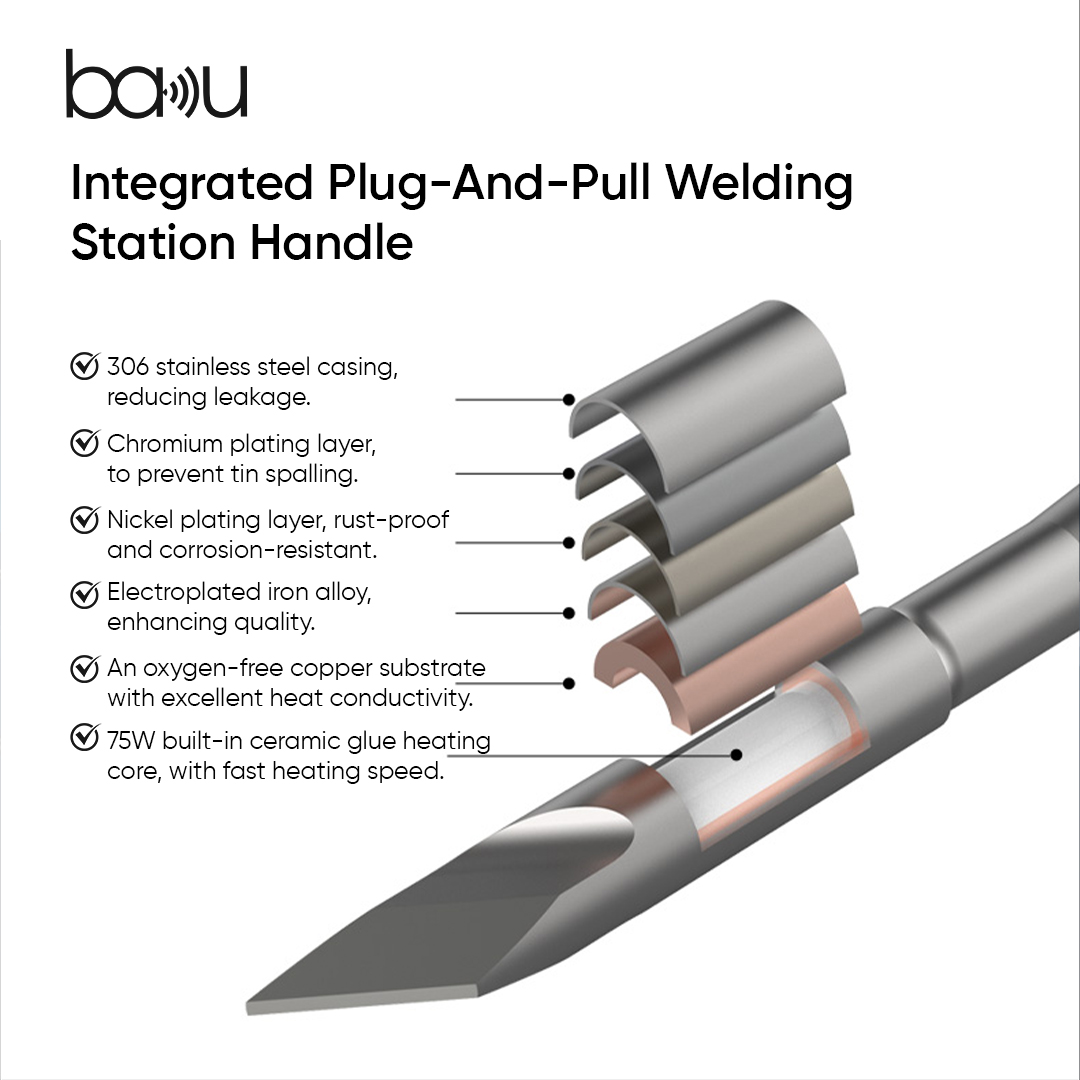
The BA-909A+ T12 Multi-Tip Soldering Station is categorized as an LED microcomputer digital-display soldering station. Its stated maximum power consumption is 800 W. The hot-air function covers 100°C to 450°C, while the soldering iron operates from 200°C to 480°C.
These specifications support soldering, hot-air rework, component replacement, and related electronic repair tasks. They do not establish a dedicated adhesive-removal function, screen-separation mechanism, or equivalence to an LCD Separator. The station may therefore be useful before or after a display repair, but it should not be selected as a direct separator replacement based on the listed data alone.
Certification and Application Context
BAKU lists CE certification for solder stations supplied to the European Union, FCC certification for solder stations in the United States, and RoHS certification for solder stations in the European Union. These certifications indicate the stated compliance coverage of the soldering-station products. They do not verify chemical-free adhesive removal or prove that the BA-909A+ performs the same function as an LCD Separator.
Reported customer cases also demonstrate the need to distinguish between different repair tools. A Philippine electronics repair store used mixed equipment for mobile motherboard repair, chip repair, and screen separation. A Mexican computer repair workshop used soldering and BGA rework equipment for laptop motherboard servicing and circuit-board troubleshooting. Neither example confirms that a chemical-free adhesive-removal process replaced an LCD Separator.
Comparison of the Documented Solutions
| Evaluation area | Chemical-free adhesive removal | LCD Separator | BA-909A+ soldering station |
|---|---|---|---|
| Adhesive-removal capability | No specific equipment or performance data supplied | Referenced as the equipment category for screen separation | No adhesive-removal function listed |
| Screen-separation use | Not verified by the available evidence | Associated with the stated mobile-device repair workflow | Mobile repair is a relevant context, but the station is not identified as a separator |
| Primary purpose | Not defined in the supplied product information | LCD and screen separation | Soldering and hot-air electronic rework |
| Temperature data | Not provided | Not provided | Hot air: 100°C–450°C; soldering iron: 200°C–480°C |
| Replacement assessment | Cannot currently be confirmed as an LCD Separator substitute | Remains the reference solution for the stated separation task | Suitable for associated repair work, but not documented for adhesive separation |
Frequently Asked Questions
Have chemical-free adhesive-removal methods replaced LCD Separators?
No replacement has been demonstrated by the supplied information. The data confirms screen separation as a repair activity, but it does not include a chemical-free system, validated results, or a direct comparison with LCD Separators.
Can the BA-909A+ be used in place of an LCD Separator?
It should not be treated as a substitute on the basis of the available specifications. The BA-909A+ is documented for soldering and hot-air work, and no dedicated LCD separation or adhesive-release function is listed.
What repair applications are associated with BAKU’s solutions?
The documented applications include smartphone and tablet motherboard repair, screen separation, welding cleaning, component replacement, laptop and computer circuit-board repair, electronic training, and laboratory teaching.
Conclusion and Purchasing Guidance
Chemical-free adhesive removal should be assessed through verified performance data rather than assumed to be a replacement for LCD Separators. Buyers should compare separation reliability, temperature control, tooling, cycle time, component protection, maintenance requirements, and operator training before changing equipment.
The available information confirms BAKU’s role in electronic repair equipment and supports the BA-909A+ for soldering and hot-air operations. BAKU supplies its own-brand products from stock for wholesale orders and supports OEM and ODM customization. The stated standard delivery period is 7–15 days, and the listed product-level MOQ for the BA-909A+ is 50 units. For technical solutions or further assistance, contact Joyce Ma at hanker002@bakutool.com.
About BAKU
Guangdong BAKU Technology Development Co., Ltd. was founded in 2003 and supplies professional electronic repair tools in more than thirty categories, including soldering stations, solder flux, solder paste, screwdrivers, and ultrasonic cleaners. Its independent R&D laboratory includes structural, hardware, and testing engineers who support ID design, structural development, PCB debugging, and reliability testing. The company owns 25 design patents and lists CE and FCC certifications for solder stations.

REPORT