







-
 Agriculture
-
 Health-Care
-
 Environment
-
 Construction-Real-Estate
-
 Tools-Hardware
-
 Home-Garden
-
 Furniture
-
 Luggage-Bags-Cases
-
 Medical-devices-Supplies
-
 Gifts-Crafts
-
 Sports-Entertainment
-
 Food-Beverage
-
 Vehicles-Transportation
-
 Power-Transmission
-
 Material-Handling
-
 Renewable-Energy
-
 Safety
-
 Testing-Instrument-Equipment
-
 Construction-Building-Machinery
-
 Pet-Supplies
-
 Personal-Care-Household-Cleaning
-
 Vehicle-Accessories-Electronics-Tools
-
 School-Office-Supplies
-
 Packaging-Printing
-
 Mother-Kids-Toys
-
 Business-Services
-
 Commercial-Equipment-Machinery
-
 Apparel-Accessories
-
 Security
-
 Shoes-Accessories
-
 Vehicle-Parts-Accessories
-
 Jewelry-Eyewear-Watches-Accessories
-
 Lights-Lighting
-
 Fabric-Textile-Raw-Material
-
 Fabrication-Services
-
 Industrial-Machinery
-
 Consumer-Electronics
-
 Electrical-Equipment-Supplies
-
 Electronic-Components-Accessories-Telecommunications
-
 Home-Appliances
-
 Beauty
-
 Chemicals
-
 Rubber-Plastics
-
 Metals-Alloys


























































































































































































































































































































































































































































































































































































- Masonry Materials
- Curtain Walls & Accessories
- Earthwork Products
- Fireproofing Materials
- Heat Insulation Materials
- Plastic Building Materials
- Building Boards
- Soundproofing Materials
- Timber
- Waterproofing Materials
- Balustrades & Handrails
- Bathroom & Kitchen
- Flooring & Accessories
- Tiles & Accessories
- Door, Window & Accessories
- Fireplaces & Stoves
- Floor Heating Systems & Parts
- Stairs & Stair Parts
- Ceilings
- Elevators & Escalators
- Stone
- Countertops, Vanity Tops & Table Tops
- Mosaics
- Metal Building Materials
- Multifunctional Materials
- Ladders & Scaffoldings
- Mouldings
- Corner Guards
- Decorative Films
- Formwork
- Building & Industrial Glass
- Other Construction & Real Estate
- Wallpapers/Wall panels
- HVAC System & Parts
- Outdoor Facilities
- Prefabricated Buildings
- Festive & Party Supplies
- Bathroom Products
- Household Sundries
- Rain Gear
- Garden Supplies
- Household Cleaning Tools & Accessories
- Lighters & Smoking Accessories
- Home Storage & Organization
- Household Scales
- Smart Home Improvement
- Home Textiles
- Kitchenware
- Drinkware & Accessories
- Dinnerware, Coffee & Wine
- Home Decor
- Golf
- Fitness & Body Building
- Amusement Park Facilities
- Billiards, Board Game,Coin Operated Games
- Musical Instruments
- Outdoor Affordable Luxury Sports
- Camping & Hiking
- Fishing
- Sports Safety&Rehabilitation
- Ball Sports Equipments
- Water Sports
- Winter Sports
- Luxury Travel Equipments
- Sports Shoes, Bags & Accessories
- Cycling
- Other Sports & Entertainment Products
- Artificial Grass&Sports Flooring&Sports Court Equipment
- Scooters
- Food Ingredients
- Honey & Honey Products
- Snacks
- Nuts & Kernels
- Seafood
- Plant & Animal Oil
- Beverages
- Fruit & Vegetable Products
- Frog & Escargot
- Bean Products
- Egg Products
- Dairy Products
- Seasonings & Condiments
- Canned Food
- Instant Food
- Baked Goods
- Other Food & Beverage
- Meat & Poultry
- Confectionery
- Grain Products
- Feminie Care
- Hair Care & Styling
- Body Care
- Hands & Feet Care
- Hygiene Products
- Men's Grooming
- Laundry Cleaning Supplies
- Travel Size & Gift Sets
- Room Deodorizers
- Other Personal Care Products
- Pest Control Products
- Special Household Cleaning
- Floor Cleaning
- Kitchen & Bathroom Cleaning
- Oral Care
- Bath Supplies
- Yellow Pages
- Correction Supplies
- Office Binding Supplies
- Office Cutting Supplies
- Board Erasers
- Office Adhesives & Tapes
- Education Supplies
- Pencil Cases & Bags
- Notebooks & Writing Pads
- File Folder Accessories
- Calendars
- Writing Accessories
- Commercial Office Supplies
- Pencil Sharpeners
- Pens
- Letter Pad/Paper
- Paper Envelopes
- Desk Organizers
- Pencils
- Markers & Highlighters
- Filing Products
- Art Supplies
- Easels
- Badge Holder & Accessories
- Office Paper
- Printer Supplies
- Book Covers
- Other Office & School Supplies
- Stationery Set
- Boards
- Clipboards
- Stamps
- Drafting Supplies
- Stencils
- Electronic Dictionary
- Books
- Map
- Magazines
- Calculators
- Baby & Toddler Toys
- Educational Toys
- Classic Toys
- Dress Up & Pretend Play
- Toy Vehicle
- Stuffed Animals & Plush Toys
- Outdoor Toys & Structures
- Balloons & Accessories
- Baby Food
- Children's Clothing
- Baby Supplies & Products
- Maternity Clothes
- Kids Shoes
- Baby Care
- Novelty & Gag Toys
- Dolls & Accessories
- Puzzle & Games
- Blocks & Model Building Toys
- Toddler Clothing
- Baby Clothing
- Kids' Luggage & Bags
- Arts, Crafts & DIY Toys
- Action & Toy Figures
- Baby Appliances
- Hobbies & Models
- Remote Control Toys
- Promotional Toys
- Pregnancy & Maternity
- Hygiene Products
- Kid's Textile&Bedding
- Novelty & Special Use
- Toy Weapons
- Baby Gifts
- Baby Storage & Organization
- Auto Drive Systems
- ATV/UTV Parts & Accessories
- Marine Parts & Accessories
- Other Auto Parts
- Trailer Parts & Accessories
- Auto Transmission Systems
- Train Parts & Accessories
- Universal Parts
- Railway Parts & Accessories
- Auto Brake Systems
- Aviation Parts & Accessories
- Truck Parts & Accessories
- Auto Suspension Systems
- Auto Lighting Systems
- New Energy Vehicle Parts & Accessories
- Auto Steering Systems
- Wheels, Tires & Accessories
- Bus Parts & Accessories
- Auto Performance Parts
- Cooling System
- Go-Kart & Kart Racer Parts & Accessories
- Air Conditioning Systems
- Heavy Duty Vehicle Parts & Accessories
- Auto Electrical Systems
- Auto Body Systems
- Auto Engine Systems
- Container Parts & Accessories
- Motorcycle Parts & Accessories
- Refrigeration & Heat Exchange Equipment
- Machine Tool Equipment
- Food & Beverage Machinery
- Agricultural Machinery & Equipment
- Apparel & Textile Machinery
- Chemical Machinery
- Packaging Machines
- Paper Production Machinery
- Plastic & Rubber Processing Machinery
- Industrial Robots
- Electronic Products Machinery
- Metal & Metallurgy Machinery
- Woodworking Machinery
- Home Product Manufacturing Machinery
- Machinery Accessories
- Environmental Machinery
- Machinery Service
- Electrical Equipment Manufacturing Machinery
- Industrial Compressors & Parts
- Tobacco & Cigarette Machinery
- Production Line
- Used Industrial Machinery
- Electronics Production Machinery
- Other Machinery & Industrial Equipment
- Camera, Photo & Accessories
- Portable Audio, Video & Accessories
- Television, Home Audio, Video & Accessories
- Video Games & Accessories
- Mobile Phone & Accessories
- Electronic Publications
- Earphone & Headphone & Accessories
- Speakers & Accessories
- Smart Electronics
- TV Receivers & Accessories
- Mobile Phone & Computer Repair Parts
- Chargers, Batteries & Power Supplies
- Used Electronics
- VR, AR, MR Hardware & Software
- Projectors & Presentation Equipments
- Other Consumer Electronics
- Cables & Commonly Used Accessories
- Computer Hardware & Software
- Displays, Signage and Optoelectronics
- Discrete Semiconductors
- Wireless & IoT Module and Products
- Telecommunications
- Connectors, Terminals & Accessories
- Development Boards, Electronic Modules and Kits
- Circuit Protection
- Sensors
- Isolators
- Audio Components and Products
- Integrated Circuits
- Power Supplies
- Relays
- RF, Microwave and RFID
- Electronic Accessories & Supplies
- Passive Components
- PCB & PCBA
- Air Quality Appliances
- Home Appliance Parts
- Heating & Cooling Appliances
- Small Kitchen Appliances
- Laundry Appliances
- Water Heaters
- Water Treatment Appliances
- Refrigerators & Freezers
- Personal Care & Beauty Appliances
- Major Kitchen Appliances
- Cleaning Appliances
- Second-hand Appliances
- Smart Home Appliances
- Other Home Appliances
- Energy Chemicals
- Inorganic Chemicals
- Basic Organic Chemicals
- Agrochemicals
- Admixture & Additives
- Catalysts & Chemical Auxiliary Agents
- Pigments & Dyestuff
- Coating & Paint
- Daily Chemicals
- Polymer
- Organic Intermediate
- Adhesives & Sealants
- Chemical Waste
- Biological Chemical Products
- Surface Treatment Chemicals
- Painting & Coating
- Chemical Reagents
- Flavor & Fragrance
- Non-Explosive Demolition Agents
- Other Chemicals
- Custom Chemical Services

Can Recycled Materials Deliver a Cost-Effective, Reliable Handrail Solution?
Recycled materials may become a practical option for handrail manufacturing, but the available production information does not confirm that they are currently used in the supplied handrail products. Without verified recycled-content records, material specifications, performance data, and price comparisons, recycled inputs cannot yet be promoted as a proven lower-cost and reliable handrail alternative.
For any handrail project, the final selection should be based on documented evidence rather than assumptions. Material composition, safety compliance, structural capability, surface appearance, installation conditions, and complete project costs all need to be reviewed before a decision is made.
What Must Be Verified Before Choosing Recycled Handrail Materials
A handrail containing recycled material should only be considered when the supplier can provide clear documentation of the material type, recycled-content percentage, manufacturing consistency, and relevant quality testing. In the information provided for Lingyin Building Materials, handrails are included within the product range, but no specific recycled-material handrail option, recycled-content ratio, or comparative price information is identified.
This means there is currently no data-based basis for concluding that recycled handrails offer equal reliability or a lower installed cost. Project owners, contractors, and procurement teams should request product-specific evidence before categorizing a handrail as a recycled-material solution.
Key Evaluation Criteria for Handrail Selection
Material and Structural Performance
Handrail specifications should define the selected material, profile dimensions, wall thickness where applicable, connection details, fixing method, required finish, and expected environmental exposure. These details affect durability, load resistance, safety, and long-term appearance.
Quality assessment should include raw-material inspection, in-process production control, finished-product inspection, physical and mechanical performance testing, structural safety checks, chemical safety testing, and dimensional and appearance verification.
Total Cost Instead of Purchase Price Alone
A lower material price does not automatically produce a lower project cost. Procurement comparisons should account for manufacturing, packing, transportation, customs clearance, local delivery, installation, maintenance requirements, and potential replacement risk. A recycled-material option can only be described as cost-effective after these full-project factors have been evaluated for the specific application.
Suitability for the Building Type
Handrail requirements differ between private homes, apartment developments, hotels, retail and commercial complexes, hospitals, and public buildings. The selected solution should match the project’s traffic level, architectural style, safety expectations, installation environment, and local building requirements.
Recycled Handrails: Decision Overview
| Assessment Area | Current Position for Recycled Handrails | Required Verification |
|---|---|---|
| Material composition | Not identified in the supplied handrail data | Confirm material grade and documented recycled-content information |
| Product reliability | Cannot be established from the available information | Review structural, mechanical, chemical, dimensional, and appearance test results |
| Cost advantage | No verified price comparison is available | Calculate manufacturing, logistics, installation, maintenance, and replacement costs |
| Application fit | Depends on project conditions and design requirements | Match the handrail specification to the intended building and installation setting |
Project Support for African Construction Markets
For projects in Africa, dependable supply and installation coordination are important parts of overall handrail reliability. Lingyin Building Materials states that it offers an end-to-end service covering design, procurement, manufacturing, cross-border transportation, customs clearance, delivery, local installation, and after-sales maintenance.
The company reports working with African building-material distributors, engineering contractors, property developers, homeowners, public-sector construction partners, and architectural design firms. Its stated experience includes door and window hardware, customized whole-house furniture, and building-material sourcing and implementation for African construction projects.
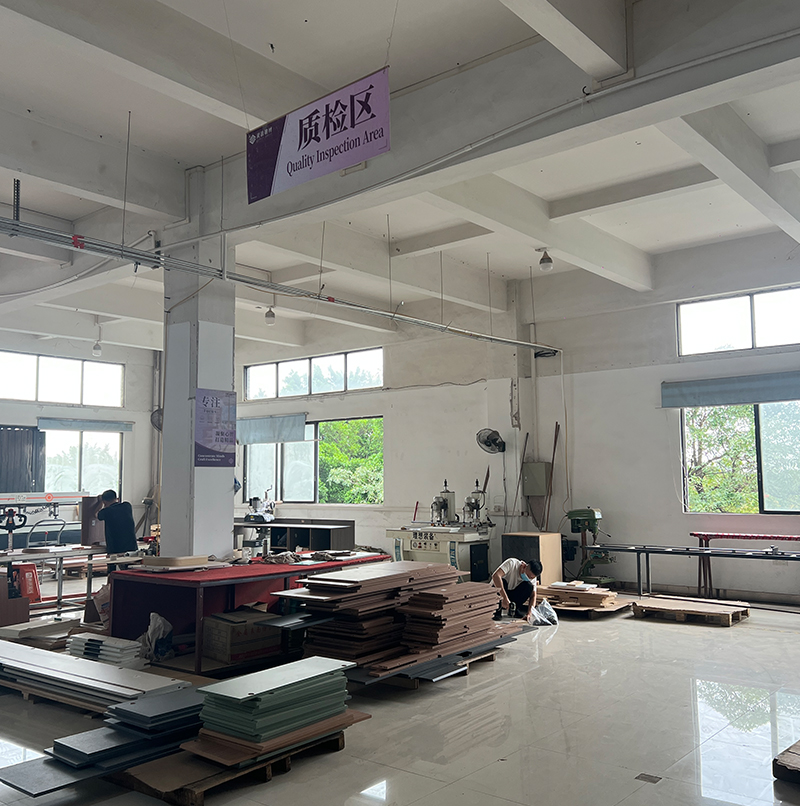
Guangzhou Lingyin Building Materials Co., Ltd. operates a 30,000-square-meter intelligent manufacturing base with automated production lines for doors, windows, and whole-house customization.
Frequently Asked Questions
Can recycled materials already be marketed as a lower-cost handrail option?
Not based on the supplied information. There is no documented recycled-content specification, dedicated recycled-handrail pricing, or performance comparison available for the listed handrail products.
Which inspections should be requested for a handrail order?
Buyers should request evidence of raw-material inspection, production-process control, finished-product testing, chemical safety testing, physical and mechanical testing, structural safety inspection, and appearance and size inspection.
Do the listed certifications apply to recycled handrails?
No. The stated CE certification applies to kitchen cabinets, while the RoHS certification applies to aluminum windows. These product-specific certifications should not be interpreted as certification for recycled handrail materials.
What after-sales support is stated for African projects?
The company states that local African after-sales issues are addressed within 24 hours and domestic technical support issues within 48 hours. It also reports a 10-year warranty and lifetime maintenance service for its products.
Conclusion
Recycled materials should remain a conditional handrail option until their composition, performance, safety profile, structural suitability, and total installed cost have been confirmed for the individual project. A responsible selection process requires technical documentation and application-specific cost analysis, not simply a recycled-material claim.
Lingyin Building Materials presents a full-chain building-material service model for African projects, supported by stated quality inspections, logistics coordination, installation services, and after-sales maintenance. For detailed technical solutions or support, please reach out via 18144733878@139.com.
About Us
Guangzhou Lingyin Building Materials Co., Ltd. is a South China building-materials group serving export projects with windows, doors, handrails, sunrooms, curtain walls, and customized furniture. Established in 1990, it operates a 30,000-square-meter modern intelligent production base and reports annual sales of 200 million RMB. Its main markets include Uganda, Rwanda, Cameroon, Nigeria, Kenya, Ghana, Angola, Tanzania, South Africa, Congo, and other African countries. The company lists CE certification for kitchen cabinets and RoHS certification for aluminum windows, and has served clients across multiple industries.
REPORT