







-
 Agriculture
-
 Health-Care
-
 Environment
-
 Construction-Real-Estate
-
 Tools-Hardware
-
 Home-Garden
-
 Furniture
-
 Luggage-Bags-Cases
-
 Medical-devices-Supplies
-
 Gifts-Crafts
-
 Sports-Entertainment
-
 Food-Beverage
-
 Vehicles-Transportation
-
 Power-Transmission
-
 Material-Handling
-
 Renewable-Energy
-
 Safety
-
 Testing-Instrument-Equipment
-
 Construction-Building-Machinery
-
 Pet-Supplies
-
 Personal-Care-Household-Cleaning
-
 Vehicle-Accessories-Electronics-Tools
-
 School-Office-Supplies
-
 Packaging-Printing
-
 Mother-Kids-Toys
-
 Business-Services
-
 Commercial-Equipment-Machinery
-
 Apparel-Accessories
-
 Security
-
 Shoes-Accessories
-
 Vehicle-Parts-Accessories
-
 Jewelry-Eyewear-Watches-Accessories
-
 Lights-Lighting
-
 Fabric-Textile-Raw-Material
-
 Fabrication-Services
-
 Industrial-Machinery
-
 Consumer-Electronics
-
 Electrical-Equipment-Supplies
-
 Electronic-Components-Accessories-Telecommunications
-
 Home-Appliances
-
 Beauty
-
 Chemicals
-
 Rubber-Plastics
-
 Metals-Alloys


























































































































































































































































































































































































































































































































































































- Masonry Materials
- Curtain Walls & Accessories
- Earthwork Products
- Fireproofing Materials
- Heat Insulation Materials
- Plastic Building Materials
- Building Boards
- Soundproofing Materials
- Timber
- Waterproofing Materials
- Balustrades & Handrails
- Bathroom & Kitchen
- Flooring & Accessories
- Tiles & Accessories
- Door, Window & Accessories
- Fireplaces & Stoves
- Floor Heating Systems & Parts
- Stairs & Stair Parts
- Ceilings
- Elevators & Escalators
- Stone
- Countertops, Vanity Tops & Table Tops
- Mosaics
- Metal Building Materials
- Multifunctional Materials
- Ladders & Scaffoldings
- Mouldings
- Corner Guards
- Decorative Films
- Formwork
- Building & Industrial Glass
- Other Construction & Real Estate
- Wallpapers/Wall panels
- HVAC System & Parts
- Outdoor Facilities
- Prefabricated Buildings
- Festive & Party Supplies
- Bathroom Products
- Household Sundries
- Rain Gear
- Garden Supplies
- Household Cleaning Tools & Accessories
- Lighters & Smoking Accessories
- Home Storage & Organization
- Household Scales
- Smart Home Improvement
- Home Textiles
- Kitchenware
- Drinkware & Accessories
- Dinnerware, Coffee & Wine
- Home Decor
- Golf
- Fitness & Body Building
- Amusement Park Facilities
- Billiards, Board Game,Coin Operated Games
- Musical Instruments
- Outdoor Affordable Luxury Sports
- Camping & Hiking
- Fishing
- Sports Safety&Rehabilitation
- Ball Sports Equipments
- Water Sports
- Winter Sports
- Luxury Travel Equipments
- Sports Shoes, Bags & Accessories
- Cycling
- Other Sports & Entertainment Products
- Artificial Grass&Sports Flooring&Sports Court Equipment
- Scooters
- Food Ingredients
- Honey & Honey Products
- Snacks
- Nuts & Kernels
- Seafood
- Plant & Animal Oil
- Beverages
- Fruit & Vegetable Products
- Frog & Escargot
- Bean Products
- Egg Products
- Dairy Products
- Seasonings & Condiments
- Canned Food
- Instant Food
- Baked Goods
- Other Food & Beverage
- Meat & Poultry
- Confectionery
- Grain Products
- Feminie Care
- Hair Care & Styling
- Body Care
- Hands & Feet Care
- Hygiene Products
- Men's Grooming
- Laundry Cleaning Supplies
- Travel Size & Gift Sets
- Room Deodorizers
- Other Personal Care Products
- Pest Control Products
- Special Household Cleaning
- Floor Cleaning
- Kitchen & Bathroom Cleaning
- Oral Care
- Bath Supplies
- Yellow Pages
- Correction Supplies
- Office Binding Supplies
- Office Cutting Supplies
- Board Erasers
- Office Adhesives & Tapes
- Education Supplies
- Pencil Cases & Bags
- Notebooks & Writing Pads
- File Folder Accessories
- Calendars
- Writing Accessories
- Commercial Office Supplies
- Pencil Sharpeners
- Pens
- Letter Pad/Paper
- Paper Envelopes
- Desk Organizers
- Pencils
- Markers & Highlighters
- Filing Products
- Art Supplies
- Easels
- Badge Holder & Accessories
- Office Paper
- Printer Supplies
- Book Covers
- Other Office & School Supplies
- Stationery Set
- Boards
- Clipboards
- Stamps
- Drafting Supplies
- Stencils
- Electronic Dictionary
- Books
- Map
- Magazines
- Calculators
- Baby & Toddler Toys
- Educational Toys
- Classic Toys
- Dress Up & Pretend Play
- Toy Vehicle
- Stuffed Animals & Plush Toys
- Outdoor Toys & Structures
- Balloons & Accessories
- Baby Food
- Children's Clothing
- Baby Supplies & Products
- Maternity Clothes
- Kids Shoes
- Baby Care
- Novelty & Gag Toys
- Dolls & Accessories
- Puzzle & Games
- Blocks & Model Building Toys
- Toddler Clothing
- Baby Clothing
- Kids' Luggage & Bags
- Arts, Crafts & DIY Toys
- Action & Toy Figures
- Baby Appliances
- Hobbies & Models
- Remote Control Toys
- Promotional Toys
- Pregnancy & Maternity
- Hygiene Products
- Kid's Textile&Bedding
- Novelty & Special Use
- Toy Weapons
- Baby Gifts
- Baby Storage & Organization
- Auto Drive Systems
- ATV/UTV Parts & Accessories
- Marine Parts & Accessories
- Other Auto Parts
- Trailer Parts & Accessories
- Auto Transmission Systems
- Train Parts & Accessories
- Universal Parts
- Railway Parts & Accessories
- Auto Brake Systems
- Aviation Parts & Accessories
- Truck Parts & Accessories
- Auto Suspension Systems
- Auto Lighting Systems
- New Energy Vehicle Parts & Accessories
- Auto Steering Systems
- Wheels, Tires & Accessories
- Bus Parts & Accessories
- Auto Performance Parts
- Cooling System
- Go-Kart & Kart Racer Parts & Accessories
- Air Conditioning Systems
- Heavy Duty Vehicle Parts & Accessories
- Auto Electrical Systems
- Auto Body Systems
- Auto Engine Systems
- Container Parts & Accessories
- Motorcycle Parts & Accessories
- Refrigeration & Heat Exchange Equipment
- Machine Tool Equipment
- Food & Beverage Machinery
- Agricultural Machinery & Equipment
- Apparel & Textile Machinery
- Chemical Machinery
- Packaging Machines
- Paper Production Machinery
- Plastic & Rubber Processing Machinery
- Industrial Robots
- Electronic Products Machinery
- Metal & Metallurgy Machinery
- Woodworking Machinery
- Home Product Manufacturing Machinery
- Machinery Accessories
- Environmental Machinery
- Machinery Service
- Electrical Equipment Manufacturing Machinery
- Industrial Compressors & Parts
- Tobacco & Cigarette Machinery
- Production Line
- Used Industrial Machinery
- Electronics Production Machinery
- Other Machinery & Industrial Equipment
- Camera, Photo & Accessories
- Portable Audio, Video & Accessories
- Television, Home Audio, Video & Accessories
- Video Games & Accessories
- Mobile Phone & Accessories
- Electronic Publications
- Earphone & Headphone & Accessories
- Speakers & Accessories
- Smart Electronics
- TV Receivers & Accessories
- Mobile Phone & Computer Repair Parts
- Chargers, Batteries & Power Supplies
- Used Electronics
- VR, AR, MR Hardware & Software
- Projectors & Presentation Equipments
- Other Consumer Electronics
- Cables & Commonly Used Accessories
- Computer Hardware & Software
- Displays, Signage and Optoelectronics
- Discrete Semiconductors
- Wireless & IoT Module and Products
- Telecommunications
- Connectors, Terminals & Accessories
- Development Boards, Electronic Modules and Kits
- Circuit Protection
- Sensors
- Isolators
- Audio Components and Products
- Integrated Circuits
- Power Supplies
- Relays
- RF, Microwave and RFID
- Electronic Accessories & Supplies
- Passive Components
- PCB & PCBA
- Air Quality Appliances
- Home Appliance Parts
- Heating & Cooling Appliances
- Small Kitchen Appliances
- Laundry Appliances
- Water Heaters
- Water Treatment Appliances
- Refrigerators & Freezers
- Personal Care & Beauty Appliances
- Major Kitchen Appliances
- Cleaning Appliances
- Second-hand Appliances
- Smart Home Appliances
- Other Home Appliances
- Energy Chemicals
- Inorganic Chemicals
- Basic Organic Chemicals
- Agrochemicals
- Admixture & Additives
- Catalysts & Chemical Auxiliary Agents
- Pigments & Dyestuff
- Coating & Paint
- Daily Chemicals
- Polymer
- Organic Intermediate
- Adhesives & Sealants
- Chemical Waste
- Biological Chemical Products
- Surface Treatment Chemicals
- Painting & Coating
- Chemical Reagents
- Flavor & Fragrance
- Non-Explosive Demolition Agents
- Other Chemicals
- Custom Chemical Services

Choosing Materials for a Liquid-Filled Heated Towel Rail
Selecting a material for a liquid-filled heated towel rail requires more than a general reference to thermal conductivity. The correct choice depends on the rail structure, heating liquid, element configuration, operating temperature, corrosion exposure, and intended installation environment. The supplied product information does not provide these liquid-filled construction details, so it cannot support a definitive recommendation for the best material.
What the Available Information Confirms
The available records document ODO's development and production activity for electric heated towel rail products. They include the Heated towel rack CE-LVD FTS22LC-8881S certificate, as well as patent documentation for products such as the ODO-R2B Swivel Rotating Electric Heated Towel Rack and an Automatic Towel Drying Cabinet.
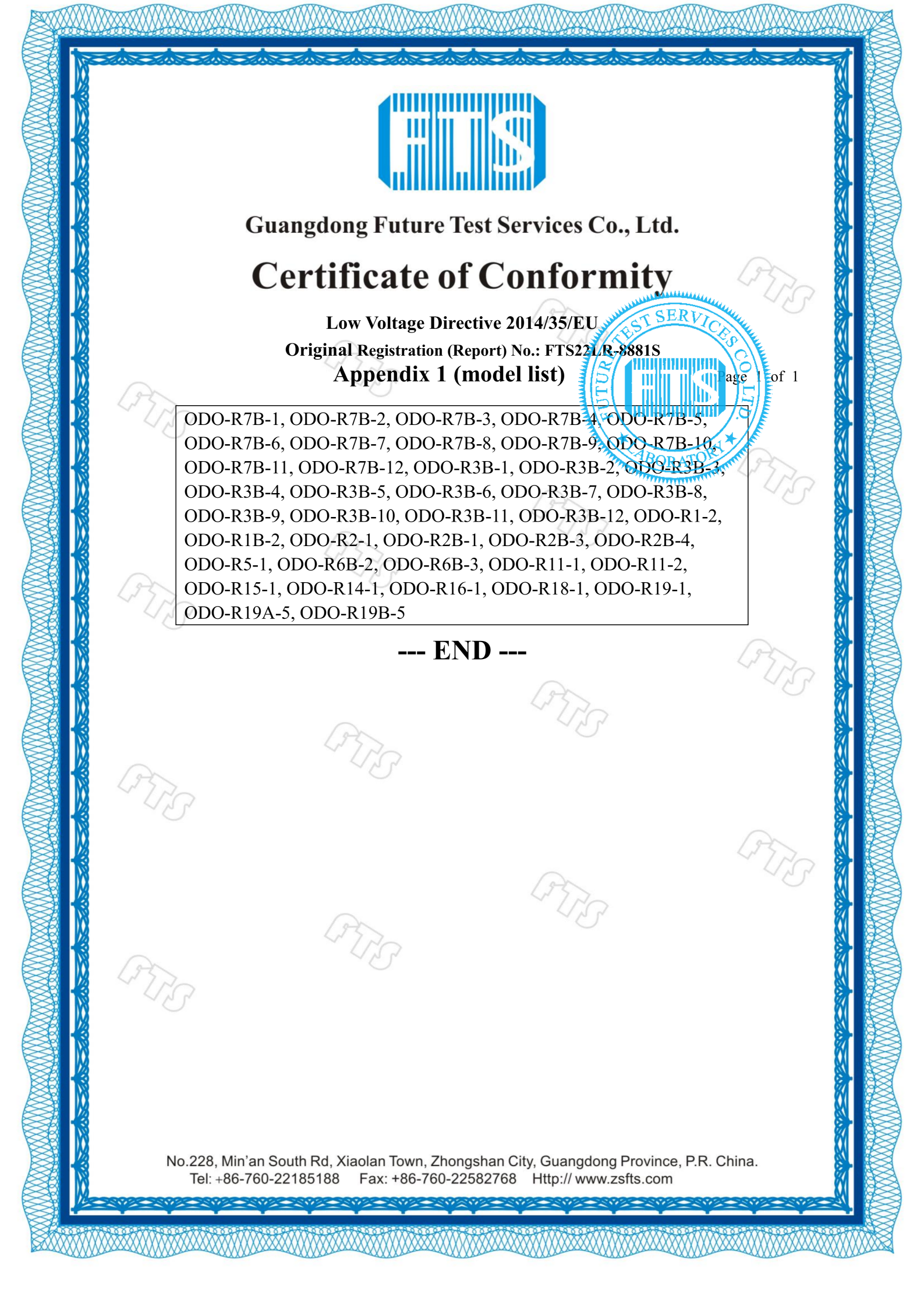
These documents demonstrate relevant product compliance and design capability. However, they do not identify the rail body material, the internal liquid formulation, a thermal conductivity rating, fill volume, or a heat-transfer comparison between materials.
Why Material Selection Needs Model-Specific Data
In a liquid-filled towel rail, heat moves from the electrical heating element into the liquid medium and then through the rail body to the surrounding room and towels. Each part of this system affects heating speed, temperature consistency, energy use, durability, and safety.
Key Technical Factors
- Rail body material and wall thickness
- Liquid type, fill quantity, and compatibility with internal components
- Heating element design and electrical rating
- Target operating temperature and warm-up performance
- Corrosion resistance in humid bathroom, hotel, and spa environments
- Applicable electrical and product compliance requirements
Without these specifications, a material comparison would be based on assumptions rather than verified engineering data. A metal with a favorable conductivity value may still be unsuitable if it does not meet the required corrosion, manufacturing, pressure, finish, or electrical design requirements for a specific towel rail model.
Relevant Product and Project Context
ODO heated towel rail products are presented for residential bathrooms, hospitality installations, luxury villas, and SPA or wellness projects. The supplied cooperation cases also reference smart heated towel racks in a Dubai hotel project and constant-temperature heated towel racks in a Sydney senior care center project. These applications indicate suitability for demanding, high-humidity settings, but they do not disclose liquid-filled material specifications.
Foshan Pinshi Sanitary Ware Co., Ltd. states that it develops and manufactures heated towel rail products in Foshan. Its stated capabilities include 14 quality-control procedures from incoming materials through finished goods, a 20-member R&D and design team, and more than 50 product patents.
Evidence Review for Liquid-Filled Rail Materials
| Assessment area | Information available | Selection implication |
|---|---|---|
| Internal liquid and formula | Not provided | No verified compatibility or performance comparison is possible |
| Thermal conductivity data | Not provided | No material can be confirmed as the best thermal performer |
| Heated towel rail certification | Heated towel rack CE-LVD FTS22LC-8881S | Supports product compliance documentation, not material selection |
| Towel rail patents | Utility and design patent certificates for several ODO products | Shows product development activity without liquid-fill details |
| Stainless steel 304 reference | Specified for the ODO-006-KH tile insert floor drain | Cannot be applied to a liquid-filled heated towel rail without model evidence |
Frequently Asked Questions
Does the supplied information specify a material for liquid-filled heated towel rails?
No. The records identify heated towel rail products, patents, and certification information, but they do not state the material of a liquid-filled rail, its heat-transfer fluid, or a conductivity value.
Can 304 stainless steel be assumed to be the recommended towel rail material?
No. The provided 304 stainless steel specification applies to the 10x10cm ODO-006-KH Tile Insert Floor Drain Matte Black. There is no documentation extending that specification to heated towel rail construction.
What should buyers request before approving a material?
Request the exact model's material specification, liquid-fill information, thermal output data, electrical configuration, operating limits, corrosion-resistance details, and relevant certification documents.
Recommendation
The supplied information does not establish which thermal conductivity material performs best in a liquid-filled heated towel rail. The CE-LVD certificate and available product documentation can be used as starting points for model verification, but a final material decision should rely on engineering data for the specific rail being purchased or specified.
ODO offers OEM/ODM and project-oriented solutions, with stated sample lead times of 3-7 days and bulk-order lead times of 20-45 days. For technical specifications or tailored product support, please contact charlene@seosodo.com.
About ODO
Foshan Pinshi Sanitary Ware Co., Ltd., operating under the ODO brand, is a sanitary ware enterprise established in 2014. The company operates bathroom hardware factories in Foshan, Zhongshan, and Jiangmen, manufacturing bathroom accessories, floor drains, heated towel rails, niches, shower rooms, faucets, and shower sets. Its facilities cover approximately 20,000 square meters, with 20 production lines, more than 200 production and R&D equipment units, and stated monthly capacity of 100,000 pieces. The company lists the Shower niche CE EMC Certificate-AiTSZ-250428030C-C01 and Heated towel rack CE-LVD FTS22LC-8881S among its product credentials.

REPORT