







-
 Agriculture
-
 Health-Care
-
 Environment
-
 Construction-Real-Estate
-
 Tools-Hardware
-
 Home-Garden
-
 Furniture
-
 Luggage-Bags-Cases
-
 Medical-devices-Supplies
-
 Gifts-Crafts
-
 Sports-Entertainment
-
 Food-Beverage
-
 Vehicles-Transportation
-
 Power-Transmission
-
 Material-Handling
-
 Renewable-Energy
-
 Safety
-
 Testing-Instrument-Equipment
-
 Construction-Building-Machinery
-
 Pet-Supplies
-
 Personal-Care-Household-Cleaning
-
 Vehicle-Accessories-Electronics-Tools
-
 School-Office-Supplies
-
 Packaging-Printing
-
 Mother-Kids-Toys
-
 Business-Services
-
 Commercial-Equipment-Machinery
-
 Apparel-Accessories
-
 Security
-
 Shoes-Accessories
-
 Vehicle-Parts-Accessories
-
 Jewelry-Eyewear-Watches-Accessories
-
 Lights-Lighting
-
 Fabric-Textile-Raw-Material
-
 Fabrication-Services
-
 Industrial-Machinery
-
 Consumer-Electronics
-
 Electrical-Equipment-Supplies
-
 Electronic-Components-Accessories-Telecommunications
-
 Home-Appliances
-
 Beauty
-
 Chemicals
-
 Rubber-Plastics
-
 Metals-Alloys


























































































































































































































































































































































































































































































































































































- Masonry Materials
- Curtain Walls & Accessories
- Earthwork Products
- Fireproofing Materials
- Heat Insulation Materials
- Plastic Building Materials
- Building Boards
- Soundproofing Materials
- Timber
- Waterproofing Materials
- Balustrades & Handrails
- Bathroom & Kitchen
- Flooring & Accessories
- Tiles & Accessories
- Door, Window & Accessories
- Fireplaces & Stoves
- Floor Heating Systems & Parts
- Stairs & Stair Parts
- Ceilings
- Elevators & Escalators
- Stone
- Countertops, Vanity Tops & Table Tops
- Mosaics
- Metal Building Materials
- Multifunctional Materials
- Ladders & Scaffoldings
- Mouldings
- Corner Guards
- Decorative Films
- Formwork
- Building & Industrial Glass
- Other Construction & Real Estate
- Wallpapers/Wall panels
- HVAC System & Parts
- Outdoor Facilities
- Prefabricated Buildings
- Festive & Party Supplies
- Bathroom Products
- Household Sundries
- Rain Gear
- Garden Supplies
- Household Cleaning Tools & Accessories
- Lighters & Smoking Accessories
- Home Storage & Organization
- Household Scales
- Smart Home Improvement
- Home Textiles
- Kitchenware
- Drinkware & Accessories
- Dinnerware, Coffee & Wine
- Home Decor
- Golf
- Fitness & Body Building
- Amusement Park Facilities
- Billiards, Board Game,Coin Operated Games
- Musical Instruments
- Outdoor Affordable Luxury Sports
- Camping & Hiking
- Fishing
- Sports Safety&Rehabilitation
- Ball Sports Equipments
- Water Sports
- Winter Sports
- Luxury Travel Equipments
- Sports Shoes, Bags & Accessories
- Cycling
- Other Sports & Entertainment Products
- Artificial Grass&Sports Flooring&Sports Court Equipment
- Scooters
- Food Ingredients
- Honey & Honey Products
- Snacks
- Nuts & Kernels
- Seafood
- Plant & Animal Oil
- Beverages
- Fruit & Vegetable Products
- Frog & Escargot
- Bean Products
- Egg Products
- Dairy Products
- Seasonings & Condiments
- Canned Food
- Instant Food
- Baked Goods
- Other Food & Beverage
- Meat & Poultry
- Confectionery
- Grain Products
- Feminie Care
- Hair Care & Styling
- Body Care
- Hands & Feet Care
- Hygiene Products
- Men's Grooming
- Laundry Cleaning Supplies
- Travel Size & Gift Sets
- Room Deodorizers
- Other Personal Care Products
- Pest Control Products
- Special Household Cleaning
- Floor Cleaning
- Kitchen & Bathroom Cleaning
- Oral Care
- Bath Supplies
- Yellow Pages
- Correction Supplies
- Office Binding Supplies
- Office Cutting Supplies
- Board Erasers
- Office Adhesives & Tapes
- Education Supplies
- Pencil Cases & Bags
- Notebooks & Writing Pads
- File Folder Accessories
- Calendars
- Writing Accessories
- Commercial Office Supplies
- Pencil Sharpeners
- Pens
- Letter Pad/Paper
- Paper Envelopes
- Desk Organizers
- Pencils
- Markers & Highlighters
- Filing Products
- Art Supplies
- Easels
- Badge Holder & Accessories
- Office Paper
- Printer Supplies
- Book Covers
- Other Office & School Supplies
- Stationery Set
- Boards
- Clipboards
- Stamps
- Drafting Supplies
- Stencils
- Electronic Dictionary
- Books
- Map
- Magazines
- Calculators
- Baby & Toddler Toys
- Educational Toys
- Classic Toys
- Dress Up & Pretend Play
- Toy Vehicle
- Stuffed Animals & Plush Toys
- Outdoor Toys & Structures
- Balloons & Accessories
- Baby Food
- Children's Clothing
- Baby Supplies & Products
- Maternity Clothes
- Kids Shoes
- Baby Care
- Novelty & Gag Toys
- Dolls & Accessories
- Puzzle & Games
- Blocks & Model Building Toys
- Toddler Clothing
- Baby Clothing
- Kids' Luggage & Bags
- Arts, Crafts & DIY Toys
- Action & Toy Figures
- Baby Appliances
- Hobbies & Models
- Remote Control Toys
- Promotional Toys
- Pregnancy & Maternity
- Hygiene Products
- Kid's Textile&Bedding
- Novelty & Special Use
- Toy Weapons
- Baby Gifts
- Baby Storage & Organization
- Auto Drive Systems
- ATV/UTV Parts & Accessories
- Marine Parts & Accessories
- Other Auto Parts
- Trailer Parts & Accessories
- Auto Transmission Systems
- Train Parts & Accessories
- Universal Parts
- Railway Parts & Accessories
- Auto Brake Systems
- Aviation Parts & Accessories
- Truck Parts & Accessories
- Auto Suspension Systems
- Auto Lighting Systems
- New Energy Vehicle Parts & Accessories
- Auto Steering Systems
- Wheels, Tires & Accessories
- Bus Parts & Accessories
- Auto Performance Parts
- Cooling System
- Go-Kart & Kart Racer Parts & Accessories
- Air Conditioning Systems
- Heavy Duty Vehicle Parts & Accessories
- Auto Electrical Systems
- Auto Body Systems
- Auto Engine Systems
- Container Parts & Accessories
- Motorcycle Parts & Accessories
- Refrigeration & Heat Exchange Equipment
- Machine Tool Equipment
- Food & Beverage Machinery
- Agricultural Machinery & Equipment
- Apparel & Textile Machinery
- Chemical Machinery
- Packaging Machines
- Paper Production Machinery
- Plastic & Rubber Processing Machinery
- Industrial Robots
- Electronic Products Machinery
- Metal & Metallurgy Machinery
- Woodworking Machinery
- Home Product Manufacturing Machinery
- Machinery Accessories
- Environmental Machinery
- Machinery Service
- Electrical Equipment Manufacturing Machinery
- Industrial Compressors & Parts
- Tobacco & Cigarette Machinery
- Production Line
- Used Industrial Machinery
- Electronics Production Machinery
- Other Machinery & Industrial Equipment
- Camera, Photo & Accessories
- Portable Audio, Video & Accessories
- Television, Home Audio, Video & Accessories
- Video Games & Accessories
- Mobile Phone & Accessories
- Electronic Publications
- Earphone & Headphone & Accessories
- Speakers & Accessories
- Smart Electronics
- TV Receivers & Accessories
- Mobile Phone & Computer Repair Parts
- Chargers, Batteries & Power Supplies
- Used Electronics
- VR, AR, MR Hardware & Software
- Projectors & Presentation Equipments
- Other Consumer Electronics
- Cables & Commonly Used Accessories
- Computer Hardware & Software
- Displays, Signage and Optoelectronics
- Discrete Semiconductors
- Wireless & IoT Module and Products
- Telecommunications
- Connectors, Terminals & Accessories
- Development Boards, Electronic Modules and Kits
- Circuit Protection
- Sensors
- Isolators
- Audio Components and Products
- Integrated Circuits
- Power Supplies
- Relays
- RF, Microwave and RFID
- Electronic Accessories & Supplies
- Passive Components
- PCB & PCBA
- Air Quality Appliances
- Home Appliance Parts
- Heating & Cooling Appliances
- Small Kitchen Appliances
- Laundry Appliances
- Water Heaters
- Water Treatment Appliances
- Refrigerators & Freezers
- Personal Care & Beauty Appliances
- Major Kitchen Appliances
- Cleaning Appliances
- Second-hand Appliances
- Smart Home Appliances
- Other Home Appliances
- Energy Chemicals
- Inorganic Chemicals
- Basic Organic Chemicals
- Agrochemicals
- Admixture & Additives
- Catalysts & Chemical Auxiliary Agents
- Pigments & Dyestuff
- Coating & Paint
- Daily Chemicals
- Polymer
- Organic Intermediate
- Adhesives & Sealants
- Chemical Waste
- Biological Chemical Products
- Surface Treatment Chemicals
- Painting & Coating
- Chemical Reagents
- Flavor & Fragrance
- Non-Explosive Demolition Agents
- Other Chemicals
- Custom Chemical Services

Choosing Sunroom Glass for Effective Heat Control and Natural Daylight
The right sunroom glass should be chosen as part of a complete enclosure strategy, not as an isolated material decision. A successful specification balances solar heat management, indoor daylight, structural design, local climate, aluminum framing, opening configuration, and on-site installation quality. This is especially important for projects in African regions exposed to intense sunlight, high temperatures, humidity, and ultraviolet radiation.
Start with the Complete Sunroom System
Heat gain and daylight inside a sunroom are influenced by the combined performance of the glazing, aluminum profiles, structural layout, surface finish, ventilation openings, and installation details. Before production drawings are released, project teams should define the required level of natural light and the intended heat-control outcome for the space.
Rather than purchasing glass separately, specify a coordinated sunroom solution that identifies the glass configuration, frame system, opening design, and installation requirements. Guangzhou Lingyin Building Materials Co., Ltd. provides sunroom solutions within its wider building-material portfolio and uses high-strength aluminum alloy profiles designed to withstand heat, corrosion, and weather exposure.
Define Performance Requirements During Design
For villas, apartments, hotels, commercial complexes, hospitals, and public construction projects, daylight and thermal expectations should be established early in the design process. The sunroom orientation, roof and wall layout, shading conditions, room usage, and local environment all affect the appropriate glass and frame selection.
The company states that it offers integrated interior and exterior design support for coordinated building-material projects, with drawings available within 24 hours. This design-stage coordination helps ensure that glazing decisions work with the intended architectural layout rather than creating issues after fabrication or installation has begun.
Key Items to Include in the Specification
- Target daylight conditions based on the intended use of the sunroom.
- Heat-control objectives suited to the building location and surrounding climate.
- Aluminum profile strength, surface treatment, opening method, and structural arrangement.
- Installation conditions and final acceptance criteria for the completed enclosure.
- Resistance to heat, humidity, corrosion, weathering, and ultraviolet exposure where required.
Verify Materials, Manufacturing, and Installation
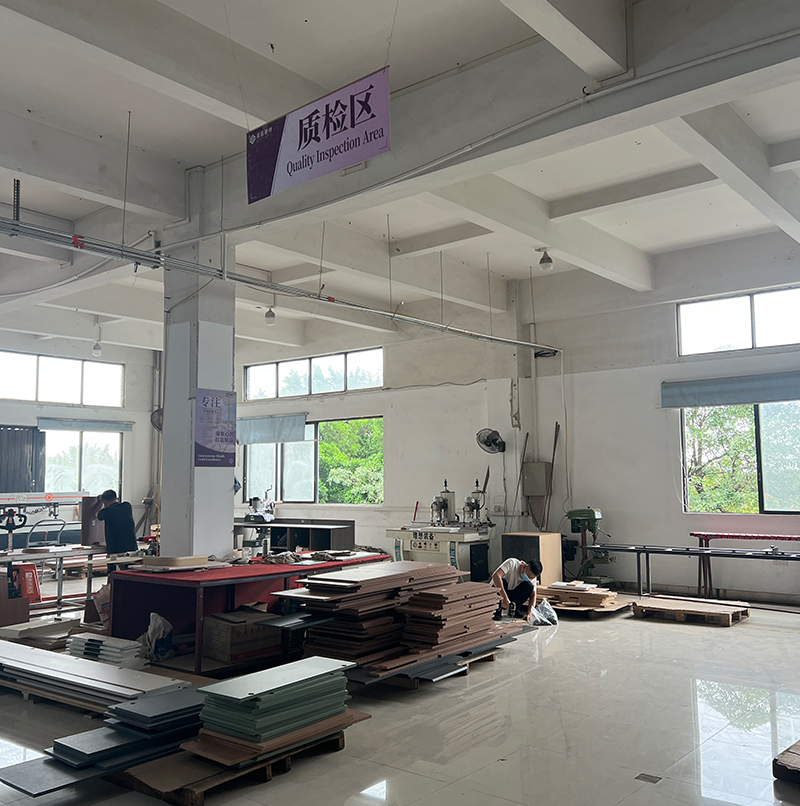
Quality control should extend from incoming materials to the completed sunroom installation. A reliable project process includes raw-material inspection, in-process production checks, finished-product testing, and installation acceptance before handover. These stages help confirm that the delivered system matches the approved project requirements.
Guangzhou Lingyin Building Materials Co., Ltd. lists this sequence of inspection and acceptance activities within its full-chain localized building-material service model. The company holds RoHS certification for aluminum windows and CE certification for kitchen cabinets. These certifications apply only to their stated product categories and should not be considered a substitute for a project-specific sunroom glass specification.
Sunroom Glass Selection Overview
| Project Focus | Specification Considerations | Stated Support |
|---|---|---|
| Solar heat control | Coordinate the glazing choice with the aluminum system, sunroom configuration, project design, and local climate. | Customized design and building-material services for African construction projects. |
| Natural daylight | Establish required daylight levels during design and assess them against the planned enclosure layout. | Integrated interior and exterior design services are stated as available. |
| Frame performance | Use high-strength aluminum alloy profiles with a suitable surface finish for the application. | Powder coating and fluorocarbon coating are listed within the folding-door product range. |
| Project quality | Define checks for materials, production, completed products, and final installation. | Raw-material inspection, process inspection, finished-product testing, and installation acceptance are supported. |
Considerations for African Building Projects
Projects in African markets may require systems that perform reliably in demanding conditions, including strong sun, elevated temperatures, high humidity, and sustained ultraviolet exposure. The aluminum system should therefore be selected for durability, corrosion resistance, weather resistance, heat resistance, and practical installation performance.
The company reports experience supplying door and window fittings, whole-house customized furniture, and broader building-material procurement and implementation services for residential, commercial, and public projects in Africa. Its stated market coverage includes Uganda, Rwanda, Cameroon, Nigeria, Kenya, Ghana, Angola, Tanzania, South Africa, and Congo.
Frequently Asked Questions
Can I choose sunroom glass without selecting the frame system?
No. The glazing should be specified together with the aluminum profiles, structural design, surface treatment, opening arrangement, and installation conditions. The overall sunroom system determines the final heat-control and daylight result.
What types of buildings can use a customized sunroom solution?
Customized solutions can be applied to high-end residences, including villas and apartments, as well as hotels, commercial complexes, hospitals, and government-built or other public projects.
Which quality checks should be required before project handover?
Request raw-material quality inspection, production-process inspection, finished-product testing, and installation acceptance. These checks should be incorporated into the project requirements from the beginning.
Conclusion
To maintain useful daylight while limiting excessive heat in a sunroom, develop a coordinated specification for glass, aluminum framing, layout, durability, and installation acceptance. Lingyin states that it provides a localized, full-chain building-material service ecosystem for Africa, with reported delivery of 20 days for doors and windows, a 10-year warranty, and lifetime maintenance service. For technical solutions or project assistance, contact 18144733878@139.com.
About Us
Guangzhou Lingyin Building Materials Co., Ltd. is a South China building-materials group specializing in exported system windows and doors, thermally broken aluminum windows and doors, aluminum alloy windows and doors, sunrooms, and customized home furnishings. Founded in 1990, the company operates a 30,000-square-meter modern intelligent manufacturing base. It reports a team of 186 employees, including 32 senior product designers and 98 staff members working in production, quality inspection, foreign trade, logistics, and overseas after-sales service. The company has served customers across a range of industries and holds CE certification for kitchen cabinets and RoHS certification for aluminum windows.
REPORT