







-
 Agriculture
-
 Health-Care
-
 Environment
-
 Construction-Real-Estate
-
 Tools-Hardware
-
 Home-Garden
-
 Furniture
-
 Luggage-Bags-Cases
-
 Medical-devices-Supplies
-
 Gifts-Crafts
-
 Sports-Entertainment
-
 Food-Beverage
-
 Vehicles-Transportation
-
 Power-Transmission
-
 Material-Handling
-
 Renewable-Energy
-
 Safety
-
 Testing-Instrument-Equipment
-
 Construction-Building-Machinery
-
 Pet-Supplies
-
 Personal-Care-Household-Cleaning
-
 Vehicle-Accessories-Electronics-Tools
-
 School-Office-Supplies
-
 Packaging-Printing
-
 Mother-Kids-Toys
-
 Business-Services
-
 Commercial-Equipment-Machinery
-
 Apparel-Accessories
-
 Security
-
 Shoes-Accessories
-
 Vehicle-Parts-Accessories
-
 Jewelry-Eyewear-Watches-Accessories
-
 Lights-Lighting
-
 Fabric-Textile-Raw-Material
-
 Fabrication-Services
-
 Industrial-Machinery
-
 Consumer-Electronics
-
 Electrical-Equipment-Supplies
-
 Electronic-Components-Accessories-Telecommunications
-
 Home-Appliances
-
 Beauty
-
 Chemicals
-
 Rubber-Plastics
-
 Metals-Alloys




































































































































































































































































































































































































- Masonry Materials
- Curtain Walls & Accessories
- Earthwork Products
- Fireproofing Materials
- Heat Insulation Materials
- Plastic Building Materials
- Building Boards
- Soundproofing Materials
- Timber
- Waterproofing Materials
- Balustrades & Handrails
- Bathroom & Kitchen
- Flooring & Accessories
- Tiles & Accessories
- Door, Window & Accessories
- Fireplaces & Stoves
- Floor Heating Systems & Parts
- Stairs & Stair Parts
- Ceilings
- Elevators & Escalators
- Stone
- Countertops, Vanity Tops & Table Tops
- Mosaics
- Metal Building Materials
- Multifunctional Materials
- Ladders & Scaffoldings
- Mouldings
- Corner Guards
- Decorative Films
- Formwork
- Building & Industrial Glass
- Other Construction & Real Estate
- Wallpapers/Wall panels
- HVAC System & Parts
- Outdoor Facilities
- Prefabricated Buildings
- Festive & Party Supplies
- Bathroom Products
- Household Sundries
- Rain Gear
- Garden Supplies
- Household Cleaning Tools & Accessories
- Lighters & Smoking Accessories
- Home Storage & Organization
- Household Scales
- Smart Home Improvement
- Home Textiles
- Kitchenware
- Drinkware & Accessories
- Dinnerware, Coffee & Wine
- Home Decor
- Golf
- Fitness & Body Building
- Amusement Park Facilities
- Billiards, Board Game,Coin Operated Games
- Musical Instruments
- Outdoor Affordable Luxury Sports
- Camping & Hiking
- Fishing
- Sports Safety&Rehabilitation
- Ball Sports Equipments
- Water Sports
- Winter Sports
- Luxury Travel Equipments
- Sports Shoes, Bags & Accessories
- Cycling
- Other Sports & Entertainment Products
- Artificial Grass&Sports Flooring&Sports Court Equipment
- Scooters
- Food Ingredients
- Honey & Honey Products
- Snacks
- Nuts & Kernels
- Seafood
- Plant & Animal Oil
- Beverages
- Fruit & Vegetable Products
- Frog & Escargot
- Bean Products
- Egg Products
- Dairy Products
- Seasonings & Condiments
- Canned Food
- Instant Food
- Baked Goods
- Other Food & Beverage
- Meat & Poultry
- Confectionery
- Grain Products
- Feminie Care
- Hair Care & Styling
- Body Care
- Hands & Feet Care
- Hygiene Products
- Men's Grooming
- Laundry Cleaning Supplies
- Travel Size & Gift Sets
- Room Deodorizers
- Other Personal Care Products
- Pest Control Products
- Special Household Cleaning
- Floor Cleaning
- Kitchen & Bathroom Cleaning
- Oral Care
- Bath Supplies
- Yellow Pages
- Correction Supplies
- Office Binding Supplies
- Office Cutting Supplies
- Board Erasers
- Office Adhesives & Tapes
- Education Supplies
- Pencil Cases & Bags
- Notebooks & Writing Pads
- File Folder Accessories
- Calendars
- Writing Accessories
- Commercial Office Supplies
- Pencil Sharpeners
- Pens
- Letter Pad/Paper
- Paper Envelopes
- Desk Organizers
- Pencils
- Markers & Highlighters
- Filing Products
- Art Supplies
- Easels
- Badge Holder & Accessories
- Office Paper
- Printer Supplies
- Book Covers
- Other Office & School Supplies
- Stationery Set
- Boards
- Clipboards
- Stamps
- Drafting Supplies
- Stencils
- Electronic Dictionary
- Books
- Map
- Magazines
- Calculators
- Baby & Toddler Toys
- Educational Toys
- Classic Toys
- Dress Up & Pretend Play
- Toy Vehicle
- Stuffed Animals & Plush Toys
- Outdoor Toys & Structures
- Balloons & Accessories
- Baby Food
- Children's Clothing
- Baby Supplies & Products
- Maternity Clothes
- Kids Shoes
- Baby Care
- Novelty & Gag Toys
- Dolls & Accessories
- Puzzle & Games
- Blocks & Model Building Toys
- Toddler Clothing
- Baby Clothing
- Kids' Luggage & Bags
- Arts, Crafts & DIY Toys
- Action & Toy Figures
- Baby Appliances
- Hobbies & Models
- Remote Control Toys
- Promotional Toys
- Pregnancy & Maternity
- Hygiene Products
- Kid's Textile&Bedding
- Novelty & Special Use
- Toy Weapons
- Baby Gifts
- Baby Storage & Organization
- Auto Drive Systems
- ATV/UTV Parts & Accessories
- Marine Parts & Accessories
- Other Auto Parts
- Trailer Parts & Accessories
- Auto Transmission Systems
- Train Parts & Accessories
- Universal Parts
- Railway Parts & Accessories
- Auto Brake Systems
- Aviation Parts & Accessories
- Truck Parts & Accessories
- Auto Suspension Systems
- Auto Lighting Systems
- New Energy Vehicle Parts & Accessories
- Auto Steering Systems
- Wheels, Tires & Accessories
- Bus Parts & Accessories
- Auto Performance Parts
- Cooling System
- Go-Kart & Kart Racer Parts & Accessories
- Air Conditioning Systems
- Heavy Duty Vehicle Parts & Accessories
- Auto Electrical Systems
- Auto Body Systems
- Auto Engine Systems
- Container Parts & Accessories
- Motorcycle Parts & Accessories
- Refrigeration & Heat Exchange Equipment
- Machine Tool Equipment
- Food & Beverage Machinery
- Agricultural Machinery & Equipment
- Apparel & Textile Machinery
- Chemical Machinery
- Packaging Machines
- Paper Production Machinery
- Plastic & Rubber Processing Machinery
- Industrial Robots
- Electronic Products Machinery
- Metal & Metallurgy Machinery
- Woodworking Machinery
- Home Product Manufacturing Machinery
- Machinery Accessories
- Environmental Machinery
- Machinery Service
- Electrical Equipment Manufacturing Machinery
- Industrial Compressors & Parts
- Tobacco & Cigarette Machinery
- Production Line
- Used Industrial Machinery
- Electronics Production Machinery
- Other Machinery & Industrial Equipment
- Camera, Photo & Accessories
- Portable Audio, Video & Accessories
- Television, Home Audio, Video & Accessories
- Video Games & Accessories
- Mobile Phone & Accessories
- Electronic Publications
- Earphone & Headphone & Accessories
- Speakers & Accessories
- Smart Electronics
- TV Receivers & Accessories
- Mobile Phone & Computer Repair Parts
- Chargers, Batteries & Power Supplies
- Used Electronics
- VR, AR, MR Hardware & Software
- Projectors & Presentation Equipments
- Other Consumer Electronics
- Cables & Commonly Used Accessories
- Computer Hardware & Software
- Displays, Signage and Optoelectronics
- Discrete Semiconductors
- Wireless & IoT Module and Products
- Telecommunications
- Connectors, Terminals & Accessories
- Development Boards, Electronic Modules and Kits
- Circuit Protection
- Sensors
- Isolators
- Audio Components and Products
- Integrated Circuits
- Power Supplies
- Relays
- RF, Microwave and RFID
- Electronic Accessories & Supplies
- Passive Components
- PCB & PCBA
- Air Quality Appliances
- Home Appliance Parts
- Heating & Cooling Appliances
- Small Kitchen Appliances
- Laundry Appliances
- Water Heaters
- Water Treatment Appliances
- Refrigerators & Freezers
- Personal Care & Beauty Appliances
- Major Kitchen Appliances
- Cleaning Appliances
- Second-hand Appliances
- Smart Home Appliances
- Other Home Appliances
- Energy Chemicals
- Inorganic Chemicals
- Basic Organic Chemicals
- Agrochemicals
- Admixture & Additives
- Catalysts & Chemical Auxiliary Agents
- Pigments & Dyestuff
- Coating & Paint
- Daily Chemicals
- Polymer
- Organic Intermediate
- Adhesives & Sealants
- Chemical Waste
- Biological Chemical Products
- Surface Treatment Chemicals
- Painting & Coating
- Chemical Reagents
- Flavor & Fragrance
- Non-Explosive Demolition Agents
- Other Chemicals
- Custom Chemical Services

Cold Shipping Insulated Mailer Sample Testing Checklist Before Mass Production
Approving an insulated mailer for mass production requires more than checking its appearance. A representative sample should be evaluated for temperature retention, material construction, seal quality, closure operation, dimensional accuracy, condensation management, print consistency, food-contact suitability, and resistance to routine handling. The evaluation should reflect the actual cold-shipping load, coolant configuration, delivery route, and intended application.
Sample Approval Priorities
- Run a thermal trial using the planned product load, gel packs, insulation structure, and delivery time. Confirm that the mailer provides the required protection under realistic cold-chain conditions.
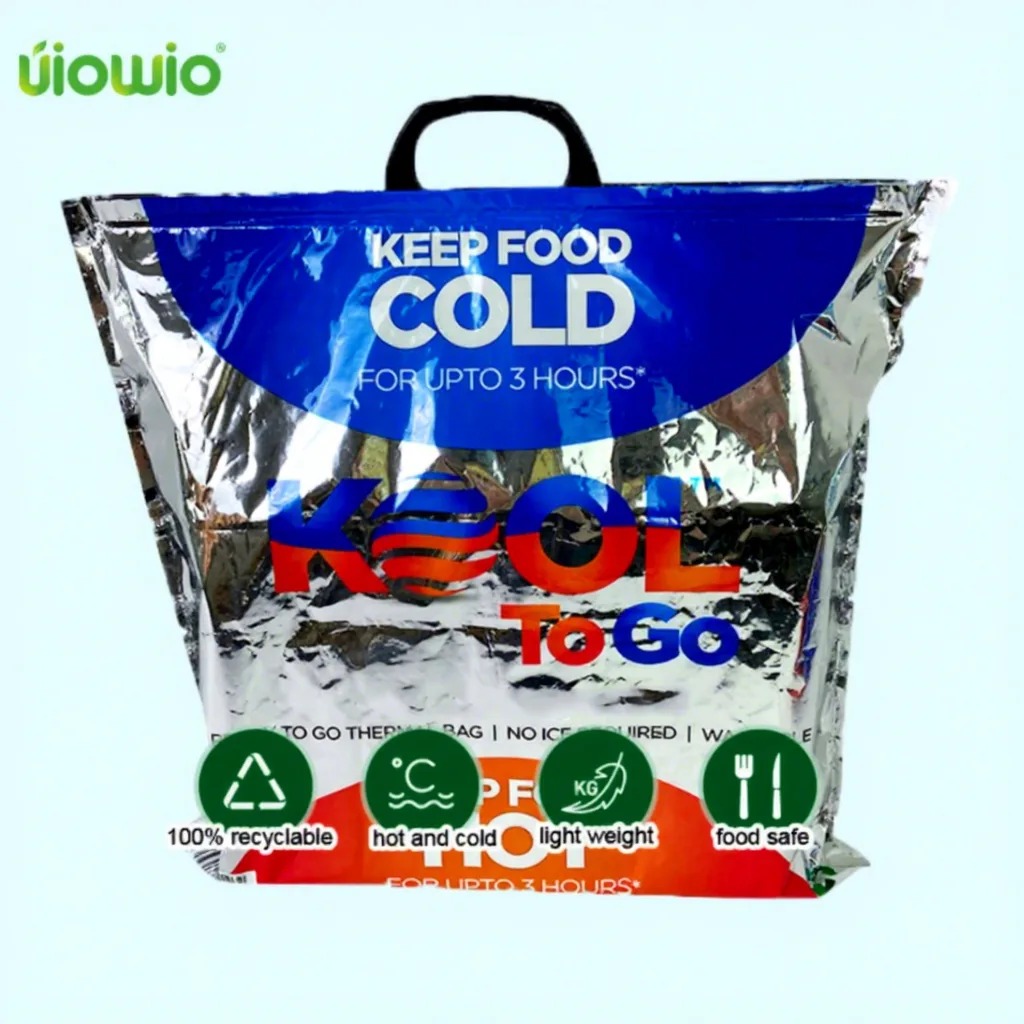
- Examine the aluminium foil laminate, closed-cell EPE foam, food-grade PE inner layer, three-side seals, closure system, and welded handle for defects and consistent workmanship.
- Verify that the selected format can be loaded, closed, carried, stacked, and placed inside any required outer courier bag without damaging the contents.
- For grocery, pharmaceutical, or other last-mile cold-chain applications, inspect the gel-pack sleeve, moisture control, product separation, and space for labels or temperature indicators.
Construction and Material Inspection
Begin by matching the physical sample with the approved specification. The listed design is a flat pouch without a gusset and is sealed on three sides. Its exterior is made from an aluminium foil laminate with full-colour printing. The insulating layer is closed-cell EPE foam specified at 2-5 mm, although an air-bubble core may be supplied when requested. The sample should state exactly which construction has been approved so that performance results are not compared across different structures.
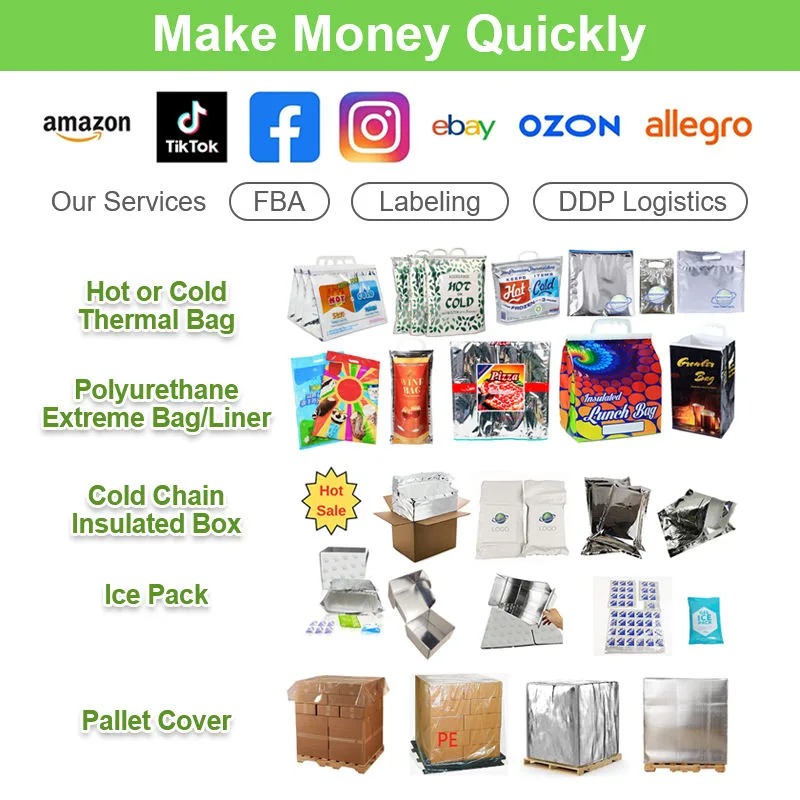
Inspect all sealed edges for continuous bonding, smooth trimming, wrinkles, open channels, and incomplete fusion. When the mailer includes a zipper, open and close it repeatedly and pay particular attention to the sealed areas at both ends. When a heat-sealed opening is specified, verify that it closes evenly and does not interfere with the loading sequence.
The inner contact surface uses food-grade PE sealant. Confirm that the correct material is present, clean, and undamaged. The foil laminate should also be checked for pinholes, scratches, peeling, delamination, and areas where the foam is exposed. These defects may weaken the moisture and thermal barrier during transport.
Fit, Closure, and Handling Tests
Measure the sample against the approved size, which may range from 30 x 18 cm to 49 x 51 cm depending on the selected format. Record both the external dimensions and the usable internal space after sealing. Load the intended food container, parcel, or coolant pack to confirm that it fits securely without excessive compression or movement.
Test the mailer through the same handling steps expected in fulfilment: loading, closing, lifting, short-distance carrying, stacking, and insertion into an outer delivery satchel when applicable. The moulded plastic grip should be loaded with a filled pouch, and its welded connection through the top seal should be checked for separation, distortion, or tearing.
Cold-Chain and Appearance Verification
For thermal testing, document the starting temperature, contents, coolant type and quantity, coolant position, ambient conditions, and test duration. A dedicated gel-pack sleeve is available for grocery and pharmacy cold-chain designs. Confirm that the sleeve holds the coolant in the intended position, keeps it suitably separated from the product, and limits condensation exposure. Also check whether the layout provides room for batch information, shipping labels, or temperature-monitoring devices.
Compare the printed sample with the approved artwork. Review colour consistency, registration, logo placement, foil surface quality, temperature bands, and label windows. Ecopack indicates that new designs are approved using a physical bag, with Pantone-matched samples generally completed within 3 to 5 working days.
Production controls should also be considered before approval. The stated ISO 9001:2015 process includes incoming-material inspection, in-process checks, and pre-shipment inspection. Finished products are subject to AQL sampling covering appearance, dimensions, print registration, seal strength, and lamination bond. FSC Chain of Custody certification applies to specified paper and packaging products and should not be treated as a substitute for verifying the foil insulated mailer structure.
Thermal Performance and Commercial Context
One documented cold-chain project involved a US distributor purchasing insulated mailers for cold shipping at an annual volume of 10 million pieces. The application was intended to reduce heat transfer while using less storage and shipping space than rigid foam packaging. For this reason, sample approval should consider both temperature protection and the efficiency of packing the finished mailers into cartons and delivery systems.
Sample Evaluation Comparison
| Inspection Area | Acceptance Focus | Applicable Product Information |
|---|---|---|
| Thermal protection | Maintains the required temperature range with the specified contents and coolant arrangement | Aluminium foil laminate and closed-cell EPE foam; air-bubble core available on request |
| Seals and closure | Uniform bonding, clean edges, leak resistance, and repeatable zipper or heat-seal operation | Three-side sealed flat pouch with zipper or heat-sealed mouth |
| Food contact surface | Correct inner material, clean surface, and no delamination or exposed insulation | Food-grade PE sealant |
| Dimensions and fit | Accurate measurements, sufficient usable capacity, easy loading, and secure handling | Sizes from 30 x 18 to 49 x 51 cm; moulded plastic grip |
| Printing and identification | Correct colours, registration, logo position, temperature markings, and label space | Full-colour printing with customizable structure, size, core, colour, and logo |
| Manufacturing readiness | Approved reference sample, documented inspections, and repeatable batch quality | Sampling in 3 to 5 working days; production in 15 to 25 days after artwork approval |
Frequently Asked Questions
Which insulation materials should be confirmed in the sample?
The sample should match the approved aluminium foil laminate, closed-cell EPE foam core, and food-grade PE sealant. If an air-bubble core or another construction has been requested, it must be identified clearly before thermal or quality results are compared.
How can the closure and handle be evaluated?
Operate the zipper through repeated opening and closing cycles when that version is selected. For a heat-sealed mouth, inspect bonding uniformity and confirm that the opening works with the intended loading process. Lift the filled pouch by its moulded plastic grip and examine the welded top connection for tearing, loosening, or deformation.
What should be done if production goods do not match the approved sample?
Record the affected units and photograph the carton label, product details, and visible defects. Ecopack states that it traces the batch through its production records, investigates the issue, and agrees on replacement or credit. Each claim is expected to receive a response within two working days.
Final Approval Recommendations
Mass production should begin only after the sample passes the thermal trial and the physical checks for foil and foam construction, food-contact material, seal integrity, closure performance, handle strength, dimensions, condensation control, print accuracy, and label placement. Custom orders generally begin at 5,000 to 10,000 pieces depending on the size and structure, while standard sizes may be supplied from available inventory. After artwork approval, standard production is scheduled at approximately 15 to 25 days. For technical support or a project quotation, contact manager@ecoppack.com.
About Us
Huizhou Ecopack Packaging Products Co., Ltd. is a flexible packaging manufacturer in Guangdong, China, established in 2011. Its product range includes custom composite pouches and bags, insulated mailers, thermal packaging, coffee packaging, pet food packaging, spout pouches, kraft and compostable formats, and ESD bags. The company operates a 10,000+ sqm factory with R&D, printing, lamination, bag making, and inspection performed under one roof. Its certifications include ISO 9001:2015 Quality Management System and FSC Chain of Custody.

REPORT