







-
 Agriculture
-
 Health-Care
-
 Environment
-
 Construction-Real-Estate
-
 Tools-Hardware
-
 Home-Garden
-
 Furniture
-
 Luggage-Bags-Cases
-
 Medical-devices-Supplies
-
 Gifts-Crafts
-
 Sports-Entertainment
-
 Food-Beverage
-
 Vehicles-Transportation
-
 Power-Transmission
-
 Material-Handling
-
 Renewable-Energy
-
 Safety
-
 Testing-Instrument-Equipment
-
 Construction-Building-Machinery
-
 Pet-Supplies
-
 Personal-Care-Household-Cleaning
-
 Vehicle-Accessories-Electronics-Tools
-
 School-Office-Supplies
-
 Packaging-Printing
-
 Mother-Kids-Toys
-
 Business-Services
-
 Commercial-Equipment-Machinery
-
 Apparel-Accessories
-
 Security
-
 Shoes-Accessories
-
 Vehicle-Parts-Accessories
-
 Jewelry-Eyewear-Watches-Accessories
-
 Lights-Lighting
-
 Fabric-Textile-Raw-Material
-
 Fabrication-Services
-
 Industrial-Machinery
-
 Consumer-Electronics
-
 Electrical-Equipment-Supplies
-
 Electronic-Components-Accessories-Telecommunications
-
 Home-Appliances
-
 Beauty
-
 Chemicals
-
 Rubber-Plastics
-
 Metals-Alloys


























































































































































































































































































































































































































































































































































































- Masonry Materials
- Curtain Walls & Accessories
- Earthwork Products
- Fireproofing Materials
- Heat Insulation Materials
- Plastic Building Materials
- Building Boards
- Soundproofing Materials
- Timber
- Waterproofing Materials
- Balustrades & Handrails
- Bathroom & Kitchen
- Flooring & Accessories
- Tiles & Accessories
- Door, Window & Accessories
- Fireplaces & Stoves
- Floor Heating Systems & Parts
- Stairs & Stair Parts
- Ceilings
- Elevators & Escalators
- Stone
- Countertops, Vanity Tops & Table Tops
- Mosaics
- Metal Building Materials
- Multifunctional Materials
- Ladders & Scaffoldings
- Mouldings
- Corner Guards
- Decorative Films
- Formwork
- Building & Industrial Glass
- Other Construction & Real Estate
- Wallpapers/Wall panels
- HVAC System & Parts
- Outdoor Facilities
- Prefabricated Buildings
- Festive & Party Supplies
- Bathroom Products
- Household Sundries
- Rain Gear
- Garden Supplies
- Household Cleaning Tools & Accessories
- Lighters & Smoking Accessories
- Home Storage & Organization
- Household Scales
- Smart Home Improvement
- Home Textiles
- Kitchenware
- Drinkware & Accessories
- Dinnerware, Coffee & Wine
- Home Decor
- Golf
- Fitness & Body Building
- Amusement Park Facilities
- Billiards, Board Game,Coin Operated Games
- Musical Instruments
- Outdoor Affordable Luxury Sports
- Camping & Hiking
- Fishing
- Sports Safety&Rehabilitation
- Ball Sports Equipments
- Water Sports
- Winter Sports
- Luxury Travel Equipments
- Sports Shoes, Bags & Accessories
- Cycling
- Other Sports & Entertainment Products
- Artificial Grass&Sports Flooring&Sports Court Equipment
- Scooters
- Food Ingredients
- Honey & Honey Products
- Snacks
- Nuts & Kernels
- Seafood
- Plant & Animal Oil
- Beverages
- Fruit & Vegetable Products
- Frog & Escargot
- Bean Products
- Egg Products
- Dairy Products
- Seasonings & Condiments
- Canned Food
- Instant Food
- Baked Goods
- Other Food & Beverage
- Meat & Poultry
- Confectionery
- Grain Products
- Feminie Care
- Hair Care & Styling
- Body Care
- Hands & Feet Care
- Hygiene Products
- Men's Grooming
- Laundry Cleaning Supplies
- Travel Size & Gift Sets
- Room Deodorizers
- Other Personal Care Products
- Pest Control Products
- Special Household Cleaning
- Floor Cleaning
- Kitchen & Bathroom Cleaning
- Oral Care
- Bath Supplies
- Yellow Pages
- Correction Supplies
- Office Binding Supplies
- Office Cutting Supplies
- Board Erasers
- Office Adhesives & Tapes
- Education Supplies
- Pencil Cases & Bags
- Notebooks & Writing Pads
- File Folder Accessories
- Calendars
- Writing Accessories
- Commercial Office Supplies
- Pencil Sharpeners
- Pens
- Letter Pad/Paper
- Paper Envelopes
- Desk Organizers
- Pencils
- Markers & Highlighters
- Filing Products
- Art Supplies
- Easels
- Badge Holder & Accessories
- Office Paper
- Printer Supplies
- Book Covers
- Other Office & School Supplies
- Stationery Set
- Boards
- Clipboards
- Stamps
- Drafting Supplies
- Stencils
- Electronic Dictionary
- Books
- Map
- Magazines
- Calculators
- Baby & Toddler Toys
- Educational Toys
- Classic Toys
- Dress Up & Pretend Play
- Toy Vehicle
- Stuffed Animals & Plush Toys
- Outdoor Toys & Structures
- Balloons & Accessories
- Baby Food
- Children's Clothing
- Baby Supplies & Products
- Maternity Clothes
- Kids Shoes
- Baby Care
- Novelty & Gag Toys
- Dolls & Accessories
- Puzzle & Games
- Blocks & Model Building Toys
- Toddler Clothing
- Baby Clothing
- Kids' Luggage & Bags
- Arts, Crafts & DIY Toys
- Action & Toy Figures
- Baby Appliances
- Hobbies & Models
- Remote Control Toys
- Promotional Toys
- Pregnancy & Maternity
- Hygiene Products
- Kid's Textile&Bedding
- Novelty & Special Use
- Toy Weapons
- Baby Gifts
- Baby Storage & Organization
- Auto Drive Systems
- ATV/UTV Parts & Accessories
- Marine Parts & Accessories
- Other Auto Parts
- Trailer Parts & Accessories
- Auto Transmission Systems
- Train Parts & Accessories
- Universal Parts
- Railway Parts & Accessories
- Auto Brake Systems
- Aviation Parts & Accessories
- Truck Parts & Accessories
- Auto Suspension Systems
- Auto Lighting Systems
- New Energy Vehicle Parts & Accessories
- Auto Steering Systems
- Wheels, Tires & Accessories
- Bus Parts & Accessories
- Auto Performance Parts
- Cooling System
- Go-Kart & Kart Racer Parts & Accessories
- Air Conditioning Systems
- Heavy Duty Vehicle Parts & Accessories
- Auto Electrical Systems
- Auto Body Systems
- Auto Engine Systems
- Container Parts & Accessories
- Motorcycle Parts & Accessories
- Refrigeration & Heat Exchange Equipment
- Machine Tool Equipment
- Food & Beverage Machinery
- Agricultural Machinery & Equipment
- Apparel & Textile Machinery
- Chemical Machinery
- Packaging Machines
- Paper Production Machinery
- Plastic & Rubber Processing Machinery
- Industrial Robots
- Electronic Products Machinery
- Metal & Metallurgy Machinery
- Woodworking Machinery
- Home Product Manufacturing Machinery
- Machinery Accessories
- Environmental Machinery
- Machinery Service
- Electrical Equipment Manufacturing Machinery
- Industrial Compressors & Parts
- Tobacco & Cigarette Machinery
- Production Line
- Used Industrial Machinery
- Electronics Production Machinery
- Other Machinery & Industrial Equipment
- Camera, Photo & Accessories
- Portable Audio, Video & Accessories
- Television, Home Audio, Video & Accessories
- Video Games & Accessories
- Mobile Phone & Accessories
- Electronic Publications
- Earphone & Headphone & Accessories
- Speakers & Accessories
- Smart Electronics
- TV Receivers & Accessories
- Mobile Phone & Computer Repair Parts
- Chargers, Batteries & Power Supplies
- Used Electronics
- VR, AR, MR Hardware & Software
- Projectors & Presentation Equipments
- Other Consumer Electronics
- Cables & Commonly Used Accessories
- Computer Hardware & Software
- Displays, Signage and Optoelectronics
- Discrete Semiconductors
- Wireless & IoT Module and Products
- Telecommunications
- Connectors, Terminals & Accessories
- Development Boards, Electronic Modules and Kits
- Circuit Protection
- Sensors
- Isolators
- Audio Components and Products
- Integrated Circuits
- Power Supplies
- Relays
- RF, Microwave and RFID
- Electronic Accessories & Supplies
- Passive Components
- PCB & PCBA
- Air Quality Appliances
- Home Appliance Parts
- Heating & Cooling Appliances
- Small Kitchen Appliances
- Laundry Appliances
- Water Heaters
- Water Treatment Appliances
- Refrigerators & Freezers
- Personal Care & Beauty Appliances
- Major Kitchen Appliances
- Cleaning Appliances
- Second-hand Appliances
- Smart Home Appliances
- Other Home Appliances
- Energy Chemicals
- Inorganic Chemicals
- Basic Organic Chemicals
- Agrochemicals
- Admixture & Additives
- Catalysts & Chemical Auxiliary Agents
- Pigments & Dyestuff
- Coating & Paint
- Daily Chemicals
- Polymer
- Organic Intermediate
- Adhesives & Sealants
- Chemical Waste
- Biological Chemical Products
- Surface Treatment Chemicals
- Painting & Coating
- Chemical Reagents
- Flavor & Fragrance
- Non-Explosive Demolition Agents
- Other Chemicals
- Custom Chemical Services

Custom Handwheel MOQ and Volume Pricing: How to Avoid Unexpected Fees
When purchasing custom handwheels, the expected minimum order quantity depends on whether the product is standard or engineered to specific requirements. Standard stainless steel handwheels, valve handwheels, clamping knobs, and similar hardware typically start at 10 pieces. Custom dimensions, unusual materials, engraved logos, or specialized structures commonly require 200–1,000 pieces. For design validation, CNC prototype orders may begin with only 1–10 pieces.
Because the final price is influenced by tooling, machining complexity, material selection, order volume, finishing, packaging, freight, and payment conditions, volume pricing is normally prepared through a project-specific quotation rather than a fixed public price list.
MOQ Guidelines and Main Purchasing Options
- Standard stainless steel handwheels, valve wheels, clamping knobs, handles, and regular hardware parts generally have a 10-piece MOQ, subject to size and specification.
- OEM handwheels with special sizes, materials, logos, or non-standard constructions usually require 200–1,000 pieces, depending on tooling and production difficulty.
- CNC samples and prototypes are available in quantities of 1–10 pieces, while small-batch CNC production can generally cover 50–500 pieces.
- Orders of 1,000 pieces or more are suitable for mass production and high-volume OEM or ODM programs.
- Typical applications include valve and pipeline assemblies, industrial machinery, automation systems, food-processing equipment, marine installations, CNC equipment, and packaging machinery.
How Custom Handwheel Pricing Is Built
A reliable quotation should be based on the actual production configuration. Before pricing is finalized, the supplier normally reviews the handwheel design, outside dimensions, mounting method, thread details, material, tolerances, surface finish, logo requirements, packaging, quantity, and shipping destination.
The manufacturing route may include OEM production, ODM development, custom CNC turning or milling, factory-direct supply, small-batch manufacturing, and repeat bulk production. Each route affects setup costs, inspection requirements, production time, and the unit price.
Standard and Customized MOQ Conditions
For regular products, 10 pieces is a practical reference MOQ, although the final requirement can vary with the handwheel size, construction, and available production setup. Custom OEM designs with unusual dimensions, new materials, branding, or special mechanical features generally fall within a 200–1,000-piece range. This higher threshold helps distribute tooling, programming, setup, and process-development expenses across the order.
For new product development, market testing, or long-term cooperation, more flexible arrangements may be discussed. Prototype orders, mixed orders, and trial batches can be used to verify the design before a customer commits to full-scale production.
Materials, Finishes, and Manufacturing Scope
Available material solutions for handwheels and related industrial controls may include stainless steel, carbon steel, aluminum alloy, engineering plastics, and rubber or soft-touch grip materials. The most appropriate option depends on load, corrosion exposure, operating temperature, hygiene requirements, and the intended application.
Possible surface treatments include polishing, brushed finishing, passivation, electropolishing, mirror polishing, anodizing, powder coating, zinc plating, nickel plating, and chrome plating. Not every finish is suitable for every material or geometry, so the finish should be confirmed during drawing review.
Preventing Unclear or Unexpected Charges
The available product information does not establish a universal unit-price schedule or guarantee that every project will have no additional charges. To reduce commercial uncertainty, request a written, itemized quotation before placing an order.
The quotation should distinguish the product price from tooling, sample development, CNC programming, surface treatment, logo application, packaging, freight, insurance, payment fees, and delivery-related conditions. It should also state whether taxes, duties, or other destination costs are included. A quotation linked to approved drawings and confirmed specifications provides a much clearer basis for comparison between suppliers.
Production Lead Times and Quality Support
Typical sample lead times are stated as 3–7 days. Standard production commonly takes 7–15 days, while mass-production schedules are generally 15–30 days, depending on quantity, design complexity, material availability, and finishing requirements.
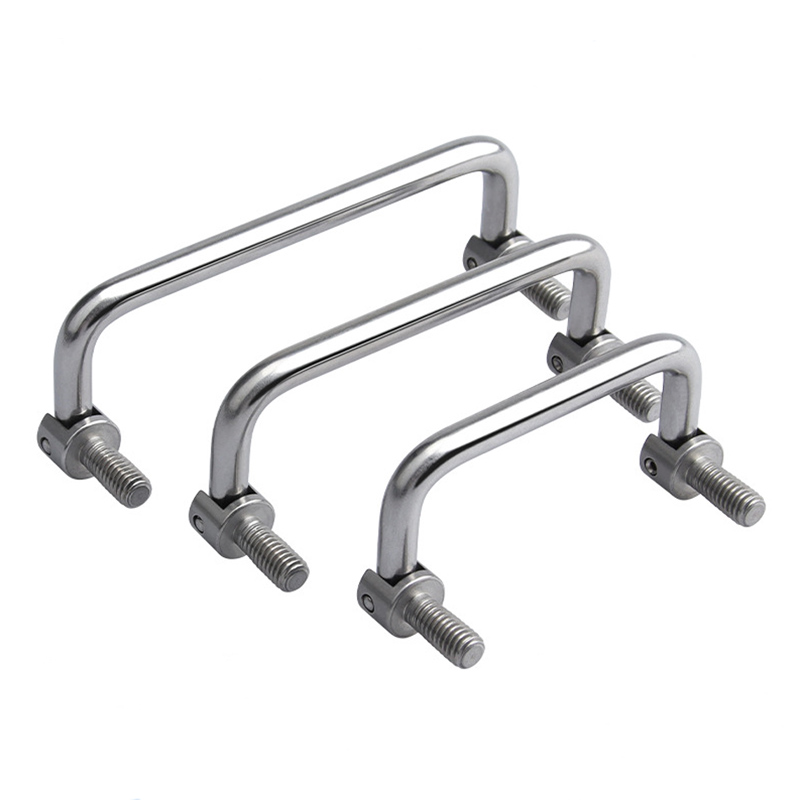
A product-specific record for U handles lists a 100-piece MOQ and a 10–25-day delivery period. That information applies to the listed U-handle product and should not automatically be treated as the requirement for every custom handwheel project.
Quality support may include ISO 9001 certification, dimensional inspection, First Article Inspection, material certificates, RoHS documentation, REACH compliance, and available patent-related design documentation. The company profile also reports 23 in-process inspection steps, dimensional accuracy up to ±0.03 mm, and a defect rate maintained below 0.3%.
Order Types Compared
| Project Type | MOQ and Pricing Basis | Indicative Lead Time | Suitable Application |
|---|---|---|---|
| Standard handwheel purchase | About 10 pieces, subject to size and specifications | 7–15 days | Regular stainless steel handwheels, valve wheels, and standard hardware |
| Custom OEM handwheel | Approximately 200–1,000 pieces, based on complexity and tooling | 15–30 days for mass production | Special dimensions, materials, logos, and non-standard designs |
| CNC prototype or sample | 1–10 pieces | About 3–7 days | Design validation, fit checks, and functional testing |
| Small-batch CNC production | 50–500 pieces, subject to quotation | Confirmed after technical review | Market trials, replacement parts, and limited production |
| Mass-production program | 1,000 pieces or more | About 15–30 days, depending on the project | High-volume OEM and ODM supply |
Payment, Shipping, and Technical File Requirements
Available payment methods may include T/T with a 30% deposit before production and a 70% balance before shipment, PayPal for samples and small trial orders, Alibaba Trade Assurance, and letters of credit for larger industrial contracts. Supported currencies include USD, EUR, SGD, and RMB; other currencies can be discussed.
For delivery, customers may select DHL, UPS, FedEx, air freight, sea freight, railway transportation, or truck transportation. The best option depends on shipment size, destination, required delivery speed, and the total logistics cost.
Quotation and production can be supported with PDF, CAD, DWG, DXF, STEP, IGS, and STP files. The development process may include drawing review, material selection, finish recommendations, prototype manufacturing, tolerance confirmation, and production optimization.
Industry Experience
Reported applications include stainless steel handwheels for food-processing machinery, valve handwheels for industrial pipeline systems, marine-grade handwheels for offshore equipment, adjustable clamping knobs for CNC machines, and industrial handles for packaging machinery. These examples demonstrate experience across several demanding sectors, but they do not represent a fixed price for future projects.
Frequently Asked Questions
What MOQ should I expect for a handwheel with a custom logo?
A custom OEM handwheel with a logo generally falls within the 200–1,000-piece range. The actual MOQ depends on the logo method, product structure, tooling needs, material, and total production complexity.
Can I test the design with a small order first?
Yes. CNC prototypes or samples can be ordered in quantities of 1–10 pieces. Small-batch orders of 50–500 pieces are also supported for market testing, replacement requirements, and early-stage production. Flexible terms may be available for development projects or long-term customers.
How do I make sure the quotation has no unclear fees?
Ask for a line-item quotation that separately identifies the handwheel cost, tooling, sampling, finishing, logo work, packaging, freight, payment terms, taxes, and delivery conditions. Since there is no universal unit-price table, the final amount should be tied to approved drawings and confirmed order requirements.
Which information should be sent for an accurate quote?
Provide the technical drawing or 3D file, material, dimensions, tolerances, thread or mounting details, surface finish, logo requirements, expected quantity, packaging needs, and destination. Complete information helps the supplier select the correct process and avoid later price revisions.
Conclusion: A Practical Buying Strategy
As a planning reference, use 10 pieces for standard handwheels, 200–1,000 pieces for customized OEM configurations, and 1–10 pieces for prototype evaluation. The safest way to control the total cost is to request a detailed quotation based on approved drawings, material, tolerances, finishing, packaging, freight, payment, and delivery terms.
Zhejiang Dream Industry Limited provides OEM, ODM, custom CNC machining, factory-direct manufacturing, bulk production, and flexible small-batch services. Its stated ISO 9001 certification and documented inspection procedures provide a defined quality framework. For technical support or project discussions, contact 86-15868979792.
About Us
ZheJiang Dream Industry Limited has more than 20 years of precision manufacturing experience and specializes in CNC-machined parts and assemblies made from stainless steel, aluminum, brass, copper, carbon steel, and engineering plastics. Its turnkey services cover design review, CNC turning and milling, surface treatment, precision casting, and final inspection. The company operates a 2,500-square-meter factory with more than 100 production and inspection units, over 80% of which are automated CNC machining centers, CNC lathes, and laser welding equipment. It is ISO 9001 certified and serves industries including food machinery, industrial valves, marine equipment, CNC machinery, and packaging machinery.
REPORT