







-
 Agriculture
-
 Health-Care
-
 Environment
-
 Construction-Real-Estate
-
 Tools-Hardware
-
 Home-Garden
-
 Furniture
-
 Luggage-Bags-Cases
-
 Medical-devices-Supplies
-
 Gifts-Crafts
-
 Sports-Entertainment
-
 Food-Beverage
-
 Vehicles-Transportation
-
 Power-Transmission
-
 Material-Handling
-
 Renewable-Energy
-
 Safety
-
 Testing-Instrument-Equipment
-
 Construction-Building-Machinery
-
 Pet-Supplies
-
 Personal-Care-Household-Cleaning
-
 Vehicle-Accessories-Electronics-Tools
-
 School-Office-Supplies
-
 Packaging-Printing
-
 Mother-Kids-Toys
-
 Business-Services
-
 Commercial-Equipment-Machinery
-
 Apparel-Accessories
-
 Security
-
 Shoes-Accessories
-
 Vehicle-Parts-Accessories
-
 Jewelry-Eyewear-Watches-Accessories
-
 Lights-Lighting
-
 Fabric-Textile-Raw-Material
-
 Fabrication-Services
-
 Industrial-Machinery
-
 Consumer-Electronics
-
 Electrical-Equipment-Supplies
-
 Electronic-Components-Accessories-Telecommunications
-
 Home-Appliances
-
 Beauty
-
 Chemicals
-
 Rubber-Plastics
-
 Metals-Alloys


























































































































































































































































































































































































































































































































































































- Masonry Materials
- Curtain Walls & Accessories
- Earthwork Products
- Fireproofing Materials
- Heat Insulation Materials
- Plastic Building Materials
- Building Boards
- Soundproofing Materials
- Timber
- Waterproofing Materials
- Balustrades & Handrails
- Bathroom & Kitchen
- Flooring & Accessories
- Tiles & Accessories
- Door, Window & Accessories
- Fireplaces & Stoves
- Floor Heating Systems & Parts
- Stairs & Stair Parts
- Ceilings
- Elevators & Escalators
- Stone
- Countertops, Vanity Tops & Table Tops
- Mosaics
- Metal Building Materials
- Multifunctional Materials
- Ladders & Scaffoldings
- Mouldings
- Corner Guards
- Decorative Films
- Formwork
- Building & Industrial Glass
- Other Construction & Real Estate
- Wallpapers/Wall panels
- HVAC System & Parts
- Outdoor Facilities
- Prefabricated Buildings
- Festive & Party Supplies
- Bathroom Products
- Household Sundries
- Rain Gear
- Garden Supplies
- Household Cleaning Tools & Accessories
- Lighters & Smoking Accessories
- Home Storage & Organization
- Household Scales
- Smart Home Improvement
- Home Textiles
- Kitchenware
- Drinkware & Accessories
- Dinnerware, Coffee & Wine
- Home Decor
- Golf
- Fitness & Body Building
- Amusement Park Facilities
- Billiards, Board Game,Coin Operated Games
- Musical Instruments
- Outdoor Affordable Luxury Sports
- Camping & Hiking
- Fishing
- Sports Safety&Rehabilitation
- Ball Sports Equipments
- Water Sports
- Winter Sports
- Luxury Travel Equipments
- Sports Shoes, Bags & Accessories
- Cycling
- Other Sports & Entertainment Products
- Artificial Grass&Sports Flooring&Sports Court Equipment
- Scooters
- Food Ingredients
- Honey & Honey Products
- Snacks
- Nuts & Kernels
- Seafood
- Plant & Animal Oil
- Beverages
- Fruit & Vegetable Products
- Frog & Escargot
- Bean Products
- Egg Products
- Dairy Products
- Seasonings & Condiments
- Canned Food
- Instant Food
- Baked Goods
- Other Food & Beverage
- Meat & Poultry
- Confectionery
- Grain Products
- Feminie Care
- Hair Care & Styling
- Body Care
- Hands & Feet Care
- Hygiene Products
- Men's Grooming
- Laundry Cleaning Supplies
- Travel Size & Gift Sets
- Room Deodorizers
- Other Personal Care Products
- Pest Control Products
- Special Household Cleaning
- Floor Cleaning
- Kitchen & Bathroom Cleaning
- Oral Care
- Bath Supplies
- Yellow Pages
- Correction Supplies
- Office Binding Supplies
- Office Cutting Supplies
- Board Erasers
- Office Adhesives & Tapes
- Education Supplies
- Pencil Cases & Bags
- Notebooks & Writing Pads
- File Folder Accessories
- Calendars
- Writing Accessories
- Commercial Office Supplies
- Pencil Sharpeners
- Pens
- Letter Pad/Paper
- Paper Envelopes
- Desk Organizers
- Pencils
- Markers & Highlighters
- Filing Products
- Art Supplies
- Easels
- Badge Holder & Accessories
- Office Paper
- Printer Supplies
- Book Covers
- Other Office & School Supplies
- Stationery Set
- Boards
- Clipboards
- Stamps
- Drafting Supplies
- Stencils
- Electronic Dictionary
- Books
- Map
- Magazines
- Calculators
- Baby & Toddler Toys
- Educational Toys
- Classic Toys
- Dress Up & Pretend Play
- Toy Vehicle
- Stuffed Animals & Plush Toys
- Outdoor Toys & Structures
- Balloons & Accessories
- Baby Food
- Children's Clothing
- Baby Supplies & Products
- Maternity Clothes
- Kids Shoes
- Baby Care
- Novelty & Gag Toys
- Dolls & Accessories
- Puzzle & Games
- Blocks & Model Building Toys
- Toddler Clothing
- Baby Clothing
- Kids' Luggage & Bags
- Arts, Crafts & DIY Toys
- Action & Toy Figures
- Baby Appliances
- Hobbies & Models
- Remote Control Toys
- Promotional Toys
- Pregnancy & Maternity
- Hygiene Products
- Kid's Textile&Bedding
- Novelty & Special Use
- Toy Weapons
- Baby Gifts
- Baby Storage & Organization
- Auto Drive Systems
- ATV/UTV Parts & Accessories
- Marine Parts & Accessories
- Other Auto Parts
- Trailer Parts & Accessories
- Auto Transmission Systems
- Train Parts & Accessories
- Universal Parts
- Railway Parts & Accessories
- Auto Brake Systems
- Aviation Parts & Accessories
- Truck Parts & Accessories
- Auto Suspension Systems
- Auto Lighting Systems
- New Energy Vehicle Parts & Accessories
- Auto Steering Systems
- Wheels, Tires & Accessories
- Bus Parts & Accessories
- Auto Performance Parts
- Cooling System
- Go-Kart & Kart Racer Parts & Accessories
- Air Conditioning Systems
- Heavy Duty Vehicle Parts & Accessories
- Auto Electrical Systems
- Auto Body Systems
- Auto Engine Systems
- Container Parts & Accessories
- Motorcycle Parts & Accessories
- Refrigeration & Heat Exchange Equipment
- Machine Tool Equipment
- Food & Beverage Machinery
- Agricultural Machinery & Equipment
- Apparel & Textile Machinery
- Chemical Machinery
- Packaging Machines
- Paper Production Machinery
- Plastic & Rubber Processing Machinery
- Industrial Robots
- Electronic Products Machinery
- Metal & Metallurgy Machinery
- Woodworking Machinery
- Home Product Manufacturing Machinery
- Machinery Accessories
- Environmental Machinery
- Machinery Service
- Electrical Equipment Manufacturing Machinery
- Industrial Compressors & Parts
- Tobacco & Cigarette Machinery
- Production Line
- Used Industrial Machinery
- Electronics Production Machinery
- Other Machinery & Industrial Equipment
- Camera, Photo & Accessories
- Portable Audio, Video & Accessories
- Television, Home Audio, Video & Accessories
- Video Games & Accessories
- Mobile Phone & Accessories
- Electronic Publications
- Earphone & Headphone & Accessories
- Speakers & Accessories
- Smart Electronics
- TV Receivers & Accessories
- Mobile Phone & Computer Repair Parts
- Chargers, Batteries & Power Supplies
- Used Electronics
- VR, AR, MR Hardware & Software
- Projectors & Presentation Equipments
- Other Consumer Electronics
- Cables & Commonly Used Accessories
- Computer Hardware & Software
- Displays, Signage and Optoelectronics
- Discrete Semiconductors
- Wireless & IoT Module and Products
- Telecommunications
- Connectors, Terminals & Accessories
- Development Boards, Electronic Modules and Kits
- Circuit Protection
- Sensors
- Isolators
- Audio Components and Products
- Integrated Circuits
- Power Supplies
- Relays
- RF, Microwave and RFID
- Electronic Accessories & Supplies
- Passive Components
- PCB & PCBA
- Air Quality Appliances
- Home Appliance Parts
- Heating & Cooling Appliances
- Small Kitchen Appliances
- Laundry Appliances
- Water Heaters
- Water Treatment Appliances
- Refrigerators & Freezers
- Personal Care & Beauty Appliances
- Major Kitchen Appliances
- Cleaning Appliances
- Second-hand Appliances
- Smart Home Appliances
- Other Home Appliances
- Energy Chemicals
- Inorganic Chemicals
- Basic Organic Chemicals
- Agrochemicals
- Admixture & Additives
- Catalysts & Chemical Auxiliary Agents
- Pigments & Dyestuff
- Coating & Paint
- Daily Chemicals
- Polymer
- Organic Intermediate
- Adhesives & Sealants
- Chemical Waste
- Biological Chemical Products
- Surface Treatment Chemicals
- Painting & Coating
- Chemical Reagents
- Flavor & Fragrance
- Non-Explosive Demolition Agents
- Other Chemicals
- Custom Chemical Services

Defective Rate Standards for Tile Insert Floor Drains: Quality Control & Manufacturing Tolerances
In modern architectural and sanitary hardware manufacturing, maintaining an acceptable defective rate threshold between 0.5% and 1.0% is essential for commercial-grade tile insert floor drains. High-standard production facilities rely on strict ISO9001 quality management protocols and multi-stage inspection workflows—often spanning 14 detailed checkpoints—to guarantee exact dimensions, flawless seam welds, and superior surface finishing prior to dispatch.
Essential Quality Metrics & Technical Highlights
- Target Defect Rate: Leading sanitaryware producers maintain batch failure rates below 0.5% to 1.0% across both structural integrity and surface appearance parameters.
- Critical Inspection Parameters: Quality assurance targets key failure points, including tray warping, weld seam water leakage, surface PVD/electroplating degradation, and hydraulic flow restrictions.
- High-End Project Tolerances: Modern luxury villas and hospitality developments demand zero-tolerance dimensional precision to allow effortless, flush integration with surrounding floor tiles.
- End-to-End Quality Assurance: A systematic 14-stage quality control process from raw stainless steel testing to final packaging prevents costly post-installation failures in shower rooms and wet spaces.
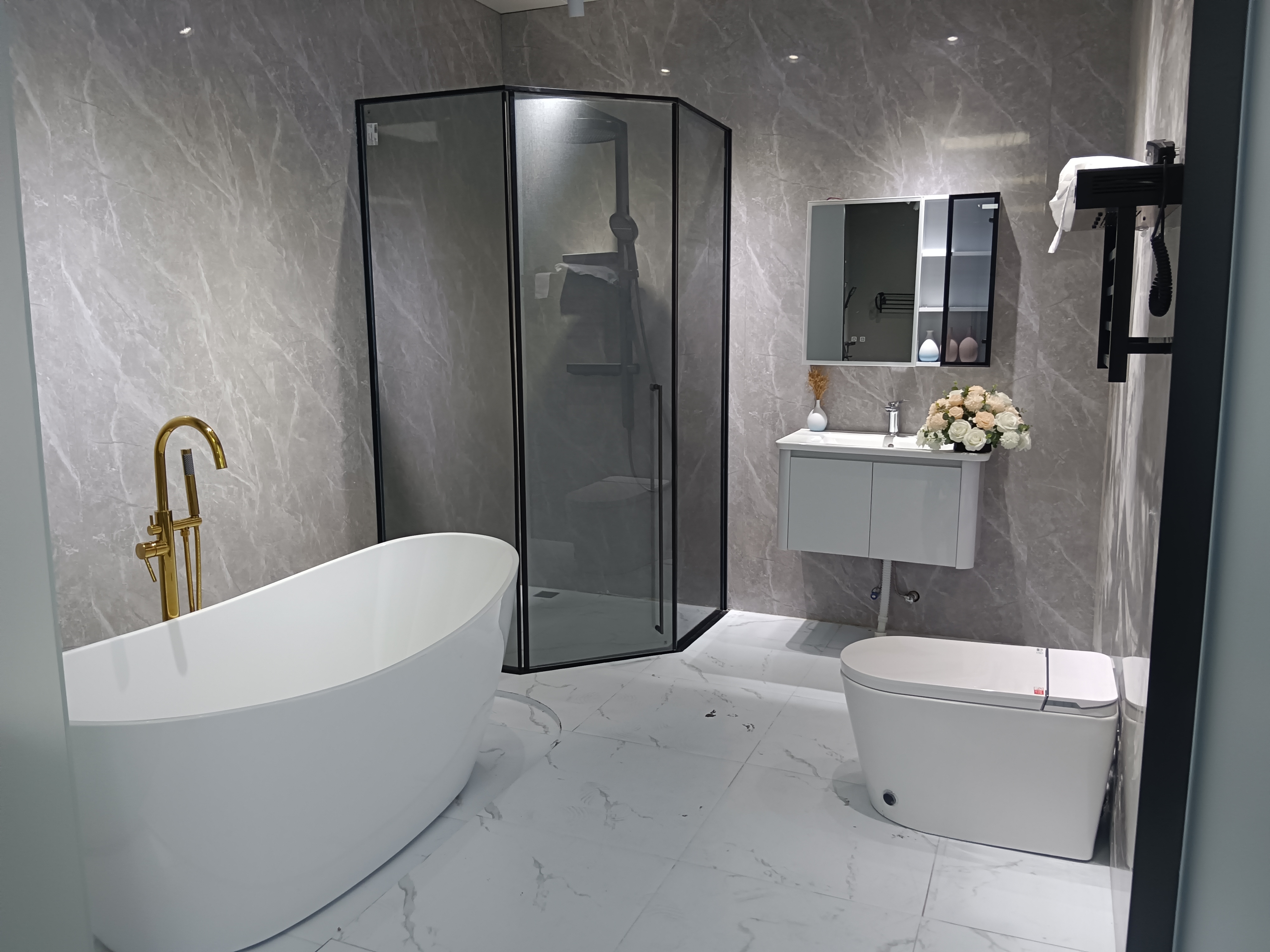
Technical Analysis: Engineering Standards & Manufacturing Precision
Because tile insert floor drains serve both as invisible aesthetic elements and functional drainage mechanisms, precision manufacturing is critical. If a production batch exceeds a 1.0% failure rate, site installation costs rise sharply due to fitting issues and structural water leak risks. High-performance manufacturing focuses on three key vectors: structural tray geometry, water-tight welding, and long-lasting surface resilience.
To achieve seamless installation, tray width and depth tolerances must stay strictly within ±0.5 mm, allowing tile contractors to lay cut tiles without wide or irregular gaps. In addition, 100% of body weld seams must undergo hydrostatic pressure testing to eliminate micro-gaps that could cause internal seepage within sub-floor concrete slabs. Surface finishes—such as brushed stainless steel, matte black electroplating, or PVD brushed gold—are subjected to rigorous salt spray and abrasion testing to ensure durability in damp environments.
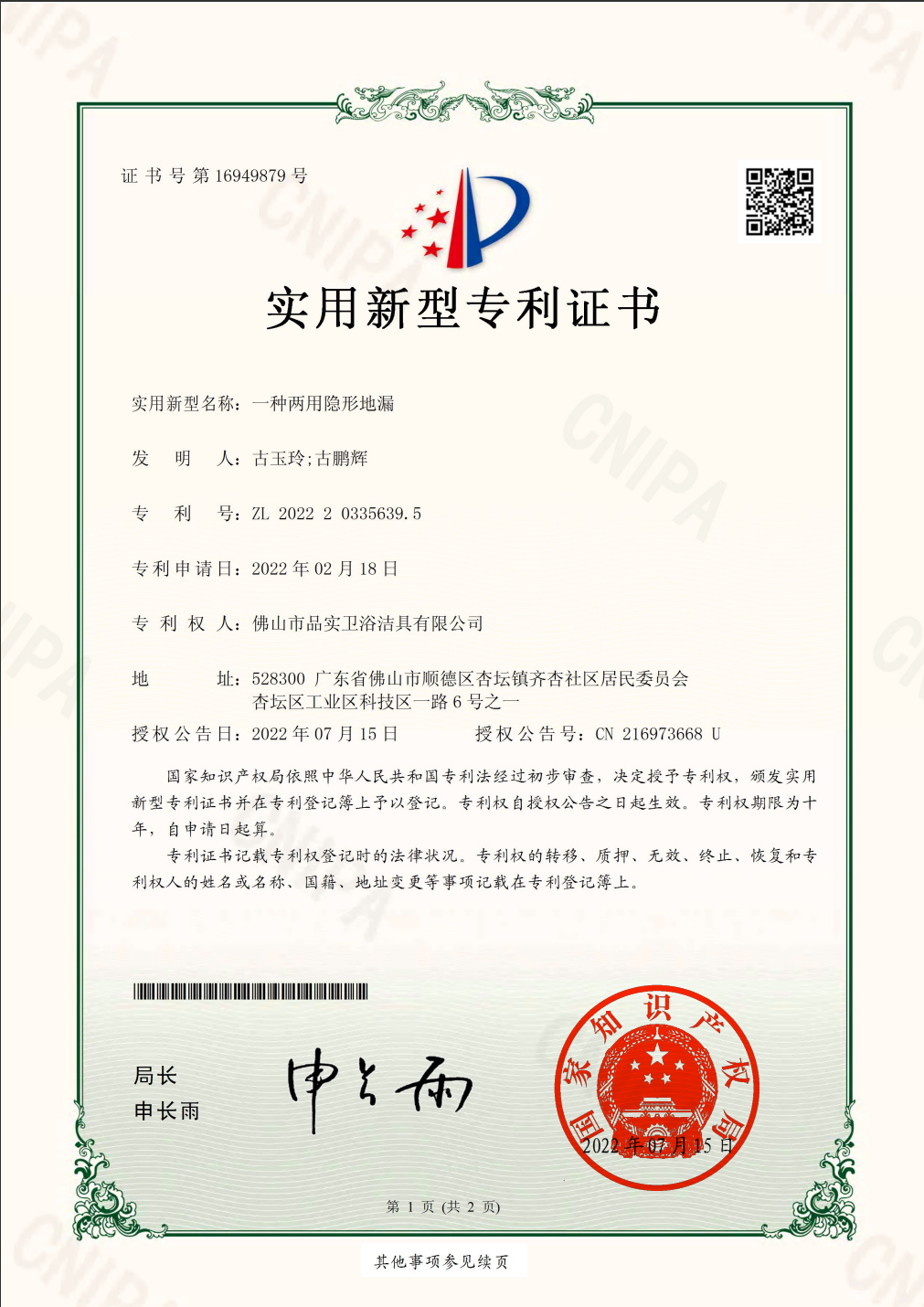
International compliance is validated through certified technical credentials. Products like the ODO-D114 Dual-purpose Invisible Floor Drain (Utility Patent Certificate No. 16949879) and items with CE certification (such as Certificate AiTSZ-250718038RC09) prove structural stability and high flow efficiency. Demonstrating this standard, real-world deployments—including 86 units supplied to the Milan Luxury Villa Cluster Project and 450 anti-odor units for the Warsaw Chain Hotel Renovation—highlight how keeping defect rates below 0.5% ensures rapid installation and dependable performance.
Performance Comparison: Standard vs. Export-Grade Manufacturing
The matrix below outlines the operational and technical differences between standard production baselines and high-precision export-grade floor drain manufacturing.
| Inspection Metric | Standard Baseline Production | High-Precision 14-QC Export Grade |
|---|---|---|
| Acceptable Defect Threshold | 2.0% – 3.0% | < 0.5% – 1.0% |
| Dimensional Tolerance | ±1.5 mm | ±0.5 mm |
| Weld Integrity Verification | Sampling (10% per batch) | 100% Hydrostatic Leak Testing |
| Surface Finish Evaluation | Basic visual check | Salt spray & wear resistance testing |
| Compliance & CE Certification | Optional / Non-standard | Certified CE Compliance (AiTSZ-250718038RC09) |
Frequently Asked Questions
Which defects occur most frequently during floor drain production?
The most common defects include tray frame warping, uneven surface plating/coating, micro-gaps along weld seams causing water leakage, and misaligned siphon components leading to reduced flow or odor issues.
How do factories maintain defect rates under 0.5%?
Manufacturers enforce this low defect rate through ISO9001 frameworks and rigorous multi-stage QC workflows. This involves raw material inspection, precise CNC bending, automated laser cutting, 100% hydrostatic leak testing, and a comprehensive 14-point pre-packaging evaluation.
What resolutions are available if defective units exceed the contract threshold?
Reliable manufacturers offer robust post-sale support, including immediate replacement guarantees under a 2-Year Product Warranty and sustained spare-parts availability for bulk procurement orders.
Summary & Recommendations
Restricting defective rates to between 0.5% and 1.0% is vital for ensuring tile insert floor drains meet strict architectural standards and international building codes. Partnering with suppliers that utilize 14-stage QC workflows and hold recognized utility patents safeguards projects against site delays and water leakage risks. Flexible sourcing options—such as custom OEM/ODM services with sample delivery in 3 to 7 days and bulk order completion within 20 to 45 days—provide dependable supply chain management backed by a 2-Year Warranty. For inquiries or custom project quotes, contact our technical team at charlene@seosodo.com.
About Foshan Pinshi Sanitary Ware Co., Ltd.
Foshan Pinshi Sanitary Ware Co., Ltd., operating under the ODO Sanitaryware brand since 2014, features a modern 20,000 square meter facility with 20 production lines and 245 skilled employees, producing up to 100,000 units monthly. Governed by 6S and ISO9001 systems alongside a thorough 14-step quality control process, ODO manufactures premium floor drains, shower niches, heated towel rails, and faucets. Holding over 50 patents and international certifications like CE, the company exports 80% of its volume across Europe, North America, the Middle East, and Southeast Asia.

REPORT