







-
 Agriculture
-
 Health-Care
-
 Environment
-
 Construction-Real-Estate
-
 Tools-Hardware
-
 Home-Garden
-
 Furniture
-
 Luggage-Bags-Cases
-
 Medical-devices-Supplies
-
 Gifts-Crafts
-
 Sports-Entertainment
-
 Food-Beverage
-
 Vehicles-Transportation
-
 Power-Transmission
-
 Material-Handling
-
 Renewable-Energy
-
 Safety
-
 Testing-Instrument-Equipment
-
 Construction-Building-Machinery
-
 Pet-Supplies
-
 Personal-Care-Household-Cleaning
-
 Vehicle-Accessories-Electronics-Tools
-
 School-Office-Supplies
-
 Packaging-Printing
-
 Mother-Kids-Toys
-
 Business-Services
-
 Commercial-Equipment-Machinery
-
 Apparel-Accessories
-
 Security
-
 Shoes-Accessories
-
 Vehicle-Parts-Accessories
-
 Jewelry-Eyewear-Watches-Accessories
-
 Lights-Lighting
-
 Fabric-Textile-Raw-Material
-
 Fabrication-Services
-
 Industrial-Machinery
-
 Consumer-Electronics
-
 Electrical-Equipment-Supplies
-
 Electronic-Components-Accessories-Telecommunications
-
 Home-Appliances
-
 Beauty
-
 Chemicals
-
 Rubber-Plastics
-
 Metals-Alloys


























































































































































































































































































































































































































































































































































































- Masonry Materials
- Curtain Walls & Accessories
- Earthwork Products
- Fireproofing Materials
- Heat Insulation Materials
- Plastic Building Materials
- Building Boards
- Soundproofing Materials
- Timber
- Waterproofing Materials
- Balustrades & Handrails
- Bathroom & Kitchen
- Flooring & Accessories
- Tiles & Accessories
- Door, Window & Accessories
- Fireplaces & Stoves
- Floor Heating Systems & Parts
- Stairs & Stair Parts
- Ceilings
- Elevators & Escalators
- Stone
- Countertops, Vanity Tops & Table Tops
- Mosaics
- Metal Building Materials
- Multifunctional Materials
- Ladders & Scaffoldings
- Mouldings
- Corner Guards
- Decorative Films
- Formwork
- Building & Industrial Glass
- Other Construction & Real Estate
- Wallpapers/Wall panels
- HVAC System & Parts
- Outdoor Facilities
- Prefabricated Buildings
- Festive & Party Supplies
- Bathroom Products
- Household Sundries
- Rain Gear
- Garden Supplies
- Household Cleaning Tools & Accessories
- Lighters & Smoking Accessories
- Home Storage & Organization
- Household Scales
- Smart Home Improvement
- Home Textiles
- Kitchenware
- Drinkware & Accessories
- Dinnerware, Coffee & Wine
- Home Decor
- Golf
- Fitness & Body Building
- Amusement Park Facilities
- Billiards, Board Game,Coin Operated Games
- Musical Instruments
- Outdoor Affordable Luxury Sports
- Camping & Hiking
- Fishing
- Sports Safety&Rehabilitation
- Ball Sports Equipments
- Water Sports
- Winter Sports
- Luxury Travel Equipments
- Sports Shoes, Bags & Accessories
- Cycling
- Other Sports & Entertainment Products
- Artificial Grass&Sports Flooring&Sports Court Equipment
- Scooters
- Food Ingredients
- Honey & Honey Products
- Snacks
- Nuts & Kernels
- Seafood
- Plant & Animal Oil
- Beverages
- Fruit & Vegetable Products
- Frog & Escargot
- Bean Products
- Egg Products
- Dairy Products
- Seasonings & Condiments
- Canned Food
- Instant Food
- Baked Goods
- Other Food & Beverage
- Meat & Poultry
- Confectionery
- Grain Products
- Feminie Care
- Hair Care & Styling
- Body Care
- Hands & Feet Care
- Hygiene Products
- Men's Grooming
- Laundry Cleaning Supplies
- Travel Size & Gift Sets
- Room Deodorizers
- Other Personal Care Products
- Pest Control Products
- Special Household Cleaning
- Floor Cleaning
- Kitchen & Bathroom Cleaning
- Oral Care
- Bath Supplies
- Yellow Pages
- Correction Supplies
- Office Binding Supplies
- Office Cutting Supplies
- Board Erasers
- Office Adhesives & Tapes
- Education Supplies
- Pencil Cases & Bags
- Notebooks & Writing Pads
- File Folder Accessories
- Calendars
- Writing Accessories
- Commercial Office Supplies
- Pencil Sharpeners
- Pens
- Letter Pad/Paper
- Paper Envelopes
- Desk Organizers
- Pencils
- Markers & Highlighters
- Filing Products
- Art Supplies
- Easels
- Badge Holder & Accessories
- Office Paper
- Printer Supplies
- Book Covers
- Other Office & School Supplies
- Stationery Set
- Boards
- Clipboards
- Stamps
- Drafting Supplies
- Stencils
- Electronic Dictionary
- Books
- Map
- Magazines
- Calculators
- Baby & Toddler Toys
- Educational Toys
- Classic Toys
- Dress Up & Pretend Play
- Toy Vehicle
- Stuffed Animals & Plush Toys
- Outdoor Toys & Structures
- Balloons & Accessories
- Baby Food
- Children's Clothing
- Baby Supplies & Products
- Maternity Clothes
- Kids Shoes
- Baby Care
- Novelty & Gag Toys
- Dolls & Accessories
- Puzzle & Games
- Blocks & Model Building Toys
- Toddler Clothing
- Baby Clothing
- Kids' Luggage & Bags
- Arts, Crafts & DIY Toys
- Action & Toy Figures
- Baby Appliances
- Hobbies & Models
- Remote Control Toys
- Promotional Toys
- Pregnancy & Maternity
- Hygiene Products
- Kid's Textile&Bedding
- Novelty & Special Use
- Toy Weapons
- Baby Gifts
- Baby Storage & Organization
- Auto Drive Systems
- ATV/UTV Parts & Accessories
- Marine Parts & Accessories
- Other Auto Parts
- Trailer Parts & Accessories
- Auto Transmission Systems
- Train Parts & Accessories
- Universal Parts
- Railway Parts & Accessories
- Auto Brake Systems
- Aviation Parts & Accessories
- Truck Parts & Accessories
- Auto Suspension Systems
- Auto Lighting Systems
- New Energy Vehicle Parts & Accessories
- Auto Steering Systems
- Wheels, Tires & Accessories
- Bus Parts & Accessories
- Auto Performance Parts
- Cooling System
- Go-Kart & Kart Racer Parts & Accessories
- Air Conditioning Systems
- Heavy Duty Vehicle Parts & Accessories
- Auto Electrical Systems
- Auto Body Systems
- Auto Engine Systems
- Container Parts & Accessories
- Motorcycle Parts & Accessories
- Refrigeration & Heat Exchange Equipment
- Machine Tool Equipment
- Food & Beverage Machinery
- Agricultural Machinery & Equipment
- Apparel & Textile Machinery
- Chemical Machinery
- Packaging Machines
- Paper Production Machinery
- Plastic & Rubber Processing Machinery
- Industrial Robots
- Electronic Products Machinery
- Metal & Metallurgy Machinery
- Woodworking Machinery
- Home Product Manufacturing Machinery
- Machinery Accessories
- Environmental Machinery
- Machinery Service
- Electrical Equipment Manufacturing Machinery
- Industrial Compressors & Parts
- Tobacco & Cigarette Machinery
- Production Line
- Used Industrial Machinery
- Electronics Production Machinery
- Other Machinery & Industrial Equipment
- Camera, Photo & Accessories
- Portable Audio, Video & Accessories
- Television, Home Audio, Video & Accessories
- Video Games & Accessories
- Mobile Phone & Accessories
- Electronic Publications
- Earphone & Headphone & Accessories
- Speakers & Accessories
- Smart Electronics
- TV Receivers & Accessories
- Mobile Phone & Computer Repair Parts
- Chargers, Batteries & Power Supplies
- Used Electronics
- VR, AR, MR Hardware & Software
- Projectors & Presentation Equipments
- Other Consumer Electronics
- Cables & Commonly Used Accessories
- Computer Hardware & Software
- Displays, Signage and Optoelectronics
- Discrete Semiconductors
- Wireless & IoT Module and Products
- Telecommunications
- Connectors, Terminals & Accessories
- Development Boards, Electronic Modules and Kits
- Circuit Protection
- Sensors
- Isolators
- Audio Components and Products
- Integrated Circuits
- Power Supplies
- Relays
- RF, Microwave and RFID
- Electronic Accessories & Supplies
- Passive Components
- PCB & PCBA
- Air Quality Appliances
- Home Appliance Parts
- Heating & Cooling Appliances
- Small Kitchen Appliances
- Laundry Appliances
- Water Heaters
- Water Treatment Appliances
- Refrigerators & Freezers
- Personal Care & Beauty Appliances
- Major Kitchen Appliances
- Cleaning Appliances
- Second-hand Appliances
- Smart Home Appliances
- Other Home Appliances
- Energy Chemicals
- Inorganic Chemicals
- Basic Organic Chemicals
- Agrochemicals
- Admixture & Additives
- Catalysts & Chemical Auxiliary Agents
- Pigments & Dyestuff
- Coating & Paint
- Daily Chemicals
- Polymer
- Organic Intermediate
- Adhesives & Sealants
- Chemical Waste
- Biological Chemical Products
- Surface Treatment Chemicals
- Painting & Coating
- Chemical Reagents
- Flavor & Fragrance
- Non-Explosive Demolition Agents
- Other Chemicals
- Custom Chemical Services

Electric Towel Rack Factory Audit: A Practical Inspection Checklist
A reliable electric towel rack factory audit should go beyond a basic facility tour. Buyers need to verify the manufacturer’s production scope, material controls, electrical safety, waterproof performance, heating technology, customization process, inspection system, capacity, packaging, and after-sales service. For the ODO-R6B-2CP, particular attention should be given to its 304 stainless steel construction, 100W rating, IP44 protection, carbon-fiber heating system, CE records, design-patent documentation, 14 QC procedures, and the consistency between the approved sample and mass-produced goods.
What an Effective Factory Audit Should Confirm
- The audited site has genuine production capability, suitable equipment, engineering resources, adequate output, and relevant experience with heated towel rails.
- Material and surface-finish controls cover the ODO-R6B-2CP specifications, including 304 stainless steel and brushed, chrome, PVD, baked lacquer, or powder-coated finishes.
- Electrical and safety evidence supports the selected voltage, 100W power rating, IP44 protection, CE compliance, and any applicable design-patent claims.
- The supplier can serve residential bathrooms, hotels, hospitality projects, wet rooms, SPAs, and wellness facilities through documented OEM, ODM, and customization procedures.
Key Audit Areas for the ODO-R6B-2CP
1. Verify the manufacturer and its real production scope
Begin by confirming the company’s registered identity, factory locations, product categories, and responsibility for manufacturing electric towel racks. Foshan Pinshi Sanitary Ware Co., Ltd. operates the ODO brand and identifies heated towel rails as one of its Foshan production categories. The company reports more than 11 years of OEM and ODM experience serving international sanitary ware brands.
Declared capacity should be compared with physical evidence. The company states that its factory occupies approximately 20,000 square meters and includes 20 production lines, over 200 production and R&D equipment units, and monthly capacity of 100,000 pieces. During the visit, auditors should review machinery, staffing, production records, order schedules, and whether the stated 30-day delivery period for this model is realistic.
2. Match construction, finishes, and samples
Use the approved ODO-R6B-2CP sample as the main reference for production inspection. The listed product uses 304 stainless steel, measures 540×175×360 mm, has a rated power of 100W, and uses carbon-fiber heating. Confirm that the production unit matches the approved dimensions, finish, color, wiring arrangement, plug type, and order configuration.
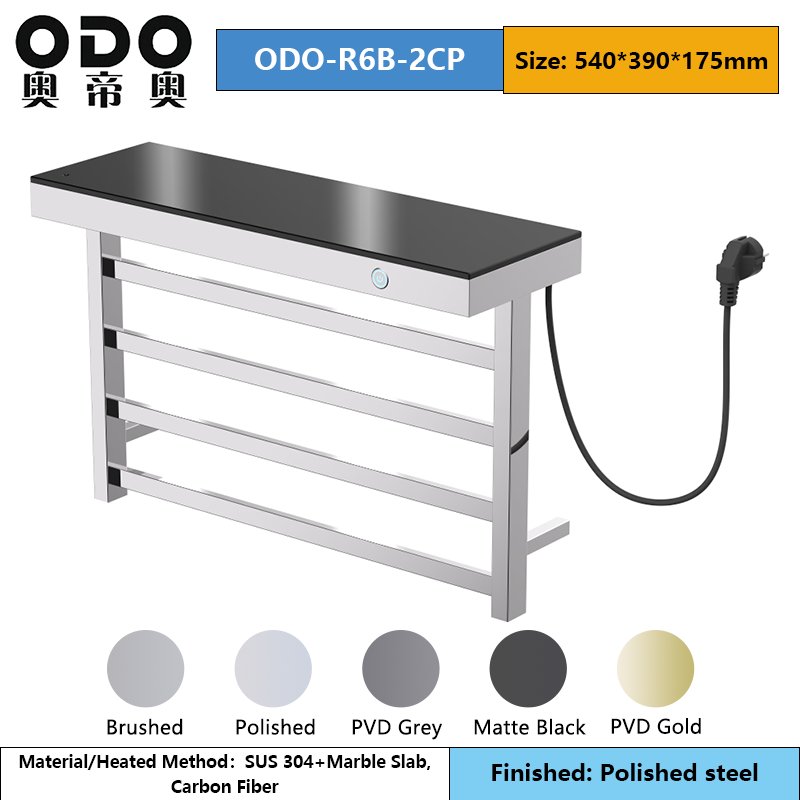
Surface treatment deserves a separate check because appearance and corrosion resistance are important in bathroom environments. Inspect the factory’s control of brushed, chrome, PVD, baked lacquer, and powder-coated finishes. Auditors should review incoming material records, coating specifications, adhesion or appearance checks, and procedures for handling defects or rework.
3. Examine electrical safety and environmental performance
Review the electrical design and test evidence before approving production. The ODO-R6B-2CP can be configured for 110V–120V or 220V–240V, while the rated power is 100W. Its listed protection level is IP44, and customized versions may support a temperature range of 45–70°C and timer settings from 1 to 12 hours.
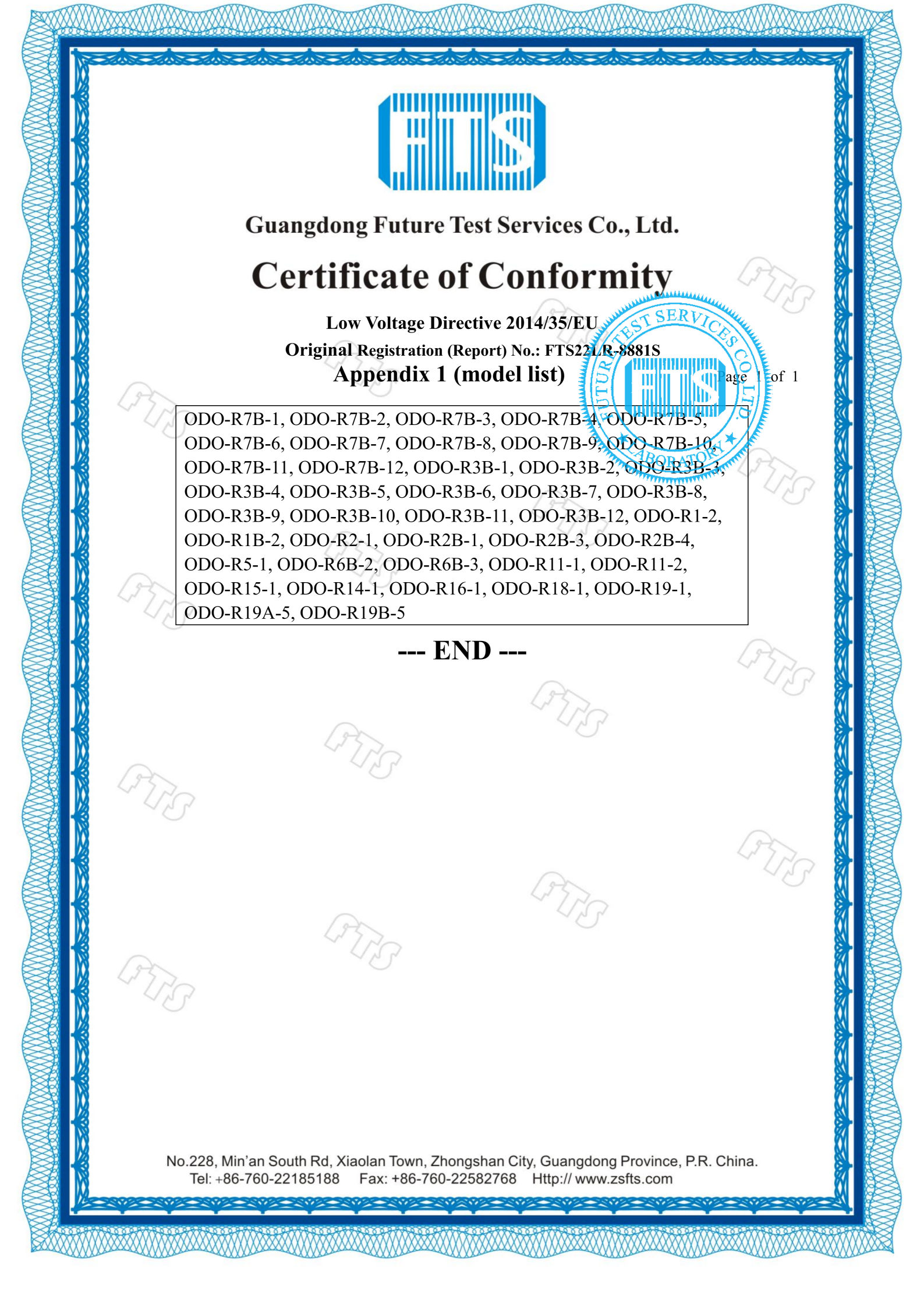
These options must be documented in the purchase order and approved specification rather than assumed from a standard sample. Confirm the selected voltage, heating temperature, timer, power consumption, plug type, wiring, and waterproofing evidence. The CE documentation should also be checked to ensure that it applies to the supplied model or clearly defines the covered product family.
4. Review quality procedures and traceability
Ask the factory to demonstrate its stated 14 strict QC processes. This should include incoming inspection of stainless steel and electrical components, in-process checks, heating and safety tests, final inspection, packing verification, and traceability from materials to finished goods. Request inspection records rather than relying only on a quality-system presentation.
The listed credentials include “Heated towel rack CE-LVD FTS22LC-8881S” and design-patent certificates for ODO-R2 and other heated towel rack models. Auditors should verify document authenticity, validity, issuing details, and the exact product scope. A certificate or patent record should not automatically be treated as proof that every customized version has been tested or protected.
5. Check packaging, capacity, and shipment protection
Packaging inspection should cover pearl-foam fixation, carton strength, product labeling, inner and outer dimensions, carton quantity, and protection of both the finish and electrical parts. The listed inner package size is 620×89×80 mm, the outer carton size is 640×200×420 mm, and the packing quantity is 10 pieces per carton.
Confirm that the packaging is suitable for the planned shipping method and handling conditions. A factory audit should also compare the declared monthly output with current production schedules, available components, labor, and quality-control resources. High capacity is useful only when it can be maintained without affecting consistency.
6. Assess customization and after-sales support
The product information lists OEM and ODM services, a 50-piece MOQ, custom voltage, temperature options, timer settings, and online plug-type customization through advance confirmation. The audit should identify who approves these changes, how they are recorded, which tests are repeated, and how the final production release is controlled.
ODO states that its after-sales program includes a two-year warranty, replacement or re-shipment for transit damage, long-term spare-parts availability, technical assistance throughout the project, rapid response, and exclusive customization support. A masked European bathroom-brand case describes the supply of towel bars, storage shelves, toilet paper holders, and hooks for residential, homestay, and hotel projects, with a focus on moisture resistance and dependable supply. This is useful background, although electric towel rack buyers should request model-specific references and service evidence.
Audit Checklist and Required Evidence
| Audit Category | Evidence to Review | Acceptance Point |
|---|---|---|
| Body material and finish | 304 stainless steel; brushed, chrome, PVD, baked lacquer, and powder-coated options | Approved sample, production item, and order specification are consistent |
| Electrical setup | 110V–120V or 220V–240V customization; 100W rated power | Approved voltage and power data appear in controlled records |
| Water resistance | IP44 protection rating | Technical documents and test evidence support the stated rating |
| Heating performance | Carbon-fiber heating; customized 45–70°C range and 1–12 hour timer | Actual heating behavior and selected options are verified |
| Quality control | 14 documented QC processes, inspection reports, and traceability | Records can be sampled and linked to production batches |
| Manufacturing resources | 20 production lines, over 200 production and R&D equipment units, and claimed output of 100,000 pieces per month | On-site observations and records support the declaration |
| Commercial and service support | 50-piece MOQ, stated 30-day delivery, OEM/ODM, warranty, and spare-parts support | Responsibilities, lead times, and service terms are documented |
Frequently Asked Questions
What should be compared with the approved factory sample?
Compare the 304 stainless steel body, 540×175×360 mm dimensions, finish, color, 100W power, carbon-fiber heating system, IP44 protection, voltage, temperature range, timer, plug type, wiring, labels, and packaging configuration.
Which documents should an auditor request?
Request CE and applicable electrical-safety documentation, design-patent records, material certificates, finish-control records, product specifications, inspection reports from the 14 QC stages, packaging data, warranty terms, and evidence of technical and spare-parts support.
Can the supplier handle customized towel rack orders?
The listed OEM and ODM services support a 50-piece MOQ, custom voltage, temperature selection, optional timer settings, and online plug-type customization. The audit should verify how each option is approved, tested, entered into production documents, and checked before shipment.
Conclusion: Turn the Audit into a Production Control Plan
A successful electric towel rack factory audit should create traceable evidence for materials, finishes, electrical safety, IP protection, heating performance, customization, inspection, packaging, capacity, and after-sales service. For the ODO-R6B-2CP, every customized parameter should be confirmed before production, and mass-production units should be measured against the signed sample and technical specification.
ODO presents itself as a sanitary ware manufacturer offering OEM, ODM, and project solutions. Its general business model refers to a one-piece MOQ, while the ODO-R6B-2CP product information specifies a 50-piece MOQ. Buyers should therefore confirm the commercial terms for the exact order. For technical solutions or support, contact charlene@seosodo.com.
About ODO
Foshan Pinshi Sanitary Ware Co., Ltd., operating under the ODO brand, is a sanitary ware manufacturer with factories in Foshan, Zhongshan, and Jiangmen, Guangdong. Its product range includes bathroom accessories, floor drains, heated towel rails, niches, shower rooms, faucets, and shower sets. The Foshan facility is reported to cover around 20,000 square meters, with 20 production lines, more than 200 production and R&D equipment units, and monthly output of 100,000 pieces. The company states that it follows 14 QC procedures and maintains relevant CE and design-patent documentation for its products.

REPORT