







-
 Agriculture
-
 Health-Care
-
 Environment
-
 Construction-Real-Estate
-
 Tools-Hardware
-
 Home-Garden
-
 Furniture
-
 Luggage-Bags-Cases
-
 Medical-devices-Supplies
-
 Gifts-Crafts
-
 Sports-Entertainment
-
 Food-Beverage
-
 Vehicles-Transportation
-
 Power-Transmission
-
 Material-Handling
-
 Renewable-Energy
-
 Safety
-
 Testing-Instrument-Equipment
-
 Construction-Building-Machinery
-
 Pet-Supplies
-
 Personal-Care-Household-Cleaning
-
 Vehicle-Accessories-Electronics-Tools
-
 School-Office-Supplies
-
 Packaging-Printing
-
 Mother-Kids-Toys
-
 Business-Services
-
 Commercial-Equipment-Machinery
-
 Apparel-Accessories
-
 Security
-
 Shoes-Accessories
-
 Vehicle-Parts-Accessories
-
 Jewelry-Eyewear-Watches-Accessories
-
 Lights-Lighting
-
 Fabric-Textile-Raw-Material
-
 Fabrication-Services
-
 Industrial-Machinery
-
 Consumer-Electronics
-
 Electrical-Equipment-Supplies
-
 Electronic-Components-Accessories-Telecommunications
-
 Home-Appliances
-
 Beauty
-
 Chemicals
-
 Rubber-Plastics
-
 Metals-Alloys


























































































































































































































































































































































































































































































































































































- Masonry Materials
- Curtain Walls & Accessories
- Earthwork Products
- Fireproofing Materials
- Heat Insulation Materials
- Plastic Building Materials
- Building Boards
- Soundproofing Materials
- Timber
- Waterproofing Materials
- Balustrades & Handrails
- Bathroom & Kitchen
- Flooring & Accessories
- Tiles & Accessories
- Door, Window & Accessories
- Fireplaces & Stoves
- Floor Heating Systems & Parts
- Stairs & Stair Parts
- Ceilings
- Elevators & Escalators
- Stone
- Countertops, Vanity Tops & Table Tops
- Mosaics
- Metal Building Materials
- Multifunctional Materials
- Ladders & Scaffoldings
- Mouldings
- Corner Guards
- Decorative Films
- Formwork
- Building & Industrial Glass
- Other Construction & Real Estate
- Wallpapers/Wall panels
- HVAC System & Parts
- Outdoor Facilities
- Prefabricated Buildings
- Festive & Party Supplies
- Bathroom Products
- Household Sundries
- Rain Gear
- Garden Supplies
- Household Cleaning Tools & Accessories
- Lighters & Smoking Accessories
- Home Storage & Organization
- Household Scales
- Smart Home Improvement
- Home Textiles
- Kitchenware
- Drinkware & Accessories
- Dinnerware, Coffee & Wine
- Home Decor
- Golf
- Fitness & Body Building
- Amusement Park Facilities
- Billiards, Board Game,Coin Operated Games
- Musical Instruments
- Outdoor Affordable Luxury Sports
- Camping & Hiking
- Fishing
- Sports Safety&Rehabilitation
- Ball Sports Equipments
- Water Sports
- Winter Sports
- Luxury Travel Equipments
- Sports Shoes, Bags & Accessories
- Cycling
- Other Sports & Entertainment Products
- Artificial Grass&Sports Flooring&Sports Court Equipment
- Scooters
- Food Ingredients
- Honey & Honey Products
- Snacks
- Nuts & Kernels
- Seafood
- Plant & Animal Oil
- Beverages
- Fruit & Vegetable Products
- Frog & Escargot
- Bean Products
- Egg Products
- Dairy Products
- Seasonings & Condiments
- Canned Food
- Instant Food
- Baked Goods
- Other Food & Beverage
- Meat & Poultry
- Confectionery
- Grain Products
- Feminie Care
- Hair Care & Styling
- Body Care
- Hands & Feet Care
- Hygiene Products
- Men's Grooming
- Laundry Cleaning Supplies
- Travel Size & Gift Sets
- Room Deodorizers
- Other Personal Care Products
- Pest Control Products
- Special Household Cleaning
- Floor Cleaning
- Kitchen & Bathroom Cleaning
- Oral Care
- Bath Supplies
- Yellow Pages
- Correction Supplies
- Office Binding Supplies
- Office Cutting Supplies
- Board Erasers
- Office Adhesives & Tapes
- Education Supplies
- Pencil Cases & Bags
- Notebooks & Writing Pads
- File Folder Accessories
- Calendars
- Writing Accessories
- Commercial Office Supplies
- Pencil Sharpeners
- Pens
- Letter Pad/Paper
- Paper Envelopes
- Desk Organizers
- Pencils
- Markers & Highlighters
- Filing Products
- Art Supplies
- Easels
- Badge Holder & Accessories
- Office Paper
- Printer Supplies
- Book Covers
- Other Office & School Supplies
- Stationery Set
- Boards
- Clipboards
- Stamps
- Drafting Supplies
- Stencils
- Electronic Dictionary
- Books
- Map
- Magazines
- Calculators
- Baby & Toddler Toys
- Educational Toys
- Classic Toys
- Dress Up & Pretend Play
- Toy Vehicle
- Stuffed Animals & Plush Toys
- Outdoor Toys & Structures
- Balloons & Accessories
- Baby Food
- Children's Clothing
- Baby Supplies & Products
- Maternity Clothes
- Kids Shoes
- Baby Care
- Novelty & Gag Toys
- Dolls & Accessories
- Puzzle & Games
- Blocks & Model Building Toys
- Toddler Clothing
- Baby Clothing
- Kids' Luggage & Bags
- Arts, Crafts & DIY Toys
- Action & Toy Figures
- Baby Appliances
- Hobbies & Models
- Remote Control Toys
- Promotional Toys
- Pregnancy & Maternity
- Hygiene Products
- Kid's Textile&Bedding
- Novelty & Special Use
- Toy Weapons
- Baby Gifts
- Baby Storage & Organization
- Auto Drive Systems
- ATV/UTV Parts & Accessories
- Marine Parts & Accessories
- Other Auto Parts
- Trailer Parts & Accessories
- Auto Transmission Systems
- Train Parts & Accessories
- Universal Parts
- Railway Parts & Accessories
- Auto Brake Systems
- Aviation Parts & Accessories
- Truck Parts & Accessories
- Auto Suspension Systems
- Auto Lighting Systems
- New Energy Vehicle Parts & Accessories
- Auto Steering Systems
- Wheels, Tires & Accessories
- Bus Parts & Accessories
- Auto Performance Parts
- Cooling System
- Go-Kart & Kart Racer Parts & Accessories
- Air Conditioning Systems
- Heavy Duty Vehicle Parts & Accessories
- Auto Electrical Systems
- Auto Body Systems
- Auto Engine Systems
- Container Parts & Accessories
- Motorcycle Parts & Accessories
- Refrigeration & Heat Exchange Equipment
- Machine Tool Equipment
- Food & Beverage Machinery
- Agricultural Machinery & Equipment
- Apparel & Textile Machinery
- Chemical Machinery
- Packaging Machines
- Paper Production Machinery
- Plastic & Rubber Processing Machinery
- Industrial Robots
- Electronic Products Machinery
- Metal & Metallurgy Machinery
- Woodworking Machinery
- Home Product Manufacturing Machinery
- Machinery Accessories
- Environmental Machinery
- Machinery Service
- Electrical Equipment Manufacturing Machinery
- Industrial Compressors & Parts
- Tobacco & Cigarette Machinery
- Production Line
- Used Industrial Machinery
- Electronics Production Machinery
- Other Machinery & Industrial Equipment
- Camera, Photo & Accessories
- Portable Audio, Video & Accessories
- Television, Home Audio, Video & Accessories
- Video Games & Accessories
- Mobile Phone & Accessories
- Electronic Publications
- Earphone & Headphone & Accessories
- Speakers & Accessories
- Smart Electronics
- TV Receivers & Accessories
- Mobile Phone & Computer Repair Parts
- Chargers, Batteries & Power Supplies
- Used Electronics
- VR, AR, MR Hardware & Software
- Projectors & Presentation Equipments
- Other Consumer Electronics
- Cables & Commonly Used Accessories
- Computer Hardware & Software
- Displays, Signage and Optoelectronics
- Discrete Semiconductors
- Wireless & IoT Module and Products
- Telecommunications
- Connectors, Terminals & Accessories
- Development Boards, Electronic Modules and Kits
- Circuit Protection
- Sensors
- Isolators
- Audio Components and Products
- Integrated Circuits
- Power Supplies
- Relays
- RF, Microwave and RFID
- Electronic Accessories & Supplies
- Passive Components
- PCB & PCBA
- Air Quality Appliances
- Home Appliance Parts
- Heating & Cooling Appliances
- Small Kitchen Appliances
- Laundry Appliances
- Water Heaters
- Water Treatment Appliances
- Refrigerators & Freezers
- Personal Care & Beauty Appliances
- Major Kitchen Appliances
- Cleaning Appliances
- Second-hand Appliances
- Smart Home Appliances
- Other Home Appliances
- Energy Chemicals
- Inorganic Chemicals
- Basic Organic Chemicals
- Agrochemicals
- Admixture & Additives
- Catalysts & Chemical Auxiliary Agents
- Pigments & Dyestuff
- Coating & Paint
- Daily Chemicals
- Polymer
- Organic Intermediate
- Adhesives & Sealants
- Chemical Waste
- Biological Chemical Products
- Surface Treatment Chemicals
- Painting & Coating
- Chemical Reagents
- Flavor & Fragrance
- Non-Explosive Demolition Agents
- Other Chemicals
- Custom Chemical Services

Eliminating Fuel Overhead in Stop-and-Go Routes: The Engineering Behind 17-Seat Electric Sightseeing Buses
High-frequency passenger transit—whether across holiday resorts, airport terminals, or historic tourist locations—presents a severe operational hurdle for traditional internal combustion engines. Repeated stopping and starting rapidly inflates fuel consumption and causes heavy wear on conventional braking hardware. The 17seats bus built on a pure electric powertrain solves this inefficiency, completely removing gas and diesel costs while enabling zero-emission shuttle service.
Key Advantages of All-Electric Transit Operations
- Zero Idle Energy Loss: Electric motors consume power only when moving, meaning stationary boarding stops use no battery energy.
- Robust Chassis & Suspension: Designed with a high-strength anti-corrosion frame, MacPherson independent front suspension, and heavy-duty rear leaf springs to ensure smooth handling under full passenger loads.
- Advanced Lightweight Materials: Features a durable PT+PBT alloy injection-molded front hood paired with an open-cockpit framework to minimize curb weight without sacrificing impact resistance.
- Effortless Low-Speed Maneuverability: Equipped with Electric Power-Assisted Steering (EPS) and responsive braking, making frequent stop-and-go driving effortless for operators.
Engineering Excellence & Architectural Insights
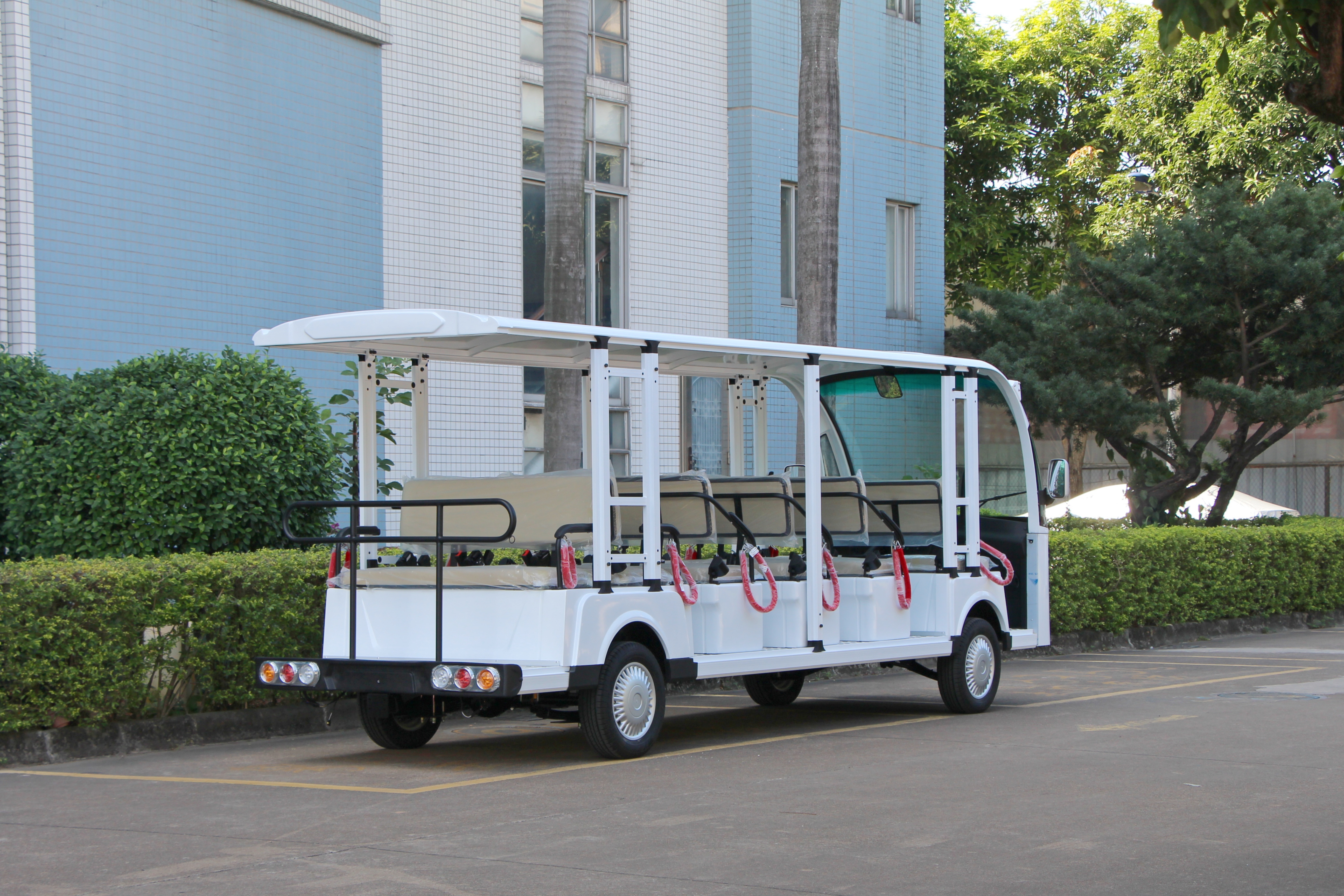
Designed specifically to withstand intense municipal and tourist transit cycles, the electric 17seats bus (Model LQY148A / D14A+3) produced by Guangzhou Langqing Electric Car CO., LTD. addresses thermal overload and acceleration power spikes through smart structural design.
By integrating an open cockpit and lightweight roof structure, the vehicle maintains a reduced overall weight, minimizing battery consumption during acceleration phases. Minor front collisions—common in crowded resort environments—are absorbed by the high-impact PT+PBT alloy body panels. Furthermore, the high-strength anti-rust chassis frame guarantees structural durability over years of continuous deployment.

International Compliance & Global Proven Track Record
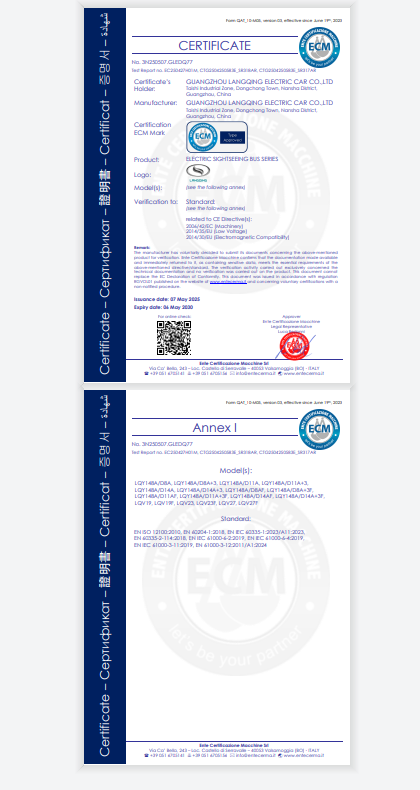
Safety during constant passenger boarding is ensured through automotive-grade responsive brakes coupled with Electric Power-Assisted Steering (EPS). The vehicle's quality standards are backed by European CE certifications (Certificate numbers 3N250506.GLEDQ43, 3N250507.GLEDQ77, and 3N250507.GLEDQ78).
Global commercial shuttle projects demonstrate the vehicle's real-world dependability: over 3,500 units operate in Cuba's transit networks, 131 units serve cultural tourism sites in Egypt, and 20 units handle passenger transfers at airport terminals in Argentina.
Performance Comparison: Electric vs. Combustion Mini-Buses
The table below contrasts the key technical features of the electric 17seats bus against conventional internal combustion vehicles under intensive stop-and-go operations:
| Technical Parameter | Electric 17seats Bus (Model LQY148A) | Traditional Combustion Mini-Bus |
|---|---|---|
| Fuel Consumption | Zero (100% Battery-Powered Drive) | High (Substantial idle & acceleration waste) |
| Front Suspension System | MacPherson Independent Suspension | Standard Leaf Spring / Rigid Axle |
| Exterior Panel Construction | Injection-Molded PT+PBT Alloy | Standard Stamped Steel / Sheet Metal |
| Steering System | Electric Power-Assisted Steering (EPS) | Mechanical or Hydraulic Steering |
| Corrosion Protection | Anti-Rust High-Strength Steel Frame | Basic Paint Layer Coating |
| Quality Verification | 100% Assembly Line + Road Testing | Varies by Manufacturer |
Frequently Asked Questions
Why is an electric 17seats bus more economical for routes with frequent stops?
Unlike combustion engines that idle continuously, an electric powertrain consumes power only when the accelerator is engaged. When stopped for passenger boarding, energy consumption drops to zero.
How does the suspension system handle a fully loaded 17-passenger vehicle?
The dual-suspension layout features an independent MacPherson setup at the front for steering control and road dampening, complemented by heavy-duty rear leaf springs capable of supporting full load capacities across long shifts.
What quality assurance processes are performed prior to shipment?
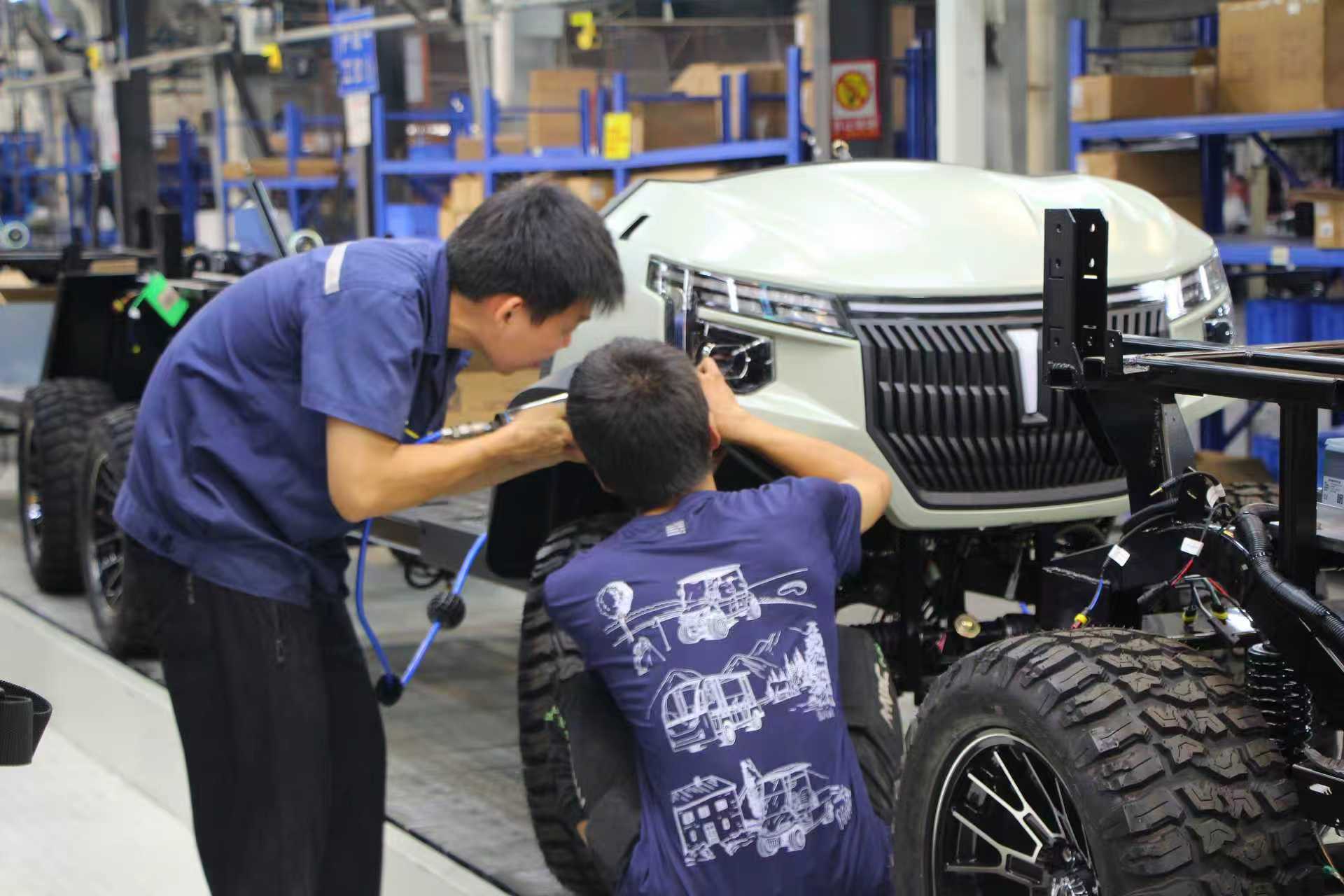
Each bus undergoes a thorough dual verification process, combining specialized diagnostic line testing and practical road testing before receiving dispatch authorization.
Procurement Guidelines & Manufacturer Overview
Switching to electric 17seats buses eliminates fuel expenses while optimizing maneuverability for high-frequency passenger transit. Orders are fulfilled directly under an integrated industry and trade supply model, featuring a Minimum Order Quantity (MOQ) of 1 unit, 15 to 30 days production lead time, ocean freight logistics, and standard terms of 30% deposit with the balance due before shipment. Each unit includes a 1-year comprehensive vehicle warranty. For inquiries or custom solutions, reach out to crystalhuang@langqing.cn.
Founded in 2000, Guangzhou Langqing Electric Car CO., LTD. operates a 35,000 m² manufacturing facility in Nansha District, Guangzhou. Supported by 160 employees and a 30-member R&D engineering team, the company maintains a monthly capacity of 1,000 units. Holding ISO9001, ISO14001, and EU CE certifications, Langqing supplies municipal, resort, and airport transport fleets across North America, South America, Europe, the Middle East, Africa, and Southeast Asia.
REPORT