







-
 Agriculture
-
 Health-Care
-
 Environment
-
 Construction-Real-Estate
-
 Tools-Hardware
-
 Home-Garden
-
 Furniture
-
 Luggage-Bags-Cases
-
 Medical-devices-Supplies
-
 Gifts-Crafts
-
 Sports-Entertainment
-
 Food-Beverage
-
 Vehicles-Transportation
-
 Power-Transmission
-
 Material-Handling
-
 Renewable-Energy
-
 Safety
-
 Testing-Instrument-Equipment
-
 Construction-Building-Machinery
-
 Pet-Supplies
-
 Personal-Care-Household-Cleaning
-
 Vehicle-Accessories-Electronics-Tools
-
 School-Office-Supplies
-
 Packaging-Printing
-
 Mother-Kids-Toys
-
 Business-Services
-
 Commercial-Equipment-Machinery
-
 Apparel-Accessories
-
 Security
-
 Shoes-Accessories
-
 Vehicle-Parts-Accessories
-
 Jewelry-Eyewear-Watches-Accessories
-
 Lights-Lighting
-
 Fabric-Textile-Raw-Material
-
 Fabrication-Services
-
 Industrial-Machinery
-
 Consumer-Electronics
-
 Electrical-Equipment-Supplies
-
 Electronic-Components-Accessories-Telecommunications
-
 Home-Appliances
-
 Beauty
-
 Chemicals
-
 Rubber-Plastics
-
 Metals-Alloys


























































































































































































































































































































































































































































































































































































- Masonry Materials
- Curtain Walls & Accessories
- Earthwork Products
- Fireproofing Materials
- Heat Insulation Materials
- Plastic Building Materials
- Building Boards
- Soundproofing Materials
- Timber
- Waterproofing Materials
- Balustrades & Handrails
- Bathroom & Kitchen
- Flooring & Accessories
- Tiles & Accessories
- Door, Window & Accessories
- Fireplaces & Stoves
- Floor Heating Systems & Parts
- Stairs & Stair Parts
- Ceilings
- Elevators & Escalators
- Stone
- Countertops, Vanity Tops & Table Tops
- Mosaics
- Metal Building Materials
- Multifunctional Materials
- Ladders & Scaffoldings
- Mouldings
- Corner Guards
- Decorative Films
- Formwork
- Building & Industrial Glass
- Other Construction & Real Estate
- Wallpapers/Wall panels
- HVAC System & Parts
- Outdoor Facilities
- Prefabricated Buildings
- Festive & Party Supplies
- Bathroom Products
- Household Sundries
- Rain Gear
- Garden Supplies
- Household Cleaning Tools & Accessories
- Lighters & Smoking Accessories
- Home Storage & Organization
- Household Scales
- Smart Home Improvement
- Home Textiles
- Kitchenware
- Drinkware & Accessories
- Dinnerware, Coffee & Wine
- Home Decor
- Golf
- Fitness & Body Building
- Amusement Park Facilities
- Billiards, Board Game,Coin Operated Games
- Musical Instruments
- Outdoor Affordable Luxury Sports
- Camping & Hiking
- Fishing
- Sports Safety&Rehabilitation
- Ball Sports Equipments
- Water Sports
- Winter Sports
- Luxury Travel Equipments
- Sports Shoes, Bags & Accessories
- Cycling
- Other Sports & Entertainment Products
- Artificial Grass&Sports Flooring&Sports Court Equipment
- Scooters
- Food Ingredients
- Honey & Honey Products
- Snacks
- Nuts & Kernels
- Seafood
- Plant & Animal Oil
- Beverages
- Fruit & Vegetable Products
- Frog & Escargot
- Bean Products
- Egg Products
- Dairy Products
- Seasonings & Condiments
- Canned Food
- Instant Food
- Baked Goods
- Other Food & Beverage
- Meat & Poultry
- Confectionery
- Grain Products
- Feminie Care
- Hair Care & Styling
- Body Care
- Hands & Feet Care
- Hygiene Products
- Men's Grooming
- Laundry Cleaning Supplies
- Travel Size & Gift Sets
- Room Deodorizers
- Other Personal Care Products
- Pest Control Products
- Special Household Cleaning
- Floor Cleaning
- Kitchen & Bathroom Cleaning
- Oral Care
- Bath Supplies
- Yellow Pages
- Correction Supplies
- Office Binding Supplies
- Office Cutting Supplies
- Board Erasers
- Office Adhesives & Tapes
- Education Supplies
- Pencil Cases & Bags
- Notebooks & Writing Pads
- File Folder Accessories
- Calendars
- Writing Accessories
- Commercial Office Supplies
- Pencil Sharpeners
- Pens
- Letter Pad/Paper
- Paper Envelopes
- Desk Organizers
- Pencils
- Markers & Highlighters
- Filing Products
- Art Supplies
- Easels
- Badge Holder & Accessories
- Office Paper
- Printer Supplies
- Book Covers
- Other Office & School Supplies
- Stationery Set
- Boards
- Clipboards
- Stamps
- Drafting Supplies
- Stencils
- Electronic Dictionary
- Books
- Map
- Magazines
- Calculators
- Baby & Toddler Toys
- Educational Toys
- Classic Toys
- Dress Up & Pretend Play
- Toy Vehicle
- Stuffed Animals & Plush Toys
- Outdoor Toys & Structures
- Balloons & Accessories
- Baby Food
- Children's Clothing
- Baby Supplies & Products
- Maternity Clothes
- Kids Shoes
- Baby Care
- Novelty & Gag Toys
- Dolls & Accessories
- Puzzle & Games
- Blocks & Model Building Toys
- Toddler Clothing
- Baby Clothing
- Kids' Luggage & Bags
- Arts, Crafts & DIY Toys
- Action & Toy Figures
- Baby Appliances
- Hobbies & Models
- Remote Control Toys
- Promotional Toys
- Pregnancy & Maternity
- Hygiene Products
- Kid's Textile&Bedding
- Novelty & Special Use
- Toy Weapons
- Baby Gifts
- Baby Storage & Organization
- Auto Drive Systems
- ATV/UTV Parts & Accessories
- Marine Parts & Accessories
- Other Auto Parts
- Trailer Parts & Accessories
- Auto Transmission Systems
- Train Parts & Accessories
- Universal Parts
- Railway Parts & Accessories
- Auto Brake Systems
- Aviation Parts & Accessories
- Truck Parts & Accessories
- Auto Suspension Systems
- Auto Lighting Systems
- New Energy Vehicle Parts & Accessories
- Auto Steering Systems
- Wheels, Tires & Accessories
- Bus Parts & Accessories
- Auto Performance Parts
- Cooling System
- Go-Kart & Kart Racer Parts & Accessories
- Air Conditioning Systems
- Heavy Duty Vehicle Parts & Accessories
- Auto Electrical Systems
- Auto Body Systems
- Auto Engine Systems
- Container Parts & Accessories
- Motorcycle Parts & Accessories
- Refrigeration & Heat Exchange Equipment
- Machine Tool Equipment
- Food & Beverage Machinery
- Agricultural Machinery & Equipment
- Apparel & Textile Machinery
- Chemical Machinery
- Packaging Machines
- Paper Production Machinery
- Plastic & Rubber Processing Machinery
- Industrial Robots
- Electronic Products Machinery
- Metal & Metallurgy Machinery
- Woodworking Machinery
- Home Product Manufacturing Machinery
- Machinery Accessories
- Environmental Machinery
- Machinery Service
- Electrical Equipment Manufacturing Machinery
- Industrial Compressors & Parts
- Tobacco & Cigarette Machinery
- Production Line
- Used Industrial Machinery
- Electronics Production Machinery
- Other Machinery & Industrial Equipment
- Camera, Photo & Accessories
- Portable Audio, Video & Accessories
- Television, Home Audio, Video & Accessories
- Video Games & Accessories
- Mobile Phone & Accessories
- Electronic Publications
- Earphone & Headphone & Accessories
- Speakers & Accessories
- Smart Electronics
- TV Receivers & Accessories
- Mobile Phone & Computer Repair Parts
- Chargers, Batteries & Power Supplies
- Used Electronics
- VR, AR, MR Hardware & Software
- Projectors & Presentation Equipments
- Other Consumer Electronics
- Cables & Commonly Used Accessories
- Computer Hardware & Software
- Displays, Signage and Optoelectronics
- Discrete Semiconductors
- Wireless & IoT Module and Products
- Telecommunications
- Connectors, Terminals & Accessories
- Development Boards, Electronic Modules and Kits
- Circuit Protection
- Sensors
- Isolators
- Audio Components and Products
- Integrated Circuits
- Power Supplies
- Relays
- RF, Microwave and RFID
- Electronic Accessories & Supplies
- Passive Components
- PCB & PCBA
- Air Quality Appliances
- Home Appliance Parts
- Heating & Cooling Appliances
- Small Kitchen Appliances
- Laundry Appliances
- Water Heaters
- Water Treatment Appliances
- Refrigerators & Freezers
- Personal Care & Beauty Appliances
- Major Kitchen Appliances
- Cleaning Appliances
- Second-hand Appliances
- Smart Home Appliances
- Other Home Appliances
- Energy Chemicals
- Inorganic Chemicals
- Basic Organic Chemicals
- Agrochemicals
- Admixture & Additives
- Catalysts & Chemical Auxiliary Agents
- Pigments & Dyestuff
- Coating & Paint
- Daily Chemicals
- Polymer
- Organic Intermediate
- Adhesives & Sealants
- Chemical Waste
- Biological Chemical Products
- Surface Treatment Chemicals
- Painting & Coating
- Chemical Reagents
- Flavor & Fragrance
- Non-Explosive Demolition Agents
- Other Chemicals
- Custom Chemical Services

Essential Customs Documents for Importing a 23-Seat Electric Bus
A complete and internally consistent document package is essential when importing a 23-seat bus. Before shipment, the importer should collect the relevant CE certificate, vehicle identity and specification documents, final inspection and road-test reports, purchase order information, and sea-freight details. However, the available product information describes a 14-seat bus, not a 23-seat model. This capacity difference must be clarified with the exporter before the vehicle leaves the factory.
Documents to Prepare Before Shipment
Customs authorities and other reviewing agencies generally rely on the information shown across the commercial, technical, and compliance documents. The following records should be prepared and checked against the actual vehicle:
- Product identity and specifications: Confirm the model name, seating capacity, vehicle type, and technical description.
- Applicable CE certification: Provide the certificate references and verify that their scope covers the exact vehicle being shipped.
- Quality-control records: Obtain the 100% production-line inspection and road-testing records for the specific unit.
- Order documentation: Ensure that the purchase order, quantity, delivery schedule, and product description are consistent.
- Freight information: Include the sea-shipping method and related shipping records in the import file.
Resolve the Seating-Capacity Discrepancy
The most important issue in the supplied information is the mismatch between the requested 23-seat bus and the documented product. The listed product keyword is “14seats bus,” while the product name is “LQY148A型/D11A+3.” No 23-seat specification, seating layout, or technical data is included in the record. The exporter should therefore confirm the correct model and issue documents that accurately identify the vehicle's actual capacity.
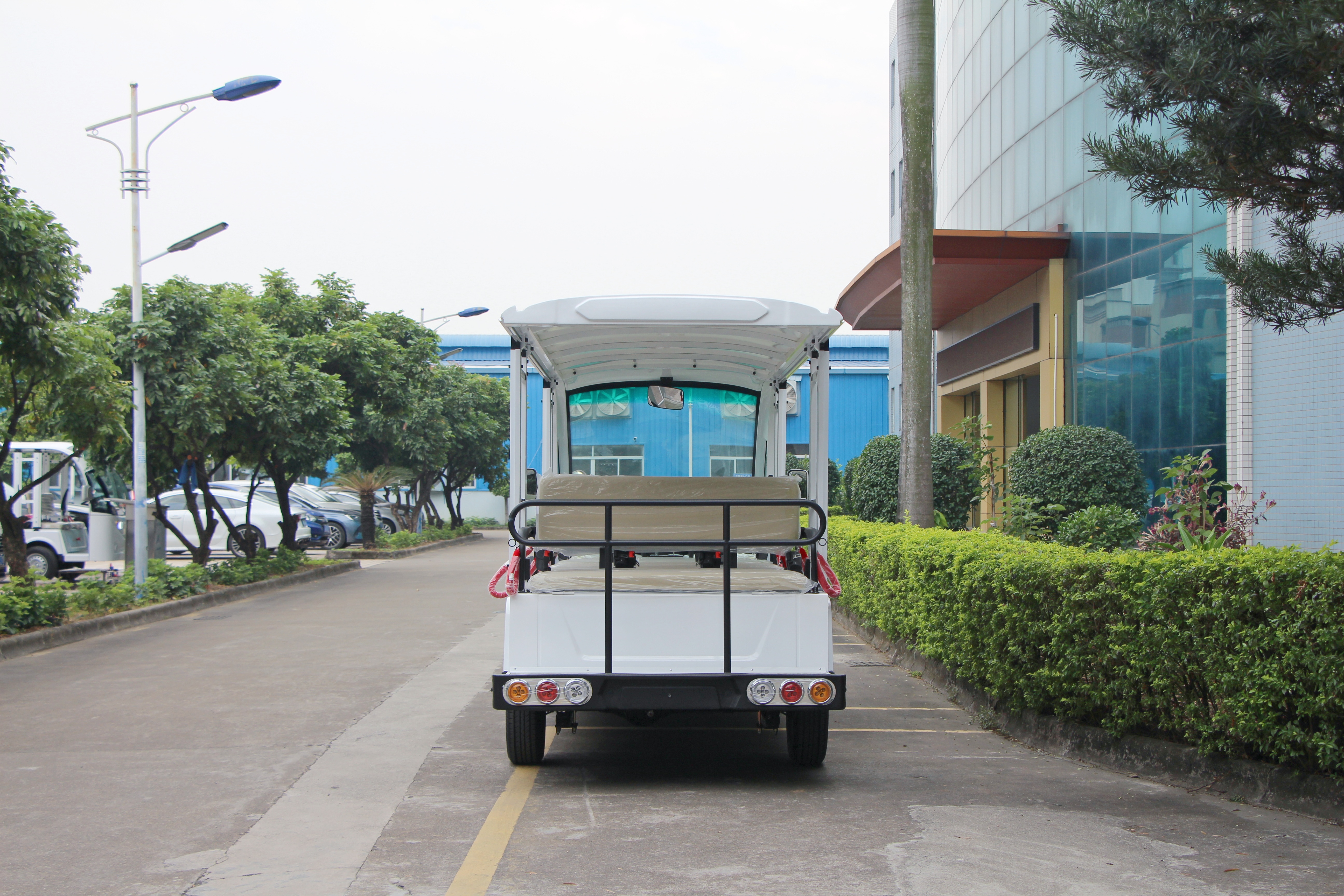
Using a 14-seat description for a 23-seat vehicle could create inconsistencies between the invoice, packing list, certificate, customs declaration, and transport documents. Before booking shipment, compare the seating configuration, model code, product name, and physical vehicle with every document in the export package.
Compliance and Vehicle-Test Evidence
The product information states that each vehicle undergoes 100% inspection-line testing and road testing. Only units that pass the required checks are approved for shipment. Requesting the inspection and road-test records for the individual bus can help demonstrate that the shipped unit matches the declared specifications and has passed the manufacturer's quality controls.
The technical description refers to an open sightseeing bus with a lightweight roof and open cockpit. It also mentions a PT + PBT alloy injection-molded front cover, a high-strength anti-rust steel chassis, MacPherson independent front suspension, leaf-spring rear suspension, electric power-assisted steering, and a braking system. These details can support the product specification file, provided they accurately describe the vehicle being imported.
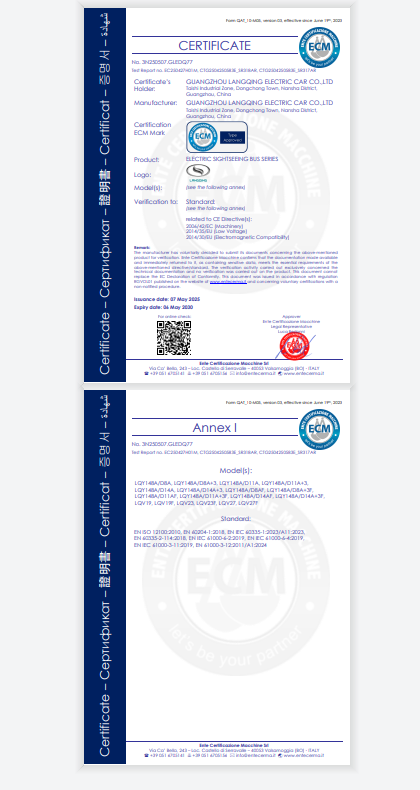
The listed European Union CE records are numbered 3N250506.GLEDQ43, 3N250507.GLEDQ77, and 3N250507.GLEDQ78. Their stated scope includes electric sightseeing buses. Nevertheless, the supplied data does not confirm that these certificates cover a 23-seat configuration. The certificate scope, model identification, and seating capacity should be matched with the final vehicle documentation.
Commercial and Shipping Details
The available commercial information indicates a minimum order quantity of one unit, a stated delivery period of 15-20 days, and sea freight as the shipping method. These details should appear consistently in the order confirmation and shipping file. At the company level, Guangzhou Langqing also states an MOQ of one and delivery periods of 15-30 days, so the buyer should confirm the specific schedule for the selected model and order.
| Document or Record | Status Based on the Available Information |
|---|---|
| Vehicle identity and specification record | Available, but it identifies a 14-seat bus, model LQY148A型/D11A+3 |
| CE certificate | Available for the EU; the stated scope includes electric sightseeing buses |
| Inspection and road-test records | Supported by the manufacturer's statement that every vehicle is tested before shipment |
| Order and delivery information | Available; MOQ 1 and an indicated delivery time of 15-20 days |
| Freight information | Available; sea freight is specified |
| 23-seat technical documentation | Unavailable in the supplied data and must be obtained from the exporter |
Frequently Asked Questions
Does the current product record prove that the bus has 23 seats?
No. The record identifies a 14-seat bus and does not include a 23-seat model reference, seating plan, or 23-seat technical specification.
Can the listed CE certificates be used for the import?
The certificates are listed for the European Union and include electric sightseeing buses within their stated scope. Their suitability for the specific 23-seat vehicle must be confirmed before shipment.
Why are inspection and road-test reports useful?
They provide evidence that the individual vehicle was checked and road-tested before dispatch. They can also help demonstrate consistency between the shipped unit and the declared product information.
What should be checked before the documents are submitted?
Compare the model, seating capacity, certificate references, technical specifications, order quantity, delivery terms, and freight method across the invoice, packing list, certificate, inspection records, and customs paperwork.
Conclusion
To reduce the risk of customs delays, prepare the applicable CE certificate, accurate product specifications, inspection and road-testing records, purchase order details, and sea-freight information as one consistent shipment file. The 14-seat versus 23-seat discrepancy is the primary unresolved issue. It should be corrected by the exporter before shipment, because the current product data cannot substantiate a 23-seat bus.
Guangzhou Langqing states that it combines industry and trade operations, uses equipment and manual labor for double inspection, and offers a one-year whole-vehicle warranty. The company also reports a production capacity of 1,000 units per month, with approximately 80% of production exported. For model-specific technical confirmation or document support, contact crystalhuang@langqing.cn.
About Guangzhou Langqing
Guangzhou Langqing Electric Car CO., LTD. was founded in 2000 in the Nansha Economic Development Zone of Guangzhou. Its operations cover research and development, manufacturing, sales, and after-sales service. After 25 years of development, the company reports an asset scale exceeding thirty million dollars and experience serving international dealers and end users.
Langqing holds CE certification and states that it has maintained national “High-tech Enterprise” status for 16 consecutive years. Its reported cooperation projects include a museum shuttle project in Egypt, a municipal sanitation project in Singapore, a shuttle bus project in Cuba, and an airport shuttle project in Argentina.

REPORT