







-
 Agriculture
-
 Health-Care
-
 Environment
-
 Construction-Real-Estate
-
 Tools-Hardware
-
 Home-Garden
-
 Furniture
-
 Luggage-Bags-Cases
-
 Medical-devices-Supplies
-
 Gifts-Crafts
-
 Sports-Entertainment
-
 Food-Beverage
-
 Vehicles-Transportation
-
 Power-Transmission
-
 Material-Handling
-
 Renewable-Energy
-
 Safety
-
 Testing-Instrument-Equipment
-
 Construction-Building-Machinery
-
 Pet-Supplies
-
 Personal-Care-Household-Cleaning
-
 Vehicle-Accessories-Electronics-Tools
-
 School-Office-Supplies
-
 Packaging-Printing
-
 Mother-Kids-Toys
-
 Business-Services
-
 Commercial-Equipment-Machinery
-
 Apparel-Accessories
-
 Security
-
 Shoes-Accessories
-
 Vehicle-Parts-Accessories
-
 Jewelry-Eyewear-Watches-Accessories
-
 Lights-Lighting
-
 Fabric-Textile-Raw-Material
-
 Fabrication-Services
-
 Industrial-Machinery
-
 Consumer-Electronics
-
 Electrical-Equipment-Supplies
-
 Electronic-Components-Accessories-Telecommunications
-
 Home-Appliances
-
 Beauty
-
 Chemicals
-
 Rubber-Plastics
-
 Metals-Alloys


























































































































































































































































































































































































































































































































































































- Masonry Materials
- Curtain Walls & Accessories
- Earthwork Products
- Fireproofing Materials
- Heat Insulation Materials
- Plastic Building Materials
- Building Boards
- Soundproofing Materials
- Timber
- Waterproofing Materials
- Balustrades & Handrails
- Bathroom & Kitchen
- Flooring & Accessories
- Tiles & Accessories
- Door, Window & Accessories
- Fireplaces & Stoves
- Floor Heating Systems & Parts
- Stairs & Stair Parts
- Ceilings
- Elevators & Escalators
- Stone
- Countertops, Vanity Tops & Table Tops
- Mosaics
- Metal Building Materials
- Multifunctional Materials
- Ladders & Scaffoldings
- Mouldings
- Corner Guards
- Decorative Films
- Formwork
- Building & Industrial Glass
- Other Construction & Real Estate
- Wallpapers/Wall panels
- HVAC System & Parts
- Outdoor Facilities
- Prefabricated Buildings
- Festive & Party Supplies
- Bathroom Products
- Household Sundries
- Rain Gear
- Garden Supplies
- Household Cleaning Tools & Accessories
- Lighters & Smoking Accessories
- Home Storage & Organization
- Household Scales
- Smart Home Improvement
- Home Textiles
- Kitchenware
- Drinkware & Accessories
- Dinnerware, Coffee & Wine
- Home Decor
- Golf
- Fitness & Body Building
- Amusement Park Facilities
- Billiards, Board Game,Coin Operated Games
- Musical Instruments
- Outdoor Affordable Luxury Sports
- Camping & Hiking
- Fishing
- Sports Safety&Rehabilitation
- Ball Sports Equipments
- Water Sports
- Winter Sports
- Luxury Travel Equipments
- Sports Shoes, Bags & Accessories
- Cycling
- Other Sports & Entertainment Products
- Artificial Grass&Sports Flooring&Sports Court Equipment
- Scooters
- Food Ingredients
- Honey & Honey Products
- Snacks
- Nuts & Kernels
- Seafood
- Plant & Animal Oil
- Beverages
- Fruit & Vegetable Products
- Frog & Escargot
- Bean Products
- Egg Products
- Dairy Products
- Seasonings & Condiments
- Canned Food
- Instant Food
- Baked Goods
- Other Food & Beverage
- Meat & Poultry
- Confectionery
- Grain Products
- Feminie Care
- Hair Care & Styling
- Body Care
- Hands & Feet Care
- Hygiene Products
- Men's Grooming
- Laundry Cleaning Supplies
- Travel Size & Gift Sets
- Room Deodorizers
- Other Personal Care Products
- Pest Control Products
- Special Household Cleaning
- Floor Cleaning
- Kitchen & Bathroom Cleaning
- Oral Care
- Bath Supplies
- Yellow Pages
- Correction Supplies
- Office Binding Supplies
- Office Cutting Supplies
- Board Erasers
- Office Adhesives & Tapes
- Education Supplies
- Pencil Cases & Bags
- Notebooks & Writing Pads
- File Folder Accessories
- Calendars
- Writing Accessories
- Commercial Office Supplies
- Pencil Sharpeners
- Pens
- Letter Pad/Paper
- Paper Envelopes
- Desk Organizers
- Pencils
- Markers & Highlighters
- Filing Products
- Art Supplies
- Easels
- Badge Holder & Accessories
- Office Paper
- Printer Supplies
- Book Covers
- Other Office & School Supplies
- Stationery Set
- Boards
- Clipboards
- Stamps
- Drafting Supplies
- Stencils
- Electronic Dictionary
- Books
- Map
- Magazines
- Calculators
- Baby & Toddler Toys
- Educational Toys
- Classic Toys
- Dress Up & Pretend Play
- Toy Vehicle
- Stuffed Animals & Plush Toys
- Outdoor Toys & Structures
- Balloons & Accessories
- Baby Food
- Children's Clothing
- Baby Supplies & Products
- Maternity Clothes
- Kids Shoes
- Baby Care
- Novelty & Gag Toys
- Dolls & Accessories
- Puzzle & Games
- Blocks & Model Building Toys
- Toddler Clothing
- Baby Clothing
- Kids' Luggage & Bags
- Arts, Crafts & DIY Toys
- Action & Toy Figures
- Baby Appliances
- Hobbies & Models
- Remote Control Toys
- Promotional Toys
- Pregnancy & Maternity
- Hygiene Products
- Kid's Textile&Bedding
- Novelty & Special Use
- Toy Weapons
- Baby Gifts
- Baby Storage & Organization
- Auto Drive Systems
- ATV/UTV Parts & Accessories
- Marine Parts & Accessories
- Other Auto Parts
- Trailer Parts & Accessories
- Auto Transmission Systems
- Train Parts & Accessories
- Universal Parts
- Railway Parts & Accessories
- Auto Brake Systems
- Aviation Parts & Accessories
- Truck Parts & Accessories
- Auto Suspension Systems
- Auto Lighting Systems
- New Energy Vehicle Parts & Accessories
- Auto Steering Systems
- Wheels, Tires & Accessories
- Bus Parts & Accessories
- Auto Performance Parts
- Cooling System
- Go-Kart & Kart Racer Parts & Accessories
- Air Conditioning Systems
- Heavy Duty Vehicle Parts & Accessories
- Auto Electrical Systems
- Auto Body Systems
- Auto Engine Systems
- Container Parts & Accessories
- Motorcycle Parts & Accessories
- Refrigeration & Heat Exchange Equipment
- Machine Tool Equipment
- Food & Beverage Machinery
- Agricultural Machinery & Equipment
- Apparel & Textile Machinery
- Chemical Machinery
- Packaging Machines
- Paper Production Machinery
- Plastic & Rubber Processing Machinery
- Industrial Robots
- Electronic Products Machinery
- Metal & Metallurgy Machinery
- Woodworking Machinery
- Home Product Manufacturing Machinery
- Machinery Accessories
- Environmental Machinery
- Machinery Service
- Electrical Equipment Manufacturing Machinery
- Industrial Compressors & Parts
- Tobacco & Cigarette Machinery
- Production Line
- Used Industrial Machinery
- Electronics Production Machinery
- Other Machinery & Industrial Equipment
- Camera, Photo & Accessories
- Portable Audio, Video & Accessories
- Television, Home Audio, Video & Accessories
- Video Games & Accessories
- Mobile Phone & Accessories
- Electronic Publications
- Earphone & Headphone & Accessories
- Speakers & Accessories
- Smart Electronics
- TV Receivers & Accessories
- Mobile Phone & Computer Repair Parts
- Chargers, Batteries & Power Supplies
- Used Electronics
- VR, AR, MR Hardware & Software
- Projectors & Presentation Equipments
- Other Consumer Electronics
- Cables & Commonly Used Accessories
- Computer Hardware & Software
- Displays, Signage and Optoelectronics
- Discrete Semiconductors
- Wireless & IoT Module and Products
- Telecommunications
- Connectors, Terminals & Accessories
- Development Boards, Electronic Modules and Kits
- Circuit Protection
- Sensors
- Isolators
- Audio Components and Products
- Integrated Circuits
- Power Supplies
- Relays
- RF, Microwave and RFID
- Electronic Accessories & Supplies
- Passive Components
- PCB & PCBA
- Air Quality Appliances
- Home Appliance Parts
- Heating & Cooling Appliances
- Small Kitchen Appliances
- Laundry Appliances
- Water Heaters
- Water Treatment Appliances
- Refrigerators & Freezers
- Personal Care & Beauty Appliances
- Major Kitchen Appliances
- Cleaning Appliances
- Second-hand Appliances
- Smart Home Appliances
- Other Home Appliances
- Energy Chemicals
- Inorganic Chemicals
- Basic Organic Chemicals
- Agrochemicals
- Admixture & Additives
- Catalysts & Chemical Auxiliary Agents
- Pigments & Dyestuff
- Coating & Paint
- Daily Chemicals
- Polymer
- Organic Intermediate
- Adhesives & Sealants
- Chemical Waste
- Biological Chemical Products
- Surface Treatment Chemicals
- Painting & Coating
- Chemical Reagents
- Flavor & Fragrance
- Non-Explosive Demolition Agents
- Other Chemicals
- Custom Chemical Services

Evaluating Long-Term Coffee Machine Brewing Stability: Beyond Initial Sample Testing
Introduction: Prototype Verification vs. Long-Term Reliability
While initial sample testing plays an essential role in confirming thermal logic, extraction flow rate, and digital UI responsiveness, it cannot fully guarantee a coffee machine's long-term brewing endurance on its own. True operational stability requires extended stress testing under continuous high-volume workloads. Evaluating multi-stage volume outputs, heat retention, and precise extraction timers over prolonged cycles ensures that the underlying heating element, internal pump, and control interface maintain peak standards throughout large-scale commercial distribution.
Essential Takeaways & Operational Guidelines
- Initial sample inspections confirm baseline parameters, such as touch panel response times, 7-level coffee volume calibration, and integrated heat-timer logic.
- Sustained brewing consistency depends on rigorous stress testing of mechanical and thermal components under repeated cycles rather than short-term trials.
- Standardized quality assurance models, including ISO 9001 Quality Management System practices, ensure consistent output across mass production runs.
- Global sourcing, cross-border procurement, and international trade channels demand comprehensive pre-shipment checks alongside sample validation.
Technical Breakdown: Fluid Dynamics and System Architecture
Assessing commercial and residential coffee equipment calls for a comprehensive analysis of both digital control systems and internal mechanical pathways. A responsive touch interface allows users to adjust extraction recipes, but engineering teams must verify that control boards deliver steady voltage to heating elements over thousands of brew cycles without degradation. Minor thermal fluctuations can substantially alter coffee flavor profiles and extraction ratios.

Hydraulic precision is equally crucial for consistent output. Units incorporating 7-level adjustable volume controls rely on precision flow sensors to regulate liquid delivery. Early sample checks test these sensors against different water pressures and hardness levels. However, verifying true system stability mandates prolonged continuous operation to reveal potential flow variance caused by mineral scale buildup or thermal expansion in the internal conduits.
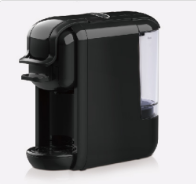
Customizable brewing relies heavily on synchronized time and temperature regulation. Onboard microcontrollers direct boiler pre-heating schedules, extraction times, and post-brew thermal stability. Engineering assessments conducted by industry leaders such as Guangdong BFC Technology Co,.Ltd confirm that software instructions for time and temperature adjustments trigger accurately without firmware lag or sensor errors under extended operational stresses.
To transition smoothly from sample approval to full-scale manufacturing, production facilities execute rigid quality management workflows. Applying certified quality management system protocols guarantees that the precise component specifications validated during prototype testing remain consistent across bulk shipments destined for South America, Southeast Asia, and broader global markets.
Technical & Commercial Parameter Comparison
The table below summarizes key technical parameters, quality verification benchmarks, and trade terms for coffee machine production orders:
| Parameter / Feature | Sample Evaluation Standard | Mass Production Specification |
|---|---|---|
| User Interface | Touch screen operation check | High-durability touch panel assembly |
| Volume Control | 7-level adjustable settings calibration | Flow meter precision calibration (±2% variance) |
| Thermal & Time Management | Adjustable time and temperature settings | PID controller heat stability test |
| Minimum Order Quantity (MOQ) | 1 - 5 units (Prototype sample) | 500 pcs |
| Production Delivery Lead Time | 7 - 10 days | 30 days |
| Export Markets | Target market regional compliance | South America, Southeast Asia, Global Market |
| Quality Inspection | According to customer requirements | Standard factory QA / Third-party audit |
Frequently Asked Questions
Does passing a sample test ensure zero defects during mass manufacturing?
No. While sample testing confirms baseline functionality and design logic, maintaining low defect rates across bulk shipments requires incoming raw material checks, continuous in-line quality controls, and certified factory auditing.
Which features are prioritized during initial sample checks?
Key focus areas include touch panel responsiveness, accurate output across all 7 volume settings, stable brew water temperature, timer precision, and physical pressure resistance.
What are the standard order and fulfillment terms for commercial orders?
Typical manufacturing agreements specify an MOQ of 500 units and a 30-day production lead time. Payment terms usually require a 30% T/T deposit with the 70% balance due upon B/L issuance for sea freight delivery.
Summary & Final Recommendations
Sample testing is a crucial first step to validate thermal consistency, touch panel input, and volume metering accuracy. Nevertheless, guaranteeing long-term brewing stability requires combining sample approvals with continuous endurance testing and strict compliance with certified manufacturing procedures. B2B buyers should align sample criteria directly with bulk production standards to protect product quality across worldwide distribution channels. For specialized technical guidance or inquiries, please contact our team at karl.liu@buyfromchina.cn.
Company Profile
Guangdong BFC Technology Co,.Ltd is an industrial internet platform operator and specialized equipment exporter founded in 2012. Operating a 1,500 square meter facility with a 100% export ratio, the business offers complete machinery solutions, trade platform integration, and end-to-end supply chain support for global buyers, particularly across South America. Holding ISO 9001 Quality Management System certification, the enterprise supports commercial clients in international import, export, and industrial technology deployment projects.

REPORT