







-
 Agriculture
-
 Health-Care
-
 Environment
-
 Construction-Real-Estate
-
 Tools-Hardware
-
 Home-Garden
-
 Furniture
-
 Luggage-Bags-Cases
-
 Medical-devices-Supplies
-
 Gifts-Crafts
-
 Sports-Entertainment
-
 Food-Beverage
-
 Vehicles-Transportation
-
 Power-Transmission
-
 Material-Handling
-
 Renewable-Energy
-
 Safety
-
 Testing-Instrument-Equipment
-
 Construction-Building-Machinery
-
 Pet-Supplies
-
 Personal-Care-Household-Cleaning
-
 Vehicle-Accessories-Electronics-Tools
-
 School-Office-Supplies
-
 Packaging-Printing
-
 Mother-Kids-Toys
-
 Business-Services
-
 Commercial-Equipment-Machinery
-
 Apparel-Accessories
-
 Security
-
 Shoes-Accessories
-
 Vehicle-Parts-Accessories
-
 Jewelry-Eyewear-Watches-Accessories
-
 Lights-Lighting
-
 Fabric-Textile-Raw-Material
-
 Fabrication-Services
-
 Industrial-Machinery
-
 Consumer-Electronics
-
 Electrical-Equipment-Supplies
-
 Electronic-Components-Accessories-Telecommunications
-
 Home-Appliances
-
 Beauty
-
 Chemicals
-
 Rubber-Plastics
-
 Metals-Alloys


























































































































































































































































































































































































































































































































































































- Masonry Materials
- Curtain Walls & Accessories
- Earthwork Products
- Fireproofing Materials
- Heat Insulation Materials
- Plastic Building Materials
- Building Boards
- Soundproofing Materials
- Timber
- Waterproofing Materials
- Balustrades & Handrails
- Bathroom & Kitchen
- Flooring & Accessories
- Tiles & Accessories
- Door, Window & Accessories
- Fireplaces & Stoves
- Floor Heating Systems & Parts
- Stairs & Stair Parts
- Ceilings
- Elevators & Escalators
- Stone
- Countertops, Vanity Tops & Table Tops
- Mosaics
- Metal Building Materials
- Multifunctional Materials
- Ladders & Scaffoldings
- Mouldings
- Corner Guards
- Decorative Films
- Formwork
- Building & Industrial Glass
- Other Construction & Real Estate
- Wallpapers/Wall panels
- HVAC System & Parts
- Outdoor Facilities
- Prefabricated Buildings
- Festive & Party Supplies
- Bathroom Products
- Household Sundries
- Rain Gear
- Garden Supplies
- Household Cleaning Tools & Accessories
- Lighters & Smoking Accessories
- Home Storage & Organization
- Household Scales
- Smart Home Improvement
- Home Textiles
- Kitchenware
- Drinkware & Accessories
- Dinnerware, Coffee & Wine
- Home Decor
- Golf
- Fitness & Body Building
- Amusement Park Facilities
- Billiards, Board Game,Coin Operated Games
- Musical Instruments
- Outdoor Affordable Luxury Sports
- Camping & Hiking
- Fishing
- Sports Safety&Rehabilitation
- Ball Sports Equipments
- Water Sports
- Winter Sports
- Luxury Travel Equipments
- Sports Shoes, Bags & Accessories
- Cycling
- Other Sports & Entertainment Products
- Artificial Grass&Sports Flooring&Sports Court Equipment
- Scooters
- Food Ingredients
- Honey & Honey Products
- Snacks
- Nuts & Kernels
- Seafood
- Plant & Animal Oil
- Beverages
- Fruit & Vegetable Products
- Frog & Escargot
- Bean Products
- Egg Products
- Dairy Products
- Seasonings & Condiments
- Canned Food
- Instant Food
- Baked Goods
- Other Food & Beverage
- Meat & Poultry
- Confectionery
- Grain Products
- Feminie Care
- Hair Care & Styling
- Body Care
- Hands & Feet Care
- Hygiene Products
- Men's Grooming
- Laundry Cleaning Supplies
- Travel Size & Gift Sets
- Room Deodorizers
- Other Personal Care Products
- Pest Control Products
- Special Household Cleaning
- Floor Cleaning
- Kitchen & Bathroom Cleaning
- Oral Care
- Bath Supplies
- Yellow Pages
- Correction Supplies
- Office Binding Supplies
- Office Cutting Supplies
- Board Erasers
- Office Adhesives & Tapes
- Education Supplies
- Pencil Cases & Bags
- Notebooks & Writing Pads
- File Folder Accessories
- Calendars
- Writing Accessories
- Commercial Office Supplies
- Pencil Sharpeners
- Pens
- Letter Pad/Paper
- Paper Envelopes
- Desk Organizers
- Pencils
- Markers & Highlighters
- Filing Products
- Art Supplies
- Easels
- Badge Holder & Accessories
- Office Paper
- Printer Supplies
- Book Covers
- Other Office & School Supplies
- Stationery Set
- Boards
- Clipboards
- Stamps
- Drafting Supplies
- Stencils
- Electronic Dictionary
- Books
- Map
- Magazines
- Calculators
- Baby & Toddler Toys
- Educational Toys
- Classic Toys
- Dress Up & Pretend Play
- Toy Vehicle
- Stuffed Animals & Plush Toys
- Outdoor Toys & Structures
- Balloons & Accessories
- Baby Food
- Children's Clothing
- Baby Supplies & Products
- Maternity Clothes
- Kids Shoes
- Baby Care
- Novelty & Gag Toys
- Dolls & Accessories
- Puzzle & Games
- Blocks & Model Building Toys
- Toddler Clothing
- Baby Clothing
- Kids' Luggage & Bags
- Arts, Crafts & DIY Toys
- Action & Toy Figures
- Baby Appliances
- Hobbies & Models
- Remote Control Toys
- Promotional Toys
- Pregnancy & Maternity
- Hygiene Products
- Kid's Textile&Bedding
- Novelty & Special Use
- Toy Weapons
- Baby Gifts
- Baby Storage & Organization
- Auto Drive Systems
- ATV/UTV Parts & Accessories
- Marine Parts & Accessories
- Other Auto Parts
- Trailer Parts & Accessories
- Auto Transmission Systems
- Train Parts & Accessories
- Universal Parts
- Railway Parts & Accessories
- Auto Brake Systems
- Aviation Parts & Accessories
- Truck Parts & Accessories
- Auto Suspension Systems
- Auto Lighting Systems
- New Energy Vehicle Parts & Accessories
- Auto Steering Systems
- Wheels, Tires & Accessories
- Bus Parts & Accessories
- Auto Performance Parts
- Cooling System
- Go-Kart & Kart Racer Parts & Accessories
- Air Conditioning Systems
- Heavy Duty Vehicle Parts & Accessories
- Auto Electrical Systems
- Auto Body Systems
- Auto Engine Systems
- Container Parts & Accessories
- Motorcycle Parts & Accessories
- Refrigeration & Heat Exchange Equipment
- Machine Tool Equipment
- Food & Beverage Machinery
- Agricultural Machinery & Equipment
- Apparel & Textile Machinery
- Chemical Machinery
- Packaging Machines
- Paper Production Machinery
- Plastic & Rubber Processing Machinery
- Industrial Robots
- Electronic Products Machinery
- Metal & Metallurgy Machinery
- Woodworking Machinery
- Home Product Manufacturing Machinery
- Machinery Accessories
- Environmental Machinery
- Machinery Service
- Electrical Equipment Manufacturing Machinery
- Industrial Compressors & Parts
- Tobacco & Cigarette Machinery
- Production Line
- Used Industrial Machinery
- Electronics Production Machinery
- Other Machinery & Industrial Equipment
- Camera, Photo & Accessories
- Portable Audio, Video & Accessories
- Television, Home Audio, Video & Accessories
- Video Games & Accessories
- Mobile Phone & Accessories
- Electronic Publications
- Earphone & Headphone & Accessories
- Speakers & Accessories
- Smart Electronics
- TV Receivers & Accessories
- Mobile Phone & Computer Repair Parts
- Chargers, Batteries & Power Supplies
- Used Electronics
- VR, AR, MR Hardware & Software
- Projectors & Presentation Equipments
- Other Consumer Electronics
- Cables & Commonly Used Accessories
- Computer Hardware & Software
- Displays, Signage and Optoelectronics
- Discrete Semiconductors
- Wireless & IoT Module and Products
- Telecommunications
- Connectors, Terminals & Accessories
- Development Boards, Electronic Modules and Kits
- Circuit Protection
- Sensors
- Isolators
- Audio Components and Products
- Integrated Circuits
- Power Supplies
- Relays
- RF, Microwave and RFID
- Electronic Accessories & Supplies
- Passive Components
- PCB & PCBA
- Air Quality Appliances
- Home Appliance Parts
- Heating & Cooling Appliances
- Small Kitchen Appliances
- Laundry Appliances
- Water Heaters
- Water Treatment Appliances
- Refrigerators & Freezers
- Personal Care & Beauty Appliances
- Major Kitchen Appliances
- Cleaning Appliances
- Second-hand Appliances
- Smart Home Appliances
- Other Home Appliances
- Energy Chemicals
- Inorganic Chemicals
- Basic Organic Chemicals
- Agrochemicals
- Admixture & Additives
- Catalysts & Chemical Auxiliary Agents
- Pigments & Dyestuff
- Coating & Paint
- Daily Chemicals
- Polymer
- Organic Intermediate
- Adhesives & Sealants
- Chemical Waste
- Biological Chemical Products
- Surface Treatment Chemicals
- Painting & Coating
- Chemical Reagents
- Flavor & Fragrance
- Non-Explosive Demolition Agents
- Other Chemicals
- Custom Chemical Services

Factory Warning Signs of Quality Problems in Custom Pest Control Products
When sourcing custom pest control products, buyers should look beyond the finished sample. Incomplete inspection records, inconsistent medication filling, incorrect printed bags, missing batch numbers, and unresolved glue-quality complaints can all indicate weaknesses in factory quality control. A supplier that cannot show evidence for its checkpoints or follow a defined after-sales procedure creates a clear supply risk.
Key Quality Checks for Buyers
- Review inspection documentation for raw materials, production processes, semi-finished goods, surface treatment, assembly, finished products, and packaging.
- Confirm that the approved packaging specification matches the actual filling and packing sequence for printed bags, middle boxes, and outer containers.
- Request legible batch identification and photographic or video evidence when investigating a production defect.
- Evaluate whether the product design and materials fit the intended environment, including food warehouses, supermarket shelves, hotel kitchens, or farm feed rooms.
How Production and Packaging Reveal Quality Risks
Custom cockroach poison and fly poison products require a consistent packaging workflow. Typically, the loose medication is loaded into a packaging machine, the bags are printed, the medication is filled into those bags, and the bags are placed into middle boxes and larger containers. Any unexplained change in this sequence, unclear labeling, or visible variation between production batches should be checked against the approved specification.
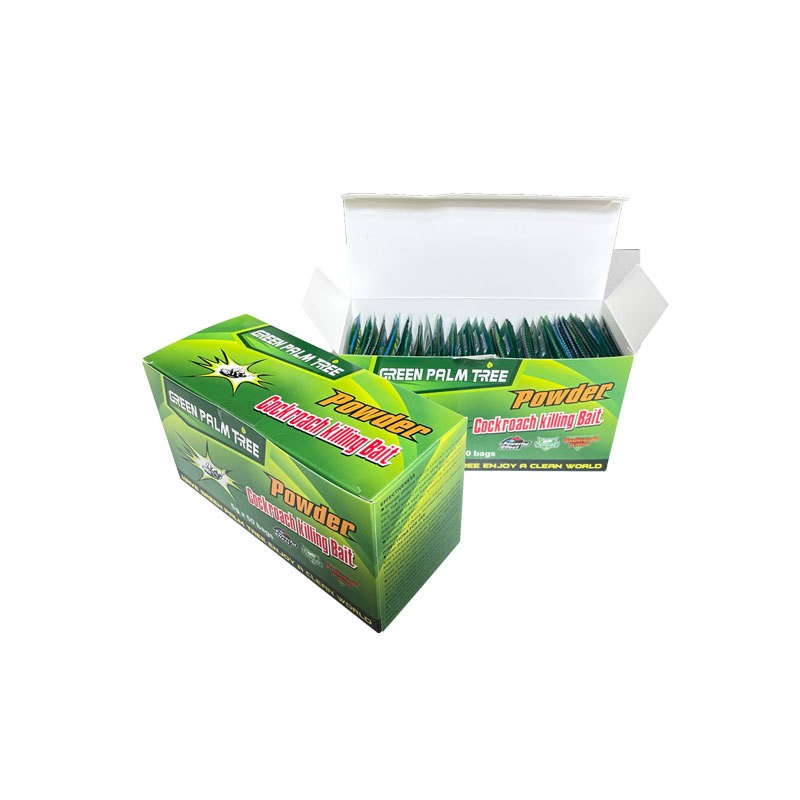
A dependable quality-management system should leave records at every major stage. If raw-material or process inspections are missing, it may be difficult to determine where a defect originated. Likewise, absent final-product and packaging checks can allow labeling, filling, or assembly problems to reach the customer before shipment.
Traceability and Complaint Handling
Batch traceability is another important indicator. When an outer-box batch number is unavailable, the buyer may be unable to connect a complaint with a particular production run, shipment, or inspection record. Suppliers should be able to explain how batches are marked and how production and delivery information can be retrieved.
After-sales performance also helps reveal the strength of a supplier’s quality system. For glue-production-quality complaints, the stated procedure requests clear photos or video together with the outer-box batch number within 15 days of receipt. Once the issue is confirmed, the supplier may provide replacement goods or deduct payment according to the affected quantity. The policy excludes problems related to exposure, moisture, dust accumulation, extremely low temperatures, or local regulatory restrictions.
Factory Signal and Verification Guide
| Observed factory signal | Possible quality meaning | Buyer action |
|---|---|---|
| Inspection documents cover each production stage | Evidence of structured process control | Check records from incoming materials through packaging |
| Medication filling or printed bags differ from the agreed method | Possible production deviation | Compare samples, photographs, and specifications with the actual process |
| No clear batch number appears on the outer packaging | Insufficient product traceability | Request batch details, shipment records, and related inspection documents |
| Complaints have no documented response procedure | Potential after-sales and accountability weakness | Confirm evidence requirements, reporting deadlines, remedies, and exclusions |
Frequently Asked Questions
What quality records should be requested before ordering custom pest control products?
Ask for documentation covering raw materials, manufacturing processes, semi-finished products, surface treatment, assembly, final products, and packaging. These records help confirm that controls exist throughout the production cycle.
Which packaging differences deserve further investigation?
Verify whether the bags are printed according to the approved design, whether the medication is filled directly into them as specified, and whether the middle boxes and containers follow the agreed packing sequence. Unexplained visual differences should be resolved before shipment.
What evidence is required for a confirmed glue-quality complaint?
Under the stated procedure, the buyer should submit clear photos or video and the outer-box batch number within 15 days of receiving the goods. For confirmed affected quantities, the proposed remedy is free replenishment or a corresponding payment deduction.
Conclusion and Purchasing Recommendations
The most useful warning-sign framework combines inspection coverage, packaging consistency, batch traceability, and after-sales responsiveness. Buyers should review these areas before approving a custom pest control order and should also confirm local requirements for adhesive mousetrap products before sale or use.
Yiwu Jinli supports OEM Manufacturing, ODM Manufacturing, Factory Direct Supply, Bulk Production, Flexible Small Batch Orders, and Long-Term Supply Cooperation. For technical questions or product support, contact bob@jinwen-goods.com.
About Yiwu Jinli Commodity Co., Ltd.
Yiwu Jinli Commodity Co., Ltd., operating under the MUSTRAP brand, was founded in 2010 and combines product research and development, manufacturing, and sales. Its product team has experience in pest-control products and provides R&D, OEM, and ODM services. Independent workshops and production lines support a stated daily capacity of 80,000 units, with production procedures designed to maintain consistent quality.
Company records include trade mark certificate No. 15322289 and Copyright certificate No. 黔作登字-2020-F-00118638. The company also reports export cooperation involving sticky mouse boards in India, Brazil, and Peru, with customer feedback noting consistent quality, dependable cooperation, and responsive service.

REPORT