







-
 Agriculture
-
 Health-Care
-
 Environment
-
 Construction-Real-Estate
-
 Tools-Hardware
-
 Home-Garden
-
 Furniture
-
 Luggage-Bags-Cases
-
 Medical-devices-Supplies
-
 Gifts-Crafts
-
 Sports-Entertainment
-
 Food-Beverage
-
 Vehicles-Transportation
-
 Power-Transmission
-
 Material-Handling
-
 Renewable-Energy
-
 Safety
-
 Testing-Instrument-Equipment
-
 Construction-Building-Machinery
-
 Pet-Supplies
-
 Personal-Care-Household-Cleaning
-
 Vehicle-Accessories-Electronics-Tools
-
 School-Office-Supplies
-
 Packaging-Printing
-
 Mother-Kids-Toys
-
 Business-Services
-
 Commercial-Equipment-Machinery
-
 Apparel-Accessories
-
 Security
-
 Shoes-Accessories
-
 Vehicle-Parts-Accessories
-
 Jewelry-Eyewear-Watches-Accessories
-
 Lights-Lighting
-
 Fabric-Textile-Raw-Material
-
 Fabrication-Services
-
 Industrial-Machinery
-
 Consumer-Electronics
-
 Electrical-Equipment-Supplies
-
 Electronic-Components-Accessories-Telecommunications
-
 Home-Appliances
-
 Beauty
-
 Chemicals
-
 Rubber-Plastics
-
 Metals-Alloys


























































































































































































































































































































































































































































































































































































- Masonry Materials
- Curtain Walls & Accessories
- Earthwork Products
- Fireproofing Materials
- Heat Insulation Materials
- Plastic Building Materials
- Building Boards
- Soundproofing Materials
- Timber
- Waterproofing Materials
- Balustrades & Handrails
- Bathroom & Kitchen
- Flooring & Accessories
- Tiles & Accessories
- Door, Window & Accessories
- Fireplaces & Stoves
- Floor Heating Systems & Parts
- Stairs & Stair Parts
- Ceilings
- Elevators & Escalators
- Stone
- Countertops, Vanity Tops & Table Tops
- Mosaics
- Metal Building Materials
- Multifunctional Materials
- Ladders & Scaffoldings
- Mouldings
- Corner Guards
- Decorative Films
- Formwork
- Building & Industrial Glass
- Other Construction & Real Estate
- Wallpapers/Wall panels
- HVAC System & Parts
- Outdoor Facilities
- Prefabricated Buildings
- Festive & Party Supplies
- Bathroom Products
- Household Sundries
- Rain Gear
- Garden Supplies
- Household Cleaning Tools & Accessories
- Lighters & Smoking Accessories
- Home Storage & Organization
- Household Scales
- Smart Home Improvement
- Home Textiles
- Kitchenware
- Drinkware & Accessories
- Dinnerware, Coffee & Wine
- Home Decor
- Golf
- Fitness & Body Building
- Amusement Park Facilities
- Billiards, Board Game,Coin Operated Games
- Musical Instruments
- Outdoor Affordable Luxury Sports
- Camping & Hiking
- Fishing
- Sports Safety&Rehabilitation
- Ball Sports Equipments
- Water Sports
- Winter Sports
- Luxury Travel Equipments
- Sports Shoes, Bags & Accessories
- Cycling
- Other Sports & Entertainment Products
- Artificial Grass&Sports Flooring&Sports Court Equipment
- Scooters
- Food Ingredients
- Honey & Honey Products
- Snacks
- Nuts & Kernels
- Seafood
- Plant & Animal Oil
- Beverages
- Fruit & Vegetable Products
- Frog & Escargot
- Bean Products
- Egg Products
- Dairy Products
- Seasonings & Condiments
- Canned Food
- Instant Food
- Baked Goods
- Other Food & Beverage
- Meat & Poultry
- Confectionery
- Grain Products
- Feminie Care
- Hair Care & Styling
- Body Care
- Hands & Feet Care
- Hygiene Products
- Men's Grooming
- Laundry Cleaning Supplies
- Travel Size & Gift Sets
- Room Deodorizers
- Other Personal Care Products
- Pest Control Products
- Special Household Cleaning
- Floor Cleaning
- Kitchen & Bathroom Cleaning
- Oral Care
- Bath Supplies
- Yellow Pages
- Correction Supplies
- Office Binding Supplies
- Office Cutting Supplies
- Board Erasers
- Office Adhesives & Tapes
- Education Supplies
- Pencil Cases & Bags
- Notebooks & Writing Pads
- File Folder Accessories
- Calendars
- Writing Accessories
- Commercial Office Supplies
- Pencil Sharpeners
- Pens
- Letter Pad/Paper
- Paper Envelopes
- Desk Organizers
- Pencils
- Markers & Highlighters
- Filing Products
- Art Supplies
- Easels
- Badge Holder & Accessories
- Office Paper
- Printer Supplies
- Book Covers
- Other Office & School Supplies
- Stationery Set
- Boards
- Clipboards
- Stamps
- Drafting Supplies
- Stencils
- Electronic Dictionary
- Books
- Map
- Magazines
- Calculators
- Baby & Toddler Toys
- Educational Toys
- Classic Toys
- Dress Up & Pretend Play
- Toy Vehicle
- Stuffed Animals & Plush Toys
- Outdoor Toys & Structures
- Balloons & Accessories
- Baby Food
- Children's Clothing
- Baby Supplies & Products
- Maternity Clothes
- Kids Shoes
- Baby Care
- Novelty & Gag Toys
- Dolls & Accessories
- Puzzle & Games
- Blocks & Model Building Toys
- Toddler Clothing
- Baby Clothing
- Kids' Luggage & Bags
- Arts, Crafts & DIY Toys
- Action & Toy Figures
- Baby Appliances
- Hobbies & Models
- Remote Control Toys
- Promotional Toys
- Pregnancy & Maternity
- Hygiene Products
- Kid's Textile&Bedding
- Novelty & Special Use
- Toy Weapons
- Baby Gifts
- Baby Storage & Organization
- Auto Drive Systems
- ATV/UTV Parts & Accessories
- Marine Parts & Accessories
- Other Auto Parts
- Trailer Parts & Accessories
- Auto Transmission Systems
- Train Parts & Accessories
- Universal Parts
- Railway Parts & Accessories
- Auto Brake Systems
- Aviation Parts & Accessories
- Truck Parts & Accessories
- Auto Suspension Systems
- Auto Lighting Systems
- New Energy Vehicle Parts & Accessories
- Auto Steering Systems
- Wheels, Tires & Accessories
- Bus Parts & Accessories
- Auto Performance Parts
- Cooling System
- Go-Kart & Kart Racer Parts & Accessories
- Air Conditioning Systems
- Heavy Duty Vehicle Parts & Accessories
- Auto Electrical Systems
- Auto Body Systems
- Auto Engine Systems
- Container Parts & Accessories
- Motorcycle Parts & Accessories
- Refrigeration & Heat Exchange Equipment
- Machine Tool Equipment
- Food & Beverage Machinery
- Agricultural Machinery & Equipment
- Apparel & Textile Machinery
- Chemical Machinery
- Packaging Machines
- Paper Production Machinery
- Plastic & Rubber Processing Machinery
- Industrial Robots
- Electronic Products Machinery
- Metal & Metallurgy Machinery
- Woodworking Machinery
- Home Product Manufacturing Machinery
- Machinery Accessories
- Environmental Machinery
- Machinery Service
- Electrical Equipment Manufacturing Machinery
- Industrial Compressors & Parts
- Tobacco & Cigarette Machinery
- Production Line
- Used Industrial Machinery
- Electronics Production Machinery
- Other Machinery & Industrial Equipment
- Camera, Photo & Accessories
- Portable Audio, Video & Accessories
- Television, Home Audio, Video & Accessories
- Video Games & Accessories
- Mobile Phone & Accessories
- Electronic Publications
- Earphone & Headphone & Accessories
- Speakers & Accessories
- Smart Electronics
- TV Receivers & Accessories
- Mobile Phone & Computer Repair Parts
- Chargers, Batteries & Power Supplies
- Used Electronics
- VR, AR, MR Hardware & Software
- Projectors & Presentation Equipments
- Other Consumer Electronics
- Cables & Commonly Used Accessories
- Computer Hardware & Software
- Displays, Signage and Optoelectronics
- Discrete Semiconductors
- Wireless & IoT Module and Products
- Telecommunications
- Connectors, Terminals & Accessories
- Development Boards, Electronic Modules and Kits
- Circuit Protection
- Sensors
- Isolators
- Audio Components and Products
- Integrated Circuits
- Power Supplies
- Relays
- RF, Microwave and RFID
- Electronic Accessories & Supplies
- Passive Components
- PCB & PCBA
- Air Quality Appliances
- Home Appliance Parts
- Heating & Cooling Appliances
- Small Kitchen Appliances
- Laundry Appliances
- Water Heaters
- Water Treatment Appliances
- Refrigerators & Freezers
- Personal Care & Beauty Appliances
- Major Kitchen Appliances
- Cleaning Appliances
- Second-hand Appliances
- Smart Home Appliances
- Other Home Appliances
- Energy Chemicals
- Inorganic Chemicals
- Basic Organic Chemicals
- Agrochemicals
- Admixture & Additives
- Catalysts & Chemical Auxiliary Agents
- Pigments & Dyestuff
- Coating & Paint
- Daily Chemicals
- Polymer
- Organic Intermediate
- Adhesives & Sealants
- Chemical Waste
- Biological Chemical Products
- Surface Treatment Chemicals
- Painting & Coating
- Chemical Reagents
- Flavor & Fragrance
- Non-Explosive Demolition Agents
- Other Chemicals
- Custom Chemical Services

FOB vs. CIF: Which Is Better for Bulk Decorative Aluminum Profiles?
When purchasing decorative aluminum profiles in large quantities, the choice between FOB and CIF depends on how much control your company wants over international freight and destination handling. FOB is generally suitable for buyers with established logistics partners, while CIF may be more convenient when the supplier arranges sea transport to an agreed destination. Before confirming either option, review the freight scope, insurance coverage, loading responsibilities, payment terms, minimum order quantity, and delivery schedule.
FOB or CIF: Choosing the Right Shipping Arrangement
FOB can give importers greater control over freight booking, shipping costs, customs coordination, and delivery after the goods are loaded. It is often preferred by experienced purchasing teams that already work with freight forwarders and understand destination-port procedures.
CIF may simplify procurement by allowing the supplier to coordinate the main sea-freight service to the named destination. However, the buyer should obtain written details about the destination, insurance coverage, included services, quotation validity, and charges that remain payable after arrival. A lower-looking CIF price should always be compared with the full landed cost.
- Select FOB when your company already manages international shipping, import clearance, and destination delivery.
- Select CIF when supplier-organized sea freight provides a more convenient purchasing process.
- Xinhe Aluminium lists a 3-ton MOQ and a 15–20 day delivery period for aluminum profiles.
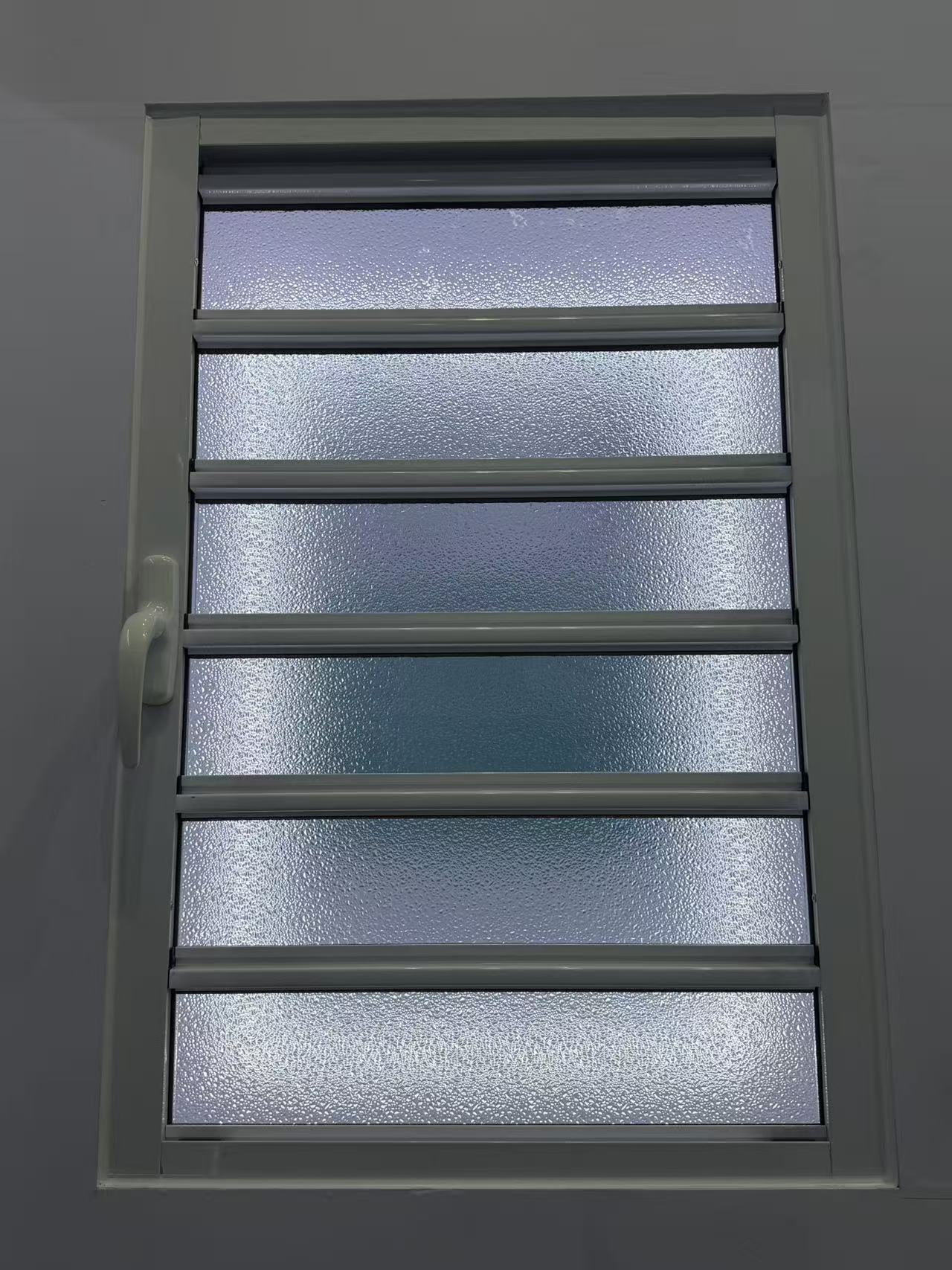
- The Glass Shutter product has a separate MOQ of 500 sqm and a listed delivery time of 15–20 days.
- Decorative profile uses include floor, cabinet, ceiling, and feature-wall edge trim, while aluminum grilles can be used for partitions, façades, garages, courtyards, shopfronts, and display windows.
Logistics and Order Planning for Decorative Profiles
The supplied company information identifies sea freight as the available shipping method. With relatively low unit freight, substantial loading capacity, and suitability for long products, sea transport is practical for bulk aluminum profiles and other extended-length building materials.
For an FOB quotation, ask the supplier to specify the point at which responsibility transfers, the loading arrangements, packaging details, and documents provided for the buyer’s freight forwarder. For a CIF quotation, confirm the named port or destination, the freight route, insurance terms, estimated transit schedule, and all excluded destination costs. The available information does not state a CIF freight rate, insurance value, destination port, or specific CIF quotation, so these items must be confirmed before purchase approval.
Payment, Quantity, and Delivery Checks
Xinhe Aluminium lists T/T and sight L/C among its payment options. For aluminum profiles, the stated T/T arrangement is 30% D/P before production and 70% balance before loading. For aluminum windows and doors, the stated structure is 50% D/P before production, with the balance due before loading. Buyers should ensure that the payment schedule in the sales contract corresponds to the selected product category.
The company reports a quality-control process that includes 100% inspection on production lines, laboratory sampling and testing, and inspection of incoming raw materials. Its listed credentials include SIRIM certificate PC003807 for aluminum and aluminum alloy extruded shapes used in windows and sliding doors in Malaysia, as well as Qualicoat certificate 3419 for aluminum profile powder coating in Europe.
Reported projects and cooperation cases cover hotels, offices, residences, and other construction developments in markets such as Malaysia, Singapore, and the Philippines. These cases highlight requirements including delivery planning, protective packaging, profile wall-thickness control, custom die development for special cross-sections, and clear quotation practices.
FOB and CIF Comparison
| Evaluation point | FOB | CIF |
|---|---|---|
| Freight management | The buyer arranges the main sea freight and destination handling after loading | The supplier coordinates the quoted sea freight to the named destination |
| Most suitable for | Importers with established forwarding and customs arrangements | Importers who want the supplier to coordinate international transport |
| Quotation items to verify | Loading responsibility, freight booking, documentation, and destination charges | Destination, freight scope, insurance, delivery terms, and excluded charges |
| Shipping method listed in the supplied information | Sea freight | Sea freight |
| Aluminum profile MOQ and delivery | 3 tons; 15–20 days | 3 tons; 15–20 days |
| Payment options listed | T/T or sight L/C | T/T or sight L/C |
Frequently Asked Questions
Which is more suitable for a large decorative profile purchase, FOB or CIF?
There is no universal answer. FOB is a practical choice for buyers that can control freight forwarding and destination operations. CIF is more convenient when the importer prefers the supplier to arrange the principal sea transport. The decision should be based on total landed cost, logistics capability, and the clarity of each party’s responsibilities.
What is the MOQ for Xinhe Aluminium aluminum profiles?
The stated minimum order quantity for aluminum profiles is 3 tons. The Glass Shutter product is listed separately with a minimum order quantity of 500 sqm.
What information should be requested before placing a CIF order?
Request the named destination, freight and insurance coverage, estimated delivery schedule, excluded destination charges, packaging requirements, payment terms, and inspection arrangements. The listed delivery time for the profiles and Glass Shutter products is 15–20 days.
Practical Recommendation
FOB is usually the better fit when your organization has reliable freight-forwarding resources and wants direct control of the shipping process. CIF may be preferable when coordinated supplier shipping reduces administrative work. Regardless of the selected term, document the product specifications, order quantity, quotation inclusions, payment schedule, delivery time, inspection procedure, and packaging standards before production begins.
Xinhe Aluminium supports industrial-chain, distribution, and direct-sales cooperation, with sea freight available for long-shaped materials. For technical requirements or purchasing assistance, contact xh@xinhealuminium.com.
About Xinhe Aluminium
Guangdong Xinhe Aluminium Co., Ltd specializes in the research, development, and manufacture of building, decorative, and industrial aluminum profiles. The company is supported by a CNAS national accredited laboratory and works with research institutions and universities. Founded in 1998, it reports an annual production capacity of 200,000 tons and serves customers across Asia, Africa, Australia, Europe, and other international markets. Its listed certifications include ISO 9001:2015, ISO 14001:2015, SIRIM, Qualicoat, and CNAS laboratory accreditation, with project experience spanning several industries.

REPORT