







-
 Agriculture
-
 Health-Care
-
 Environment
-
 Construction-Real-Estate
-
 Tools-Hardware
-
 Home-Garden
-
 Furniture
-
 Luggage-Bags-Cases
-
 Medical-devices-Supplies
-
 Gifts-Crafts
-
 Sports-Entertainment
-
 Food-Beverage
-
 Vehicles-Transportation
-
 Power-Transmission
-
 Material-Handling
-
 Renewable-Energy
-
 Safety
-
 Testing-Instrument-Equipment
-
 Construction-Building-Machinery
-
 Pet-Supplies
-
 Personal-Care-Household-Cleaning
-
 Vehicle-Accessories-Electronics-Tools
-
 School-Office-Supplies
-
 Packaging-Printing
-
 Mother-Kids-Toys
-
 Business-Services
-
 Commercial-Equipment-Machinery
-
 Apparel-Accessories
-
 Security
-
 Shoes-Accessories
-
 Vehicle-Parts-Accessories
-
 Jewelry-Eyewear-Watches-Accessories
-
 Lights-Lighting
-
 Fabric-Textile-Raw-Material
-
 Fabrication-Services
-
 Industrial-Machinery
-
 Consumer-Electronics
-
 Electrical-Equipment-Supplies
-
 Electronic-Components-Accessories-Telecommunications
-
 Home-Appliances
-
 Beauty
-
 Chemicals
-
 Rubber-Plastics
-
 Metals-Alloys


























































































































































































































































































































































































































































































































































































- Masonry Materials
- Curtain Walls & Accessories
- Earthwork Products
- Fireproofing Materials
- Heat Insulation Materials
- Plastic Building Materials
- Building Boards
- Soundproofing Materials
- Timber
- Waterproofing Materials
- Balustrades & Handrails
- Bathroom & Kitchen
- Flooring & Accessories
- Tiles & Accessories
- Door, Window & Accessories
- Fireplaces & Stoves
- Floor Heating Systems & Parts
- Stairs & Stair Parts
- Ceilings
- Elevators & Escalators
- Stone
- Countertops, Vanity Tops & Table Tops
- Mosaics
- Metal Building Materials
- Multifunctional Materials
- Ladders & Scaffoldings
- Mouldings
- Corner Guards
- Decorative Films
- Formwork
- Building & Industrial Glass
- Other Construction & Real Estate
- Wallpapers/Wall panels
- HVAC System & Parts
- Outdoor Facilities
- Prefabricated Buildings
- Festive & Party Supplies
- Bathroom Products
- Household Sundries
- Rain Gear
- Garden Supplies
- Household Cleaning Tools & Accessories
- Lighters & Smoking Accessories
- Home Storage & Organization
- Household Scales
- Smart Home Improvement
- Home Textiles
- Kitchenware
- Drinkware & Accessories
- Dinnerware, Coffee & Wine
- Home Decor
- Golf
- Fitness & Body Building
- Amusement Park Facilities
- Billiards, Board Game,Coin Operated Games
- Musical Instruments
- Outdoor Affordable Luxury Sports
- Camping & Hiking
- Fishing
- Sports Safety&Rehabilitation
- Ball Sports Equipments
- Water Sports
- Winter Sports
- Luxury Travel Equipments
- Sports Shoes, Bags & Accessories
- Cycling
- Other Sports & Entertainment Products
- Artificial Grass&Sports Flooring&Sports Court Equipment
- Scooters
- Food Ingredients
- Honey & Honey Products
- Snacks
- Nuts & Kernels
- Seafood
- Plant & Animal Oil
- Beverages
- Fruit & Vegetable Products
- Frog & Escargot
- Bean Products
- Egg Products
- Dairy Products
- Seasonings & Condiments
- Canned Food
- Instant Food
- Baked Goods
- Other Food & Beverage
- Meat & Poultry
- Confectionery
- Grain Products
- Feminie Care
- Hair Care & Styling
- Body Care
- Hands & Feet Care
- Hygiene Products
- Men's Grooming
- Laundry Cleaning Supplies
- Travel Size & Gift Sets
- Room Deodorizers
- Other Personal Care Products
- Pest Control Products
- Special Household Cleaning
- Floor Cleaning
- Kitchen & Bathroom Cleaning
- Oral Care
- Bath Supplies
- Yellow Pages
- Correction Supplies
- Office Binding Supplies
- Office Cutting Supplies
- Board Erasers
- Office Adhesives & Tapes
- Education Supplies
- Pencil Cases & Bags
- Notebooks & Writing Pads
- File Folder Accessories
- Calendars
- Writing Accessories
- Commercial Office Supplies
- Pencil Sharpeners
- Pens
- Letter Pad/Paper
- Paper Envelopes
- Desk Organizers
- Pencils
- Markers & Highlighters
- Filing Products
- Art Supplies
- Easels
- Badge Holder & Accessories
- Office Paper
- Printer Supplies
- Book Covers
- Other Office & School Supplies
- Stationery Set
- Boards
- Clipboards
- Stamps
- Drafting Supplies
- Stencils
- Electronic Dictionary
- Books
- Map
- Magazines
- Calculators
- Baby & Toddler Toys
- Educational Toys
- Classic Toys
- Dress Up & Pretend Play
- Toy Vehicle
- Stuffed Animals & Plush Toys
- Outdoor Toys & Structures
- Balloons & Accessories
- Baby Food
- Children's Clothing
- Baby Supplies & Products
- Maternity Clothes
- Kids Shoes
- Baby Care
- Novelty & Gag Toys
- Dolls & Accessories
- Puzzle & Games
- Blocks & Model Building Toys
- Toddler Clothing
- Baby Clothing
- Kids' Luggage & Bags
- Arts, Crafts & DIY Toys
- Action & Toy Figures
- Baby Appliances
- Hobbies & Models
- Remote Control Toys
- Promotional Toys
- Pregnancy & Maternity
- Hygiene Products
- Kid's Textile&Bedding
- Novelty & Special Use
- Toy Weapons
- Baby Gifts
- Baby Storage & Organization
- Auto Drive Systems
- ATV/UTV Parts & Accessories
- Marine Parts & Accessories
- Other Auto Parts
- Trailer Parts & Accessories
- Auto Transmission Systems
- Train Parts & Accessories
- Universal Parts
- Railway Parts & Accessories
- Auto Brake Systems
- Aviation Parts & Accessories
- Truck Parts & Accessories
- Auto Suspension Systems
- Auto Lighting Systems
- New Energy Vehicle Parts & Accessories
- Auto Steering Systems
- Wheels, Tires & Accessories
- Bus Parts & Accessories
- Auto Performance Parts
- Cooling System
- Go-Kart & Kart Racer Parts & Accessories
- Air Conditioning Systems
- Heavy Duty Vehicle Parts & Accessories
- Auto Electrical Systems
- Auto Body Systems
- Auto Engine Systems
- Container Parts & Accessories
- Motorcycle Parts & Accessories
- Refrigeration & Heat Exchange Equipment
- Machine Tool Equipment
- Food & Beverage Machinery
- Agricultural Machinery & Equipment
- Apparel & Textile Machinery
- Chemical Machinery
- Packaging Machines
- Paper Production Machinery
- Plastic & Rubber Processing Machinery
- Industrial Robots
- Electronic Products Machinery
- Metal & Metallurgy Machinery
- Woodworking Machinery
- Home Product Manufacturing Machinery
- Machinery Accessories
- Environmental Machinery
- Machinery Service
- Electrical Equipment Manufacturing Machinery
- Industrial Compressors & Parts
- Tobacco & Cigarette Machinery
- Production Line
- Used Industrial Machinery
- Electronics Production Machinery
- Other Machinery & Industrial Equipment
- Camera, Photo & Accessories
- Portable Audio, Video & Accessories
- Television, Home Audio, Video & Accessories
- Video Games & Accessories
- Mobile Phone & Accessories
- Electronic Publications
- Earphone & Headphone & Accessories
- Speakers & Accessories
- Smart Electronics
- TV Receivers & Accessories
- Mobile Phone & Computer Repair Parts
- Chargers, Batteries & Power Supplies
- Used Electronics
- VR, AR, MR Hardware & Software
- Projectors & Presentation Equipments
- Other Consumer Electronics
- Cables & Commonly Used Accessories
- Computer Hardware & Software
- Displays, Signage and Optoelectronics
- Discrete Semiconductors
- Wireless & IoT Module and Products
- Telecommunications
- Connectors, Terminals & Accessories
- Development Boards, Electronic Modules and Kits
- Circuit Protection
- Sensors
- Isolators
- Audio Components and Products
- Integrated Circuits
- Power Supplies
- Relays
- RF, Microwave and RFID
- Electronic Accessories & Supplies
- Passive Components
- PCB & PCBA
- Air Quality Appliances
- Home Appliance Parts
- Heating & Cooling Appliances
- Small Kitchen Appliances
- Laundry Appliances
- Water Heaters
- Water Treatment Appliances
- Refrigerators & Freezers
- Personal Care & Beauty Appliances
- Major Kitchen Appliances
- Cleaning Appliances
- Second-hand Appliances
- Smart Home Appliances
- Other Home Appliances
- Energy Chemicals
- Inorganic Chemicals
- Basic Organic Chemicals
- Agrochemicals
- Admixture & Additives
- Catalysts & Chemical Auxiliary Agents
- Pigments & Dyestuff
- Coating & Paint
- Daily Chemicals
- Polymer
- Organic Intermediate
- Adhesives & Sealants
- Chemical Waste
- Biological Chemical Products
- Surface Treatment Chemicals
- Painting & Coating
- Chemical Reagents
- Flavor & Fragrance
- Non-Explosive Demolition Agents
- Other Chemicals
- Custom Chemical Services

How do I choose the right active ingredient for custom-made rat-killing products to avoid bait shyness?
To avoid bait shyness in custom-made rat-killing products, select physical capture mechanisms with non-toxic, food-grade scent attractants instead of chemical active ingredients. Physical solutions like adhesive-based sticky mouse boards bypass bait shyness entirely because they do not rely on slow-acting toxicants that alert surviving rodents to danger.
Core Answers & Key Points
- Non-Toxic Scent Attractants: Infusing physical adhesives with peanut, grain, or seed aromas attracts target rodents naturally without triggering chemical bait aversion.
- Zero Physiological Resistance: Unlike chemical active ingredients which rodents can build resistance to, physical sticky mouse boards offer 100% mechanical capture efficiency upon contact.
- High-Tack Glue Formulations: Custom professional-grade adhesives prevent target pests from escaping, eliminating the risk of learned trap shyness associated with failed capture attempts.
- Multi-Scenario Application: Physical pest control products are highly suitable for sensitive environments such as family rooms, catering kitchens, food processing facilities, and agricultural granaries where chemical rodenticides are restricted.
In-Depth Analysis
Bait shyness is a survival behavior where rodents associate a specific scent or taste with physical illness. This occurs when a rodent consumes a sub-lethal dose of a chemical active ingredient (such as acute poisons or slow-acting anticoagulants) and survives. Once bait shyness develops within a rodent population, chemical-based control methods experience a dramatic drop in efficacy. To solve this issue permanently, professional pest control strategies are shifting toward high-performance physical capture systems.
Custom-made physical traps manufactured by Yiwu Jinli Commodity Co., Ltd. address the root cause of bait shyness. By utilizing a physical manufacturing process that includes precise lamination, printing, embossing, and uniform adhesive application, these products secure rodents instantly. Instead of poison, the traps rely on non-toxic food-grade attractants. Because there is no chemical ingestion and no delayed sickness, surviving rodents in the area do not associate the trap with physiological danger, allowing continuous high capture rates.
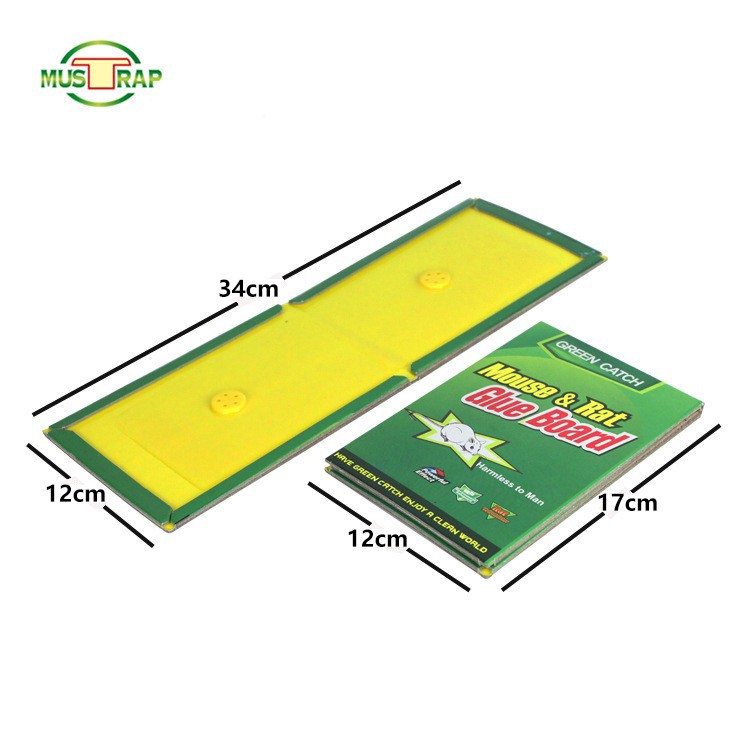
Global markets have increasingly adopted these physical solutions. For instance, large-scale distribution projects include the export of 1.8 million pieces of sticky mouse boards to Peru, 617,000 pieces to Brazil, and 40,000 pieces to India. These high-volume deployments demonstrate that physical adhesive traps provide consistent, reliable pest management without the ecological risks or bait shyness issues linked to traditional chemical active ingredients.

Data / Solution Comparison
| Feature / Parameter | Chemical Rodenticides (Active Ingredients) | Custom Sticky Mouse Boards (Physical Capture) |
|---|---|---|
| Risk of Bait Shyness | High (occurs after sub-lethal dosing) | None (mechanical capture, no ingestion required) |
| Primary Attraction Mechanism | Chemical bait formulations | Food-grade scent attractants (peanut, grain) |
| Safety in Food Areas | Restricted (risk of chemical contamination) | Highly Suitable (non-toxic and safe) |
| Customization Scope | Limited (regulated active ingredients) | High (custom pattern, size, glue thickness) |
| Environmental Impact | Secondary poisoning risks for pets and wildlife | Eco-friendly paperboard and non-toxic glue |
| Production Lead Time | Varies by chemical regulation | 1 month for custom orders; 3 to 7 days for stock |
Frequently Asked Questions (FAQ)
Why do rodents develop bait shyness to active chemical ingredients?
Rodents possess a strong survival instinct called neophobia. If they ingest a chemical active ingredient that does not kill them immediately but makes them ill, they associate that specific smell or taste with danger and will permanently avoid similar bait stations in the future.
How do food-grade attractants in physical traps avoid bait shyness?
Food-grade attractants mimic natural food sources like peanuts or grains without containing any toxic chemical agents. Since there is no physiological poisoning or delayed illness associated with the scent, rodents do not develop a learned avoidance behavior toward the trap's scent profile.
What customization options are available for physical sticky mouse boards?
Customization options include bespoke pattern color printing, specialized paperboard dimensions, custom adhesive thickness, and specific scent infusions. These options allow businesses to match local rodent behaviors and environmental conditions, such as high-temperature resistance for tropical climates.
Final Conclusion & Recommendations
To completely eliminate bait shyness in pest control programs, shifting from chemical active ingredients to physical, custom-made sticky mouse boards is the most reliable strategy. Utilizing non-toxic food-grade attractants ensures continuous rodent attraction without triggering survival-based avoidance. For bulk procurement, businesses can leverage flexible supply options including OEM Manufacturing, ODM Manufacturing, and Factory Direct Supply, with a minimum order quantity of 10,000 pieces for custom mouse traps. Supported payment methods include T/T (30% deposit, 70% balance before shipment), PayPal, and Alibaba Trade Assurance, with worldwide logistics handled via Sea, Air, Railway, or Truck transportation. Technical Support: bob@jinwen-goods.com
About Us
Yiwu Jinli Commodity Co., Ltd. (brand name: MUSTRAP) is a comprehensive enterprise integrating R&D, production, and sales. Established in 2010, the company operates independent workshops and production lines equipped with advanced domestic machinery, achieving a daily output of 80,000 units. With an export ratio of 70%, its high-quality sticky rat traps, flypaper, and cockroach traps are distributed to over 30 countries across South America, the Middle East, Southeast Asia, Africa, and other global markets. The company holds multiple registered trademarks and copyright certificates, including Copyright certificate 黔作登字-2020-F-00118638 (CERO-RAT) and 黔作登字-2024-F-01286419 (GREEN CATCH), reflecting its commitment to quality and intellectual property.

REPORT