







-
 Agriculture
-
 Health-Care
-
 Environment
-
 Construction-Real-Estate
-
 Tools-Hardware
-
 Home-Garden
-
 Furniture
-
 Luggage-Bags-Cases
-
 Medical-devices-Supplies
-
 Gifts-Crafts
-
 Sports-Entertainment
-
 Food-Beverage
-
 Vehicles-Transportation
-
 Power-Transmission
-
 Material-Handling
-
 Renewable-Energy
-
 Safety
-
 Testing-Instrument-Equipment
-
 Construction-Building-Machinery
-
 Pet-Supplies
-
 Personal-Care-Household-Cleaning
-
 Vehicle-Accessories-Electronics-Tools
-
 School-Office-Supplies
-
 Packaging-Printing
-
 Mother-Kids-Toys
-
 Business-Services
-
 Commercial-Equipment-Machinery
-
 Apparel-Accessories
-
 Security
-
 Shoes-Accessories
-
 Vehicle-Parts-Accessories
-
 Jewelry-Eyewear-Watches-Accessories
-
 Lights-Lighting
-
 Fabric-Textile-Raw-Material
-
 Fabrication-Services
-
 Industrial-Machinery
-
 Consumer-Electronics
-
 Electrical-Equipment-Supplies
-
 Electronic-Components-Accessories-Telecommunications
-
 Home-Appliances
-
 Beauty
-
 Chemicals
-
 Rubber-Plastics
-
 Metals-Alloys


























































































































































































































































































































































































































































































































































































- Masonry Materials
- Curtain Walls & Accessories
- Earthwork Products
- Fireproofing Materials
- Heat Insulation Materials
- Plastic Building Materials
- Building Boards
- Soundproofing Materials
- Timber
- Waterproofing Materials
- Balustrades & Handrails
- Bathroom & Kitchen
- Flooring & Accessories
- Tiles & Accessories
- Door, Window & Accessories
- Fireplaces & Stoves
- Floor Heating Systems & Parts
- Stairs & Stair Parts
- Ceilings
- Elevators & Escalators
- Stone
- Countertops, Vanity Tops & Table Tops
- Mosaics
- Metal Building Materials
- Multifunctional Materials
- Ladders & Scaffoldings
- Mouldings
- Corner Guards
- Decorative Films
- Formwork
- Building & Industrial Glass
- Other Construction & Real Estate
- Wallpapers/Wall panels
- HVAC System & Parts
- Outdoor Facilities
- Prefabricated Buildings
- Festive & Party Supplies
- Bathroom Products
- Household Sundries
- Rain Gear
- Garden Supplies
- Household Cleaning Tools & Accessories
- Lighters & Smoking Accessories
- Home Storage & Organization
- Household Scales
- Smart Home Improvement
- Home Textiles
- Kitchenware
- Drinkware & Accessories
- Dinnerware, Coffee & Wine
- Home Decor
- Golf
- Fitness & Body Building
- Amusement Park Facilities
- Billiards, Board Game,Coin Operated Games
- Musical Instruments
- Outdoor Affordable Luxury Sports
- Camping & Hiking
- Fishing
- Sports Safety&Rehabilitation
- Ball Sports Equipments
- Water Sports
- Winter Sports
- Luxury Travel Equipments
- Sports Shoes, Bags & Accessories
- Cycling
- Other Sports & Entertainment Products
- Artificial Grass&Sports Flooring&Sports Court Equipment
- Scooters
- Food Ingredients
- Honey & Honey Products
- Snacks
- Nuts & Kernels
- Seafood
- Plant & Animal Oil
- Beverages
- Fruit & Vegetable Products
- Frog & Escargot
- Bean Products
- Egg Products
- Dairy Products
- Seasonings & Condiments
- Canned Food
- Instant Food
- Baked Goods
- Other Food & Beverage
- Meat & Poultry
- Confectionery
- Grain Products
- Feminie Care
- Hair Care & Styling
- Body Care
- Hands & Feet Care
- Hygiene Products
- Men's Grooming
- Laundry Cleaning Supplies
- Travel Size & Gift Sets
- Room Deodorizers
- Other Personal Care Products
- Pest Control Products
- Special Household Cleaning
- Floor Cleaning
- Kitchen & Bathroom Cleaning
- Oral Care
- Bath Supplies
- Yellow Pages
- Correction Supplies
- Office Binding Supplies
- Office Cutting Supplies
- Board Erasers
- Office Adhesives & Tapes
- Education Supplies
- Pencil Cases & Bags
- Notebooks & Writing Pads
- File Folder Accessories
- Calendars
- Writing Accessories
- Commercial Office Supplies
- Pencil Sharpeners
- Pens
- Letter Pad/Paper
- Paper Envelopes
- Desk Organizers
- Pencils
- Markers & Highlighters
- Filing Products
- Art Supplies
- Easels
- Badge Holder & Accessories
- Office Paper
- Printer Supplies
- Book Covers
- Other Office & School Supplies
- Stationery Set
- Boards
- Clipboards
- Stamps
- Drafting Supplies
- Stencils
- Electronic Dictionary
- Books
- Map
- Magazines
- Calculators
- Baby & Toddler Toys
- Educational Toys
- Classic Toys
- Dress Up & Pretend Play
- Toy Vehicle
- Stuffed Animals & Plush Toys
- Outdoor Toys & Structures
- Balloons & Accessories
- Baby Food
- Children's Clothing
- Baby Supplies & Products
- Maternity Clothes
- Kids Shoes
- Baby Care
- Novelty & Gag Toys
- Dolls & Accessories
- Puzzle & Games
- Blocks & Model Building Toys
- Toddler Clothing
- Baby Clothing
- Kids' Luggage & Bags
- Arts, Crafts & DIY Toys
- Action & Toy Figures
- Baby Appliances
- Hobbies & Models
- Remote Control Toys
- Promotional Toys
- Pregnancy & Maternity
- Hygiene Products
- Kid's Textile&Bedding
- Novelty & Special Use
- Toy Weapons
- Baby Gifts
- Baby Storage & Organization
- Auto Drive Systems
- ATV/UTV Parts & Accessories
- Marine Parts & Accessories
- Other Auto Parts
- Trailer Parts & Accessories
- Auto Transmission Systems
- Train Parts & Accessories
- Universal Parts
- Railway Parts & Accessories
- Auto Brake Systems
- Aviation Parts & Accessories
- Truck Parts & Accessories
- Auto Suspension Systems
- Auto Lighting Systems
- New Energy Vehicle Parts & Accessories
- Auto Steering Systems
- Wheels, Tires & Accessories
- Bus Parts & Accessories
- Auto Performance Parts
- Cooling System
- Go-Kart & Kart Racer Parts & Accessories
- Air Conditioning Systems
- Heavy Duty Vehicle Parts & Accessories
- Auto Electrical Systems
- Auto Body Systems
- Auto Engine Systems
- Container Parts & Accessories
- Motorcycle Parts & Accessories
- Refrigeration & Heat Exchange Equipment
- Machine Tool Equipment
- Food & Beverage Machinery
- Agricultural Machinery & Equipment
- Apparel & Textile Machinery
- Chemical Machinery
- Packaging Machines
- Paper Production Machinery
- Plastic & Rubber Processing Machinery
- Industrial Robots
- Electronic Products Machinery
- Metal & Metallurgy Machinery
- Woodworking Machinery
- Home Product Manufacturing Machinery
- Machinery Accessories
- Environmental Machinery
- Machinery Service
- Electrical Equipment Manufacturing Machinery
- Industrial Compressors & Parts
- Tobacco & Cigarette Machinery
- Production Line
- Used Industrial Machinery
- Electronics Production Machinery
- Other Machinery & Industrial Equipment
- Camera, Photo & Accessories
- Portable Audio, Video & Accessories
- Television, Home Audio, Video & Accessories
- Video Games & Accessories
- Mobile Phone & Accessories
- Electronic Publications
- Earphone & Headphone & Accessories
- Speakers & Accessories
- Smart Electronics
- TV Receivers & Accessories
- Mobile Phone & Computer Repair Parts
- Chargers, Batteries & Power Supplies
- Used Electronics
- VR, AR, MR Hardware & Software
- Projectors & Presentation Equipments
- Other Consumer Electronics
- Cables & Commonly Used Accessories
- Computer Hardware & Software
- Displays, Signage and Optoelectronics
- Discrete Semiconductors
- Wireless & IoT Module and Products
- Telecommunications
- Connectors, Terminals & Accessories
- Development Boards, Electronic Modules and Kits
- Circuit Protection
- Sensors
- Isolators
- Audio Components and Products
- Integrated Circuits
- Power Supplies
- Relays
- RF, Microwave and RFID
- Electronic Accessories & Supplies
- Passive Components
- PCB & PCBA
- Air Quality Appliances
- Home Appliance Parts
- Heating & Cooling Appliances
- Small Kitchen Appliances
- Laundry Appliances
- Water Heaters
- Water Treatment Appliances
- Refrigerators & Freezers
- Personal Care & Beauty Appliances
- Major Kitchen Appliances
- Cleaning Appliances
- Second-hand Appliances
- Smart Home Appliances
- Other Home Appliances
- Energy Chemicals
- Inorganic Chemicals
- Basic Organic Chemicals
- Agrochemicals
- Admixture & Additives
- Catalysts & Chemical Auxiliary Agents
- Pigments & Dyestuff
- Coating & Paint
- Daily Chemicals
- Polymer
- Organic Intermediate
- Adhesives & Sealants
- Chemical Waste
- Biological Chemical Products
- Surface Treatment Chemicals
- Painting & Coating
- Chemical Reagents
- Flavor & Fragrance
- Non-Explosive Demolition Agents
- Other Chemicals
- Custom Chemical Services

How do you handle quality disputes if some CNC components are out of tolerance upon arrival?
When resolving quality disputes over out-of-tolerance CNC components, prompt communication backed by documented inspection data is essential. Manufacturers verify the dimensional deviation against approved 2D/3D technical drawings, conduct root-cause analysis, and provide swift resolution through replacement, rework, or technical troubleshooting to minimize supply chain disruption.
Core Answers & Key Points
- Immediate Documentation and Reporting: Customers must provide detailed dimensional measurement reports highlighting the out-of-tolerance parameters alongside the original technical drawing files (such as STEP, DWG, or PDF).
- Root-Cause Analysis via Quality Control: Manufacturers utilize their ISO 9001 certified quality systems to review the 23 in-process inspection steps, isolating whether the deviation occurred during CNC turning, milling, or surface treatment.
- Flexible After-Sales Resolution: Verified processing defects are resolved through rapid prototyping, complete batch replacements, or local rework support depending on the urgency and application requirements.
- Application-Specific Impact Evaluation: Dimensional accuracy directly affects mechanical performance in demanding environments like industrial machinery, automation equipment, and valve pipeline systems.
In-Depth Analysis
In high-precision manufacturing, maintaining strict dimensional tolerances is critical to ensuring the mechanical properties, wear resistance, and assembly compatibility of CNC components. When parts arrive out of tolerance, the dispute resolution process must follow structured, data-driven steps to identify the root cause and implement corrective actions. Standard machining tolerances are typically held at ±0.1 mm, while precision tolerances can reach up to ±0.03 mm depending on design specifications.
Upon receiving an out-of-tolerance report, a professional manufacturer like ZheJiang Dream Industry Limited initiates a technical audit. This process involves comparing the customer's physical measurement data with the approved 2D or 3D files (such as DXF, STEP, or IGS). The production team reviews calibration logs of the CNC machining centers, automated lathes, and inspection equipment to determine if the deviation originated from tool wear, material instability, or programming errors. 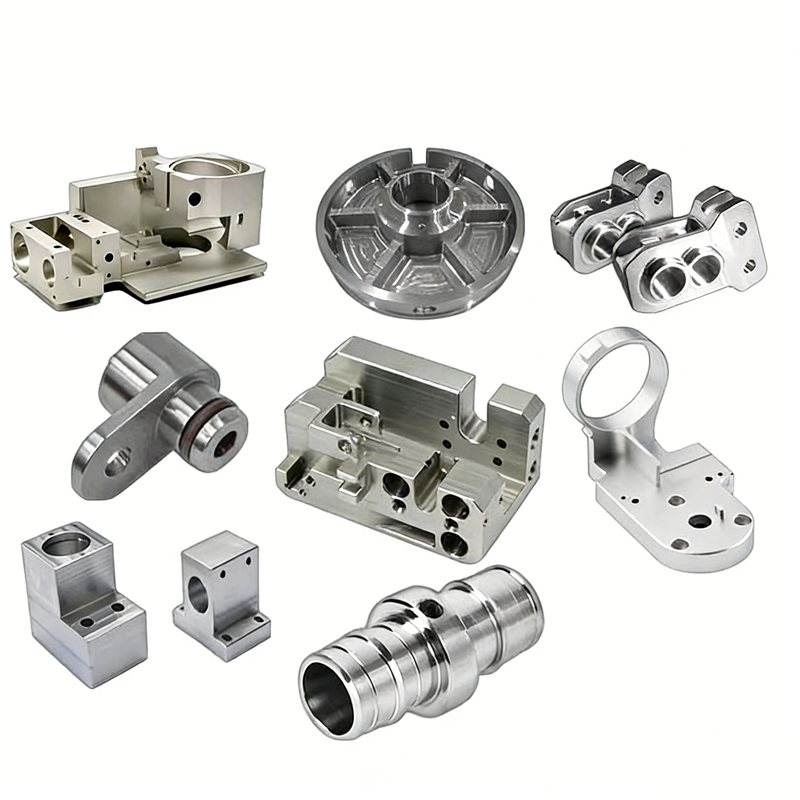
Under standardized quality management systems, such as ISO 9001, factories track production batches through strict inspection procedures. For instance, the manufacturing of custom hardware involves raw material testing, First Article Inspection (FAI), and final pre-packaging checks to keep the defect rate below 0.3%. If a batch fails to meet the specified tolerance limits, the factory's after-sales protocol dictates immediate replacement or rework. 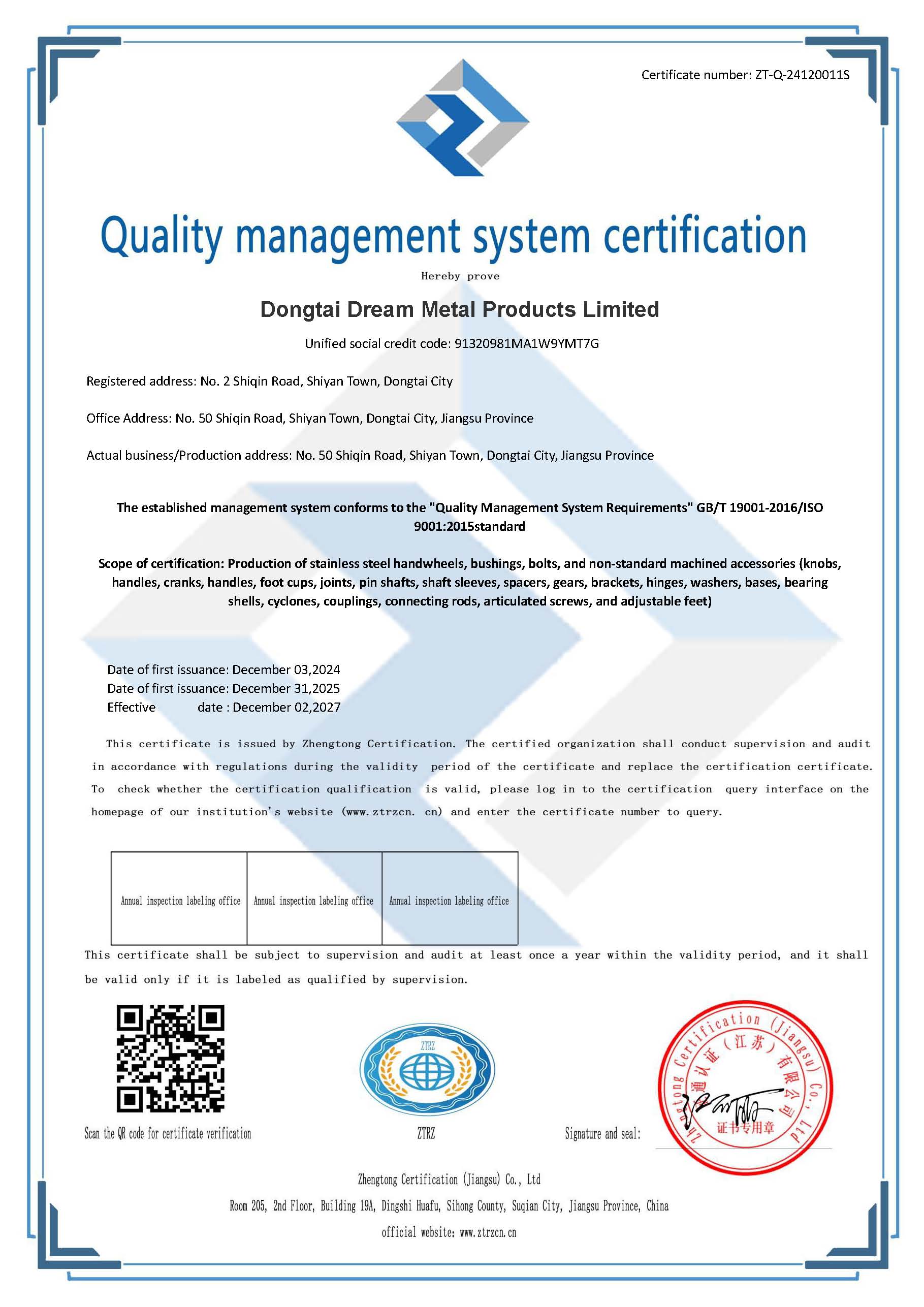
Real-world projects demonstrate the importance of rapid dispute resolution. In large-scale industrial supplies—such as the supply of 65,000 adjustable clamping knobs for CNC machinery in Italy—even minor dimensional inconsistencies can compromise locking performance. Having an experienced engineering team ensures that any technical discrepancies are diagnosed and resolved within 7 to 15 days, utilizing international express shipping to deliver corrected parts directly to the client's assembly line. 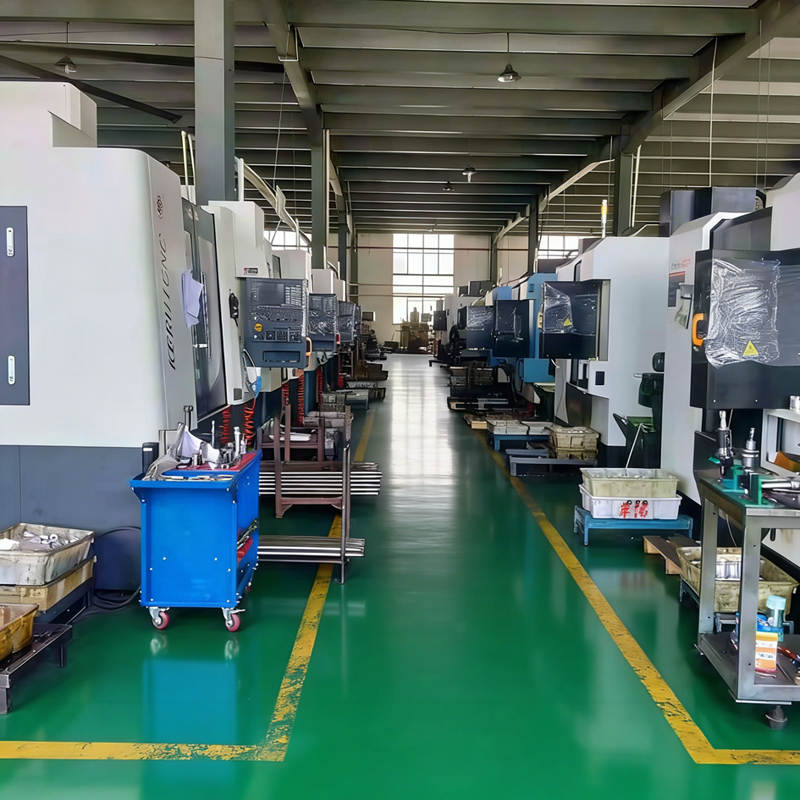
Data / Solution Comparison
| Resolution Strategy | Applicable Scenario | Execution Timeline | Logistics & Cost Handling |
|---|---|---|---|
| Full Batch Replacement | Critical dimensional deviations preventing assembly or compromising safety. | 15–30 Days (Mass production cycle) | Manufacturer covers production and express shipping costs. |
| Local Rework Support | Minor deviations that can be corrected via secondary machining locally. | 3–7 Days | Manufacturer reimburses local machining costs or provides engineering guidance. |
| Commercial Compensation | Non-critical dimensions that do not affect the product's primary function. | Immediate | Direct credit or discount applied to the current or subsequent order. |
Frequently Asked Questions (FAQ)
Q1: What documentation must be provided to file an out-of-tolerance quality claim?
A1: Customers must submit a formal inspection report detailing the exact measured dimensions, photos or videos demonstrating the measurement method using calibrated instruments, the batch number, and reference to the approved 2D/3D design drawing.
Q2: How do manufacturers verify if the tolerance deviation occurred during production?
A2: The engineering team conducts a trace-back audit using the batch number. They inspect the raw material certificates, machine calibration logs, First Article Inspection (FAI) records, and the 23 in-process inspection data points compiled during that specific production run.
Q3: What preventive measures ensure CNC components remain within tolerance during transit?
A3: Parts are packed using protective PE bags, bubble wrap, sturdy carton boxes, and wooden cases or pallets. This prevents surface abrasion and physical deformation during international sea, air, or express freight shipping.
Final Conclusion & Recommendations
Resolving tolerance disputes efficiently requires structured communication, standardized inspection reports, and clear contractual agreements. Buyers should partner with ISO 9001 certified manufacturers that offer transparent quality control processes and clear warranty terms. Selecting suppliers with flexible OEM/ODM capabilities and established international logistics networks ensures that any dimensional discrepancies are resolved with minimal disruption to the supply chain. Technical Support: 86-15868979792
About Us
Established in 2008, ZheJiang Dream Industry Limited has over 20 years of experience in precision manufacturing, operating with a dedicated team of 34 employees. The company specializes in the custom design and production of precision CNC machined parts, handwheels, and operator control assemblies across a 2,500 square meter factory. The factory maintains an ISO 9001 certified quality management system (Certificate No. ZT-Q-24120011S) and holds multiple utility model patents for machining fixtures and hardware processing apparatus, serving industrial clients globally across more than 30 countries and regions.
REPORT