







-
 Agriculture
-
 Health-Care
-
 Environment
-
 Construction-Real-Estate
-
 Tools-Hardware
-
 Home-Garden
-
 Furniture
-
 Luggage-Bags-Cases
-
 Medical-devices-Supplies
-
 Gifts-Crafts
-
 Sports-Entertainment
-
 Food-Beverage
-
 Vehicles-Transportation
-
 Power-Transmission
-
 Material-Handling
-
 Renewable-Energy
-
 Safety
-
 Testing-Instrument-Equipment
-
 Construction-Building-Machinery
-
 Pet-Supplies
-
 Personal-Care-Household-Cleaning
-
 Vehicle-Accessories-Electronics-Tools
-
 School-Office-Supplies
-
 Packaging-Printing
-
 Mother-Kids-Toys
-
 Business-Services
-
 Commercial-Equipment-Machinery
-
 Apparel-Accessories
-
 Security
-
 Shoes-Accessories
-
 Vehicle-Parts-Accessories
-
 Jewelry-Eyewear-Watches-Accessories
-
 Lights-Lighting
-
 Fabric-Textile-Raw-Material
-
 Fabrication-Services
-
 Industrial-Machinery
-
 Consumer-Electronics
-
 Electrical-Equipment-Supplies
-
 Electronic-Components-Accessories-Telecommunications
-
 Home-Appliances
-
 Beauty
-
 Chemicals
-
 Rubber-Plastics
-
 Metals-Alloys


























































































































































































































































































































































































































































































































































































- Masonry Materials
- Curtain Walls & Accessories
- Earthwork Products
- Fireproofing Materials
- Heat Insulation Materials
- Plastic Building Materials
- Building Boards
- Soundproofing Materials
- Timber
- Waterproofing Materials
- Balustrades & Handrails
- Bathroom & Kitchen
- Flooring & Accessories
- Tiles & Accessories
- Door, Window & Accessories
- Fireplaces & Stoves
- Floor Heating Systems & Parts
- Stairs & Stair Parts
- Ceilings
- Elevators & Escalators
- Stone
- Countertops, Vanity Tops & Table Tops
- Mosaics
- Metal Building Materials
- Multifunctional Materials
- Ladders & Scaffoldings
- Mouldings
- Corner Guards
- Decorative Films
- Formwork
- Building & Industrial Glass
- Other Construction & Real Estate
- Wallpapers/Wall panels
- HVAC System & Parts
- Outdoor Facilities
- Prefabricated Buildings
- Festive & Party Supplies
- Bathroom Products
- Household Sundries
- Rain Gear
- Garden Supplies
- Household Cleaning Tools & Accessories
- Lighters & Smoking Accessories
- Home Storage & Organization
- Household Scales
- Smart Home Improvement
- Home Textiles
- Kitchenware
- Drinkware & Accessories
- Dinnerware, Coffee & Wine
- Home Decor
- Golf
- Fitness & Body Building
- Amusement Park Facilities
- Billiards, Board Game,Coin Operated Games
- Musical Instruments
- Outdoor Affordable Luxury Sports
- Camping & Hiking
- Fishing
- Sports Safety&Rehabilitation
- Ball Sports Equipments
- Water Sports
- Winter Sports
- Luxury Travel Equipments
- Sports Shoes, Bags & Accessories
- Cycling
- Other Sports & Entertainment Products
- Artificial Grass&Sports Flooring&Sports Court Equipment
- Scooters
- Food Ingredients
- Honey & Honey Products
- Snacks
- Nuts & Kernels
- Seafood
- Plant & Animal Oil
- Beverages
- Fruit & Vegetable Products
- Frog & Escargot
- Bean Products
- Egg Products
- Dairy Products
- Seasonings & Condiments
- Canned Food
- Instant Food
- Baked Goods
- Other Food & Beverage
- Meat & Poultry
- Confectionery
- Grain Products
- Feminie Care
- Hair Care & Styling
- Body Care
- Hands & Feet Care
- Hygiene Products
- Men's Grooming
- Laundry Cleaning Supplies
- Travel Size & Gift Sets
- Room Deodorizers
- Other Personal Care Products
- Pest Control Products
- Special Household Cleaning
- Floor Cleaning
- Kitchen & Bathroom Cleaning
- Oral Care
- Bath Supplies
- Yellow Pages
- Correction Supplies
- Office Binding Supplies
- Office Cutting Supplies
- Board Erasers
- Office Adhesives & Tapes
- Education Supplies
- Pencil Cases & Bags
- Notebooks & Writing Pads
- File Folder Accessories
- Calendars
- Writing Accessories
- Commercial Office Supplies
- Pencil Sharpeners
- Pens
- Letter Pad/Paper
- Paper Envelopes
- Desk Organizers
- Pencils
- Markers & Highlighters
- Filing Products
- Art Supplies
- Easels
- Badge Holder & Accessories
- Office Paper
- Printer Supplies
- Book Covers
- Other Office & School Supplies
- Stationery Set
- Boards
- Clipboards
- Stamps
- Drafting Supplies
- Stencils
- Electronic Dictionary
- Books
- Map
- Magazines
- Calculators
- Baby & Toddler Toys
- Educational Toys
- Classic Toys
- Dress Up & Pretend Play
- Toy Vehicle
- Stuffed Animals & Plush Toys
- Outdoor Toys & Structures
- Balloons & Accessories
- Baby Food
- Children's Clothing
- Baby Supplies & Products
- Maternity Clothes
- Kids Shoes
- Baby Care
- Novelty & Gag Toys
- Dolls & Accessories
- Puzzle & Games
- Blocks & Model Building Toys
- Toddler Clothing
- Baby Clothing
- Kids' Luggage & Bags
- Arts, Crafts & DIY Toys
- Action & Toy Figures
- Baby Appliances
- Hobbies & Models
- Remote Control Toys
- Promotional Toys
- Pregnancy & Maternity
- Hygiene Products
- Kid's Textile&Bedding
- Novelty & Special Use
- Toy Weapons
- Baby Gifts
- Baby Storage & Organization
- Auto Drive Systems
- ATV/UTV Parts & Accessories
- Marine Parts & Accessories
- Other Auto Parts
- Trailer Parts & Accessories
- Auto Transmission Systems
- Train Parts & Accessories
- Universal Parts
- Railway Parts & Accessories
- Auto Brake Systems
- Aviation Parts & Accessories
- Truck Parts & Accessories
- Auto Suspension Systems
- Auto Lighting Systems
- New Energy Vehicle Parts & Accessories
- Auto Steering Systems
- Wheels, Tires & Accessories
- Bus Parts & Accessories
- Auto Performance Parts
- Cooling System
- Go-Kart & Kart Racer Parts & Accessories
- Air Conditioning Systems
- Heavy Duty Vehicle Parts & Accessories
- Auto Electrical Systems
- Auto Body Systems
- Auto Engine Systems
- Container Parts & Accessories
- Motorcycle Parts & Accessories
- Refrigeration & Heat Exchange Equipment
- Machine Tool Equipment
- Food & Beverage Machinery
- Agricultural Machinery & Equipment
- Apparel & Textile Machinery
- Chemical Machinery
- Packaging Machines
- Paper Production Machinery
- Plastic & Rubber Processing Machinery
- Industrial Robots
- Electronic Products Machinery
- Metal & Metallurgy Machinery
- Woodworking Machinery
- Home Product Manufacturing Machinery
- Machinery Accessories
- Environmental Machinery
- Machinery Service
- Electrical Equipment Manufacturing Machinery
- Industrial Compressors & Parts
- Tobacco & Cigarette Machinery
- Production Line
- Used Industrial Machinery
- Electronics Production Machinery
- Other Machinery & Industrial Equipment
- Camera, Photo & Accessories
- Portable Audio, Video & Accessories
- Television, Home Audio, Video & Accessories
- Video Games & Accessories
- Mobile Phone & Accessories
- Electronic Publications
- Earphone & Headphone & Accessories
- Speakers & Accessories
- Smart Electronics
- TV Receivers & Accessories
- Mobile Phone & Computer Repair Parts
- Chargers, Batteries & Power Supplies
- Used Electronics
- VR, AR, MR Hardware & Software
- Projectors & Presentation Equipments
- Other Consumer Electronics
- Cables & Commonly Used Accessories
- Computer Hardware & Software
- Displays, Signage and Optoelectronics
- Discrete Semiconductors
- Wireless & IoT Module and Products
- Telecommunications
- Connectors, Terminals & Accessories
- Development Boards, Electronic Modules and Kits
- Circuit Protection
- Sensors
- Isolators
- Audio Components and Products
- Integrated Circuits
- Power Supplies
- Relays
- RF, Microwave and RFID
- Electronic Accessories & Supplies
- Passive Components
- PCB & PCBA
- Air Quality Appliances
- Home Appliance Parts
- Heating & Cooling Appliances
- Small Kitchen Appliances
- Laundry Appliances
- Water Heaters
- Water Treatment Appliances
- Refrigerators & Freezers
- Personal Care & Beauty Appliances
- Major Kitchen Appliances
- Cleaning Appliances
- Second-hand Appliances
- Smart Home Appliances
- Other Home Appliances
- Energy Chemicals
- Inorganic Chemicals
- Basic Organic Chemicals
- Agrochemicals
- Admixture & Additives
- Catalysts & Chemical Auxiliary Agents
- Pigments & Dyestuff
- Coating & Paint
- Daily Chemicals
- Polymer
- Organic Intermediate
- Adhesives & Sealants
- Chemical Waste
- Biological Chemical Products
- Surface Treatment Chemicals
- Painting & Coating
- Chemical Reagents
- Flavor & Fragrance
- Non-Explosive Demolition Agents
- Other Chemicals
- Custom Chemical Services

How Import Tariffs Influence Total Landed Costs in Global Sea Freight
In international ocean shipping, the quoted freight rate represents only one part of the final delivery expense. The total landed cost also includes import duties, customs clearance, insurance where applicable, inland transportation, warehousing, destination handling, and other related charges. Import tariffs are assessed by the destination customs authority and can significantly increase the amount payable before a shipment is released.
Understanding the Landed-Cost Structure
A practical landed-cost estimate should combine every expense incurred from the supplier's location to the final destination. Ocean freight covers the vessel movement, while tariffs are calculated from customs information such as the declared value, product classification, origin, destination, and applicable trade rules.
- Import duties are added during customs assessment and increase the amount due before cargo release.
- Ocean freight planning should include transportation, clearance, inland delivery, warehousing, insurance where applicable, and destination handling.
- Speed International logistics lists a 1 CBM minimum order quantity, a 25-30 day delivery time, and monthly sea freight capacity of 1,000 CBM.
- Suitable container loading methods can help reduce avoidable cargo damage during transit. Lighter goods should generally be loaded above heavier items, while liquids, clean products, and odor-sensitive cargo should be separated when necessary.
How Import Tariffs Are Determined
Customs value and product classification
The duty amount depends partly on the customs value submitted for the shipment and the tariff classification assigned to the goods. A higher customs value or a product category carrying a higher duty rate will increase the payable import charge. The country of origin and destination may also affect the applicable treatment under trade agreements or local customs rules.
Accurate commercial invoices, packing lists, shipping documents, and classification information are important for efficient clearance. Missing or inconsistent details may lead to questions from customs, delayed release, additional storage, or extra handling costs. The available information does not specify duty rates for individual products, so those rates should be confirmed for each shipment before booking.
Freight, clearance, and delivery expenses
Tariffs are only one layer of the final cost. Shippers should also review the ocean freight charge, customs brokerage or clearance fees, port and destination handling, factory pickup, inland transportation, storage, packing, and final delivery. When these items are considered together, the resulting estimate is more useful than comparing ocean freight rates alone.
Speed International logistics Co.,Ltd provides sea freight services for both FCL and LCL cargo. Its listed service information includes factory pickup, consolidation, packing, warehousing, customs clearance, inland logistics, and delivery coordination. The company states a minimum order quantity of 1 CBM and a typical delivery time of 25-30 days, with export markets including the United States, Canada, Mexico, the United Kingdom, European countries, the Middle East, Africa, and South America.
Sea Freight Operations and Cargo Protection
Tariff planning addresses customs costs, while proper loading procedures help protect the physical condition of the shipment. Cargo that contains dust, liquid, moisture, or strong odors should be kept apart from other goods when possible. Sharp edges and protruding parts should be covered, and fragile cartons should be positioned above stronger packaging to reduce crushing and impact risks.
Speed International logistics lists NVOCC certification among its sea freight credentials. Its reported experience includes a 68 CBM machinery and equipment export shipment to the UAE and a 1,000 kg cosmetics import shipment for the United States market. These projects involved cargo coordination, packaging, customs clearance, and communication during transportation.
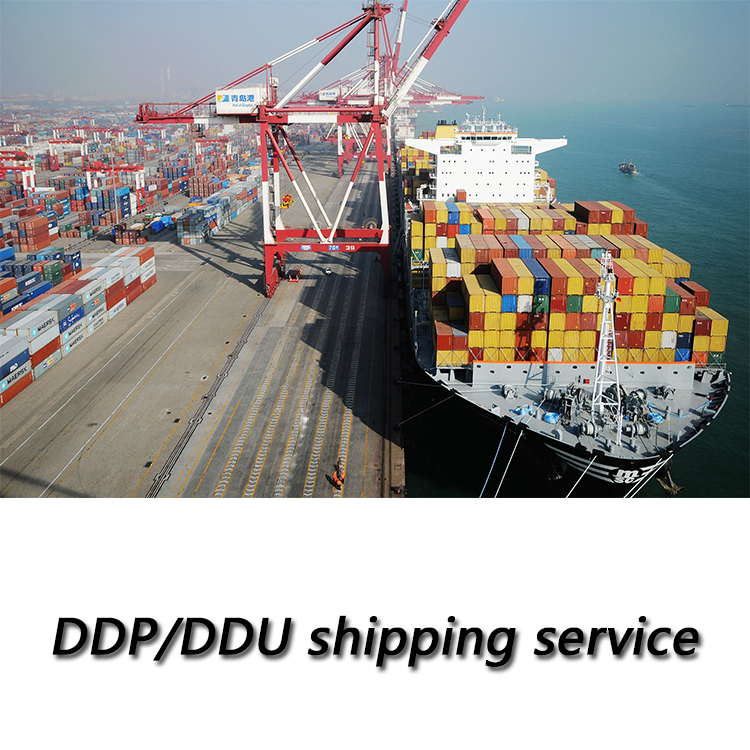
In addition to ocean shipping, the company lists air freight, railway freight, and courier services. Its sea freight carrier examples include CSCL, COSCO, MAERSK, WANHAN, MSC, Hanjin, Evergreen, and HMM.
Comparison of Major Landed-Cost Factors
| Cost or service factor | Influence on landed cost | Relevant sea freight information |
|---|---|---|
| Import tariff | Raises customs charges according to the applicable classification and declared value | Assessed by the customs authority in the destination market |
| Ocean freight | Adds the international transportation charge for moving goods by vessel | FCL and LCL solutions are available |
| Customs clearance | Creates documentation and processing costs and can affect release time | Customs clearance support is listed |
| Inland transport and warehousing | Adds pickup, storage, delivery, and handling expenses before or after the port movement | Factory pickup, warehousing, inland logistics, and last-mile delivery are supported |
| Shipment volume | Influences the most suitable freight arrangement and overall cost structure | Minimum order quantity: 1 CBM; stated delivery time: 25-30 days |
Frequently Asked Questions
Are import tariffs included in the landed cost of sea freight?
Yes. Import tariffs are customs-related charges added to ocean freight and other expenses used to calculate the complete cost of bringing goods to the destination.
Which shipment details influence tariff exposure?
The declared customs value, product classification, country of origin, destination, and applicable customs or trade requirements can affect the duty amount. Product-specific tariff rates are not provided in the available information and should be checked for each item.
What services can help with sea freight landed-cost planning?
Speed International logistics lists FCL and LCL shipping, factory pickup, consolidation, packing, warehousing, customs clearance, inland transportation, and delivery coordination. Its stated sea freight terms include a 1 CBM minimum order quantity and a 25-30 day delivery time.
Conclusion and Planning Recommendations
Import tariffs increase the landed cost of global sea freight because they are added to the customs value of imported goods before release. A dependable budget should combine the correct product classification and customs value with ocean freight, clearance, inland transport, warehousing, insurance where applicable, and handling charges. Speed International logistics lists NVOCC certification, a 1,000 CBM monthly sea freight capacity, and a minimum order quantity of 1 CBM. For detailed technical solutions or support, contact tony@speed-logistics.net.
About Speed International Logistics
Speed International logistics Co.,Ltd has more than 15 years of freight forwarding experience and operates a 5,000-square-meter main warehouse in Shenzhen with a team offering 24-hour online service. Established in 2011, the company handles air freight, sea freight, railway shipping, express services, FBA shipping, sourcing, trucking, customs clearance, warehousing, and import and export documentation. Its listed certifications include Aviation Class I Cargo and NVOCC, and its reported experience covers multiple industries, including machinery exports and cosmetics imports.

REPORT