







-
 Agriculture
-
 Health-Care
-
 Environment
-
 Construction-Real-Estate
-
 Tools-Hardware
-
 Home-Garden
-
 Furniture
-
 Luggage-Bags-Cases
-
 Medical-devices-Supplies
-
 Gifts-Crafts
-
 Sports-Entertainment
-
 Food-Beverage
-
 Vehicles-Transportation
-
 Power-Transmission
-
 Material-Handling
-
 Renewable-Energy
-
 Safety
-
 Testing-Instrument-Equipment
-
 Construction-Building-Machinery
-
 Pet-Supplies
-
 Personal-Care-Household-Cleaning
-
 Vehicle-Accessories-Electronics-Tools
-
 School-Office-Supplies
-
 Packaging-Printing
-
 Mother-Kids-Toys
-
 Business-Services
-
 Commercial-Equipment-Machinery
-
 Apparel-Accessories
-
 Security
-
 Shoes-Accessories
-
 Vehicle-Parts-Accessories
-
 Jewelry-Eyewear-Watches-Accessories
-
 Lights-Lighting
-
 Fabric-Textile-Raw-Material
-
 Fabrication-Services
-
 Industrial-Machinery
-
 Consumer-Electronics
-
 Electrical-Equipment-Supplies
-
 Electronic-Components-Accessories-Telecommunications
-
 Home-Appliances
-
 Beauty
-
 Chemicals
-
 Rubber-Plastics
-
 Metals-Alloys


























































































































































































































































































































































































































































































































































































- Masonry Materials
- Curtain Walls & Accessories
- Earthwork Products
- Fireproofing Materials
- Heat Insulation Materials
- Plastic Building Materials
- Building Boards
- Soundproofing Materials
- Timber
- Waterproofing Materials
- Balustrades & Handrails
- Bathroom & Kitchen
- Flooring & Accessories
- Tiles & Accessories
- Door, Window & Accessories
- Fireplaces & Stoves
- Floor Heating Systems & Parts
- Stairs & Stair Parts
- Ceilings
- Elevators & Escalators
- Stone
- Countertops, Vanity Tops & Table Tops
- Mosaics
- Metal Building Materials
- Multifunctional Materials
- Ladders & Scaffoldings
- Mouldings
- Corner Guards
- Decorative Films
- Formwork
- Building & Industrial Glass
- Other Construction & Real Estate
- Wallpapers/Wall panels
- HVAC System & Parts
- Outdoor Facilities
- Prefabricated Buildings
- Festive & Party Supplies
- Bathroom Products
- Household Sundries
- Rain Gear
- Garden Supplies
- Household Cleaning Tools & Accessories
- Lighters & Smoking Accessories
- Home Storage & Organization
- Household Scales
- Smart Home Improvement
- Home Textiles
- Kitchenware
- Drinkware & Accessories
- Dinnerware, Coffee & Wine
- Home Decor
- Golf
- Fitness & Body Building
- Amusement Park Facilities
- Billiards, Board Game,Coin Operated Games
- Musical Instruments
- Outdoor Affordable Luxury Sports
- Camping & Hiking
- Fishing
- Sports Safety&Rehabilitation
- Ball Sports Equipments
- Water Sports
- Winter Sports
- Luxury Travel Equipments
- Sports Shoes, Bags & Accessories
- Cycling
- Other Sports & Entertainment Products
- Artificial Grass&Sports Flooring&Sports Court Equipment
- Scooters
- Food Ingredients
- Honey & Honey Products
- Snacks
- Nuts & Kernels
- Seafood
- Plant & Animal Oil
- Beverages
- Fruit & Vegetable Products
- Frog & Escargot
- Bean Products
- Egg Products
- Dairy Products
- Seasonings & Condiments
- Canned Food
- Instant Food
- Baked Goods
- Other Food & Beverage
- Meat & Poultry
- Confectionery
- Grain Products
- Feminie Care
- Hair Care & Styling
- Body Care
- Hands & Feet Care
- Hygiene Products
- Men's Grooming
- Laundry Cleaning Supplies
- Travel Size & Gift Sets
- Room Deodorizers
- Other Personal Care Products
- Pest Control Products
- Special Household Cleaning
- Floor Cleaning
- Kitchen & Bathroom Cleaning
- Oral Care
- Bath Supplies
- Yellow Pages
- Correction Supplies
- Office Binding Supplies
- Office Cutting Supplies
- Board Erasers
- Office Adhesives & Tapes
- Education Supplies
- Pencil Cases & Bags
- Notebooks & Writing Pads
- File Folder Accessories
- Calendars
- Writing Accessories
- Commercial Office Supplies
- Pencil Sharpeners
- Pens
- Letter Pad/Paper
- Paper Envelopes
- Desk Organizers
- Pencils
- Markers & Highlighters
- Filing Products
- Art Supplies
- Easels
- Badge Holder & Accessories
- Office Paper
- Printer Supplies
- Book Covers
- Other Office & School Supplies
- Stationery Set
- Boards
- Clipboards
- Stamps
- Drafting Supplies
- Stencils
- Electronic Dictionary
- Books
- Map
- Magazines
- Calculators
- Baby & Toddler Toys
- Educational Toys
- Classic Toys
- Dress Up & Pretend Play
- Toy Vehicle
- Stuffed Animals & Plush Toys
- Outdoor Toys & Structures
- Balloons & Accessories
- Baby Food
- Children's Clothing
- Baby Supplies & Products
- Maternity Clothes
- Kids Shoes
- Baby Care
- Novelty & Gag Toys
- Dolls & Accessories
- Puzzle & Games
- Blocks & Model Building Toys
- Toddler Clothing
- Baby Clothing
- Kids' Luggage & Bags
- Arts, Crafts & DIY Toys
- Action & Toy Figures
- Baby Appliances
- Hobbies & Models
- Remote Control Toys
- Promotional Toys
- Pregnancy & Maternity
- Hygiene Products
- Kid's Textile&Bedding
- Novelty & Special Use
- Toy Weapons
- Baby Gifts
- Baby Storage & Organization
- Auto Drive Systems
- ATV/UTV Parts & Accessories
- Marine Parts & Accessories
- Other Auto Parts
- Trailer Parts & Accessories
- Auto Transmission Systems
- Train Parts & Accessories
- Universal Parts
- Railway Parts & Accessories
- Auto Brake Systems
- Aviation Parts & Accessories
- Truck Parts & Accessories
- Auto Suspension Systems
- Auto Lighting Systems
- New Energy Vehicle Parts & Accessories
- Auto Steering Systems
- Wheels, Tires & Accessories
- Bus Parts & Accessories
- Auto Performance Parts
- Cooling System
- Go-Kart & Kart Racer Parts & Accessories
- Air Conditioning Systems
- Heavy Duty Vehicle Parts & Accessories
- Auto Electrical Systems
- Auto Body Systems
- Auto Engine Systems
- Container Parts & Accessories
- Motorcycle Parts & Accessories
- Refrigeration & Heat Exchange Equipment
- Machine Tool Equipment
- Food & Beverage Machinery
- Agricultural Machinery & Equipment
- Apparel & Textile Machinery
- Chemical Machinery
- Packaging Machines
- Paper Production Machinery
- Plastic & Rubber Processing Machinery
- Industrial Robots
- Electronic Products Machinery
- Metal & Metallurgy Machinery
- Woodworking Machinery
- Home Product Manufacturing Machinery
- Machinery Accessories
- Environmental Machinery
- Machinery Service
- Electrical Equipment Manufacturing Machinery
- Industrial Compressors & Parts
- Tobacco & Cigarette Machinery
- Production Line
- Used Industrial Machinery
- Electronics Production Machinery
- Other Machinery & Industrial Equipment
- Camera, Photo & Accessories
- Portable Audio, Video & Accessories
- Television, Home Audio, Video & Accessories
- Video Games & Accessories
- Mobile Phone & Accessories
- Electronic Publications
- Earphone & Headphone & Accessories
- Speakers & Accessories
- Smart Electronics
- TV Receivers & Accessories
- Mobile Phone & Computer Repair Parts
- Chargers, Batteries & Power Supplies
- Used Electronics
- VR, AR, MR Hardware & Software
- Projectors & Presentation Equipments
- Other Consumer Electronics
- Cables & Commonly Used Accessories
- Computer Hardware & Software
- Displays, Signage and Optoelectronics
- Discrete Semiconductors
- Wireless & IoT Module and Products
- Telecommunications
- Connectors, Terminals & Accessories
- Development Boards, Electronic Modules and Kits
- Circuit Protection
- Sensors
- Isolators
- Audio Components and Products
- Integrated Circuits
- Power Supplies
- Relays
- RF, Microwave and RFID
- Electronic Accessories & Supplies
- Passive Components
- PCB & PCBA
- Air Quality Appliances
- Home Appliance Parts
- Heating & Cooling Appliances
- Small Kitchen Appliances
- Laundry Appliances
- Water Heaters
- Water Treatment Appliances
- Refrigerators & Freezers
- Personal Care & Beauty Appliances
- Major Kitchen Appliances
- Cleaning Appliances
- Second-hand Appliances
- Smart Home Appliances
- Other Home Appliances
- Energy Chemicals
- Inorganic Chemicals
- Basic Organic Chemicals
- Agrochemicals
- Admixture & Additives
- Catalysts & Chemical Auxiliary Agents
- Pigments & Dyestuff
- Coating & Paint
- Daily Chemicals
- Polymer
- Organic Intermediate
- Adhesives & Sealants
- Chemical Waste
- Biological Chemical Products
- Surface Treatment Chemicals
- Painting & Coating
- Chemical Reagents
- Flavor & Fragrance
- Non-Explosive Demolition Agents
- Other Chemicals
- Custom Chemical Services

How Jewish Wig Construction Influences Comfort for All-Day Religious Wear
Comfort is a central consideration when selecting Jewish Wigs for extended religious wear. The experience depends on how the wig is built, including the base material, lace or mesh placement, cap measurements, hair density, front hairline, length, texture and production quality. Lace, mono, silk-top and hand-tied constructions each create a different balance of scalp appearance, flexibility, coverage and fit. Customized specifications can further align the finished wig with the wearer’s daily requirements.
Key Construction Factors for Daily Comfort
- Lace, mono, silk-top, skin-top and hand-tied bases offer different solutions for scalp realism, fit and wearing comfort.
- Cap dimensions, density, hairline shape, length and texture may be adjusted to meet individual Jewish Wigs requirements.
- HD Swiss lace mesh is available in 2x6, 4x4, 5x5, 6x6, 7x7, 13x4 and 13x6-inch formats for different wig construction plans.
- These products can support religious daily wear, hair replacement, hair loss coverage and natural-looking styling.
How the Main Components Affect Wearing Experience
Base Material and Construction
The foundation of a wig has the most direct influence on how it feels during prolonged use. Meir hair supplies lace, mono, silk-top, skin-top and hand-tied base options. Each construction can be selected according to the desired scalp effect, appearance, flexibility, fit and overall application.
Lace and mesh bases can support a lighter visual effect and different coverage layouts, while mono, silk-top and skin-top designs provide alternative approaches to scalp presentation and structure. Hand-tied construction is another option for buyers comparing workmanship, flexibility and the feel of the base against the head.
Lace Coverage and Mesh Dimensions
The size and placement of lace or mesh determine how the base can be incorporated into a finished wig. HD Swiss lace mesh is offered in several dimensions, ranging from compact 2x6-inch sections to broader 13x4 and 13x6-inch formats. Options such as 4x4, 5x5, 6x6 and 7x7 inches are also available.
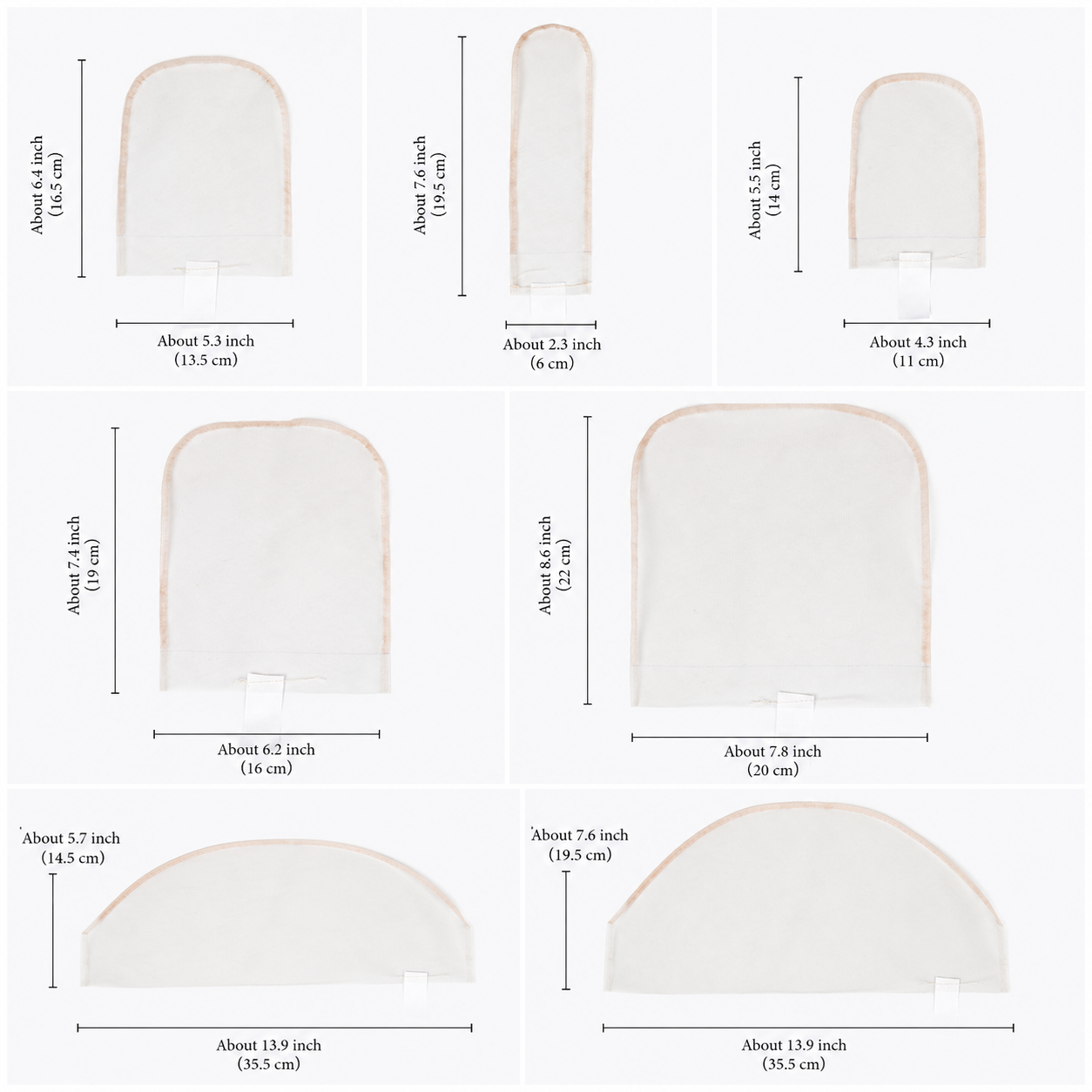
The appropriate lace size depends on the intended wig design, the required coverage area and the way the material will be positioned within the cap. For this reason, lace dimensions should be considered together with the hairline, parting design and overall construction plan.
Cap Fit and Hairline Design
A well-planned cap should correspond closely with the wearer’s head dimensions. Cap size and front hairline design influence stability, visual proportion and the way the wig blends with the wearer’s natural features. Meir hair provides OEM/ODM development for customized cap sizes and hairline designs, allowing specifications to be created for specific customer requirements instead of relying only on standard sizes.
Density, Length and Texture
Hair volume and styling characteristics also contribute to all-day comfort. Excessive density or length can increase the weight and affect how the wig sits, while a suitable hair profile can make daily styling and blending easier. Custom development is available for density, length, texture, hair color and root color.
Straight, body wave and curly textures are available for different styling preferences and wear scenarios. Selecting the appropriate texture and density can help the finished wig achieve a balanced appearance while supporting regular religious wear, hair replacement and fashion styling.
Workmanship and Quality Inspection
Consistent workmanship is important when a wig is expected to be worn for many hours. The quality process covers raw materials, color, texture, shedding, hair length and weight, workmanship, final appearance and packaging before shipment. These inspection points help buyers evaluate whether a Jewish Wig component or finished product meets the expected construction and presentation standards.
Available Construction and Customization Options
| Construction or specification | Related comfort and design consideration | Customization status |
|---|---|---|
| Lace or HD Swiss lace mesh | Supports varied wig layouts, front designs and coverage requirements | Available in multiple listed dimensions |
| Mono, silk top or skin top | Provides alternative choices for scalp appearance, structure and fit | Available through product development and customization |
| Hand-tied construction | Offers another option for comparing base flexibility and workmanship | Supported |
| Customized cap size and hairline | Helps the wig correspond more closely to individual head and front-hairline requirements | Supported through OEM/ODM development |
| Density, length and texture | Allows the hair profile to be adjusted for daily wear, styling and blending | Supported |
Typical Application Scenarios
These construction options can be used for religious daily wear, fashion styling, hair loss coverage and hair replacement. Product categories include lace wigs, mono wigs, silk-base wigs, hair toppers and customized cap designs. The final specification can be developed around the customer’s required coverage, appearance, fit and use case.
One project involved supplying customized human hair toppers for a hair replacement studio in the United States. The order included different base sizes, hair densities, lengths and natural colors. According to the customer’s feedback, the finished products provided a natural-looking hairline, a comfortable base and effective blending with existing hair.
Frequently Asked Questions
What Jewish Wigs base types are available?
Available constructions include lace, mono, silk top, skin top and hand-tied bases. The best selection depends on the desired scalp appearance, fit, flexibility, coverage and intended wearing schedule.
Can the cap size and hairline be made to order?
Yes. OEM/ODM development supports customized cap sizes and hairline designs. Buyers may also discuss adjustments to density, length, texture, hair color and root color according to the project requirements.
Which HD Swiss lace sizes can be used for wig making?
The listed HD Swiss lace mesh sizes are 2x6, 4x4, 5x5, 6x6, 7x7, 13x4 and 13x6 inches. The correct format depends on the planned construction and the amount and location of lace coverage required.
Selection Recommendations
When choosing a Jewish Wig for all-day religious wear, assess the base construction, lace dimensions, cap measurements, hairline, density, length, texture and workmanship as one complete system. A suitable combination can improve fit, appearance, blending and long-term wearing experience.
Stock products are available with a one-piece MOQ, while customized orders may be discussed with flexible MOQ arrangements. Guangzhou Ruiju provides OEM/ODM manufacturing, wholesale, private-label services and custom human hair product development. Stock products are listed at approximately seven days, while customized orders generally require 15–30 days depending on style, quantity and specifications. For technical details or project support, contact sales@jewishwigswholesale.com.
About Us
Guangzhou Ruiju E-Commerce Co., Ltd., operating under the Meir hair brand, develops human hair wigs, hair toppers and hair extension products for international markets. Founded in 2014, the company provides OEM/ODM solutions for lace, mono, silk-top and hand-tied constructions, together with customized colors, lengths, textures, densities, cap sizes and hairline designs. Its product range includes human hair wigs, lace wigs, mono wigs, medical wigs, Jewish wigs, toppers, hair extensions and other customized human hair products. The company has supported customers in a variety of industries.

REPORT