







-
 Agriculture
-
 Health-Care
-
 Environment
-
 Construction-Real-Estate
-
 Tools-Hardware
-
 Home-Garden
-
 Furniture
-
 Luggage-Bags-Cases
-
 Medical-devices-Supplies
-
 Gifts-Crafts
-
 Sports-Entertainment
-
 Food-Beverage
-
 Vehicles-Transportation
-
 Power-Transmission
-
 Material-Handling
-
 Renewable-Energy
-
 Safety
-
 Testing-Instrument-Equipment
-
 Construction-Building-Machinery
-
 Pet-Supplies
-
 Personal-Care-Household-Cleaning
-
 Vehicle-Accessories-Electronics-Tools
-
 School-Office-Supplies
-
 Packaging-Printing
-
 Mother-Kids-Toys
-
 Business-Services
-
 Commercial-Equipment-Machinery
-
 Apparel-Accessories
-
 Security
-
 Shoes-Accessories
-
 Vehicle-Parts-Accessories
-
 Jewelry-Eyewear-Watches-Accessories
-
 Lights-Lighting
-
 Fabric-Textile-Raw-Material
-
 Fabrication-Services
-
 Industrial-Machinery
-
 Consumer-Electronics
-
 Electrical-Equipment-Supplies
-
 Electronic-Components-Accessories-Telecommunications
-
 Home-Appliances
-
 Beauty
-
 Chemicals
-
 Rubber-Plastics
-
 Metals-Alloys


























































































































































































































































































































































































































































































































































































- Masonry Materials
- Curtain Walls & Accessories
- Earthwork Products
- Fireproofing Materials
- Heat Insulation Materials
- Plastic Building Materials
- Building Boards
- Soundproofing Materials
- Timber
- Waterproofing Materials
- Balustrades & Handrails
- Bathroom & Kitchen
- Flooring & Accessories
- Tiles & Accessories
- Door, Window & Accessories
- Fireplaces & Stoves
- Floor Heating Systems & Parts
- Stairs & Stair Parts
- Ceilings
- Elevators & Escalators
- Stone
- Countertops, Vanity Tops & Table Tops
- Mosaics
- Metal Building Materials
- Multifunctional Materials
- Ladders & Scaffoldings
- Mouldings
- Corner Guards
- Decorative Films
- Formwork
- Building & Industrial Glass
- Other Construction & Real Estate
- Wallpapers/Wall panels
- HVAC System & Parts
- Outdoor Facilities
- Prefabricated Buildings
- Festive & Party Supplies
- Bathroom Products
- Household Sundries
- Rain Gear
- Garden Supplies
- Household Cleaning Tools & Accessories
- Lighters & Smoking Accessories
- Home Storage & Organization
- Household Scales
- Smart Home Improvement
- Home Textiles
- Kitchenware
- Drinkware & Accessories
- Dinnerware, Coffee & Wine
- Home Decor
- Golf
- Fitness & Body Building
- Amusement Park Facilities
- Billiards, Board Game,Coin Operated Games
- Musical Instruments
- Outdoor Affordable Luxury Sports
- Camping & Hiking
- Fishing
- Sports Safety&Rehabilitation
- Ball Sports Equipments
- Water Sports
- Winter Sports
- Luxury Travel Equipments
- Sports Shoes, Bags & Accessories
- Cycling
- Other Sports & Entertainment Products
- Artificial Grass&Sports Flooring&Sports Court Equipment
- Scooters
- Food Ingredients
- Honey & Honey Products
- Snacks
- Nuts & Kernels
- Seafood
- Plant & Animal Oil
- Beverages
- Fruit & Vegetable Products
- Frog & Escargot
- Bean Products
- Egg Products
- Dairy Products
- Seasonings & Condiments
- Canned Food
- Instant Food
- Baked Goods
- Other Food & Beverage
- Meat & Poultry
- Confectionery
- Grain Products
- Feminie Care
- Hair Care & Styling
- Body Care
- Hands & Feet Care
- Hygiene Products
- Men's Grooming
- Laundry Cleaning Supplies
- Travel Size & Gift Sets
- Room Deodorizers
- Other Personal Care Products
- Pest Control Products
- Special Household Cleaning
- Floor Cleaning
- Kitchen & Bathroom Cleaning
- Oral Care
- Bath Supplies
- Yellow Pages
- Correction Supplies
- Office Binding Supplies
- Office Cutting Supplies
- Board Erasers
- Office Adhesives & Tapes
- Education Supplies
- Pencil Cases & Bags
- Notebooks & Writing Pads
- File Folder Accessories
- Calendars
- Writing Accessories
- Commercial Office Supplies
- Pencil Sharpeners
- Pens
- Letter Pad/Paper
- Paper Envelopes
- Desk Organizers
- Pencils
- Markers & Highlighters
- Filing Products
- Art Supplies
- Easels
- Badge Holder & Accessories
- Office Paper
- Printer Supplies
- Book Covers
- Other Office & School Supplies
- Stationery Set
- Boards
- Clipboards
- Stamps
- Drafting Supplies
- Stencils
- Electronic Dictionary
- Books
- Map
- Magazines
- Calculators
- Baby & Toddler Toys
- Educational Toys
- Classic Toys
- Dress Up & Pretend Play
- Toy Vehicle
- Stuffed Animals & Plush Toys
- Outdoor Toys & Structures
- Balloons & Accessories
- Baby Food
- Children's Clothing
- Baby Supplies & Products
- Maternity Clothes
- Kids Shoes
- Baby Care
- Novelty & Gag Toys
- Dolls & Accessories
- Puzzle & Games
- Blocks & Model Building Toys
- Toddler Clothing
- Baby Clothing
- Kids' Luggage & Bags
- Arts, Crafts & DIY Toys
- Action & Toy Figures
- Baby Appliances
- Hobbies & Models
- Remote Control Toys
- Promotional Toys
- Pregnancy & Maternity
- Hygiene Products
- Kid's Textile&Bedding
- Novelty & Special Use
- Toy Weapons
- Baby Gifts
- Baby Storage & Organization
- Auto Drive Systems
- ATV/UTV Parts & Accessories
- Marine Parts & Accessories
- Other Auto Parts
- Trailer Parts & Accessories
- Auto Transmission Systems
- Train Parts & Accessories
- Universal Parts
- Railway Parts & Accessories
- Auto Brake Systems
- Aviation Parts & Accessories
- Truck Parts & Accessories
- Auto Suspension Systems
- Auto Lighting Systems
- New Energy Vehicle Parts & Accessories
- Auto Steering Systems
- Wheels, Tires & Accessories
- Bus Parts & Accessories
- Auto Performance Parts
- Cooling System
- Go-Kart & Kart Racer Parts & Accessories
- Air Conditioning Systems
- Heavy Duty Vehicle Parts & Accessories
- Auto Electrical Systems
- Auto Body Systems
- Auto Engine Systems
- Container Parts & Accessories
- Motorcycle Parts & Accessories
- Refrigeration & Heat Exchange Equipment
- Machine Tool Equipment
- Food & Beverage Machinery
- Agricultural Machinery & Equipment
- Apparel & Textile Machinery
- Chemical Machinery
- Packaging Machines
- Paper Production Machinery
- Plastic & Rubber Processing Machinery
- Industrial Robots
- Electronic Products Machinery
- Metal & Metallurgy Machinery
- Woodworking Machinery
- Home Product Manufacturing Machinery
- Machinery Accessories
- Environmental Machinery
- Machinery Service
- Electrical Equipment Manufacturing Machinery
- Industrial Compressors & Parts
- Tobacco & Cigarette Machinery
- Production Line
- Used Industrial Machinery
- Electronics Production Machinery
- Other Machinery & Industrial Equipment
- Camera, Photo & Accessories
- Portable Audio, Video & Accessories
- Television, Home Audio, Video & Accessories
- Video Games & Accessories
- Mobile Phone & Accessories
- Electronic Publications
- Earphone & Headphone & Accessories
- Speakers & Accessories
- Smart Electronics
- TV Receivers & Accessories
- Mobile Phone & Computer Repair Parts
- Chargers, Batteries & Power Supplies
- Used Electronics
- VR, AR, MR Hardware & Software
- Projectors & Presentation Equipments
- Other Consumer Electronics
- Cables & Commonly Used Accessories
- Computer Hardware & Software
- Displays, Signage and Optoelectronics
- Discrete Semiconductors
- Wireless & IoT Module and Products
- Telecommunications
- Connectors, Terminals & Accessories
- Development Boards, Electronic Modules and Kits
- Circuit Protection
- Sensors
- Isolators
- Audio Components and Products
- Integrated Circuits
- Power Supplies
- Relays
- RF, Microwave and RFID
- Electronic Accessories & Supplies
- Passive Components
- PCB & PCBA
- Air Quality Appliances
- Home Appliance Parts
- Heating & Cooling Appliances
- Small Kitchen Appliances
- Laundry Appliances
- Water Heaters
- Water Treatment Appliances
- Refrigerators & Freezers
- Personal Care & Beauty Appliances
- Major Kitchen Appliances
- Cleaning Appliances
- Second-hand Appliances
- Smart Home Appliances
- Other Home Appliances
- Energy Chemicals
- Inorganic Chemicals
- Basic Organic Chemicals
- Agrochemicals
- Admixture & Additives
- Catalysts & Chemical Auxiliary Agents
- Pigments & Dyestuff
- Coating & Paint
- Daily Chemicals
- Polymer
- Organic Intermediate
- Adhesives & Sealants
- Chemical Waste
- Biological Chemical Products
- Surface Treatment Chemicals
- Painting & Coating
- Chemical Reagents
- Flavor & Fragrance
- Non-Explosive Demolition Agents
- Other Chemicals
- Custom Chemical Services

How Smart Energy Planning Is Reshaping Prefab Capsule Houses
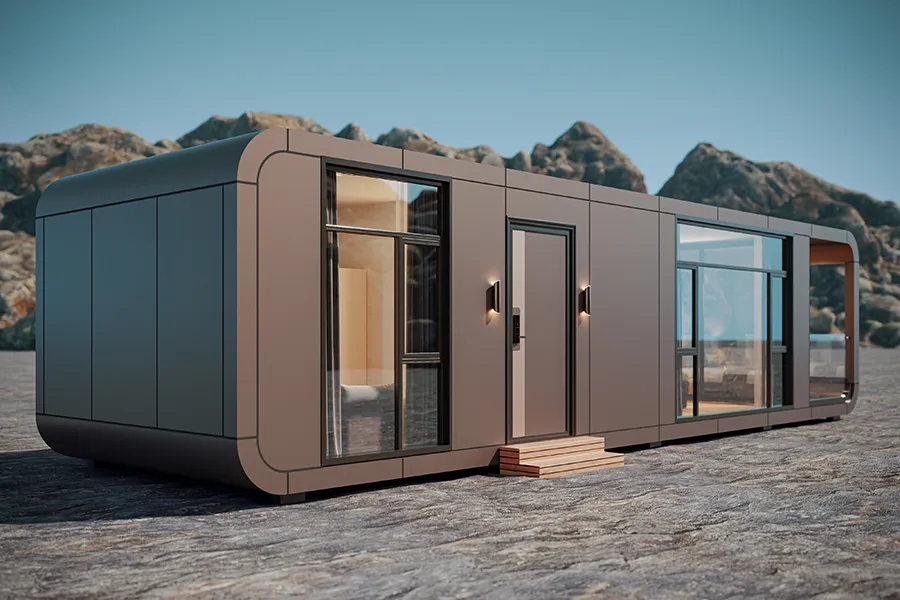
Energy-efficient technology is influencing prefab capsule houses by shifting attention from general product claims to project-specific performance planning. For a detachable space capsule house, the evaluation should consider the destination’s climate, insulation approach, selected materials, utility systems, transportation, installation process, and planned use. YOUTOME’s available information confirms flexible modular planning, but it does not publish a standardized energy rating or guaranteed efficiency result.
Energy Planning Priorities for Capsule Houses
- Energy performance should be reviewed according to the project location, climate, users, utilities, and daily operating conditions.
- The detachable space capsule house allows adaptable modular planning, while the final materials, fixtures, equipment, and layout must be confirmed in writing.
- Residential use, hospitality stays, and outdoor accommodation are possible planning directions, but none automatically represents a defined energy-performance specification.
- Freight, unloading, foundations, assembly, utility connections, commissioning, and acceptance should be assessed separately as part of the project’s complete environmental and operating scope.
How the Design Approach Affects Energy Performance
The supplied product information identifies the product as a Detachable Space Capsule House within the “Prefab Capsule Houses” category. It does not list U-values, insulation thickness, annual energy consumption, renewable-energy systems, heating or cooling capacity, window-performance data, or energy-efficiency certification. Buyers should request these documents for the selected model, configuration, and destination before comparing alternatives.
Start With the Project Brief
A practical energy strategy begins with a complete project brief. It should state the country and city, intended application, expected users, quantity, site accessibility, available utilities, preferred layout, and target delivery schedule. BFC’s project-based customization process also considers local climate and transportation conditions together with the building type, floor plan, and modular arrangement.
Materials, Openings, and Equipment
Materials and components can be reviewed as part of the project discussion. BFC indicates that its coordination scope may include primary structures, building materials, doors and windows, bathroom fixtures, and furniture. These selections can influence operating requirements and comfort, yet the available information does not attach a specific energy result to any individual component or capsule-house design.

Use Case and Operating Requirements
The intended application determines the design priorities. A living unit may need carefully planned sleeping and living zones, storage, workspace, access, and utility provision. A hospitality project may require guest-room layouts, shared facilities, cleaning procedures, maintenance planning, and clearly assigned local operating duties. These use cases help define the energy brief, but they do not confirm residential or hospitality approval, nor do they establish a fixed building specification.
Previous cooperation examples include worker accommodation in Uzbekistan, a modular school in Malaysia, an outdoor camp in Azerbaijan, and villa projects in Tanzania and the United States. These examples demonstrate experience across different modular-space applications, but they should not be interpreted as evidence of a particular energy-efficiency result for the detachable space capsule house.
Information Buyers Should Verify
Project documentation should distinguish between a product reference and a confirmed technical commitment. Images can show the appearance and general arrangement of a capsule house, while drawings, specifications, quotations, acceptance criteria, and test documents are needed to confirm actual performance. The same principle applies to transport and installation: sea freight by FCL or LCL is listed as an available shipping method, but unloading, site access, foundations, equipment, assembly, and utility connection responsibilities require project-level agreement.
The company profile lists ISO 9001:2015 certification for quality management in the processing of prefabricated buildings, including container houses, and ISO 45001:2018 certification for occupational health and safety management in related processing activities. These credentials support management-system information, but they are not energy-performance certifications for the product described here.
Assessment Comparison
| Review category | Information currently supported | Details to confirm for the project |
|---|---|---|
| Product definition | Detachable Space Capsule House in the prefab capsule house category | Exact model, dimensions, drawings, layout, and selected configuration |
| Climate adaptation | Local climate and site conditions are considered during project coordination | Insulation values, envelope performance, heating, cooling, and energy-use evidence |
| Materials and fittings | Building materials, windows, doors, bathroom fixtures, and furniture may be coordinated from available options | Final specifications, supply availability, testing, and performance documentation |
| Utilities and operation | Utility requirements and operating responsibilities should be defined in the project brief | Capacity, connection method, equipment, maintenance, commissioning, and acceptance scope |
| Logistics and delivery | FCL and LCL sea freight are listed as shipping options | Packing list, freight quotation, unloading machinery, access route, foundations, and installation duties |
Frequently Asked Questions
Is an energy-efficiency rating available for the detachable space capsule house?
No. The supplied information does not publish an energy rating, consumption figure, insulation value, or renewable-energy specification. The relevant technical documents should be requested for the chosen configuration and destination.
What is the correct way to evaluate energy performance?
First define the city, country, climate, intended use, users, utilities, site access, layout, and operating model. Then review the envelope, doors and windows, internal equipment, utility connections, installation work, commissioning requirements, and ongoing maintenance responsibilities separately.
Can product photographs confirm energy efficiency?
No. Photographs present a reference appearance only. They cannot verify insulation, completed construction, local approval, certification, or the final agreed specification.
Conclusion and Project Recommendations
Energy-conscious technologies can improve prefab capsule-house planning through climate-responsive design, considered material selection, efficient utility coordination, and clearer operational planning. For the Detachable Space Capsule House, the available evidence supports a flexible project-development process rather than a universal efficiency claim. YOUTOME handles purchases and cooperation on a project basis, with configuration, technical requirements, acceptance terms, delivery schedules, and after-sales responsibilities agreed for each order. For technical consultation or project support, contact us at bfc@buyfromchina.cn.
About Us
Guangdong BFC Technology Co., Ltd. operates YOUTOME as an independently operated brand serving housing projects and adaptable physical spaces. Its project discussions include folding-expandable homes and modular spaces for living, accommodation, business, work, and community applications. BFC coordinates with modular-building manufacturers and component suppliers to assess intended use, site conditions, local climate, transportation, installation, and configuration needs. Its listed credentials include ISO 9001:2015 and ISO 45001:2018 certificates, while its cooperation cases cover multiple sectors and project environments.
REPORT