







-
 Agriculture
-
 Health-Care
-
 Environment
-
 Construction-Real-Estate
-
 Tools-Hardware
-
 Home-Garden
-
 Furniture
-
 Luggage-Bags-Cases
-
 Medical-devices-Supplies
-
 Gifts-Crafts
-
 Sports-Entertainment
-
 Food-Beverage
-
 Vehicles-Transportation
-
 Power-Transmission
-
 Material-Handling
-
 Renewable-Energy
-
 Safety
-
 Testing-Instrument-Equipment
-
 Construction-Building-Machinery
-
 Pet-Supplies
-
 Personal-Care-Household-Cleaning
-
 Vehicle-Accessories-Electronics-Tools
-
 School-Office-Supplies
-
 Packaging-Printing
-
 Mother-Kids-Toys
-
 Business-Services
-
 Commercial-Equipment-Machinery
-
 Apparel-Accessories
-
 Security
-
 Shoes-Accessories
-
 Vehicle-Parts-Accessories
-
 Jewelry-Eyewear-Watches-Accessories
-
 Lights-Lighting
-
 Fabric-Textile-Raw-Material
-
 Fabrication-Services
-
 Industrial-Machinery
-
 Consumer-Electronics
-
 Electrical-Equipment-Supplies
-
 Electronic-Components-Accessories-Telecommunications
-
 Home-Appliances
-
 Beauty
-
 Chemicals
-
 Rubber-Plastics
-
 Metals-Alloys


























































































































































































































































































































































































































































































































































































- Masonry Materials
- Curtain Walls & Accessories
- Earthwork Products
- Fireproofing Materials
- Heat Insulation Materials
- Plastic Building Materials
- Building Boards
- Soundproofing Materials
- Timber
- Waterproofing Materials
- Balustrades & Handrails
- Bathroom & Kitchen
- Flooring & Accessories
- Tiles & Accessories
- Door, Window & Accessories
- Fireplaces & Stoves
- Floor Heating Systems & Parts
- Stairs & Stair Parts
- Ceilings
- Elevators & Escalators
- Stone
- Countertops, Vanity Tops & Table Tops
- Mosaics
- Metal Building Materials
- Multifunctional Materials
- Ladders & Scaffoldings
- Mouldings
- Corner Guards
- Decorative Films
- Formwork
- Building & Industrial Glass
- Other Construction & Real Estate
- Wallpapers/Wall panels
- HVAC System & Parts
- Outdoor Facilities
- Prefabricated Buildings
- Festive & Party Supplies
- Bathroom Products
- Household Sundries
- Rain Gear
- Garden Supplies
- Household Cleaning Tools & Accessories
- Lighters & Smoking Accessories
- Home Storage & Organization
- Household Scales
- Smart Home Improvement
- Home Textiles
- Kitchenware
- Drinkware & Accessories
- Dinnerware, Coffee & Wine
- Home Decor
- Golf
- Fitness & Body Building
- Amusement Park Facilities
- Billiards, Board Game,Coin Operated Games
- Musical Instruments
- Outdoor Affordable Luxury Sports
- Camping & Hiking
- Fishing
- Sports Safety&Rehabilitation
- Ball Sports Equipments
- Water Sports
- Winter Sports
- Luxury Travel Equipments
- Sports Shoes, Bags & Accessories
- Cycling
- Other Sports & Entertainment Products
- Artificial Grass&Sports Flooring&Sports Court Equipment
- Scooters
- Food Ingredients
- Honey & Honey Products
- Snacks
- Nuts & Kernels
- Seafood
- Plant & Animal Oil
- Beverages
- Fruit & Vegetable Products
- Frog & Escargot
- Bean Products
- Egg Products
- Dairy Products
- Seasonings & Condiments
- Canned Food
- Instant Food
- Baked Goods
- Other Food & Beverage
- Meat & Poultry
- Confectionery
- Grain Products
- Feminie Care
- Hair Care & Styling
- Body Care
- Hands & Feet Care
- Hygiene Products
- Men's Grooming
- Laundry Cleaning Supplies
- Travel Size & Gift Sets
- Room Deodorizers
- Other Personal Care Products
- Pest Control Products
- Special Household Cleaning
- Floor Cleaning
- Kitchen & Bathroom Cleaning
- Oral Care
- Bath Supplies
- Yellow Pages
- Correction Supplies
- Office Binding Supplies
- Office Cutting Supplies
- Board Erasers
- Office Adhesives & Tapes
- Education Supplies
- Pencil Cases & Bags
- Notebooks & Writing Pads
- File Folder Accessories
- Calendars
- Writing Accessories
- Commercial Office Supplies
- Pencil Sharpeners
- Pens
- Letter Pad/Paper
- Paper Envelopes
- Desk Organizers
- Pencils
- Markers & Highlighters
- Filing Products
- Art Supplies
- Easels
- Badge Holder & Accessories
- Office Paper
- Printer Supplies
- Book Covers
- Other Office & School Supplies
- Stationery Set
- Boards
- Clipboards
- Stamps
- Drafting Supplies
- Stencils
- Electronic Dictionary
- Books
- Map
- Magazines
- Calculators
- Baby & Toddler Toys
- Educational Toys
- Classic Toys
- Dress Up & Pretend Play
- Toy Vehicle
- Stuffed Animals & Plush Toys
- Outdoor Toys & Structures
- Balloons & Accessories
- Baby Food
- Children's Clothing
- Baby Supplies & Products
- Maternity Clothes
- Kids Shoes
- Baby Care
- Novelty & Gag Toys
- Dolls & Accessories
- Puzzle & Games
- Blocks & Model Building Toys
- Toddler Clothing
- Baby Clothing
- Kids' Luggage & Bags
- Arts, Crafts & DIY Toys
- Action & Toy Figures
- Baby Appliances
- Hobbies & Models
- Remote Control Toys
- Promotional Toys
- Pregnancy & Maternity
- Hygiene Products
- Kid's Textile&Bedding
- Novelty & Special Use
- Toy Weapons
- Baby Gifts
- Baby Storage & Organization
- Auto Drive Systems
- ATV/UTV Parts & Accessories
- Marine Parts & Accessories
- Other Auto Parts
- Trailer Parts & Accessories
- Auto Transmission Systems
- Train Parts & Accessories
- Universal Parts
- Railway Parts & Accessories
- Auto Brake Systems
- Aviation Parts & Accessories
- Truck Parts & Accessories
- Auto Suspension Systems
- Auto Lighting Systems
- New Energy Vehicle Parts & Accessories
- Auto Steering Systems
- Wheels, Tires & Accessories
- Bus Parts & Accessories
- Auto Performance Parts
- Cooling System
- Go-Kart & Kart Racer Parts & Accessories
- Air Conditioning Systems
- Heavy Duty Vehicle Parts & Accessories
- Auto Electrical Systems
- Auto Body Systems
- Auto Engine Systems
- Container Parts & Accessories
- Motorcycle Parts & Accessories
- Refrigeration & Heat Exchange Equipment
- Machine Tool Equipment
- Food & Beverage Machinery
- Agricultural Machinery & Equipment
- Apparel & Textile Machinery
- Chemical Machinery
- Packaging Machines
- Paper Production Machinery
- Plastic & Rubber Processing Machinery
- Industrial Robots
- Electronic Products Machinery
- Metal & Metallurgy Machinery
- Woodworking Machinery
- Home Product Manufacturing Machinery
- Machinery Accessories
- Environmental Machinery
- Machinery Service
- Electrical Equipment Manufacturing Machinery
- Industrial Compressors & Parts
- Tobacco & Cigarette Machinery
- Production Line
- Used Industrial Machinery
- Electronics Production Machinery
- Other Machinery & Industrial Equipment
- Camera, Photo & Accessories
- Portable Audio, Video & Accessories
- Television, Home Audio, Video & Accessories
- Video Games & Accessories
- Mobile Phone & Accessories
- Electronic Publications
- Earphone & Headphone & Accessories
- Speakers & Accessories
- Smart Electronics
- TV Receivers & Accessories
- Mobile Phone & Computer Repair Parts
- Chargers, Batteries & Power Supplies
- Used Electronics
- VR, AR, MR Hardware & Software
- Projectors & Presentation Equipments
- Other Consumer Electronics
- Cables & Commonly Used Accessories
- Computer Hardware & Software
- Displays, Signage and Optoelectronics
- Discrete Semiconductors
- Wireless & IoT Module and Products
- Telecommunications
- Connectors, Terminals & Accessories
- Development Boards, Electronic Modules and Kits
- Circuit Protection
- Sensors
- Isolators
- Audio Components and Products
- Integrated Circuits
- Power Supplies
- Relays
- RF, Microwave and RFID
- Electronic Accessories & Supplies
- Passive Components
- PCB & PCBA
- Air Quality Appliances
- Home Appliance Parts
- Heating & Cooling Appliances
- Small Kitchen Appliances
- Laundry Appliances
- Water Heaters
- Water Treatment Appliances
- Refrigerators & Freezers
- Personal Care & Beauty Appliances
- Major Kitchen Appliances
- Cleaning Appliances
- Second-hand Appliances
- Smart Home Appliances
- Other Home Appliances
- Energy Chemicals
- Inorganic Chemicals
- Basic Organic Chemicals
- Agrochemicals
- Admixture & Additives
- Catalysts & Chemical Auxiliary Agents
- Pigments & Dyestuff
- Coating & Paint
- Daily Chemicals
- Polymer
- Organic Intermediate
- Adhesives & Sealants
- Chemical Waste
- Biological Chemical Products
- Surface Treatment Chemicals
- Painting & Coating
- Chemical Reagents
- Flavor & Fragrance
- Non-Explosive Demolition Agents
- Other Chemicals
- Custom Chemical Services

How to Audit a Packaging Flocking Fabric Factory: Complete Inspection Guide & Technical Requirements
Conducting a comprehensive facility audit for packaging flocking fabric requires evaluating everything from raw material preparation to specialized chemical testing. To guarantee reliable supply chains for luxury goods, electronics, and automotive interiors, auditors must assess vertical integration, anti-tarnish formulations, eco-friendly adhesive systems, and global regulatory compliance including REACH, GRS, and RoHS 2.0 standards.
Essential Audit Checkpoints & Strategic Takeaways
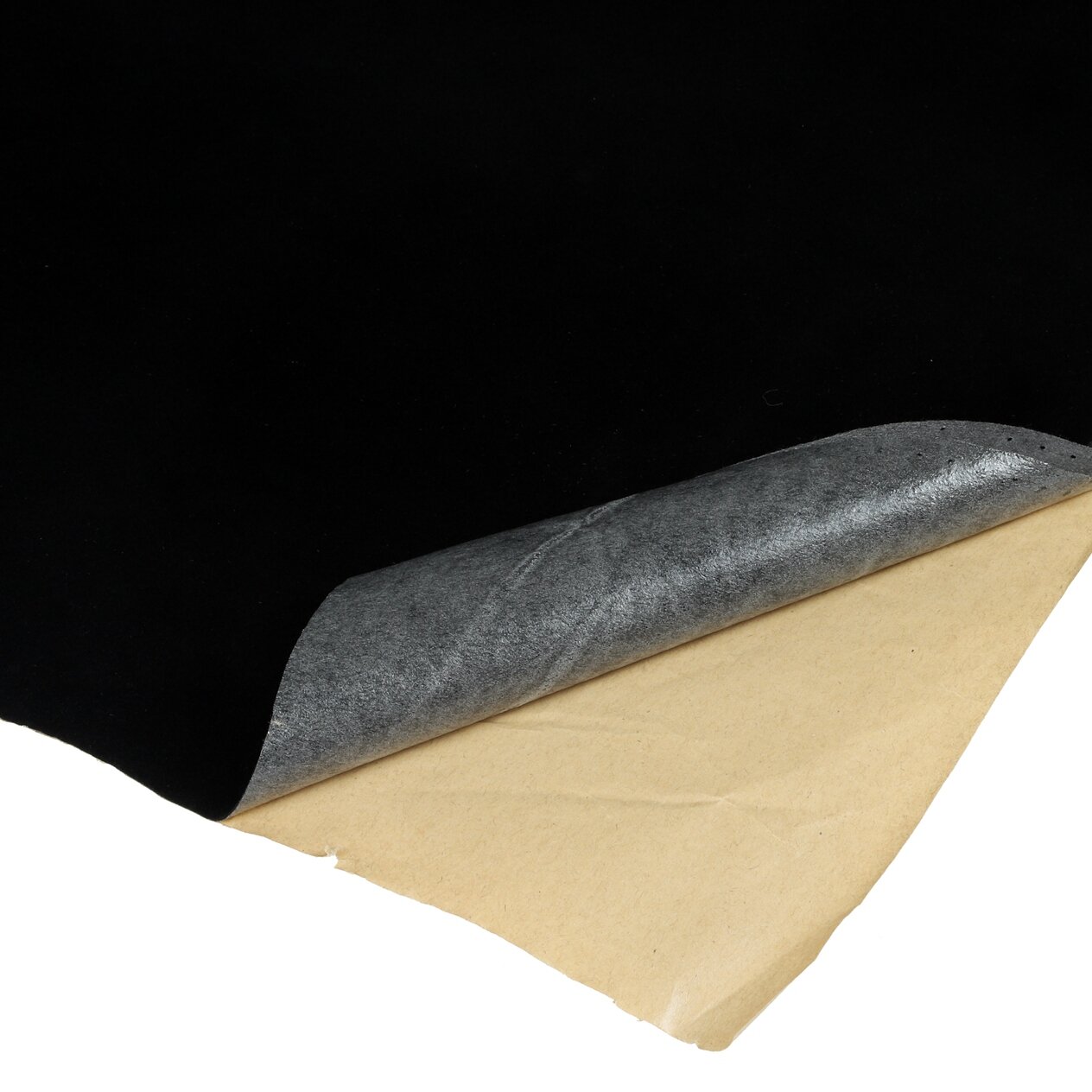
- Fully Integrated Manufacturing: Confirm that the factory controls all production steps internally—ranging from substrate pretreatment and custom dyeing to high-voltage flocking, pressure-sensitive backing, and precision cutting—preventing third-party bottlenecks and quality variations.
- Precise Anti-Tarnish Protections: For high-end jewelry packaging, verify that free reactive sulfur is restricted to under 5 ppm, aqueous pH levels remain strictly between 5.5 and 7.5, and silver coupon corrosion testing is performed per batch to avoid tarnishing precious metals.
- Global Environmental & Regulatory Verification: Audit for complete compliance with international frameworks, such as the REACH 253 SVHC list, EU RoHS 2.0 (Directive 2015/863), EU Packaging & Packaging Waste Regulation (PPWR), US TPCH/CONEG, and California Proposition 65.
- Advanced Customization & Converting Options: Validate secondary processing capabilities including peelable self-adhesive backings (peel force ≥ 2 N/25mm), laser engraving guidance, ultra-tight die-cutting tolerances (±0.1mm), anti-static ESD shielding (10⁶–10⁹ Ω), and UL94 V-0 flame retardancy.
Technical Workflow & Quality Control Architecture
An effective manufacturing audit tracks the seven key stages of production: raw fabric preparation, specialized in-house dyeing, water-based adhesive application, 30–50 kV electrostatic flocking, controlled thermal curing, functional finishing, and final quality verification. By operating in-house color matching labs with advanced spectrophotometers, top-tier mills limit color variance to a Pantone Delta E ≤ 2.0 for standard production runs and Delta E ≤ 0.5 for bespoke orders, keeping batch-to-batch color shifts under 3 percent.
Quality assurance must be evaluated across four systematic inspection checkpoints. Incoming raw materials are rigorously screened for heavy metals, unapproved dyes, and sulfur compounds. Mid-process controls monitor field voltage, dry coat weight, and oven temperature profiles every 100 yards. Finished roll testing verifies dry and wet color fastness (Grade 4+), lightfastness (Grade 6+), and pile adhesion via 10-cycle 3M tape peel testing following FAMA standards. Additionally, internal labs verify that formaldehyde remains below 75 ppm (with 4-hour rapid test turnaround) and carcinogenic Azo dyes stay under 30 ppm across 22 prohibited aromatic amines.

Chemical Safety & Environmental Auditing
Auditors must scrutinize accredited third-party lab documentation. Verify that all flocking formulations use solvent-free, water-based acrylic adhesives free from phthalate plasticizers, organotin compounds, and short/medium-chain chlorinated paraffins. In-factory VOC emissions must be controlled under 10 mg/m³. For international compliance, heavy metal content (lead, cadmium, mercury, hexavalent chromium) under EU PPWR must not exceed 100 ppm combined, while total organic fluorine (PFAS) must remain under 50 mg/kg without intentional addition.
Application-Tailored Performance Benchmarks
Different packaging applications require specific technical parameters. Luxury jewelry linings require sulfur-free dyes and non-sulfur crosslinking chemistry. Electronics packaging mandates anti-static properties compliant with MIL-STD-1686. Automotive components—such as glove boxes and sun visors—require UL94 V-0 flame resistance and 100,000-cycle rub resistance without fiber loss. Adherence to these strict parameters enables long-term tier-1 vendor partnerships with prestigious brands like Dior, Chow Tai Fook, Moutai, Dyson, BYD, and Volkswagen.
Technical Performance & Compliance Comparison Matrix
The matrix below outlines key technical specs, environmental standards, and target applications for main packaging flocking categories:
| Flocking Material Category | Primary Substrate Options | Key Technical Parameters | Chemical & Compliance Certifications | Target Packaging Applications |
|---|---|---|---|---|
| Self-Adhesive Flocking Fabric | Spunlace, Nonwoven, Knitted, or PVC | Peel strength ≥ 2 N/25mm; Eco-friendly water-based acrylic pressure-sensitive glue; 3M tape 10-cycle test passed | REACH SVHC 253; RoHS 2.0; Formaldehyde ≤ 75 ppm | Direct application to paperboard, wooden, plastic, and EVA box liners |
| Anti-Tarnish Jewelry Flocking | Spunlace or Cotton-Rayon Blend | Reactive sulfur < 5 ppm; pH 5.5–7.5; Non-sulfur formulation; Accelerated silver coupon test passed | Azo dyes ≤ 30 ppm; OEKO-TEX Standard 100; REACH Annex XVII | High-end jewelry boxes, watch cases, ring trays, and protective pouches |
| ESD Protection Flocking | Nonwoven / Knitted with Conductive Yarns | Surface resistivity 10⁶ to 10⁹ Ω; Die-cutting precision ±0.1mm; MIL-STD-1686 compliant | RoHS Directive 2015/863; Zero intentional PFAS additions | Smartphones, consumer electronics, wearables, and medical device packaging |
| Recycled GRS Flocking Fabric | GRS Certified Recycled PET / Nylon | Scope Cert: SGC-GRC01308-GRS-2026-05R3; Delta E ≤ 0.5 capable; 100,000-cycle abrasion resistance | GRS Version 4.0; EU PPWR heavy metals < 100 ppm; VOC < 10 mg/m³ | Sustainable luxury perfume boxes, cosmetics packaging, and premium brand pouches |

Frequently Asked Questions
Q: How does self-adhesive flocking fabric improve box lining assembly efficiency?
A: Self-adhesive flocking fabric comes with a pre-applied, eco-friendly water-based acrylic pressure-sensitive adhesive protected by a release backing. Box manufacturers simply peel and apply the fabric onto paperboard, wood, plastic, or EVA inserts, eliminating external glue application, avoiding messy adhesive bleed-through, and shortening assembly times.
Q: What key controls safeguard silver jewelry against tarnishing in flocking-lined boxes?
A: Anti-tarnish protection is achieved by maintaining free reactive sulfur under 5 ppm, holding aqueous extract pH between 5.5 and 7.5, excluding chloride ions, and eliminating volatile organic acids. Every production lot undergoes accelerated silver coupon testing to ensure no oxidation or blackening occurs during storage.
Q: What are the typical MOQs and lead times for custom flocking orders?
A: Standard in-stock fabrics are available with a 1-yard minimum order quantity for same-day dispatch. Custom color developments require 500 to 1,000 yards per shade (with 50-yard trial sample dyeing options). Lab dip prototypes take 3 to 5 days, while full production is completed in 5 to 7 days (or 3 days under expedited processing).
Conclusion & Recommendations
A thorough audit of a packaging flocking fabric manufacturer must analyze full vertical integration, laboratory testing rigor, anti-tarnish controls, and chemical compliance certifications. Partnering with a dedicated OEM/ODM factory equipped for in-house dyeing, coating, and precision cutting guarantees superior pile consistency, tight color tolerances, and reliable lot traceability across luxury, electronic, and industrial packaging projects. For technical consultation or product samples, please contact our engineering team at 005@mingqianflocking.com.
About the Manufacturer
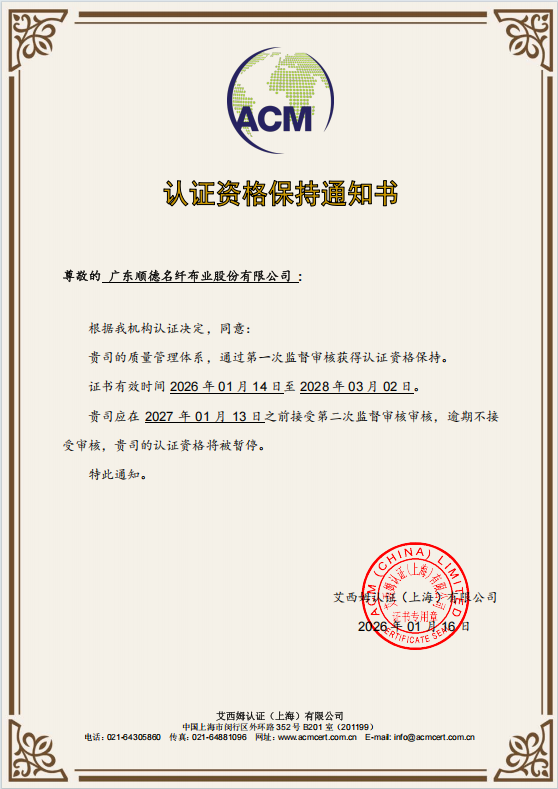
Operating under the Mingqian brand, Guangdong Shunde Mingqian Flocking Co., Ltd. was founded in 2008 in Foshan City, Guangdong Province. The company operates a 12,000-square-meter owned facility with five automated high-voltage electrostatic flocking lines, supported by over 100 skilled personnel with a monthly production capacity exceeding 3,000,000 yards. Fully certified under ISO 9001:2015 and GRS Version 4.0, Mingqian delivers complete end-to-end manufacturing from in-house dyeing to coating, backing, and precision converting. All products meet REACH SVHC, RoHS 2.0, and EU PPWR requirements, serving global clients in over 30 countries across luxury, jewelry, electronics, and automotive markets.

REPORT