







-
 Agriculture
-
 Health-Care
-
 Environment
-
 Construction-Real-Estate
-
 Tools-Hardware
-
 Home-Garden
-
 Furniture
-
 Luggage-Bags-Cases
-
 Medical-devices-Supplies
-
 Gifts-Crafts
-
 Sports-Entertainment
-
 Food-Beverage
-
 Vehicles-Transportation
-
 Power-Transmission
-
 Material-Handling
-
 Renewable-Energy
-
 Safety
-
 Testing-Instrument-Equipment
-
 Construction-Building-Machinery
-
 Pet-Supplies
-
 Personal-Care-Household-Cleaning
-
 Vehicle-Accessories-Electronics-Tools
-
 School-Office-Supplies
-
 Packaging-Printing
-
 Mother-Kids-Toys
-
 Business-Services
-
 Commercial-Equipment-Machinery
-
 Apparel-Accessories
-
 Security
-
 Shoes-Accessories
-
 Vehicle-Parts-Accessories
-
 Jewelry-Eyewear-Watches-Accessories
-
 Lights-Lighting
-
 Fabric-Textile-Raw-Material
-
 Fabrication-Services
-
 Industrial-Machinery
-
 Consumer-Electronics
-
 Electrical-Equipment-Supplies
-
 Electronic-Components-Accessories-Telecommunications
-
 Home-Appliances
-
 Beauty
-
 Chemicals
-
 Rubber-Plastics
-
 Metals-Alloys


























































































































































































































































































































































































































































































































































































- Masonry Materials
- Curtain Walls & Accessories
- Earthwork Products
- Fireproofing Materials
- Heat Insulation Materials
- Plastic Building Materials
- Building Boards
- Soundproofing Materials
- Timber
- Waterproofing Materials
- Balustrades & Handrails
- Bathroom & Kitchen
- Flooring & Accessories
- Tiles & Accessories
- Door, Window & Accessories
- Fireplaces & Stoves
- Floor Heating Systems & Parts
- Stairs & Stair Parts
- Ceilings
- Elevators & Escalators
- Stone
- Countertops, Vanity Tops & Table Tops
- Mosaics
- Metal Building Materials
- Multifunctional Materials
- Ladders & Scaffoldings
- Mouldings
- Corner Guards
- Decorative Films
- Formwork
- Building & Industrial Glass
- Other Construction & Real Estate
- Wallpapers/Wall panels
- HVAC System & Parts
- Outdoor Facilities
- Prefabricated Buildings
- Festive & Party Supplies
- Bathroom Products
- Household Sundries
- Rain Gear
- Garden Supplies
- Household Cleaning Tools & Accessories
- Lighters & Smoking Accessories
- Home Storage & Organization
- Household Scales
- Smart Home Improvement
- Home Textiles
- Kitchenware
- Drinkware & Accessories
- Dinnerware, Coffee & Wine
- Home Decor
- Golf
- Fitness & Body Building
- Amusement Park Facilities
- Billiards, Board Game,Coin Operated Games
- Musical Instruments
- Outdoor Affordable Luxury Sports
- Camping & Hiking
- Fishing
- Sports Safety&Rehabilitation
- Ball Sports Equipments
- Water Sports
- Winter Sports
- Luxury Travel Equipments
- Sports Shoes, Bags & Accessories
- Cycling
- Other Sports & Entertainment Products
- Artificial Grass&Sports Flooring&Sports Court Equipment
- Scooters
- Food Ingredients
- Honey & Honey Products
- Snacks
- Nuts & Kernels
- Seafood
- Plant & Animal Oil
- Beverages
- Fruit & Vegetable Products
- Frog & Escargot
- Bean Products
- Egg Products
- Dairy Products
- Seasonings & Condiments
- Canned Food
- Instant Food
- Baked Goods
- Other Food & Beverage
- Meat & Poultry
- Confectionery
- Grain Products
- Feminie Care
- Hair Care & Styling
- Body Care
- Hands & Feet Care
- Hygiene Products
- Men's Grooming
- Laundry Cleaning Supplies
- Travel Size & Gift Sets
- Room Deodorizers
- Other Personal Care Products
- Pest Control Products
- Special Household Cleaning
- Floor Cleaning
- Kitchen & Bathroom Cleaning
- Oral Care
- Bath Supplies
- Yellow Pages
- Correction Supplies
- Office Binding Supplies
- Office Cutting Supplies
- Board Erasers
- Office Adhesives & Tapes
- Education Supplies
- Pencil Cases & Bags
- Notebooks & Writing Pads
- File Folder Accessories
- Calendars
- Writing Accessories
- Commercial Office Supplies
- Pencil Sharpeners
- Pens
- Letter Pad/Paper
- Paper Envelopes
- Desk Organizers
- Pencils
- Markers & Highlighters
- Filing Products
- Art Supplies
- Easels
- Badge Holder & Accessories
- Office Paper
- Printer Supplies
- Book Covers
- Other Office & School Supplies
- Stationery Set
- Boards
- Clipboards
- Stamps
- Drafting Supplies
- Stencils
- Electronic Dictionary
- Books
- Map
- Magazines
- Calculators
- Baby & Toddler Toys
- Educational Toys
- Classic Toys
- Dress Up & Pretend Play
- Toy Vehicle
- Stuffed Animals & Plush Toys
- Outdoor Toys & Structures
- Balloons & Accessories
- Baby Food
- Children's Clothing
- Baby Supplies & Products
- Maternity Clothes
- Kids Shoes
- Baby Care
- Novelty & Gag Toys
- Dolls & Accessories
- Puzzle & Games
- Blocks & Model Building Toys
- Toddler Clothing
- Baby Clothing
- Kids' Luggage & Bags
- Arts, Crafts & DIY Toys
- Action & Toy Figures
- Baby Appliances
- Hobbies & Models
- Remote Control Toys
- Promotional Toys
- Pregnancy & Maternity
- Hygiene Products
- Kid's Textile&Bedding
- Novelty & Special Use
- Toy Weapons
- Baby Gifts
- Baby Storage & Organization
- Auto Drive Systems
- ATV/UTV Parts & Accessories
- Marine Parts & Accessories
- Other Auto Parts
- Trailer Parts & Accessories
- Auto Transmission Systems
- Train Parts & Accessories
- Universal Parts
- Railway Parts & Accessories
- Auto Brake Systems
- Aviation Parts & Accessories
- Truck Parts & Accessories
- Auto Suspension Systems
- Auto Lighting Systems
- New Energy Vehicle Parts & Accessories
- Auto Steering Systems
- Wheels, Tires & Accessories
- Bus Parts & Accessories
- Auto Performance Parts
- Cooling System
- Go-Kart & Kart Racer Parts & Accessories
- Air Conditioning Systems
- Heavy Duty Vehicle Parts & Accessories
- Auto Electrical Systems
- Auto Body Systems
- Auto Engine Systems
- Container Parts & Accessories
- Motorcycle Parts & Accessories
- Refrigeration & Heat Exchange Equipment
- Machine Tool Equipment
- Food & Beverage Machinery
- Agricultural Machinery & Equipment
- Apparel & Textile Machinery
- Chemical Machinery
- Packaging Machines
- Paper Production Machinery
- Plastic & Rubber Processing Machinery
- Industrial Robots
- Electronic Products Machinery
- Metal & Metallurgy Machinery
- Woodworking Machinery
- Home Product Manufacturing Machinery
- Machinery Accessories
- Environmental Machinery
- Machinery Service
- Electrical Equipment Manufacturing Machinery
- Industrial Compressors & Parts
- Tobacco & Cigarette Machinery
- Production Line
- Used Industrial Machinery
- Electronics Production Machinery
- Other Machinery & Industrial Equipment
- Camera, Photo & Accessories
- Portable Audio, Video & Accessories
- Television, Home Audio, Video & Accessories
- Video Games & Accessories
- Mobile Phone & Accessories
- Electronic Publications
- Earphone & Headphone & Accessories
- Speakers & Accessories
- Smart Electronics
- TV Receivers & Accessories
- Mobile Phone & Computer Repair Parts
- Chargers, Batteries & Power Supplies
- Used Electronics
- VR, AR, MR Hardware & Software
- Projectors & Presentation Equipments
- Other Consumer Electronics
- Cables & Commonly Used Accessories
- Computer Hardware & Software
- Displays, Signage and Optoelectronics
- Discrete Semiconductors
- Wireless & IoT Module and Products
- Telecommunications
- Connectors, Terminals & Accessories
- Development Boards, Electronic Modules and Kits
- Circuit Protection
- Sensors
- Isolators
- Audio Components and Products
- Integrated Circuits
- Power Supplies
- Relays
- RF, Microwave and RFID
- Electronic Accessories & Supplies
- Passive Components
- PCB & PCBA
- Air Quality Appliances
- Home Appliance Parts
- Heating & Cooling Appliances
- Small Kitchen Appliances
- Laundry Appliances
- Water Heaters
- Water Treatment Appliances
- Refrigerators & Freezers
- Personal Care & Beauty Appliances
- Major Kitchen Appliances
- Cleaning Appliances
- Second-hand Appliances
- Smart Home Appliances
- Other Home Appliances
- Energy Chemicals
- Inorganic Chemicals
- Basic Organic Chemicals
- Agrochemicals
- Admixture & Additives
- Catalysts & Chemical Auxiliary Agents
- Pigments & Dyestuff
- Coating & Paint
- Daily Chemicals
- Polymer
- Organic Intermediate
- Adhesives & Sealants
- Chemical Waste
- Biological Chemical Products
- Surface Treatment Chemicals
- Painting & Coating
- Chemical Reagents
- Flavor & Fragrance
- Non-Explosive Demolition Agents
- Other Chemicals
- Custom Chemical Services

How to Build a Seasonal Safety Stock Plan for Electrostatic Flocking Fabric
A reliable busy-season inventory plan for electrostatic flocking fabric should distinguish between ready-stock products, customer-specific colors, and newly developed specifications. Mingqian’s inventory of more than 1,000,000 yards and same-day dispatch capability can cover many standard requirements, while custom programs need advance scheduling. The right stock level depends on the application, required finish, color, urgency, and shipping destination.
Seasonal Inventory Strategy at a Glance
- Use standard flocking fabric as the main safety-stock category. More than 1,000,000 yards are distributed across hundreds of standard SKUs and may be dispatched on the same day when available.
- Manage custom colors outside the standard inventory pool. Color-specific orders generally require 500 to 1,000 yards per color, while trial dyeing and sampling can begin with 50 yards for custom development.
- Schedule custom production before the seasonal peak. Sample production typically takes 3 to 5 days, standard custom orders require 5 to 7 days, and OEM/ODM programs list a 14-day delivery period.
- Link each reserve quantity to its final use. Jewelry packaging, eyewear cases, and electronics packaging may require different base fabrics, pile heights, colors, and functional finishes.
How to Structure the Safety Stock
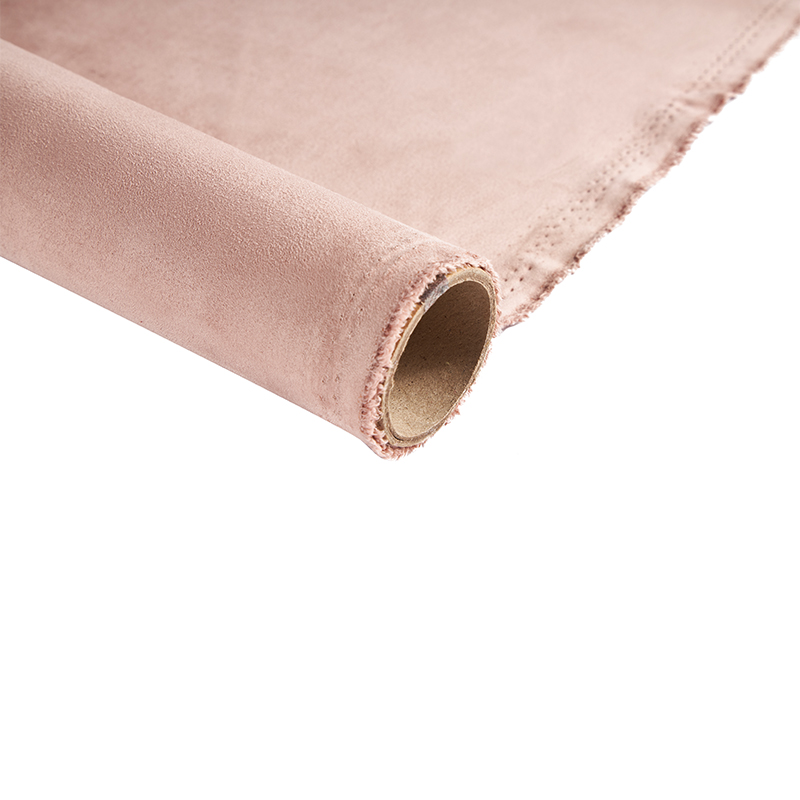
Recording inventory simply as “flocking fabric” is not sufficient for accurate seasonal planning. Mingqian offers multiple substrate choices, including spunlace, nonwoven, knitted, cotton-rayon, silk, PVC, polyester pongee, lining fabric, and sponge. Surface options include plain, medium, long, short, pearl, embossed pearl, crushed, soft textured, and frosted or embossed velvet finishes. Each stock record should therefore identify the substrate, pile or surface style, color, width, treatment, and intended application.
Standard SKUs can normally support routine replenishment through existing inventory. Mingqian reports five flocking production lines, monthly capacity above 3,000,000 yards, and daily output of up to 100,000 yards. These capabilities provide a useful supply base for recurring standard demand, but they should not be treated as a substitute for reserving capacity for color matching, embossing, adhesive backing, flame retardancy, anti-static treatment, low-sulfur requirements, or other customized specifications.
Match Stock Depth to Packaging Risk
The application should determine how much material is reserved and which technical details are recorded. Jewelry box lining may require low-sulfur fabric and a silver coupon accelerated corrosion test, with no blackening, spotting, or oxidation discoloration accepted. Eyewear cases generally call for a soft, delicate pile that limits scratching while maintaining color fastness. Electronics packaging may need anti-static flocking with surface resistivity between 106 and 109 ohms, together with precision die-cutting to a tolerance of plus or minus 0.1 millimeters.
Quality documentation is also part of seasonal supply planning. Incoming materials are checked before processing, production conditions and color differences are monitored, finished batches are tested, and pre-shipment spot inspections are completed. Digital records organized by batch number can trace finished material back to its raw materials. ISO 9001 and Global Recycled Standard certification documents may be supplied when relevant to the procurement program.
Plan for Different Demand Patterns
Trial orders, recurring standard purchases, and large annual programs should not use the same inventory formula. Published cooperation examples include a luxury perfume packaging project that grew from trial quantities to 150,000 yards per year and a jewelry box lining program that reached annual purchases at the million-yard level. These cases indicate the value of maintaining separate sample material, recurring SKU stock, and reserved production capacity for larger accounts.
Stock and Lead-Time Comparison
| Demand Category | Recommended Stock Action | Supply Basis |
|---|---|---|
| Standard in-stock SKU | Allocate inventory by recurring usage and replenish before the seasonal peak | More than 1,000,000 yards available; same-day dispatch may be arranged |
| Custom color | Reserve the exact color together with the required substrate and pile style | Usually 500 to 1,000 yards per color; trial quantities may be negotiated |
| Custom development | Keep sampling material separate and begin production after approval | 50 yards accepted for trial dyeing and sampling; standard custom production takes 5 to 7 days |
| OEM/ODM program | Confirm capacity, approvals, packaging, and shipping documents before peak demand | MOQ of 1,000 yards with a listed delivery time of 14 days |
| Urgent regional demand | Use available stock and select the fastest practical transport route | Same-day truck delivery in the Pearl River Delta; major domestic cities generally receive orders in 3 to 5 days |
Frequently Asked Questions
How should standard flocking fabric be allocated before a busy season?
Use the existing standard inventory of more than 1,000,000 yards as the primary buffer, but divide it by SKU rather than treating all fabric as interchangeable. Substrate, pile type, color, width, finish, and application should be included in the allocation plan.
Can custom colors be counted as standard safety stock?
Custom colors should remain in a separate planning category. The usual requirement is 500 to 1,000 yards per color, while custom development can start with 50 yards for trial dyeing and sampling. Complete color matching and customer approval before the demand peak whenever possible.
What shipping option is appropriate when inventory becomes tight?
Customers in the Pearl River Delta can use same-day dedicated truck service with free shipping. Domestic shipments to major Chinese cities generally take 3 to 5 days through SF Express or Deppon Logistics. International bulk orders can move by sea through Guangzhou or Shenzhen, while urgent small shipments may use air freight.
Recommended Seasonal Planning Process
Begin by separating standard, custom-color, development, and OEM/ODM requirements. Next, map each product to its technical specification and forecast usage by week. Reserve standard SKUs for same-day replenishment, confirm custom colors and samples early, and hold capacity for recurring programs. Finally, verify batch records, inspection documentation, certifications, packaging requirements, and the selected delivery route before the busy season begins.
For technical advice or assistance with a specific flocking fabric program, please contact 005@mingqianflocking.com.
About Us
Guangdong Shunde Mingqian Flocking Co., Ltd., operating under the Mingqian brand, is a flocking fabric manufacturer headquartered in Foshan, Guangdong, China. Founded in 2008, the company focuses on the research, development, production, and sales of flocking fabrics and operates a manufacturing facility listed at 10,000 square meters. Its stated monthly production capacity exceeds 3,000,000 yards. The company holds ISO 9001 and Global Recycled Standard certifications and has served clients across multiple industries.
REPORT