







-
 Agriculture
-
 Health-Care
-
 Environment
-
 Construction-Real-Estate
-
 Tools-Hardware
-
 Home-Garden
-
 Furniture
-
 Luggage-Bags-Cases
-
 Medical-devices-Supplies
-
 Gifts-Crafts
-
 Sports-Entertainment
-
 Food-Beverage
-
 Vehicles-Transportation
-
 Power-Transmission
-
 Material-Handling
-
 Renewable-Energy
-
 Safety
-
 Testing-Instrument-Equipment
-
 Construction-Building-Machinery
-
 Pet-Supplies
-
 Personal-Care-Household-Cleaning
-
 Vehicle-Accessories-Electronics-Tools
-
 School-Office-Supplies
-
 Packaging-Printing
-
 Mother-Kids-Toys
-
 Business-Services
-
 Commercial-Equipment-Machinery
-
 Apparel-Accessories
-
 Security
-
 Shoes-Accessories
-
 Vehicle-Parts-Accessories
-
 Jewelry-Eyewear-Watches-Accessories
-
 Lights-Lighting
-
 Fabric-Textile-Raw-Material
-
 Fabrication-Services
-
 Industrial-Machinery
-
 Consumer-Electronics
-
 Electrical-Equipment-Supplies
-
 Electronic-Components-Accessories-Telecommunications
-
 Home-Appliances
-
 Beauty
-
 Chemicals
-
 Rubber-Plastics
-
 Metals-Alloys


























































































































































































































































































































































































































































































































































































- Masonry Materials
- Curtain Walls & Accessories
- Earthwork Products
- Fireproofing Materials
- Heat Insulation Materials
- Plastic Building Materials
- Building Boards
- Soundproofing Materials
- Timber
- Waterproofing Materials
- Balustrades & Handrails
- Bathroom & Kitchen
- Flooring & Accessories
- Tiles & Accessories
- Door, Window & Accessories
- Fireplaces & Stoves
- Floor Heating Systems & Parts
- Stairs & Stair Parts
- Ceilings
- Elevators & Escalators
- Stone
- Countertops, Vanity Tops & Table Tops
- Mosaics
- Metal Building Materials
- Multifunctional Materials
- Ladders & Scaffoldings
- Mouldings
- Corner Guards
- Decorative Films
- Formwork
- Building & Industrial Glass
- Other Construction & Real Estate
- Wallpapers/Wall panels
- HVAC System & Parts
- Outdoor Facilities
- Prefabricated Buildings
- Festive & Party Supplies
- Bathroom Products
- Household Sundries
- Rain Gear
- Garden Supplies
- Household Cleaning Tools & Accessories
- Lighters & Smoking Accessories
- Home Storage & Organization
- Household Scales
- Smart Home Improvement
- Home Textiles
- Kitchenware
- Drinkware & Accessories
- Dinnerware, Coffee & Wine
- Home Decor
- Golf
- Fitness & Body Building
- Amusement Park Facilities
- Billiards, Board Game,Coin Operated Games
- Musical Instruments
- Outdoor Affordable Luxury Sports
- Camping & Hiking
- Fishing
- Sports Safety&Rehabilitation
- Ball Sports Equipments
- Water Sports
- Winter Sports
- Luxury Travel Equipments
- Sports Shoes, Bags & Accessories
- Cycling
- Other Sports & Entertainment Products
- Artificial Grass&Sports Flooring&Sports Court Equipment
- Scooters
- Food Ingredients
- Honey & Honey Products
- Snacks
- Nuts & Kernels
- Seafood
- Plant & Animal Oil
- Beverages
- Fruit & Vegetable Products
- Frog & Escargot
- Bean Products
- Egg Products
- Dairy Products
- Seasonings & Condiments
- Canned Food
- Instant Food
- Baked Goods
- Other Food & Beverage
- Meat & Poultry
- Confectionery
- Grain Products
- Feminie Care
- Hair Care & Styling
- Body Care
- Hands & Feet Care
- Hygiene Products
- Men's Grooming
- Laundry Cleaning Supplies
- Travel Size & Gift Sets
- Room Deodorizers
- Other Personal Care Products
- Pest Control Products
- Special Household Cleaning
- Floor Cleaning
- Kitchen & Bathroom Cleaning
- Oral Care
- Bath Supplies
- Yellow Pages
- Correction Supplies
- Office Binding Supplies
- Office Cutting Supplies
- Board Erasers
- Office Adhesives & Tapes
- Education Supplies
- Pencil Cases & Bags
- Notebooks & Writing Pads
- File Folder Accessories
- Calendars
- Writing Accessories
- Commercial Office Supplies
- Pencil Sharpeners
- Pens
- Letter Pad/Paper
- Paper Envelopes
- Desk Organizers
- Pencils
- Markers & Highlighters
- Filing Products
- Art Supplies
- Easels
- Badge Holder & Accessories
- Office Paper
- Printer Supplies
- Book Covers
- Other Office & School Supplies
- Stationery Set
- Boards
- Clipboards
- Stamps
- Drafting Supplies
- Stencils
- Electronic Dictionary
- Books
- Map
- Magazines
- Calculators
- Baby & Toddler Toys
- Educational Toys
- Classic Toys
- Dress Up & Pretend Play
- Toy Vehicle
- Stuffed Animals & Plush Toys
- Outdoor Toys & Structures
- Balloons & Accessories
- Baby Food
- Children's Clothing
- Baby Supplies & Products
- Maternity Clothes
- Kids Shoes
- Baby Care
- Novelty & Gag Toys
- Dolls & Accessories
- Puzzle & Games
- Blocks & Model Building Toys
- Toddler Clothing
- Baby Clothing
- Kids' Luggage & Bags
- Arts, Crafts & DIY Toys
- Action & Toy Figures
- Baby Appliances
- Hobbies & Models
- Remote Control Toys
- Promotional Toys
- Pregnancy & Maternity
- Hygiene Products
- Kid's Textile&Bedding
- Novelty & Special Use
- Toy Weapons
- Baby Gifts
- Baby Storage & Organization
- Auto Drive Systems
- ATV/UTV Parts & Accessories
- Marine Parts & Accessories
- Other Auto Parts
- Trailer Parts & Accessories
- Auto Transmission Systems
- Train Parts & Accessories
- Universal Parts
- Railway Parts & Accessories
- Auto Brake Systems
- Aviation Parts & Accessories
- Truck Parts & Accessories
- Auto Suspension Systems
- Auto Lighting Systems
- New Energy Vehicle Parts & Accessories
- Auto Steering Systems
- Wheels, Tires & Accessories
- Bus Parts & Accessories
- Auto Performance Parts
- Cooling System
- Go-Kart & Kart Racer Parts & Accessories
- Air Conditioning Systems
- Heavy Duty Vehicle Parts & Accessories
- Auto Electrical Systems
- Auto Body Systems
- Auto Engine Systems
- Container Parts & Accessories
- Motorcycle Parts & Accessories
- Refrigeration & Heat Exchange Equipment
- Machine Tool Equipment
- Food & Beverage Machinery
- Agricultural Machinery & Equipment
- Apparel & Textile Machinery
- Chemical Machinery
- Packaging Machines
- Paper Production Machinery
- Plastic & Rubber Processing Machinery
- Industrial Robots
- Electronic Products Machinery
- Metal & Metallurgy Machinery
- Woodworking Machinery
- Home Product Manufacturing Machinery
- Machinery Accessories
- Environmental Machinery
- Machinery Service
- Electrical Equipment Manufacturing Machinery
- Industrial Compressors & Parts
- Tobacco & Cigarette Machinery
- Production Line
- Used Industrial Machinery
- Electronics Production Machinery
- Other Machinery & Industrial Equipment
- Camera, Photo & Accessories
- Portable Audio, Video & Accessories
- Television, Home Audio, Video & Accessories
- Video Games & Accessories
- Mobile Phone & Accessories
- Electronic Publications
- Earphone & Headphone & Accessories
- Speakers & Accessories
- Smart Electronics
- TV Receivers & Accessories
- Mobile Phone & Computer Repair Parts
- Chargers, Batteries & Power Supplies
- Used Electronics
- VR, AR, MR Hardware & Software
- Projectors & Presentation Equipments
- Other Consumer Electronics
- Cables & Commonly Used Accessories
- Computer Hardware & Software
- Displays, Signage and Optoelectronics
- Discrete Semiconductors
- Wireless & IoT Module and Products
- Telecommunications
- Connectors, Terminals & Accessories
- Development Boards, Electronic Modules and Kits
- Circuit Protection
- Sensors
- Isolators
- Audio Components and Products
- Integrated Circuits
- Power Supplies
- Relays
- RF, Microwave and RFID
- Electronic Accessories & Supplies
- Passive Components
- PCB & PCBA
- Air Quality Appliances
- Home Appliance Parts
- Heating & Cooling Appliances
- Small Kitchen Appliances
- Laundry Appliances
- Water Heaters
- Water Treatment Appliances
- Refrigerators & Freezers
- Personal Care & Beauty Appliances
- Major Kitchen Appliances
- Cleaning Appliances
- Second-hand Appliances
- Smart Home Appliances
- Other Home Appliances
- Energy Chemicals
- Inorganic Chemicals
- Basic Organic Chemicals
- Agrochemicals
- Admixture & Additives
- Catalysts & Chemical Auxiliary Agents
- Pigments & Dyestuff
- Coating & Paint
- Daily Chemicals
- Polymer
- Organic Intermediate
- Adhesives & Sealants
- Chemical Waste
- Biological Chemical Products
- Surface Treatment Chemicals
- Painting & Coating
- Chemical Reagents
- Flavor & Fragrance
- Non-Explosive Demolition Agents
- Other Chemicals
- Custom Chemical Services

How to Calculate Landed Cost: FOB vs. CIF Import Comparison
To determine the real cost of imported goods, buyers must look beyond the supplier’s quoted price. A complete landed-cost calculation may include the product value, origin handling, international freight, cargo insurance, destination terminal charges, customs duties, import taxes, clearance fees, and delivery to the final warehouse.
FOB and CIF: What Each Term Includes
FOB and CIF distribute transportation responsibilities differently. With FOB, the seller completes export procedures and loads the goods onto the vessel at the origin port. The buyer then arranges and pays for the main freight, insurance, destination charges, customs clearance, and inland transportation.
With CIF, the seller purchases transportation to the named destination port and provides basic marine insurance. However, the buyer remains responsible for destination handling, import formalities, duties, taxes, and delivery beyond the port. Although the seller pays for the main carriage under CIF, risk transfers to the buyer when the cargo is loaded on board at the origin port.
Practical Landed Cost Formula
A useful calculation model for either trade term is:
Total Landed Cost = Product Cost + International Freight + Cargo Insurance + Terminal Handling Charges + Customs Duties and Taxes + Import Clearance + Inland Delivery
For an accurate unit cost, divide the complete landed amount by the quantity received. This prevents apparently low product prices from hiding expensive freight, port surcharges, or regulatory costs.
How to Estimate FOB Landed Cost
Under FOB, start with the supplier’s product quotation and add all buyer-controlled logistics expenses. These can include freight booking, fuel or peak-season surcharges, export-related documentation not covered by the seller, cargo insurance, destination terminal handling, customs broker fees, duties, taxes, storage, and trucking from the port to the distribution center.
FOB can be attractive for experienced importers because the buyer can compare carriers and select express, air, or sea freight according to shipment size and delivery urgency. The trade-off is greater exposure to rate changes and a larger number of separate charges that must be verified before purchase.

How to Estimate CIF Landed Cost
For a CIF shipment, the seller’s invoice generally combines the merchandise value, ocean freight, and basic insurance through the agreed destination port. The buyer should add destination terminal handling, port documentation, customs brokerage, import duties, applicable taxes, storage risk, and final inland transport.
Importers should not assume that CIF is an all-inclusive delivery price. In many countries, customs authorities assess duties and taxes using a value based on the product price plus freight and insurance. Consequently, destination fees and the customs valuation method can materially change the final cost.
Compliance Costs for Beauty Equipment Imports
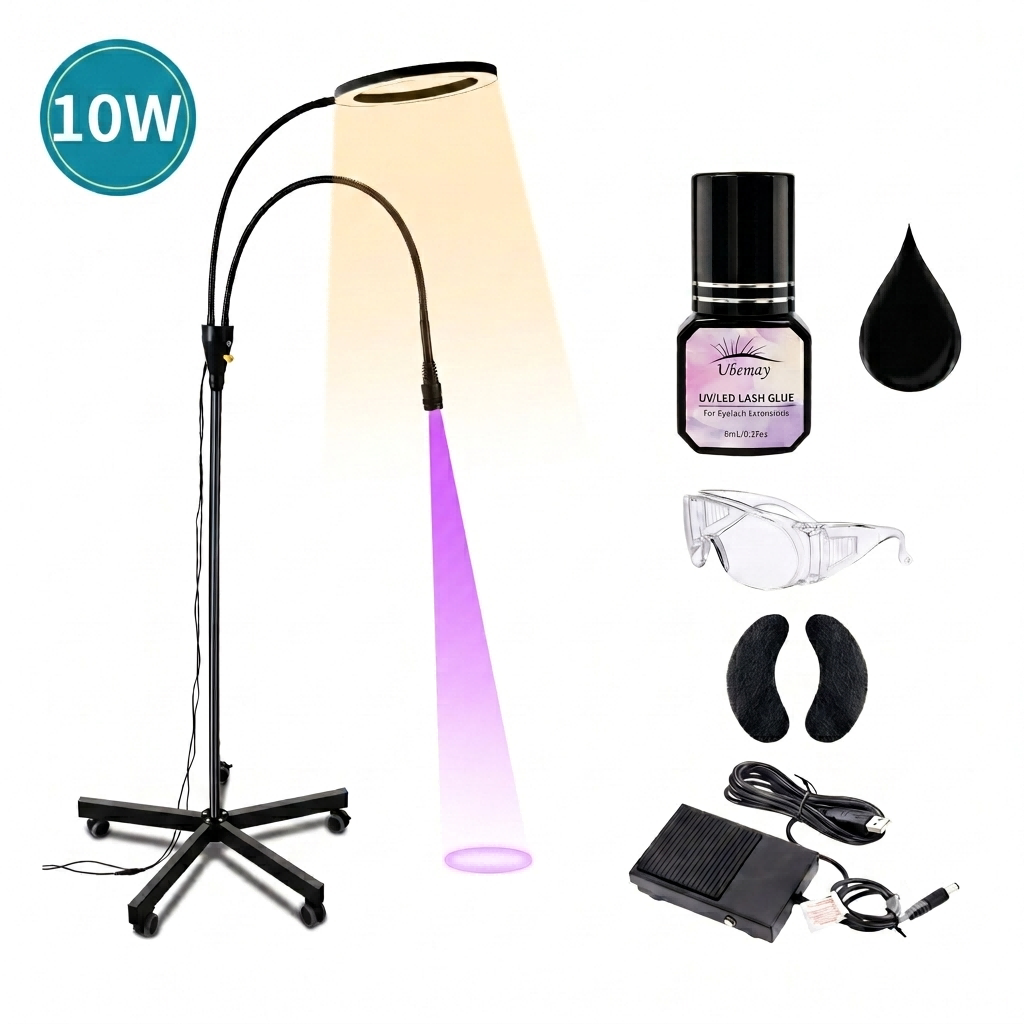
Documentation and product compliance can influence both landed cost and clearance speed. Electronic beauty devices, including LED lash adhesive curing lamps, may require safety and electromagnetic compatibility documentation. Certificates such as CE LVD and CE EMC, together with relevant product or cosmetic compliance records, can help reduce inspection delays, storage charges, and classification disputes.

This planning is especially important for distributors purchasing several thousand units for professional lash salons, training academies, or wholesale networks. A small difference in port charges or duty treatment can significantly affect the final margin on every unit.
FOB, CIF, and DDP Cost Responsibility
The table below shows the usual allocation of major expenses. Exact obligations may vary according to the named port, contract wording, and local customs rules.
| Cost Item | FOB | CIF | DDP |
|---|---|---|---|
| Origin loading and export clearance | Seller | Seller | Seller |
| Main international freight | Buyer | Seller | Seller |
| Transit cargo insurance | Buyer | Seller | Seller |
| Destination port and terminal charges | Buyer | Buyer | Seller |
| Import clearance, duties, and taxes | Buyer | Buyer | Seller |
| Delivery from port to final destination | Buyer | Buyer | Seller |
Choosing the Right Shipping Option
Samples and Small Orders
Single-unit samples or small validation orders are commonly sent by DHL, FedEx, UPS, or another express provider. Typical transit may take approximately four to seven days, depending on destination, customs processing, and service level.
Bulk and OEM Shipments
Orders involving hundreds of units, private-label packaging, or customized production are often more economical by air freight or sea freight. Buyers should compare the complete door-to-door cost rather than comparing only the supplier’s FOB or CIF quotation.
Frequently Asked Questions
How is customs value determined under FOB and CIF?
In many jurisdictions, customs value includes the merchandise price, freight, and insurance. For an FOB shipment, customs may add the importer’s documented freight and insurance costs to the FOB invoice value. Under CIF, these elements are usually already reflected in the declared CIF amount. Local regulations should always be confirmed with a customs professional.
Which payment methods are commonly used for customized orders?
Common arrangements include T/T bank transfer, Alibaba Trade Assurance, PayPal, and Western Union. For OEM or ODM projects, the deposit, balance, and production schedule are normally agreed according to order value, customization requirements, and the parties’ trading history.
When is FOB preferable to CIF?
FOB may suit buyers with established freight partners and strong logistics control. CIF can be more convenient for importers who prefer the supplier to arrange the main carriage. In both cases, destination charges and tax exposure should be estimated before signing the purchase order.
Final Recommendations
FOB and CIF should be compared using the full landed cost, not the quoted product price alone. Review freight rates, insurance, destination port fees, tariff classification, taxes, documentation, and inland delivery before selecting a term. For markets in North America, Europe, South America, and the Middle East, matching the trade term with the shipment size and the buyer’s logistics capabilities can protect margins.
Whether you need one sample, a wholesale shipment, or a private-label production run, selecting the appropriate combination of express, air, sea, or DDP service can reduce unexpected expenses and clearance delays. For technical guidance and sourcing support, contact sales@ubemay.com.
About UBEMAY
Guangzhou Ruiju E-Commerce Co., Ltd. operates the UBEMAY brand and supplies eyelash extensions, lash adhesives, accessories, and UV/LED lash equipment to beauty businesses worldwide. Founded in 2014, the company exports approximately 80% of its output to customers across North America, Europe, the Middle East, and Latin America. With a 5,000 sqm production facility and quality checks from incoming materials through pre-shipment inspection, UBEMAY supports OEM, ODM, private-label, and wholesale programs.

REPORT