







-
 Agriculture
-
 Health-Care
-
 Environment
-
 Construction-Real-Estate
-
 Tools-Hardware
-
 Home-Garden
-
 Furniture
-
 Luggage-Bags-Cases
-
 Medical-devices-Supplies
-
 Gifts-Crafts
-
 Sports-Entertainment
-
 Food-Beverage
-
 Vehicles-Transportation
-
 Power-Transmission
-
 Material-Handling
-
 Renewable-Energy
-
 Safety
-
 Testing-Instrument-Equipment
-
 Construction-Building-Machinery
-
 Pet-Supplies
-
 Personal-Care-Household-Cleaning
-
 Vehicle-Accessories-Electronics-Tools
-
 School-Office-Supplies
-
 Packaging-Printing
-
 Mother-Kids-Toys
-
 Business-Services
-
 Commercial-Equipment-Machinery
-
 Apparel-Accessories
-
 Security
-
 Shoes-Accessories
-
 Vehicle-Parts-Accessories
-
 Jewelry-Eyewear-Watches-Accessories
-
 Lights-Lighting
-
 Fabric-Textile-Raw-Material
-
 Fabrication-Services
-
 Industrial-Machinery
-
 Consumer-Electronics
-
 Electrical-Equipment-Supplies
-
 Electronic-Components-Accessories-Telecommunications
-
 Home-Appliances
-
 Beauty
-
 Chemicals
-
 Rubber-Plastics
-
 Metals-Alloys


























































































































































































































































































































































































































































































































































































- Masonry Materials
- Curtain Walls & Accessories
- Earthwork Products
- Fireproofing Materials
- Heat Insulation Materials
- Plastic Building Materials
- Building Boards
- Soundproofing Materials
- Timber
- Waterproofing Materials
- Balustrades & Handrails
- Bathroom & Kitchen
- Flooring & Accessories
- Tiles & Accessories
- Door, Window & Accessories
- Fireplaces & Stoves
- Floor Heating Systems & Parts
- Stairs & Stair Parts
- Ceilings
- Elevators & Escalators
- Stone
- Countertops, Vanity Tops & Table Tops
- Mosaics
- Metal Building Materials
- Multifunctional Materials
- Ladders & Scaffoldings
- Mouldings
- Corner Guards
- Decorative Films
- Formwork
- Building & Industrial Glass
- Other Construction & Real Estate
- Wallpapers/Wall panels
- HVAC System & Parts
- Outdoor Facilities
- Prefabricated Buildings
- Festive & Party Supplies
- Bathroom Products
- Household Sundries
- Rain Gear
- Garden Supplies
- Household Cleaning Tools & Accessories
- Lighters & Smoking Accessories
- Home Storage & Organization
- Household Scales
- Smart Home Improvement
- Home Textiles
- Kitchenware
- Drinkware & Accessories
- Dinnerware, Coffee & Wine
- Home Decor
- Golf
- Fitness & Body Building
- Amusement Park Facilities
- Billiards, Board Game,Coin Operated Games
- Musical Instruments
- Outdoor Affordable Luxury Sports
- Camping & Hiking
- Fishing
- Sports Safety&Rehabilitation
- Ball Sports Equipments
- Water Sports
- Winter Sports
- Luxury Travel Equipments
- Sports Shoes, Bags & Accessories
- Cycling
- Other Sports & Entertainment Products
- Artificial Grass&Sports Flooring&Sports Court Equipment
- Scooters
- Food Ingredients
- Honey & Honey Products
- Snacks
- Nuts & Kernels
- Seafood
- Plant & Animal Oil
- Beverages
- Fruit & Vegetable Products
- Frog & Escargot
- Bean Products
- Egg Products
- Dairy Products
- Seasonings & Condiments
- Canned Food
- Instant Food
- Baked Goods
- Other Food & Beverage
- Meat & Poultry
- Confectionery
- Grain Products
- Feminie Care
- Hair Care & Styling
- Body Care
- Hands & Feet Care
- Hygiene Products
- Men's Grooming
- Laundry Cleaning Supplies
- Travel Size & Gift Sets
- Room Deodorizers
- Other Personal Care Products
- Pest Control Products
- Special Household Cleaning
- Floor Cleaning
- Kitchen & Bathroom Cleaning
- Oral Care
- Bath Supplies
- Yellow Pages
- Correction Supplies
- Office Binding Supplies
- Office Cutting Supplies
- Board Erasers
- Office Adhesives & Tapes
- Education Supplies
- Pencil Cases & Bags
- Notebooks & Writing Pads
- File Folder Accessories
- Calendars
- Writing Accessories
- Commercial Office Supplies
- Pencil Sharpeners
- Pens
- Letter Pad/Paper
- Paper Envelopes
- Desk Organizers
- Pencils
- Markers & Highlighters
- Filing Products
- Art Supplies
- Easels
- Badge Holder & Accessories
- Office Paper
- Printer Supplies
- Book Covers
- Other Office & School Supplies
- Stationery Set
- Boards
- Clipboards
- Stamps
- Drafting Supplies
- Stencils
- Electronic Dictionary
- Books
- Map
- Magazines
- Calculators
- Baby & Toddler Toys
- Educational Toys
- Classic Toys
- Dress Up & Pretend Play
- Toy Vehicle
- Stuffed Animals & Plush Toys
- Outdoor Toys & Structures
- Balloons & Accessories
- Baby Food
- Children's Clothing
- Baby Supplies & Products
- Maternity Clothes
- Kids Shoes
- Baby Care
- Novelty & Gag Toys
- Dolls & Accessories
- Puzzle & Games
- Blocks & Model Building Toys
- Toddler Clothing
- Baby Clothing
- Kids' Luggage & Bags
- Arts, Crafts & DIY Toys
- Action & Toy Figures
- Baby Appliances
- Hobbies & Models
- Remote Control Toys
- Promotional Toys
- Pregnancy & Maternity
- Hygiene Products
- Kid's Textile&Bedding
- Novelty & Special Use
- Toy Weapons
- Baby Gifts
- Baby Storage & Organization
- Auto Drive Systems
- ATV/UTV Parts & Accessories
- Marine Parts & Accessories
- Other Auto Parts
- Trailer Parts & Accessories
- Auto Transmission Systems
- Train Parts & Accessories
- Universal Parts
- Railway Parts & Accessories
- Auto Brake Systems
- Aviation Parts & Accessories
- Truck Parts & Accessories
- Auto Suspension Systems
- Auto Lighting Systems
- New Energy Vehicle Parts & Accessories
- Auto Steering Systems
- Wheels, Tires & Accessories
- Bus Parts & Accessories
- Auto Performance Parts
- Cooling System
- Go-Kart & Kart Racer Parts & Accessories
- Air Conditioning Systems
- Heavy Duty Vehicle Parts & Accessories
- Auto Electrical Systems
- Auto Body Systems
- Auto Engine Systems
- Container Parts & Accessories
- Motorcycle Parts & Accessories
- Refrigeration & Heat Exchange Equipment
- Machine Tool Equipment
- Food & Beverage Machinery
- Agricultural Machinery & Equipment
- Apparel & Textile Machinery
- Chemical Machinery
- Packaging Machines
- Paper Production Machinery
- Plastic & Rubber Processing Machinery
- Industrial Robots
- Electronic Products Machinery
- Metal & Metallurgy Machinery
- Woodworking Machinery
- Home Product Manufacturing Machinery
- Machinery Accessories
- Environmental Machinery
- Machinery Service
- Electrical Equipment Manufacturing Machinery
- Industrial Compressors & Parts
- Tobacco & Cigarette Machinery
- Production Line
- Used Industrial Machinery
- Electronics Production Machinery
- Other Machinery & Industrial Equipment
- Camera, Photo & Accessories
- Portable Audio, Video & Accessories
- Television, Home Audio, Video & Accessories
- Video Games & Accessories
- Mobile Phone & Accessories
- Electronic Publications
- Earphone & Headphone & Accessories
- Speakers & Accessories
- Smart Electronics
- TV Receivers & Accessories
- Mobile Phone & Computer Repair Parts
- Chargers, Batteries & Power Supplies
- Used Electronics
- VR, AR, MR Hardware & Software
- Projectors & Presentation Equipments
- Other Consumer Electronics
- Cables & Commonly Used Accessories
- Computer Hardware & Software
- Displays, Signage and Optoelectronics
- Discrete Semiconductors
- Wireless & IoT Module and Products
- Telecommunications
- Connectors, Terminals & Accessories
- Development Boards, Electronic Modules and Kits
- Circuit Protection
- Sensors
- Isolators
- Audio Components and Products
- Integrated Circuits
- Power Supplies
- Relays
- RF, Microwave and RFID
- Electronic Accessories & Supplies
- Passive Components
- PCB & PCBA
- Air Quality Appliances
- Home Appliance Parts
- Heating & Cooling Appliances
- Small Kitchen Appliances
- Laundry Appliances
- Water Heaters
- Water Treatment Appliances
- Refrigerators & Freezers
- Personal Care & Beauty Appliances
- Major Kitchen Appliances
- Cleaning Appliances
- Second-hand Appliances
- Smart Home Appliances
- Other Home Appliances
- Energy Chemicals
- Inorganic Chemicals
- Basic Organic Chemicals
- Agrochemicals
- Admixture & Additives
- Catalysts & Chemical Auxiliary Agents
- Pigments & Dyestuff
- Coating & Paint
- Daily Chemicals
- Polymer
- Organic Intermediate
- Adhesives & Sealants
- Chemical Waste
- Biological Chemical Products
- Surface Treatment Chemicals
- Painting & Coating
- Chemical Reagents
- Flavor & Fragrance
- Non-Explosive Demolition Agents
- Other Chemicals
- Custom Chemical Services

How to Choose Pipe Couplings for Pressure Variation, Corrosion, and Repeated Maintenance
Pipe and fluid-handling equipment often operates under changing loads, vibration, corrosive conditions, and regular maintenance schedules. The right coupling can help maintain reliable power transmission while accommodating shaft movement and simplifying installation. Flexible stainless steel couplings are particularly suitable because they combine misalignment compensation, vibration damping, corrosion resistance, and practical clamping options.
Recommended Coupling Options
- Flexible couplings accommodate radial, angular, and axial shaft misalignment while limiting shock, vibration, and operating noise.
- Stainless steel grades such as SUS303, SUS304, and SUS316 are appropriate for marine, chemical, food-processing, medical, and fluid-handling environments.
- Clamp, set-screw, keyway, and split-hub configurations support repeated assembly, servicing, and shaft connection work.
- Typical applications include pumps, compressors, industrial valves, conveyors, pipeline equipment, packaging machinery, and automated production systems.
How Coupling Designs Work
Flexible Couplings for Movement and Vibration
Flexible couplings are intended for machinery in which connected shafts may shift slightly because of installation tolerances, thermal expansion, operating loads, or equipment movement. Jaw, Oldham, grid, bellows, disc, elastomer, and universal-joint designs use different construction principles to absorb shock, reduce vibration, limit noise, or compensate for misalignment. This helps preserve dependable drive transmission when shaft alignment changes during service.
Rigid Couplings for Accurate Alignment
Rigid couplings are better suited to systems in which the shafts are accurately aligned and rotational precision is the primary requirement. Sleeve, clamp, and flange couplings create a firm connection with high torque capacity and zero backlash. Because they offer little or no compensation for alignment errors, the supporting equipment and installation must be carefully positioned.
Torque and Speed Considerations
Coupling selection should be based on the complete drive system rather than pressure conditions alone. Available specifications may range from 0.5 Nm to 50,000 Nm of torque, with operating speeds reaching 3,000 RPM or 10,000 RPM depending on the model. High-speed or specialized machinery can also require customized performance. Typical compensation ranges include radial movement of ±0.1 mm to ±2 mm, angular movement of 1° to 5°, and axial movement of ±0.2 mm to ±5 mm.
Materials and Surface Treatments
Material choice affects corrosion resistance, mechanical strength, weight, wear performance, hygiene, and cost. Aluminum alloys 6061 and 7075 are commonly selected for lightweight automation and servo equipment. SUS303, SUS304, and SUS316 stainless steel provide different combinations of machinability, corrosion resistance, wear resistance, and cleanable surfaces for food, marine, medical, and chemical machinery.
Carbon steel, alloy steel, cast iron, ductile iron, polyurethane, rubber, and other elastomers extend the available options for high-load, rigid, damping, and economical applications. Depending on the operating environment, surface treatments may include anodizing, hard anodizing, black oxide, zinc plating, nickel plating, chrome plating, passivation, polishing, or electropolishing.
Mounting Methods for Repeated Installation
Installation design is important when equipment is frequently inspected, repaired, or reconfigured. Clamp and split-hub couplings can often be mounted without extensive shaft modification, while set-screw and keyway versions provide established locking methods for specific shaft conditions. Single-split clamps, double-split clamps, and other locking arrangements should be selected according to shaft access, available maintenance space, torque requirements, and the expected frequency of removal.
Zhejiang Dream Industry Limited supplies stainless steel handwheels and related industrial hardware for valve and pipeline systems, along with custom CNC-machined mechanical components. ISO 9001-certified production covers stainless steel handwheels, bushings, bolts, and non-standard parts. The company has supported projects involving industrial pipelines, food-processing machinery, marine valve systems, CNC equipment, and packaging machines.
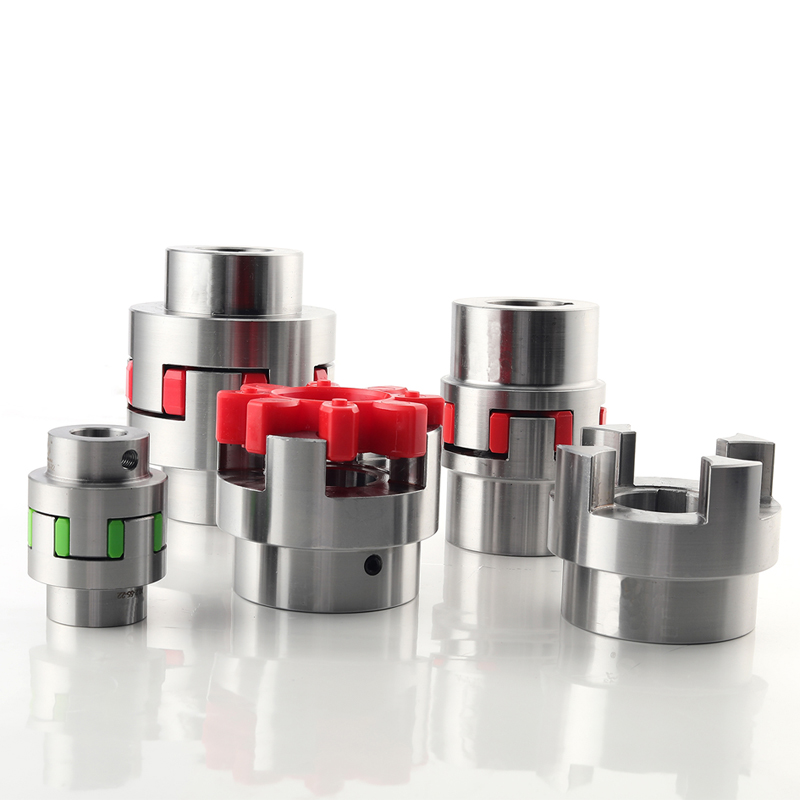
Coupling Selection Comparison
| Coupling type | Main advantages and suitable applications |
|---|---|
| Flexible coupling | Compensates for shaft misalignment, absorbs shock, reduces vibration, and supports pumps, motors, conveyors, and automation equipment. |
| Rigid coupling | Creates an accurate, high-torque, backlash-free connection when shaft alignment is tightly controlled. |
| Torque-limiting coupling | Protects equipment through overload release, slip control, or safety shutdown in conveyors, packaging systems, and automated lines. |
| Stainless steel coupling | Offers corrosion resistance, strength, wear performance, and hygienic surfaces for food, marine, medical, and chemical equipment. |
| Clamp or split-hub coupling | Provides convenient shaft access and supports frequent removal, replacement, and maintenance. |
Frequently Asked Questions
What coupling material works well in corrosive pipe and fluid systems?
Stainless steel is a practical choice for corrosive or hygienic environments. SUS303, SUS304, and SUS316 are used across food machinery, marine equipment, chemical systems, and other fluid-related applications, with the final grade depending on the required corrosion resistance and machining characteristics.
Which coupling can accommodate shaft movement during operation?
Flexible couplings are designed to compensate for radial, angular, and axial misalignment. Jaw, Oldham, grid, bellows, disc, and elastomer models offer different levels of movement compensation, damping, and vibration control.
What specifications matter when a coupling will be installed repeatedly?
Review the bore diameter, shaft tolerance, rated torque, rotational speed, allowable misalignment, mounting style, material, surface finish, temperature range, and environmental exposure. Clamp, split-hub, set-screw, and keyway designs can be matched to the access and service requirements.
Conclusion
For pipe, valve, pump, and fluid equipment exposed to load variation, corrosion, vibration, and frequent maintenance, a flexible stainless steel coupling offers a well-balanced solution. It combines shaft movement compensation with environmental resistance and practical installation. Rigid couplings remain suitable for precisely aligned shafts, while torque-limiting models add overload protection where equipment safety is critical.
Zhejiang Dream Industry Limited provides OEM and ODM manufacturing, custom CNC machining, factory-direct production, bulk orders, and flexible small-batch support. For technical assistance or a customized coupling solution, contact the company at 86-15868979792.
About Us
ZheJiang Dream Industry Limited has more than 20 years of experience producing custom CNC-machined parts and assemblies from stainless steel, aluminum, brass, copper, carbon steel, and engineering plastics. Founded in 2008, the company operates a 2500sqm factory and provides design review, CNC turning and milling, surface treatment, precision casting, and final inspection. Its engineering and R&D team supports product development, structural optimization, precision machining, mold development, surface finishing, and customized manufacturing. The company is ISO 9001 certified and serves customers in a range of industrial sectors.
REPORT