







-
 Agriculture
-
 Health-Care
-
 Environment
-
 Construction-Real-Estate
-
 Tools-Hardware
-
 Home-Garden
-
 Furniture
-
 Luggage-Bags-Cases
-
 Medical-devices-Supplies
-
 Gifts-Crafts
-
 Sports-Entertainment
-
 Food-Beverage
-
 Vehicles-Transportation
-
 Power-Transmission
-
 Material-Handling
-
 Renewable-Energy
-
 Safety
-
 Testing-Instrument-Equipment
-
 Construction-Building-Machinery
-
 Pet-Supplies
-
 Personal-Care-Household-Cleaning
-
 Vehicle-Accessories-Electronics-Tools
-
 School-Office-Supplies
-
 Packaging-Printing
-
 Mother-Kids-Toys
-
 Business-Services
-
 Commercial-Equipment-Machinery
-
 Apparel-Accessories
-
 Security
-
 Shoes-Accessories
-
 Vehicle-Parts-Accessories
-
 Jewelry-Eyewear-Watches-Accessories
-
 Lights-Lighting
-
 Fabric-Textile-Raw-Material
-
 Fabrication-Services
-
 Industrial-Machinery
-
 Consumer-Electronics
-
 Electrical-Equipment-Supplies
-
 Electronic-Components-Accessories-Telecommunications
-
 Home-Appliances
-
 Beauty
-
 Chemicals
-
 Rubber-Plastics
-
 Metals-Alloys









































































































































































































































































































































- Masonry Materials
- Curtain Walls & Accessories
- Earthwork Products
- Fireproofing Materials
- Heat Insulation Materials
- Plastic Building Materials
- Building Boards
- Soundproofing Materials
- Timber
- Waterproofing Materials
- Balustrades & Handrails
- Bathroom & Kitchen
- Flooring & Accessories
- Tiles & Accessories
- Door, Window & Accessories
- Fireplaces & Stoves
- Floor Heating Systems & Parts
- Stairs & Stair Parts
- Ceilings
- Elevators & Escalators
- Stone
- Countertops, Vanity Tops & Table Tops
- Mosaics
- Metal Building Materials
- Multifunctional Materials
- Ladders & Scaffoldings
- Mouldings
- Corner Guards
- Decorative Films
- Formwork
- Building & Industrial Glass
- Other Construction & Real Estate
- Wallpapers/Wall panels
- HVAC System & Parts
- Outdoor Facilities
- Prefabricated Buildings
- Festive & Party Supplies
- Bathroom Products
- Household Sundries
- Rain Gear
- Garden Supplies
- Household Cleaning Tools & Accessories
- Lighters & Smoking Accessories
- Home Storage & Organization
- Household Scales
- Smart Home Improvement
- Home Textiles
- Kitchenware
- Drinkware & Accessories
- Dinnerware, Coffee & Wine
- Home Decor
- Golf
- Fitness & Body Building
- Amusement Park Facilities
- Billiards, Board Game,Coin Operated Games
- Musical Instruments
- Outdoor Affordable Luxury Sports
- Camping & Hiking
- Fishing
- Sports Safety&Rehabilitation
- Ball Sports Equipments
- Water Sports
- Winter Sports
- Luxury Travel Equipments
- Sports Shoes, Bags & Accessories
- Cycling
- Other Sports & Entertainment Products
- Artificial Grass&Sports Flooring&Sports Court Equipment
- Scooters
- Food Ingredients
- Honey & Honey Products
- Snacks
- Nuts & Kernels
- Seafood
- Plant & Animal Oil
- Beverages
- Fruit & Vegetable Products
- Frog & Escargot
- Bean Products
- Egg Products
- Dairy Products
- Seasonings & Condiments
- Canned Food
- Instant Food
- Baked Goods
- Other Food & Beverage
- Meat & Poultry
- Confectionery
- Grain Products
- Feminie Care
- Hair Care & Styling
- Body Care
- Hands & Feet Care
- Hygiene Products
- Men's Grooming
- Laundry Cleaning Supplies
- Travel Size & Gift Sets
- Room Deodorizers
- Other Personal Care Products
- Pest Control Products
- Special Household Cleaning
- Floor Cleaning
- Kitchen & Bathroom Cleaning
- Oral Care
- Bath Supplies
- Yellow Pages
- Correction Supplies
- Office Binding Supplies
- Office Cutting Supplies
- Board Erasers
- Office Adhesives & Tapes
- Education Supplies
- Pencil Cases & Bags
- Notebooks & Writing Pads
- File Folder Accessories
- Calendars
- Writing Accessories
- Commercial Office Supplies
- Pencil Sharpeners
- Pens
- Letter Pad/Paper
- Paper Envelopes
- Desk Organizers
- Pencils
- Markers & Highlighters
- Filing Products
- Art Supplies
- Easels
- Badge Holder & Accessories
- Office Paper
- Printer Supplies
- Book Covers
- Other Office & School Supplies
- Stationery Set
- Boards
- Clipboards
- Stamps
- Drafting Supplies
- Stencils
- Electronic Dictionary
- Books
- Map
- Magazines
- Calculators
- Baby & Toddler Toys
- Educational Toys
- Classic Toys
- Dress Up & Pretend Play
- Toy Vehicle
- Stuffed Animals & Plush Toys
- Outdoor Toys & Structures
- Balloons & Accessories
- Baby Food
- Children's Clothing
- Baby Supplies & Products
- Maternity Clothes
- Kids Shoes
- Baby Care
- Novelty & Gag Toys
- Dolls & Accessories
- Puzzle & Games
- Blocks & Model Building Toys
- Toddler Clothing
- Baby Clothing
- Kids' Luggage & Bags
- Arts, Crafts & DIY Toys
- Action & Toy Figures
- Baby Appliances
- Hobbies & Models
- Remote Control Toys
- Promotional Toys
- Pregnancy & Maternity
- Hygiene Products
- Kid's Textile&Bedding
- Novelty & Special Use
- Toy Weapons
- Baby Gifts
- Baby Storage & Organization
- Auto Drive Systems
- ATV/UTV Parts & Accessories
- Marine Parts & Accessories
- Other Auto Parts
- Trailer Parts & Accessories
- Auto Transmission Systems
- Train Parts & Accessories
- Universal Parts
- Railway Parts & Accessories
- Auto Brake Systems
- Aviation Parts & Accessories
- Truck Parts & Accessories
- Auto Suspension Systems
- Auto Lighting Systems
- New Energy Vehicle Parts & Accessories
- Auto Steering Systems
- Wheels, Tires & Accessories
- Bus Parts & Accessories
- Auto Performance Parts
- Cooling System
- Go-Kart & Kart Racer Parts & Accessories
- Air Conditioning Systems
- Heavy Duty Vehicle Parts & Accessories
- Auto Electrical Systems
- Auto Body Systems
- Auto Engine Systems
- Container Parts & Accessories
- Motorcycle Parts & Accessories
- Refrigeration & Heat Exchange Equipment
- Machine Tool Equipment
- Food & Beverage Machinery
- Agricultural Machinery & Equipment
- Apparel & Textile Machinery
- Chemical Machinery
- Packaging Machines
- Paper Production Machinery
- Plastic & Rubber Processing Machinery
- Industrial Robots
- Electronic Products Machinery
- Metal & Metallurgy Machinery
- Woodworking Machinery
- Home Product Manufacturing Machinery
- Machinery Accessories
- Environmental Machinery
- Machinery Service
- Electrical Equipment Manufacturing Machinery
- Industrial Compressors & Parts
- Tobacco & Cigarette Machinery
- Production Line
- Used Industrial Machinery
- Electronics Production Machinery
- Other Machinery & Industrial Equipment
- Camera, Photo & Accessories
- Portable Audio, Video & Accessories
- Television, Home Audio, Video & Accessories
- Video Games & Accessories
- Mobile Phone & Accessories
- Electronic Publications
- Earphone & Headphone & Accessories
- Speakers & Accessories
- Smart Electronics
- TV Receivers & Accessories
- Mobile Phone & Computer Repair Parts
- Chargers, Batteries & Power Supplies
- Used Electronics
- VR, AR, MR Hardware & Software
- Projectors & Presentation Equipments
- Other Consumer Electronics
- Cables & Commonly Used Accessories
- Computer Hardware & Software
- Displays, Signage and Optoelectronics
- Discrete Semiconductors
- Wireless & IoT Module and Products
- Telecommunications
- Connectors, Terminals & Accessories
- Development Boards, Electronic Modules and Kits
- Circuit Protection
- Sensors
- Isolators
- Audio Components and Products
- Integrated Circuits
- Power Supplies
- Relays
- RF, Microwave and RFID
- Electronic Accessories & Supplies
- Passive Components
- PCB & PCBA
- Air Quality Appliances
- Home Appliance Parts
- Heating & Cooling Appliances
- Small Kitchen Appliances
- Laundry Appliances
- Water Heaters
- Water Treatment Appliances
- Refrigerators & Freezers
- Personal Care & Beauty Appliances
- Major Kitchen Appliances
- Cleaning Appliances
- Second-hand Appliances
- Smart Home Appliances
- Other Home Appliances
- Energy Chemicals
- Inorganic Chemicals
- Basic Organic Chemicals
- Agrochemicals
- Admixture & Additives
- Catalysts & Chemical Auxiliary Agents
- Pigments & Dyestuff
- Coating & Paint
- Daily Chemicals
- Polymer
- Organic Intermediate
- Adhesives & Sealants
- Chemical Waste
- Biological Chemical Products
- Surface Treatment Chemicals
- Painting & Coating
- Chemical Reagents
- Flavor & Fragrance
- Non-Explosive Demolition Agents
- Other Chemicals
- Custom Chemical Services

How to Design Plastic Tooling for Reliable Release of Deep Undercuts
Deep undercuts can prevent a molded part from leaving the tool smoothly unless the mold includes a release method that matches the part geometry. Depending on the feature, the tooling design may require side actions, lifters, or another specialized mechanism. The available product information does not confirm a specific undercut solution, so the final approach should be reviewed against the part drawing, mold layout, and trial results with the tooling supplier.
Recommended Design and Verification Approach
- Map every deep undercut to the planned mold-opening and ejection sequence before tool construction begins.
- Provide the supplier with a complete part drawing or physical sample and request a formal release-feasibility assessment.
- Use mold trials to check whether the part separates cleanly, without deformation, scuffing, or feature damage.
- Approve production only after sample dimensions and functional fit meet the agreed acceptance criteria.
- Consumer-electronics shells and household-appliance housings are among the applications listed for the company's custom injection tooling.
How Deep Undercut Release Works
A deep undercut lies outside the direct path of a conventional mold opening or straight ejector movement. If the feature is not cleared before ejection, it may lock the part in place or create excessive stress during removal. The design review should therefore determine how each undercut will move away from the cavity or core before the part is ejected.
Possible solutions can include angled side actions, lifters, collapsible cores, or other geometry-specific mechanisms. However, Longterm's supplied product information does not state that it provides a guaranteed side-action, lifter, collapsible-core, or other deep-undercut configuration. The tooling team must select and confirm the mechanism based on the actual part geometry.
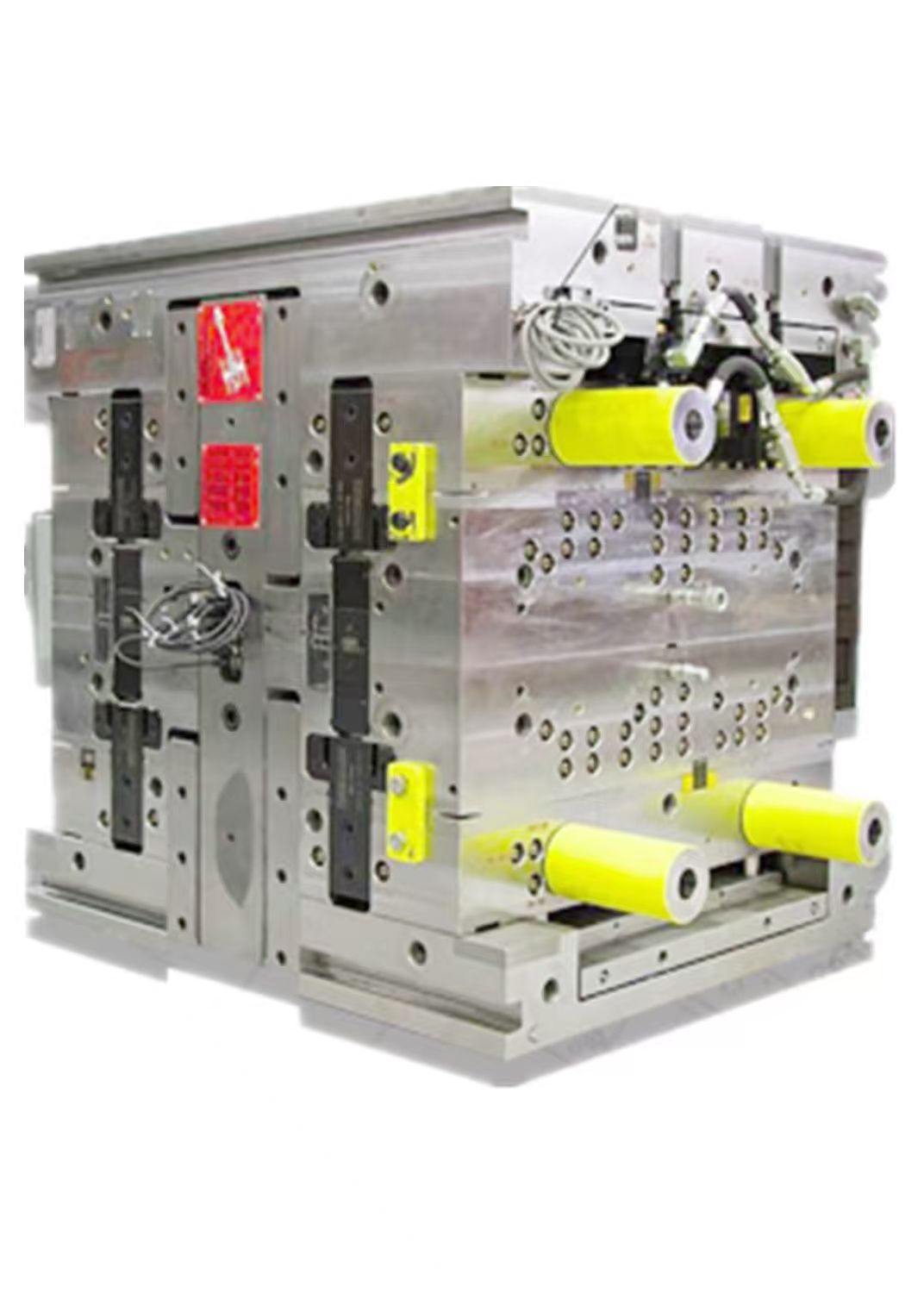
Longterm lists S50C or P20 for the mold base and 718H, 1.2738, or S136 for cavity steel. Both cold-runner and hot-runner systems are available as options. The product listing also states a precision tolerance of ±0.02 mm and a mold life of 50,000 to 1,000,000 shots. These specifications describe the tooling capability, but they do not independently prove that a particular undercut will release reliably.
Inspection Before Production Approval
For project verification, Longterm lists mold trial testing, dimensional inspection, and a full inspection before shipment. Its ISO 9001:2015 certification covers the design, manufacture, and sale of precision molds, along with the sale of plastic products. The company also reports completed projects involving consumer-electronics housings and home-appliance components. Those examples mention sample acceptance and mold quality, but they do not specifically document deep-undercut mechanisms.
Design Information and Required Confirmations
| Item | Information currently provided | Confirmation required for the project |
|---|---|---|
| Undercut release method | No particular mechanism is identified | Match the proposed side action, lifter, or other solution to the part geometry |
| Mold construction materials | Mold base: S50C or P20; cavity steel: 718H, 1.2738, or S136 | Approve the material combination for the required service conditions |
| Runner system | Cold-runner and hot-runner designs are optional | Select the system according to the part, cycle, and mold layout |
| Quality checks | Mold trial, dimensional inspection, and pre-shipment full inspection | Review release behavior, measurements, appearance, and fit of trial parts |
| Stated performance data | ±0.02 mm precision tolerance and 50,000–1,000,000 shot mold life | Define project-specific tolerances, service life, and acceptance standards |
Frequently Asked Questions
Does the available information confirm that Longterm supports deep-undercut tooling?
The listing confirms custom plastic injection tooling, but it does not name a deep-undercut mechanism or guarantee a specific release design. Send the part drawing or sample to the supplier for a geometry-based feasibility review.
What is the best way to validate release performance?
Include the undercut features in the mold trial and inspect the trial parts for smooth release, dimensional accuracy, surface condition, and fit before production approval.
What service is available after delivery?
The product information lists online technical support, mold-maintenance guidance, and spare-parts supply.
Conclusion and Next Steps
Reliable release of a part with deep undercuts depends on a mechanism designed around the actual geometry, followed by confirmation through mold trials. The supplied specifications do not identify a universal or guaranteed undercut solution. Longterm lists a minimum order quantity of one set and a delivery time of 25–40 days for its custom tooling. Its company profile describes mold design and manufacturing experience for international customers. For a review of a specific undercut feature, contact Roger Luo at rogerluo@longterm-mold.com.
About Us
Longterm Manufacturing Solutions Limited was established in 2010 and provides mold design, tooling, precision machining, mold manufacturing, and plastic parts production. Its customers are located in the United States, Europe, Australia, and other markets. The company reports a 2,000-square-meter factory and a workforce of 50 employees. Its ISO 9001:2015 certification covers precision-mold design and manufacturing, with project experience in electronics, home appliances, and industrial products.

REPORT