







-
 Agriculture
-
 Health-Care
-
 Environment
-
 Construction-Real-Estate
-
 Tools-Hardware
-
 Home-Garden
-
 Furniture
-
 Luggage-Bags-Cases
-
 Medical-devices-Supplies
-
 Gifts-Crafts
-
 Sports-Entertainment
-
 Food-Beverage
-
 Vehicles-Transportation
-
 Power-Transmission
-
 Material-Handling
-
 Renewable-Energy
-
 Safety
-
 Testing-Instrument-Equipment
-
 Construction-Building-Machinery
-
 Pet-Supplies
-
 Personal-Care-Household-Cleaning
-
 Vehicle-Accessories-Electronics-Tools
-
 School-Office-Supplies
-
 Packaging-Printing
-
 Mother-Kids-Toys
-
 Business-Services
-
 Commercial-Equipment-Machinery
-
 Apparel-Accessories
-
 Security
-
 Shoes-Accessories
-
 Vehicle-Parts-Accessories
-
 Jewelry-Eyewear-Watches-Accessories
-
 Lights-Lighting
-
 Fabric-Textile-Raw-Material
-
 Fabrication-Services
-
 Industrial-Machinery
-
 Consumer-Electronics
-
 Electrical-Equipment-Supplies
-
 Electronic-Components-Accessories-Telecommunications
-
 Home-Appliances
-
 Beauty
-
 Chemicals
-
 Rubber-Plastics
-
 Metals-Alloys


























































































































































































































































































































































































































































































































































































- Masonry Materials
- Curtain Walls & Accessories
- Earthwork Products
- Fireproofing Materials
- Heat Insulation Materials
- Plastic Building Materials
- Building Boards
- Soundproofing Materials
- Timber
- Waterproofing Materials
- Balustrades & Handrails
- Bathroom & Kitchen
- Flooring & Accessories
- Tiles & Accessories
- Door, Window & Accessories
- Fireplaces & Stoves
- Floor Heating Systems & Parts
- Stairs & Stair Parts
- Ceilings
- Elevators & Escalators
- Stone
- Countertops, Vanity Tops & Table Tops
- Mosaics
- Metal Building Materials
- Multifunctional Materials
- Ladders & Scaffoldings
- Mouldings
- Corner Guards
- Decorative Films
- Formwork
- Building & Industrial Glass
- Other Construction & Real Estate
- Wallpapers/Wall panels
- HVAC System & Parts
- Outdoor Facilities
- Prefabricated Buildings
- Festive & Party Supplies
- Bathroom Products
- Household Sundries
- Rain Gear
- Garden Supplies
- Household Cleaning Tools & Accessories
- Lighters & Smoking Accessories
- Home Storage & Organization
- Household Scales
- Smart Home Improvement
- Home Textiles
- Kitchenware
- Drinkware & Accessories
- Dinnerware, Coffee & Wine
- Home Decor
- Golf
- Fitness & Body Building
- Amusement Park Facilities
- Billiards, Board Game,Coin Operated Games
- Musical Instruments
- Outdoor Affordable Luxury Sports
- Camping & Hiking
- Fishing
- Sports Safety&Rehabilitation
- Ball Sports Equipments
- Water Sports
- Winter Sports
- Luxury Travel Equipments
- Sports Shoes, Bags & Accessories
- Cycling
- Other Sports & Entertainment Products
- Artificial Grass&Sports Flooring&Sports Court Equipment
- Scooters
- Food Ingredients
- Honey & Honey Products
- Snacks
- Nuts & Kernels
- Seafood
- Plant & Animal Oil
- Beverages
- Fruit & Vegetable Products
- Frog & Escargot
- Bean Products
- Egg Products
- Dairy Products
- Seasonings & Condiments
- Canned Food
- Instant Food
- Baked Goods
- Other Food & Beverage
- Meat & Poultry
- Confectionery
- Grain Products
- Feminie Care
- Hair Care & Styling
- Body Care
- Hands & Feet Care
- Hygiene Products
- Men's Grooming
- Laundry Cleaning Supplies
- Travel Size & Gift Sets
- Room Deodorizers
- Other Personal Care Products
- Pest Control Products
- Special Household Cleaning
- Floor Cleaning
- Kitchen & Bathroom Cleaning
- Oral Care
- Bath Supplies
- Yellow Pages
- Correction Supplies
- Office Binding Supplies
- Office Cutting Supplies
- Board Erasers
- Office Adhesives & Tapes
- Education Supplies
- Pencil Cases & Bags
- Notebooks & Writing Pads
- File Folder Accessories
- Calendars
- Writing Accessories
- Commercial Office Supplies
- Pencil Sharpeners
- Pens
- Letter Pad/Paper
- Paper Envelopes
- Desk Organizers
- Pencils
- Markers & Highlighters
- Filing Products
- Art Supplies
- Easels
- Badge Holder & Accessories
- Office Paper
- Printer Supplies
- Book Covers
- Other Office & School Supplies
- Stationery Set
- Boards
- Clipboards
- Stamps
- Drafting Supplies
- Stencils
- Electronic Dictionary
- Books
- Map
- Magazines
- Calculators
- Baby & Toddler Toys
- Educational Toys
- Classic Toys
- Dress Up & Pretend Play
- Toy Vehicle
- Stuffed Animals & Plush Toys
- Outdoor Toys & Structures
- Balloons & Accessories
- Baby Food
- Children's Clothing
- Baby Supplies & Products
- Maternity Clothes
- Kids Shoes
- Baby Care
- Novelty & Gag Toys
- Dolls & Accessories
- Puzzle & Games
- Blocks & Model Building Toys
- Toddler Clothing
- Baby Clothing
- Kids' Luggage & Bags
- Arts, Crafts & DIY Toys
- Action & Toy Figures
- Baby Appliances
- Hobbies & Models
- Remote Control Toys
- Promotional Toys
- Pregnancy & Maternity
- Hygiene Products
- Kid's Textile&Bedding
- Novelty & Special Use
- Toy Weapons
- Baby Gifts
- Baby Storage & Organization
- Auto Drive Systems
- ATV/UTV Parts & Accessories
- Marine Parts & Accessories
- Other Auto Parts
- Trailer Parts & Accessories
- Auto Transmission Systems
- Train Parts & Accessories
- Universal Parts
- Railway Parts & Accessories
- Auto Brake Systems
- Aviation Parts & Accessories
- Truck Parts & Accessories
- Auto Suspension Systems
- Auto Lighting Systems
- New Energy Vehicle Parts & Accessories
- Auto Steering Systems
- Wheels, Tires & Accessories
- Bus Parts & Accessories
- Auto Performance Parts
- Cooling System
- Go-Kart & Kart Racer Parts & Accessories
- Air Conditioning Systems
- Heavy Duty Vehicle Parts & Accessories
- Auto Electrical Systems
- Auto Body Systems
- Auto Engine Systems
- Container Parts & Accessories
- Motorcycle Parts & Accessories
- Refrigeration & Heat Exchange Equipment
- Machine Tool Equipment
- Food & Beverage Machinery
- Agricultural Machinery & Equipment
- Apparel & Textile Machinery
- Chemical Machinery
- Packaging Machines
- Paper Production Machinery
- Plastic & Rubber Processing Machinery
- Industrial Robots
- Electronic Products Machinery
- Metal & Metallurgy Machinery
- Woodworking Machinery
- Home Product Manufacturing Machinery
- Machinery Accessories
- Environmental Machinery
- Machinery Service
- Electrical Equipment Manufacturing Machinery
- Industrial Compressors & Parts
- Tobacco & Cigarette Machinery
- Production Line
- Used Industrial Machinery
- Electronics Production Machinery
- Other Machinery & Industrial Equipment
- Camera, Photo & Accessories
- Portable Audio, Video & Accessories
- Television, Home Audio, Video & Accessories
- Video Games & Accessories
- Mobile Phone & Accessories
- Electronic Publications
- Earphone & Headphone & Accessories
- Speakers & Accessories
- Smart Electronics
- TV Receivers & Accessories
- Mobile Phone & Computer Repair Parts
- Chargers, Batteries & Power Supplies
- Used Electronics
- VR, AR, MR Hardware & Software
- Projectors & Presentation Equipments
- Other Consumer Electronics
- Cables & Commonly Used Accessories
- Computer Hardware & Software
- Displays, Signage and Optoelectronics
- Discrete Semiconductors
- Wireless & IoT Module and Products
- Telecommunications
- Connectors, Terminals & Accessories
- Development Boards, Electronic Modules and Kits
- Circuit Protection
- Sensors
- Isolators
- Audio Components and Products
- Integrated Circuits
- Power Supplies
- Relays
- RF, Microwave and RFID
- Electronic Accessories & Supplies
- Passive Components
- PCB & PCBA
- Air Quality Appliances
- Home Appliance Parts
- Heating & Cooling Appliances
- Small Kitchen Appliances
- Laundry Appliances
- Water Heaters
- Water Treatment Appliances
- Refrigerators & Freezers
- Personal Care & Beauty Appliances
- Major Kitchen Appliances
- Cleaning Appliances
- Second-hand Appliances
- Smart Home Appliances
- Other Home Appliances
- Energy Chemicals
- Inorganic Chemicals
- Basic Organic Chemicals
- Agrochemicals
- Admixture & Additives
- Catalysts & Chemical Auxiliary Agents
- Pigments & Dyestuff
- Coating & Paint
- Daily Chemicals
- Polymer
- Organic Intermediate
- Adhesives & Sealants
- Chemical Waste
- Biological Chemical Products
- Surface Treatment Chemicals
- Painting & Coating
- Chemical Reagents
- Flavor & Fragrance
- Non-Explosive Demolition Agents
- Other Chemicals
- Custom Chemical Services

How to Ensure a Luxury Packaging Flocking Sample Matches Bulk Production
Turn Your Approved Flocking Sample Into a Production Standard
A luxury packaging flocking sample should be approved as a complete production benchmark rather than as a simple color reference. To ensure that bulk material delivers the same visual richness, soft hand feel, pile density, and durability, buyers should confirm the fabric construction, pile height, color tolerance, finishing process, and inspection requirements in writing before production begins.
For cotton-rayon flocking used in premium gift boxes, jewelry packaging, perfume cases, and drawstring pouches, the approved reference needs to reflect the actual final application. A sample that looks acceptable before decoration may differ significantly after gold stamping, silk-screen printing, hot pressing, die-cutting, or other downstream processes.
1. Define All Material Specifications Before Sample Approval
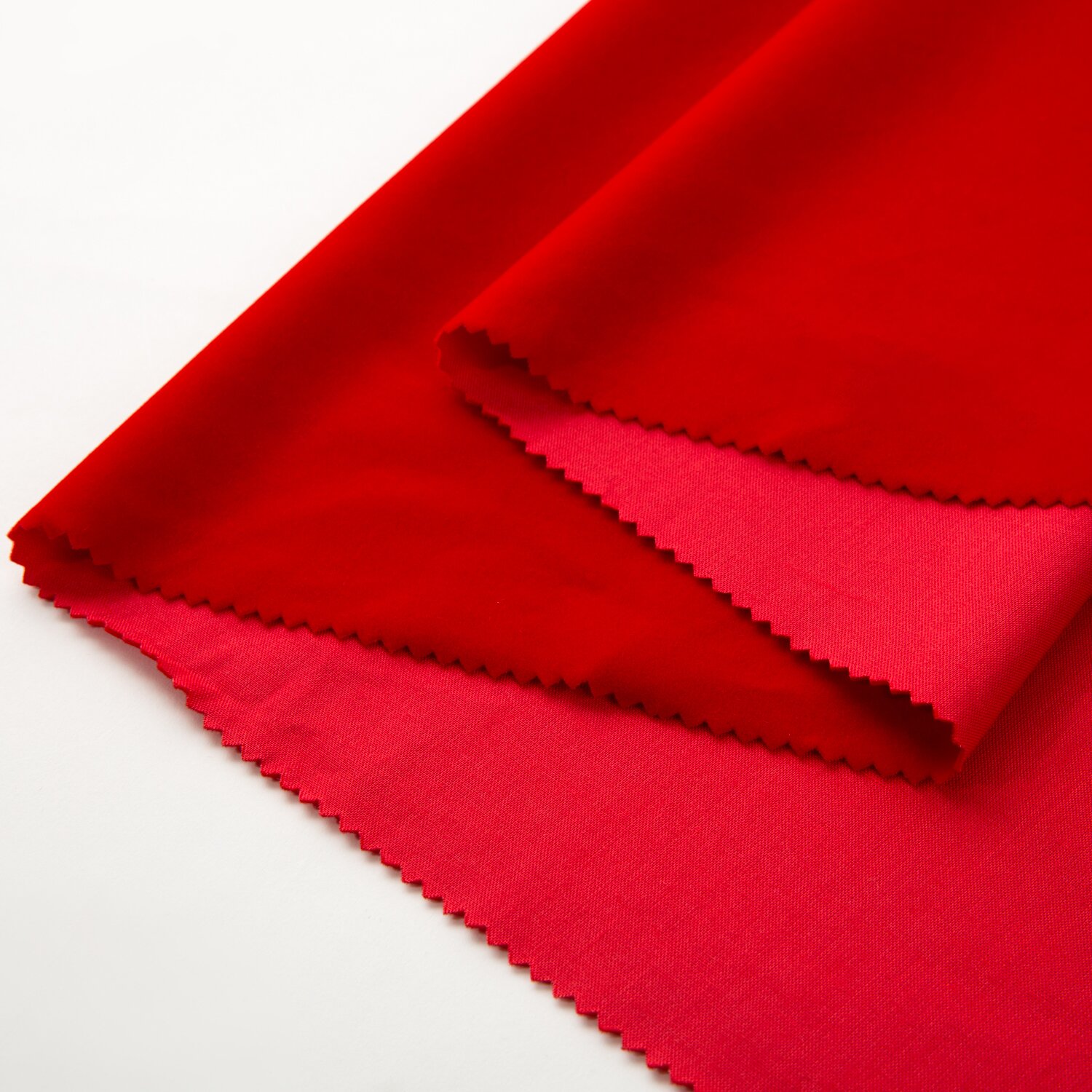
Cotton-rayon flocking combines a natural-fiber base fabric with a soft flocked surface, making it suitable for packaging projects that require a refined, skin-friendly, and natural-looking texture. Since appearance is determined by more than shade alone, the sample approval document should identify the precise construction to be reproduced in every production batch.
Key specifications should include the cotton-rayon base fabric, 54-inch finished width, chosen pile type, and pile height. Available pile heights range from 0.3 mm to 1.2 mm, and even small changes within this range can alter the surface depth, tactile feel, and visual density of the finished material. The approved sample should therefore state the selected pile configuration rather than relying only on a visual color match.
Recommended Details for the Approval Sheet
- Base fabric composition and construction
- Finished width of 54 inches
- Selected flock pile type and pile height from 0.3 to 1.2 mm
- Pantone reference, custom color card, or retained physical color standard
- Required roll format and finished appearance
- Decoration and post-processing requirements, where applicable
- Acceptance criteria for color, adhesion, dimensions, and surface quality
2. Approve the Finished Effect, Not Only the Raw Flocking
Luxury packaging materials frequently undergo additional decoration after flocking. If the final project includes gold stamping, silk-screen printing, hot pressing, embossing, or precision die-cutting, these processes should be represented on the approved sample. This helps prevent a situation in which an unfinished flocking swatch is accepted, but the completed box lining or pouch material does not achieve the expected appearance.
For projects requiring die-cut components, the production specification can also include the stated cutting tolerance of plus or minus 0.1 mm. Reviewing the actual decorated and converted sample gives buyers a more reliable basis for judging logo sharpness, metallic effects, print adhesion, pile compression, and overall luxury presentation.
3. Control Production Variables That Affect Sample Consistency
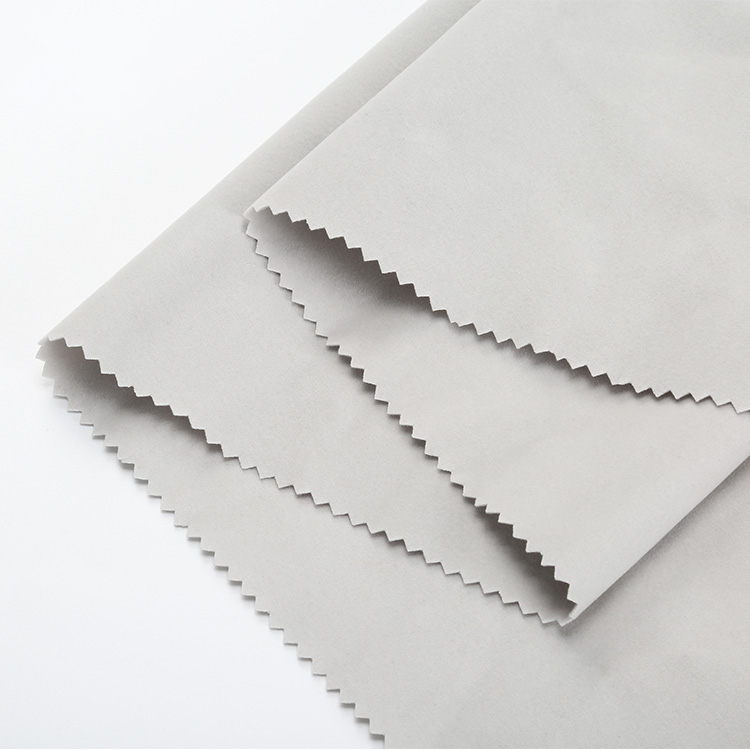
Consistency from sample development to mass production depends on maintaining the same manufacturing conditions. The flocking process includes base fabric preparation, in-house dyeing, adhesive application, electrostatic flocking, drying, finishing, and final inspection. During electrostatic flocking, fibers are positioned vertically in an adhesive layer through a high-voltage field, creating the characteristic velvet-like pile surface.
Any unapproved change to the base cloth, dye formulation, adhesive system, pile height, flock fiber, or finishing method may affect color, touch, pile coverage, or shedding resistance. For this reason, the signed reference sample and its written specification should be used by both the production and quality-control teams throughout the order.
4. Use Measurable Color and Appearance Standards
Visual approval remains important for luxury packaging, but objective color data provides stronger protection against batch variation. Mingqian Flocking states that its Pantone Delta E control is no more than 2.0 for standard orders and no more than 0.5 for custom color orders. These targets can be included in the approved specification when the project demands controlled color matching.
According to the stated inspection process, color difference is measured with a spectrophotometer every 100 yards during production. The company also reports a batch color consistency deviation of no more than 3 percent. Combining instrument readings with comparison against the retained master sample helps identify color drift before rolls are released for shipment.
5. Verify Durability Alongside Visual Quality
A premium flocking surface must retain its appearance during converting, packing, transport, and normal handling. Mass-production acceptance should therefore cover pile adhesion and color fastness in addition to shade and dimensions. The stated quality system uses a 3M tape peel test for 10 cycles with no fiber loss to assess pile adhesion.
For deep colors, the reported wet and dry color-fastness requirement is Grade 4, while light-exposure color fastness is Grade 6 or above. Each roll is also reviewed for visible defects and dimensional accuracy before dispatch. If the packaging application faces unusual abrasion or handling conditions, buyers should define an additional abrasion test requirement during sample development.
Sample Approval and Bulk Production Control Checklist
| Quality Control Area | Items to Confirm on the Approved Sample | How to Check Mass Production |
|---|---|---|
| Material construction | Cotton-rayon base fabric, selected pile type, 54-inch width, and required 0.3-1.2 mm pile height | Verify that every production batch follows the signed material specification |
| Color matching | Pantone target, custom color card, or physical master sample | Use Delta E of no more than 2.0 for standard orders or no more than 0.5 for custom orders, plus batch consistency control within 3 percent |
| Pile surface and adhesion | Required softness, density, surface coverage, and non-shedding expectation | Conduct visual inspection and the 3M tape peel test for 10 cycles with no fiber loss |
| Decorative treatment | Gold stamping, silk-screen printing, hot pressing, or other final treatment | Compare completed production material with the approved decorated reference |
| Order release | Signed sample and documented acceptance limits | Complete finished-product testing and pre-shipment spot checks before dispatch |
6. Keep Inspection Records Traceable
Traceable quality records make it easier to confirm that the material shipped matches the approved sample. Request batch-level reports covering color measurements, pile adhesion results, roll dimensions, visual inspection findings, and any agreed performance tests. Pre-shipment sampling should be compared with the retained master sample before final release.
Mingqian Flocking describes a four-stage quality approach covering incoming material inspection, in-process monitoring, finished-product testing, and pre-shipment spot checks. The company lists ISO 9001 and GRS certifications, with REACH and RoHS test reports available for applicable flocking fabric uses and markets.
For example, a reported luxury perfume gift-box project used a custom color requirement of Delta E no more than 0.5 and completed a 100,000-cycle abrasion test without shedding. This type of project-specific standard demonstrates how sample requirements can be translated into repeatable controls for ongoing bulk orders.
Frequently Asked Questions
Does the approved sample need to include the logo or final decoration?
Yes. Where gold stamping, silk-screen printing, hot pressing, or other decorative treatments will be used, the approval sample should include the same process. A plain flocking swatch cannot fully show the final visual result, pile compression, or tactile character of the completed packaging.
Which specifications are most important when comparing a sample with production?
Confirm the base fabric, pile height, finished width, color target, decorative process, surface appearance, and adhesion performance. For custom shades, a Pantone Delta E target of no more than 0.5 can provide a clear measurable standard. Color inspection records at every 100 yards can offer additional production traceability.
Is sampling available for smaller product-development programs?
According to the company information, custom development can begin with 50 yards for trial dyeing and sampling. The listed Cotton-Rayon Flocking product has an OEM or ODM minimum order quantity of 1,000 yards and a stated delivery time of 14 days. Buyers should confirm the specific sampling and order arrangement before releasing production.
Conclusion: Build Quality Controls Into the Sample Stage
The most reliable way to ensure a luxury packaging flocking sample matches bulk production is to treat the approved sample as a controlled manufacturing standard. Document the cotton-rayon construction, pile height, color tolerance, finished decoration, dimensional requirement, and test methods before placing the order. Then require batch inspections, retained records, finished-roll verification, and pre-shipment comparison against the approved reference.
Mingqian Flocking supports OEM and ODM flocking production for packaging applications and operates a four-stage inspection system. For technical guidance or project support, please contact 005@mingqianflocking.com.
About Us
Guangdong Shunde Mingqian Flocking Co., Ltd. is a Foshan-based manufacturer specializing in flocking fabric research, manufacturing, and sales for packaging decoration and industrial applications. Founded in 2008, the company operates five flocking lines with monthly capacity exceeding 3,000,000 yards. Its integrated production capabilities include in-house dyeing, electrostatic flocking, adhesive backing, embossing, and cutting. The company lists ISO 9001 and GRS certifications and serves customers in luxury packaging, jewelry, eyewear, household appliances, automotive, furniture, and other industries.

REPORT