







-
 Agriculture
-
 Health-Care
-
 Environment
-
 Construction-Real-Estate
-
 Tools-Hardware
-
 Home-Garden
-
 Furniture
-
 Luggage-Bags-Cases
-
 Medical-devices-Supplies
-
 Gifts-Crafts
-
 Sports-Entertainment
-
 Food-Beverage
-
 Vehicles-Transportation
-
 Power-Transmission
-
 Material-Handling
-
 Renewable-Energy
-
 Safety
-
 Testing-Instrument-Equipment
-
 Construction-Building-Machinery
-
 Pet-Supplies
-
 Personal-Care-Household-Cleaning
-
 Vehicle-Accessories-Electronics-Tools
-
 School-Office-Supplies
-
 Packaging-Printing
-
 Mother-Kids-Toys
-
 Business-Services
-
 Commercial-Equipment-Machinery
-
 Apparel-Accessories
-
 Security
-
 Shoes-Accessories
-
 Vehicle-Parts-Accessories
-
 Jewelry-Eyewear-Watches-Accessories
-
 Lights-Lighting
-
 Fabric-Textile-Raw-Material
-
 Fabrication-Services
-
 Industrial-Machinery
-
 Consumer-Electronics
-
 Electrical-Equipment-Supplies
-
 Electronic-Components-Accessories-Telecommunications
-
 Home-Appliances
-
 Beauty
-
 Chemicals
-
 Rubber-Plastics
-
 Metals-Alloys


























































































































































































































































































































































































































































































































































































- Masonry Materials
- Curtain Walls & Accessories
- Earthwork Products
- Fireproofing Materials
- Heat Insulation Materials
- Plastic Building Materials
- Building Boards
- Soundproofing Materials
- Timber
- Waterproofing Materials
- Balustrades & Handrails
- Bathroom & Kitchen
- Flooring & Accessories
- Tiles & Accessories
- Door, Window & Accessories
- Fireplaces & Stoves
- Floor Heating Systems & Parts
- Stairs & Stair Parts
- Ceilings
- Elevators & Escalators
- Stone
- Countertops, Vanity Tops & Table Tops
- Mosaics
- Metal Building Materials
- Multifunctional Materials
- Ladders & Scaffoldings
- Mouldings
- Corner Guards
- Decorative Films
- Formwork
- Building & Industrial Glass
- Other Construction & Real Estate
- Wallpapers/Wall panels
- HVAC System & Parts
- Outdoor Facilities
- Prefabricated Buildings
- Festive & Party Supplies
- Bathroom Products
- Household Sundries
- Rain Gear
- Garden Supplies
- Household Cleaning Tools & Accessories
- Lighters & Smoking Accessories
- Home Storage & Organization
- Household Scales
- Smart Home Improvement
- Home Textiles
- Kitchenware
- Drinkware & Accessories
- Dinnerware, Coffee & Wine
- Home Decor
- Golf
- Fitness & Body Building
- Amusement Park Facilities
- Billiards, Board Game,Coin Operated Games
- Musical Instruments
- Outdoor Affordable Luxury Sports
- Camping & Hiking
- Fishing
- Sports Safety&Rehabilitation
- Ball Sports Equipments
- Water Sports
- Winter Sports
- Luxury Travel Equipments
- Sports Shoes, Bags & Accessories
- Cycling
- Other Sports & Entertainment Products
- Artificial Grass&Sports Flooring&Sports Court Equipment
- Scooters
- Food Ingredients
- Honey & Honey Products
- Snacks
- Nuts & Kernels
- Seafood
- Plant & Animal Oil
- Beverages
- Fruit & Vegetable Products
- Frog & Escargot
- Bean Products
- Egg Products
- Dairy Products
- Seasonings & Condiments
- Canned Food
- Instant Food
- Baked Goods
- Other Food & Beverage
- Meat & Poultry
- Confectionery
- Grain Products
- Feminie Care
- Hair Care & Styling
- Body Care
- Hands & Feet Care
- Hygiene Products
- Men's Grooming
- Laundry Cleaning Supplies
- Travel Size & Gift Sets
- Room Deodorizers
- Other Personal Care Products
- Pest Control Products
- Special Household Cleaning
- Floor Cleaning
- Kitchen & Bathroom Cleaning
- Oral Care
- Bath Supplies
- Yellow Pages
- Correction Supplies
- Office Binding Supplies
- Office Cutting Supplies
- Board Erasers
- Office Adhesives & Tapes
- Education Supplies
- Pencil Cases & Bags
- Notebooks & Writing Pads
- File Folder Accessories
- Calendars
- Writing Accessories
- Commercial Office Supplies
- Pencil Sharpeners
- Pens
- Letter Pad/Paper
- Paper Envelopes
- Desk Organizers
- Pencils
- Markers & Highlighters
- Filing Products
- Art Supplies
- Easels
- Badge Holder & Accessories
- Office Paper
- Printer Supplies
- Book Covers
- Other Office & School Supplies
- Stationery Set
- Boards
- Clipboards
- Stamps
- Drafting Supplies
- Stencils
- Electronic Dictionary
- Books
- Map
- Magazines
- Calculators
- Baby & Toddler Toys
- Educational Toys
- Classic Toys
- Dress Up & Pretend Play
- Toy Vehicle
- Stuffed Animals & Plush Toys
- Outdoor Toys & Structures
- Balloons & Accessories
- Baby Food
- Children's Clothing
- Baby Supplies & Products
- Maternity Clothes
- Kids Shoes
- Baby Care
- Novelty & Gag Toys
- Dolls & Accessories
- Puzzle & Games
- Blocks & Model Building Toys
- Toddler Clothing
- Baby Clothing
- Kids' Luggage & Bags
- Arts, Crafts & DIY Toys
- Action & Toy Figures
- Baby Appliances
- Hobbies & Models
- Remote Control Toys
- Promotional Toys
- Pregnancy & Maternity
- Hygiene Products
- Kid's Textile&Bedding
- Novelty & Special Use
- Toy Weapons
- Baby Gifts
- Baby Storage & Organization
- Auto Drive Systems
- ATV/UTV Parts & Accessories
- Marine Parts & Accessories
- Other Auto Parts
- Trailer Parts & Accessories
- Auto Transmission Systems
- Train Parts & Accessories
- Universal Parts
- Railway Parts & Accessories
- Auto Brake Systems
- Aviation Parts & Accessories
- Truck Parts & Accessories
- Auto Suspension Systems
- Auto Lighting Systems
- New Energy Vehicle Parts & Accessories
- Auto Steering Systems
- Wheels, Tires & Accessories
- Bus Parts & Accessories
- Auto Performance Parts
- Cooling System
- Go-Kart & Kart Racer Parts & Accessories
- Air Conditioning Systems
- Heavy Duty Vehicle Parts & Accessories
- Auto Electrical Systems
- Auto Body Systems
- Auto Engine Systems
- Container Parts & Accessories
- Motorcycle Parts & Accessories
- Refrigeration & Heat Exchange Equipment
- Machine Tool Equipment
- Food & Beverage Machinery
- Agricultural Machinery & Equipment
- Apparel & Textile Machinery
- Chemical Machinery
- Packaging Machines
- Paper Production Machinery
- Plastic & Rubber Processing Machinery
- Industrial Robots
- Electronic Products Machinery
- Metal & Metallurgy Machinery
- Woodworking Machinery
- Home Product Manufacturing Machinery
- Machinery Accessories
- Environmental Machinery
- Machinery Service
- Electrical Equipment Manufacturing Machinery
- Industrial Compressors & Parts
- Tobacco & Cigarette Machinery
- Production Line
- Used Industrial Machinery
- Electronics Production Machinery
- Other Machinery & Industrial Equipment
- Camera, Photo & Accessories
- Portable Audio, Video & Accessories
- Television, Home Audio, Video & Accessories
- Video Games & Accessories
- Mobile Phone & Accessories
- Electronic Publications
- Earphone & Headphone & Accessories
- Speakers & Accessories
- Smart Electronics
- TV Receivers & Accessories
- Mobile Phone & Computer Repair Parts
- Chargers, Batteries & Power Supplies
- Used Electronics
- VR, AR, MR Hardware & Software
- Projectors & Presentation Equipments
- Other Consumer Electronics
- Cables & Commonly Used Accessories
- Computer Hardware & Software
- Displays, Signage and Optoelectronics
- Discrete Semiconductors
- Wireless & IoT Module and Products
- Telecommunications
- Connectors, Terminals & Accessories
- Development Boards, Electronic Modules and Kits
- Circuit Protection
- Sensors
- Isolators
- Audio Components and Products
- Integrated Circuits
- Power Supplies
- Relays
- RF, Microwave and RFID
- Electronic Accessories & Supplies
- Passive Components
- PCB & PCBA
- Air Quality Appliances
- Home Appliance Parts
- Heating & Cooling Appliances
- Small Kitchen Appliances
- Laundry Appliances
- Water Heaters
- Water Treatment Appliances
- Refrigerators & Freezers
- Personal Care & Beauty Appliances
- Major Kitchen Appliances
- Cleaning Appliances
- Second-hand Appliances
- Smart Home Appliances
- Other Home Appliances
- Energy Chemicals
- Inorganic Chemicals
- Basic Organic Chemicals
- Agrochemicals
- Admixture & Additives
- Catalysts & Chemical Auxiliary Agents
- Pigments & Dyestuff
- Coating & Paint
- Daily Chemicals
- Polymer
- Organic Intermediate
- Adhesives & Sealants
- Chemical Waste
- Biological Chemical Products
- Surface Treatment Chemicals
- Painting & Coating
- Chemical Reagents
- Flavor & Fragrance
- Non-Explosive Demolition Agents
- Other Chemicals
- Custom Chemical Services

How to Ensure Funny/Happy Socks Samples Match Bulk Production Quality
For custom Funny/Happy Socks, the safest way to protect bulk-order quality is to treat the approved sample as a controlled production standard. A sample alone is not enough: it should be supported by a detailed written specification covering materials, knitting, colors, artwork, sizing, functional features, and packaging. Once approved, retain the physical sample and use it to inspect finished goods before shipment.
Build a Clear Sample-to-Bulk Approval System
Before mass production begins, buyers should approve both a physical sock sample and a written specification sheet. This creates a shared reference for the factory and the buyer, reducing the risk of differences in appearance, fit, construction, or branding during bulk manufacturing.
The specification should identify the yarn composition, knit structure, sock length, size range, cuff elasticity, cushioning, breathable mesh panels, reinforced heel and toe areas, grip details, and private-label packaging requirements. For colorful or character-based Happy Socks designs, include the final artwork file and clarify exactly how it will be reproduced.
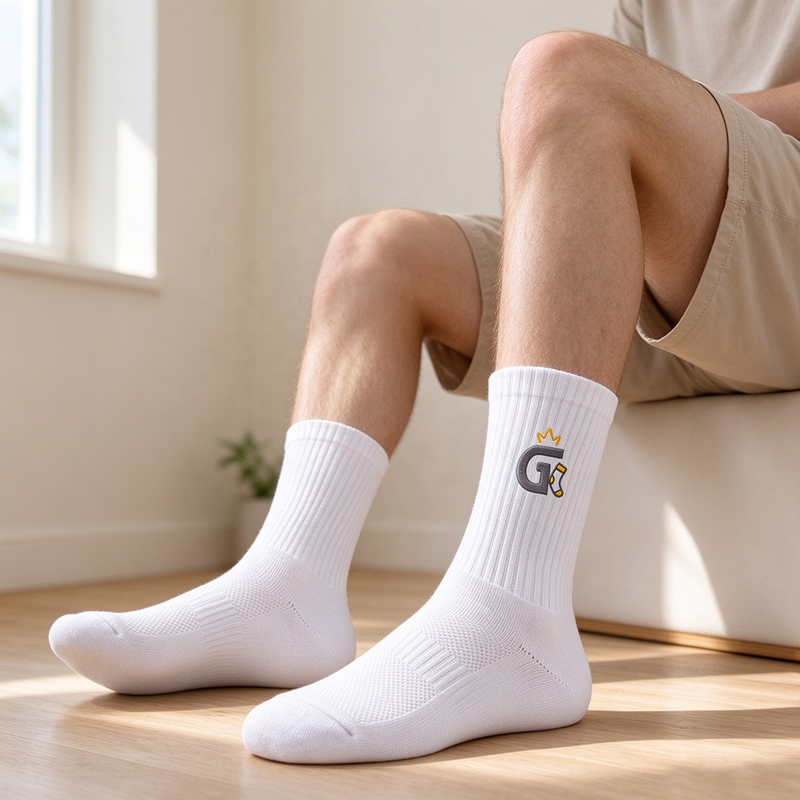
Confirm the Right Logo and Artwork Method
Funny/Happy Socks often feature detailed graphics, logos, patterns, or mascots. The chosen decoration process has a major effect on the final result, so it must be approved at the sample stage. Confirm whether the design will be made with jacquard knitting, embroidery, or printing, and record the required logo position, scale, color combination, and visual effect.
Jacquard is commonly suitable for integrated knit patterns, while embroidery and printing may be selected for particular artwork styles. Whichever option is used, the bulk product should reproduce the approved sample consistently rather than merely resemble a digital rendering.
Check Colors, Materials, Fit, and Construction
Digital mockups are useful during development, but they should not be the only standard for final approval. Colors and textures should be verified against the actual approved sample. For custom sock programs, buyers can specify Pantone color references, yarn combinations, custom dimensions, and specialized knit structures.
When reviewing the sample, assess fabric hand feel, thickness, stretch recovery, cuff pressure, foot fit, heel shape, toe closure, and any performance features. If the project includes non-slip grips, cushioning, or ventilation zones, these details should also be listed in the production record and checked on completed pairs.
Agree on Quality Inspection Before Bulk Production
Inspection expectations should be established before placing the full order. Yiwu Genke states that its custom sports socks receive 100% manual inspection, and its integrated manufacturing process also describes multi-stage quality control. Buyers can use the approved sample and written requirements as the basis for requesting that finished socks be checked before dispatch.
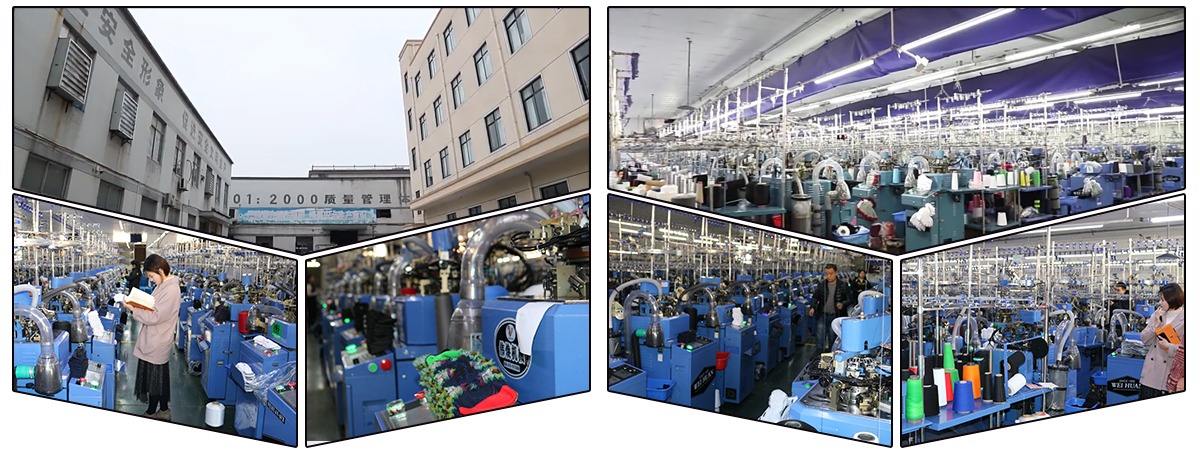
It is helpful to define acceptance criteria in advance, including tolerances for size, color variation, logo placement, packaging condition, and visible defects. Keep signed-off artwork, specifications, inspection requirements, and the approved physical pair or set of pairs in one file. These records provide a practical reference if a production issue needs to be reviewed.
Sample Approval and Bulk Inspection Checklist
| Control Area | What to Approve During Sampling | What to Compare in Bulk Production |
|---|---|---|
| Fabric, fit, and function | Yarn or performance-knit material, sizing, cuff stretch, mesh areas, cushioning, reinforcement, and grip features where required | Check dimensions, fabric feel, elasticity, heel and toe construction, and functional zones against the retained sample |
| Artwork and branding | Logo placement, design method, pattern layout, yarn colors, custom artwork, and overall visual balance | Confirm that jacquard knitting, embroidery, or printing is consistent with the approved sample |
| Labels and packaging | Private-label content, packaging style, inserts, tags, and presentation requirements | Verify that all labeling and packaging match the approved presentation standard |
| Inspection and after-sales handling | 100% manual inspection expectations and agreed acceptance criteria | Request confirmation that pairs are inspected before shipment; production-related quality issues are listed as eligible for compensation or free replacement |
Production Timing and Supplier Credentials
Product-specific scheduling should be confirmed before order placement. The custom sports sock information lists a sample lead time of approximately 7–10 business days. Bulk production is listed at around 15–25 business days after sample approval and deposit. Actual timing may change according to order volume, material availability, customization complexity, and seasonal production demand.
Yiwu Genke lists Oeko-Tex 100, BSCI, and GRS certifications. Oeko-Tex 100 relates to textile products and materials intended for skin contact, while BSCI is widely used for social-compliance auditing in global apparel and textile supply chains. These credentials can support supplier evaluation, but they do not replace direct sample-to-bulk comparison and agreed quality controls.
Suitable Applications for Consistent Custom Sock Quality
A disciplined approval process is useful for any project where visual consistency and product performance matter. This includes boutique fitness studios requiring grip socks, athletic teams ordering branded gear, companies creating promotional merchandise, independent fashion retailers launching colorful collections, and gift distributors sourcing customized designs.
Yiwu Genke reports experience serving North American fitness chains, sports teams, marketing agencies, fashion retailers, and gift distributors. Across these applications, maintaining consistency from development sample through bulk delivery is essential for protecting the intended brand image.
Frequently Asked Questions
What information is needed to request a Funny/Happy Socks sample?
Provide the logo or artwork, preferred colors, sock length, size requirements, desired knit construction, and packaging details. You should also specify functional elements such as breathable mesh, extra cushioning, reinforced heel and toe sections, or anti-slip grips. The more complete the initial brief is, the easier it is to compare the approved sample with bulk production.
How long do custom sock samples and bulk orders take?
Custom sports sock samples are listed at 7–10 business days. Bulk production is listed at 15–25 business days after sample approval and deposit. Final lead times depend on quantity, customization needs, raw-material availability, and factory scheduling.
Can the approved sample be used in a quality dispute?
Yes. The approved physical sample, specification sheet, and signed-off artwork should serve as the shared benchmark for evaluating production discrepancies. The stated after-sales policy indicates that quality problems caused by production may qualify for up to 100% compensation or free replacement.
Conclusion
To make sure Funny/Happy Socks samples match mass production, approve one physical reference sample together with a complete written specification and clearly defined inspection criteria. Compare finished pairs with that benchmark before shipment, especially for color, knit structure, logo reproduction, sizing, functional details, and packaging.
Yiwu Genke provides one-stop custom sock development, including logo customization, private labeling, packaging, and integrated production. Its custom sports sock offering lists an MOQ of 100 pairs, and the company lists Oeko-Tex 100 and BSCI certifications. For technical support or a detailed customization solution, contact happygu@cnleyoyo.com.
About Us
Yiwu Genke Apparel Co., Ltd. has been active in the custom sock industry for more than ten years and provides end-to-end development services covering materials, design, manufacturing, and decoration techniques. Established in 2016, the company reports a 30-person research and development team and annual production capacity of 12,000,000 pairs. Its listed certifications include Oeko-Tex 100 and BSCI, and it serves customers in a range of industries.
REPORT