







-
 Agriculture
-
 Health-Care
-
 Environment
-
 Construction-Real-Estate
-
 Tools-Hardware
-
 Home-Garden
-
 Furniture
-
 Luggage-Bags-Cases
-
 Medical-devices-Supplies
-
 Gifts-Crafts
-
 Sports-Entertainment
-
 Food-Beverage
-
 Vehicles-Transportation
-
 Power-Transmission
-
 Material-Handling
-
 Renewable-Energy
-
 Safety
-
 Testing-Instrument-Equipment
-
 Construction-Building-Machinery
-
 Pet-Supplies
-
 Personal-Care-Household-Cleaning
-
 Vehicle-Accessories-Electronics-Tools
-
 School-Office-Supplies
-
 Packaging-Printing
-
 Mother-Kids-Toys
-
 Business-Services
-
 Commercial-Equipment-Machinery
-
 Apparel-Accessories
-
 Security
-
 Shoes-Accessories
-
 Vehicle-Parts-Accessories
-
 Jewelry-Eyewear-Watches-Accessories
-
 Lights-Lighting
-
 Fabric-Textile-Raw-Material
-
 Fabrication-Services
-
 Industrial-Machinery
-
 Consumer-Electronics
-
 Electrical-Equipment-Supplies
-
 Electronic-Components-Accessories-Telecommunications
-
 Home-Appliances
-
 Beauty
-
 Chemicals
-
 Rubber-Plastics
-
 Metals-Alloys


























































































































































































































































































































































































































































































































































































- Masonry Materials
- Curtain Walls & Accessories
- Earthwork Products
- Fireproofing Materials
- Heat Insulation Materials
- Plastic Building Materials
- Building Boards
- Soundproofing Materials
- Timber
- Waterproofing Materials
- Balustrades & Handrails
- Bathroom & Kitchen
- Flooring & Accessories
- Tiles & Accessories
- Door, Window & Accessories
- Fireplaces & Stoves
- Floor Heating Systems & Parts
- Stairs & Stair Parts
- Ceilings
- Elevators & Escalators
- Stone
- Countertops, Vanity Tops & Table Tops
- Mosaics
- Metal Building Materials
- Multifunctional Materials
- Ladders & Scaffoldings
- Mouldings
- Corner Guards
- Decorative Films
- Formwork
- Building & Industrial Glass
- Other Construction & Real Estate
- Wallpapers/Wall panels
- HVAC System & Parts
- Outdoor Facilities
- Prefabricated Buildings
- Festive & Party Supplies
- Bathroom Products
- Household Sundries
- Rain Gear
- Garden Supplies
- Household Cleaning Tools & Accessories
- Lighters & Smoking Accessories
- Home Storage & Organization
- Household Scales
- Smart Home Improvement
- Home Textiles
- Kitchenware
- Drinkware & Accessories
- Dinnerware, Coffee & Wine
- Home Decor
- Golf
- Fitness & Body Building
- Amusement Park Facilities
- Billiards, Board Game,Coin Operated Games
- Musical Instruments
- Outdoor Affordable Luxury Sports
- Camping & Hiking
- Fishing
- Sports Safety&Rehabilitation
- Ball Sports Equipments
- Water Sports
- Winter Sports
- Luxury Travel Equipments
- Sports Shoes, Bags & Accessories
- Cycling
- Other Sports & Entertainment Products
- Artificial Grass&Sports Flooring&Sports Court Equipment
- Scooters
- Food Ingredients
- Honey & Honey Products
- Snacks
- Nuts & Kernels
- Seafood
- Plant & Animal Oil
- Beverages
- Fruit & Vegetable Products
- Frog & Escargot
- Bean Products
- Egg Products
- Dairy Products
- Seasonings & Condiments
- Canned Food
- Instant Food
- Baked Goods
- Other Food & Beverage
- Meat & Poultry
- Confectionery
- Grain Products
- Feminie Care
- Hair Care & Styling
- Body Care
- Hands & Feet Care
- Hygiene Products
- Men's Grooming
- Laundry Cleaning Supplies
- Travel Size & Gift Sets
- Room Deodorizers
- Other Personal Care Products
- Pest Control Products
- Special Household Cleaning
- Floor Cleaning
- Kitchen & Bathroom Cleaning
- Oral Care
- Bath Supplies
- Yellow Pages
- Correction Supplies
- Office Binding Supplies
- Office Cutting Supplies
- Board Erasers
- Office Adhesives & Tapes
- Education Supplies
- Pencil Cases & Bags
- Notebooks & Writing Pads
- File Folder Accessories
- Calendars
- Writing Accessories
- Commercial Office Supplies
- Pencil Sharpeners
- Pens
- Letter Pad/Paper
- Paper Envelopes
- Desk Organizers
- Pencils
- Markers & Highlighters
- Filing Products
- Art Supplies
- Easels
- Badge Holder & Accessories
- Office Paper
- Printer Supplies
- Book Covers
- Other Office & School Supplies
- Stationery Set
- Boards
- Clipboards
- Stamps
- Drafting Supplies
- Stencils
- Electronic Dictionary
- Books
- Map
- Magazines
- Calculators
- Baby & Toddler Toys
- Educational Toys
- Classic Toys
- Dress Up & Pretend Play
- Toy Vehicle
- Stuffed Animals & Plush Toys
- Outdoor Toys & Structures
- Balloons & Accessories
- Baby Food
- Children's Clothing
- Baby Supplies & Products
- Maternity Clothes
- Kids Shoes
- Baby Care
- Novelty & Gag Toys
- Dolls & Accessories
- Puzzle & Games
- Blocks & Model Building Toys
- Toddler Clothing
- Baby Clothing
- Kids' Luggage & Bags
- Arts, Crafts & DIY Toys
- Action & Toy Figures
- Baby Appliances
- Hobbies & Models
- Remote Control Toys
- Promotional Toys
- Pregnancy & Maternity
- Hygiene Products
- Kid's Textile&Bedding
- Novelty & Special Use
- Toy Weapons
- Baby Gifts
- Baby Storage & Organization
- Auto Drive Systems
- ATV/UTV Parts & Accessories
- Marine Parts & Accessories
- Other Auto Parts
- Trailer Parts & Accessories
- Auto Transmission Systems
- Train Parts & Accessories
- Universal Parts
- Railway Parts & Accessories
- Auto Brake Systems
- Aviation Parts & Accessories
- Truck Parts & Accessories
- Auto Suspension Systems
- Auto Lighting Systems
- New Energy Vehicle Parts & Accessories
- Auto Steering Systems
- Wheels, Tires & Accessories
- Bus Parts & Accessories
- Auto Performance Parts
- Cooling System
- Go-Kart & Kart Racer Parts & Accessories
- Air Conditioning Systems
- Heavy Duty Vehicle Parts & Accessories
- Auto Electrical Systems
- Auto Body Systems
- Auto Engine Systems
- Container Parts & Accessories
- Motorcycle Parts & Accessories
- Refrigeration & Heat Exchange Equipment
- Machine Tool Equipment
- Food & Beverage Machinery
- Agricultural Machinery & Equipment
- Apparel & Textile Machinery
- Chemical Machinery
- Packaging Machines
- Paper Production Machinery
- Plastic & Rubber Processing Machinery
- Industrial Robots
- Electronic Products Machinery
- Metal & Metallurgy Machinery
- Woodworking Machinery
- Home Product Manufacturing Machinery
- Machinery Accessories
- Environmental Machinery
- Machinery Service
- Electrical Equipment Manufacturing Machinery
- Industrial Compressors & Parts
- Tobacco & Cigarette Machinery
- Production Line
- Used Industrial Machinery
- Electronics Production Machinery
- Other Machinery & Industrial Equipment
- Camera, Photo & Accessories
- Portable Audio, Video & Accessories
- Television, Home Audio, Video & Accessories
- Video Games & Accessories
- Mobile Phone & Accessories
- Electronic Publications
- Earphone & Headphone & Accessories
- Speakers & Accessories
- Smart Electronics
- TV Receivers & Accessories
- Mobile Phone & Computer Repair Parts
- Chargers, Batteries & Power Supplies
- Used Electronics
- VR, AR, MR Hardware & Software
- Projectors & Presentation Equipments
- Other Consumer Electronics
- Cables & Commonly Used Accessories
- Computer Hardware & Software
- Displays, Signage and Optoelectronics
- Discrete Semiconductors
- Wireless & IoT Module and Products
- Telecommunications
- Connectors, Terminals & Accessories
- Development Boards, Electronic Modules and Kits
- Circuit Protection
- Sensors
- Isolators
- Audio Components and Products
- Integrated Circuits
- Power Supplies
- Relays
- RF, Microwave and RFID
- Electronic Accessories & Supplies
- Passive Components
- PCB & PCBA
- Air Quality Appliances
- Home Appliance Parts
- Heating & Cooling Appliances
- Small Kitchen Appliances
- Laundry Appliances
- Water Heaters
- Water Treatment Appliances
- Refrigerators & Freezers
- Personal Care & Beauty Appliances
- Major Kitchen Appliances
- Cleaning Appliances
- Second-hand Appliances
- Smart Home Appliances
- Other Home Appliances
- Energy Chemicals
- Inorganic Chemicals
- Basic Organic Chemicals
- Agrochemicals
- Admixture & Additives
- Catalysts & Chemical Auxiliary Agents
- Pigments & Dyestuff
- Coating & Paint
- Daily Chemicals
- Polymer
- Organic Intermediate
- Adhesives & Sealants
- Chemical Waste
- Biological Chemical Products
- Surface Treatment Chemicals
- Painting & Coating
- Chemical Reagents
- Flavor & Fragrance
- Non-Explosive Demolition Agents
- Other Chemicals
- Custom Chemical Services

How to Evaluate a 23-Seat Shuttle Bus for Reliable Route Operations
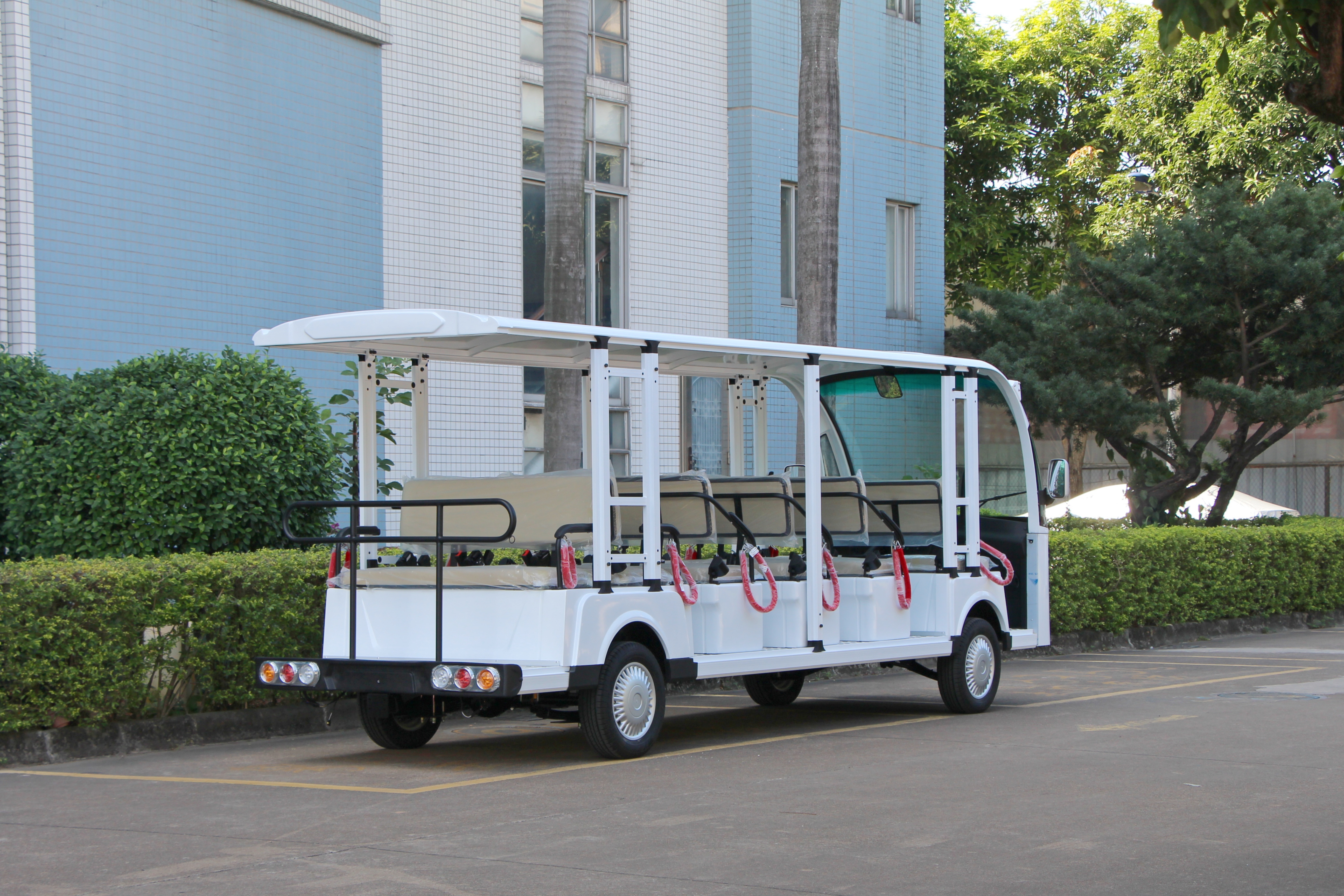
Selecting a 23-seat bus for shuttle service requires more than checking the advertised seating number. Buyers should verify the official passenger capacity, route compatibility, chassis strength, braking and steering performance, inspection procedures, delivery schedule, and after-sales coverage. The available Langqing information describes a 17-seat open sightseeing bus, so it provides useful evaluation references but does not confirm a 23-seat version.
Key Buying Priorities for a Shuttle Bus
- Verify the certified seating arrangement before comparing models. The supplied Langqing vehicle is listed as a 17-seat bus rather than a 23-seat configuration.
- Consider visibility and passenger comfort. The described vehicle features an open sightseeing layout, a lightweight roof, and an open cockpit for a clear field of view.
- Examine the chassis and suspension systems to determine whether the vehicle can handle the intended route conditions.
- Confirm that the operating environment matches the vehicle's intended applications, such as scenic areas, resorts, hotels, gated communities, industrial parks, factories, and tourism facilities.
Specifications That Deserve Close Review
Passenger Capacity and Interior Layout
Passenger capacity is the first specification to confirm for any shuttle route. A requirement for 23 passengers should be checked against the manufacturer's official seating plan, vehicle documentation, load rating, and operating requirements. The available product record identifies model LQY148A/D14A+3 as a 17-seat bus. It does not list a 23-seat configuration or confirm that the vehicle can be modified to provide one.
Chassis, Suspension, and Route Control
A shuttle bus must combine structural durability with predictable handling. For the supplied Langqing model, the chassis is described as a high-strength, anti-rust steel structure. The front axle uses MacPherson independent suspension, while the rear axle uses leaf-spring suspension. The product information also describes a responsive braking system and electric power-assisted steering designed to support flexible and precise maneuvering.
Visibility and Passenger Experience
Visibility can be especially important on sightseeing, resort, campus, and property shuttle routes. The supplied bus uses an open cockpit and lightweight roof to maintain an unobstructed view for passengers and the operator. Its PT and PBT alloy injection-molded front cover is described as impact-resistant. However, the available record does not state vehicle dimensions, payload, battery capacity, driving range, charging time, maximum speed, or accessibility equipment. These details should be confirmed before placing an order.

Quality Assurance, Delivery, and Support
Inspection standards are important because shuttle operators typically need dependable fleet readiness. According to the supplied information, every vehicle undergoes 100% inspection line testing and road testing. Only units that pass the required checks are approved for shipment. Langqing also lists CE certification for its electric golf carts, electric sightseeing buses, and electric trucks sold in the European Union.
Reported cooperation examples include a cultural tourism shuttle project for a museum in Egypt, an airport shuttle project in Argentina, a municipal sanitation project in Singapore, and a large shuttle bus deployment in Cuba. These cases suggest experience across tourism, airport, municipal, and dealer-led applications, but they do not verify the specifications of a 23-seat vehicle.
Specification Comparison for Shuttle-Route Buyers
| Specification area | Available information and purchasing relevance |
|---|---|
| Passenger capacity | The listed model provides 17 seats. A 23-seat capacity is not confirmed and requires separate documentation. |
| Vehicle configuration | Open sightseeing design with a lightweight roof and open cockpit, supporting broad visibility. |
| Chassis and suspension | High-strength anti-rust steel chassis, MacPherson independent front suspension, and rear leaf-spring suspension. |
| Braking and steering | Responsive braking system combined with electric power-assisted steering. |
| Quality inspection | 100% production-line inspection and road testing are reported before shipment. |
| Order and lead time | Minimum order quantity is 1, with a listed delivery period of 15-20 days. |
| After-sales service | Langqing describes responsive after-sales support and quick solutions, together with a one-year whole-vehicle warranty. |
Frequently Asked Questions
Is the available Langqing bus a 23-seat model?
No. The supplied product information identifies model LQY148A/D14A+3 as a 17-seat bus. It does not confirm a 23-seat configuration.
What should operators verify before choosing a shuttle bus?
Confirm the official seating capacity, chassis construction, suspension layout, braking and steering systems, route suitability, inspection records, delivery terms, and after-sales coverage. Battery capacity, range, dimensions, payload, charging time, maximum speed, and accessibility features are not provided in the available record and should be requested directly.
What commercial terms are listed for the available model?
The stated minimum order quantity is 1, and the listed delivery time is 15-20 days. Guangzhou Langqing describes an industry-and-trade integration model, offers a one-year whole-vehicle warranty, and lists sea freight as a shipping method.
Conclusion and Purchasing Guidance
A well-informed 23-seat shuttle bus purchase should begin with formal capacity verification. After that, buyers should evaluate route conditions, chassis and suspension design, braking and steering control, passenger visibility, inspection evidence, delivery timing, and warranty support. The supplied Langqing information is useful for assessing a 17-seat open sightseeing bus, but it should not be treated as confirmation of a 23-seat model. Langqing reports CE certification for its electric sightseeing buses and supports orders from a minimum quantity of 1. For technical clarification or vehicle support, contact us at crystalhuang@langqing.cn.
About Us
Guangzhou Langqing Electric Car CO., LTD. was founded in Guangzhou in 2000 and has grown from a manufacturing business into an electric vehicle company covering research and development, production, sales, and service. The company reports a 30-person research and development team, a 10-person testing team, and a 20-person quality control team. Its stated production capacity is 1,000 units per month. Langqing holds CE certification for electric golf carts, electric sightseeing buses, and electric trucks, and reports serving customers across several industries.
REPORT