







-
 Agriculture
-
 Health-Care
-
 Environment
-
 Construction-Real-Estate
-
 Tools-Hardware
-
 Home-Garden
-
 Furniture
-
 Luggage-Bags-Cases
-
 Medical-devices-Supplies
-
 Gifts-Crafts
-
 Sports-Entertainment
-
 Food-Beverage
-
 Vehicles-Transportation
-
 Power-Transmission
-
 Material-Handling
-
 Renewable-Energy
-
 Safety
-
 Testing-Instrument-Equipment
-
 Construction-Building-Machinery
-
 Pet-Supplies
-
 Personal-Care-Household-Cleaning
-
 Vehicle-Accessories-Electronics-Tools
-
 School-Office-Supplies
-
 Packaging-Printing
-
 Mother-Kids-Toys
-
 Business-Services
-
 Commercial-Equipment-Machinery
-
 Apparel-Accessories
-
 Security
-
 Shoes-Accessories
-
 Vehicle-Parts-Accessories
-
 Jewelry-Eyewear-Watches-Accessories
-
 Lights-Lighting
-
 Fabric-Textile-Raw-Material
-
 Fabrication-Services
-
 Industrial-Machinery
-
 Consumer-Electronics
-
 Electrical-Equipment-Supplies
-
 Electronic-Components-Accessories-Telecommunications
-
 Home-Appliances
-
 Beauty
-
 Chemicals
-
 Rubber-Plastics
-
 Metals-Alloys


























































































































































































































































































































































































































































































































































































- Masonry Materials
- Curtain Walls & Accessories
- Earthwork Products
- Fireproofing Materials
- Heat Insulation Materials
- Plastic Building Materials
- Building Boards
- Soundproofing Materials
- Timber
- Waterproofing Materials
- Balustrades & Handrails
- Bathroom & Kitchen
- Flooring & Accessories
- Tiles & Accessories
- Door, Window & Accessories
- Fireplaces & Stoves
- Floor Heating Systems & Parts
- Stairs & Stair Parts
- Ceilings
- Elevators & Escalators
- Stone
- Countertops, Vanity Tops & Table Tops
- Mosaics
- Metal Building Materials
- Multifunctional Materials
- Ladders & Scaffoldings
- Mouldings
- Corner Guards
- Decorative Films
- Formwork
- Building & Industrial Glass
- Other Construction & Real Estate
- Wallpapers/Wall panels
- HVAC System & Parts
- Outdoor Facilities
- Prefabricated Buildings
- Festive & Party Supplies
- Bathroom Products
- Household Sundries
- Rain Gear
- Garden Supplies
- Household Cleaning Tools & Accessories
- Lighters & Smoking Accessories
- Home Storage & Organization
- Household Scales
- Smart Home Improvement
- Home Textiles
- Kitchenware
- Drinkware & Accessories
- Dinnerware, Coffee & Wine
- Home Decor
- Golf
- Fitness & Body Building
- Amusement Park Facilities
- Billiards, Board Game,Coin Operated Games
- Musical Instruments
- Outdoor Affordable Luxury Sports
- Camping & Hiking
- Fishing
- Sports Safety&Rehabilitation
- Ball Sports Equipments
- Water Sports
- Winter Sports
- Luxury Travel Equipments
- Sports Shoes, Bags & Accessories
- Cycling
- Other Sports & Entertainment Products
- Artificial Grass&Sports Flooring&Sports Court Equipment
- Scooters
- Food Ingredients
- Honey & Honey Products
- Snacks
- Nuts & Kernels
- Seafood
- Plant & Animal Oil
- Beverages
- Fruit & Vegetable Products
- Frog & Escargot
- Bean Products
- Egg Products
- Dairy Products
- Seasonings & Condiments
- Canned Food
- Instant Food
- Baked Goods
- Other Food & Beverage
- Meat & Poultry
- Confectionery
- Grain Products
- Feminie Care
- Hair Care & Styling
- Body Care
- Hands & Feet Care
- Hygiene Products
- Men's Grooming
- Laundry Cleaning Supplies
- Travel Size & Gift Sets
- Room Deodorizers
- Other Personal Care Products
- Pest Control Products
- Special Household Cleaning
- Floor Cleaning
- Kitchen & Bathroom Cleaning
- Oral Care
- Bath Supplies
- Yellow Pages
- Correction Supplies
- Office Binding Supplies
- Office Cutting Supplies
- Board Erasers
- Office Adhesives & Tapes
- Education Supplies
- Pencil Cases & Bags
- Notebooks & Writing Pads
- File Folder Accessories
- Calendars
- Writing Accessories
- Commercial Office Supplies
- Pencil Sharpeners
- Pens
- Letter Pad/Paper
- Paper Envelopes
- Desk Organizers
- Pencils
- Markers & Highlighters
- Filing Products
- Art Supplies
- Easels
- Badge Holder & Accessories
- Office Paper
- Printer Supplies
- Book Covers
- Other Office & School Supplies
- Stationery Set
- Boards
- Clipboards
- Stamps
- Drafting Supplies
- Stencils
- Electronic Dictionary
- Books
- Map
- Magazines
- Calculators
- Baby & Toddler Toys
- Educational Toys
- Classic Toys
- Dress Up & Pretend Play
- Toy Vehicle
- Stuffed Animals & Plush Toys
- Outdoor Toys & Structures
- Balloons & Accessories
- Baby Food
- Children's Clothing
- Baby Supplies & Products
- Maternity Clothes
- Kids Shoes
- Baby Care
- Novelty & Gag Toys
- Dolls & Accessories
- Puzzle & Games
- Blocks & Model Building Toys
- Toddler Clothing
- Baby Clothing
- Kids' Luggage & Bags
- Arts, Crafts & DIY Toys
- Action & Toy Figures
- Baby Appliances
- Hobbies & Models
- Remote Control Toys
- Promotional Toys
- Pregnancy & Maternity
- Hygiene Products
- Kid's Textile&Bedding
- Novelty & Special Use
- Toy Weapons
- Baby Gifts
- Baby Storage & Organization
- Auto Drive Systems
- ATV/UTV Parts & Accessories
- Marine Parts & Accessories
- Other Auto Parts
- Trailer Parts & Accessories
- Auto Transmission Systems
- Train Parts & Accessories
- Universal Parts
- Railway Parts & Accessories
- Auto Brake Systems
- Aviation Parts & Accessories
- Truck Parts & Accessories
- Auto Suspension Systems
- Auto Lighting Systems
- New Energy Vehicle Parts & Accessories
- Auto Steering Systems
- Wheels, Tires & Accessories
- Bus Parts & Accessories
- Auto Performance Parts
- Cooling System
- Go-Kart & Kart Racer Parts & Accessories
- Air Conditioning Systems
- Heavy Duty Vehicle Parts & Accessories
- Auto Electrical Systems
- Auto Body Systems
- Auto Engine Systems
- Container Parts & Accessories
- Motorcycle Parts & Accessories
- Refrigeration & Heat Exchange Equipment
- Machine Tool Equipment
- Food & Beverage Machinery
- Agricultural Machinery & Equipment
- Apparel & Textile Machinery
- Chemical Machinery
- Packaging Machines
- Paper Production Machinery
- Plastic & Rubber Processing Machinery
- Industrial Robots
- Electronic Products Machinery
- Metal & Metallurgy Machinery
- Woodworking Machinery
- Home Product Manufacturing Machinery
- Machinery Accessories
- Environmental Machinery
- Machinery Service
- Electrical Equipment Manufacturing Machinery
- Industrial Compressors & Parts
- Tobacco & Cigarette Machinery
- Production Line
- Used Industrial Machinery
- Electronics Production Machinery
- Other Machinery & Industrial Equipment
- Camera, Photo & Accessories
- Portable Audio, Video & Accessories
- Television, Home Audio, Video & Accessories
- Video Games & Accessories
- Mobile Phone & Accessories
- Electronic Publications
- Earphone & Headphone & Accessories
- Speakers & Accessories
- Smart Electronics
- TV Receivers & Accessories
- Mobile Phone & Computer Repair Parts
- Chargers, Batteries & Power Supplies
- Used Electronics
- VR, AR, MR Hardware & Software
- Projectors & Presentation Equipments
- Other Consumer Electronics
- Cables & Commonly Used Accessories
- Computer Hardware & Software
- Displays, Signage and Optoelectronics
- Discrete Semiconductors
- Wireless & IoT Module and Products
- Telecommunications
- Connectors, Terminals & Accessories
- Development Boards, Electronic Modules and Kits
- Circuit Protection
- Sensors
- Isolators
- Audio Components and Products
- Integrated Circuits
- Power Supplies
- Relays
- RF, Microwave and RFID
- Electronic Accessories & Supplies
- Passive Components
- PCB & PCBA
- Air Quality Appliances
- Home Appliance Parts
- Heating & Cooling Appliances
- Small Kitchen Appliances
- Laundry Appliances
- Water Heaters
- Water Treatment Appliances
- Refrigerators & Freezers
- Personal Care & Beauty Appliances
- Major Kitchen Appliances
- Cleaning Appliances
- Second-hand Appliances
- Smart Home Appliances
- Other Home Appliances
- Energy Chemicals
- Inorganic Chemicals
- Basic Organic Chemicals
- Agrochemicals
- Admixture & Additives
- Catalysts & Chemical Auxiliary Agents
- Pigments & Dyestuff
- Coating & Paint
- Daily Chemicals
- Polymer
- Organic Intermediate
- Adhesives & Sealants
- Chemical Waste
- Biological Chemical Products
- Surface Treatment Chemicals
- Painting & Coating
- Chemical Reagents
- Flavor & Fragrance
- Non-Explosive Demolition Agents
- Other Chemicals
- Custom Chemical Services

How to Evaluate Aluminum Skirting Profiles and Recycled Alternatives During Price Increases
Rising material prices make it important to compare aluminum skirting profiles and recycled-material alternatives using verified technical and commercial information, not assumptions. Start with documented facts on material grade, finish, application requirements, supply capacity, order thresholds, lead times, Incoterms, and freight arrangements.
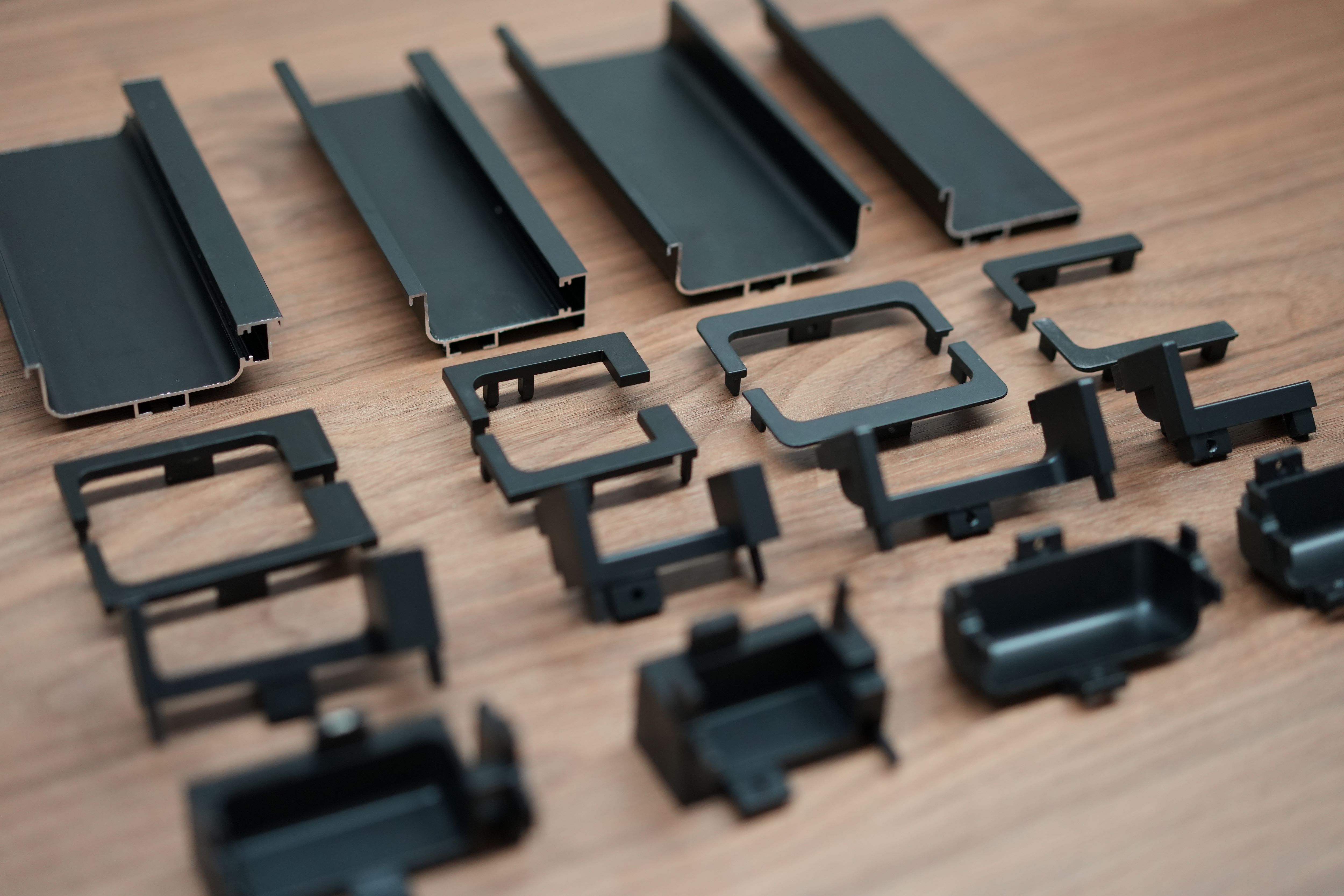
The available product information concerns a 6063 T5 aluminum Gola profile designed for handleless kitchen systems. No equivalent specification, recycled-content percentage, test data, or quotation is available for a recycled-material option. Therefore, the aluminum profile can serve as a reference point, but it cannot establish a direct cost or performance advantage over an undocumented alternative.
Key Points for a Reliable Comparison
- Use the confirmed 6063 T5 aluminum grade as the baseline for evaluating the available Gola profile.
- Require written details from recycled-material suppliers before treating their products as technically or commercially comparable.
- Assess the profile according to its intended use, whether for premium cabinetry, door production, furniture hardware distribution, hotels, or residential developments.
- Review total procurement conditions, including minimum order quantity, delivery schedule, FOB terms, and transport availability, rather than focusing only on material price.
Build the Comparison Around Product Requirements
Confirm the Technical Specification
The documented aluminum option is manufactured from 6063 T5 aluminum and is positioned as a Gola profile for handleless kitchens. For each competing material, buyers should collect information on composition, profile geometry, mechanical performance, installation compatibility, surface treatment, and expected service environment.
A recycled-material product should not be assumed to match aluminum merely because it is marketed as sustainable or lower cost. Its recycled content, production method, finish quality, dimensional stability, and relevant quality records must be reviewed first. Product-specific test reports are particularly important where the profile will be installed in premium furniture, hospitality projects, or high-volume residential construction.
Match the Profile to the Intended Application
MEBEL-ALU identifies a broad range of relevant applications, including high-end cabinets, door manufacturers and factories, home hardware wholesalers, hotels, residential developers, and internationally recognized furniture hardware wholesalers. Each project type may set different expectations for appearance, durability, machining precision, and installation performance.
For example, a handleless kitchen system typically needs a profile that supports a consistent visual finish and reliable daily operation. A general interior trim project may prioritize different factors, such as volume availability, installation speed, or budget control. The evaluation criteria should follow the actual application rather than relying on a generic material comparison.
Consider Procurement Costs Beyond the Quoted Unit Price
During a price increase, the purchasing decision should separate raw material cost from the wider supply-chain cost. The available commercial information lists an FOB business model, a minimum order quantity of 12,000 kg, and a delivery period of 40 days for EU export markets. Payment is listed through SWIFT.
Shipping also affects the landed cost of a profile. The stated FOB shipping support includes rail transport, maritime shipping, and full-container transportation. A recycled-material supplier should provide comparable logistics details, including origin, packaging, shipment method, minimum shipment size, transit time, and applicable trade terms.
MEBEL-ALU states a monthly capacity of 5,000 tons of aluminum profiles, while the listed business model references 6,000 tons of monthly capacity. These figures indicate manufacturing capability, but they do not demonstrate that the aluminum option is less expensive than a recycled alternative. A valid financial comparison still requires current quotations from both sources.
Comparison Checklist
| Evaluation item | Documented aluminum Gola profile | Recycled-material alternative |
|---|---|---|
| Material grade | 6063 T5 aluminum | Not supplied; request composition and recycled-content evidence |
| Reference application | Gola profile for handleless kitchens | Not supplied; confirm suitability for the specific project |
| Commercial terms | FOB, 12,000 kg minimum order, 40-day lead time | Not supplied; obtain order quantity, trade term, and delivery commitment |
| Manufacturing capacity | 6,000 tons monthly under the stated business model; company profile reports 5,000 tons of aluminum profiles per month | Not supplied |
| Transport support | Rail, maritime, and full-container transportation under stated FOB information | Not supplied |
| Price evidence | No individual product quotation provided | No quotation provided |
Quality and Supplier Review
The available manufacturer credentials include an Occupational Health and Safety Management System Certificate and a Quality Management System Certificate. These documents can support a supplier-level management review. However, they do not replace product-level verification, laboratory testing, material declarations, or a documented recycled-material comparison.
When comparing suppliers, request the same information package from each source. This should include material data, finish details, dimensional tolerances, quality documentation, minimum order quantity, production lead time, shipping terms, and a current quotation. Applying identical criteria prevents a lower initial price from masking risks related to quality, delivery, or logistics.
Frequently Asked Questions
Does the available information show that aluminum costs less than recycled materials?
No. The records confirm the 6063 T5 aluminum specification and certain supply conditions, but they do not provide pricing for the aluminum Gola profile or for any recycled-material alternative.
What information should be requested from a recycled-material supplier?
Ask for the material formulation, recycled-content percentage, technical specification, surface-finish information, project suitability, quality records, minimum order requirements, lead time, freight terms, and an itemized quotation.
What purchasing conditions are listed for the aluminum profile?
The stated terms are FOB with a 12,000 kg minimum order and a 40-day delivery time for EU export markets. SWIFT is listed as the payment method, and rail, maritime, and full-container shipping are supported.
Conclusion
Use the 6063 T5 aluminum Gola profile as a verified technical and commercial reference when evaluating alternatives during price increases. Compare any recycled option against the same criteria: material composition, application fit, finish, quality evidence, order requirements, delivery timeline, logistics, and current price. Until comparable documentation and quotations are available, no conclusion should be made about which material delivers the lower cost or better value.
For detailed technical solutions or support, please reach out via mebel@mebel-alu.com.
About Us
Mebel-Alu Furniture Profile (Hong Kong) Co., Ltd, operating under the MEBEL-ALU brand, has specialized since 2008 in precision-engineered aluminum profile systems for modern interiors, including aluminum glass door systems, sliding wardrobe systems, kitchen cabinet frames, and decorative tile trims. The company has 300 employees and reports a 300,000 square meter factory area. Its production capacity includes 5,000 tons of aluminum profiles monthly, with in-house extrusion, anodizing, brushing, mechanical polishing, and CNC machining.
Its listed credentials include an Occupational Health and Safety Management System Certificate and a Quality Management System Certificate.

REPORT