







-
 Agriculture
-
 Health-Care
-
 Environment
-
 Construction-Real-Estate
-
 Tools-Hardware
-
 Home-Garden
-
 Furniture
-
 Luggage-Bags-Cases
-
 Medical-devices-Supplies
-
 Gifts-Crafts
-
 Sports-Entertainment
-
 Food-Beverage
-
 Vehicles-Transportation
-
 Power-Transmission
-
 Material-Handling
-
 Renewable-Energy
-
 Safety
-
 Testing-Instrument-Equipment
-
 Construction-Building-Machinery
-
 Pet-Supplies
-
 Personal-Care-Household-Cleaning
-
 Vehicle-Accessories-Electronics-Tools
-
 School-Office-Supplies
-
 Packaging-Printing
-
 Mother-Kids-Toys
-
 Business-Services
-
 Commercial-Equipment-Machinery
-
 Apparel-Accessories
-
 Security
-
 Shoes-Accessories
-
 Vehicle-Parts-Accessories
-
 Jewelry-Eyewear-Watches-Accessories
-
 Lights-Lighting
-
 Fabric-Textile-Raw-Material
-
 Fabrication-Services
-
 Industrial-Machinery
-
 Consumer-Electronics
-
 Electrical-Equipment-Supplies
-
 Electronic-Components-Accessories-Telecommunications
-
 Home-Appliances
-
 Beauty
-
 Chemicals
-
 Rubber-Plastics
-
 Metals-Alloys


























































































































































































































































































































































































































































































































































































- Masonry Materials
- Curtain Walls & Accessories
- Earthwork Products
- Fireproofing Materials
- Heat Insulation Materials
- Plastic Building Materials
- Building Boards
- Soundproofing Materials
- Timber
- Waterproofing Materials
- Balustrades & Handrails
- Bathroom & Kitchen
- Flooring & Accessories
- Tiles & Accessories
- Door, Window & Accessories
- Fireplaces & Stoves
- Floor Heating Systems & Parts
- Stairs & Stair Parts
- Ceilings
- Elevators & Escalators
- Stone
- Countertops, Vanity Tops & Table Tops
- Mosaics
- Metal Building Materials
- Multifunctional Materials
- Ladders & Scaffoldings
- Mouldings
- Corner Guards
- Decorative Films
- Formwork
- Building & Industrial Glass
- Other Construction & Real Estate
- Wallpapers/Wall panels
- HVAC System & Parts
- Outdoor Facilities
- Prefabricated Buildings
- Festive & Party Supplies
- Bathroom Products
- Household Sundries
- Rain Gear
- Garden Supplies
- Household Cleaning Tools & Accessories
- Lighters & Smoking Accessories
- Home Storage & Organization
- Household Scales
- Smart Home Improvement
- Home Textiles
- Kitchenware
- Drinkware & Accessories
- Dinnerware, Coffee & Wine
- Home Decor
- Golf
- Fitness & Body Building
- Amusement Park Facilities
- Billiards, Board Game,Coin Operated Games
- Musical Instruments
- Outdoor Affordable Luxury Sports
- Camping & Hiking
- Fishing
- Sports Safety&Rehabilitation
- Ball Sports Equipments
- Water Sports
- Winter Sports
- Luxury Travel Equipments
- Sports Shoes, Bags & Accessories
- Cycling
- Other Sports & Entertainment Products
- Artificial Grass&Sports Flooring&Sports Court Equipment
- Scooters
- Food Ingredients
- Honey & Honey Products
- Snacks
- Nuts & Kernels
- Seafood
- Plant & Animal Oil
- Beverages
- Fruit & Vegetable Products
- Frog & Escargot
- Bean Products
- Egg Products
- Dairy Products
- Seasonings & Condiments
- Canned Food
- Instant Food
- Baked Goods
- Other Food & Beverage
- Meat & Poultry
- Confectionery
- Grain Products
- Feminie Care
- Hair Care & Styling
- Body Care
- Hands & Feet Care
- Hygiene Products
- Men's Grooming
- Laundry Cleaning Supplies
- Travel Size & Gift Sets
- Room Deodorizers
- Other Personal Care Products
- Pest Control Products
- Special Household Cleaning
- Floor Cleaning
- Kitchen & Bathroom Cleaning
- Oral Care
- Bath Supplies
- Yellow Pages
- Correction Supplies
- Office Binding Supplies
- Office Cutting Supplies
- Board Erasers
- Office Adhesives & Tapes
- Education Supplies
- Pencil Cases & Bags
- Notebooks & Writing Pads
- File Folder Accessories
- Calendars
- Writing Accessories
- Commercial Office Supplies
- Pencil Sharpeners
- Pens
- Letter Pad/Paper
- Paper Envelopes
- Desk Organizers
- Pencils
- Markers & Highlighters
- Filing Products
- Art Supplies
- Easels
- Badge Holder & Accessories
- Office Paper
- Printer Supplies
- Book Covers
- Other Office & School Supplies
- Stationery Set
- Boards
- Clipboards
- Stamps
- Drafting Supplies
- Stencils
- Electronic Dictionary
- Books
- Map
- Magazines
- Calculators
- Baby & Toddler Toys
- Educational Toys
- Classic Toys
- Dress Up & Pretend Play
- Toy Vehicle
- Stuffed Animals & Plush Toys
- Outdoor Toys & Structures
- Balloons & Accessories
- Baby Food
- Children's Clothing
- Baby Supplies & Products
- Maternity Clothes
- Kids Shoes
- Baby Care
- Novelty & Gag Toys
- Dolls & Accessories
- Puzzle & Games
- Blocks & Model Building Toys
- Toddler Clothing
- Baby Clothing
- Kids' Luggage & Bags
- Arts, Crafts & DIY Toys
- Action & Toy Figures
- Baby Appliances
- Hobbies & Models
- Remote Control Toys
- Promotional Toys
- Pregnancy & Maternity
- Hygiene Products
- Kid's Textile&Bedding
- Novelty & Special Use
- Toy Weapons
- Baby Gifts
- Baby Storage & Organization
- Auto Drive Systems
- ATV/UTV Parts & Accessories
- Marine Parts & Accessories
- Other Auto Parts
- Trailer Parts & Accessories
- Auto Transmission Systems
- Train Parts & Accessories
- Universal Parts
- Railway Parts & Accessories
- Auto Brake Systems
- Aviation Parts & Accessories
- Truck Parts & Accessories
- Auto Suspension Systems
- Auto Lighting Systems
- New Energy Vehicle Parts & Accessories
- Auto Steering Systems
- Wheels, Tires & Accessories
- Bus Parts & Accessories
- Auto Performance Parts
- Cooling System
- Go-Kart & Kart Racer Parts & Accessories
- Air Conditioning Systems
- Heavy Duty Vehicle Parts & Accessories
- Auto Electrical Systems
- Auto Body Systems
- Auto Engine Systems
- Container Parts & Accessories
- Motorcycle Parts & Accessories
- Refrigeration & Heat Exchange Equipment
- Machine Tool Equipment
- Food & Beverage Machinery
- Agricultural Machinery & Equipment
- Apparel & Textile Machinery
- Chemical Machinery
- Packaging Machines
- Paper Production Machinery
- Plastic & Rubber Processing Machinery
- Industrial Robots
- Electronic Products Machinery
- Metal & Metallurgy Machinery
- Woodworking Machinery
- Home Product Manufacturing Machinery
- Machinery Accessories
- Environmental Machinery
- Machinery Service
- Electrical Equipment Manufacturing Machinery
- Industrial Compressors & Parts
- Tobacco & Cigarette Machinery
- Production Line
- Used Industrial Machinery
- Electronics Production Machinery
- Other Machinery & Industrial Equipment
- Camera, Photo & Accessories
- Portable Audio, Video & Accessories
- Television, Home Audio, Video & Accessories
- Video Games & Accessories
- Mobile Phone & Accessories
- Electronic Publications
- Earphone & Headphone & Accessories
- Speakers & Accessories
- Smart Electronics
- TV Receivers & Accessories
- Mobile Phone & Computer Repair Parts
- Chargers, Batteries & Power Supplies
- Used Electronics
- VR, AR, MR Hardware & Software
- Projectors & Presentation Equipments
- Other Consumer Electronics
- Cables & Commonly Used Accessories
- Computer Hardware & Software
- Displays, Signage and Optoelectronics
- Discrete Semiconductors
- Wireless & IoT Module and Products
- Telecommunications
- Connectors, Terminals & Accessories
- Development Boards, Electronic Modules and Kits
- Circuit Protection
- Sensors
- Isolators
- Audio Components and Products
- Integrated Circuits
- Power Supplies
- Relays
- RF, Microwave and RFID
- Electronic Accessories & Supplies
- Passive Components
- PCB & PCBA
- Air Quality Appliances
- Home Appliance Parts
- Heating & Cooling Appliances
- Small Kitchen Appliances
- Laundry Appliances
- Water Heaters
- Water Treatment Appliances
- Refrigerators & Freezers
- Personal Care & Beauty Appliances
- Major Kitchen Appliances
- Cleaning Appliances
- Second-hand Appliances
- Smart Home Appliances
- Other Home Appliances
- Energy Chemicals
- Inorganic Chemicals
- Basic Organic Chemicals
- Agrochemicals
- Admixture & Additives
- Catalysts & Chemical Auxiliary Agents
- Pigments & Dyestuff
- Coating & Paint
- Daily Chemicals
- Polymer
- Organic Intermediate
- Adhesives & Sealants
- Chemical Waste
- Biological Chemical Products
- Surface Treatment Chemicals
- Painting & Coating
- Chemical Reagents
- Flavor & Fragrance
- Non-Explosive Demolition Agents
- Other Chemicals
- Custom Chemical Services

How to Identify Traceability Gaps in a Small UV Printer Factory
Traceability is an important factor when evaluating a small UV printer manufacturer. Warning signs include unclear model identification, incomplete inspection records, uncertain ink or component details, undocumented printhead and software settings, and limited service history. Before placing an order, buyers should determine whether the factory can connect a specific machine with its configuration, quality checks, delivery records, installation process, and after-sales support.
Key Checks for Factory Traceability
- Ask for the complete machine identity, including the exact model, printhead arrangement, compatible materials, and formal production specifications.
- Confirm whether the quality process includes an aging test and 100% inspection, as stated for the NC-UV0406-VI-B multifunctional compact digital inkjet printer.
- Request model-specific support materials, such as manuals, installation videos, spare-part replacement instructions, online assistance, video calls, and remote control.
- Examine certification documents, production resources, application examples, and customer records involving UV printers used on different substrates.
How Traceability Works in Practice
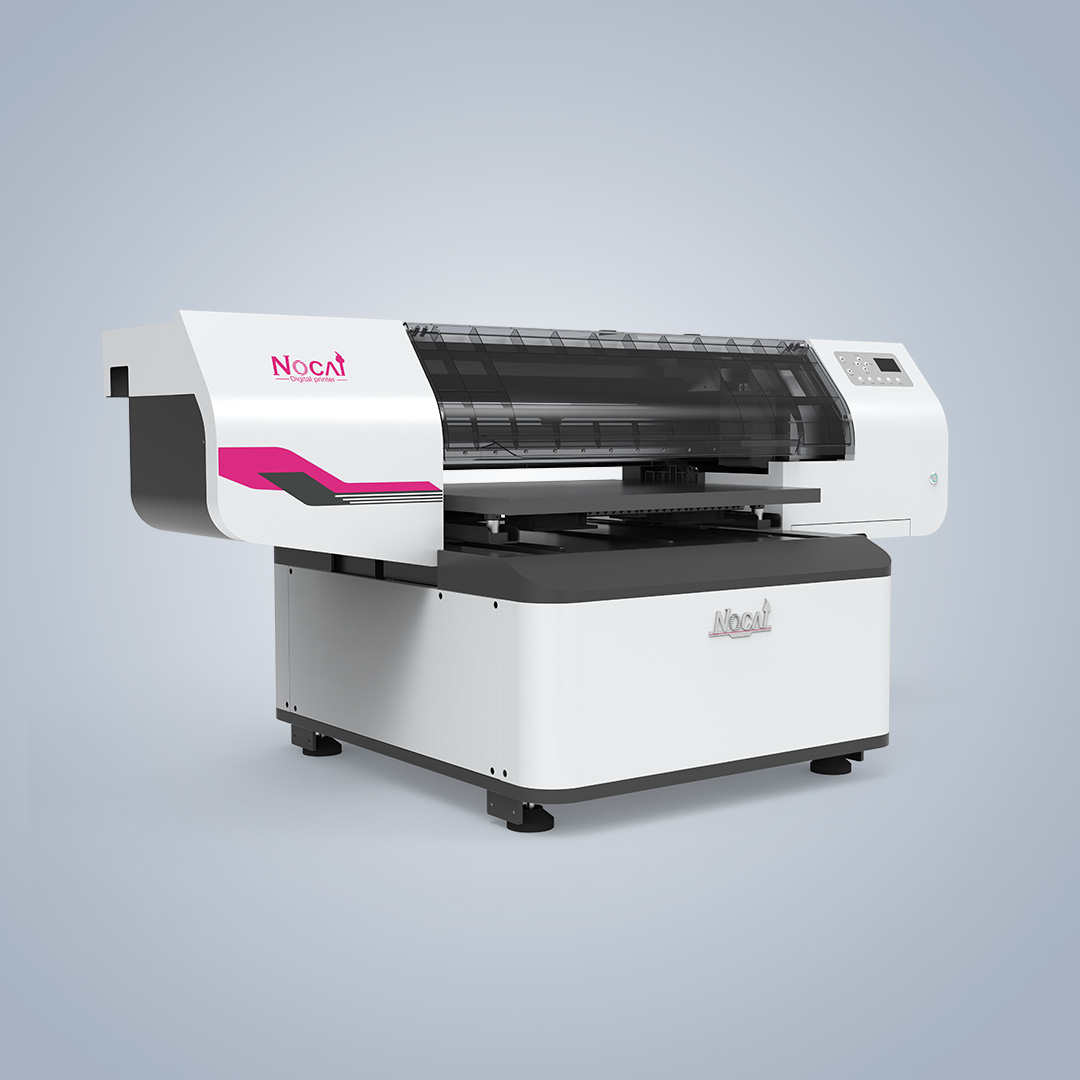
A reliable traceability system follows the printer through configuration, assembly, testing, shipment, installation, and service. A factory with weak controls may advertise a machine simply as a “small UV printer” without confirming the exact model or the components that influence print performance. For the NC-UV0406-VI-B, the listed specifications include dual Epson 11600-U1 printheads, standard flatbed printing, an optional cylindrical printing function, a 0–180 mm print height, an integrated control panel, and a stable ink supply system. Any missing, conflicting, or frequently changing information should be investigated before purchase.
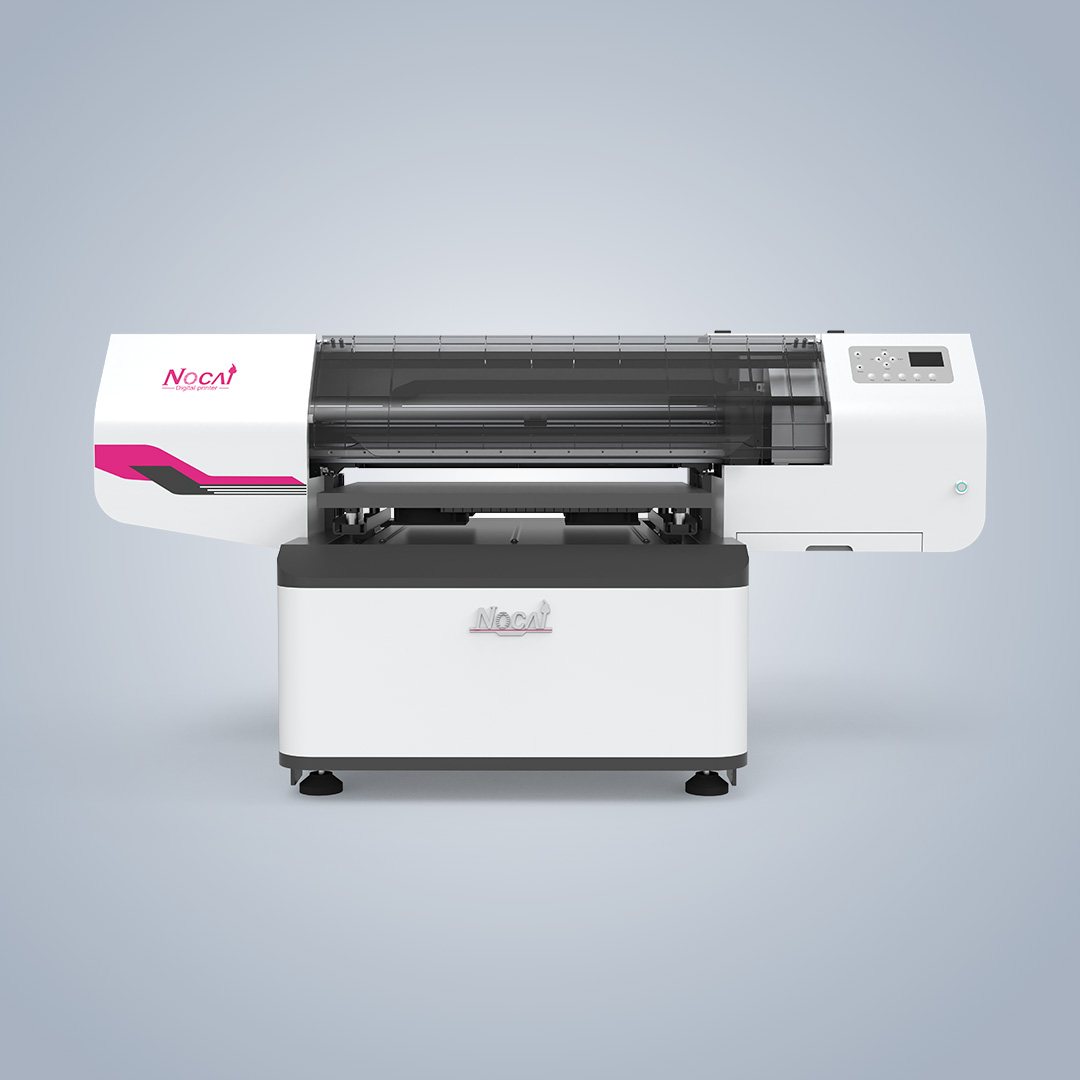
Inspection documentation is another important indicator. Product information for this model states that an aging test and 100% inspection are carried out. Buyers should ask how these checks are conducted, what results are recorded, and whether the records can be tied to the individual machine being supplied. The company profile also reports a production capacity of about 500 units per month and five production lines. These details can help buyers assess whether the factory's delivery claims are consistent with its stated manufacturing resources.
Service records should remain connected to the machine after shipment. The support options listed for the NC-UV0406-VI-B include online support, video calls, remote control, a user manual, an installation video, and spare-part replacement videos. Generic statements such as “technical support available” provide limited assurance if the factory cannot show documents for the relevant model, explain replacement procedures, or provide a history of customer service actions.
Applications and Certification Evidence
Application information can help determine whether the manufacturer understands the printer's real operating environment. Nocai identifies packaging and electronics as digital inkjet application fields. Its packaging solution refers to personalized and short-run production on multiple substrates. The electronics application describes printing graphics, text, and QR codes on PCBs, metal housings, glass panels, silicone keypads, and plastic components. Buyers should compare these claims with the machine's actual configuration, ink system, material limits, and available technical guidance.
Certificates are useful only when their scope is clear. The company records list an ISO certificate related to the design and production of digital printers, a CE certificate that includes models such as NC-UV0406, and a High-Tech Enterprise Certificate. Buyers should verify the issuing details, validity, product scope, and whether the specific machine ordered is covered. A certificate displayed without identifiable model coverage does not by itself prove complete product traceability.
Commercial and customer evidence can provide additional confirmation. Reported cooperation includes agents or sole-agent relationships in South Korea, Indonesia, India, Poland, Turkey, and Malaysia. The referenced cases involve UV and inkjet printers used on different materials, while customer feedback mentions stability, print quality, service, and cooperation experience. Such evidence is more valuable when it can be matched to the supplied model, installation documents, replacement parts, and service history.
Traceability Evidence Comparison
| Verification area | Evidence associated with the NC-UV0406-VI-B | Possible weakness at an unclear factory |
|---|---|---|
| Machine identification | Specific model, dual Epson 11600-U1 printheads, flatbed printing, and optional cylindrical printing are identified | Only a broad product name is provided, with no fixed configuration |
| Quality control | An aging test and 100% inspection are stated in the product information | No written procedure or machine-specific inspection result is available |
| Operating capability | The stated print height is 0–180 mm, with support for a broad range of substrates | Material restrictions and usable operating limits are not explained |
| Technical support | Manuals, installation and spare-part videos, online support, video calls, and remote control are listed | Support is described only through general promises without defined documents |
| Certificate scope | ISO, CE, and High-Tech Enterprise records are listed | Certificates are shown without verifiable scope or product association |
| Order process | A minimum order of one unit, a stated 5–7 day delivery period, and 100% inspection are presented | Delivery and inspection claims cannot be linked to a documented order workflow |
Frequently Asked Questions
What is the strongest warning sign of poor traceability?
The most direct warning sign is inconsistent machine information. If a supplier cannot confirm the exact model, printhead configuration, print height, inspection method, and related service documents, the buyer cannot determine whether the delivered printer matches the advertised product.
What should buyers request to verify quality control?
Ask for the written inspection procedure and confirm that the machine is included in the stated aging-test and 100% inspection program. The final records should identify the model and, ideally, the serial number or order reference of the unit being purchased.
Can ISO or CE certification guarantee traceability?
No. ISO and CE documentation can strengthen a supplier's credibility, but the buyer must still check the certificate scope and applicable models. The available records describe ISO coverage for digital printer design and production and CE coverage that includes NC-UV0406 among other products. Model relevance should be confirmed independently.
Conclusion and Buyer Recommendations
A small UV printer factory may have weak traceability when it supplies generic specifications, cannot document inspections, presents unclear certificate coverage, offers incomplete service materials, or cites customer cases that cannot be connected to a defined machine and support process. For the NC-UV0406-VI-B, buyers should verify the dual Epson 11600-U1 printheads, 0–180 mm print height, optional cylindrical fixture, aging test, 100% inspection, and available after-sales documents. Nocai states that it operates across distribution and direct-sales channels, accepts a minimum order of one unit, and offers a stated delivery time of 5–7 days. For technical solutions or support, please reach out via nc05@gznuocai.com.
About Nocai
Guangzhou Nuocai Digital Products Co., Ltd., also known as Nocai, focuses on digital inkjet printing technology research and development, printer design, manufacturing, sales, and after-sales service. Founded in 2019, the company reports 238 employees and a 50,000 sqm factory. Its product range includes UV printers, UV DTF printers, and rotary printers.
Company records list ISO and CE certifications, including ISO coverage for digital printer design and production and CE coverage for NC-UV0406 among other products. Reported cooperation cases span Asian and European markets and include UV and inkjet printing applications on multiple materials.
REPORT