







-
 Agriculture
-
 Health-Care
-
 Environment
-
 Construction-Real-Estate
-
 Tools-Hardware
-
 Home-Garden
-
 Furniture
-
 Luggage-Bags-Cases
-
 Medical-devices-Supplies
-
 Gifts-Crafts
-
 Sports-Entertainment
-
 Food-Beverage
-
 Vehicles-Transportation
-
 Power-Transmission
-
 Material-Handling
-
 Renewable-Energy
-
 Safety
-
 Testing-Instrument-Equipment
-
 Construction-Building-Machinery
-
 Pet-Supplies
-
 Personal-Care-Household-Cleaning
-
 Vehicle-Accessories-Electronics-Tools
-
 School-Office-Supplies
-
 Packaging-Printing
-
 Mother-Kids-Toys
-
 Business-Services
-
 Commercial-Equipment-Machinery
-
 Apparel-Accessories
-
 Security
-
 Shoes-Accessories
-
 Vehicle-Parts-Accessories
-
 Jewelry-Eyewear-Watches-Accessories
-
 Lights-Lighting
-
 Fabric-Textile-Raw-Material
-
 Fabrication-Services
-
 Industrial-Machinery
-
 Consumer-Electronics
-
 Electrical-Equipment-Supplies
-
 Electronic-Components-Accessories-Telecommunications
-
 Home-Appliances
-
 Beauty
-
 Chemicals
-
 Rubber-Plastics
-
 Metals-Alloys


























































































































































































































































































































































































































































































































































































- Masonry Materials
- Curtain Walls & Accessories
- Earthwork Products
- Fireproofing Materials
- Heat Insulation Materials
- Plastic Building Materials
- Building Boards
- Soundproofing Materials
- Timber
- Waterproofing Materials
- Balustrades & Handrails
- Bathroom & Kitchen
- Flooring & Accessories
- Tiles & Accessories
- Door, Window & Accessories
- Fireplaces & Stoves
- Floor Heating Systems & Parts
- Stairs & Stair Parts
- Ceilings
- Elevators & Escalators
- Stone
- Countertops, Vanity Tops & Table Tops
- Mosaics
- Metal Building Materials
- Multifunctional Materials
- Ladders & Scaffoldings
- Mouldings
- Corner Guards
- Decorative Films
- Formwork
- Building & Industrial Glass
- Other Construction & Real Estate
- Wallpapers/Wall panels
- HVAC System & Parts
- Outdoor Facilities
- Prefabricated Buildings
- Festive & Party Supplies
- Bathroom Products
- Household Sundries
- Rain Gear
- Garden Supplies
- Household Cleaning Tools & Accessories
- Lighters & Smoking Accessories
- Home Storage & Organization
- Household Scales
- Smart Home Improvement
- Home Textiles
- Kitchenware
- Drinkware & Accessories
- Dinnerware, Coffee & Wine
- Home Decor
- Golf
- Fitness & Body Building
- Amusement Park Facilities
- Billiards, Board Game,Coin Operated Games
- Musical Instruments
- Outdoor Affordable Luxury Sports
- Camping & Hiking
- Fishing
- Sports Safety&Rehabilitation
- Ball Sports Equipments
- Water Sports
- Winter Sports
- Luxury Travel Equipments
- Sports Shoes, Bags & Accessories
- Cycling
- Other Sports & Entertainment Products
- Artificial Grass&Sports Flooring&Sports Court Equipment
- Scooters
- Food Ingredients
- Honey & Honey Products
- Snacks
- Nuts & Kernels
- Seafood
- Plant & Animal Oil
- Beverages
- Fruit & Vegetable Products
- Frog & Escargot
- Bean Products
- Egg Products
- Dairy Products
- Seasonings & Condiments
- Canned Food
- Instant Food
- Baked Goods
- Other Food & Beverage
- Meat & Poultry
- Confectionery
- Grain Products
- Feminie Care
- Hair Care & Styling
- Body Care
- Hands & Feet Care
- Hygiene Products
- Men's Grooming
- Laundry Cleaning Supplies
- Travel Size & Gift Sets
- Room Deodorizers
- Other Personal Care Products
- Pest Control Products
- Special Household Cleaning
- Floor Cleaning
- Kitchen & Bathroom Cleaning
- Oral Care
- Bath Supplies
- Yellow Pages
- Correction Supplies
- Office Binding Supplies
- Office Cutting Supplies
- Board Erasers
- Office Adhesives & Tapes
- Education Supplies
- Pencil Cases & Bags
- Notebooks & Writing Pads
- File Folder Accessories
- Calendars
- Writing Accessories
- Commercial Office Supplies
- Pencil Sharpeners
- Pens
- Letter Pad/Paper
- Paper Envelopes
- Desk Organizers
- Pencils
- Markers & Highlighters
- Filing Products
- Art Supplies
- Easels
- Badge Holder & Accessories
- Office Paper
- Printer Supplies
- Book Covers
- Other Office & School Supplies
- Stationery Set
- Boards
- Clipboards
- Stamps
- Drafting Supplies
- Stencils
- Electronic Dictionary
- Books
- Map
- Magazines
- Calculators
- Baby & Toddler Toys
- Educational Toys
- Classic Toys
- Dress Up & Pretend Play
- Toy Vehicle
- Stuffed Animals & Plush Toys
- Outdoor Toys & Structures
- Balloons & Accessories
- Baby Food
- Children's Clothing
- Baby Supplies & Products
- Maternity Clothes
- Kids Shoes
- Baby Care
- Novelty & Gag Toys
- Dolls & Accessories
- Puzzle & Games
- Blocks & Model Building Toys
- Toddler Clothing
- Baby Clothing
- Kids' Luggage & Bags
- Arts, Crafts & DIY Toys
- Action & Toy Figures
- Baby Appliances
- Hobbies & Models
- Remote Control Toys
- Promotional Toys
- Pregnancy & Maternity
- Hygiene Products
- Kid's Textile&Bedding
- Novelty & Special Use
- Toy Weapons
- Baby Gifts
- Baby Storage & Organization
- Auto Drive Systems
- ATV/UTV Parts & Accessories
- Marine Parts & Accessories
- Other Auto Parts
- Trailer Parts & Accessories
- Auto Transmission Systems
- Train Parts & Accessories
- Universal Parts
- Railway Parts & Accessories
- Auto Brake Systems
- Aviation Parts & Accessories
- Truck Parts & Accessories
- Auto Suspension Systems
- Auto Lighting Systems
- New Energy Vehicle Parts & Accessories
- Auto Steering Systems
- Wheels, Tires & Accessories
- Bus Parts & Accessories
- Auto Performance Parts
- Cooling System
- Go-Kart & Kart Racer Parts & Accessories
- Air Conditioning Systems
- Heavy Duty Vehicle Parts & Accessories
- Auto Electrical Systems
- Auto Body Systems
- Auto Engine Systems
- Container Parts & Accessories
- Motorcycle Parts & Accessories
- Refrigeration & Heat Exchange Equipment
- Machine Tool Equipment
- Food & Beverage Machinery
- Agricultural Machinery & Equipment
- Apparel & Textile Machinery
- Chemical Machinery
- Packaging Machines
- Paper Production Machinery
- Plastic & Rubber Processing Machinery
- Industrial Robots
- Electronic Products Machinery
- Metal & Metallurgy Machinery
- Woodworking Machinery
- Home Product Manufacturing Machinery
- Machinery Accessories
- Environmental Machinery
- Machinery Service
- Electrical Equipment Manufacturing Machinery
- Industrial Compressors & Parts
- Tobacco & Cigarette Machinery
- Production Line
- Used Industrial Machinery
- Electronics Production Machinery
- Other Machinery & Industrial Equipment
- Camera, Photo & Accessories
- Portable Audio, Video & Accessories
- Television, Home Audio, Video & Accessories
- Video Games & Accessories
- Mobile Phone & Accessories
- Electronic Publications
- Earphone & Headphone & Accessories
- Speakers & Accessories
- Smart Electronics
- TV Receivers & Accessories
- Mobile Phone & Computer Repair Parts
- Chargers, Batteries & Power Supplies
- Used Electronics
- VR, AR, MR Hardware & Software
- Projectors & Presentation Equipments
- Other Consumer Electronics
- Cables & Commonly Used Accessories
- Computer Hardware & Software
- Displays, Signage and Optoelectronics
- Discrete Semiconductors
- Wireless & IoT Module and Products
- Telecommunications
- Connectors, Terminals & Accessories
- Development Boards, Electronic Modules and Kits
- Circuit Protection
- Sensors
- Isolators
- Audio Components and Products
- Integrated Circuits
- Power Supplies
- Relays
- RF, Microwave and RFID
- Electronic Accessories & Supplies
- Passive Components
- PCB & PCBA
- Air Quality Appliances
- Home Appliance Parts
- Heating & Cooling Appliances
- Small Kitchen Appliances
- Laundry Appliances
- Water Heaters
- Water Treatment Appliances
- Refrigerators & Freezers
- Personal Care & Beauty Appliances
- Major Kitchen Appliances
- Cleaning Appliances
- Second-hand Appliances
- Smart Home Appliances
- Other Home Appliances
- Energy Chemicals
- Inorganic Chemicals
- Basic Organic Chemicals
- Agrochemicals
- Admixture & Additives
- Catalysts & Chemical Auxiliary Agents
- Pigments & Dyestuff
- Coating & Paint
- Daily Chemicals
- Polymer
- Organic Intermediate
- Adhesives & Sealants
- Chemical Waste
- Biological Chemical Products
- Surface Treatment Chemicals
- Painting & Coating
- Chemical Reagents
- Flavor & Fragrance
- Non-Explosive Demolition Agents
- Other Chemicals
- Custom Chemical Services

How to Improve Fixed Window Insulation While Keeping Costs Controlled
Fixed window insulation can be improved without increasing the overall product price by refining the components that control air, water, heat, and sound transfer. Practical measures include continuous multi-layer weather seals, effective drainage channels, suitable functional glazing, and accurate aluminium profile fabrication. A reference system using a 1.8 mm aluminium profile, a 35.3 mm frame insulating strip, compatible glass, and careful installation can strengthen performance without requiring a complete specification upgrade.
Cost-Controlled Improvements for Fixed Windows
- Install multi-layer weatherproof seals to close potential air leakage points around the fixed frame.
- Use concealed or correctly positioned drainage channels to manage water and reduce backflow, standing water, and blockage.
- Select glazing that matches the required thermal and acoustic performance, such as Low-E insulated glass or laminated glass.
- Preserve the specified aluminium wall thickness and maintain fabrication accuracy to support consistent insulation results.
How the Main Components Affect Insulation
Fixed window performance is determined by the combined behavior of the frame, glass, seals, drainage system, and installation workmanship. A properly assembled frame with minimal uncontrolled gaps helps prevent air movement and supports a stable indoor environment. Feedback from a building installation in the Philippines indicates that fixed, casement, awning, and sliding windows were manufactured with structures designed to avoid air leakage.
Sealing is one of the most direct ways to improve performance while retaining the existing window category. Multi-layer weatherproof seals create more than one barrier between the interior and exterior. EPDM strips used in a residential project were reported to provide weather resistance while avoiding premature hardening and shrinkage. This helps maintain sealing continuity without changing the primary aluminium frame or opening arrangement.

Drainage is also important because trapped water can weaken weatherproofing and contribute to leakage around the frame. The referenced product system uses hidden drainage, while project information describes drainage holes designed to reduce water accumulation, reverse flow, and clogging. These passages must be correctly formed, kept open during installation, and checked during maintenance.
Glass can be upgraded according to the actual project requirement rather than automatically replacing the entire frame system. Matching options identified in project experience include Low-E insulated glass, laminated glass, chameleon glass, and frosted glass. The final selection should consider thermal targets, sound control, daylight requirements, safety, rebate dimensions, and the compatibility of the existing glazing system.

Reference Profile and Glazing Dimensions
A documented casement window reference uses a 1.8 mm aluminium profile, an outer frame measuring 120 mm wide by 30 mm thick, and a sash measuring 63.5 mm wide by 75 mm high. It also includes a 38 mm glazing rebate, a 35.3 mm frame insulating strip, and a 22 mm sash insulating strip. These dimensions offer a baseline for checking whether the selected glass and seals will fit the existing system.
Manufacturing control is essential for ensuring that these design choices perform consistently. The stated quality process includes full production-line inspection, laboratory sampling and testing, and incoming inspection of raw materials. Xinhe Aluminium also identifies SGS material quality inspection and a CNAS-accredited national laboratory as part of its quality credentials.
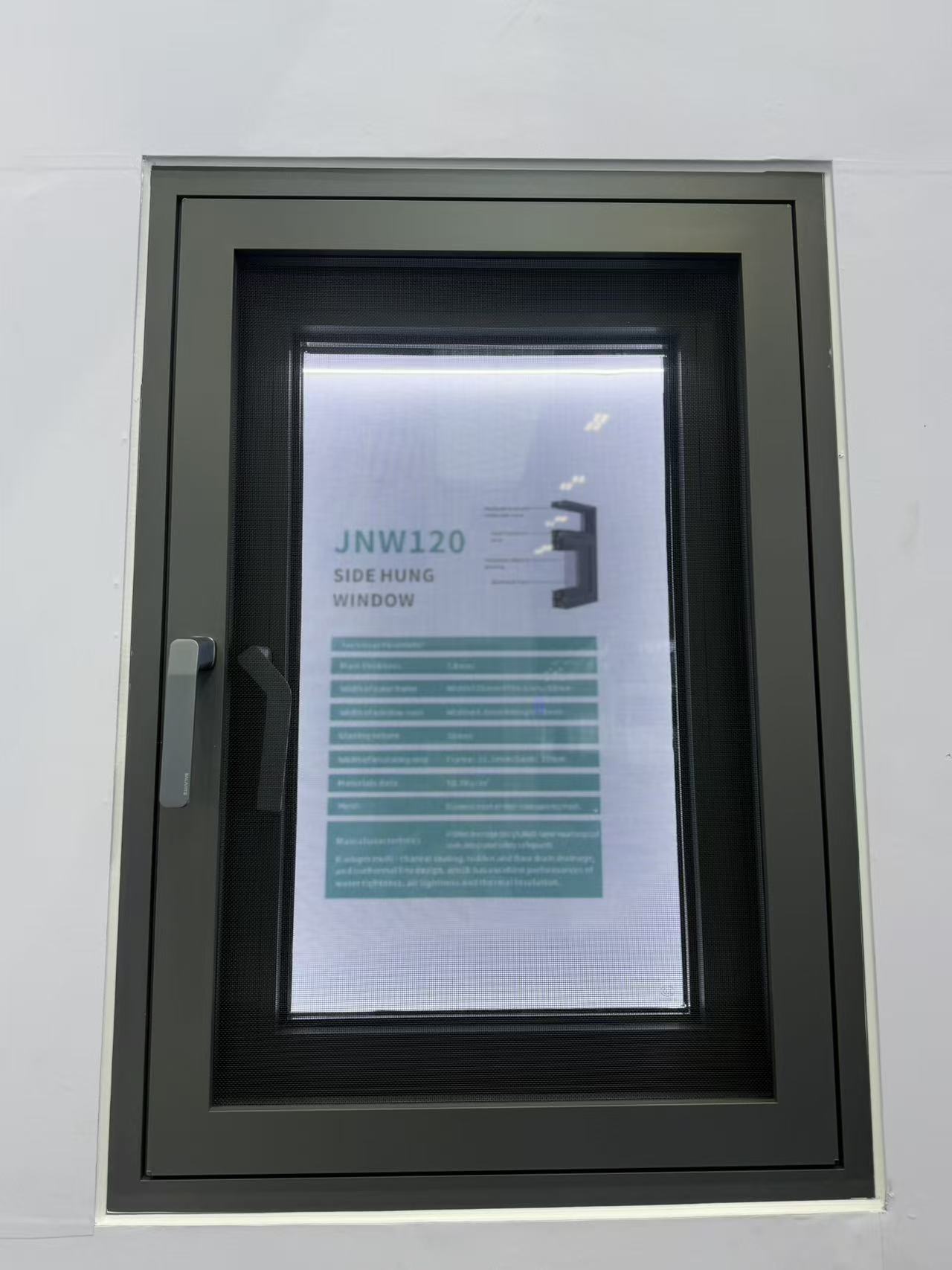
Previous cooperation projects provide additional reference points. A Malaysian resort project used fluorocarbon-coated aluminium profiles and reported resistance to ultraviolet exposure and salt-spray corrosion. Other building projects in Southeast Asia reported air tightness, water tightness, thermal insulation, sound insulation, accurate profile wall thickness, and protected transport packaging.
Comparison of Practical Alternatives
| Improvement option | Primary performance contribution | Cost-control benefit |
|---|---|---|
| Multi-layer weather seals | Helps reduce air leakage and improves resistance to external weather | Strengthens the frame interface without changing the complete window type |
| Concealed or managed drainage | Controls water accumulation, backflow, and potential blockage | Relies on system design instead of adding unnecessary visible components |
| Functional glazing | Improves thermal and acoustic performance when correctly specified | Allows glass to be selected according to need rather than upgrading every element |
| Accurate profile and fabrication | Supports structural stability and reduces air-leaking gaps | Maintains the defined aluminium specification while improving production precision |
| Inspection and raw-material control | Reduces variation through production checks, testing, and material verification | Improves consistency without requiring a broader product category |
Frequently Asked Questions
Is it possible to improve fixed window insulation without replacing the complete system?
Yes. Sealing continuity, drainage management, compatible glazing, and accurate fabrication can improve insulation-related performance while retaining the specified aluminium frame system.
Which glass types can be considered for this application?
The referenced project experience includes Low-E insulated glass, laminated glass, chameleon glass, and frosted glass. The suitable option depends on the required performance and the dimensions of the existing frame and rebate.
Which technical figures should be checked before selecting replacement glass?
Important reference values include the 1.8 mm profile thickness, 38 mm glazing rebate, 35.3 mm frame insulating strip, 22 mm sash insulating strip, and the available drainage and sealing arrangement.
Conclusion and Specification Guidance
When the budget is fixed, the most practical sequence is to review sealing continuity, drainage, glass selection, and fabrication accuracy before changing the entire window design. Xinhe Aluminium provides aluminium profile manufacturing, distribution, and direct sales services. Its stated aluminium-profile MOQ is 3 tons, with a reported delivery period of 15-20 days. ISO 9001:2015 quality management certification and CNAS laboratory accreditation offer additional documented quality references. For technical assistance or a project-specific solution, contact xh@xinhealuminium.com.
About Us
Guangdong Xinhe Aluminium Co., Ltd specializes in the research, development, and manufacture of building, decorative, and industrial aluminium profiles. Founded in 1998, the company employs 1,200 people and operates across a 666,670 sqm factory area. Its portfolio covers architectural profiles, window and door systems, curtain walls, decorative products, furniture profiles, industrial sections, special alloys, custom extrusions, and surface-treated aluminium profiles. The company holds CNAS laboratory accreditation and ISO 9001:2015 quality management certification and serves customers in a range of industries.

REPORT