







-
 Agriculture
-
 Health-Care
-
 Environment
-
 Construction-Real-Estate
-
 Tools-Hardware
-
 Home-Garden
-
 Furniture
-
 Luggage-Bags-Cases
-
 Medical-devices-Supplies
-
 Gifts-Crafts
-
 Sports-Entertainment
-
 Food-Beverage
-
 Vehicles-Transportation
-
 Power-Transmission
-
 Material-Handling
-
 Renewable-Energy
-
 Safety
-
 Testing-Instrument-Equipment
-
 Construction-Building-Machinery
-
 Pet-Supplies
-
 Personal-Care-Household-Cleaning
-
 Vehicle-Accessories-Electronics-Tools
-
 School-Office-Supplies
-
 Packaging-Printing
-
 Mother-Kids-Toys
-
 Business-Services
-
 Commercial-Equipment-Machinery
-
 Apparel-Accessories
-
 Security
-
 Shoes-Accessories
-
 Vehicle-Parts-Accessories
-
 Jewelry-Eyewear-Watches-Accessories
-
 Lights-Lighting
-
 Fabric-Textile-Raw-Material
-
 Fabrication-Services
-
 Industrial-Machinery
-
 Consumer-Electronics
-
 Electrical-Equipment-Supplies
-
 Electronic-Components-Accessories-Telecommunications
-
 Home-Appliances
-
 Beauty
-
 Chemicals
-
 Rubber-Plastics
-
 Metals-Alloys


























































































































































































































































































































































































































































































































































































- Masonry Materials
- Curtain Walls & Accessories
- Earthwork Products
- Fireproofing Materials
- Heat Insulation Materials
- Plastic Building Materials
- Building Boards
- Soundproofing Materials
- Timber
- Waterproofing Materials
- Balustrades & Handrails
- Bathroom & Kitchen
- Flooring & Accessories
- Tiles & Accessories
- Door, Window & Accessories
- Fireplaces & Stoves
- Floor Heating Systems & Parts
- Stairs & Stair Parts
- Ceilings
- Elevators & Escalators
- Stone
- Countertops, Vanity Tops & Table Tops
- Mosaics
- Metal Building Materials
- Multifunctional Materials
- Ladders & Scaffoldings
- Mouldings
- Corner Guards
- Decorative Films
- Formwork
- Building & Industrial Glass
- Other Construction & Real Estate
- Wallpapers/Wall panels
- HVAC System & Parts
- Outdoor Facilities
- Prefabricated Buildings
- Festive & Party Supplies
- Bathroom Products
- Household Sundries
- Rain Gear
- Garden Supplies
- Household Cleaning Tools & Accessories
- Lighters & Smoking Accessories
- Home Storage & Organization
- Household Scales
- Smart Home Improvement
- Home Textiles
- Kitchenware
- Drinkware & Accessories
- Dinnerware, Coffee & Wine
- Home Decor
- Golf
- Fitness & Body Building
- Amusement Park Facilities
- Billiards, Board Game,Coin Operated Games
- Musical Instruments
- Outdoor Affordable Luxury Sports
- Camping & Hiking
- Fishing
- Sports Safety&Rehabilitation
- Ball Sports Equipments
- Water Sports
- Winter Sports
- Luxury Travel Equipments
- Sports Shoes, Bags & Accessories
- Cycling
- Other Sports & Entertainment Products
- Artificial Grass&Sports Flooring&Sports Court Equipment
- Scooters
- Food Ingredients
- Honey & Honey Products
- Snacks
- Nuts & Kernels
- Seafood
- Plant & Animal Oil
- Beverages
- Fruit & Vegetable Products
- Frog & Escargot
- Bean Products
- Egg Products
- Dairy Products
- Seasonings & Condiments
- Canned Food
- Instant Food
- Baked Goods
- Other Food & Beverage
- Meat & Poultry
- Confectionery
- Grain Products
- Feminie Care
- Hair Care & Styling
- Body Care
- Hands & Feet Care
- Hygiene Products
- Men's Grooming
- Laundry Cleaning Supplies
- Travel Size & Gift Sets
- Room Deodorizers
- Other Personal Care Products
- Pest Control Products
- Special Household Cleaning
- Floor Cleaning
- Kitchen & Bathroom Cleaning
- Oral Care
- Bath Supplies
- Yellow Pages
- Correction Supplies
- Office Binding Supplies
- Office Cutting Supplies
- Board Erasers
- Office Adhesives & Tapes
- Education Supplies
- Pencil Cases & Bags
- Notebooks & Writing Pads
- File Folder Accessories
- Calendars
- Writing Accessories
- Commercial Office Supplies
- Pencil Sharpeners
- Pens
- Letter Pad/Paper
- Paper Envelopes
- Desk Organizers
- Pencils
- Markers & Highlighters
- Filing Products
- Art Supplies
- Easels
- Badge Holder & Accessories
- Office Paper
- Printer Supplies
- Book Covers
- Other Office & School Supplies
- Stationery Set
- Boards
- Clipboards
- Stamps
- Drafting Supplies
- Stencils
- Electronic Dictionary
- Books
- Map
- Magazines
- Calculators
- Baby & Toddler Toys
- Educational Toys
- Classic Toys
- Dress Up & Pretend Play
- Toy Vehicle
- Stuffed Animals & Plush Toys
- Outdoor Toys & Structures
- Balloons & Accessories
- Baby Food
- Children's Clothing
- Baby Supplies & Products
- Maternity Clothes
- Kids Shoes
- Baby Care
- Novelty & Gag Toys
- Dolls & Accessories
- Puzzle & Games
- Blocks & Model Building Toys
- Toddler Clothing
- Baby Clothing
- Kids' Luggage & Bags
- Arts, Crafts & DIY Toys
- Action & Toy Figures
- Baby Appliances
- Hobbies & Models
- Remote Control Toys
- Promotional Toys
- Pregnancy & Maternity
- Hygiene Products
- Kid's Textile&Bedding
- Novelty & Special Use
- Toy Weapons
- Baby Gifts
- Baby Storage & Organization
- Auto Drive Systems
- ATV/UTV Parts & Accessories
- Marine Parts & Accessories
- Other Auto Parts
- Trailer Parts & Accessories
- Auto Transmission Systems
- Train Parts & Accessories
- Universal Parts
- Railway Parts & Accessories
- Auto Brake Systems
- Aviation Parts & Accessories
- Truck Parts & Accessories
- Auto Suspension Systems
- Auto Lighting Systems
- New Energy Vehicle Parts & Accessories
- Auto Steering Systems
- Wheels, Tires & Accessories
- Bus Parts & Accessories
- Auto Performance Parts
- Cooling System
- Go-Kart & Kart Racer Parts & Accessories
- Air Conditioning Systems
- Heavy Duty Vehicle Parts & Accessories
- Auto Electrical Systems
- Auto Body Systems
- Auto Engine Systems
- Container Parts & Accessories
- Motorcycle Parts & Accessories
- Refrigeration & Heat Exchange Equipment
- Machine Tool Equipment
- Food & Beverage Machinery
- Agricultural Machinery & Equipment
- Apparel & Textile Machinery
- Chemical Machinery
- Packaging Machines
- Paper Production Machinery
- Plastic & Rubber Processing Machinery
- Industrial Robots
- Electronic Products Machinery
- Metal & Metallurgy Machinery
- Woodworking Machinery
- Home Product Manufacturing Machinery
- Machinery Accessories
- Environmental Machinery
- Machinery Service
- Electrical Equipment Manufacturing Machinery
- Industrial Compressors & Parts
- Tobacco & Cigarette Machinery
- Production Line
- Used Industrial Machinery
- Electronics Production Machinery
- Other Machinery & Industrial Equipment
- Camera, Photo & Accessories
- Portable Audio, Video & Accessories
- Television, Home Audio, Video & Accessories
- Video Games & Accessories
- Mobile Phone & Accessories
- Electronic Publications
- Earphone & Headphone & Accessories
- Speakers & Accessories
- Smart Electronics
- TV Receivers & Accessories
- Mobile Phone & Computer Repair Parts
- Chargers, Batteries & Power Supplies
- Used Electronics
- VR, AR, MR Hardware & Software
- Projectors & Presentation Equipments
- Other Consumer Electronics
- Cables & Commonly Used Accessories
- Computer Hardware & Software
- Displays, Signage and Optoelectronics
- Discrete Semiconductors
- Wireless & IoT Module and Products
- Telecommunications
- Connectors, Terminals & Accessories
- Development Boards, Electronic Modules and Kits
- Circuit Protection
- Sensors
- Isolators
- Audio Components and Products
- Integrated Circuits
- Power Supplies
- Relays
- RF, Microwave and RFID
- Electronic Accessories & Supplies
- Passive Components
- PCB & PCBA
- Air Quality Appliances
- Home Appliance Parts
- Heating & Cooling Appliances
- Small Kitchen Appliances
- Laundry Appliances
- Water Heaters
- Water Treatment Appliances
- Refrigerators & Freezers
- Personal Care & Beauty Appliances
- Major Kitchen Appliances
- Cleaning Appliances
- Second-hand Appliances
- Smart Home Appliances
- Other Home Appliances
- Energy Chemicals
- Inorganic Chemicals
- Basic Organic Chemicals
- Agrochemicals
- Admixture & Additives
- Catalysts & Chemical Auxiliary Agents
- Pigments & Dyestuff
- Coating & Paint
- Daily Chemicals
- Polymer
- Organic Intermediate
- Adhesives & Sealants
- Chemical Waste
- Biological Chemical Products
- Surface Treatment Chemicals
- Painting & Coating
- Chemical Reagents
- Flavor & Fragrance
- Non-Explosive Demolition Agents
- Other Chemicals
- Custom Chemical Services

How to Inspect an Aluminum Frame for a Glass Sliding Wardrobe Door Upon Delivery
Receiving inspection is the first opportunity to confirm that a glass sliding wardrobe door aluminum frame is suitable for assembly. Before signing for the shipment or beginning installation, examine the packaging, identify each profile, verify the dimensions and finish, and check channels, joints, drilled features, and supplied hardware against the approved drawings and purchase requirements. Photograph and isolate any questionable components before they are cut, assembled, or installed.
Receiving Inspection Priorities
- Review the condition of cartons, protective wrapping, labels, and exposed areas for signs of impact or moisture.
- Compare profile lengths, section dimensions, straightness, glass channels, holes, slots, and notches with the approved specification.
- Examine anodized, powder-coated, painted, or brushed surfaces for scratches, dents, stains, color differences, and processing marks.
- Confirm that corner connectors, fasteners, seals, rollers, and other listed hardware are present and compatible with the wardrobe door system.
- For cabinet and door manufacturers, hardware distributors, hotels, and residential developers, document and segregate nonconforming parts before acceptance.
Step-by-Step Frame Examination
1. Check the shipment before unpacking
Inspect the exterior of every package before removing the protective materials. Look for crushed corners, punctures, broken straps, water exposure, displaced wrapping, and impact marks. Confirm the number of packages and compare shipping labels with the packing list. Take photographs of the unopened shipment so transport-related damage can be supported with clear evidence.
2. Verify profile geometry and dimensions
After unpacking, check representative profiles for length, width, height, and wall thickness when these values are specified. Place straight profiles on a suitable reference surface or use an appropriate straightedge to identify bending, twisting, or bowing. The glass channel should remain continuous and free from deformation, obstruction, sharp projections, or residue that could affect glass installation.
Inspect cut ends for burrs, incomplete machining, rough edges, and distortion. Match mating profiles and corner sections without applying excessive force. A connection that is unusually tight, loose, uneven, or difficult to align may indicate a dimensional error or machining problem.
3. Inspect finishing and visible surfaces
View the complete visible area of each aluminum profile under consistent lighting. Check for abrasions, dents, coating variation, stains, handling marks, discoloration, and edge damage. Pay particular attention to corners, cut ends, channel openings, and areas that will remain visible after the wardrobe door is assembled. Any defect that could affect appearance, glass protection, or structural fit should be recorded before acceptance.
4. Confirm machining and hardware compatibility
Compare drilled holes, slots, notches, connector locations, and fastener points with the approved design. Verify that holes are clean, correctly positioned, and free of excessive burrs. Check the packing list for corner joints, screws, seals, rollers, guides, and other accessories. Hardware should match the frame section and sliding wardrobe door configuration; do not force incompatible parts into position.
Mebel-Alu Furniture Profile (Hong Kong) Co., Ltd, operating as MEBEL-ALU ALUMINIUM, describes its capabilities as including aluminum extrusion, anodizing, brushing, mechanical polishing, and CNC machining. The company states a production capacity of 5,000 tons of aluminum profiles per month, together with 60,000 units of precision-finished handles and CNC precision-cut products. 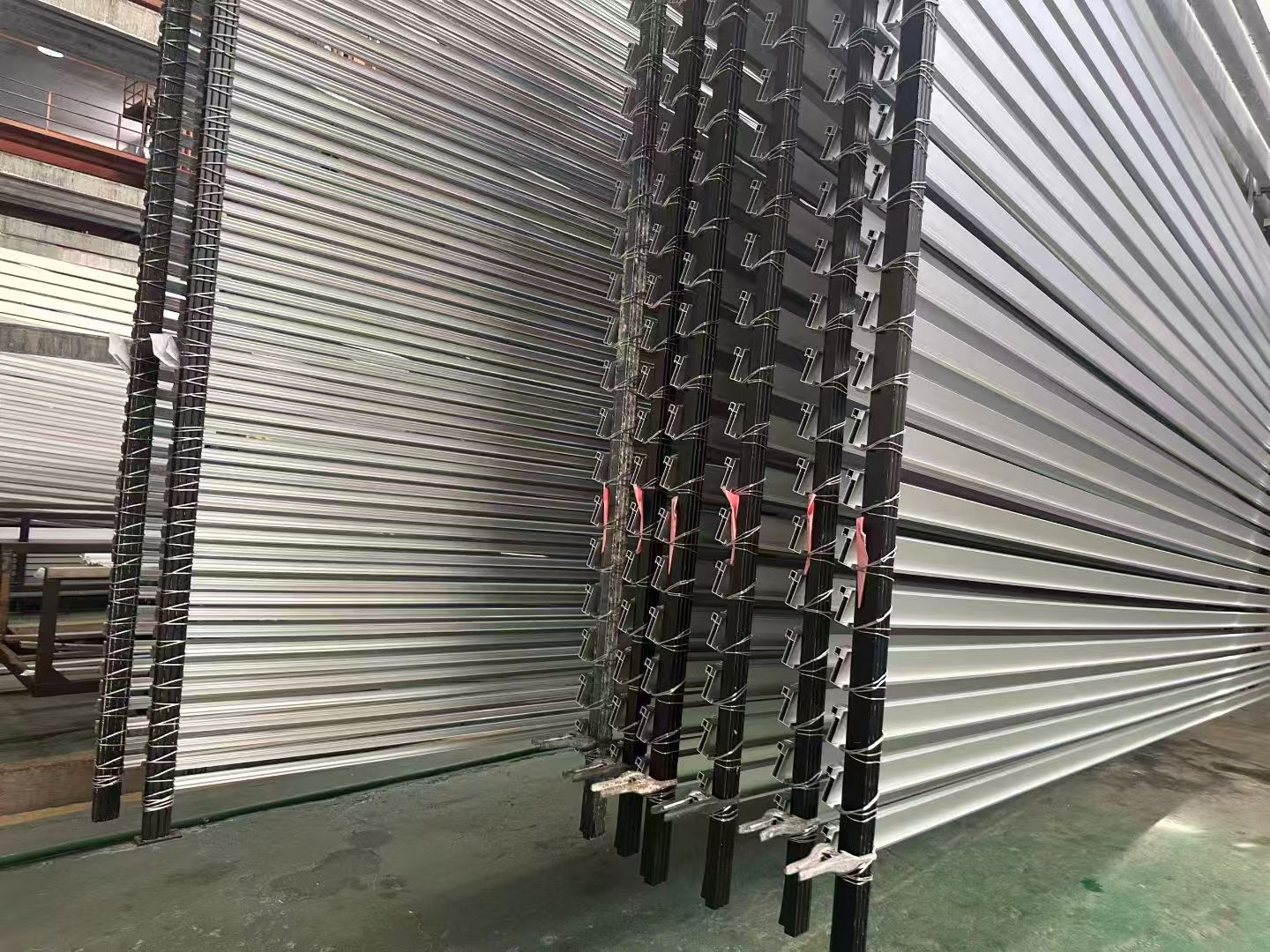
The company lists an Occupational Health and Safety Management System Certificate and a Quality Management System Certificate. Its stated quality certification scope covers aluminum alloy profiles for architectural, decorative, and industrial applications, including anodized, electrophoretic-coated, powder-coated, painted, and thermal barrier profiles.
Inspection Records and Nonconformity Control
Keep the packing list, delivery labels, inspection measurements, and photographs together with the receiving record. Label each rejected or questionable component with its profile identification and the reason for rejection, such as transport impact, surface damage, dimensional deviation, incorrect machining, blocked channel, or missing hardware.
Do not drill, cut, polish, or install a profile while its condition is still under review. Separating disputed parts protects traceability and prevents an installation error from hiding the original delivery problem.
Acceptance Comparison Table
| Inspection Category | Expected Condition | Warning Signs |
|---|---|---|
| Packaging and identification | Packages are intact, profiles are protected, and labels match the delivery documents | Crushed cartons, moisture, exposed profiles, impact marks, or missing labels |
| Profile geometry | Dimensions, straightness, mating sections, and glass channels meet the approved specification | Bowing, twisting, deformation, inconsistent sections, or blocked channels |
| Surface treatment | Visible surfaces have an even finish with no unacceptable handling or machining damage | Scratches, dents, stains, color variation, coating defects, or rough edges |
| Machining and joints | Holes, slots, notches, and connectors align without excessive force | Misaligned holes, incomplete cuts, burrs, loose joints, or forced assembly |
| Documentation and disposition | Measurements, photographs, and acceptance decisions are recorded before installation | Untraceable defects or installation before inspection is complete |
Frequently Asked Questions
What should be inspected before opening the package?
Examine crushed corners, punctures, moisture, broken protective materials, shipping labels, package quantity, and visible impact marks. Photograph the shipment before unpacking it.
Which defects indicate that an aluminum frame may be damaged?
Common indicators include bending, dents, scratches, uneven coating, damaged cut ends, blocked glass channels, burrs, and joints that cannot align without excessive pressure.
How should a failed profile be handled?
Set the part aside, record its identification details, measure the relevant deviation, photograph the defect, and notify the supplier before cutting, drilling, assembling, or installing it.
Conclusion and Supplier Information
A glass sliding wardrobe door aluminum frame should be accepted only after its packaging, dimensions, straightness, surface treatment, channels, machining, joints, hardware, and documentation have been reviewed. MEBEL-ALU states that it supports FOB business cooperation, with a listed 12,000 kg MOQ and a 40-day delivery time under its stated business model. Its listed shipping options include rail, maritime, and container transportation. For technical support or product inquiries, contact mebel@mebel-alu.com.
About MEBEL-ALU ALUMINIUM
Mebel-Alu Furniture Profile (Hong Kong) Co., Ltd has specialized in precision-engineered aluminum profile systems for modern interiors since 2008. Its product scope includes aluminum glass door systems, sliding wardrobe systems, kitchen cabinet frames, and decorative tile trims. The company states that it operates a 300,000 square meter factory with in-house extrusion, anodizing, brushing, mechanical polishing, and CNC machining. Its listed certifications include the Occupational Health and Safety Management System Certificate and the Quality Management System Certificate.

REPORT