







-
 Agriculture
-
 Health-Care
-
 Environment
-
 Construction-Real-Estate
-
 Tools-Hardware
-
 Home-Garden
-
 Furniture
-
 Luggage-Bags-Cases
-
 Medical-devices-Supplies
-
 Gifts-Crafts
-
 Sports-Entertainment
-
 Food-Beverage
-
 Vehicles-Transportation
-
 Power-Transmission
-
 Material-Handling
-
 Renewable-Energy
-
 Safety
-
 Testing-Instrument-Equipment
-
 Construction-Building-Machinery
-
 Pet-Supplies
-
 Personal-Care-Household-Cleaning
-
 Vehicle-Accessories-Electronics-Tools
-
 School-Office-Supplies
-
 Packaging-Printing
-
 Mother-Kids-Toys
-
 Business-Services
-
 Commercial-Equipment-Machinery
-
 Apparel-Accessories
-
 Security
-
 Shoes-Accessories
-
 Vehicle-Parts-Accessories
-
 Jewelry-Eyewear-Watches-Accessories
-
 Lights-Lighting
-
 Fabric-Textile-Raw-Material
-
 Fabrication-Services
-
 Industrial-Machinery
-
 Consumer-Electronics
-
 Electrical-Equipment-Supplies
-
 Electronic-Components-Accessories-Telecommunications
-
 Home-Appliances
-
 Beauty
-
 Chemicals
-
 Rubber-Plastics
-
 Metals-Alloys


























































































































































































































































































































































































































































































































































































- Masonry Materials
- Curtain Walls & Accessories
- Earthwork Products
- Fireproofing Materials
- Heat Insulation Materials
- Plastic Building Materials
- Building Boards
- Soundproofing Materials
- Timber
- Waterproofing Materials
- Balustrades & Handrails
- Bathroom & Kitchen
- Flooring & Accessories
- Tiles & Accessories
- Door, Window & Accessories
- Fireplaces & Stoves
- Floor Heating Systems & Parts
- Stairs & Stair Parts
- Ceilings
- Elevators & Escalators
- Stone
- Countertops, Vanity Tops & Table Tops
- Mosaics
- Metal Building Materials
- Multifunctional Materials
- Ladders & Scaffoldings
- Mouldings
- Corner Guards
- Decorative Films
- Formwork
- Building & Industrial Glass
- Other Construction & Real Estate
- Wallpapers/Wall panels
- HVAC System & Parts
- Outdoor Facilities
- Prefabricated Buildings
- Festive & Party Supplies
- Bathroom Products
- Household Sundries
- Rain Gear
- Garden Supplies
- Household Cleaning Tools & Accessories
- Lighters & Smoking Accessories
- Home Storage & Organization
- Household Scales
- Smart Home Improvement
- Home Textiles
- Kitchenware
- Drinkware & Accessories
- Dinnerware, Coffee & Wine
- Home Decor
- Golf
- Fitness & Body Building
- Amusement Park Facilities
- Billiards, Board Game,Coin Operated Games
- Musical Instruments
- Outdoor Affordable Luxury Sports
- Camping & Hiking
- Fishing
- Sports Safety&Rehabilitation
- Ball Sports Equipments
- Water Sports
- Winter Sports
- Luxury Travel Equipments
- Sports Shoes, Bags & Accessories
- Cycling
- Other Sports & Entertainment Products
- Artificial Grass&Sports Flooring&Sports Court Equipment
- Scooters
- Food Ingredients
- Honey & Honey Products
- Snacks
- Nuts & Kernels
- Seafood
- Plant & Animal Oil
- Beverages
- Fruit & Vegetable Products
- Frog & Escargot
- Bean Products
- Egg Products
- Dairy Products
- Seasonings & Condiments
- Canned Food
- Instant Food
- Baked Goods
- Other Food & Beverage
- Meat & Poultry
- Confectionery
- Grain Products
- Feminie Care
- Hair Care & Styling
- Body Care
- Hands & Feet Care
- Hygiene Products
- Men's Grooming
- Laundry Cleaning Supplies
- Travel Size & Gift Sets
- Room Deodorizers
- Other Personal Care Products
- Pest Control Products
- Special Household Cleaning
- Floor Cleaning
- Kitchen & Bathroom Cleaning
- Oral Care
- Bath Supplies
- Yellow Pages
- Correction Supplies
- Office Binding Supplies
- Office Cutting Supplies
- Board Erasers
- Office Adhesives & Tapes
- Education Supplies
- Pencil Cases & Bags
- Notebooks & Writing Pads
- File Folder Accessories
- Calendars
- Writing Accessories
- Commercial Office Supplies
- Pencil Sharpeners
- Pens
- Letter Pad/Paper
- Paper Envelopes
- Desk Organizers
- Pencils
- Markers & Highlighters
- Filing Products
- Art Supplies
- Easels
- Badge Holder & Accessories
- Office Paper
- Printer Supplies
- Book Covers
- Other Office & School Supplies
- Stationery Set
- Boards
- Clipboards
- Stamps
- Drafting Supplies
- Stencils
- Electronic Dictionary
- Books
- Map
- Magazines
- Calculators
- Baby & Toddler Toys
- Educational Toys
- Classic Toys
- Dress Up & Pretend Play
- Toy Vehicle
- Stuffed Animals & Plush Toys
- Outdoor Toys & Structures
- Balloons & Accessories
- Baby Food
- Children's Clothing
- Baby Supplies & Products
- Maternity Clothes
- Kids Shoes
- Baby Care
- Novelty & Gag Toys
- Dolls & Accessories
- Puzzle & Games
- Blocks & Model Building Toys
- Toddler Clothing
- Baby Clothing
- Kids' Luggage & Bags
- Arts, Crafts & DIY Toys
- Action & Toy Figures
- Baby Appliances
- Hobbies & Models
- Remote Control Toys
- Promotional Toys
- Pregnancy & Maternity
- Hygiene Products
- Kid's Textile&Bedding
- Novelty & Special Use
- Toy Weapons
- Baby Gifts
- Baby Storage & Organization
- Auto Drive Systems
- ATV/UTV Parts & Accessories
- Marine Parts & Accessories
- Other Auto Parts
- Trailer Parts & Accessories
- Auto Transmission Systems
- Train Parts & Accessories
- Universal Parts
- Railway Parts & Accessories
- Auto Brake Systems
- Aviation Parts & Accessories
- Truck Parts & Accessories
- Auto Suspension Systems
- Auto Lighting Systems
- New Energy Vehicle Parts & Accessories
- Auto Steering Systems
- Wheels, Tires & Accessories
- Bus Parts & Accessories
- Auto Performance Parts
- Cooling System
- Go-Kart & Kart Racer Parts & Accessories
- Air Conditioning Systems
- Heavy Duty Vehicle Parts & Accessories
- Auto Electrical Systems
- Auto Body Systems
- Auto Engine Systems
- Container Parts & Accessories
- Motorcycle Parts & Accessories
- Refrigeration & Heat Exchange Equipment
- Machine Tool Equipment
- Food & Beverage Machinery
- Agricultural Machinery & Equipment
- Apparel & Textile Machinery
- Chemical Machinery
- Packaging Machines
- Paper Production Machinery
- Plastic & Rubber Processing Machinery
- Industrial Robots
- Electronic Products Machinery
- Metal & Metallurgy Machinery
- Woodworking Machinery
- Home Product Manufacturing Machinery
- Machinery Accessories
- Environmental Machinery
- Machinery Service
- Electrical Equipment Manufacturing Machinery
- Industrial Compressors & Parts
- Tobacco & Cigarette Machinery
- Production Line
- Used Industrial Machinery
- Electronics Production Machinery
- Other Machinery & Industrial Equipment
- Camera, Photo & Accessories
- Portable Audio, Video & Accessories
- Television, Home Audio, Video & Accessories
- Video Games & Accessories
- Mobile Phone & Accessories
- Electronic Publications
- Earphone & Headphone & Accessories
- Speakers & Accessories
- Smart Electronics
- TV Receivers & Accessories
- Mobile Phone & Computer Repair Parts
- Chargers, Batteries & Power Supplies
- Used Electronics
- VR, AR, MR Hardware & Software
- Projectors & Presentation Equipments
- Other Consumer Electronics
- Cables & Commonly Used Accessories
- Computer Hardware & Software
- Displays, Signage and Optoelectronics
- Discrete Semiconductors
- Wireless & IoT Module and Products
- Telecommunications
- Connectors, Terminals & Accessories
- Development Boards, Electronic Modules and Kits
- Circuit Protection
- Sensors
- Isolators
- Audio Components and Products
- Integrated Circuits
- Power Supplies
- Relays
- RF, Microwave and RFID
- Electronic Accessories & Supplies
- Passive Components
- PCB & PCBA
- Air Quality Appliances
- Home Appliance Parts
- Heating & Cooling Appliances
- Small Kitchen Appliances
- Laundry Appliances
- Water Heaters
- Water Treatment Appliances
- Refrigerators & Freezers
- Personal Care & Beauty Appliances
- Major Kitchen Appliances
- Cleaning Appliances
- Second-hand Appliances
- Smart Home Appliances
- Other Home Appliances
- Energy Chemicals
- Inorganic Chemicals
- Basic Organic Chemicals
- Agrochemicals
- Admixture & Additives
- Catalysts & Chemical Auxiliary Agents
- Pigments & Dyestuff
- Coating & Paint
- Daily Chemicals
- Polymer
- Organic Intermediate
- Adhesives & Sealants
- Chemical Waste
- Biological Chemical Products
- Surface Treatment Chemicals
- Painting & Coating
- Chemical Reagents
- Flavor & Fragrance
- Non-Explosive Demolition Agents
- Other Chemicals
- Custom Chemical Services

How to Inspect Luxury Packaging Flocking for Surface Defects
Luxury packaging flocking is judged as much by touch and appearance as by technical performance. A premium velvet-like lining or decorative wrap must present a smooth, uniform finish without loose fibers, color variation, adhesive marks, or distorted patterns. When evaluating flocked materials, inspect pile density, fiber orientation, adhesion, texture, dimensional precision, and color conformity against the approved production standard.
For jewelry packaging, the inspection process must extend beyond visible quality. The flocking material should also be assessed for anti-tarnish properties, including reactive sulfur content, pH level, chloride control, and performance in silver coupon corrosion testing.
Primary Inspection Priorities
A reliable quality review begins with the visible face of the flocked fabric. Examine samples under stable, consistent lighting and compare multiple points across the roll, panel, or finished packaging component. The surface should look even from different viewing angles and retain a consistent soft hand feel.
- Check for uniform pile coverage without thin areas, exposed backing, streaks, bald spots, or abrupt density changes.
- Confirm that fibers are securely attached and do not shed during handling, rubbing, or tape adhesion testing.
- Compare the color with the approved Pantone or customer color standard.
- Inspect embossed, pearled, frosted, or crushed finishes for clear and correctly positioned texture patterns.
- Review dimensions, edge cutting, roll length, and die-cut component accuracy.
- For jewelry boxes, verify that the material will not contribute to silver tarnishing in enclosed storage conditions.
Assessing the Flocked Pile Surface
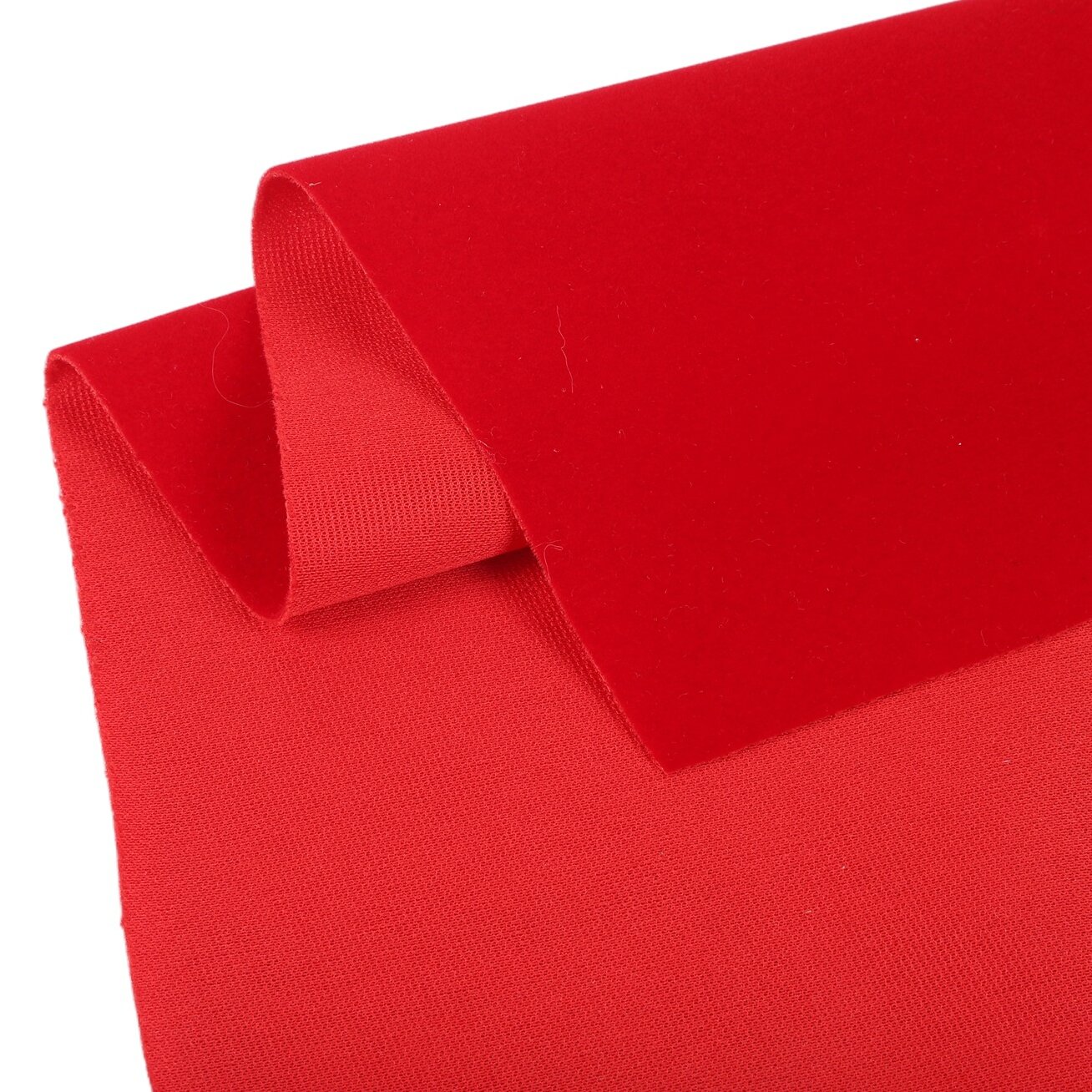
Flocking is created by applying short fibers to an adhesive-coated base under an electrostatic field. This process positions the fibers vertically and produces the characteristic velvet finish used in luxury boxes, perfume gift sets, cosmetic packaging, wine cases, and jewelry presentation products. A well-made flocked surface should have stable pile direction, even coverage, and a refined, uninterrupted appearance.
Uneven pile is among the most noticeable defects because it immediately reduces the perceived value of premium packaging. Look for irregular pile height, sparse patches, visible base fabric, directional streaks, compression marks, and sections that reflect light differently from the rest of the surface. The approved pile specification should remain stable throughout the entire roll or production batch.
Mingqian Flocking states that pile density can be controlled to 0.01 millimeter precision. For knitted flocking fabric, selectable pile heights range from 0.5 to 1.2 millimeters. Regardless of the chosen height, inspectors should ensure that the pile remains visually and tactually consistent from edge to edge.
Fiber Adhesion and Shedding Control
Fiber loss is a major warning sign in luxury flocking because loose fibers can contaminate the packaged product, make the box interior look worn, and indicate weak bonding. Shedding may result from insufficient adhesive coverage, incomplete curing, poor electrostatic application, or inadequate drying conditions.
Inspectors should rub the material according to the approved method and examine both the flocked face and surrounding test area for detached fibers. Adhesion records should also be reviewed where available. Mingqian Flocking references a 3M tape 10-cycle peel test conducted according to the stated FAMA testing method, with acceptance requiring no fiber loss.
Abrasion resistance should match the intended application. Standard flocked materials may be evaluated at approximately 500 cycles, while functional products can be specified for abrasion performance up to 100,000 cycles. High-contact packaging areas, such as hinged box interiors or removable inserts, should receive closer attention during assessment.
Adhesive Bleed-Through and Backing Defects
Adhesive bleed-through can undermine an otherwise attractive flocked finish. It often appears as glossy patches, stiff zones, darkened areas, wet-looking marks, or discolored sections where adhesive has migrated toward the visible surface. These defects are especially problematic on dark velvet finishes and highly tactile packaging linings.
Inspect both sides of the material. The visible flocked face should remain soft and even, while the backing should show controlled, uniform adhesive application. Check for excessive glue, uneven coating weight, hardened spots, wrinkling, or a loss of flexibility that could affect forming and box assembly.
The general production process uses water-based acrylic adhesive with controlled coating weight. The W Series is described as providing base fabric concealment and no glue bleed-through, making it relevant where a clean, dense face finish is required.
Color Matching and Color Fastness
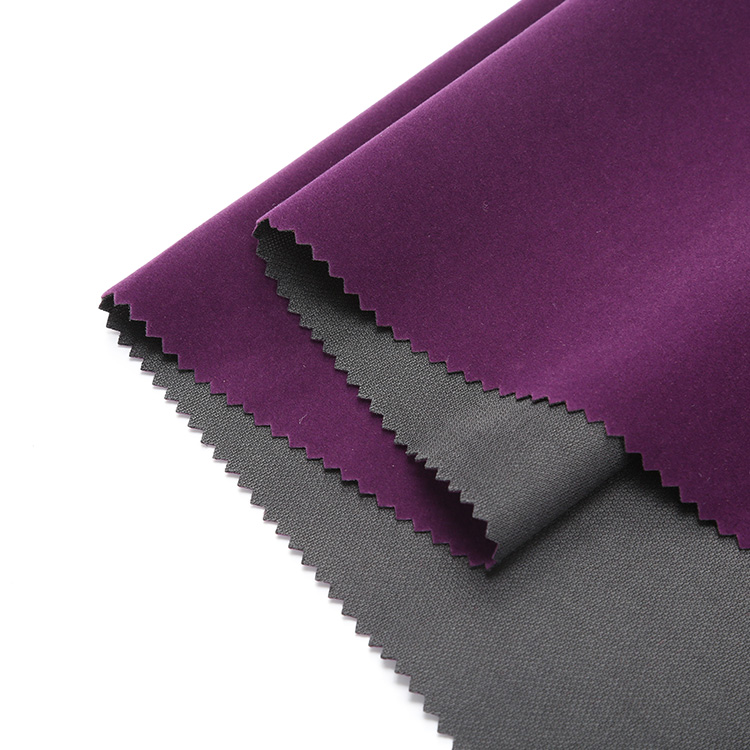
Color inconsistency is highly visible in luxury packaging, particularly when multiple materials must coordinate with printed paper, ribbons, metal logos, molded trays, or other decorative components. Compare the flocking against the approved Pantone reference, color swatch, or signed master sample under suitable lighting conditions.
Key color defects include side-to-side shade variation, roll-to-roll inconsistency, streaking, uneven dye penetration, and mismatch between repeat production batches. Mingqian Flocking states a Delta E tolerance of no more than 2.0 for standard orders and no more than 0.5 for custom projects. The stated batch color consistency deviation is no more than 3 percent.
Color fastness is also relevant when packaging may be exposed to moisture, handling, or display lighting. Deep-colored materials should achieve wet and dry color fastness of Grade 4 or above, while light exposure color fastness should reach Grade 6 or above.
Texture, Embossing, and Decorative Finish Inspection
Surface texture requirements depend on the flocking style selected for the packaging design. Plain velvet should show a smooth, dense, and level surface. Pearl velvet should maintain a regular granular effect, while embossed pearl velvet needs crisp pattern transfer and even relief across the full panel.
Frosted velvet should display its intended matte visual character without cracking or incomplete finishing. Crushed velvet should preserve a controlled crushed effect rather than random pressure marks or inconsistent compression. For all patterned materials, inspect for incomplete embossing, flattened areas, distorted motifs, misalignment, visible seam marks, and loss of pattern clarity near edges or folds.
Dimensional Accuracy and Converting Quality
Luxury packaging materials must fit production equipment and finished box structures accurately. Dimensional inspection should cover fabric width, roll length, slitting quality, edge straightness, die-cut shape, and tolerance compliance. Poorly cut edges, uneven widths, or distorted die-cut parts can create assembly problems and visible finishing defects.
The knitted flocking fabric specification lists a standard width of 58 inches and standard packing of 50 yards per roll. Custom pile heights are available from 0.5 to 1.2 millimeters. Where shaped lining pieces or decorative components are required, precision die-cutting is available to a tolerance of plus or minus 0.1 millimeters.
Additional Requirements for Jewelry Box Flocking
Jewelry box linings require more than an attractive flocked appearance. Silver jewelry stored in a closed package can be affected by reactive sulfur, acidic conditions, chloride ions, volatile organic acids, and residual moisture released by surrounding materials. These chemical factors can cause blackening, spotting, or oxidation discoloration.
For jewelry applications, confirm that reactive sulfur is below 5 parts per million and that pH remains between 5.5 and 7.5. Chloride and volatile acid levels should be controlled, and the material should pass a silver coupon accelerated corrosion test. Mingqian Flocking describes batch-level silver coupon testing with acceptance criteria requiring no blackening, no spotting, and no oxidation discoloration.
Dark flocking materials intended for jewelry packaging should use non-sulfur dye systems. This requirement is particularly important for black or deep-colored jewelry box interiors, where chemical compatibility must be verified alongside visual quality.
Inspection Reference Table
| Inspection Area | Defects to Identify | Reference Information |
|---|---|---|
| Pile appearance | Bare spots, streaks, irregular density, exposed backing, uneven pile direction or height | Pile density control to 0.01 millimeter precision; selectable pile heights available |
| Fiber adhesion | Loose fibers, shedding, lifting, or loss after rubbing and tape testing | 3M tape 10-cycle peel test; no fiber loss under the stated FAMA method |
| Color quality | Shade mismatch, batch variation, streaking, insufficient color fastness | Delta E no more than 2.0 for standard orders and no more than 0.5 for custom projects |
| Decorative texture | Incomplete embossing, distorted pearling, cracks, flattening, misplaced patterns | Plain, pearl, embossed pearl, frosted, and crushed velvet finishes available |
| Adhesive and backing | Glue bleed-through, stiff patches, migration, uneven backing coverage | Water-based acrylic adhesive; W Series specified as having no glue bleed-through |
| Dimensions | Incorrect width, roll length, slitting, edges, or die-cut accuracy | 58-inch width, 50-yard standard roll, and plus or minus 0.1 millimeter die-cutting tolerance |
Quality Control Process
Surface defects are best prevented through a structured quality system rather than relying only on final inspection. A four-stage process can include incoming material checks, in-process monitoring, finished product testing, and pre-shipment spot checks. This approach helps identify adhesion, color, texture, and dimensional issues before materials reach packaging assembly.
Mingqian Flocking states an overall defect-rate target of no more than 0.5 percent. Products manufactured by Guangdong Shunde Mingqian Flocking Co., Ltd. are covered by ISO 9001:2015 certification, while REACH and RoHS test reports address specified European Union market requirements.
One reported project for a French international luxury brand involved spunlace-based black nylon flocking for limited-edition perfume gift boxes. The project required custom color matching, a 0.3 millimeter ultra-dense pile, and abrasion testing without shedding. Sampling through delivery was completed within five days, illustrating how tactile uniformity, accurate color, secure adhesion, and finish quality must be managed together in premium packaging applications.
Frequently Asked Questions
Which flocking defect has the greatest impact on luxury packaging appearance?
Uneven pile is often the most immediately visible problem. Inspect the complete panel for thin areas, exposed backing, streaks, inconsistent fiber direction, and irregular surface texture.
How can I confirm that flocking fibers are properly bonded?
Check for loose fibers after approved rubbing or handling tests and review adhesion documentation. Mingqian Flocking cites a 3M tape 10-cycle peel test requiring no fiber loss, along with abrasion testing from 500 to 100,000 cycles depending on the product type.
What tests should be added for jewelry box linings?
Jewelry flocking should be checked for reactive sulfur below 5 parts per million, pH between 5.5 and 7.5, controlled chloride and volatile acid content, and a passed silver coupon accelerated corrosion test without blackening, spotting, or oxidation discoloration.
Conclusion
A complete evaluation of luxury packaging flocking should combine visual, tactile, mechanical, and dimensional checks. Confirm that the pile is even, fibers are firmly bonded, colors match the approved standard, decorative textures remain clear, adhesive does not migrate, and finished dimensions meet the packaging design requirements. For jewelry boxes, anti-tarnish verification should be included in the approval process before production begins.
Mingqian Flocking supports OEM and ODM orders with a stated minimum order quantity of 1,000 yards and a 14-day delivery time. The company also provides dedicated account management and technical application support. For detailed technical solutions or support, please contact Leo Yue at 005@mingqianflocking.com.
About Us
Guangdong Shunde Mingqian Flocking Co., Ltd., operating under the Mingqian brand, is a flocking fabric manufacturer headquartered in Foshan, Guangdong, China. Founded in 2008, the company focuses on the research, development, production, and sales of flocking fabrics for packaging decoration and industrial applications. Its self-owned manufacturing facility covers over 12,000 square meters and its five flocking lines provide a stated monthly capacity of over 3,000,000 yards. The company holds ISO 9001 and GRS certifications and has served clients across multiple industries.

REPORT