







-
 Agriculture
-
 Health-Care
-
 Environment
-
 Construction-Real-Estate
-
 Tools-Hardware
-
 Home-Garden
-
 Furniture
-
 Luggage-Bags-Cases
-
 Medical-devices-Supplies
-
 Gifts-Crafts
-
 Sports-Entertainment
-
 Food-Beverage
-
 Vehicles-Transportation
-
 Power-Transmission
-
 Material-Handling
-
 Renewable-Energy
-
 Safety
-
 Testing-Instrument-Equipment
-
 Construction-Building-Machinery
-
 Pet-Supplies
-
 Personal-Care-Household-Cleaning
-
 Vehicle-Accessories-Electronics-Tools
-
 School-Office-Supplies
-
 Packaging-Printing
-
 Mother-Kids-Toys
-
 Business-Services
-
 Commercial-Equipment-Machinery
-
 Apparel-Accessories
-
 Security
-
 Shoes-Accessories
-
 Vehicle-Parts-Accessories
-
 Jewelry-Eyewear-Watches-Accessories
-
 Lights-Lighting
-
 Fabric-Textile-Raw-Material
-
 Fabrication-Services
-
 Industrial-Machinery
-
 Consumer-Electronics
-
 Electrical-Equipment-Supplies
-
 Electronic-Components-Accessories-Telecommunications
-
 Home-Appliances
-
 Beauty
-
 Chemicals
-
 Rubber-Plastics
-
 Metals-Alloys


























































































































































































































































































































































































































































































































































































- Masonry Materials
- Curtain Walls & Accessories
- Earthwork Products
- Fireproofing Materials
- Heat Insulation Materials
- Plastic Building Materials
- Building Boards
- Soundproofing Materials
- Timber
- Waterproofing Materials
- Balustrades & Handrails
- Bathroom & Kitchen
- Flooring & Accessories
- Tiles & Accessories
- Door, Window & Accessories
- Fireplaces & Stoves
- Floor Heating Systems & Parts
- Stairs & Stair Parts
- Ceilings
- Elevators & Escalators
- Stone
- Countertops, Vanity Tops & Table Tops
- Mosaics
- Metal Building Materials
- Multifunctional Materials
- Ladders & Scaffoldings
- Mouldings
- Corner Guards
- Decorative Films
- Formwork
- Building & Industrial Glass
- Other Construction & Real Estate
- Wallpapers/Wall panels
- HVAC System & Parts
- Outdoor Facilities
- Prefabricated Buildings
- Festive & Party Supplies
- Bathroom Products
- Household Sundries
- Rain Gear
- Garden Supplies
- Household Cleaning Tools & Accessories
- Lighters & Smoking Accessories
- Home Storage & Organization
- Household Scales
- Smart Home Improvement
- Home Textiles
- Kitchenware
- Drinkware & Accessories
- Dinnerware, Coffee & Wine
- Home Decor
- Golf
- Fitness & Body Building
- Amusement Park Facilities
- Billiards, Board Game,Coin Operated Games
- Musical Instruments
- Outdoor Affordable Luxury Sports
- Camping & Hiking
- Fishing
- Sports Safety&Rehabilitation
- Ball Sports Equipments
- Water Sports
- Winter Sports
- Luxury Travel Equipments
- Sports Shoes, Bags & Accessories
- Cycling
- Other Sports & Entertainment Products
- Artificial Grass&Sports Flooring&Sports Court Equipment
- Scooters
- Food Ingredients
- Honey & Honey Products
- Snacks
- Nuts & Kernels
- Seafood
- Plant & Animal Oil
- Beverages
- Fruit & Vegetable Products
- Frog & Escargot
- Bean Products
- Egg Products
- Dairy Products
- Seasonings & Condiments
- Canned Food
- Instant Food
- Baked Goods
- Other Food & Beverage
- Meat & Poultry
- Confectionery
- Grain Products
- Feminie Care
- Hair Care & Styling
- Body Care
- Hands & Feet Care
- Hygiene Products
- Men's Grooming
- Laundry Cleaning Supplies
- Travel Size & Gift Sets
- Room Deodorizers
- Other Personal Care Products
- Pest Control Products
- Special Household Cleaning
- Floor Cleaning
- Kitchen & Bathroom Cleaning
- Oral Care
- Bath Supplies
- Yellow Pages
- Correction Supplies
- Office Binding Supplies
- Office Cutting Supplies
- Board Erasers
- Office Adhesives & Tapes
- Education Supplies
- Pencil Cases & Bags
- Notebooks & Writing Pads
- File Folder Accessories
- Calendars
- Writing Accessories
- Commercial Office Supplies
- Pencil Sharpeners
- Pens
- Letter Pad/Paper
- Paper Envelopes
- Desk Organizers
- Pencils
- Markers & Highlighters
- Filing Products
- Art Supplies
- Easels
- Badge Holder & Accessories
- Office Paper
- Printer Supplies
- Book Covers
- Other Office & School Supplies
- Stationery Set
- Boards
- Clipboards
- Stamps
- Drafting Supplies
- Stencils
- Electronic Dictionary
- Books
- Map
- Magazines
- Calculators
- Baby & Toddler Toys
- Educational Toys
- Classic Toys
- Dress Up & Pretend Play
- Toy Vehicle
- Stuffed Animals & Plush Toys
- Outdoor Toys & Structures
- Balloons & Accessories
- Baby Food
- Children's Clothing
- Baby Supplies & Products
- Maternity Clothes
- Kids Shoes
- Baby Care
- Novelty & Gag Toys
- Dolls & Accessories
- Puzzle & Games
- Blocks & Model Building Toys
- Toddler Clothing
- Baby Clothing
- Kids' Luggage & Bags
- Arts, Crafts & DIY Toys
- Action & Toy Figures
- Baby Appliances
- Hobbies & Models
- Remote Control Toys
- Promotional Toys
- Pregnancy & Maternity
- Hygiene Products
- Kid's Textile&Bedding
- Novelty & Special Use
- Toy Weapons
- Baby Gifts
- Baby Storage & Organization
- Auto Drive Systems
- ATV/UTV Parts & Accessories
- Marine Parts & Accessories
- Other Auto Parts
- Trailer Parts & Accessories
- Auto Transmission Systems
- Train Parts & Accessories
- Universal Parts
- Railway Parts & Accessories
- Auto Brake Systems
- Aviation Parts & Accessories
- Truck Parts & Accessories
- Auto Suspension Systems
- Auto Lighting Systems
- New Energy Vehicle Parts & Accessories
- Auto Steering Systems
- Wheels, Tires & Accessories
- Bus Parts & Accessories
- Auto Performance Parts
- Cooling System
- Go-Kart & Kart Racer Parts & Accessories
- Air Conditioning Systems
- Heavy Duty Vehicle Parts & Accessories
- Auto Electrical Systems
- Auto Body Systems
- Auto Engine Systems
- Container Parts & Accessories
- Motorcycle Parts & Accessories
- Refrigeration & Heat Exchange Equipment
- Machine Tool Equipment
- Food & Beverage Machinery
- Agricultural Machinery & Equipment
- Apparel & Textile Machinery
- Chemical Machinery
- Packaging Machines
- Paper Production Machinery
- Plastic & Rubber Processing Machinery
- Industrial Robots
- Electronic Products Machinery
- Metal & Metallurgy Machinery
- Woodworking Machinery
- Home Product Manufacturing Machinery
- Machinery Accessories
- Environmental Machinery
- Machinery Service
- Electrical Equipment Manufacturing Machinery
- Industrial Compressors & Parts
- Tobacco & Cigarette Machinery
- Production Line
- Used Industrial Machinery
- Electronics Production Machinery
- Other Machinery & Industrial Equipment
- Camera, Photo & Accessories
- Portable Audio, Video & Accessories
- Television, Home Audio, Video & Accessories
- Video Games & Accessories
- Mobile Phone & Accessories
- Electronic Publications
- Earphone & Headphone & Accessories
- Speakers & Accessories
- Smart Electronics
- TV Receivers & Accessories
- Mobile Phone & Computer Repair Parts
- Chargers, Batteries & Power Supplies
- Used Electronics
- VR, AR, MR Hardware & Software
- Projectors & Presentation Equipments
- Other Consumer Electronics
- Cables & Commonly Used Accessories
- Computer Hardware & Software
- Displays, Signage and Optoelectronics
- Discrete Semiconductors
- Wireless & IoT Module and Products
- Telecommunications
- Connectors, Terminals & Accessories
- Development Boards, Electronic Modules and Kits
- Circuit Protection
- Sensors
- Isolators
- Audio Components and Products
- Integrated Circuits
- Power Supplies
- Relays
- RF, Microwave and RFID
- Electronic Accessories & Supplies
- Passive Components
- PCB & PCBA
- Air Quality Appliances
- Home Appliance Parts
- Heating & Cooling Appliances
- Small Kitchen Appliances
- Laundry Appliances
- Water Heaters
- Water Treatment Appliances
- Refrigerators & Freezers
- Personal Care & Beauty Appliances
- Major Kitchen Appliances
- Cleaning Appliances
- Second-hand Appliances
- Smart Home Appliances
- Other Home Appliances
- Energy Chemicals
- Inorganic Chemicals
- Basic Organic Chemicals
- Agrochemicals
- Admixture & Additives
- Catalysts & Chemical Auxiliary Agents
- Pigments & Dyestuff
- Coating & Paint
- Daily Chemicals
- Polymer
- Organic Intermediate
- Adhesives & Sealants
- Chemical Waste
- Biological Chemical Products
- Surface Treatment Chemicals
- Painting & Coating
- Chemical Reagents
- Flavor & Fragrance
- Non-Explosive Demolition Agents
- Other Chemicals
- Custom Chemical Services

How to Protect a Private Laser Projector Design from Competitors
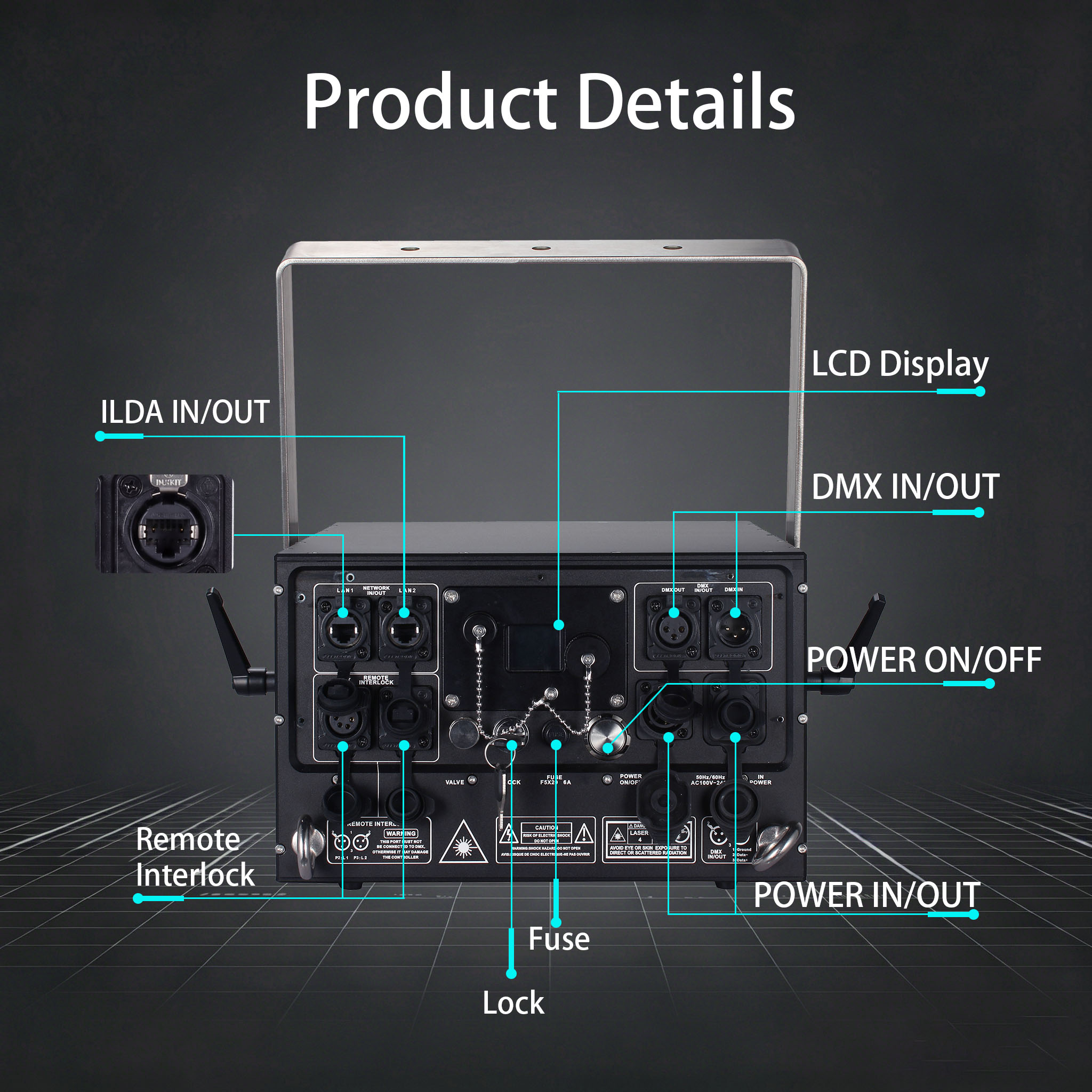
Keeping a private laser projector design away from competitors requires coordinated control over technical files, supplier access, production records, and project communications. For a 20W RGB outdoor laser projector using an FB4 control system, protection should cover the optical layout, scanners, electronics, enclosure, waterproofing, safety functions, and laser-show programming from initial development through delivery.
Practical Measures for Design Protection
A customized outdoor laser projector contains more than its visible housing. Its confidential value may include RGB laser effects, animation graphics, beam effects, scanner parameters, control settings, installation requirements, and configuration details developed for a specific venue or event.
Control Technical Access
Give drawings, optical layouts, electronic diagrams, FB4 settings, and customized specifications only to employees and suppliers whose responsibilities require them. Engineering teams may need optical and scanner information, while assembly partners may only require the files related to their assigned components. This role-based approach reduces exposure of the complete product design.
Separate Information by Project Stage
Divide documentation according to design, assembly, testing, packaging, and shipment activities. Avoid sending one external party the entire technical package when separate files can support each task. Confidentiality labels, approved file versions, controlled storage, and written distribution records also help maintain document authority throughout the OEM/ODM process.
Applying Controls to the Product Architecture
Protection measures should match the main technical areas of the projector. Optical performance data, laser module specifications, scanner accuracy, electronic control information, waterproofing requirements, safety functions, and aging-test results should be shared only with the responsible development, production, or inspection personnel.
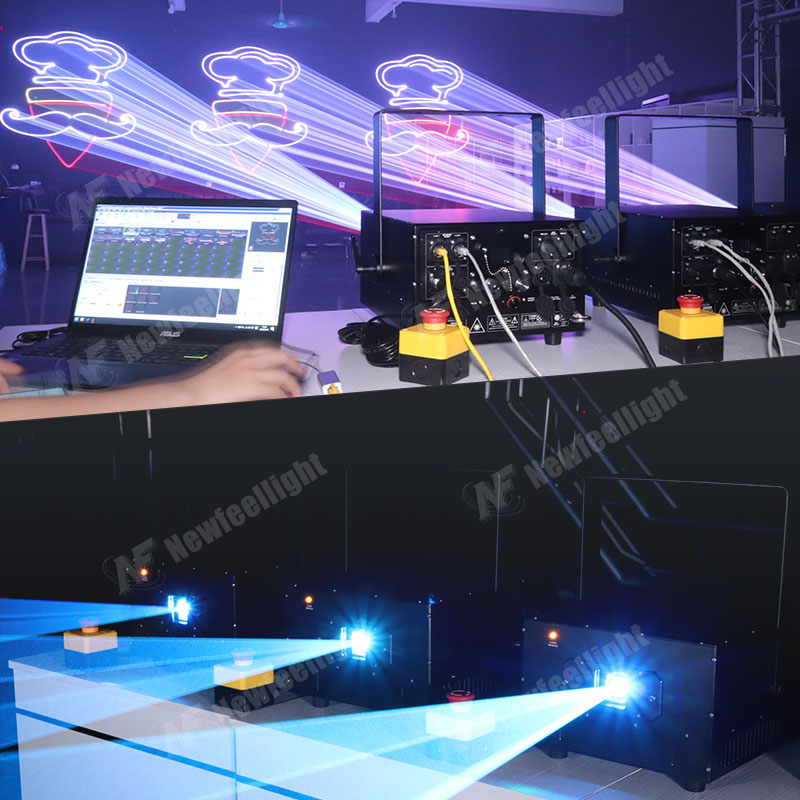
Every customized requirement should be recorded before production begins. This includes power output, control platform, installation conditions, environmental protection, show programming, and any project-specific housing or mounting requirements. A formal change approval process helps prevent unverified modifications from entering manufacturing or shipment.
Quality Records as a Design-Control Tool
Inspection procedures provide an additional way to confirm that the manufactured product matches the approved private design. For this type of outdoor laser projector, relevant checkpoints include laser module inspection, optical performance measurement, scanner accuracy verification, electronic component inspection, waterproof testing, safety-function testing, aging tests, final product inspection, and pre-shipment review.
Records should identify the tested configuration and connect results to the correct project version. This makes it easier to detect unauthorized component substitutions, configuration changes, or deviations from the agreed OEM/ODM specifications before the equipment reaches the customer.
Supplier Evaluation and Application Scope
Supplier experience, operating procedures, and certification records should be reviewed when selecting a manufacturing partner. The available CE certification applies to laser light. Documented cooperation includes a United States lighting-equipment distributor project for weddings and events, as well as a France-based stage-production project covering live shows, music festivals, corporate events, and entertainment venues.
These controls are relevant to concert productions, festivals, landmark illumination, theme parks, clubs, and other entertainment applications. Each project may require different programmable RGB effects, control integration, installation methods, and environmental protection standards.
Protection Measures by Area
| Protection Area | Recommended Practice | Typical Information Covered |
|---|---|---|
| Design files | Restrict access to approved project personnel and necessary suppliers | RGB effects, animation graphics, beam effects, optical layouts, and custom settings |
| Manufacturing data | Distribute only the files required for each production responsibility | Laser modules, optical parts, scanners, electronics, housing, and waterproofing |
| Testing records | Link inspection results to the approved product configuration | Optical output, scanner accuracy, safety functions, aging, waterproofing, and final checks |
| OEM/ODM management | Document confidential materials, approved changes, and technical deliverables | Power levels, control systems, installation conditions, and project-specific solutions |
Frequently Asked Questions
Which elements of a private outdoor laser projector design should be protected?
The controlled package should include optical design information, RGB laser configuration, scanner parameters, electronic controls, waterproofing requirements, safety functions, show settings, and other project-specific specifications.
Can quality inspections reveal unauthorized design changes?
They can help identify deviations when test records are tied to the approved configuration. Comparing laser modules, optical results, scanner accuracy, electronics, waterproofing, safety performance, aging results, and final inspection data can expose unapproved changes.
What is the best way to work with a manufacturer on a customized projector?
Define OEM/ODM requirements in writing, mark confidential documents, provide suppliers with only the information needed for their tasks, approve every technical change, and verify the final configuration before production and shipment. Lead times will depend on the selected configuration and manufacturing requirements.
Conclusion
A private laser projector design is best protected through layered controls rather than a single confidentiality measure. Role-based access, divided technical documentation, written OEM/ODM requirements, approved change procedures, and configuration-linked inspections can reduce the risk of design exposure or unauthorized modification.
Guangzhou New Feel Lighting And Audio Equipment Co., Ltd. provides stage-lighting research and development, manufacturing, export, OEM/ODM services, and customized lighting solutions. The company holds CE certification for laser light. For technical assistance or project support, contact sunny@nfstagelight.com.
About Us
Guangzhou New Feel Lighting And Audio Equipment Co., Ltd., operating under the NewFeel Lighting brand, is a Guangzhou-based manufacturer founded in 2008. Its products include RGB laser projectors, moving head lights, fog machines, snow machines, and professional stage-effects equipment for concerts, festivals, weddings, clubs, entertainment venues, rental productions, and architectural lighting. Its R&D team works on laser systems, moving head lights, special effects equipment, optical design, electronic control, structural improvements, and customized product development. The company holds CE certification for laser light and serves customers across multiple industries.

REPORT