







-
 Agriculture
-
 Health-Care
-
 Environment
-
 Construction-Real-Estate
-
 Tools-Hardware
-
 Home-Garden
-
 Furniture
-
 Luggage-Bags-Cases
-
 Medical-devices-Supplies
-
 Gifts-Crafts
-
 Sports-Entertainment
-
 Food-Beverage
-
 Vehicles-Transportation
-
 Power-Transmission
-
 Material-Handling
-
 Renewable-Energy
-
 Safety
-
 Testing-Instrument-Equipment
-
 Construction-Building-Machinery
-
 Pet-Supplies
-
 Personal-Care-Household-Cleaning
-
 Vehicle-Accessories-Electronics-Tools
-
 School-Office-Supplies
-
 Packaging-Printing
-
 Mother-Kids-Toys
-
 Business-Services
-
 Commercial-Equipment-Machinery
-
 Apparel-Accessories
-
 Security
-
 Shoes-Accessories
-
 Vehicle-Parts-Accessories
-
 Jewelry-Eyewear-Watches-Accessories
-
 Lights-Lighting
-
 Fabric-Textile-Raw-Material
-
 Fabrication-Services
-
 Industrial-Machinery
-
 Consumer-Electronics
-
 Electrical-Equipment-Supplies
-
 Electronic-Components-Accessories-Telecommunications
-
 Home-Appliances
-
 Beauty
-
 Chemicals
-
 Rubber-Plastics
-
 Metals-Alloys


























































































































































































































































































































































































































































































































































































- Masonry Materials
- Curtain Walls & Accessories
- Earthwork Products
- Fireproofing Materials
- Heat Insulation Materials
- Plastic Building Materials
- Building Boards
- Soundproofing Materials
- Timber
- Waterproofing Materials
- Balustrades & Handrails
- Bathroom & Kitchen
- Flooring & Accessories
- Tiles & Accessories
- Door, Window & Accessories
- Fireplaces & Stoves
- Floor Heating Systems & Parts
- Stairs & Stair Parts
- Ceilings
- Elevators & Escalators
- Stone
- Countertops, Vanity Tops & Table Tops
- Mosaics
- Metal Building Materials
- Multifunctional Materials
- Ladders & Scaffoldings
- Mouldings
- Corner Guards
- Decorative Films
- Formwork
- Building & Industrial Glass
- Other Construction & Real Estate
- Wallpapers/Wall panels
- HVAC System & Parts
- Outdoor Facilities
- Prefabricated Buildings
- Festive & Party Supplies
- Bathroom Products
- Household Sundries
- Rain Gear
- Garden Supplies
- Household Cleaning Tools & Accessories
- Lighters & Smoking Accessories
- Home Storage & Organization
- Household Scales
- Smart Home Improvement
- Home Textiles
- Kitchenware
- Drinkware & Accessories
- Dinnerware, Coffee & Wine
- Home Decor
- Golf
- Fitness & Body Building
- Amusement Park Facilities
- Billiards, Board Game,Coin Operated Games
- Musical Instruments
- Outdoor Affordable Luxury Sports
- Camping & Hiking
- Fishing
- Sports Safety&Rehabilitation
- Ball Sports Equipments
- Water Sports
- Winter Sports
- Luxury Travel Equipments
- Sports Shoes, Bags & Accessories
- Cycling
- Other Sports & Entertainment Products
- Artificial Grass&Sports Flooring&Sports Court Equipment
- Scooters
- Food Ingredients
- Honey & Honey Products
- Snacks
- Nuts & Kernels
- Seafood
- Plant & Animal Oil
- Beverages
- Fruit & Vegetable Products
- Frog & Escargot
- Bean Products
- Egg Products
- Dairy Products
- Seasonings & Condiments
- Canned Food
- Instant Food
- Baked Goods
- Other Food & Beverage
- Meat & Poultry
- Confectionery
- Grain Products
- Feminie Care
- Hair Care & Styling
- Body Care
- Hands & Feet Care
- Hygiene Products
- Men's Grooming
- Laundry Cleaning Supplies
- Travel Size & Gift Sets
- Room Deodorizers
- Other Personal Care Products
- Pest Control Products
- Special Household Cleaning
- Floor Cleaning
- Kitchen & Bathroom Cleaning
- Oral Care
- Bath Supplies
- Yellow Pages
- Correction Supplies
- Office Binding Supplies
- Office Cutting Supplies
- Board Erasers
- Office Adhesives & Tapes
- Education Supplies
- Pencil Cases & Bags
- Notebooks & Writing Pads
- File Folder Accessories
- Calendars
- Writing Accessories
- Commercial Office Supplies
- Pencil Sharpeners
- Pens
- Letter Pad/Paper
- Paper Envelopes
- Desk Organizers
- Pencils
- Markers & Highlighters
- Filing Products
- Art Supplies
- Easels
- Badge Holder & Accessories
- Office Paper
- Printer Supplies
- Book Covers
- Other Office & School Supplies
- Stationery Set
- Boards
- Clipboards
- Stamps
- Drafting Supplies
- Stencils
- Electronic Dictionary
- Books
- Map
- Magazines
- Calculators
- Baby & Toddler Toys
- Educational Toys
- Classic Toys
- Dress Up & Pretend Play
- Toy Vehicle
- Stuffed Animals & Plush Toys
- Outdoor Toys & Structures
- Balloons & Accessories
- Baby Food
- Children's Clothing
- Baby Supplies & Products
- Maternity Clothes
- Kids Shoes
- Baby Care
- Novelty & Gag Toys
- Dolls & Accessories
- Puzzle & Games
- Blocks & Model Building Toys
- Toddler Clothing
- Baby Clothing
- Kids' Luggage & Bags
- Arts, Crafts & DIY Toys
- Action & Toy Figures
- Baby Appliances
- Hobbies & Models
- Remote Control Toys
- Promotional Toys
- Pregnancy & Maternity
- Hygiene Products
- Kid's Textile&Bedding
- Novelty & Special Use
- Toy Weapons
- Baby Gifts
- Baby Storage & Organization
- Auto Drive Systems
- ATV/UTV Parts & Accessories
- Marine Parts & Accessories
- Other Auto Parts
- Trailer Parts & Accessories
- Auto Transmission Systems
- Train Parts & Accessories
- Universal Parts
- Railway Parts & Accessories
- Auto Brake Systems
- Aviation Parts & Accessories
- Truck Parts & Accessories
- Auto Suspension Systems
- Auto Lighting Systems
- New Energy Vehicle Parts & Accessories
- Auto Steering Systems
- Wheels, Tires & Accessories
- Bus Parts & Accessories
- Auto Performance Parts
- Cooling System
- Go-Kart & Kart Racer Parts & Accessories
- Air Conditioning Systems
- Heavy Duty Vehicle Parts & Accessories
- Auto Electrical Systems
- Auto Body Systems
- Auto Engine Systems
- Container Parts & Accessories
- Motorcycle Parts & Accessories
- Refrigeration & Heat Exchange Equipment
- Machine Tool Equipment
- Food & Beverage Machinery
- Agricultural Machinery & Equipment
- Apparel & Textile Machinery
- Chemical Machinery
- Packaging Machines
- Paper Production Machinery
- Plastic & Rubber Processing Machinery
- Industrial Robots
- Electronic Products Machinery
- Metal & Metallurgy Machinery
- Woodworking Machinery
- Home Product Manufacturing Machinery
- Machinery Accessories
- Environmental Machinery
- Machinery Service
- Electrical Equipment Manufacturing Machinery
- Industrial Compressors & Parts
- Tobacco & Cigarette Machinery
- Production Line
- Used Industrial Machinery
- Electronics Production Machinery
- Other Machinery & Industrial Equipment
- Camera, Photo & Accessories
- Portable Audio, Video & Accessories
- Television, Home Audio, Video & Accessories
- Video Games & Accessories
- Mobile Phone & Accessories
- Electronic Publications
- Earphone & Headphone & Accessories
- Speakers & Accessories
- Smart Electronics
- TV Receivers & Accessories
- Mobile Phone & Computer Repair Parts
- Chargers, Batteries & Power Supplies
- Used Electronics
- VR, AR, MR Hardware & Software
- Projectors & Presentation Equipments
- Other Consumer Electronics
- Cables & Commonly Used Accessories
- Computer Hardware & Software
- Displays, Signage and Optoelectronics
- Discrete Semiconductors
- Wireless & IoT Module and Products
- Telecommunications
- Connectors, Terminals & Accessories
- Development Boards, Electronic Modules and Kits
- Circuit Protection
- Sensors
- Isolators
- Audio Components and Products
- Integrated Circuits
- Power Supplies
- Relays
- RF, Microwave and RFID
- Electronic Accessories & Supplies
- Passive Components
- PCB & PCBA
- Air Quality Appliances
- Home Appliance Parts
- Heating & Cooling Appliances
- Small Kitchen Appliances
- Laundry Appliances
- Water Heaters
- Water Treatment Appliances
- Refrigerators & Freezers
- Personal Care & Beauty Appliances
- Major Kitchen Appliances
- Cleaning Appliances
- Second-hand Appliances
- Smart Home Appliances
- Other Home Appliances
- Energy Chemicals
- Inorganic Chemicals
- Basic Organic Chemicals
- Agrochemicals
- Admixture & Additives
- Catalysts & Chemical Auxiliary Agents
- Pigments & Dyestuff
- Coating & Paint
- Daily Chemicals
- Polymer
- Organic Intermediate
- Adhesives & Sealants
- Chemical Waste
- Biological Chemical Products
- Surface Treatment Chemicals
- Painting & Coating
- Chemical Reagents
- Flavor & Fragrance
- Non-Explosive Demolition Agents
- Other Chemicals
- Custom Chemical Services

How to Qualify a White Laser Moving Head Sample for Production Consistency
A white laser moving head sample should be treated as the production benchmark, not merely as a visual reference. Before approving the order, create a written specification that defines the laser source, optical system, movement, effects, control functions, enclosure, protection rating, electrical requirements, and dimensions. Every production fixture should then be checked against that approved reference through functional testing, burn-in, safety inspection, optical verification, and final quality control.
Production-Matching Strategy
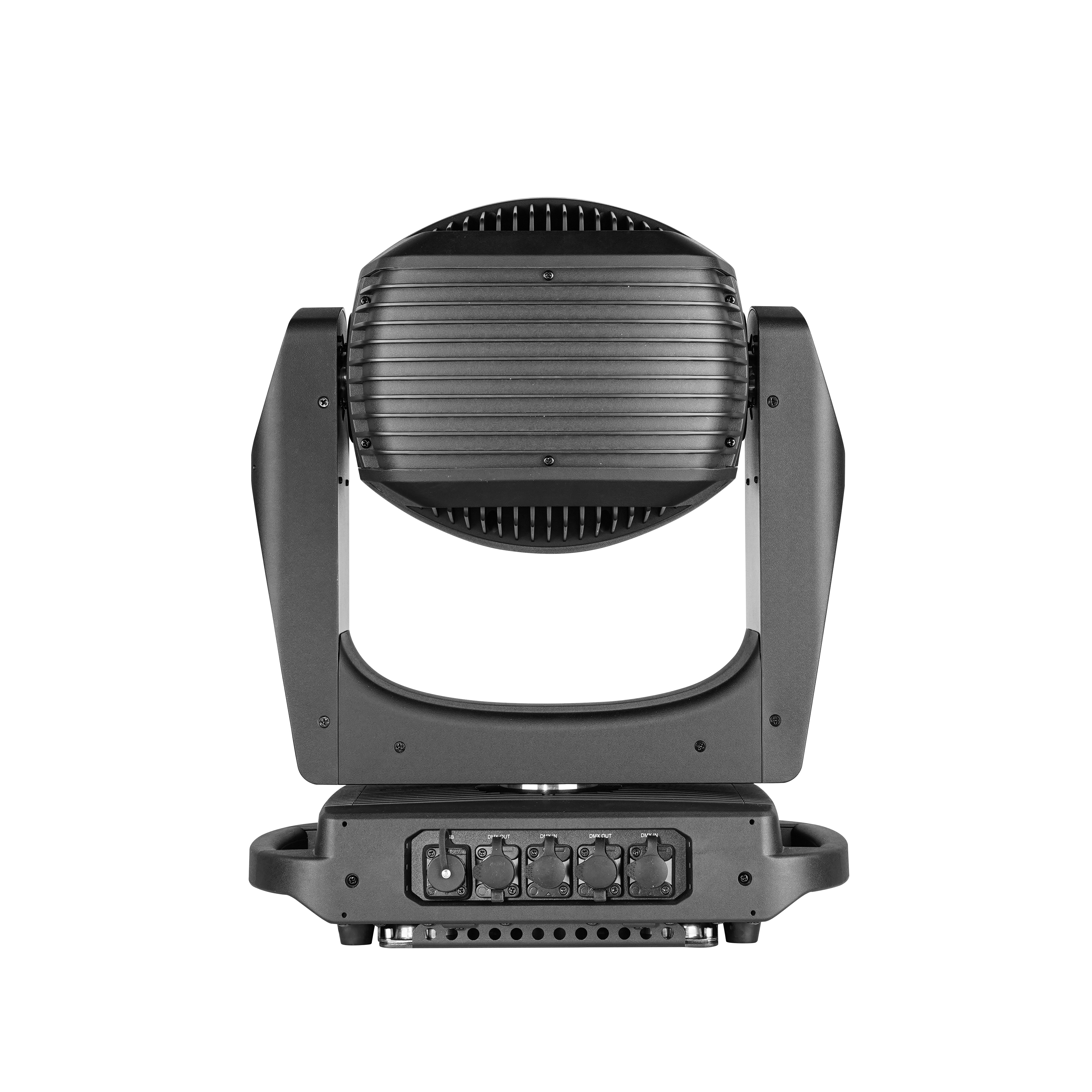
The first step is to freeze the exact sample configuration. For this 150W white laser moving head, the reference specification should include the 9000K color temperature, CRI of at least 70, 1° beam angle, 180mm front lens, 24.9kg net weight, and the agreed IP protection level. The product information contains an IP65 reference in the product wording and an IP66 rating in the detailed specification, so the purchase order and inspection document must clearly identify which rating is required.
Sample approval should also cover the complete effect package. Confirm the 13 dichroic colors plus open, six-color wheel, eight rotating and interchangeable glass gobos, 19-position static gobo wheel plus open, six-facet linear prism, eight-facet circular prism, linear focus, wash, shutter, 0–25Hz strobe, and 0–100% dimming. These features should be tested under the same operating conditions on both the approved sample and production units.
What to Compare on Production Units
Optical and Visual Output
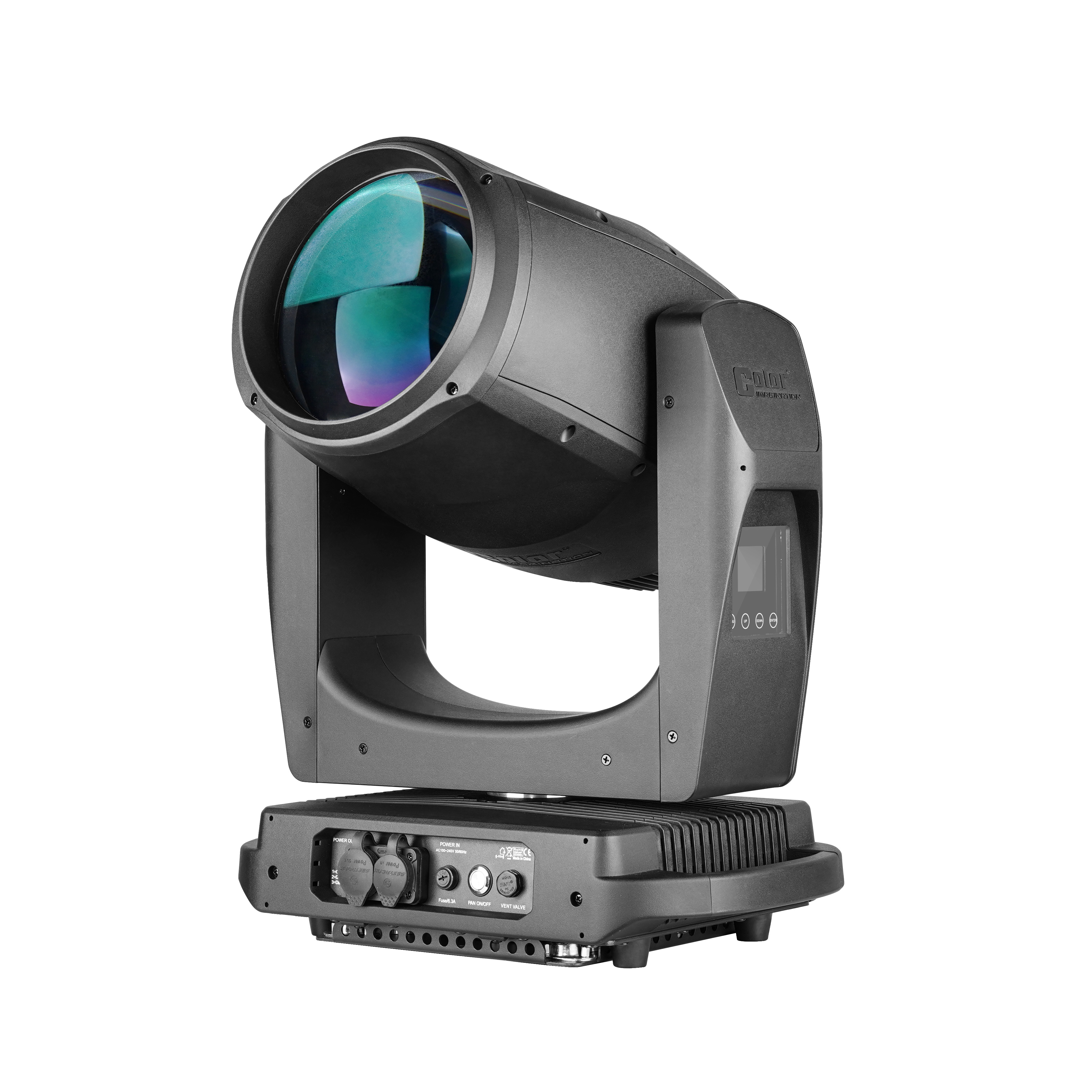
Optical verification should compare beam shape, brightness, color temperature, focus accuracy, projection uniformity, and the operation of every effect component. The 150W white laser source, 9000K output, CRI ≥70, 1° beam, and 180mm lens should match the approved sample. Test color selection, gobo indexing, prism rotation, zoom or wash behavior where applicable, strobe speed, and dimming smoothness under the same control scenes.
Movement and Mechanical Operation
Movement consistency is equally important in concert, rental, festival, and architectural applications. The fixture uses fast, quiet, smooth three-phase motors with continuous 360° pan and tilt modes, selectable 540° pan and 270° tilt ranges, scan-position memory, automatic repositioning, and reversible pan and tilt. Inspect speed, accuracy, repeatability, noise, end-stop behavior, focus, shutter response, and whether each unit returns correctly to its programmed position.
Control and Connectivity
Use one identical control path for the sample and the batch during testing. The approved configuration supports 21 DMX channels, DMX512, RDM, master-slave operation, automatic programs, DMX recording and editing, and optional Art-Net. Check display readability and response, DMX signal monitoring, software-update behavior through USB or DMX, wireless receiver options when ordered, waterproof XLR connections, and optional etherCON configurations.
Inspection and Batch-Release Requirements
A reliable acceptance process should begin before assembly and continue until shipment. Color Imagination identifies incoming material inspection, in-process verification, 100% functional testing, burn-in testing, safety inspection, and final quality checks as part of its quality-control process. Buyers should request records showing that these stages were completed for the ordered batch.
Inspection should include the 203W power supply, AC100–240V and 50/60Hz operation, waterproof TRUE1 power connectors, cooling performance, temperature management, over-temperature protection, enclosure finish, installation clamps, and the safety attachment point. Confirm that the sealed laser module, housing construction, dimensions, weight, and approved IP rating remain unchanged from the sample.
For traceability, compare the approved sample, production test results, and final packing configuration in one documented report. Color Imagination lists CE certificates LCSB070523036E and LCSB070523041S, along with ISO certificates GH004-2023E0421 and GH004-2023Q0766. These records can support supplier qualification and batch-release documentation.
Acceptance Checklist
| Inspection category | Required sample-to-production comparison |
|---|---|
| Laser and optics | 150W white laser, 9000K color temperature, CRI ≥70, 180mm front lens, 1° beam angle, focus, and beam projection match the approved reference. |
| Effects | Color wheels, 13 dichroic colors, rotating and static gobos, two prisms, strobe, shutter, wash, focus, and dimming are installed and fully operational. |
| Movement | Continuous 360° pan and tilt, selectable 540° pan and 270° tilt modes, smooth motor operation, memory functions, and automatic repositioning perform consistently. |
| Control system | DMX512, 21 DMX channels, RDM, master-slave, automatic operation, display functions, recording, editing, and software updating match the order. |
| Construction and protection | The specified IP65 or IP66 requirement, sealed laser module, connectors, cooling system, enclosure, clamps, and safety point match the approved configuration. |
| Quality release | Incoming inspection, in-process checks, 100% functional testing, burn-in, safety inspection, and final quality verification are completed before shipment. |
Why Batch Consistency Matters in Real Installations
Uniform fixtures are essential when multiple units are programmed together. In concerts, festivals, live events, rental productions, theme parks, and architectural shows, variations in beam angle, color, movement timing, or gobo position can be visible across the entire rig. Color Imagination has supplied 3,500 stage lights for a nightclub project in Kunming, China, where beam, wash, effect, and pixel fixtures were combined to create synchronized visual effects. This type of installation illustrates why repeatable optical and control performance matters.
Frequently Asked Questions
What should be written into the approved sample specification?
Document the laser output, color temperature, CRI, beam angle, lens, colors, gobos, prisms, effects, movement ranges, motor performance, control protocols, power supply, protection rating, housing, dimensions, and weight. Resolve the IP65/IP66 difference before the purchase order is finalized.
How do I prove that the production fixtures match the sample?
Run the same scenes and control signals on the sample and selected production units. Compare beam projection, color, focus, gobos, prisms, strobe, dimming, pan, tilt, noise, display response, DMX behavior, connectors, cooling, and repositioning. Request documented results for functional, burn-in, safety, and final inspections.
What happens if a batch has a technical variation?
Color Imagination offers technical assistance, remote troubleshooting, spare parts, firmware updates, repair services, project commissioning, and user training. Its OEM/ODM and project-support capabilities cover research and development, manufacturing, sales, technical service, and complete lighting solutions.
Conclusion
The safest way to achieve sample-to-batch consistency is to establish one written, measurable reference and use it throughout production acceptance. Pay particular attention to the IP65/IP66 discrepancy, then verify optical output, effects, movement, control, power, construction, and protection. Require 100% functional testing, burn-in testing, safety inspection, and final quality checks before shipment. For OEM/ODM projects and professional lighting applications, contact jack@color-imagination.com for technical support.
About Us
Guangzhou Color Imagination LED Lighting Limited, operating under the Color Imagination brand, is a professional stage and entertainment lighting manufacturer integrating R&D, production, sales, and technical services for entertainment, architectural, television, and event applications. Established in 2010, the company has 130 employees and a 6000SQM factory area. Its multidisciplinary R&D capability covers optical, mechanical, electronic, software, thermal, and lighting-control engineering, supporting standard products and customized OEM/ODM development. The company holds CE certificates including LCSB070523036E and LCSB070523041S, and has served clients across multiple industries, including a nightclub project in Kunming.

REPORT