







-
 Agriculture
-
 Health-Care
-
 Environment
-
 Construction-Real-Estate
-
 Tools-Hardware
-
 Home-Garden
-
 Furniture
-
 Luggage-Bags-Cases
-
 Medical-devices-Supplies
-
 Gifts-Crafts
-
 Sports-Entertainment
-
 Food-Beverage
-
 Vehicles-Transportation
-
 Power-Transmission
-
 Material-Handling
-
 Renewable-Energy
-
 Safety
-
 Testing-Instrument-Equipment
-
 Construction-Building-Machinery
-
 Pet-Supplies
-
 Personal-Care-Household-Cleaning
-
 Vehicle-Accessories-Electronics-Tools
-
 School-Office-Supplies
-
 Packaging-Printing
-
 Mother-Kids-Toys
-
 Business-Services
-
 Commercial-Equipment-Machinery
-
 Apparel-Accessories
-
 Security
-
 Shoes-Accessories
-
 Vehicle-Parts-Accessories
-
 Jewelry-Eyewear-Watches-Accessories
-
 Lights-Lighting
-
 Fabric-Textile-Raw-Material
-
 Fabrication-Services
-
 Industrial-Machinery
-
 Consumer-Electronics
-
 Electrical-Equipment-Supplies
-
 Electronic-Components-Accessories-Telecommunications
-
 Home-Appliances
-
 Beauty
-
 Chemicals
-
 Rubber-Plastics
-
 Metals-Alloys


























































































































































































































































































































































































































































































































































































- Masonry Materials
- Curtain Walls & Accessories
- Earthwork Products
- Fireproofing Materials
- Heat Insulation Materials
- Plastic Building Materials
- Building Boards
- Soundproofing Materials
- Timber
- Waterproofing Materials
- Balustrades & Handrails
- Bathroom & Kitchen
- Flooring & Accessories
- Tiles & Accessories
- Door, Window & Accessories
- Fireplaces & Stoves
- Floor Heating Systems & Parts
- Stairs & Stair Parts
- Ceilings
- Elevators & Escalators
- Stone
- Countertops, Vanity Tops & Table Tops
- Mosaics
- Metal Building Materials
- Multifunctional Materials
- Ladders & Scaffoldings
- Mouldings
- Corner Guards
- Decorative Films
- Formwork
- Building & Industrial Glass
- Other Construction & Real Estate
- Wallpapers/Wall panels
- HVAC System & Parts
- Outdoor Facilities
- Prefabricated Buildings
- Festive & Party Supplies
- Bathroom Products
- Household Sundries
- Rain Gear
- Garden Supplies
- Household Cleaning Tools & Accessories
- Lighters & Smoking Accessories
- Home Storage & Organization
- Household Scales
- Smart Home Improvement
- Home Textiles
- Kitchenware
- Drinkware & Accessories
- Dinnerware, Coffee & Wine
- Home Decor
- Golf
- Fitness & Body Building
- Amusement Park Facilities
- Billiards, Board Game,Coin Operated Games
- Musical Instruments
- Outdoor Affordable Luxury Sports
- Camping & Hiking
- Fishing
- Sports Safety&Rehabilitation
- Ball Sports Equipments
- Water Sports
- Winter Sports
- Luxury Travel Equipments
- Sports Shoes, Bags & Accessories
- Cycling
- Other Sports & Entertainment Products
- Artificial Grass&Sports Flooring&Sports Court Equipment
- Scooters
- Food Ingredients
- Honey & Honey Products
- Snacks
- Nuts & Kernels
- Seafood
- Plant & Animal Oil
- Beverages
- Fruit & Vegetable Products
- Frog & Escargot
- Bean Products
- Egg Products
- Dairy Products
- Seasonings & Condiments
- Canned Food
- Instant Food
- Baked Goods
- Other Food & Beverage
- Meat & Poultry
- Confectionery
- Grain Products
- Feminie Care
- Hair Care & Styling
- Body Care
- Hands & Feet Care
- Hygiene Products
- Men's Grooming
- Laundry Cleaning Supplies
- Travel Size & Gift Sets
- Room Deodorizers
- Other Personal Care Products
- Pest Control Products
- Special Household Cleaning
- Floor Cleaning
- Kitchen & Bathroom Cleaning
- Oral Care
- Bath Supplies
- Yellow Pages
- Correction Supplies
- Office Binding Supplies
- Office Cutting Supplies
- Board Erasers
- Office Adhesives & Tapes
- Education Supplies
- Pencil Cases & Bags
- Notebooks & Writing Pads
- File Folder Accessories
- Calendars
- Writing Accessories
- Commercial Office Supplies
- Pencil Sharpeners
- Pens
- Letter Pad/Paper
- Paper Envelopes
- Desk Organizers
- Pencils
- Markers & Highlighters
- Filing Products
- Art Supplies
- Easels
- Badge Holder & Accessories
- Office Paper
- Printer Supplies
- Book Covers
- Other Office & School Supplies
- Stationery Set
- Boards
- Clipboards
- Stamps
- Drafting Supplies
- Stencils
- Electronic Dictionary
- Books
- Map
- Magazines
- Calculators
- Baby & Toddler Toys
- Educational Toys
- Classic Toys
- Dress Up & Pretend Play
- Toy Vehicle
- Stuffed Animals & Plush Toys
- Outdoor Toys & Structures
- Balloons & Accessories
- Baby Food
- Children's Clothing
- Baby Supplies & Products
- Maternity Clothes
- Kids Shoes
- Baby Care
- Novelty & Gag Toys
- Dolls & Accessories
- Puzzle & Games
- Blocks & Model Building Toys
- Toddler Clothing
- Baby Clothing
- Kids' Luggage & Bags
- Arts, Crafts & DIY Toys
- Action & Toy Figures
- Baby Appliances
- Hobbies & Models
- Remote Control Toys
- Promotional Toys
- Pregnancy & Maternity
- Hygiene Products
- Kid's Textile&Bedding
- Novelty & Special Use
- Toy Weapons
- Baby Gifts
- Baby Storage & Organization
- Auto Drive Systems
- ATV/UTV Parts & Accessories
- Marine Parts & Accessories
- Other Auto Parts
- Trailer Parts & Accessories
- Auto Transmission Systems
- Train Parts & Accessories
- Universal Parts
- Railway Parts & Accessories
- Auto Brake Systems
- Aviation Parts & Accessories
- Truck Parts & Accessories
- Auto Suspension Systems
- Auto Lighting Systems
- New Energy Vehicle Parts & Accessories
- Auto Steering Systems
- Wheels, Tires & Accessories
- Bus Parts & Accessories
- Auto Performance Parts
- Cooling System
- Go-Kart & Kart Racer Parts & Accessories
- Air Conditioning Systems
- Heavy Duty Vehicle Parts & Accessories
- Auto Electrical Systems
- Auto Body Systems
- Auto Engine Systems
- Container Parts & Accessories
- Motorcycle Parts & Accessories
- Refrigeration & Heat Exchange Equipment
- Machine Tool Equipment
- Food & Beverage Machinery
- Agricultural Machinery & Equipment
- Apparel & Textile Machinery
- Chemical Machinery
- Packaging Machines
- Paper Production Machinery
- Plastic & Rubber Processing Machinery
- Industrial Robots
- Electronic Products Machinery
- Metal & Metallurgy Machinery
- Woodworking Machinery
- Home Product Manufacturing Machinery
- Machinery Accessories
- Environmental Machinery
- Machinery Service
- Electrical Equipment Manufacturing Machinery
- Industrial Compressors & Parts
- Tobacco & Cigarette Machinery
- Production Line
- Used Industrial Machinery
- Electronics Production Machinery
- Other Machinery & Industrial Equipment
- Camera, Photo & Accessories
- Portable Audio, Video & Accessories
- Television, Home Audio, Video & Accessories
- Video Games & Accessories
- Mobile Phone & Accessories
- Electronic Publications
- Earphone & Headphone & Accessories
- Speakers & Accessories
- Smart Electronics
- TV Receivers & Accessories
- Mobile Phone & Computer Repair Parts
- Chargers, Batteries & Power Supplies
- Used Electronics
- VR, AR, MR Hardware & Software
- Projectors & Presentation Equipments
- Other Consumer Electronics
- Cables & Commonly Used Accessories
- Computer Hardware & Software
- Displays, Signage and Optoelectronics
- Discrete Semiconductors
- Wireless & IoT Module and Products
- Telecommunications
- Connectors, Terminals & Accessories
- Development Boards, Electronic Modules and Kits
- Circuit Protection
- Sensors
- Isolators
- Audio Components and Products
- Integrated Circuits
- Power Supplies
- Relays
- RF, Microwave and RFID
- Electronic Accessories & Supplies
- Passive Components
- PCB & PCBA
- Air Quality Appliances
- Home Appliance Parts
- Heating & Cooling Appliances
- Small Kitchen Appliances
- Laundry Appliances
- Water Heaters
- Water Treatment Appliances
- Refrigerators & Freezers
- Personal Care & Beauty Appliances
- Major Kitchen Appliances
- Cleaning Appliances
- Second-hand Appliances
- Smart Home Appliances
- Other Home Appliances
- Energy Chemicals
- Inorganic Chemicals
- Basic Organic Chemicals
- Agrochemicals
- Admixture & Additives
- Catalysts & Chemical Auxiliary Agents
- Pigments & Dyestuff
- Coating & Paint
- Daily Chemicals
- Polymer
- Organic Intermediate
- Adhesives & Sealants
- Chemical Waste
- Biological Chemical Products
- Surface Treatment Chemicals
- Painting & Coating
- Chemical Reagents
- Flavor & Fragrance
- Non-Explosive Demolition Agents
- Other Chemicals
- Custom Chemical Services

How to Record Sample Data for Soldering Station Consistency Testing
Evaluating soldering station consistency requires more than checking the specifications printed on the product label. A reliable test record should combine rated parameters with repeated operating measurements, heating behavior, temperature stability, and functional inspection results. This approach helps determine whether different units deliver dependable performance in repair, production, or training environments.
Key Data to Collect During a Consistency Evaluation
Begin by documenting the fixed identification and specification data for every soldering station sample. This establishes a common reference point before measurements are taken and makes comparisons between units more meaningful.
For the BA-909D 2 in 1 Soldering Rework Station, the reference specifications include 450W rated power, a 100°C-500°C hot-air temperature range, and a 200°C-480°C soldering iron temperature range. Its listed weight is 1.7Kg, while the unit dimensions are 175*145*110mm.
- Model number, product batch, test date, rated power, weight, and dimensions
- Configured and measured hot-air temperatures across the 100°C-500°C range
- Configured and measured soldering iron temperatures across the 200°C-480°C range
- Warm-up time, stabilization time, operating fluctuation, and recovery behavior
- Results of control, display, hot-air, soldering iron, and general function checks
Recommended Temperature Test Record
Temperature consistency should be assessed using repeated readings at selected setpoints. For each test point, record the temperature selected on the station, the actual temperature measured with suitable test equipment, and the difference between the two values. Repeating the same procedure under controlled conditions makes it easier to identify variation among samples.
Hot-Air Performance Data
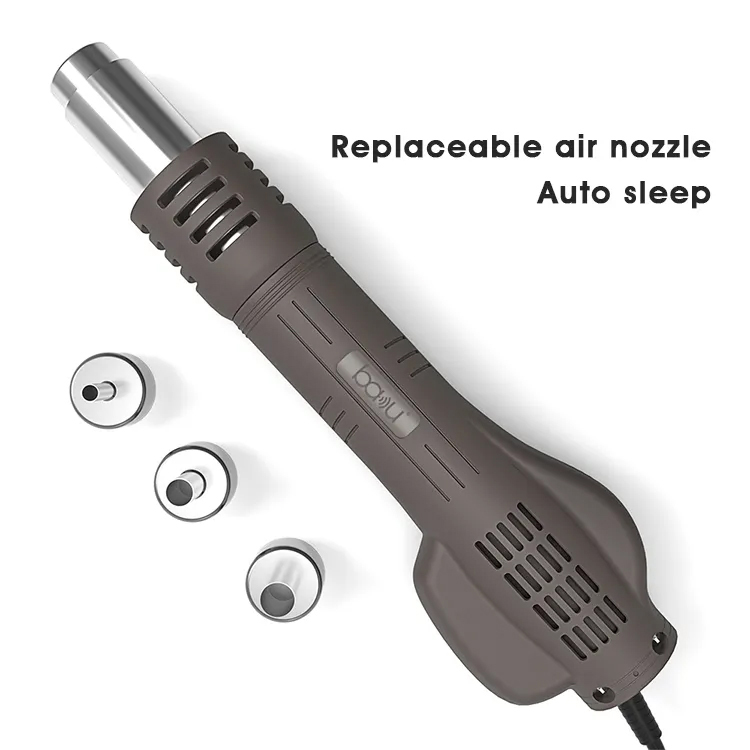
For the hot-air system, log the selected temperature, measured outlet temperature, time required to reach the selected setting, and the stability of the reading after warm-up. Notes should also include visible temperature drift, irregular airflow, unusual noise, or other abnormal behavior during operation.
Soldering Iron Performance Data
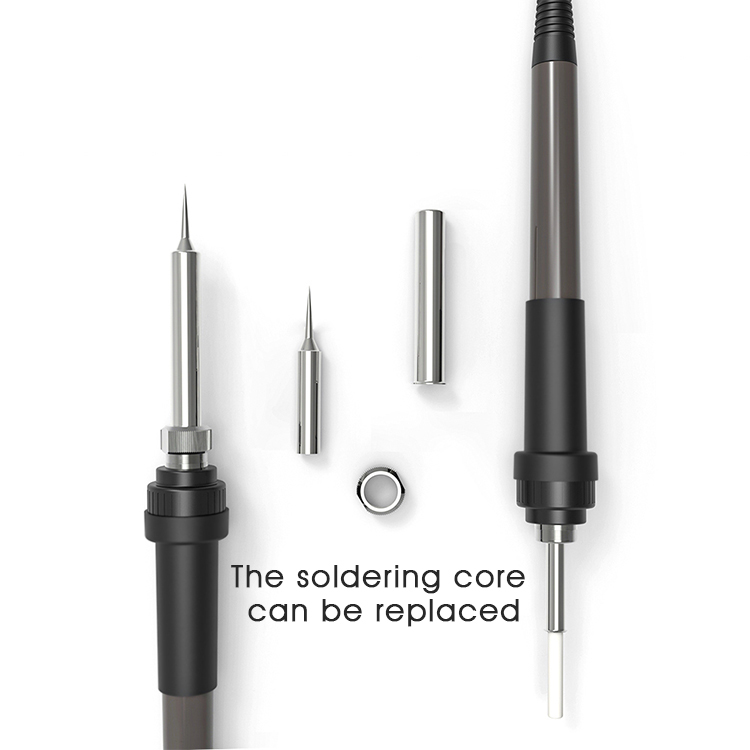
For the soldering iron, retain the chosen setpoint, measured tip temperature, heating response, and temperature stability while the tool is operating. If the test involves normal soldering loads, record how quickly the tip returns to its target temperature after contact with the workpiece.
Functional Checks That Support Consistency Testing
Nominal temperature data alone does not provide a complete view of soldering station consistency. Each sample should also undergo a full-function inspection covering the hot-air outlet, soldering iron, temperature adjustment controls, display or indicator functions, and overall operating condition.
Create a separate checklist for functional observations so that temperature results remain easy to review. Any issue, such as unstable controls, inaccurate indicators, interrupted heating, airflow irregularity, or unexpected shutdown behavior, should be documented together with the corresponding test conditions.
The BA-909D product information includes one year of after-warranty online support. Service needs, maintenance observations, and support records can therefore be added to the equipment file for future tracking.
Consistency Data Overview
| Evaluation category | Information to document |
|---|---|
| Unit reference data | BA-909D model, 450W rated power, 1.7Kg weight, 175*145*110mm dimensions, test date, and batch details |
| Hot-air temperature test | Selected setting, measured value, heating time, stabilization results, and fluctuations within the 100°C-500°C range |
| Soldering iron test | Selected setting, measured tip temperature, response time, and stability within the 200°C-480°C range |
| Functional inspection | Hot-air output, iron operation, controls, display or indicators, and abnormal operating observations |
| Compliance and service file | Applicable CE or FCC records, product identification, support requirements, and service observations |
Application Conditions to Include in Testing
The test process should reflect the environment in which the equipment will be used. Relevant applications may include mobile phone motherboard repair, tablet and screen work, welding and cleaning tasks, laptop motherboard servicing, graphics card repair, and computer circuit board maintenance.
Consistency records may also be valuable for schools, vocational training centers, and electronics laboratories where multiple users need equipment with predictable temperature control and repeatable operation. Reported supply applications include repair-tool orders for an electronics repair store in the Philippines, training equipment for a Malaysian vocational institution, wholesale distribution in Saudi Arabia, and equipment for a computer repair workshop in Mexico.
Compliance Documentation
When a consistency evaluation is used for purchasing, distribution, or market-access review, retain relevant certification information with the test report. BAKU solder stations have listed CE certificates for the European Union and FCC certificates for the United States. Include the certification record, model designation, batch information, and evaluation date where applicable.
Frequently Asked Questions
What baseline specifications should be recorded for the BA-909D?
Record the model name, 450W power rating, 1.7Kg weight, 175*145*110mm dimensions, 100°C-500°C hot-air range, and 200°C-480°C soldering iron range before beginning performance tests.
How should repeatability be evaluated?
Use the same measurement method and operating conditions for every unit. At each chosen setting, retain the displayed setting, measured temperature, time to heat, stabilization behavior, temperature variation, and any unusual operating condition.
Why is full-function testing necessary?
A station can meet a temperature target while still having issues with airflow, controls, displays, or soldering iron operation. Functional testing verifies that the complete unit performs consistently, not just its heating system.
Conclusion
An effective soldering station consistency record combines fixed product specifications with repeated temperature readings, heating response data, stability observations, and functional inspection results. For the BA-909D, the 450W power rating, 100°C-500°C air range, and 200°C-480°C soldering iron range provide the baseline for comparison.
BAKU supplies its own brand for wholesale and offers OEM and ODM customization. The stated MOQ for this product is 50 units, with a 7-15 day delivery time and worldwide export markets. For detailed technical solutions or support, please reach out via hanker002@bakutool.com.
About Us
Guangdong BAKU Technology Development Co., Ltd. was established in 2003 and provides professional electronic repair tools in more than thirty product categories, including soldering stations, solder flux, solder paste, screwdrivers, and ultrasonic cleaners. The company operates an independent R&D laboratory for ID design, structural development, PCB debugging, and reliability testing. With 25 design patents, temperature-control platforms, ESD test platforms, and standardized quality inspection processes, BAKU supports products with CE, FCC, and RoHS certification records for customers across multiple industries.

REPORT