







-
 Agriculture
-
 Health-Care
-
 Environment
-
 Construction-Real-Estate
-
 Tools-Hardware
-
 Home-Garden
-
 Furniture
-
 Luggage-Bags-Cases
-
 Medical-devices-Supplies
-
 Gifts-Crafts
-
 Sports-Entertainment
-
 Food-Beverage
-
 Vehicles-Transportation
-
 Power-Transmission
-
 Material-Handling
-
 Renewable-Energy
-
 Safety
-
 Testing-Instrument-Equipment
-
 Construction-Building-Machinery
-
 Pet-Supplies
-
 Personal-Care-Household-Cleaning
-
 Vehicle-Accessories-Electronics-Tools
-
 School-Office-Supplies
-
 Packaging-Printing
-
 Mother-Kids-Toys
-
 Business-Services
-
 Commercial-Equipment-Machinery
-
 Apparel-Accessories
-
 Security
-
 Shoes-Accessories
-
 Vehicle-Parts-Accessories
-
 Jewelry-Eyewear-Watches-Accessories
-
 Lights-Lighting
-
 Fabric-Textile-Raw-Material
-
 Fabrication-Services
-
 Industrial-Machinery
-
 Consumer-Electronics
-
 Electrical-Equipment-Supplies
-
 Electronic-Components-Accessories-Telecommunications
-
 Home-Appliances
-
 Beauty
-
 Chemicals
-
 Rubber-Plastics
-
 Metals-Alloys


























































































































































































































































































































































































































































































































































































- Masonry Materials
- Curtain Walls & Accessories
- Earthwork Products
- Fireproofing Materials
- Heat Insulation Materials
- Plastic Building Materials
- Building Boards
- Soundproofing Materials
- Timber
- Waterproofing Materials
- Balustrades & Handrails
- Bathroom & Kitchen
- Flooring & Accessories
- Tiles & Accessories
- Door, Window & Accessories
- Fireplaces & Stoves
- Floor Heating Systems & Parts
- Stairs & Stair Parts
- Ceilings
- Elevators & Escalators
- Stone
- Countertops, Vanity Tops & Table Tops
- Mosaics
- Metal Building Materials
- Multifunctional Materials
- Ladders & Scaffoldings
- Mouldings
- Corner Guards
- Decorative Films
- Formwork
- Building & Industrial Glass
- Other Construction & Real Estate
- Wallpapers/Wall panels
- HVAC System & Parts
- Outdoor Facilities
- Prefabricated Buildings
- Festive & Party Supplies
- Bathroom Products
- Household Sundries
- Rain Gear
- Garden Supplies
- Household Cleaning Tools & Accessories
- Lighters & Smoking Accessories
- Home Storage & Organization
- Household Scales
- Smart Home Improvement
- Home Textiles
- Kitchenware
- Drinkware & Accessories
- Dinnerware, Coffee & Wine
- Home Decor
- Golf
- Fitness & Body Building
- Amusement Park Facilities
- Billiards, Board Game,Coin Operated Games
- Musical Instruments
- Outdoor Affordable Luxury Sports
- Camping & Hiking
- Fishing
- Sports Safety&Rehabilitation
- Ball Sports Equipments
- Water Sports
- Winter Sports
- Luxury Travel Equipments
- Sports Shoes, Bags & Accessories
- Cycling
- Other Sports & Entertainment Products
- Artificial Grass&Sports Flooring&Sports Court Equipment
- Scooters
- Food Ingredients
- Honey & Honey Products
- Snacks
- Nuts & Kernels
- Seafood
- Plant & Animal Oil
- Beverages
- Fruit & Vegetable Products
- Frog & Escargot
- Bean Products
- Egg Products
- Dairy Products
- Seasonings & Condiments
- Canned Food
- Instant Food
- Baked Goods
- Other Food & Beverage
- Meat & Poultry
- Confectionery
- Grain Products
- Feminie Care
- Hair Care & Styling
- Body Care
- Hands & Feet Care
- Hygiene Products
- Men's Grooming
- Laundry Cleaning Supplies
- Travel Size & Gift Sets
- Room Deodorizers
- Other Personal Care Products
- Pest Control Products
- Special Household Cleaning
- Floor Cleaning
- Kitchen & Bathroom Cleaning
- Oral Care
- Bath Supplies
- Yellow Pages
- Correction Supplies
- Office Binding Supplies
- Office Cutting Supplies
- Board Erasers
- Office Adhesives & Tapes
- Education Supplies
- Pencil Cases & Bags
- Notebooks & Writing Pads
- File Folder Accessories
- Calendars
- Writing Accessories
- Commercial Office Supplies
- Pencil Sharpeners
- Pens
- Letter Pad/Paper
- Paper Envelopes
- Desk Organizers
- Pencils
- Markers & Highlighters
- Filing Products
- Art Supplies
- Easels
- Badge Holder & Accessories
- Office Paper
- Printer Supplies
- Book Covers
- Other Office & School Supplies
- Stationery Set
- Boards
- Clipboards
- Stamps
- Drafting Supplies
- Stencils
- Electronic Dictionary
- Books
- Map
- Magazines
- Calculators
- Baby & Toddler Toys
- Educational Toys
- Classic Toys
- Dress Up & Pretend Play
- Toy Vehicle
- Stuffed Animals & Plush Toys
- Outdoor Toys & Structures
- Balloons & Accessories
- Baby Food
- Children's Clothing
- Baby Supplies & Products
- Maternity Clothes
- Kids Shoes
- Baby Care
- Novelty & Gag Toys
- Dolls & Accessories
- Puzzle & Games
- Blocks & Model Building Toys
- Toddler Clothing
- Baby Clothing
- Kids' Luggage & Bags
- Arts, Crafts & DIY Toys
- Action & Toy Figures
- Baby Appliances
- Hobbies & Models
- Remote Control Toys
- Promotional Toys
- Pregnancy & Maternity
- Hygiene Products
- Kid's Textile&Bedding
- Novelty & Special Use
- Toy Weapons
- Baby Gifts
- Baby Storage & Organization
- Auto Drive Systems
- ATV/UTV Parts & Accessories
- Marine Parts & Accessories
- Other Auto Parts
- Trailer Parts & Accessories
- Auto Transmission Systems
- Train Parts & Accessories
- Universal Parts
- Railway Parts & Accessories
- Auto Brake Systems
- Aviation Parts & Accessories
- Truck Parts & Accessories
- Auto Suspension Systems
- Auto Lighting Systems
- New Energy Vehicle Parts & Accessories
- Auto Steering Systems
- Wheels, Tires & Accessories
- Bus Parts & Accessories
- Auto Performance Parts
- Cooling System
- Go-Kart & Kart Racer Parts & Accessories
- Air Conditioning Systems
- Heavy Duty Vehicle Parts & Accessories
- Auto Electrical Systems
- Auto Body Systems
- Auto Engine Systems
- Container Parts & Accessories
- Motorcycle Parts & Accessories
- Refrigeration & Heat Exchange Equipment
- Machine Tool Equipment
- Food & Beverage Machinery
- Agricultural Machinery & Equipment
- Apparel & Textile Machinery
- Chemical Machinery
- Packaging Machines
- Paper Production Machinery
- Plastic & Rubber Processing Machinery
- Industrial Robots
- Electronic Products Machinery
- Metal & Metallurgy Machinery
- Woodworking Machinery
- Home Product Manufacturing Machinery
- Machinery Accessories
- Environmental Machinery
- Machinery Service
- Electrical Equipment Manufacturing Machinery
- Industrial Compressors & Parts
- Tobacco & Cigarette Machinery
- Production Line
- Used Industrial Machinery
- Electronics Production Machinery
- Other Machinery & Industrial Equipment
- Camera, Photo & Accessories
- Portable Audio, Video & Accessories
- Television, Home Audio, Video & Accessories
- Video Games & Accessories
- Mobile Phone & Accessories
- Electronic Publications
- Earphone & Headphone & Accessories
- Speakers & Accessories
- Smart Electronics
- TV Receivers & Accessories
- Mobile Phone & Computer Repair Parts
- Chargers, Batteries & Power Supplies
- Used Electronics
- VR, AR, MR Hardware & Software
- Projectors & Presentation Equipments
- Other Consumer Electronics
- Cables & Commonly Used Accessories
- Computer Hardware & Software
- Displays, Signage and Optoelectronics
- Discrete Semiconductors
- Wireless & IoT Module and Products
- Telecommunications
- Connectors, Terminals & Accessories
- Development Boards, Electronic Modules and Kits
- Circuit Protection
- Sensors
- Isolators
- Audio Components and Products
- Integrated Circuits
- Power Supplies
- Relays
- RF, Microwave and RFID
- Electronic Accessories & Supplies
- Passive Components
- PCB & PCBA
- Air Quality Appliances
- Home Appliance Parts
- Heating & Cooling Appliances
- Small Kitchen Appliances
- Laundry Appliances
- Water Heaters
- Water Treatment Appliances
- Refrigerators & Freezers
- Personal Care & Beauty Appliances
- Major Kitchen Appliances
- Cleaning Appliances
- Second-hand Appliances
- Smart Home Appliances
- Other Home Appliances
- Energy Chemicals
- Inorganic Chemicals
- Basic Organic Chemicals
- Agrochemicals
- Admixture & Additives
- Catalysts & Chemical Auxiliary Agents
- Pigments & Dyestuff
- Coating & Paint
- Daily Chemicals
- Polymer
- Organic Intermediate
- Adhesives & Sealants
- Chemical Waste
- Biological Chemical Products
- Surface Treatment Chemicals
- Painting & Coating
- Chemical Reagents
- Flavor & Fragrance
- Non-Explosive Demolition Agents
- Other Chemicals
- Custom Chemical Services

How to Reduce Damage Risks in a Small LCL Shipping Trial
A small LCL shipping trial needs clear checkpoints from warehouse receipt through final delivery. Begin with an inbound cargo inspection, verify inventory and visible condition, confirm packaging and order details, then use outbound scanning and shipment tracking. SPW Supply Chain supports these controls through pre-loading inspections, customs compliance checks, transport monitoring, delivery confirmation, and exception management.
Recommended Controls for an LCL Trial
- Document the cargo condition and any existing damage when goods arrive at the warehouse.
- Reconcile quantities, product details, labels, packaging quality, and shipping instructions before loading.
- Scan the shipment at dispatch and connect it with tracking information for continued visibility.
- Use consistent inspection and handling procedures for parcels, LCL cargo, and full-container shipments.
How the Damage-Prevention Process Works
The most reliable way to protect a small LCL shipment is to manage it as a controlled sequence of logistics activities. At inbound receipt, the cargo should be inspected, counted, and checked for dents, tears, moisture, or other visible issues. Recording the condition at this stage helps distinguish pre-existing problems from damage that may occur later.
Packaging and order verification are equally important. Staff should confirm that cartons are suitable for shared-container handling, labels are legible, and the picked goods match the shipping order. Any discrepancy should be recorded and resolved before the shipment is released for loading.
Once the cargo leaves the facility, outbound scanning and tracking create a traceable dispatch record. In-transit monitoring can show shipment progress and help identify delays or handling exceptions. Customs compliance reviews may also reduce avoidable interruptions that could lead to additional movement or extended storage. At destination, delivery confirmation and exception records complete the shipment history.
This operating model can support cross-border e-commerce sellers, trading companies, manufacturers, and B2B businesses shipping to North America, Europe, Southeast Asia, the Middle East, and Africa. The stated fulfillment services cover small parcels, consolidated LCL cargo, and full-container loads, with account management, inventory visibility, order exception handling, and return-processing assistance.
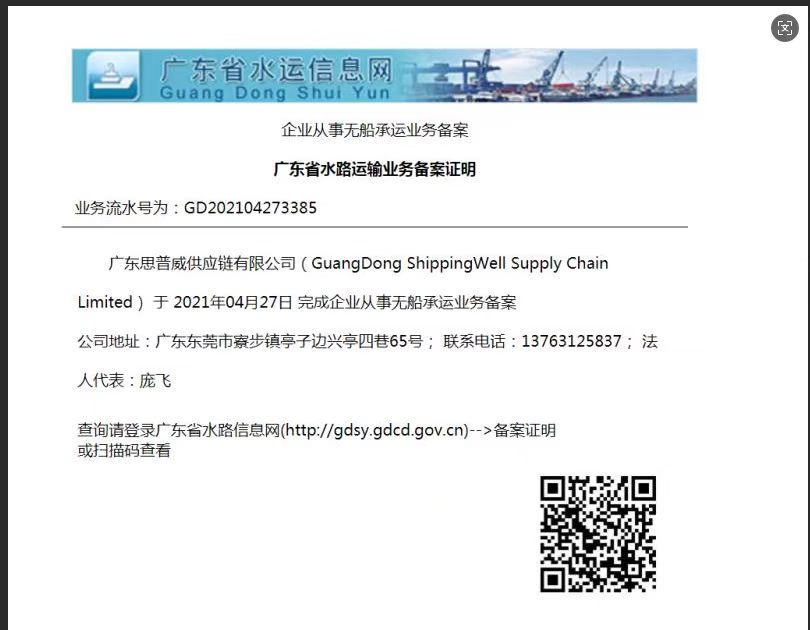
SPW Supply Chain holds a NOVCC certificate applicable to sea freight in the USA, EU, and UK. It also holds a Record Filing Form for International Freight Forwarders covering logistics operations in China, North America, Europe, Southeast Asia, the Middle East, and Africa.
Service Scope and Trial Application
A documented Canadian trading-company project used a full-container DDP model that included pickup, export declaration, ocean freight, destination customs clearance, tax payment, and door-to-door delivery. Customer feedback referenced consistent transit times, pricing transparency, dedicated account support, and tracking access. These practices can guide an LCL pilot, although the exact carton protection, inspection points, and handling requirements should be confirmed for each shipment before dispatch.
Control Comparison
| Process Stage | Recommended Action for the Trial | Service Support |
|---|---|---|
| Warehouse receipt | Inspect incoming cargo, verify quantities, and record visible damage | Supported |
| Preparation | Review packaging, product selection, labels, and order information | Supported |
| Dispatch and transit | Complete outbound scanning and monitor shipment tracking events | Supported |
| Final delivery | Obtain delivery confirmation and document any exceptions | Supported |
| After-sales handling | Escalate discrepancies through account management and return processing | Supported |
Frequently Asked Questions
What should be documented before LCL cargo is loaded?
Record the inbound condition, item count, visible defects, packaging status, labels, and order information. Retain the inspection record with the shipment documents so the original condition can be verified later.
Which controls help identify damage during transportation?
Outbound scans, shipment tracking, and in-transit monitoring provide a chronological record of the cargo movement. Delivery confirmation and exception reports add evidence when the goods arrive at the destination.
Is this process suitable for international LCL shipments?
Yes. The stated logistics network supports small parcels, LCL consignments, and full-container loads moving across North America, Europe, Southeast Asia, the Middle East, and Africa. Services include customs compliance checks and last-mile delivery confirmation.
Conclusion
Damage prevention during a small LCL trial depends on documenting cargo condition at receipt, validating packaging and order accuracy, scanning the shipment at dispatch, monitoring its movement, and confirming delivery. SPW Supply Chain offers a DDP logistics model covering pickup, customs declaration, international transport, destination clearance, tax payment, and door-to-door delivery, with a stated minimum quantity of one shipment. For technical solutions or service support, contact Sales@shippingwell.com.
About SPW Supply Chain
Guangdong Shippingwell Supply Chain Limited, operating under the name SPW Supply Chain, is headquartered in Dongguan and maintains offices in the United States, Hong Kong, the United Kingdom, Germany, France, and other locations. Its international logistics and overseas warehousing services include customs clearance, delivery, overseas storage, FCL, LCL, air freight, express shipping, and last-mile distribution. Founded in 2021, the company operates a digital logistics platform and an international operations team with more than 20 years of industry experience. Its credentials include NOVCC certification and the Record Filing Form for International Freight Forwarders.
REPORT