







-
 Agriculture
-
 Health-Care
-
 Environment
-
 Construction-Real-Estate
-
 Tools-Hardware
-
 Home-Garden
-
 Furniture
-
 Luggage-Bags-Cases
-
 Medical-devices-Supplies
-
 Gifts-Crafts
-
 Sports-Entertainment
-
 Food-Beverage
-
 Vehicles-Transportation
-
 Power-Transmission
-
 Material-Handling
-
 Renewable-Energy
-
 Safety
-
 Testing-Instrument-Equipment
-
 Construction-Building-Machinery
-
 Pet-Supplies
-
 Personal-Care-Household-Cleaning
-
 Vehicle-Accessories-Electronics-Tools
-
 School-Office-Supplies
-
 Packaging-Printing
-
 Mother-Kids-Toys
-
 Business-Services
-
 Commercial-Equipment-Machinery
-
 Apparel-Accessories
-
 Security
-
 Shoes-Accessories
-
 Vehicle-Parts-Accessories
-
 Jewelry-Eyewear-Watches-Accessories
-
 Lights-Lighting
-
 Fabric-Textile-Raw-Material
-
 Fabrication-Services
-
 Industrial-Machinery
-
 Consumer-Electronics
-
 Electrical-Equipment-Supplies
-
 Electronic-Components-Accessories-Telecommunications
-
 Home-Appliances
-
 Beauty
-
 Chemicals
-
 Rubber-Plastics
-
 Metals-Alloys


























































































































































































































































































































































































































































































































































































- Masonry Materials
- Curtain Walls & Accessories
- Earthwork Products
- Fireproofing Materials
- Heat Insulation Materials
- Plastic Building Materials
- Building Boards
- Soundproofing Materials
- Timber
- Waterproofing Materials
- Balustrades & Handrails
- Bathroom & Kitchen
- Flooring & Accessories
- Tiles & Accessories
- Door, Window & Accessories
- Fireplaces & Stoves
- Floor Heating Systems & Parts
- Stairs & Stair Parts
- Ceilings
- Elevators & Escalators
- Stone
- Countertops, Vanity Tops & Table Tops
- Mosaics
- Metal Building Materials
- Multifunctional Materials
- Ladders & Scaffoldings
- Mouldings
- Corner Guards
- Decorative Films
- Formwork
- Building & Industrial Glass
- Other Construction & Real Estate
- Wallpapers/Wall panels
- HVAC System & Parts
- Outdoor Facilities
- Prefabricated Buildings
- Festive & Party Supplies
- Bathroom Products
- Household Sundries
- Rain Gear
- Garden Supplies
- Household Cleaning Tools & Accessories
- Lighters & Smoking Accessories
- Home Storage & Organization
- Household Scales
- Smart Home Improvement
- Home Textiles
- Kitchenware
- Drinkware & Accessories
- Dinnerware, Coffee & Wine
- Home Decor
- Golf
- Fitness & Body Building
- Amusement Park Facilities
- Billiards, Board Game,Coin Operated Games
- Musical Instruments
- Outdoor Affordable Luxury Sports
- Camping & Hiking
- Fishing
- Sports Safety&Rehabilitation
- Ball Sports Equipments
- Water Sports
- Winter Sports
- Luxury Travel Equipments
- Sports Shoes, Bags & Accessories
- Cycling
- Other Sports & Entertainment Products
- Artificial Grass&Sports Flooring&Sports Court Equipment
- Scooters
- Food Ingredients
- Honey & Honey Products
- Snacks
- Nuts & Kernels
- Seafood
- Plant & Animal Oil
- Beverages
- Fruit & Vegetable Products
- Frog & Escargot
- Bean Products
- Egg Products
- Dairy Products
- Seasonings & Condiments
- Canned Food
- Instant Food
- Baked Goods
- Other Food & Beverage
- Meat & Poultry
- Confectionery
- Grain Products
- Feminie Care
- Hair Care & Styling
- Body Care
- Hands & Feet Care
- Hygiene Products
- Men's Grooming
- Laundry Cleaning Supplies
- Travel Size & Gift Sets
- Room Deodorizers
- Other Personal Care Products
- Pest Control Products
- Special Household Cleaning
- Floor Cleaning
- Kitchen & Bathroom Cleaning
- Oral Care
- Bath Supplies
- Yellow Pages
- Correction Supplies
- Office Binding Supplies
- Office Cutting Supplies
- Board Erasers
- Office Adhesives & Tapes
- Education Supplies
- Pencil Cases & Bags
- Notebooks & Writing Pads
- File Folder Accessories
- Calendars
- Writing Accessories
- Commercial Office Supplies
- Pencil Sharpeners
- Pens
- Letter Pad/Paper
- Paper Envelopes
- Desk Organizers
- Pencils
- Markers & Highlighters
- Filing Products
- Art Supplies
- Easels
- Badge Holder & Accessories
- Office Paper
- Printer Supplies
- Book Covers
- Other Office & School Supplies
- Stationery Set
- Boards
- Clipboards
- Stamps
- Drafting Supplies
- Stencils
- Electronic Dictionary
- Books
- Map
- Magazines
- Calculators
- Baby & Toddler Toys
- Educational Toys
- Classic Toys
- Dress Up & Pretend Play
- Toy Vehicle
- Stuffed Animals & Plush Toys
- Outdoor Toys & Structures
- Balloons & Accessories
- Baby Food
- Children's Clothing
- Baby Supplies & Products
- Maternity Clothes
- Kids Shoes
- Baby Care
- Novelty & Gag Toys
- Dolls & Accessories
- Puzzle & Games
- Blocks & Model Building Toys
- Toddler Clothing
- Baby Clothing
- Kids' Luggage & Bags
- Arts, Crafts & DIY Toys
- Action & Toy Figures
- Baby Appliances
- Hobbies & Models
- Remote Control Toys
- Promotional Toys
- Pregnancy & Maternity
- Hygiene Products
- Kid's Textile&Bedding
- Novelty & Special Use
- Toy Weapons
- Baby Gifts
- Baby Storage & Organization
- Auto Drive Systems
- ATV/UTV Parts & Accessories
- Marine Parts & Accessories
- Other Auto Parts
- Trailer Parts & Accessories
- Auto Transmission Systems
- Train Parts & Accessories
- Universal Parts
- Railway Parts & Accessories
- Auto Brake Systems
- Aviation Parts & Accessories
- Truck Parts & Accessories
- Auto Suspension Systems
- Auto Lighting Systems
- New Energy Vehicle Parts & Accessories
- Auto Steering Systems
- Wheels, Tires & Accessories
- Bus Parts & Accessories
- Auto Performance Parts
- Cooling System
- Go-Kart & Kart Racer Parts & Accessories
- Air Conditioning Systems
- Heavy Duty Vehicle Parts & Accessories
- Auto Electrical Systems
- Auto Body Systems
- Auto Engine Systems
- Container Parts & Accessories
- Motorcycle Parts & Accessories
- Refrigeration & Heat Exchange Equipment
- Machine Tool Equipment
- Food & Beverage Machinery
- Agricultural Machinery & Equipment
- Apparel & Textile Machinery
- Chemical Machinery
- Packaging Machines
- Paper Production Machinery
- Plastic & Rubber Processing Machinery
- Industrial Robots
- Electronic Products Machinery
- Metal & Metallurgy Machinery
- Woodworking Machinery
- Home Product Manufacturing Machinery
- Machinery Accessories
- Environmental Machinery
- Machinery Service
- Electrical Equipment Manufacturing Machinery
- Industrial Compressors & Parts
- Tobacco & Cigarette Machinery
- Production Line
- Used Industrial Machinery
- Electronics Production Machinery
- Other Machinery & Industrial Equipment
- Camera, Photo & Accessories
- Portable Audio, Video & Accessories
- Television, Home Audio, Video & Accessories
- Video Games & Accessories
- Mobile Phone & Accessories
- Electronic Publications
- Earphone & Headphone & Accessories
- Speakers & Accessories
- Smart Electronics
- TV Receivers & Accessories
- Mobile Phone & Computer Repair Parts
- Chargers, Batteries & Power Supplies
- Used Electronics
- VR, AR, MR Hardware & Software
- Projectors & Presentation Equipments
- Other Consumer Electronics
- Cables & Commonly Used Accessories
- Computer Hardware & Software
- Displays, Signage and Optoelectronics
- Discrete Semiconductors
- Wireless & IoT Module and Products
- Telecommunications
- Connectors, Terminals & Accessories
- Development Boards, Electronic Modules and Kits
- Circuit Protection
- Sensors
- Isolators
- Audio Components and Products
- Integrated Circuits
- Power Supplies
- Relays
- RF, Microwave and RFID
- Electronic Accessories & Supplies
- Passive Components
- PCB & PCBA
- Air Quality Appliances
- Home Appliance Parts
- Heating & Cooling Appliances
- Small Kitchen Appliances
- Laundry Appliances
- Water Heaters
- Water Treatment Appliances
- Refrigerators & Freezers
- Personal Care & Beauty Appliances
- Major Kitchen Appliances
- Cleaning Appliances
- Second-hand Appliances
- Smart Home Appliances
- Other Home Appliances
- Energy Chemicals
- Inorganic Chemicals
- Basic Organic Chemicals
- Agrochemicals
- Admixture & Additives
- Catalysts & Chemical Auxiliary Agents
- Pigments & Dyestuff
- Coating & Paint
- Daily Chemicals
- Polymer
- Organic Intermediate
- Adhesives & Sealants
- Chemical Waste
- Biological Chemical Products
- Surface Treatment Chemicals
- Painting & Coating
- Chemical Reagents
- Flavor & Fragrance
- Non-Explosive Demolition Agents
- Other Chemicals
- Custom Chemical Services

How to Reduce Global Shipping Costs and Risk with Smarter Logistics Choices
Choosing the right transport mode is essential for managing the cost, timing, and operational risk of international shipments. Ocean and rail freight are well suited to bulk replenishment when budget control is more important than speed. Air freight supports urgent inventory needs, while trucking and multimodal services help manage deliveries across complex local networks.
A fully coordinated DDP solution can further simplify international trade by combining pickup, export procedures, customs clearance, duty and tax payment, shipment tracking, and final delivery under one service structure. The available information does not include emissions measurements, so environmental performance should be assessed separately using verified carbon data.
Recommended Logistics Options at a Glance
- Choose economy ocean freight or rail transport for large-volume replenishment with flexible delivery schedules.
- Use expedited ocean freight when bulk cargo needs a shorter transit time without moving entirely to air transport.
- Select air freight for urgent, time-sensitive goods, with South America door-to-door delivery listed at 6–10 days.
- Use DDP logistics to coordinate transportation, customs, tax settlement, tracking, and final-mile delivery through one provider.
- FCL, LCL, parcel, and multimodal solutions are available for e-commerce sellers, manufacturers, trading firms, and B2B companies serving South America, North America, Europe, Southeast Asia, the Middle East, and Africa.
How the End-to-End Shipping Model Works
The logistics framework matches each shipment with the most appropriate transport method and then connects every stage through centralized shipment management. Ocean freight and rail are positioned for economical bulk movement, air freight is intended for urgent replenishment, and trucking provides flexibility for complicated inland delivery conditions.
For South American destinations including Brazil, Chile, Peru, Colombia, Argentina, and Ecuador, the service network supports sea freight, air freight, and combined transport routes. Transit selection should reflect cargo volume, required delivery date, budget, and the complexity of destination handling.
DDP Coordination and Compliance Support
Under a DDP arrangement, the provider can arrange warehouse collection, export customs declaration, international transportation, destination customs clearance, duty and tax payment, and delivery to the consignee. Local licensed customs brokers assist with import documents, inspections, and trade compliance requirements.

Operational controls may include pre-loading inspections, packaging checks, shipment monitoring, customs verification, proof of delivery, and cargo traceability. These measures improve visibility and help teams respond more efficiently when clearance delays or delivery exceptions occur.
Transit Time and Service Comparison
The listed South America delivery estimates are 42–55 days door to door for economy sea freight, 30–40 days for expedited sea freight, and 6–10 days for air freight. Actual performance can vary according to port congestion, routing, customs processing, and local delivery conditions.
| Shipping option | Recommended application | Published delivery estimate | Cost and risk management features |
|---|---|---|---|
| Economy sea freight | High-volume cargo and budget-led replenishment | 42–55 days door to door to South America | Cost-focused service with inspection, tracking, customs checks, and delivery confirmation |
| Expedited sea freight | Bulk shipments that need a faster ocean route | 30–40 days door to door to South America | DDP coordination, customs broker assistance, and shipment status monitoring |
| Air freight | Urgent inventory and deadline-sensitive cargo | 6–10 days door to door to South America | Faster movement with tracking updates, customs support, and cargo-claim assistance |
| Multimodal DDP | Routes requiring multiple transport modes | Depends on the selected route | Pickup, customs, taxes, tracking, and final delivery managed in one coordinated service |
Risk Reduction Across the Shipment Lifecycle
Centralized shipment visibility can help reduce uncertainty from collection through final delivery. Tracking updates, cargo sorting, customs coordination, and exception management give shippers more information when schedules change. Claim support is also available for cargo issues that require follow-up.
A Canadian trading company reported stable transit performance, clear pricing, effective customs clearance, and continued cooperation after using a DDP full-container service. The project covered pickup, export declaration, ocean transport, destination clearance, tax payment, and door-to-door delivery.
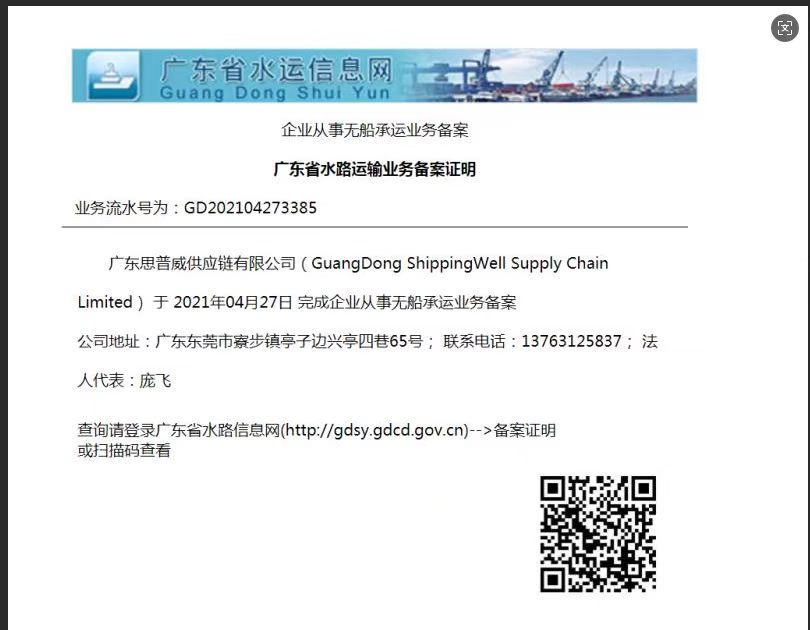
Shippingwell holds a NOVCC certificate applicable to sea freight in the United States, the European Union, and the United Kingdom. It also lists a Record Filing Form for International Freight Forwarders covering logistics services involving China, North America, Europe, Southeast Asia, the Middle East, and Africa.
Frequently Asked Questions
Which method is most economical for bulk replenishment?
Ocean freight is the stated option for cost-sensitive bulk shipments. Economy sea freight to South America is listed at 42–55 days door to door, although port conditions and customs processing may affect the final schedule. Rail can also be considered where the route and cargo profile are suitable.
How does DDP simplify international delivery?
DDP brings together pickup, export declaration, international transport, destination customs clearance, duty and tax payment, tracking, and final delivery. Compliance checks and exception support provide additional control throughout the shipment.
Can the current information confirm which option has the lowest emissions?
No. The supplied data describes delivery functions, transit estimates, and operational controls but does not provide fuel consumption, emissions figures, or a lifecycle assessment. Ocean and rail are presented as cost-effective choices, but their environmental ranking requires separate verified data.
Practical Recommendations
Use economy ocean freight or rail when replenishment volume is high and the delivery window allows longer transit. Consider expedited sea freight when a shorter ocean schedule is needed, and select air freight when speed is the primary requirement. For shipments involving multiple jurisdictions, customs procedures, tax settlement, and final-mile coordination, a multimodal DDP service can provide a single point of operational control.
The service model supports individual shipments, pallets, and full containers. Payment options listed include full payment, installment payment, T/T, PayPal, and other compliant cross-border methods. For technical logistics planning or service support, contact Sales@shippingwell.com.
About Shippingwell
Guangdong Shippingwell Supply Chain Limited, also known as SPW Supply Chain, is headquartered in Dongguan and maintains offices in the United States, Hong Kong, the United Kingdom, Germany, France, and other locations. Its international logistics and overseas warehousing services include customs clearance, delivery, FCL, LCL, air freight, express shipping, overseas warehousing, and last-mile distribution.
Founded in 2021, the company serves customers in North America, South America, Europe, the Middle East, Africa, and Southeast Asia. Its logistics team has more than 20 years of industry experience and uses a digital system for order management, shipment monitoring, and real-time cargo tracking. Listed credentials include the NOVCC certificate and the Record Filing Form for International Freight Forwarders. The company has also completed a DDP full-container program for a Canadian trading business.
REPORT