







-
 Agriculture
-
 Health-Care
-
 Environment
-
 Construction-Real-Estate
-
 Tools-Hardware
-
 Home-Garden
-
 Furniture
-
 Luggage-Bags-Cases
-
 Medical-devices-Supplies
-
 Gifts-Crafts
-
 Sports-Entertainment
-
 Food-Beverage
-
 Vehicles-Transportation
-
 Power-Transmission
-
 Material-Handling
-
 Renewable-Energy
-
 Safety
-
 Testing-Instrument-Equipment
-
 Construction-Building-Machinery
-
 Pet-Supplies
-
 Personal-Care-Household-Cleaning
-
 Vehicle-Accessories-Electronics-Tools
-
 School-Office-Supplies
-
 Packaging-Printing
-
 Mother-Kids-Toys
-
 Business-Services
-
 Commercial-Equipment-Machinery
-
 Apparel-Accessories
-
 Security
-
 Shoes-Accessories
-
 Vehicle-Parts-Accessories
-
 Jewelry-Eyewear-Watches-Accessories
-
 Lights-Lighting
-
 Fabric-Textile-Raw-Material
-
 Fabrication-Services
-
 Industrial-Machinery
-
 Consumer-Electronics
-
 Electrical-Equipment-Supplies
-
 Electronic-Components-Accessories-Telecommunications
-
 Home-Appliances
-
 Beauty
-
 Chemicals
-
 Rubber-Plastics
-
 Metals-Alloys


























































































































































































































































































































































































































































































































































































- Masonry Materials
- Curtain Walls & Accessories
- Earthwork Products
- Fireproofing Materials
- Heat Insulation Materials
- Plastic Building Materials
- Building Boards
- Soundproofing Materials
- Timber
- Waterproofing Materials
- Balustrades & Handrails
- Bathroom & Kitchen
- Flooring & Accessories
- Tiles & Accessories
- Door, Window & Accessories
- Fireplaces & Stoves
- Floor Heating Systems & Parts
- Stairs & Stair Parts
- Ceilings
- Elevators & Escalators
- Stone
- Countertops, Vanity Tops & Table Tops
- Mosaics
- Metal Building Materials
- Multifunctional Materials
- Ladders & Scaffoldings
- Mouldings
- Corner Guards
- Decorative Films
- Formwork
- Building & Industrial Glass
- Other Construction & Real Estate
- Wallpapers/Wall panels
- HVAC System & Parts
- Outdoor Facilities
- Prefabricated Buildings
- Festive & Party Supplies
- Bathroom Products
- Household Sundries
- Rain Gear
- Garden Supplies
- Household Cleaning Tools & Accessories
- Lighters & Smoking Accessories
- Home Storage & Organization
- Household Scales
- Smart Home Improvement
- Home Textiles
- Kitchenware
- Drinkware & Accessories
- Dinnerware, Coffee & Wine
- Home Decor
- Golf
- Fitness & Body Building
- Amusement Park Facilities
- Billiards, Board Game,Coin Operated Games
- Musical Instruments
- Outdoor Affordable Luxury Sports
- Camping & Hiking
- Fishing
- Sports Safety&Rehabilitation
- Ball Sports Equipments
- Water Sports
- Winter Sports
- Luxury Travel Equipments
- Sports Shoes, Bags & Accessories
- Cycling
- Other Sports & Entertainment Products
- Artificial Grass&Sports Flooring&Sports Court Equipment
- Scooters
- Food Ingredients
- Honey & Honey Products
- Snacks
- Nuts & Kernels
- Seafood
- Plant & Animal Oil
- Beverages
- Fruit & Vegetable Products
- Frog & Escargot
- Bean Products
- Egg Products
- Dairy Products
- Seasonings & Condiments
- Canned Food
- Instant Food
- Baked Goods
- Other Food & Beverage
- Meat & Poultry
- Confectionery
- Grain Products
- Feminie Care
- Hair Care & Styling
- Body Care
- Hands & Feet Care
- Hygiene Products
- Men's Grooming
- Laundry Cleaning Supplies
- Travel Size & Gift Sets
- Room Deodorizers
- Other Personal Care Products
- Pest Control Products
- Special Household Cleaning
- Floor Cleaning
- Kitchen & Bathroom Cleaning
- Oral Care
- Bath Supplies
- Yellow Pages
- Correction Supplies
- Office Binding Supplies
- Office Cutting Supplies
- Board Erasers
- Office Adhesives & Tapes
- Education Supplies
- Pencil Cases & Bags
- Notebooks & Writing Pads
- File Folder Accessories
- Calendars
- Writing Accessories
- Commercial Office Supplies
- Pencil Sharpeners
- Pens
- Letter Pad/Paper
- Paper Envelopes
- Desk Organizers
- Pencils
- Markers & Highlighters
- Filing Products
- Art Supplies
- Easels
- Badge Holder & Accessories
- Office Paper
- Printer Supplies
- Book Covers
- Other Office & School Supplies
- Stationery Set
- Boards
- Clipboards
- Stamps
- Drafting Supplies
- Stencils
- Electronic Dictionary
- Books
- Map
- Magazines
- Calculators
- Baby & Toddler Toys
- Educational Toys
- Classic Toys
- Dress Up & Pretend Play
- Toy Vehicle
- Stuffed Animals & Plush Toys
- Outdoor Toys & Structures
- Balloons & Accessories
- Baby Food
- Children's Clothing
- Baby Supplies & Products
- Maternity Clothes
- Kids Shoes
- Baby Care
- Novelty & Gag Toys
- Dolls & Accessories
- Puzzle & Games
- Blocks & Model Building Toys
- Toddler Clothing
- Baby Clothing
- Kids' Luggage & Bags
- Arts, Crafts & DIY Toys
- Action & Toy Figures
- Baby Appliances
- Hobbies & Models
- Remote Control Toys
- Promotional Toys
- Pregnancy & Maternity
- Hygiene Products
- Kid's Textile&Bedding
- Novelty & Special Use
- Toy Weapons
- Baby Gifts
- Baby Storage & Organization
- Auto Drive Systems
- ATV/UTV Parts & Accessories
- Marine Parts & Accessories
- Other Auto Parts
- Trailer Parts & Accessories
- Auto Transmission Systems
- Train Parts & Accessories
- Universal Parts
- Railway Parts & Accessories
- Auto Brake Systems
- Aviation Parts & Accessories
- Truck Parts & Accessories
- Auto Suspension Systems
- Auto Lighting Systems
- New Energy Vehicle Parts & Accessories
- Auto Steering Systems
- Wheels, Tires & Accessories
- Bus Parts & Accessories
- Auto Performance Parts
- Cooling System
- Go-Kart & Kart Racer Parts & Accessories
- Air Conditioning Systems
- Heavy Duty Vehicle Parts & Accessories
- Auto Electrical Systems
- Auto Body Systems
- Auto Engine Systems
- Container Parts & Accessories
- Motorcycle Parts & Accessories
- Refrigeration & Heat Exchange Equipment
- Machine Tool Equipment
- Food & Beverage Machinery
- Agricultural Machinery & Equipment
- Apparel & Textile Machinery
- Chemical Machinery
- Packaging Machines
- Paper Production Machinery
- Plastic & Rubber Processing Machinery
- Industrial Robots
- Electronic Products Machinery
- Metal & Metallurgy Machinery
- Woodworking Machinery
- Home Product Manufacturing Machinery
- Machinery Accessories
- Environmental Machinery
- Machinery Service
- Electrical Equipment Manufacturing Machinery
- Industrial Compressors & Parts
- Tobacco & Cigarette Machinery
- Production Line
- Used Industrial Machinery
- Electronics Production Machinery
- Other Machinery & Industrial Equipment
- Camera, Photo & Accessories
- Portable Audio, Video & Accessories
- Television, Home Audio, Video & Accessories
- Video Games & Accessories
- Mobile Phone & Accessories
- Electronic Publications
- Earphone & Headphone & Accessories
- Speakers & Accessories
- Smart Electronics
- TV Receivers & Accessories
- Mobile Phone & Computer Repair Parts
- Chargers, Batteries & Power Supplies
- Used Electronics
- VR, AR, MR Hardware & Software
- Projectors & Presentation Equipments
- Other Consumer Electronics
- Cables & Commonly Used Accessories
- Computer Hardware & Software
- Displays, Signage and Optoelectronics
- Discrete Semiconductors
- Wireless & IoT Module and Products
- Telecommunications
- Connectors, Terminals & Accessories
- Development Boards, Electronic Modules and Kits
- Circuit Protection
- Sensors
- Isolators
- Audio Components and Products
- Integrated Circuits
- Power Supplies
- Relays
- RF, Microwave and RFID
- Electronic Accessories & Supplies
- Passive Components
- PCB & PCBA
- Air Quality Appliances
- Home Appliance Parts
- Heating & Cooling Appliances
- Small Kitchen Appliances
- Laundry Appliances
- Water Heaters
- Water Treatment Appliances
- Refrigerators & Freezers
- Personal Care & Beauty Appliances
- Major Kitchen Appliances
- Cleaning Appliances
- Second-hand Appliances
- Smart Home Appliances
- Other Home Appliances
- Energy Chemicals
- Inorganic Chemicals
- Basic Organic Chemicals
- Agrochemicals
- Admixture & Additives
- Catalysts & Chemical Auxiliary Agents
- Pigments & Dyestuff
- Coating & Paint
- Daily Chemicals
- Polymer
- Organic Intermediate
- Adhesives & Sealants
- Chemical Waste
- Biological Chemical Products
- Surface Treatment Chemicals
- Painting & Coating
- Chemical Reagents
- Flavor & Fragrance
- Non-Explosive Demolition Agents
- Other Chemicals
- Custom Chemical Services

How to Safeguard Artwork and Machine Specifications for a Customized UV Printer
When ordering a customized UV flatbed or label printing solution, artwork protection and machine-design control should be managed throughout the preparation and production process. A practical workflow includes restricting access to production files, applying ICC profiles for reliable color reproduction, verifying media compatibility, and documenting every approved machine specification. The NC-SLP20 provides high-precision printing, automatic label positioning, stable media transport, and remote technical assistance. However, the available product information does not confirm legal intellectual-property protection or formal confidentiality procedures, so those matters must be agreed with the supplier separately.
Practical Measures for Protecting Customized Production
- Apply ICC color profiles to preserve the intended appearance of logos, graphics, text, and other personalized artwork.
- Approve and record the final artwork, label size, media specification, and printer configuration before production begins. The NC-SLP20 supports label widths of up to 200 mm and uses a gap sensor to identify label edges.
- Maintain accurate feeding by using the vacuum suction platform, hold-down plates, rear loading structure, and front take-up fixtures to keep media flat and correctly aligned.
- For packaging, logistics, food and beverage, electronics, cosmetics, or other labeling projects, confirm the design, substrate, and operating parameters before starting a production batch.
How the Printer Supports Artwork Accuracy
In the information provided, artwork protection is primarily addressed through color management, resolution, and positioning control. The NC-SLP20 supports ICC profiles, giving operators a consistent reference for reproducing approved colors across customized label designs and different production runs.
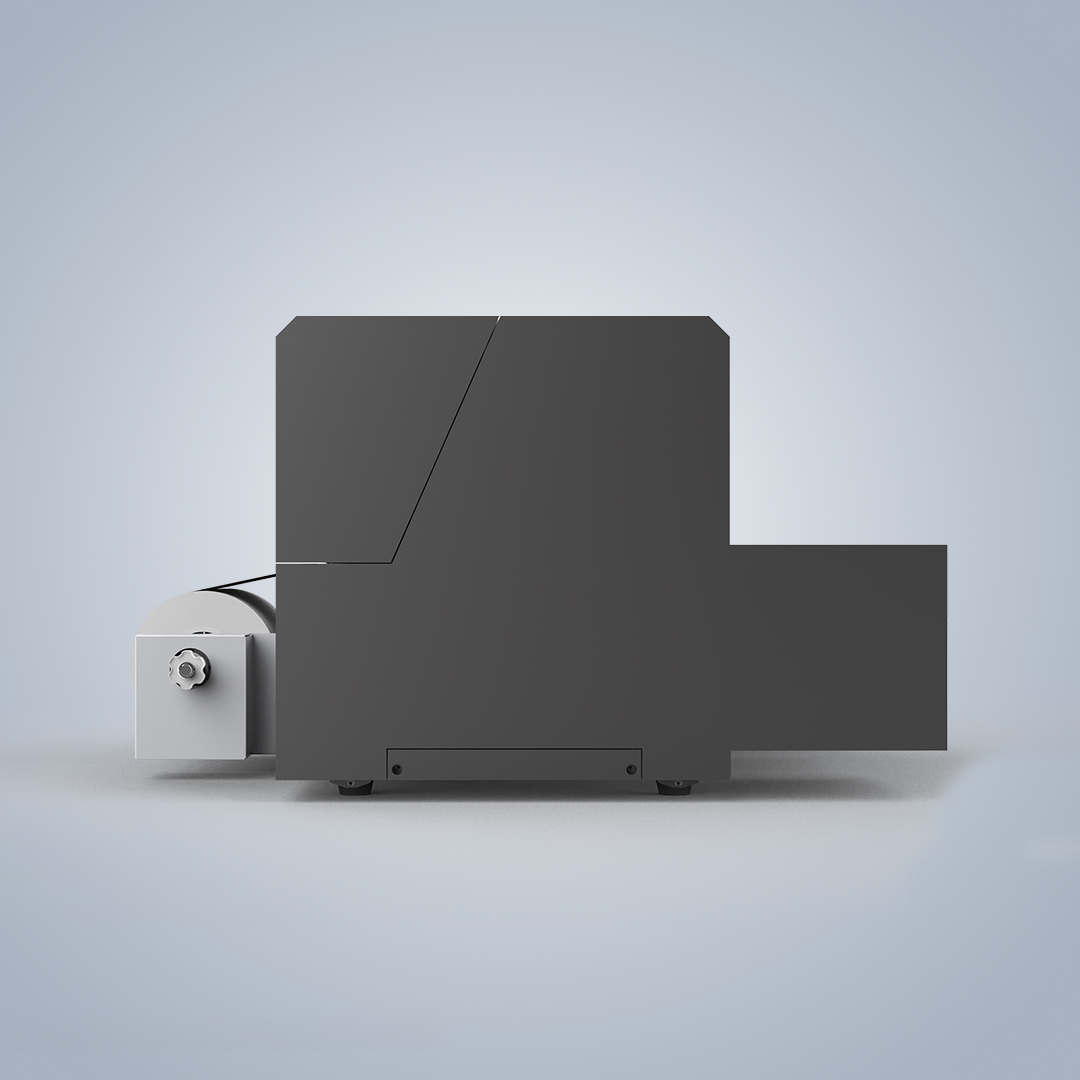
Two Epson 11600-U1 printheads and a maximum resolution of 1200 dpi enable the machine to reproduce fine design elements. The stated capability to print text as small as 3pt, together with high-saturation full-color output, is suitable for detailed logos, product information, barcodes, and other graphic components. To preserve the approved result, the source file should be finalized, color-managed, and reviewed before it is released to production.
Positioning and Media Control
Accurate artwork placement also depends on stable media transport. The NC-SLP20 uses a gap sensor to detect label edges and assist with repeatable positioning. Its vacuum suction platform and hold-down plates help prevent movement or lifting during printing, while the roll-media fixtures support loading and unloading when production changes between media sizes.
These mechanical functions help preserve the placement and proportions of customized designs, but they are not substitutes for contractual or digital security measures. A production team should still control who can access artwork files, identify the approved file version, and retain a record of the settings used for each job.
Documenting the Customized Machine Design
Machine-design protection begins with a written specification that clearly identifies what the customer has approved. The available product information describes the NC-SLP20 as a high-precision color scanning label printer and lists features including a foldable control panel, vacuum suction platform, hold-down plates, roll-media fixtures, automatic ink circulation, a low-ink alarm, independent ink cartridges, and a label gap sensor.
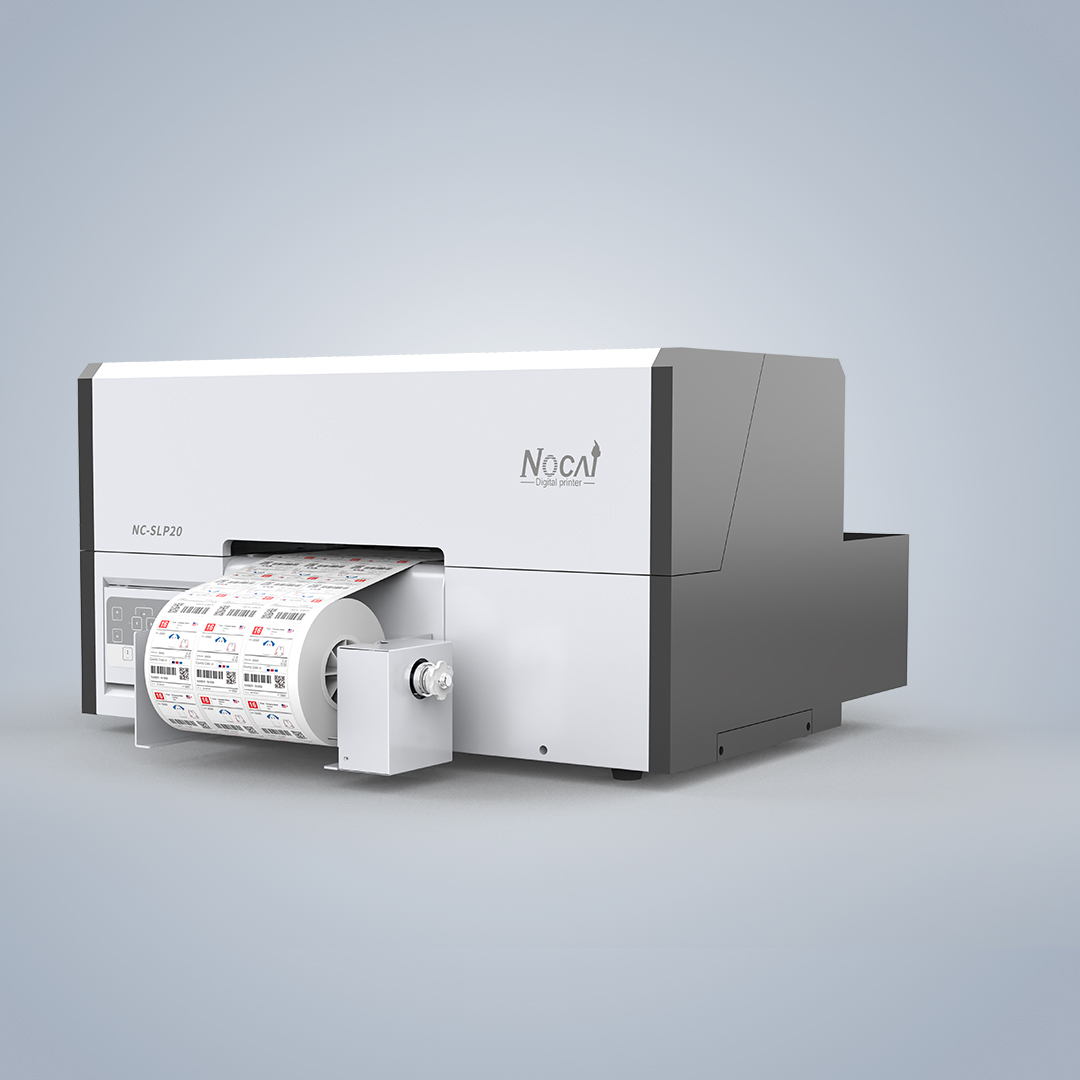
Before manufacturing or delivery, the parties should record the agreed machine configuration, optional functions, media dimensions, electrical requirements, software settings, and any customer-specific modifications. Product images, technical drawings, approved quotations, and a final specification sheet can provide a useful reference for verifying that the delivered equipment matches the agreed design.
The supplied information does not state that Nocai provides non-disclosure agreements, patent registration, encrypted file storage, watermarking, permission-based access, or contractual ownership terms. Customers sharing proprietary artwork, machine drawings, or customization instructions should therefore ask the supplier to confirm these protections in writing before transferring sensitive materials.
Production Features Relevant to Customized Labels
The NC-SLP20 is designed for batch label production and supports media widths up to 200 mm. Roll-media fixtures simplify material changes, while automatic ink circulation and independent ink cartridges help maintain operation during extended production. A low-ink warning can alert operators before a supply interruption occurs, and color-specific refilling supports more controlled maintenance.
Nocai presents label-industry applications for short runs, diverse product ranges, personalized products, and fast delivery. The listed application areas include packaging, electronics, cosmetics, stationery, drinkware, and logistics. In each of these environments, artwork approval, substrate testing, and repeatable machine settings are important for reducing waste and maintaining consistency between batches.
What the Available Information Confirms
| Control area | Support identified in the product information |
|---|---|
| Color consistency | ICC profiles, high-saturation printing, and full-color output |
| Fine design reproduction | Up to 1200 dpi resolution and text printing as small as 3pt |
| Label positioning | Automatic edge detection through a gap sensor |
| Media stability | Vacuum suction platform, hold-down plates, and roll-media fixtures |
| Configuration verification | Documented product features, operating functions, and machine images |
| Intellectual-property ownership | Not defined in the supplied product data |
| Confidentiality and access control | Not defined in the supplied product data |
| Post-sale technical assistance | Online support, video calls, remote control, manuals, installation videos, and spare-part replacement videos |
Frequently Asked Questions
How can the NC-SLP20 help maintain the appearance of customized artwork?
The printer supports ICC profiles for controlled color reproduction and offers a maximum resolution of 1200 dpi. Its stated ability to print 3pt text and high-saturation full-color images also supports detailed artwork and label graphics.
Does the available data guarantee legal protection for my artwork or machine design?
No. The provided information does not confirm non-disclosure agreements, ownership clauses, patent services, encryption, user permissions, or other legal and technical confidentiality safeguards. These conditions should be negotiated and documented separately.
Which functions help achieve repeatable label results?
The vacuum platform, hold-down plates, roll-media fixtures, gap sensor, automatic ink circulation, independent ink cartridges, and low-ink alert all support stable and repeatable operation. The printer accommodates label widths up to 200 mm.
What should be approved before sending files to production?
Confirm the final artwork version, color profile, label dimensions, media type, finishing requirements, machine options, and operating parameters. Keeping this information in a signed or otherwise traceable approval record helps reduce disputes and production errors.
Conclusion and Recommended Workflow
Protecting artwork and a customized UV printer design requires both production discipline and explicit commercial agreements. Use ICC profiles, approve the final artwork before printing, test and confirm the selected media, and document the complete machine configuration. The NC-SLP20 contributes accurate color output, fine resolution, automatic label-edge detection, and stable media handling for repeatable label production.
Nocai lists ISO certification for digital printer design and production and identifies CE certification for NC-UV0406, NC-UV0609PEII-III, NC-CylinderEIr-ll, NC-CylinderEIf-l, and NC-CylinderEIf-IV. These credentials relate to the company and the specified products; they do not by themselves establish ownership or confidentiality rights for customer artwork or machine designs.
The company also describes online support, video meetings, remote control, user manuals, installation videos, and spare-parts replacement videos. Its stated business information includes full industrial-chain distribution and direct sales, a minimum order quantity of one unit, and an estimated delivery period of 5-7 days. For technical specifications, customization discussions, or support, contact nc05@gznuocai.com.
About Us
Guangzhou Nuocai Digital Products Co., Ltd., operating under the Nocai brand, is a high-tech company specializing in digital inkjet printing technology research and development, printer design, manufacturing, sales, and after-sales service. Established in 2019, the company reports 238 employees and a professional team of more than 50 R&D engineers and designers. Its product range includes UV printers, UV DTF printers, and rotary printers. Nocai lists ISO and CE certifications and serves customers across several industries and international markets.
REPORT