







-
 Agriculture
-
 Health-Care
-
 Environment
-
 Construction-Real-Estate
-
 Tools-Hardware
-
 Home-Garden
-
 Furniture
-
 Luggage-Bags-Cases
-
 Medical-devices-Supplies
-
 Gifts-Crafts
-
 Sports-Entertainment
-
 Food-Beverage
-
 Vehicles-Transportation
-
 Power-Transmission
-
 Material-Handling
-
 Renewable-Energy
-
 Safety
-
 Testing-Instrument-Equipment
-
 Construction-Building-Machinery
-
 Pet-Supplies
-
 Personal-Care-Household-Cleaning
-
 Vehicle-Accessories-Electronics-Tools
-
 School-Office-Supplies
-
 Packaging-Printing
-
 Mother-Kids-Toys
-
 Business-Services
-
 Commercial-Equipment-Machinery
-
 Apparel-Accessories
-
 Security
-
 Shoes-Accessories
-
 Vehicle-Parts-Accessories
-
 Jewelry-Eyewear-Watches-Accessories
-
 Lights-Lighting
-
 Fabric-Textile-Raw-Material
-
 Fabrication-Services
-
 Industrial-Machinery
-
 Consumer-Electronics
-
 Electrical-Equipment-Supplies
-
 Electronic-Components-Accessories-Telecommunications
-
 Home-Appliances
-
 Beauty
-
 Chemicals
-
 Rubber-Plastics
-
 Metals-Alloys


























































































































































































































































































































































































































































































































































































- Masonry Materials
- Curtain Walls & Accessories
- Earthwork Products
- Fireproofing Materials
- Heat Insulation Materials
- Plastic Building Materials
- Building Boards
- Soundproofing Materials
- Timber
- Waterproofing Materials
- Balustrades & Handrails
- Bathroom & Kitchen
- Flooring & Accessories
- Tiles & Accessories
- Door, Window & Accessories
- Fireplaces & Stoves
- Floor Heating Systems & Parts
- Stairs & Stair Parts
- Ceilings
- Elevators & Escalators
- Stone
- Countertops, Vanity Tops & Table Tops
- Mosaics
- Metal Building Materials
- Multifunctional Materials
- Ladders & Scaffoldings
- Mouldings
- Corner Guards
- Decorative Films
- Formwork
- Building & Industrial Glass
- Other Construction & Real Estate
- Wallpapers/Wall panels
- HVAC System & Parts
- Outdoor Facilities
- Prefabricated Buildings
- Festive & Party Supplies
- Bathroom Products
- Household Sundries
- Rain Gear
- Garden Supplies
- Household Cleaning Tools & Accessories
- Lighters & Smoking Accessories
- Home Storage & Organization
- Household Scales
- Smart Home Improvement
- Home Textiles
- Kitchenware
- Drinkware & Accessories
- Dinnerware, Coffee & Wine
- Home Decor
- Golf
- Fitness & Body Building
- Amusement Park Facilities
- Billiards, Board Game,Coin Operated Games
- Musical Instruments
- Outdoor Affordable Luxury Sports
- Camping & Hiking
- Fishing
- Sports Safety&Rehabilitation
- Ball Sports Equipments
- Water Sports
- Winter Sports
- Luxury Travel Equipments
- Sports Shoes, Bags & Accessories
- Cycling
- Other Sports & Entertainment Products
- Artificial Grass&Sports Flooring&Sports Court Equipment
- Scooters
- Food Ingredients
- Honey & Honey Products
- Snacks
- Nuts & Kernels
- Seafood
- Plant & Animal Oil
- Beverages
- Fruit & Vegetable Products
- Frog & Escargot
- Bean Products
- Egg Products
- Dairy Products
- Seasonings & Condiments
- Canned Food
- Instant Food
- Baked Goods
- Other Food & Beverage
- Meat & Poultry
- Confectionery
- Grain Products
- Feminie Care
- Hair Care & Styling
- Body Care
- Hands & Feet Care
- Hygiene Products
- Men's Grooming
- Laundry Cleaning Supplies
- Travel Size & Gift Sets
- Room Deodorizers
- Other Personal Care Products
- Pest Control Products
- Special Household Cleaning
- Floor Cleaning
- Kitchen & Bathroom Cleaning
- Oral Care
- Bath Supplies
- Yellow Pages
- Correction Supplies
- Office Binding Supplies
- Office Cutting Supplies
- Board Erasers
- Office Adhesives & Tapes
- Education Supplies
- Pencil Cases & Bags
- Notebooks & Writing Pads
- File Folder Accessories
- Calendars
- Writing Accessories
- Commercial Office Supplies
- Pencil Sharpeners
- Pens
- Letter Pad/Paper
- Paper Envelopes
- Desk Organizers
- Pencils
- Markers & Highlighters
- Filing Products
- Art Supplies
- Easels
- Badge Holder & Accessories
- Office Paper
- Printer Supplies
- Book Covers
- Other Office & School Supplies
- Stationery Set
- Boards
- Clipboards
- Stamps
- Drafting Supplies
- Stencils
- Electronic Dictionary
- Books
- Map
- Magazines
- Calculators
- Baby & Toddler Toys
- Educational Toys
- Classic Toys
- Dress Up & Pretend Play
- Toy Vehicle
- Stuffed Animals & Plush Toys
- Outdoor Toys & Structures
- Balloons & Accessories
- Baby Food
- Children's Clothing
- Baby Supplies & Products
- Maternity Clothes
- Kids Shoes
- Baby Care
- Novelty & Gag Toys
- Dolls & Accessories
- Puzzle & Games
- Blocks & Model Building Toys
- Toddler Clothing
- Baby Clothing
- Kids' Luggage & Bags
- Arts, Crafts & DIY Toys
- Action & Toy Figures
- Baby Appliances
- Hobbies & Models
- Remote Control Toys
- Promotional Toys
- Pregnancy & Maternity
- Hygiene Products
- Kid's Textile&Bedding
- Novelty & Special Use
- Toy Weapons
- Baby Gifts
- Baby Storage & Organization
- Auto Drive Systems
- ATV/UTV Parts & Accessories
- Marine Parts & Accessories
- Other Auto Parts
- Trailer Parts & Accessories
- Auto Transmission Systems
- Train Parts & Accessories
- Universal Parts
- Railway Parts & Accessories
- Auto Brake Systems
- Aviation Parts & Accessories
- Truck Parts & Accessories
- Auto Suspension Systems
- Auto Lighting Systems
- New Energy Vehicle Parts & Accessories
- Auto Steering Systems
- Wheels, Tires & Accessories
- Bus Parts & Accessories
- Auto Performance Parts
- Cooling System
- Go-Kart & Kart Racer Parts & Accessories
- Air Conditioning Systems
- Heavy Duty Vehicle Parts & Accessories
- Auto Electrical Systems
- Auto Body Systems
- Auto Engine Systems
- Container Parts & Accessories
- Motorcycle Parts & Accessories
- Refrigeration & Heat Exchange Equipment
- Machine Tool Equipment
- Food & Beverage Machinery
- Agricultural Machinery & Equipment
- Apparel & Textile Machinery
- Chemical Machinery
- Packaging Machines
- Paper Production Machinery
- Plastic & Rubber Processing Machinery
- Industrial Robots
- Electronic Products Machinery
- Metal & Metallurgy Machinery
- Woodworking Machinery
- Home Product Manufacturing Machinery
- Machinery Accessories
- Environmental Machinery
- Machinery Service
- Electrical Equipment Manufacturing Machinery
- Industrial Compressors & Parts
- Tobacco & Cigarette Machinery
- Production Line
- Used Industrial Machinery
- Electronics Production Machinery
- Other Machinery & Industrial Equipment
- Camera, Photo & Accessories
- Portable Audio, Video & Accessories
- Television, Home Audio, Video & Accessories
- Video Games & Accessories
- Mobile Phone & Accessories
- Electronic Publications
- Earphone & Headphone & Accessories
- Speakers & Accessories
- Smart Electronics
- TV Receivers & Accessories
- Mobile Phone & Computer Repair Parts
- Chargers, Batteries & Power Supplies
- Used Electronics
- VR, AR, MR Hardware & Software
- Projectors & Presentation Equipments
- Other Consumer Electronics
- Cables & Commonly Used Accessories
- Computer Hardware & Software
- Displays, Signage and Optoelectronics
- Discrete Semiconductors
- Wireless & IoT Module and Products
- Telecommunications
- Connectors, Terminals & Accessories
- Development Boards, Electronic Modules and Kits
- Circuit Protection
- Sensors
- Isolators
- Audio Components and Products
- Integrated Circuits
- Power Supplies
- Relays
- RF, Microwave and RFID
- Electronic Accessories & Supplies
- Passive Components
- PCB & PCBA
- Air Quality Appliances
- Home Appliance Parts
- Heating & Cooling Appliances
- Small Kitchen Appliances
- Laundry Appliances
- Water Heaters
- Water Treatment Appliances
- Refrigerators & Freezers
- Personal Care & Beauty Appliances
- Major Kitchen Appliances
- Cleaning Appliances
- Second-hand Appliances
- Smart Home Appliances
- Other Home Appliances
- Energy Chemicals
- Inorganic Chemicals
- Basic Organic Chemicals
- Agrochemicals
- Admixture & Additives
- Catalysts & Chemical Auxiliary Agents
- Pigments & Dyestuff
- Coating & Paint
- Daily Chemicals
- Polymer
- Organic Intermediate
- Adhesives & Sealants
- Chemical Waste
- Biological Chemical Products
- Surface Treatment Chemicals
- Painting & Coating
- Chemical Reagents
- Flavor & Fragrance
- Non-Explosive Demolition Agents
- Other Chemicals
- Custom Chemical Services

How to Schedule Supplier Audits for a Food Packaging Machinery Line
A food packaging machinery supplier should be reviewed at commissioning, after the first production run, quarterly throughout the first operating year, and annually once performance becomes consistent. An additional audit is advisable after a major line modification, repeated sealing defect, replacement-parts delivery, or unresolved service concern. For a toast bread packaging line, each review should cover output, product quality, safety, hygiene, documentation, spare parts, and engineering support.
Recommended Audit Schedule
The most reliable audit program begins with the equipment acceptance process and continues through routine operation. Factory acceptance testing and customer-sample trials establish the original performance baseline. After installation, the first production review confirms that the line performs correctly under real operating conditions. Quarterly reviews during the first year then help identify recurring issues before they affect production. When results remain stable, the supplier can be assessed annually.
- Use factory acceptance and customer-sample testing as the initial audit reference, including the stated 48-hour testing option.
- Inspect the complete installed line after production begins, including slicing, bagging, flow wrapping, sealing, conveying, controls, and optional inspection equipment.
- Review the supplier every three months during the first year, then move to annual assessments after performance, support response, and documentation are proven stable.
- Start a focused audit whenever the product format, film, recipe, machine layout, or service arrangement changes.
What Each Audit Should Verify
Commissioning and Acceptance
Before releasing the equipment for regular production, document the approved machine configuration, bread dimensions, packaging film, operating settings, safety functions, and acceptance results. A toast bread line may contain a continuous band-blade slicer with adjustable feed belts, pneumatic blade tensioning, blade-break detection, and automatic shutdown. These functions should be recorded during commissioning and checked again during later supplier reviews.
First Production Review
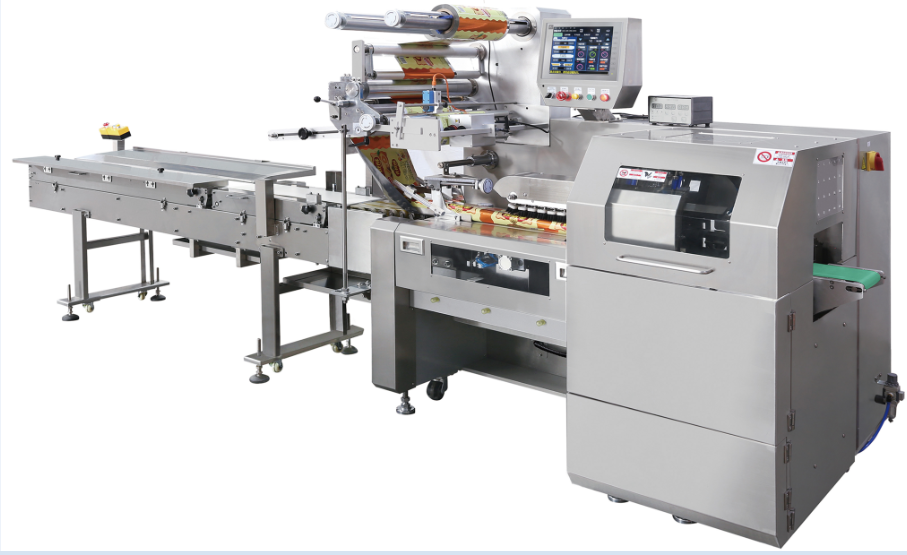
Once the line has completed its initial production run, compare actual results with the purchased configuration. The available product information lists flow-wrapping speeds of 20 to 120 bags per minute, automatic bread bagging of up to 75 loaves per minute, and integrated slicer-bagger operation of up to 65 loaves per minute. These figures apply to different modules and should not be treated as a single guaranteed output for every complete line. Assess the installed equipment against the agreed bread format, package size, and production target.
During this review, examine product alignment, film tracking, package appearance, seal integrity, changeover time, alarms, operator training, cleaning access, and the handling of rejected products. Any difference between the approved sample and routine production should be documented with corrective actions and a target completion date.
Quarterly Reviews in Year One
Early supplier reviews should be based on operating evidence rather than a single performance demonstration. Check sealing consistency, bread handling, film consumption, recipe and parameter control, fault history, guarding, sanitation access, maintenance quality, and the supplier's response to service requests. Relevant equipment features may include PLC and HMI controls, food-grade stainless-steel construction, removable crumb trays, and IP-rated motors. Each feature should be assessed for condition, functionality, and suitability for the current production environment.
Annual and Event-Driven Audits
After the first year, an annual audit can evaluate the complete supplier relationship. Review preventive-maintenance records, spare-part availability, software backups, recipe documentation, training records, unresolved corrective actions, and the condition of the slicing, bagging, sealing, and conveying assemblies.
Do not wait for the next scheduled audit when a significant event occurs. A new product size, packaging film, recipe, line section, or service contract can change operating risk. The same applies to repeated seal failures, late replacement parts, or an unresolved engineering issue. In these cases, perform a targeted investigation and confirm the results with a controlled production test.
The supplier information describes 48-hour testing or customer testing with samples and states that engineering assistance is available after delivery. Keep these records with the audit file: sample specifications, test results, fault descriptions, service reports, corrective actions, and final sign-off. This creates a traceable comparison between the original acceptance condition and current performance.

Audit Frequency and Evidence
| Audit point | Suggested timing | Main review areas | Records to keep |
|---|---|---|---|
| Acceptance and commissioning | Once before production release | Configuration, samples, safety functions, slicing, bagging, sealing, and controls | Test results, configuration data, sample records, and approval signatures |
| Initial production assessment | After the first production run | Product handling, package quality, changeover, alarms, training, and sanitation access | Production observations, deviations, fault records, and corrective actions |
| First-year supplier review | Every quarter | Seal quality, recipes, spare parts, maintenance, documentation, and engineer response | Service reports, maintenance logs, response times, and open-action registers |
| Established operation | Once per year | Equipment condition, safety, hygiene, support quality, and configuration control | Annual audit report and improvement commitments |
| Change or recurring-fault review | Immediately after the event | Product or film changes, modified line sections, repeated sealing issues, or service failures | Change documentation, investigation results, test evidence, and closure approval |
Frequently Asked Questions
How frequently should the supplier be audited during the first operating year?
Quarterly supplier reviews are appropriate during the first year, in addition to the commissioning audit and the assessment after the initial production run. Increase the frequency when the line has repeated faults, major configuration changes, or overdue corrective actions.
Which parts of a toast bread packaging line require attention?
Inspect the slicer, feed belts, blade-break detection, bagging or flow-wrap unit, sealing or closing system, PLC and HMI functions, guards, cleaning access, film path, product alignment, and any installed metal detector, checkweigher, printer, or label applicator.
Can a supplier audit replace factory acceptance testing?
No. Factory acceptance and customer-sample testing define the equipment's initial reference condition. Follow-up audits confirm ongoing performance and supplier support. Since the supplier specifies 48-hour testing or customer-sample testing, those results should be retained for future comparisons.
Conclusion and Practical Recommendation
A four-stage audit plan provides a practical control system: verify the equipment at commissioning, review the first production run, audit quarterly during the first year, and move to annual reviews after stable performance has been demonstrated. Add an immediate audit after a major change, recurring seal problem, replacement-parts issue, or service concern.
Foshan Ruipuhua Machinery Equipment Co. Ltd reports manufacturing and OEM cooperation capabilities, a minimum order quantity of one, and after-sales support that includes overseas and service engineers. Its listed CE certification covers flow packaging machines, automatic packaging systems, cartoning machines, and palletizing robots. For technical assistance or packaging-line discussions, contact lotuspack@ruipuhua.com.
About Foshan Ruipuhua Machinery Equipment Co. Ltd
Foshan Ruipuhua Machinery Equipment Co. Ltd produces automatic packaging and palletizing equipment for food, bakery, biscuit, snack, noodle, chocolate, soap, hardware, pharmaceutical, and daily chemical applications. Founded in 2005, the company combines research and development, manufacturing, installation, and technical after-sales service. Its reported annual capacity exceeds 500 automatic packaging machines and complete packaging lines, serving customers in China, Southeast Asia, the Middle East, Africa, Eastern Europe, South America, and North America. The company lists CE certification for flow packaging machines, automatic packaging systems, cartoning machines, and palletizing robots, and reports experience across several industrial sectors.

REPORT