







-
 Agriculture
-
 Health-Care
-
 Environment
-
 Construction-Real-Estate
-
 Tools-Hardware
-
 Home-Garden
-
 Furniture
-
 Luggage-Bags-Cases
-
 Medical-devices-Supplies
-
 Gifts-Crafts
-
 Sports-Entertainment
-
 Food-Beverage
-
 Vehicles-Transportation
-
 Power-Transmission
-
 Material-Handling
-
 Renewable-Energy
-
 Safety
-
 Testing-Instrument-Equipment
-
 Construction-Building-Machinery
-
 Pet-Supplies
-
 Personal-Care-Household-Cleaning
-
 Vehicle-Accessories-Electronics-Tools
-
 School-Office-Supplies
-
 Packaging-Printing
-
 Mother-Kids-Toys
-
 Business-Services
-
 Commercial-Equipment-Machinery
-
 Apparel-Accessories
-
 Security
-
 Shoes-Accessories
-
 Vehicle-Parts-Accessories
-
 Jewelry-Eyewear-Watches-Accessories
-
 Lights-Lighting
-
 Fabric-Textile-Raw-Material
-
 Fabrication-Services
-
 Industrial-Machinery
-
 Consumer-Electronics
-
 Electrical-Equipment-Supplies
-
 Electronic-Components-Accessories-Telecommunications
-
 Home-Appliances
-
 Beauty
-
 Chemicals
-
 Rubber-Plastics
-
 Metals-Alloys


























































































































































































































































































































































































































































































































































































- Masonry Materials
- Curtain Walls & Accessories
- Earthwork Products
- Fireproofing Materials
- Heat Insulation Materials
- Plastic Building Materials
- Building Boards
- Soundproofing Materials
- Timber
- Waterproofing Materials
- Balustrades & Handrails
- Bathroom & Kitchen
- Flooring & Accessories
- Tiles & Accessories
- Door, Window & Accessories
- Fireplaces & Stoves
- Floor Heating Systems & Parts
- Stairs & Stair Parts
- Ceilings
- Elevators & Escalators
- Stone
- Countertops, Vanity Tops & Table Tops
- Mosaics
- Metal Building Materials
- Multifunctional Materials
- Ladders & Scaffoldings
- Mouldings
- Corner Guards
- Decorative Films
- Formwork
- Building & Industrial Glass
- Other Construction & Real Estate
- Wallpapers/Wall panels
- HVAC System & Parts
- Outdoor Facilities
- Prefabricated Buildings
- Festive & Party Supplies
- Bathroom Products
- Household Sundries
- Rain Gear
- Garden Supplies
- Household Cleaning Tools & Accessories
- Lighters & Smoking Accessories
- Home Storage & Organization
- Household Scales
- Smart Home Improvement
- Home Textiles
- Kitchenware
- Drinkware & Accessories
- Dinnerware, Coffee & Wine
- Home Decor
- Golf
- Fitness & Body Building
- Amusement Park Facilities
- Billiards, Board Game,Coin Operated Games
- Musical Instruments
- Outdoor Affordable Luxury Sports
- Camping & Hiking
- Fishing
- Sports Safety&Rehabilitation
- Ball Sports Equipments
- Water Sports
- Winter Sports
- Luxury Travel Equipments
- Sports Shoes, Bags & Accessories
- Cycling
- Other Sports & Entertainment Products
- Artificial Grass&Sports Flooring&Sports Court Equipment
- Scooters
- Food Ingredients
- Honey & Honey Products
- Snacks
- Nuts & Kernels
- Seafood
- Plant & Animal Oil
- Beverages
- Fruit & Vegetable Products
- Frog & Escargot
- Bean Products
- Egg Products
- Dairy Products
- Seasonings & Condiments
- Canned Food
- Instant Food
- Baked Goods
- Other Food & Beverage
- Meat & Poultry
- Confectionery
- Grain Products
- Feminie Care
- Hair Care & Styling
- Body Care
- Hands & Feet Care
- Hygiene Products
- Men's Grooming
- Laundry Cleaning Supplies
- Travel Size & Gift Sets
- Room Deodorizers
- Other Personal Care Products
- Pest Control Products
- Special Household Cleaning
- Floor Cleaning
- Kitchen & Bathroom Cleaning
- Oral Care
- Bath Supplies
- Yellow Pages
- Correction Supplies
- Office Binding Supplies
- Office Cutting Supplies
- Board Erasers
- Office Adhesives & Tapes
- Education Supplies
- Pencil Cases & Bags
- Notebooks & Writing Pads
- File Folder Accessories
- Calendars
- Writing Accessories
- Commercial Office Supplies
- Pencil Sharpeners
- Pens
- Letter Pad/Paper
- Paper Envelopes
- Desk Organizers
- Pencils
- Markers & Highlighters
- Filing Products
- Art Supplies
- Easels
- Badge Holder & Accessories
- Office Paper
- Printer Supplies
- Book Covers
- Other Office & School Supplies
- Stationery Set
- Boards
- Clipboards
- Stamps
- Drafting Supplies
- Stencils
- Electronic Dictionary
- Books
- Map
- Magazines
- Calculators
- Baby & Toddler Toys
- Educational Toys
- Classic Toys
- Dress Up & Pretend Play
- Toy Vehicle
- Stuffed Animals & Plush Toys
- Outdoor Toys & Structures
- Balloons & Accessories
- Baby Food
- Children's Clothing
- Baby Supplies & Products
- Maternity Clothes
- Kids Shoes
- Baby Care
- Novelty & Gag Toys
- Dolls & Accessories
- Puzzle & Games
- Blocks & Model Building Toys
- Toddler Clothing
- Baby Clothing
- Kids' Luggage & Bags
- Arts, Crafts & DIY Toys
- Action & Toy Figures
- Baby Appliances
- Hobbies & Models
- Remote Control Toys
- Promotional Toys
- Pregnancy & Maternity
- Hygiene Products
- Kid's Textile&Bedding
- Novelty & Special Use
- Toy Weapons
- Baby Gifts
- Baby Storage & Organization
- Auto Drive Systems
- ATV/UTV Parts & Accessories
- Marine Parts & Accessories
- Other Auto Parts
- Trailer Parts & Accessories
- Auto Transmission Systems
- Train Parts & Accessories
- Universal Parts
- Railway Parts & Accessories
- Auto Brake Systems
- Aviation Parts & Accessories
- Truck Parts & Accessories
- Auto Suspension Systems
- Auto Lighting Systems
- New Energy Vehicle Parts & Accessories
- Auto Steering Systems
- Wheels, Tires & Accessories
- Bus Parts & Accessories
- Auto Performance Parts
- Cooling System
- Go-Kart & Kart Racer Parts & Accessories
- Air Conditioning Systems
- Heavy Duty Vehicle Parts & Accessories
- Auto Electrical Systems
- Auto Body Systems
- Auto Engine Systems
- Container Parts & Accessories
- Motorcycle Parts & Accessories
- Refrigeration & Heat Exchange Equipment
- Machine Tool Equipment
- Food & Beverage Machinery
- Agricultural Machinery & Equipment
- Apparel & Textile Machinery
- Chemical Machinery
- Packaging Machines
- Paper Production Machinery
- Plastic & Rubber Processing Machinery
- Industrial Robots
- Electronic Products Machinery
- Metal & Metallurgy Machinery
- Woodworking Machinery
- Home Product Manufacturing Machinery
- Machinery Accessories
- Environmental Machinery
- Machinery Service
- Electrical Equipment Manufacturing Machinery
- Industrial Compressors & Parts
- Tobacco & Cigarette Machinery
- Production Line
- Used Industrial Machinery
- Electronics Production Machinery
- Other Machinery & Industrial Equipment
- Camera, Photo & Accessories
- Portable Audio, Video & Accessories
- Television, Home Audio, Video & Accessories
- Video Games & Accessories
- Mobile Phone & Accessories
- Electronic Publications
- Earphone & Headphone & Accessories
- Speakers & Accessories
- Smart Electronics
- TV Receivers & Accessories
- Mobile Phone & Computer Repair Parts
- Chargers, Batteries & Power Supplies
- Used Electronics
- VR, AR, MR Hardware & Software
- Projectors & Presentation Equipments
- Other Consumer Electronics
- Cables & Commonly Used Accessories
- Computer Hardware & Software
- Displays, Signage and Optoelectronics
- Discrete Semiconductors
- Wireless & IoT Module and Products
- Telecommunications
- Connectors, Terminals & Accessories
- Development Boards, Electronic Modules and Kits
- Circuit Protection
- Sensors
- Isolators
- Audio Components and Products
- Integrated Circuits
- Power Supplies
- Relays
- RF, Microwave and RFID
- Electronic Accessories & Supplies
- Passive Components
- PCB & PCBA
- Air Quality Appliances
- Home Appliance Parts
- Heating & Cooling Appliances
- Small Kitchen Appliances
- Laundry Appliances
- Water Heaters
- Water Treatment Appliances
- Refrigerators & Freezers
- Personal Care & Beauty Appliances
- Major Kitchen Appliances
- Cleaning Appliances
- Second-hand Appliances
- Smart Home Appliances
- Other Home Appliances
- Energy Chemicals
- Inorganic Chemicals
- Basic Organic Chemicals
- Agrochemicals
- Admixture & Additives
- Catalysts & Chemical Auxiliary Agents
- Pigments & Dyestuff
- Coating & Paint
- Daily Chemicals
- Polymer
- Organic Intermediate
- Adhesives & Sealants
- Chemical Waste
- Biological Chemical Products
- Surface Treatment Chemicals
- Painting & Coating
- Chemical Reagents
- Flavor & Fragrance
- Non-Explosive Demolition Agents
- Other Chemicals
- Custom Chemical Services

How to Select a Double-End Saw for Accurate Hardwood Cutting and Continuous Production
Choosing a Double-End Saw for hardwood processing and high-volume daily output requires more than comparing catalog specifications. The right machine must maintain repeatable sizing accuracy, operate reliably through extended production cycles, and suit the complete workflow for doors, windows, or solid wood components. Buyers should also examine the manufacturer’s inspection procedures, assembly controls, delivery standards, and after-sales capability before making a decision.
What Matters Most When Selecting a Double-End Saw
- Confirm how the supplier controls dimensional precision, assembly clearance, transmission alignment, and final machine adjustment.
- Ask for documented no-load and full-load testing that demonstrates stable operation during long production runs.
- Check whether the proposed Double-End Saw configuration fits the hardwood species, finished dimensions, and downstream processing sequence.
- Review remote technical support, spare-parts response, and available machine or control-system customization options.
Start with Your Hardwood Production Requirements
A Double-End Saw should be selected according to the required finished component, material condition, production volume, and operating schedule. In solid wood furniture, wooden door, wooden window, and wood-aluminum composite door and window production, consistent cutting and sizing are essential. Small dimensional variations can affect later processes such as milling, drilling, slotting, fitting, assembly, and surface finishing.
Before confirming a machine, provide the supplier with information about the wood material, workpiece dimensions, target tolerance, daily capacity, and line layout. This allows the machine configuration to be evaluated against the actual application rather than selected solely from a general model description.
How to Verify Long-Term Cutting Accuracy
Accuracy retention depends on how the equipment is manufactured, assembled, calibrated, and tested. A quoted accuracy figure alone does not show whether the machine can repeatedly hold that result in a demanding hardwood production environment. Buyers should request evidence of the controls used throughout fabrication and final commissioning.
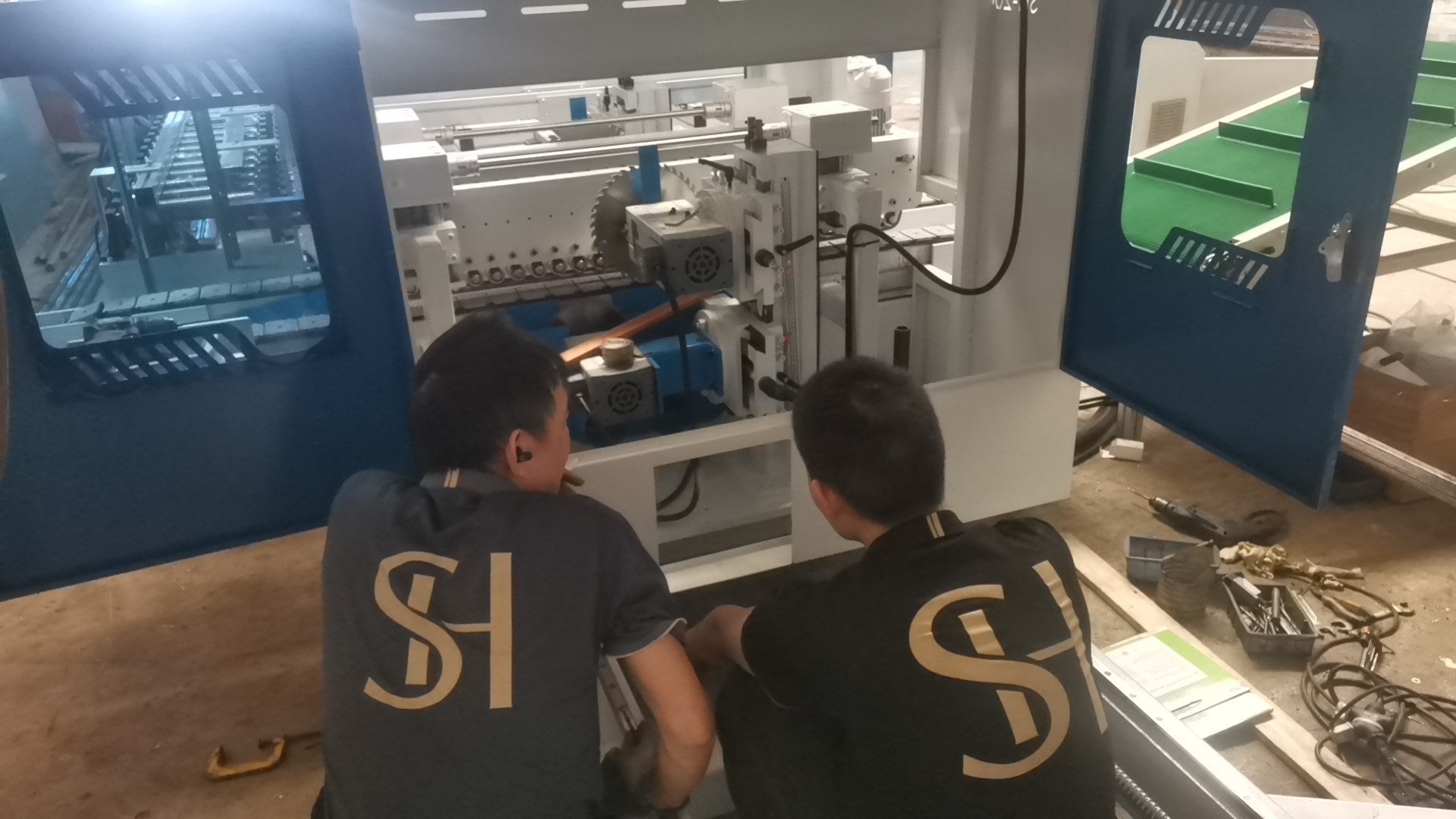
Foshan Sun Hunt states that it uses digital monitoring for key production parameters during sheet metal processing, frame welding, component installation, and final debugging. Its inspection process covers dimensional tolerance, fitting clearance, transmission coaxiality, and electrical matching. These checkpoints are useful indicators when assessing whether a Double-End Saw has been built and adjusted for repeatable operation.
Questions to Ask About Precision Control
- How are critical dimensions checked during machine manufacturing and assembly?
- How is transmission alignment or coaxiality verified?
- What final adjustment and precision remeasurement procedures are completed before shipment?
- Can the supplier provide test records or machine-specific confirmation for the intended hardwood application?
Evaluate Reliability for Continuous Daily Operation
For operations that run throughout the day, delivery inspection should include more than a brief startup test. The machine should be evaluated under both no-load and sustained full-load conditions so that potential issues involving vibration, noise, electrical performance, or mechanical stability can be identified before shipment.
The company states that finished machines undergo no-load operation, long-term full-load running, precision remeasurement, noise and vibration detection, and electrical stability checks. A pre-shipment inspection is also carried out to compare the machine, associated items, packing, and documentation with the customer order before container loading.
These verification steps are particularly relevant for hardwood applications, where material resistance and regular production demand place greater emphasis on stable machine performance.
Confirm Production-Line Compatibility
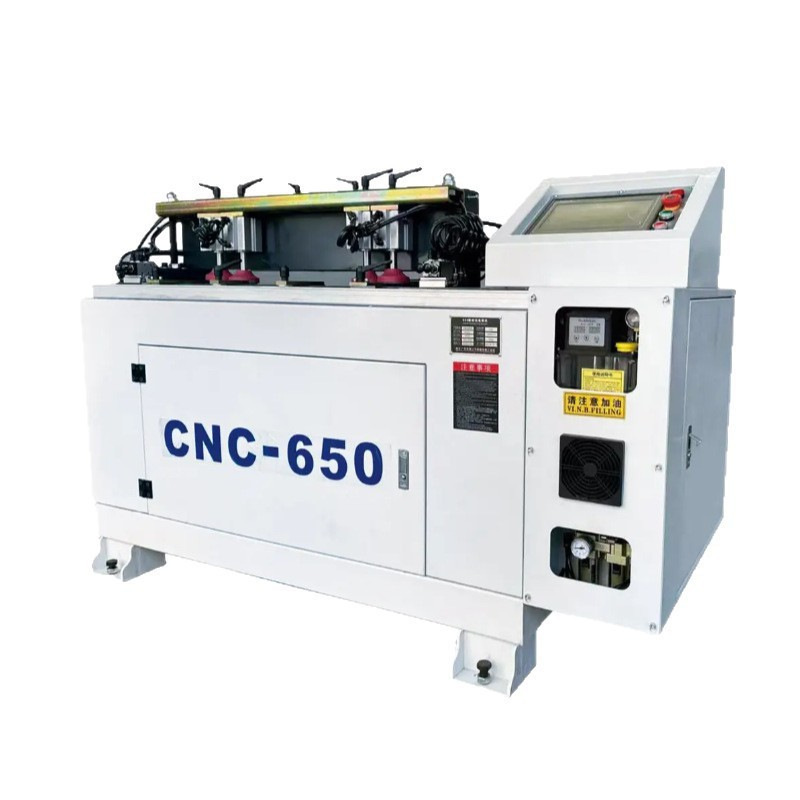
The Double-End Saw should work as part of the wider production system, not as an isolated piece of equipment. Consider material feeding, cutting or sizing requirements, part transfer, downstream machining, and the available factory layout. A suitable configuration should support the order and rhythm of the intended production process.
Foshan Sun Hunt lists solid wood furniture production, wooden door production, wooden window production, and wood-aluminum composite door and window processing among applicable scenarios. The company has also supplied 19 machines for a new wooden door factory line in India and 10 machines for a wood-processing line in the UAE. As these references concern production-line projects rather than a specified Double-End Saw model, buyers should request direct confirmation for their own hardwood process and machine requirements.
Double-End Saw Selection Checklist
| Evaluation Item | What Buyers Should Review | Supplier Evidence Available |
|---|---|---|
| Repeatable accuracy | Dimensional tolerance, assembly clearance, transmission coaxiality, and final calibration | Production Control of Key Parameters system and dedicated testing stations |
| Extended operation | Performance during prolonged running, vibration level, noise, and electrical stability | No-load testing, long-term full-load operation, precision remeasurement, and electrical checks |
| Hardwood application fit | Suitability for the required sizing sequence and downstream door, window, or solid wood processes | Stated applications include solid wood furniture and wood door and window production |
| Shipping protection | Protection of precision components and export packing quality | Moisture-proof film, shock-absorbing materials, reinforced wooden cases, and packaging tests are stated |
| Production recovery support | Remote troubleshooting, technical guidance, spare-parts handling, and response process | Video or voice support, permanent technical assistance, and stated international express dispatch within two working days after fault and part confirmation |
Frequently Asked Questions
How can I determine whether a Double-End Saw will remain accurate over time?
Review the supplier’s manufacturing controls and completed-machine test process. Important items include dimensional tolerance checks, fitting clearance, transmission coaxiality, final precision remeasurement, extended full-load running, and testing for noise, vibration, and electrical stability.
What production applications should be considered before purchasing?
Assess the entire workflow surrounding the machine. Relevant uses include solid wood furniture, wooden doors, wooden windows, and wood-aluminum composite door and window production, where accurate cutting and sizing must support subsequent machining and assembly stages.
What happens if a machine fault interrupts production?
The stated service options include online video or voice guidance, installation tutorials, permanent technical assistance, and remote fault verification. For confirmed spare-parts requirements, international express dispatch is stated to be arranged within two working days. The warranty period is one year, excluding consumables and damage resulting from improper operation.
Conclusion: Choose Based on Proof, Not Specification Alone
For reliable hardwood processing and continuous daily production, select a Double-End Saw only after confirming its accuracy-control process, long-duration testing, application compatibility, export packaging, and service responsiveness. Foshan Sun Hunt offers non-standard customized products and overall production-line solutions, with a stated minimum order quantity of one set and a normal delivery period of 20 to 35 days under its business model. For a detailed technical proposal or support, please contact vincent@fsshmachine.cn.
About Us
Foshan Sun Hunt Woodworking Machinery Co.,Ltd. is a woodworking machinery manufacturer located in Lunjiao Subdistrict, Shunde District, Foshan. Founded in 2014, the company operates a two-thousand-square-meter factory and produces CNC router machines, Double-End Saw series, planer machines, drilling machines, edge banding machines, and panel saws. Its company introduction describes a seven-pillar system covering source control, production parameters, warehousing, packaging, quality inspection, pre-shipment inspection, and after-sales service, supporting customers with production-line projects across different industries.

REPORT