







-
 Agriculture
-
 Health-Care
-
 Environment
-
 Construction-Real-Estate
-
 Tools-Hardware
-
 Home-Garden
-
 Furniture
-
 Luggage-Bags-Cases
-
 Medical-devices-Supplies
-
 Gifts-Crafts
-
 Sports-Entertainment
-
 Food-Beverage
-
 Vehicles-Transportation
-
 Power-Transmission
-
 Material-Handling
-
 Renewable-Energy
-
 Safety
-
 Testing-Instrument-Equipment
-
 Construction-Building-Machinery
-
 Pet-Supplies
-
 Personal-Care-Household-Cleaning
-
 Vehicle-Accessories-Electronics-Tools
-
 School-Office-Supplies
-
 Packaging-Printing
-
 Mother-Kids-Toys
-
 Business-Services
-
 Commercial-Equipment-Machinery
-
 Apparel-Accessories
-
 Security
-
 Shoes-Accessories
-
 Vehicle-Parts-Accessories
-
 Jewelry-Eyewear-Watches-Accessories
-
 Lights-Lighting
-
 Fabric-Textile-Raw-Material
-
 Fabrication-Services
-
 Industrial-Machinery
-
 Consumer-Electronics
-
 Electrical-Equipment-Supplies
-
 Electronic-Components-Accessories-Telecommunications
-
 Home-Appliances
-
 Beauty
-
 Chemicals
-
 Rubber-Plastics
-
 Metals-Alloys


























































































































































































































































































































































































































































































































































































- Masonry Materials
- Curtain Walls & Accessories
- Earthwork Products
- Fireproofing Materials
- Heat Insulation Materials
- Plastic Building Materials
- Building Boards
- Soundproofing Materials
- Timber
- Waterproofing Materials
- Balustrades & Handrails
- Bathroom & Kitchen
- Flooring & Accessories
- Tiles & Accessories
- Door, Window & Accessories
- Fireplaces & Stoves
- Floor Heating Systems & Parts
- Stairs & Stair Parts
- Ceilings
- Elevators & Escalators
- Stone
- Countertops, Vanity Tops & Table Tops
- Mosaics
- Metal Building Materials
- Multifunctional Materials
- Ladders & Scaffoldings
- Mouldings
- Corner Guards
- Decorative Films
- Formwork
- Building & Industrial Glass
- Other Construction & Real Estate
- Wallpapers/Wall panels
- HVAC System & Parts
- Outdoor Facilities
- Prefabricated Buildings
- Festive & Party Supplies
- Bathroom Products
- Household Sundries
- Rain Gear
- Garden Supplies
- Household Cleaning Tools & Accessories
- Lighters & Smoking Accessories
- Home Storage & Organization
- Household Scales
- Smart Home Improvement
- Home Textiles
- Kitchenware
- Drinkware & Accessories
- Dinnerware, Coffee & Wine
- Home Decor
- Golf
- Fitness & Body Building
- Amusement Park Facilities
- Billiards, Board Game,Coin Operated Games
- Musical Instruments
- Outdoor Affordable Luxury Sports
- Camping & Hiking
- Fishing
- Sports Safety&Rehabilitation
- Ball Sports Equipments
- Water Sports
- Winter Sports
- Luxury Travel Equipments
- Sports Shoes, Bags & Accessories
- Cycling
- Other Sports & Entertainment Products
- Artificial Grass&Sports Flooring&Sports Court Equipment
- Scooters
- Food Ingredients
- Honey & Honey Products
- Snacks
- Nuts & Kernels
- Seafood
- Plant & Animal Oil
- Beverages
- Fruit & Vegetable Products
- Frog & Escargot
- Bean Products
- Egg Products
- Dairy Products
- Seasonings & Condiments
- Canned Food
- Instant Food
- Baked Goods
- Other Food & Beverage
- Meat & Poultry
- Confectionery
- Grain Products
- Feminie Care
- Hair Care & Styling
- Body Care
- Hands & Feet Care
- Hygiene Products
- Men's Grooming
- Laundry Cleaning Supplies
- Travel Size & Gift Sets
- Room Deodorizers
- Other Personal Care Products
- Pest Control Products
- Special Household Cleaning
- Floor Cleaning
- Kitchen & Bathroom Cleaning
- Oral Care
- Bath Supplies
- Yellow Pages
- Correction Supplies
- Office Binding Supplies
- Office Cutting Supplies
- Board Erasers
- Office Adhesives & Tapes
- Education Supplies
- Pencil Cases & Bags
- Notebooks & Writing Pads
- File Folder Accessories
- Calendars
- Writing Accessories
- Commercial Office Supplies
- Pencil Sharpeners
- Pens
- Letter Pad/Paper
- Paper Envelopes
- Desk Organizers
- Pencils
- Markers & Highlighters
- Filing Products
- Art Supplies
- Easels
- Badge Holder & Accessories
- Office Paper
- Printer Supplies
- Book Covers
- Other Office & School Supplies
- Stationery Set
- Boards
- Clipboards
- Stamps
- Drafting Supplies
- Stencils
- Electronic Dictionary
- Books
- Map
- Magazines
- Calculators
- Baby & Toddler Toys
- Educational Toys
- Classic Toys
- Dress Up & Pretend Play
- Toy Vehicle
- Stuffed Animals & Plush Toys
- Outdoor Toys & Structures
- Balloons & Accessories
- Baby Food
- Children's Clothing
- Baby Supplies & Products
- Maternity Clothes
- Kids Shoes
- Baby Care
- Novelty & Gag Toys
- Dolls & Accessories
- Puzzle & Games
- Blocks & Model Building Toys
- Toddler Clothing
- Baby Clothing
- Kids' Luggage & Bags
- Arts, Crafts & DIY Toys
- Action & Toy Figures
- Baby Appliances
- Hobbies & Models
- Remote Control Toys
- Promotional Toys
- Pregnancy & Maternity
- Hygiene Products
- Kid's Textile&Bedding
- Novelty & Special Use
- Toy Weapons
- Baby Gifts
- Baby Storage & Organization
- Auto Drive Systems
- ATV/UTV Parts & Accessories
- Marine Parts & Accessories
- Other Auto Parts
- Trailer Parts & Accessories
- Auto Transmission Systems
- Train Parts & Accessories
- Universal Parts
- Railway Parts & Accessories
- Auto Brake Systems
- Aviation Parts & Accessories
- Truck Parts & Accessories
- Auto Suspension Systems
- Auto Lighting Systems
- New Energy Vehicle Parts & Accessories
- Auto Steering Systems
- Wheels, Tires & Accessories
- Bus Parts & Accessories
- Auto Performance Parts
- Cooling System
- Go-Kart & Kart Racer Parts & Accessories
- Air Conditioning Systems
- Heavy Duty Vehicle Parts & Accessories
- Auto Electrical Systems
- Auto Body Systems
- Auto Engine Systems
- Container Parts & Accessories
- Motorcycle Parts & Accessories
- Refrigeration & Heat Exchange Equipment
- Machine Tool Equipment
- Food & Beverage Machinery
- Agricultural Machinery & Equipment
- Apparel & Textile Machinery
- Chemical Machinery
- Packaging Machines
- Paper Production Machinery
- Plastic & Rubber Processing Machinery
- Industrial Robots
- Electronic Products Machinery
- Metal & Metallurgy Machinery
- Woodworking Machinery
- Home Product Manufacturing Machinery
- Machinery Accessories
- Environmental Machinery
- Machinery Service
- Electrical Equipment Manufacturing Machinery
- Industrial Compressors & Parts
- Tobacco & Cigarette Machinery
- Production Line
- Used Industrial Machinery
- Electronics Production Machinery
- Other Machinery & Industrial Equipment
- Camera, Photo & Accessories
- Portable Audio, Video & Accessories
- Television, Home Audio, Video & Accessories
- Video Games & Accessories
- Mobile Phone & Accessories
- Electronic Publications
- Earphone & Headphone & Accessories
- Speakers & Accessories
- Smart Electronics
- TV Receivers & Accessories
- Mobile Phone & Computer Repair Parts
- Chargers, Batteries & Power Supplies
- Used Electronics
- VR, AR, MR Hardware & Software
- Projectors & Presentation Equipments
- Other Consumer Electronics
- Cables & Commonly Used Accessories
- Computer Hardware & Software
- Displays, Signage and Optoelectronics
- Discrete Semiconductors
- Wireless & IoT Module and Products
- Telecommunications
- Connectors, Terminals & Accessories
- Development Boards, Electronic Modules and Kits
- Circuit Protection
- Sensors
- Isolators
- Audio Components and Products
- Integrated Circuits
- Power Supplies
- Relays
- RF, Microwave and RFID
- Electronic Accessories & Supplies
- Passive Components
- PCB & PCBA
- Air Quality Appliances
- Home Appliance Parts
- Heating & Cooling Appliances
- Small Kitchen Appliances
- Laundry Appliances
- Water Heaters
- Water Treatment Appliances
- Refrigerators & Freezers
- Personal Care & Beauty Appliances
- Major Kitchen Appliances
- Cleaning Appliances
- Second-hand Appliances
- Smart Home Appliances
- Other Home Appliances
- Energy Chemicals
- Inorganic Chemicals
- Basic Organic Chemicals
- Agrochemicals
- Admixture & Additives
- Catalysts & Chemical Auxiliary Agents
- Pigments & Dyestuff
- Coating & Paint
- Daily Chemicals
- Polymer
- Organic Intermediate
- Adhesives & Sealants
- Chemical Waste
- Biological Chemical Products
- Surface Treatment Chemicals
- Painting & Coating
- Chemical Reagents
- Flavor & Fragrance
- Non-Explosive Demolition Agents
- Other Chemicals
- Custom Chemical Services

How to Select Steel Plate Thickness for Consistent Transfer Printing
The available machine information does not define a fixed steel plate thickness for transfer printing. Instead, it specifies a 0-40 mm thickness range for printing materials used with the Servo-type small die-stamping machine. The correct steel plate should therefore be chosen through material trials, production inspection, finished-product testing, installation acceptance, and commissioning.
Recommended Selection Approach
Steel plate thickness should be treated as part of the complete printing process rather than as a universal machine setting. The final choice depends on the substrate, artwork, printing plate, surface condition, pressure requirements, and expected product quality.
- Do not apply an assumed standard thickness without validating it on the intended product.
- Use the machine's 0-40 mm printing-material range as a reference for the workpiece, not as a steel plate thickness specification.
- Check compatibility across plastic, metal, glass, wood, and paper applications.
- Confirm appearance, mechanical performance, operating stability, and installation results before mass production.
Machine Details and Process Considerations
The Servo-type small die-stamping machine, model SCL-1928Q, uses a rubber-wheel printing plate configuration. The listed system includes an embossing plate, silicone wheel, and servo small embossing machine. Its published specifications include a maximum raw-material width of 20 mm, maximum raw-material diameter of 8 mm, embossing speed of 20 m/min, and overall dimensions of 1900 x 800 x 1700 mm.
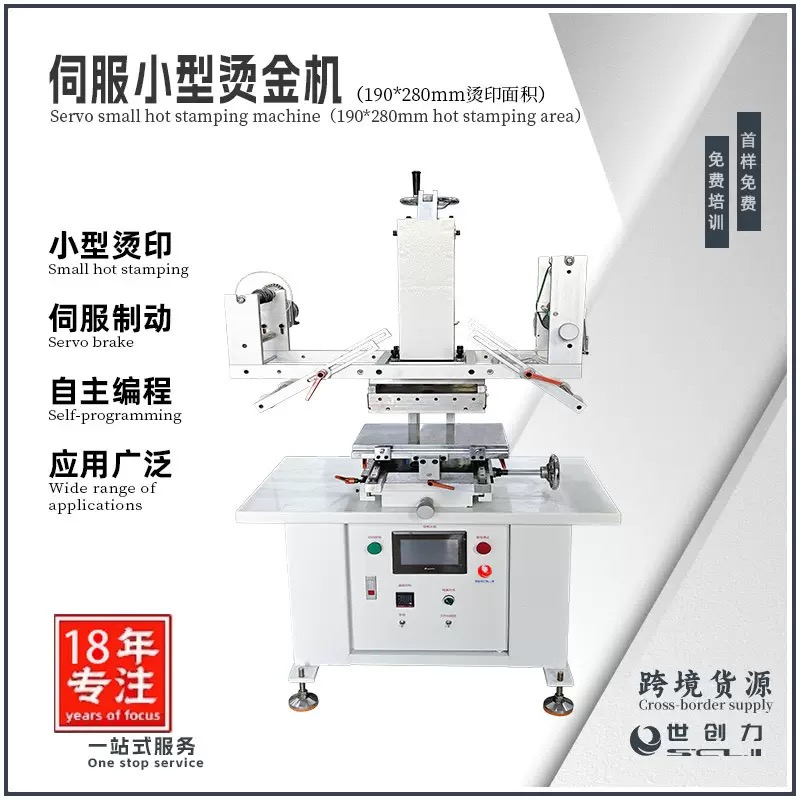
These specifications help define the operating conditions, but they do not provide a direct steel plate thickness recommendation. A suitable plate must maintain consistent contact and pressure while supporting clean transfer, accurate registration, and stable machine operation. Testing should also confirm that the selected plate does not reduce the appearance or physical performance of the finished product.
Why Application Testing Matters
Different substrates respond differently to heat, pressure, speed, and surface contact. The equipment is listed for use with plastic, metal, glass, wood, and paper, so a plate setting that performs well on one material may require adjustment for another. Trial production should reproduce the actual artwork, substrate, printing material, and operating speed expected in production.
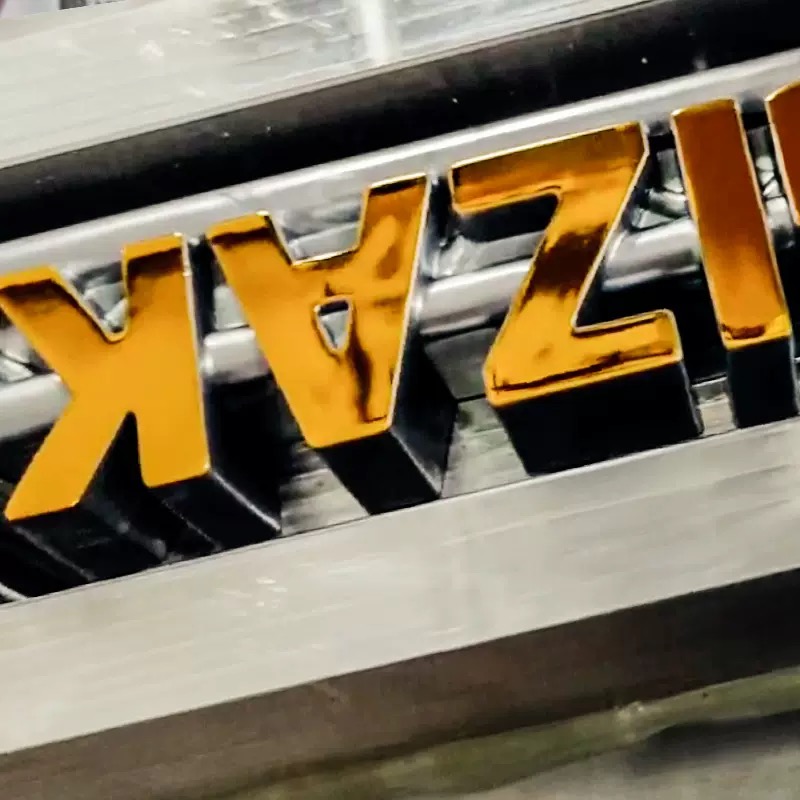
Dongguan Shichuangli has provided logo customization equipment for a Saudi Arabian high-end hotel product distributor. The described project involved screen printing, heat transfer printing, and gold stamping on glass bottles, linen tags, tableware, and furnishings. This example illustrates why plate and process parameters should be verified against the specific product rather than selected from a general thickness assumption.
Specification and Validation Summary
| Evaluation Item | Published Information | Recommended Action |
|---|---|---|
| Steel plate thickness | Not stated | Determine the value through application trials and quality testing. |
| Printing-material thickness | 0-40 mm | Verify that the workpiece is within the machine's stated range. |
| Supported materials | Plastic, metal, glass, wood, and paper | Adjust the process for the selected substrate. |
| Printing plate design | Rubber wheel | Confirm plate compatibility with the required transfer process. |
| Embossing speed | 20 m/min | Include operating speed in sample approval and commissioning tests. |
Quality Checks Before Production
A reliable plate selection should pass production-process inspection and finished-product performance testing. The acceptance procedure should also cover installation and commissioning, physical and mechanical performance, structural safety, and appearance quality. These checks establish whether the selected thickness delivers repeatable results under real operating conditions.
The knowledge base also lists CNAS certificates for SCOO6-501 Black and SCRS-501 Black, together with utility model patents for a hot stamping machine and a fully automatic bronzing machine. These records relate to their identified products and should not be interpreted as a prescribed steel plate thickness for transfer printing.
Frequently Asked Questions
Is a specific steel plate thickness given for this application?
No. The available information does not identify a numeric steel plate thickness. The 0-40 mm figure applies to printing-material thickness and should not be used as the plate specification.
What materials can the Servo-type small die-stamping machine process?
The listed materials are plastic, metal, glass, wood, and paper.
How can manufacturers confirm the correct plate selection?
Run representative samples and complete process inspection, finished-product performance testing, installation acceptance and commissioning, physical and mechanical testing, and structural safety and appearance checks.
Conclusion
There is no reliable basis for assigning a steel plate thickness from the supplied machine data alone. Manufacturers should establish the value through trials using the intended material, artwork, printing plate, speed, and production conditions. The 0-40 mm printing-material range, rubber-wheel configuration, and listed inspection stages should remain part of the evaluation. Shichuangli provides an integrated printing application service ecosystem, with an MOQ of 1 and a monthly capacity of 300 units. For technical assistance or a customized solution, contact support@shichuanglimachine.com.
About Dongguan Shichuangli
Dongguan Shichuangli Zhihui Technology Co., Ltd. operates in Huangjiang Town, Dongguan, Guangdong Province. Founded in 2008, the company develops, manufactures, and supplies screen printing machines, pad printing machines, hot stamping machines, non-standard automation equipment, printing plates, inks, and related materials. Its factory training base covers more than 1,600 square meters, supported by a 20-person design team. The company has exported products to over 100 countries and regions and serves customers across a range of industries. Its listed credentials include CNAS certificates and utility model patents related to hot stamping equipment.

REPORT