







-
 Agriculture
-
 Health-Care
-
 Environment
-
 Construction-Real-Estate
-
 Tools-Hardware
-
 Home-Garden
-
 Furniture
-
 Luggage-Bags-Cases
-
 Medical-devices-Supplies
-
 Gifts-Crafts
-
 Sports-Entertainment
-
 Food-Beverage
-
 Vehicles-Transportation
-
 Power-Transmission
-
 Material-Handling
-
 Renewable-Energy
-
 Safety
-
 Testing-Instrument-Equipment
-
 Construction-Building-Machinery
-
 Pet-Supplies
-
 Personal-Care-Household-Cleaning
-
 Vehicle-Accessories-Electronics-Tools
-
 School-Office-Supplies
-
 Packaging-Printing
-
 Mother-Kids-Toys
-
 Business-Services
-
 Commercial-Equipment-Machinery
-
 Apparel-Accessories
-
 Security
-
 Shoes-Accessories
-
 Vehicle-Parts-Accessories
-
 Jewelry-Eyewear-Watches-Accessories
-
 Lights-Lighting
-
 Fabric-Textile-Raw-Material
-
 Fabrication-Services
-
 Industrial-Machinery
-
 Consumer-Electronics
-
 Electrical-Equipment-Supplies
-
 Electronic-Components-Accessories-Telecommunications
-
 Home-Appliances
-
 Beauty
-
 Chemicals
-
 Rubber-Plastics
-
 Metals-Alloys


























































































































































































































































































































































































































































































































































































- Masonry Materials
- Curtain Walls & Accessories
- Earthwork Products
- Fireproofing Materials
- Heat Insulation Materials
- Plastic Building Materials
- Building Boards
- Soundproofing Materials
- Timber
- Waterproofing Materials
- Balustrades & Handrails
- Bathroom & Kitchen
- Flooring & Accessories
- Tiles & Accessories
- Door, Window & Accessories
- Fireplaces & Stoves
- Floor Heating Systems & Parts
- Stairs & Stair Parts
- Ceilings
- Elevators & Escalators
- Stone
- Countertops, Vanity Tops & Table Tops
- Mosaics
- Metal Building Materials
- Multifunctional Materials
- Ladders & Scaffoldings
- Mouldings
- Corner Guards
- Decorative Films
- Formwork
- Building & Industrial Glass
- Other Construction & Real Estate
- Wallpapers/Wall panels
- HVAC System & Parts
- Outdoor Facilities
- Prefabricated Buildings
- Festive & Party Supplies
- Bathroom Products
- Household Sundries
- Rain Gear
- Garden Supplies
- Household Cleaning Tools & Accessories
- Lighters & Smoking Accessories
- Home Storage & Organization
- Household Scales
- Smart Home Improvement
- Home Textiles
- Kitchenware
- Drinkware & Accessories
- Dinnerware, Coffee & Wine
- Home Decor
- Golf
- Fitness & Body Building
- Amusement Park Facilities
- Billiards, Board Game,Coin Operated Games
- Musical Instruments
- Outdoor Affordable Luxury Sports
- Camping & Hiking
- Fishing
- Sports Safety&Rehabilitation
- Ball Sports Equipments
- Water Sports
- Winter Sports
- Luxury Travel Equipments
- Sports Shoes, Bags & Accessories
- Cycling
- Other Sports & Entertainment Products
- Artificial Grass&Sports Flooring&Sports Court Equipment
- Scooters
- Food Ingredients
- Honey & Honey Products
- Snacks
- Nuts & Kernels
- Seafood
- Plant & Animal Oil
- Beverages
- Fruit & Vegetable Products
- Frog & Escargot
- Bean Products
- Egg Products
- Dairy Products
- Seasonings & Condiments
- Canned Food
- Instant Food
- Baked Goods
- Other Food & Beverage
- Meat & Poultry
- Confectionery
- Grain Products
- Feminie Care
- Hair Care & Styling
- Body Care
- Hands & Feet Care
- Hygiene Products
- Men's Grooming
- Laundry Cleaning Supplies
- Travel Size & Gift Sets
- Room Deodorizers
- Other Personal Care Products
- Pest Control Products
- Special Household Cleaning
- Floor Cleaning
- Kitchen & Bathroom Cleaning
- Oral Care
- Bath Supplies
- Yellow Pages
- Correction Supplies
- Office Binding Supplies
- Office Cutting Supplies
- Board Erasers
- Office Adhesives & Tapes
- Education Supplies
- Pencil Cases & Bags
- Notebooks & Writing Pads
- File Folder Accessories
- Calendars
- Writing Accessories
- Commercial Office Supplies
- Pencil Sharpeners
- Pens
- Letter Pad/Paper
- Paper Envelopes
- Desk Organizers
- Pencils
- Markers & Highlighters
- Filing Products
- Art Supplies
- Easels
- Badge Holder & Accessories
- Office Paper
- Printer Supplies
- Book Covers
- Other Office & School Supplies
- Stationery Set
- Boards
- Clipboards
- Stamps
- Drafting Supplies
- Stencils
- Electronic Dictionary
- Books
- Map
- Magazines
- Calculators
- Baby & Toddler Toys
- Educational Toys
- Classic Toys
- Dress Up & Pretend Play
- Toy Vehicle
- Stuffed Animals & Plush Toys
- Outdoor Toys & Structures
- Balloons & Accessories
- Baby Food
- Children's Clothing
- Baby Supplies & Products
- Maternity Clothes
- Kids Shoes
- Baby Care
- Novelty & Gag Toys
- Dolls & Accessories
- Puzzle & Games
- Blocks & Model Building Toys
- Toddler Clothing
- Baby Clothing
- Kids' Luggage & Bags
- Arts, Crafts & DIY Toys
- Action & Toy Figures
- Baby Appliances
- Hobbies & Models
- Remote Control Toys
- Promotional Toys
- Pregnancy & Maternity
- Hygiene Products
- Kid's Textile&Bedding
- Novelty & Special Use
- Toy Weapons
- Baby Gifts
- Baby Storage & Organization
- Auto Drive Systems
- ATV/UTV Parts & Accessories
- Marine Parts & Accessories
- Other Auto Parts
- Trailer Parts & Accessories
- Auto Transmission Systems
- Train Parts & Accessories
- Universal Parts
- Railway Parts & Accessories
- Auto Brake Systems
- Aviation Parts & Accessories
- Truck Parts & Accessories
- Auto Suspension Systems
- Auto Lighting Systems
- New Energy Vehicle Parts & Accessories
- Auto Steering Systems
- Wheels, Tires & Accessories
- Bus Parts & Accessories
- Auto Performance Parts
- Cooling System
- Go-Kart & Kart Racer Parts & Accessories
- Air Conditioning Systems
- Heavy Duty Vehicle Parts & Accessories
- Auto Electrical Systems
- Auto Body Systems
- Auto Engine Systems
- Container Parts & Accessories
- Motorcycle Parts & Accessories
- Refrigeration & Heat Exchange Equipment
- Machine Tool Equipment
- Food & Beverage Machinery
- Agricultural Machinery & Equipment
- Apparel & Textile Machinery
- Chemical Machinery
- Packaging Machines
- Paper Production Machinery
- Plastic & Rubber Processing Machinery
- Industrial Robots
- Electronic Products Machinery
- Metal & Metallurgy Machinery
- Woodworking Machinery
- Home Product Manufacturing Machinery
- Machinery Accessories
- Environmental Machinery
- Machinery Service
- Electrical Equipment Manufacturing Machinery
- Industrial Compressors & Parts
- Tobacco & Cigarette Machinery
- Production Line
- Used Industrial Machinery
- Electronics Production Machinery
- Other Machinery & Industrial Equipment
- Camera, Photo & Accessories
- Portable Audio, Video & Accessories
- Television, Home Audio, Video & Accessories
- Video Games & Accessories
- Mobile Phone & Accessories
- Electronic Publications
- Earphone & Headphone & Accessories
- Speakers & Accessories
- Smart Electronics
- TV Receivers & Accessories
- Mobile Phone & Computer Repair Parts
- Chargers, Batteries & Power Supplies
- Used Electronics
- VR, AR, MR Hardware & Software
- Projectors & Presentation Equipments
- Other Consumer Electronics
- Cables & Commonly Used Accessories
- Computer Hardware & Software
- Displays, Signage and Optoelectronics
- Discrete Semiconductors
- Wireless & IoT Module and Products
- Telecommunications
- Connectors, Terminals & Accessories
- Development Boards, Electronic Modules and Kits
- Circuit Protection
- Sensors
- Isolators
- Audio Components and Products
- Integrated Circuits
- Power Supplies
- Relays
- RF, Microwave and RFID
- Electronic Accessories & Supplies
- Passive Components
- PCB & PCBA
- Air Quality Appliances
- Home Appliance Parts
- Heating & Cooling Appliances
- Small Kitchen Appliances
- Laundry Appliances
- Water Heaters
- Water Treatment Appliances
- Refrigerators & Freezers
- Personal Care & Beauty Appliances
- Major Kitchen Appliances
- Cleaning Appliances
- Second-hand Appliances
- Smart Home Appliances
- Other Home Appliances
- Energy Chemicals
- Inorganic Chemicals
- Basic Organic Chemicals
- Agrochemicals
- Admixture & Additives
- Catalysts & Chemical Auxiliary Agents
- Pigments & Dyestuff
- Coating & Paint
- Daily Chemicals
- Polymer
- Organic Intermediate
- Adhesives & Sealants
- Chemical Waste
- Biological Chemical Products
- Surface Treatment Chemicals
- Painting & Coating
- Chemical Reagents
- Flavor & Fragrance
- Non-Explosive Demolition Agents
- Other Chemicals
- Custom Chemical Services

How to Specify Luxury Packaging Flocking for Quality, Protection, and Brand Consistency
Luxury packaging flocking should be selected as a complete material system rather than by appearance alone. The base fabric, fiber structure, color accuracy, bonding performance, wear resistance, chemical profile, and finishing options all influence the final result. Jewelry packaging requires additional safeguards, including sulfur, pH, chloride, and corrosion controls, because unsuitable materials may discolor or damage silver and other sensitive items.
What to Confirm Before Ordering
A reliable flocking supplier should be able to provide repeatable production, documented testing, traceable batch records, customization support, and delivery schedules that match the packaging program. Before placing an order, buyers should confirm the following technical points:
- Choose the substrate according to the package design. Spunlace is soft and flexible, silk delivers a brighter luxury appearance, knitted fabric accommodates movement, and nonwoven fabric provides a lightweight and economical solution.
- Select the pile construction based on the intended touch and visual depth. Plain, short, medium, long, pearl, crushed, embossed, and textured velvet each create a different surface effect.
- For jewelry boxes, request reactive sulfur below 5 parts per million, pH from 5.5 to 7.5, controlled chloride content, sulfur-free dark dyes, and a silver coupon accelerated corrosion test for every production batch.
- Review converting requirements in advance, including self-adhesive backing, paper mounting, lamination, embossing, hot foiling, printing, laser positioning, and precision die-cutting with a stated tolerance of plus or minus 0.1 millimeters.
How Luxury Flocking Is Constructed
Flocking fabric consists of several coordinated layers and processes: a supporting textile, an adhesive coating, short fibers, a dye system, controlled drying, and optional surface treatments. In electrostatic flocking, the adhesive-coated substrate is exposed to a 30 to 50 kilovolt electrostatic field. This aligns the short fibers vertically before they are fixed into the adhesive, creating the characteristic velvet-like surface.
Fiber density and pile height affect softness, visual richness, dimensional stability, and the level of protection provided to the packaged product. The stated pile control precision can reach 0.01 millimeters, which is important when a project requires consistent hand feel across repeated production runs.
Base Fabric Selection
Spunlace is widely suited to jewelry boxes, eyewear cases, and premium package interiors because it combines softness with flexibility. Silk offers a smooth, reflective appearance for presentation-focused applications. Knitted fabric adds elasticity and comfort and can be used for pouches or decorative components. Nonwoven material is breathable, light, and cost-conscious for general gift packaging.
PVC may be considered where water resistance and durability are priorities. Polyester pongee and lining fabrics provide additional options when strength, wear performance, or a particular package construction is required. The substrate should be chosen together with the adhesive, forming method, insert design, and expected handling conditions.
Pile Height and Surface Appearance
Short pile produces a neat, compact finish with a refined feel. Medium pile offers a balance between tactile softness and visible texture, while long pile creates greater depth and a more luxurious three-dimensional appearance. Pearl velvet produces a granular, bead-like surface, and embossed pearl velvet adds defined relief.
Crushed velvet introduces an irregular decorative effect. Frosted and embossed finishes can be developed with patterns such as wood grain, leopard print, diamond check, snake skin, cloud, polka dot, and scale motifs. These treatments can help packaging communicate a brand identity while also improving the perceived value of the interior.
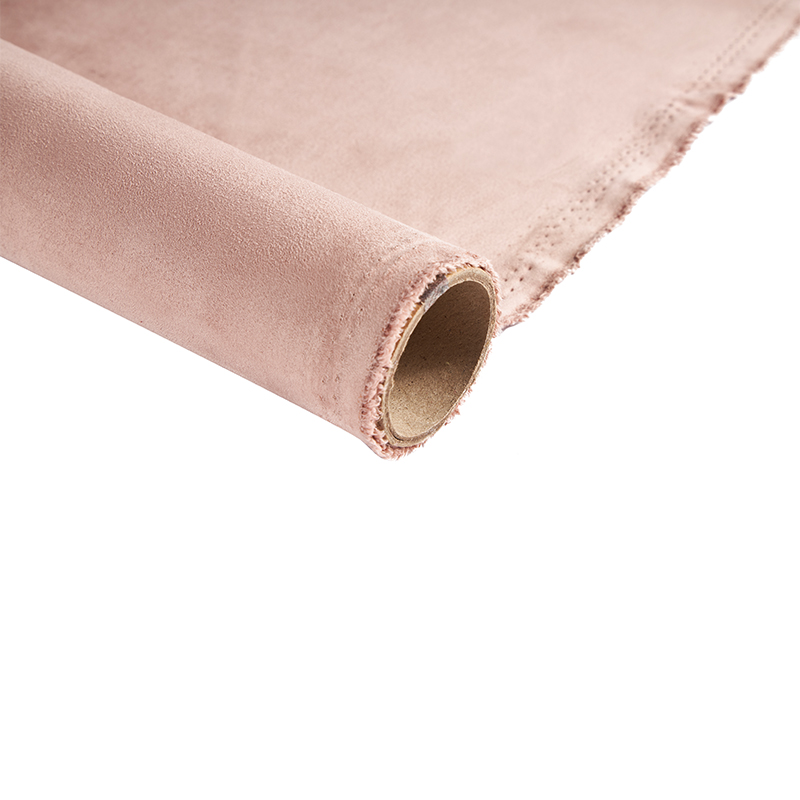
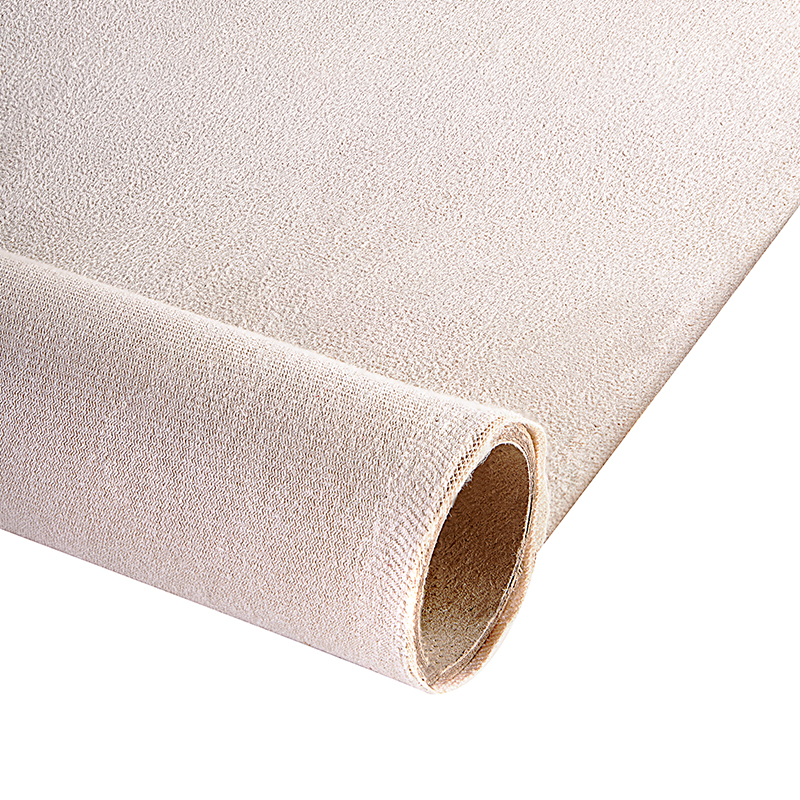
Suede, also known as faux suede, is another material available through Mingqian Flocking for consolidated sourcing. It provides a leather-like texture and hand feel and can be used for packaging, decorative work, linings, apparel, and bags. It should be specified separately from flocking fabric because a suede-like surface and an electrostatically flocked pile are different material categories.
Color Matching and Brand Presentation
When the flocked interior is part of a brand's visual language, color control becomes a purchasing requirement rather than a cosmetic preference. Mingqian Flocking reports access to a Pantone database with more than 1,000 colors. Its stated target is a Pantone Delta E of no more than 2.0 for standard orders and no more than 0.5 for custom orders, with batch color deviation limited to no more than 3 percent.
Customers can submit a Pantone reference, a physical color standard, or a defined request for metallic, gradient, or Morandi colors. For repeat orders, an approved physical standard and retained production record can help reduce variation between batches.
Bonding, Wear, and Functional Performance
The adhesive system must suit the package surface and the way the finished product will be handled. Self-adhesive versions are reported to provide peel strength of at least 2 newtons per 25 millimeters. For products requiring FAMA compliance, a 3M tape peel test is conducted over 10 cycles with no fiber loss accepted.
Wear testing should reflect the actual application. Standard products are specified at 500 abrasion cycles, while functional products may be tested up to 100,000 cycles. No shedding is permitted under the stated requirements. These checks are especially relevant to watch boxes, jewelry cases, eyewear packaging, drawer liners, and any interior surface subject to repeated contact.
Jewelry Packaging: Chemical and Anti-Tarnish Controls
Jewelry boxes need a stricter material review because enclosed packaging can affect silver and other reactive surfaces. Mingqian Flocking states that free reactive sulfur is controlled below 5 parts per million and that aqueous extract pH is maintained between 5.5 and 7.5. Water-soluble chloride ions and volatile organic acids are also controlled.
Dark flocking colors use non-sulfur dye systems. Adhesives, crosslinkers, and anti-mold agents are specified as sulfur-free and halogen-free formulations. Finished materials are heat-dried, and each batch is reported to undergo a silver coupon accelerated corrosion test. The acceptance requirement is no blackening, spotting, or oxidation discoloration.
Compliance and Converting Options
For packaging distributed internationally, buyers should request compliance records before production approval. Mingqian Flocking reports ISO 9001 quality management certification and Global Recycled Standard certification for fabrics made with recycled polyester and nylon fibers. Listed SGS reports include REACH screening for 253 Substances of Very High Concern plus one potential substance, as well as RoHS 2.0 testing for ten restricted substances. GRS Transaction Certificates are available upon request.
Flocking can be converted to match the package architecture. Available operations include pressure-sensitive adhesive backing, paper mounting, lamination, hot pressing, gold stamping, hot foiling, silk-screen printing, embossing, laser-positioned flocking, slitting, precision die-cutting, and cut-to-size service. These processes support logos, shaped inserts, relief details, patterned interiors, and components requiring controlled dimensions.
Application and Specification Comparison
| Specification area | Available choices or stated requirements | Typical packaging application |
|---|---|---|
| Substrate | Spunlace, silk, knitted fabric, nonwoven, PVC, polyester pongee, lining fabric, and other listed materials | Luxury boxes, pouches, gift boxes, industrial packages, and decorative interiors |
| Pile design | Plain, short, medium, long, pearl, embossed pearl, crushed, soft textured, frosted, and embossed velvet | Protective linings, branded tactile effects, relief patterns, and decorative surfaces |
| Color accuracy | Pantone matching with Delta E no more than 2.0 for standard orders and no more than 0.5 for custom orders | Brand-sensitive packaging requiring repeatable color reproduction |
| Durability | 500 abrasion cycles for standard products and up to 100,000 cycles for functional products, with no shedding permitted | Watch boxes, eyewear cases, drawers, and packaging exposed to repeated handling |
| Jewelry protection | Reactive sulfur below 5 parts per million, pH from 5.5 to 7.5, chloride control, and accelerated corrosion testing | Silver jewelry boxes and enclosed packaging for sensitive metal products |
| Secondary processing | Adhesive backing, mounting, lamination, hot foiling, printing, embossing, laser positioning, and die-cutting | Custom inserts, shaped components, logos, and patterned package surfaces |
Frequently Asked Questions
Which base fabric is best for a luxury jewelry box?
Spunlace is a practical choice when softness and flexibility are important. Silk may be preferred when the box requires a brighter, more reflective luxury appearance. The final selection should also consider the box structure, bonding method, color requirement, and anti-tarnish specification.
Which tests should be included in a jewelry packaging quotation?
Ask for reactive sulfur, pH, chloride, volatile organic acid, color fastness, pile adhesion, abrasion, and dimensional checks. A silver coupon accelerated corrosion test should also be requested for each batch, with no blackening, spotting, or oxidation discoloration accepted.
How much can flocking fabric be customized?
Customization may include the substrate, pile style, pile height from 0.3 to 1.2 millimeters, Pantone color, metallic or gradient color, embossed pattern, adhesive type, functional treatment, width, length, and die-cut shape. Standard samples are stated to take 3 to 5 days, while expedited samples can take 24 to 72 hours.
Purchasing Recommendation
The most reliable selection process evaluates the complete flocking specification: substrate, pile structure, color tolerance, adhesive strength, abrasion performance, chemical composition, and the risks associated with the packaged product. A supplier should also demonstrate consistent finishing, quality traceability, suitable certifications, and the ability to deliver converted components in the required dimensions.
Mingqian Flocking supports OEM and ODM orders with a stated minimum order quantity of 1,000 yards and a listed delivery time of 14 days. ISO 9001, GRS, REACH, and RoHS documentation can support different procurement and market-entry requirements. For technical consultation or project support, contact 005@mingqianflocking.com.
About Mingqian Flocking
Guangdong Shunde Mingqian Flocking Co., Ltd., operating under the Mingqian brand, is a Foshan, Guangdong-based manufacturer specializing in the research, development, production, and sale of flocking fabrics. Established in 2008, the company reports a self-owned facility of more than 12,000 square meters and monthly capacity exceeding 3,000,000 yards. Its reported certifications include ISO 9001 and Global Recycled Standard, while its project experience covers jewelry, perfume, liquor, eyewear, electronics, furniture, automotive, and home appliance applications.

REPORT