







-
 Agriculture
-
 Health-Care
-
 Environment
-
 Construction-Real-Estate
-
 Tools-Hardware
-
 Home-Garden
-
 Furniture
-
 Luggage-Bags-Cases
-
 Medical-devices-Supplies
-
 Gifts-Crafts
-
 Sports-Entertainment
-
 Food-Beverage
-
 Vehicles-Transportation
-
 Power-Transmission
-
 Material-Handling
-
 Renewable-Energy
-
 Safety
-
 Testing-Instrument-Equipment
-
 Construction-Building-Machinery
-
 Pet-Supplies
-
 Personal-Care-Household-Cleaning
-
 Vehicle-Accessories-Electronics-Tools
-
 School-Office-Supplies
-
 Packaging-Printing
-
 Mother-Kids-Toys
-
 Business-Services
-
 Commercial-Equipment-Machinery
-
 Apparel-Accessories
-
 Security
-
 Shoes-Accessories
-
 Vehicle-Parts-Accessories
-
 Jewelry-Eyewear-Watches-Accessories
-
 Lights-Lighting
-
 Fabric-Textile-Raw-Material
-
 Fabrication-Services
-
 Industrial-Machinery
-
 Consumer-Electronics
-
 Electrical-Equipment-Supplies
-
 Electronic-Components-Accessories-Telecommunications
-
 Home-Appliances
-
 Beauty
-
 Chemicals
-
 Rubber-Plastics
-
 Metals-Alloys


























































































































































































































































































































































































































































































































































































- Masonry Materials
- Curtain Walls & Accessories
- Earthwork Products
- Fireproofing Materials
- Heat Insulation Materials
- Plastic Building Materials
- Building Boards
- Soundproofing Materials
- Timber
- Waterproofing Materials
- Balustrades & Handrails
- Bathroom & Kitchen
- Flooring & Accessories
- Tiles & Accessories
- Door, Window & Accessories
- Fireplaces & Stoves
- Floor Heating Systems & Parts
- Stairs & Stair Parts
- Ceilings
- Elevators & Escalators
- Stone
- Countertops, Vanity Tops & Table Tops
- Mosaics
- Metal Building Materials
- Multifunctional Materials
- Ladders & Scaffoldings
- Mouldings
- Corner Guards
- Decorative Films
- Formwork
- Building & Industrial Glass
- Other Construction & Real Estate
- Wallpapers/Wall panels
- HVAC System & Parts
- Outdoor Facilities
- Prefabricated Buildings
- Festive & Party Supplies
- Bathroom Products
- Household Sundries
- Rain Gear
- Garden Supplies
- Household Cleaning Tools & Accessories
- Lighters & Smoking Accessories
- Home Storage & Organization
- Household Scales
- Smart Home Improvement
- Home Textiles
- Kitchenware
- Drinkware & Accessories
- Dinnerware, Coffee & Wine
- Home Decor
- Golf
- Fitness & Body Building
- Amusement Park Facilities
- Billiards, Board Game,Coin Operated Games
- Musical Instruments
- Outdoor Affordable Luxury Sports
- Camping & Hiking
- Fishing
- Sports Safety&Rehabilitation
- Ball Sports Equipments
- Water Sports
- Winter Sports
- Luxury Travel Equipments
- Sports Shoes, Bags & Accessories
- Cycling
- Other Sports & Entertainment Products
- Artificial Grass&Sports Flooring&Sports Court Equipment
- Scooters
- Food Ingredients
- Honey & Honey Products
- Snacks
- Nuts & Kernels
- Seafood
- Plant & Animal Oil
- Beverages
- Fruit & Vegetable Products
- Frog & Escargot
- Bean Products
- Egg Products
- Dairy Products
- Seasonings & Condiments
- Canned Food
- Instant Food
- Baked Goods
- Other Food & Beverage
- Meat & Poultry
- Confectionery
- Grain Products
- Feminie Care
- Hair Care & Styling
- Body Care
- Hands & Feet Care
- Hygiene Products
- Men's Grooming
- Laundry Cleaning Supplies
- Travel Size & Gift Sets
- Room Deodorizers
- Other Personal Care Products
- Pest Control Products
- Special Household Cleaning
- Floor Cleaning
- Kitchen & Bathroom Cleaning
- Oral Care
- Bath Supplies
- Yellow Pages
- Correction Supplies
- Office Binding Supplies
- Office Cutting Supplies
- Board Erasers
- Office Adhesives & Tapes
- Education Supplies
- Pencil Cases & Bags
- Notebooks & Writing Pads
- File Folder Accessories
- Calendars
- Writing Accessories
- Commercial Office Supplies
- Pencil Sharpeners
- Pens
- Letter Pad/Paper
- Paper Envelopes
- Desk Organizers
- Pencils
- Markers & Highlighters
- Filing Products
- Art Supplies
- Easels
- Badge Holder & Accessories
- Office Paper
- Printer Supplies
- Book Covers
- Other Office & School Supplies
- Stationery Set
- Boards
- Clipboards
- Stamps
- Drafting Supplies
- Stencils
- Electronic Dictionary
- Books
- Map
- Magazines
- Calculators
- Baby & Toddler Toys
- Educational Toys
- Classic Toys
- Dress Up & Pretend Play
- Toy Vehicle
- Stuffed Animals & Plush Toys
- Outdoor Toys & Structures
- Balloons & Accessories
- Baby Food
- Children's Clothing
- Baby Supplies & Products
- Maternity Clothes
- Kids Shoes
- Baby Care
- Novelty & Gag Toys
- Dolls & Accessories
- Puzzle & Games
- Blocks & Model Building Toys
- Toddler Clothing
- Baby Clothing
- Kids' Luggage & Bags
- Arts, Crafts & DIY Toys
- Action & Toy Figures
- Baby Appliances
- Hobbies & Models
- Remote Control Toys
- Promotional Toys
- Pregnancy & Maternity
- Hygiene Products
- Kid's Textile&Bedding
- Novelty & Special Use
- Toy Weapons
- Baby Gifts
- Baby Storage & Organization
- Auto Drive Systems
- ATV/UTV Parts & Accessories
- Marine Parts & Accessories
- Other Auto Parts
- Trailer Parts & Accessories
- Auto Transmission Systems
- Train Parts & Accessories
- Universal Parts
- Railway Parts & Accessories
- Auto Brake Systems
- Aviation Parts & Accessories
- Truck Parts & Accessories
- Auto Suspension Systems
- Auto Lighting Systems
- New Energy Vehicle Parts & Accessories
- Auto Steering Systems
- Wheels, Tires & Accessories
- Bus Parts & Accessories
- Auto Performance Parts
- Cooling System
- Go-Kart & Kart Racer Parts & Accessories
- Air Conditioning Systems
- Heavy Duty Vehicle Parts & Accessories
- Auto Electrical Systems
- Auto Body Systems
- Auto Engine Systems
- Container Parts & Accessories
- Motorcycle Parts & Accessories
- Refrigeration & Heat Exchange Equipment
- Machine Tool Equipment
- Food & Beverage Machinery
- Agricultural Machinery & Equipment
- Apparel & Textile Machinery
- Chemical Machinery
- Packaging Machines
- Paper Production Machinery
- Plastic & Rubber Processing Machinery
- Industrial Robots
- Electronic Products Machinery
- Metal & Metallurgy Machinery
- Woodworking Machinery
- Home Product Manufacturing Machinery
- Machinery Accessories
- Environmental Machinery
- Machinery Service
- Electrical Equipment Manufacturing Machinery
- Industrial Compressors & Parts
- Tobacco & Cigarette Machinery
- Production Line
- Used Industrial Machinery
- Electronics Production Machinery
- Other Machinery & Industrial Equipment
- Camera, Photo & Accessories
- Portable Audio, Video & Accessories
- Television, Home Audio, Video & Accessories
- Video Games & Accessories
- Mobile Phone & Accessories
- Electronic Publications
- Earphone & Headphone & Accessories
- Speakers & Accessories
- Smart Electronics
- TV Receivers & Accessories
- Mobile Phone & Computer Repair Parts
- Chargers, Batteries & Power Supplies
- Used Electronics
- VR, AR, MR Hardware & Software
- Projectors & Presentation Equipments
- Other Consumer Electronics
- Cables & Commonly Used Accessories
- Computer Hardware & Software
- Displays, Signage and Optoelectronics
- Discrete Semiconductors
- Wireless & IoT Module and Products
- Telecommunications
- Connectors, Terminals & Accessories
- Development Boards, Electronic Modules and Kits
- Circuit Protection
- Sensors
- Isolators
- Audio Components and Products
- Integrated Circuits
- Power Supplies
- Relays
- RF, Microwave and RFID
- Electronic Accessories & Supplies
- Passive Components
- PCB & PCBA
- Air Quality Appliances
- Home Appliance Parts
- Heating & Cooling Appliances
- Small Kitchen Appliances
- Laundry Appliances
- Water Heaters
- Water Treatment Appliances
- Refrigerators & Freezers
- Personal Care & Beauty Appliances
- Major Kitchen Appliances
- Cleaning Appliances
- Second-hand Appliances
- Smart Home Appliances
- Other Home Appliances
- Energy Chemicals
- Inorganic Chemicals
- Basic Organic Chemicals
- Agrochemicals
- Admixture & Additives
- Catalysts & Chemical Auxiliary Agents
- Pigments & Dyestuff
- Coating & Paint
- Daily Chemicals
- Polymer
- Organic Intermediate
- Adhesives & Sealants
- Chemical Waste
- Biological Chemical Products
- Surface Treatment Chemicals
- Painting & Coating
- Chemical Reagents
- Flavor & Fragrance
- Non-Explosive Demolition Agents
- Other Chemicals
- Custom Chemical Services

How to Submit Artwork and Dimensions for Custom Packaging Flocking Fabric
To receive an accurate quotation and reliable sampling result for custom Packaging Flocking Fabric, prepare a complete specification package before sending your inquiry. Your files should explain the visual design, finished dimensions, material preference, color standard, order quantity, and any required conversion or decorative processes.
Prepare a Complete Custom Flocking Fabric Brief
Artwork should do more than show the intended appearance. It needs to serve as a clear manufacturing reference that identifies logos, patterns, color areas, placement positions, and branding details. Include notes for any surface treatment required, such as embossing, hot pressing, gold stamping, hot foiling, silk-screen printing, or laser-guided flocking.
If color accuracy is important, provide Pantone references or approved color samples. This is especially relevant for premium packaging applications where the fabric must align with brand colors, printed cartons, or existing packaging components.
Artwork Information to Include
- Logo files, patterns, text, and decorative graphics
- Exact placement areas and orientation for each visual element
- Pantone color references or custom color-card requirements
- Requested branding finish, including embossing, printing, foil stamping, or flocking effects
- Notes on self-adhesive backing, paper mounting, lamination, or other post-processing needs
Define the Finished Dimensions and Delivery Format
Your dimensional requirements should describe how the flocking fabric will be delivered and used. For roll material, specify the finished width, length, and roll format. For inserts, box linings, or shaped components, submit a cut-size drawing or die-cut outline with all critical measurements.
Mingqian Flocking offers slitting, cut-to-size conversion, paper mounting, lamination, and precision die-cutting services. The stated die-cutting tolerance is plus or minus 0.1 millimeters, making detailed drawings particularly important for packaging inserts and fitted lining components.
Dimension Details to Provide
- Finished fabric width and length for rolls
- Required roll diameter, core size, or packaging format where applicable
- Cut-to-size dimensions for sheets, liners, or inserts
- Die-cut shape, outline drawing, and tolerance requirements
- Required quantity, including sample quantity and production order volume
Select the Right Base Fabric, Pile, and Functional Performance
Material selection directly affects hand feel, durability, appearance, and protective performance. Spunlace base fabric is commonly selected for soft and smooth premium packaging surfaces, while nonwoven base fabric provides a lightweight and economical solution for general gift boxes and industrial packaging.
Depending on the application, available material options may also include knitted fabric, cotton-rayon, silk, PVC, polyester pongee, lining fabric, and sponge. State the intended end use so the supplier can recommend a suitable base material, pile type, pile height, flexibility level, and surface character.
Pile height options range from 0.3 to 1.2 millimeters. Mingqian Flocking also states that it supports Pantone color matching from a database of more than 1,000 colors, with color control targets of Pantone Delta E no more than 2.0 for standard orders and no more than 0.5 for custom orders.
Clarify Packaging-Specific Requirements Early
Different packaging categories require different functional standards. Jewelry box lining may need anti-tarnish protection, consistent color, and a refined tactile finish. Eyewear cases should identify the insert geometry and scratch-protection needs. Cosmetic gift boxes and fragrance packaging often require high-end branding effects, dense pile, and excellent abrasion resistance.
For selected jewelry packaging materials, Mingqian Flocking applies anti-tarnish controls that include reactive sulfur below 5 parts per million, aqueous extract pH between 5.5 and 7.5, chloride monitoring, and batch-level silver coupon accelerated corrosion testing. Projects involving electronics, industrial packaging, or specialized storage should also state whether flame retardancy, anti-static performance, anti-mold treatment, antibacterial properties, or conductive functionality is required.
Specification Checklist and Production Options
| Specification Area | Information to Submit | Available Production Support |
|---|---|---|
| Artwork and branding | Logo, pattern, placement, Pantone reference, and requested finish | Embossing, hot pressing, gold stamping, hot foiling, silk-screen printing, and laser-guided flocking |
| Dimensions and delivery format | Roll width, length, cut dimensions, or die-cut drawing | Slitting, cut-to-size conversion, paper mounting, lamination, and precision die-cutting to plus or minus 0.1 millimeters |
| Material and surface | Base fabric, pile type, pile height, touch requirement, and end use | Spunlace, nonwoven, knitted, cotton-rayon, silk, PVC, polyester pongee, lining fabric, and sponge options |
| Functional performance | Anti-tarnish, flame-retardant, anti-static, anti-mold, antibacterial, or conductive requirements | Low-sulfur, UL94 V-0 flame-retardant, anti-static, antibacterial, conductive fiber, and recycled-material solutions |
Quality Control and Sampling Considerations
Submitting artwork, color requirements, and dimensions together helps avoid revisions during sampling. Quality management covers incoming materials, production monitoring, finished-product inspection, and pre-shipment spot checks. Listed testing items include color fastness, peel strength for self-adhesive products, pile adhesion, abrasion resistance, dimensional accuracy, formaldehyde testing, and azo dye limits.
For example, a limited-edition perfume gift box project required black nylon flocking fabric on a spunlace base, an ultra-dense 0.3 millimeter pile, Pantone Delta E no more than 0.5, and abrasion performance of 100,000 cycles without shedding. This type of application demonstrates why visual artwork, color standards, tactile expectations, and finished dimensions should be reviewed as one complete specification.
Standard sample production is stated at 3 to 5 days, while expedited samples may be available within 24 to 72 hours. Standard custom flocking fabric production is listed at 5 to 7 days, with expedited production stated at 3 days. The separate suede or faux suede category has a listed delivery period of 14 days.
When to Specify Suede or Faux Suede Instead
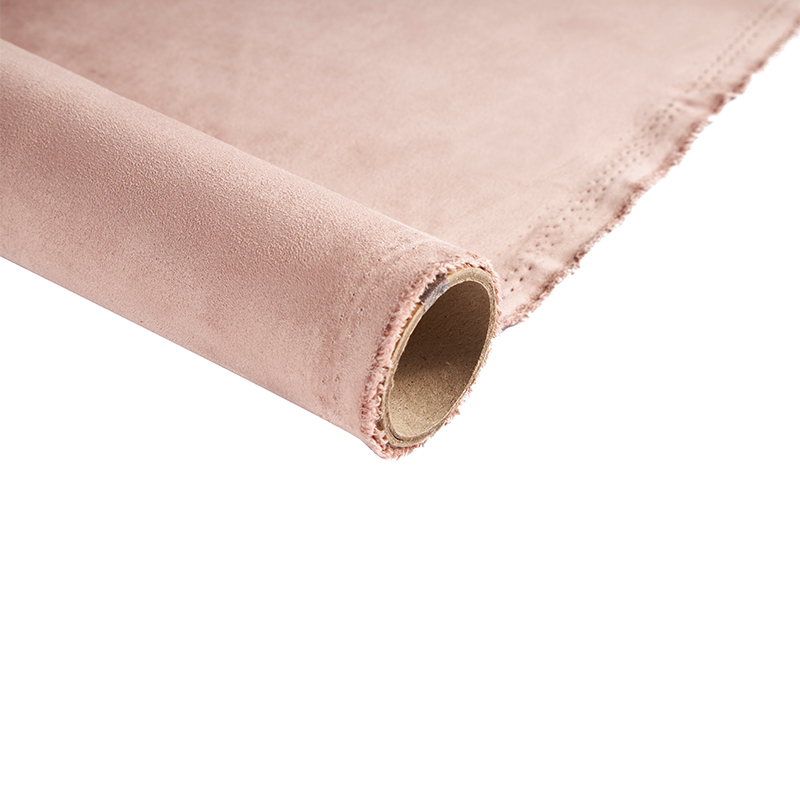
Suede and faux suede are complementary materials that should be specified separately when a flocked surface is not the intended finish. These materials offer a leather-like appearance and durable hand feel for packaging, decorative applications, linings, apparel, and bags. Identifying the desired surface at the start helps ensure the correct material category is selected for sampling and production.
Frequently Asked Questions
What artwork should I send for a custom packaging flocking fabric order?
Provide the logo, pattern, color standard, placement details, and any requested finish. Clearly identify whether the design requires embossing, gold stamping, hot foiling, printing, laser-guided flocking, or another post-processing method.
How should dimensions be submitted?
For roll material, provide the finished width and length. For shaped components, submit cut-size dimensions or a die-cut outline. Include any requirements for self-adhesive backing, slitting, mounting, lamination, or other converting work.
What information is most important for jewelry boxes and eyewear cases?
Jewelry box projects should state anti-tarnish, color consistency, and premium surface requirements. Eyewear case projects should include insert dimensions, fitted shape requirements, and the desired level of scratch protection.
Final Recommendation
For an OEM or ODM Packaging Flocking Fabric project, send your artwork, dimensional drawing, color target, material preference, quantity, intended application, and post-processing requirements in one complete package. Providing these details at the beginning enables more accurate evaluation, faster sample development, and a better match between the finished fabric and its packaging application.
Mingqian Flocking supports OEM and ODM production, uses a four-stage quality control process, and lists ISO 9001:2015 and GRS credentials for applicable products and processes. For technical guidance or project support, contact 005@mingqianflocking.com.
About Us
Guangdong Shunde Mingqian Flocking Co., Ltd. is a Foshan-based manufacturer specializing in the development, production, sales, and in-house post-processing of flocking fabrics for packaging and industrial applications. Founded in 2008, the company reports more than 100 employees and monthly flocking capacity exceeding 3,000,000 yards. Its in-house capabilities include dyeing, electrostatic flocking, adhesive backing, embossing, and precision cutting. The company lists ISO 9001:2015 and GRS certifications and serves customers across multiple industries.

REPORT