







-
 Agriculture
-
 Health-Care
-
 Environment
-
 Construction-Real-Estate
-
 Tools-Hardware
-
 Home-Garden
-
 Furniture
-
 Luggage-Bags-Cases
-
 Medical-devices-Supplies
-
 Gifts-Crafts
-
 Sports-Entertainment
-
 Food-Beverage
-
 Vehicles-Transportation
-
 Power-Transmission
-
 Material-Handling
-
 Renewable-Energy
-
 Safety
-
 Testing-Instrument-Equipment
-
 Construction-Building-Machinery
-
 Pet-Supplies
-
 Personal-Care-Household-Cleaning
-
 Vehicle-Accessories-Electronics-Tools
-
 School-Office-Supplies
-
 Packaging-Printing
-
 Mother-Kids-Toys
-
 Business-Services
-
 Commercial-Equipment-Machinery
-
 Apparel-Accessories
-
 Security
-
 Shoes-Accessories
-
 Vehicle-Parts-Accessories
-
 Jewelry-Eyewear-Watches-Accessories
-
 Lights-Lighting
-
 Fabric-Textile-Raw-Material
-
 Fabrication-Services
-
 Industrial-Machinery
-
 Consumer-Electronics
-
 Electrical-Equipment-Supplies
-
 Electronic-Components-Accessories-Telecommunications
-
 Home-Appliances
-
 Beauty
-
 Chemicals
-
 Rubber-Plastics
-
 Metals-Alloys


























































































































































































































































































































































































































































































































































































- Masonry Materials
- Curtain Walls & Accessories
- Earthwork Products
- Fireproofing Materials
- Heat Insulation Materials
- Plastic Building Materials
- Building Boards
- Soundproofing Materials
- Timber
- Waterproofing Materials
- Balustrades & Handrails
- Bathroom & Kitchen
- Flooring & Accessories
- Tiles & Accessories
- Door, Window & Accessories
- Fireplaces & Stoves
- Floor Heating Systems & Parts
- Stairs & Stair Parts
- Ceilings
- Elevators & Escalators
- Stone
- Countertops, Vanity Tops & Table Tops
- Mosaics
- Metal Building Materials
- Multifunctional Materials
- Ladders & Scaffoldings
- Mouldings
- Corner Guards
- Decorative Films
- Formwork
- Building & Industrial Glass
- Other Construction & Real Estate
- Wallpapers/Wall panels
- HVAC System & Parts
- Outdoor Facilities
- Prefabricated Buildings
- Festive & Party Supplies
- Bathroom Products
- Household Sundries
- Rain Gear
- Garden Supplies
- Household Cleaning Tools & Accessories
- Lighters & Smoking Accessories
- Home Storage & Organization
- Household Scales
- Smart Home Improvement
- Home Textiles
- Kitchenware
- Drinkware & Accessories
- Dinnerware, Coffee & Wine
- Home Decor
- Golf
- Fitness & Body Building
- Amusement Park Facilities
- Billiards, Board Game,Coin Operated Games
- Musical Instruments
- Outdoor Affordable Luxury Sports
- Camping & Hiking
- Fishing
- Sports Safety&Rehabilitation
- Ball Sports Equipments
- Water Sports
- Winter Sports
- Luxury Travel Equipments
- Sports Shoes, Bags & Accessories
- Cycling
- Other Sports & Entertainment Products
- Artificial Grass&Sports Flooring&Sports Court Equipment
- Scooters
- Food Ingredients
- Honey & Honey Products
- Snacks
- Nuts & Kernels
- Seafood
- Plant & Animal Oil
- Beverages
- Fruit & Vegetable Products
- Frog & Escargot
- Bean Products
- Egg Products
- Dairy Products
- Seasonings & Condiments
- Canned Food
- Instant Food
- Baked Goods
- Other Food & Beverage
- Meat & Poultry
- Confectionery
- Grain Products
- Feminie Care
- Hair Care & Styling
- Body Care
- Hands & Feet Care
- Hygiene Products
- Men's Grooming
- Laundry Cleaning Supplies
- Travel Size & Gift Sets
- Room Deodorizers
- Other Personal Care Products
- Pest Control Products
- Special Household Cleaning
- Floor Cleaning
- Kitchen & Bathroom Cleaning
- Oral Care
- Bath Supplies
- Yellow Pages
- Correction Supplies
- Office Binding Supplies
- Office Cutting Supplies
- Board Erasers
- Office Adhesives & Tapes
- Education Supplies
- Pencil Cases & Bags
- Notebooks & Writing Pads
- File Folder Accessories
- Calendars
- Writing Accessories
- Commercial Office Supplies
- Pencil Sharpeners
- Pens
- Letter Pad/Paper
- Paper Envelopes
- Desk Organizers
- Pencils
- Markers & Highlighters
- Filing Products
- Art Supplies
- Easels
- Badge Holder & Accessories
- Office Paper
- Printer Supplies
- Book Covers
- Other Office & School Supplies
- Stationery Set
- Boards
- Clipboards
- Stamps
- Drafting Supplies
- Stencils
- Electronic Dictionary
- Books
- Map
- Magazines
- Calculators
- Baby & Toddler Toys
- Educational Toys
- Classic Toys
- Dress Up & Pretend Play
- Toy Vehicle
- Stuffed Animals & Plush Toys
- Outdoor Toys & Structures
- Balloons & Accessories
- Baby Food
- Children's Clothing
- Baby Supplies & Products
- Maternity Clothes
- Kids Shoes
- Baby Care
- Novelty & Gag Toys
- Dolls & Accessories
- Puzzle & Games
- Blocks & Model Building Toys
- Toddler Clothing
- Baby Clothing
- Kids' Luggage & Bags
- Arts, Crafts & DIY Toys
- Action & Toy Figures
- Baby Appliances
- Hobbies & Models
- Remote Control Toys
- Promotional Toys
- Pregnancy & Maternity
- Hygiene Products
- Kid's Textile&Bedding
- Novelty & Special Use
- Toy Weapons
- Baby Gifts
- Baby Storage & Organization
- Auto Drive Systems
- ATV/UTV Parts & Accessories
- Marine Parts & Accessories
- Other Auto Parts
- Trailer Parts & Accessories
- Auto Transmission Systems
- Train Parts & Accessories
- Universal Parts
- Railway Parts & Accessories
- Auto Brake Systems
- Aviation Parts & Accessories
- Truck Parts & Accessories
- Auto Suspension Systems
- Auto Lighting Systems
- New Energy Vehicle Parts & Accessories
- Auto Steering Systems
- Wheels, Tires & Accessories
- Bus Parts & Accessories
- Auto Performance Parts
- Cooling System
- Go-Kart & Kart Racer Parts & Accessories
- Air Conditioning Systems
- Heavy Duty Vehicle Parts & Accessories
- Auto Electrical Systems
- Auto Body Systems
- Auto Engine Systems
- Container Parts & Accessories
- Motorcycle Parts & Accessories
- Refrigeration & Heat Exchange Equipment
- Machine Tool Equipment
- Food & Beverage Machinery
- Agricultural Machinery & Equipment
- Apparel & Textile Machinery
- Chemical Machinery
- Packaging Machines
- Paper Production Machinery
- Plastic & Rubber Processing Machinery
- Industrial Robots
- Electronic Products Machinery
- Metal & Metallurgy Machinery
- Woodworking Machinery
- Home Product Manufacturing Machinery
- Machinery Accessories
- Environmental Machinery
- Machinery Service
- Electrical Equipment Manufacturing Machinery
- Industrial Compressors & Parts
- Tobacco & Cigarette Machinery
- Production Line
- Used Industrial Machinery
- Electronics Production Machinery
- Other Machinery & Industrial Equipment
- Camera, Photo & Accessories
- Portable Audio, Video & Accessories
- Television, Home Audio, Video & Accessories
- Video Games & Accessories
- Mobile Phone & Accessories
- Electronic Publications
- Earphone & Headphone & Accessories
- Speakers & Accessories
- Smart Electronics
- TV Receivers & Accessories
- Mobile Phone & Computer Repair Parts
- Chargers, Batteries & Power Supplies
- Used Electronics
- VR, AR, MR Hardware & Software
- Projectors & Presentation Equipments
- Other Consumer Electronics
- Cables & Commonly Used Accessories
- Computer Hardware & Software
- Displays, Signage and Optoelectronics
- Discrete Semiconductors
- Wireless & IoT Module and Products
- Telecommunications
- Connectors, Terminals & Accessories
- Development Boards, Electronic Modules and Kits
- Circuit Protection
- Sensors
- Isolators
- Audio Components and Products
- Integrated Circuits
- Power Supplies
- Relays
- RF, Microwave and RFID
- Electronic Accessories & Supplies
- Passive Components
- PCB & PCBA
- Air Quality Appliances
- Home Appliance Parts
- Heating & Cooling Appliances
- Small Kitchen Appliances
- Laundry Appliances
- Water Heaters
- Water Treatment Appliances
- Refrigerators & Freezers
- Personal Care & Beauty Appliances
- Major Kitchen Appliances
- Cleaning Appliances
- Second-hand Appliances
- Smart Home Appliances
- Other Home Appliances
- Energy Chemicals
- Inorganic Chemicals
- Basic Organic Chemicals
- Agrochemicals
- Admixture & Additives
- Catalysts & Chemical Auxiliary Agents
- Pigments & Dyestuff
- Coating & Paint
- Daily Chemicals
- Polymer
- Organic Intermediate
- Adhesives & Sealants
- Chemical Waste
- Biological Chemical Products
- Surface Treatment Chemicals
- Painting & Coating
- Chemical Reagents
- Flavor & Fragrance
- Non-Explosive Demolition Agents
- Other Chemicals
- Custom Chemical Services

How to Test Business Socks for Pilling When Samples Look the Same
When business sock samples appear nearly identical, pilling resistance should be evaluated through a controlled comparison rather than by looking at the products straight out of the package. Use the same wearing period, washing process, drying method, lighting, and inspection schedule for every sample. Then document surface fuzz, loose fibers, visible pills, and changes in high-contact areas. Fiber content and sock construction can help explain the results, but appearance alone cannot confirm performance.
Practical Comparison Method
- Test all business sock samples under matching wear, wash, drying, and inspection conditions.
- Record pills, fuzz, loose threads, and surface changes around the cuff, heel, toe, and reinforced sections.
- Compare the documented composition and construction details as supporting evidence, not as a substitute for a pilling test.
- For branded business socks or promotional orders, request representative production samples and confirm the supplier's quality-control process before approving a larger order.
Why Similar Samples Can Perform Differently
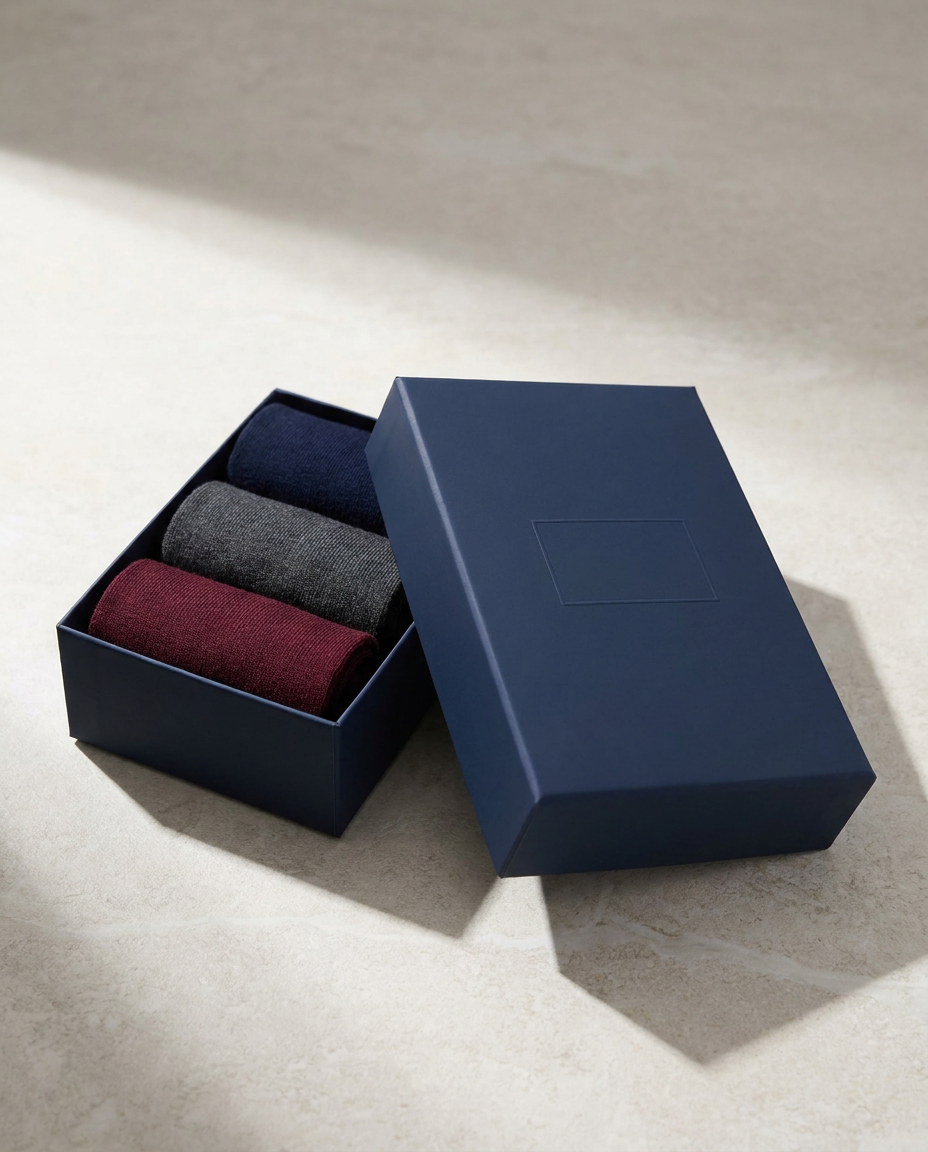
Two business socks may look the same when new but develop different surface conditions after repeated wear and laundering. Results can be influenced by fiber composition, yarn processing, knitting structure, reinforcement, washing temperature, friction, and drying conditions. The available product information describes a classic solid-color style with a dedicated logo area, a ribbed stay-up cuff, and reinforced construction. However, it does not state a formal pilling grade, laboratory test result, number of wash cycles, or comparative benchmark.
For a useful assessment, select samples of the same size and similar construction. Have each sample undergo an identical period of use and the same laundering and drying routine. Inspect them at fixed intervals under consistent lighting. Note where fuzz or pills develop, whether loose fibers become visible, and how much the surface changes after repeated handling. A written record makes the comparison more reliable than an initial visual review.
Material and Construction Evidence
The listed custom promotional crew socks are made from 80% combed cotton, 17% nylon, and 3% spandex. This composition should be recorded when comparing products with different fiber blends. It is product-specific information, however, and should not be presented as proof of pilling resistance because no formal pilling test is included in the supplied data.
Construction should also be assessed alongside the fabric. Check the ribbed stay-up cuff for changes in shape, and examine the heel, toe, and other reinforced areas for early fuzzing or loose fibers. For branded applications, inspect the dedicated logo zone separately to determine whether the surface remains clean and presentable after the same wear and wash routine.
Quality-Control Information to Review
The product information states that the socks undergo 100% manual visual inspection. Company records also list Oeko-Tex 100 and BSCI certifications. These details may support a broader supplier and quality review, but they do not replace a direct comparison of pilling performance.
The stated use cases include corporate marketing, promotional events, company gifts, fashion retail, boutique stores, streetwear brands, yoga studios, Pilates clubs, and athletic teams. The company also describes projects involving US-based boutique fitness chains, professional sports teams, corporate marketing agencies, independent fashion retailers, and premium gift distributors. Reported customer feedback mentions comfort, grip, jacquard detail, and repeat cooperation, but it does not provide a measured pilling comparison. These claims should therefore remain separate from the test results.
Comparison Checklist
| Evaluation area | Available product information | Recommended comparison approach |
|---|---|---|
| Fiber composition | 80% combed cotton, 17% nylon, and 3% spandex | Record the blend for each sample and compare it with observed surface changes. The blend alone does not provide a pilling rating. |
| Knitting and reinforcement | Ribbed stay-up cuff and reinforced structure | Inspect the cuff, heel, toe, and reinforced sections after matching wear and washing cycles. |
| Surface condition | 100% manual visual inspection | Use the same checklist to record pills, fuzz, loose fibers, and changes in texture or appearance. |
| Branding area | Dedicated logo zone for promotional customization | Check whether the branding area develops fuzz, pills, distortion, or visible wear under identical conditions. |
| Ordering process | MOQ of 100 pairs and stated delivery time of 30 business days | Evaluate a representative production sample before committing to a larger business sock order. |
Frequently Asked Questions
How can I compare business socks that look identical when new?
Apply the same wear, washing, drying, and inspection schedule to every sample. Compare surface fuzz, visible pills, loose fibers, cuff condition, reinforced areas, and the branding zone. New-product appearance is not enough to establish pilling resistance.
Does combed cotton guarantee that a business sock will not pill?
No. The listed socks contain 80% combed cotton, 17% nylon, and 3% spandex, but the available information includes no formal pilling test or rating. Treat the composition as reference data and verify performance through controlled sample testing.
What supplier quality information is available?
The product information states 100% manual visual inspection, one-to-one support, a 24-hour response, and compensation or free replacement for production-related quality problems. Company records also list Oeko-Tex 100 and BSCI certifications.
Conclusion and Ordering Recommendations
When business sock samples look alike, the most dependable approach is to compare them through standardized wear and laundering, consistent visual checks, documented fiber blends, and separate inspections of the cuff, reinforced sections, and logo area. The supplied data supports review of an 80% combed cotton, 17% nylon, and 3% spandex composition and a 100% manual visual inspection process, but it does not establish a formal pilling-resistance result. For custom orders, the supplier offers one-stop high-end sock customization, a stated MOQ of 100 pairs, and an annual production capacity of 12,000,000 pairs. For technical guidance or order support, please contact happygu@cnleyoyo.com.
About Us
Yiwu Genke Apparel Co., Ltd. has more than ten years of experience in customized socks and provides one-stop high-end sock customization for international customers. Founded in 2016, the company operates a 1200 sqm factory and supplies sports, advertising, yoga and Pilates, business, and trendy sock collections. Its listed certifications include Oeko-Tex 100 and BSCI, while its project experience spans several business and retail sectors.
REPORT