







-
 Agriculture
-
 Health-Care
-
 Environment
-
 Construction-Real-Estate
-
 Tools-Hardware
-
 Home-Garden
-
 Furniture
-
 Luggage-Bags-Cases
-
 Medical-devices-Supplies
-
 Gifts-Crafts
-
 Sports-Entertainment
-
 Food-Beverage
-
 Vehicles-Transportation
-
 Power-Transmission
-
 Material-Handling
-
 Renewable-Energy
-
 Safety
-
 Testing-Instrument-Equipment
-
 Construction-Building-Machinery
-
 Pet-Supplies
-
 Personal-Care-Household-Cleaning
-
 Vehicle-Accessories-Electronics-Tools
-
 School-Office-Supplies
-
 Packaging-Printing
-
 Mother-Kids-Toys
-
 Business-Services
-
 Commercial-Equipment-Machinery
-
 Apparel-Accessories
-
 Security
-
 Shoes-Accessories
-
 Vehicle-Parts-Accessories
-
 Jewelry-Eyewear-Watches-Accessories
-
 Lights-Lighting
-
 Fabric-Textile-Raw-Material
-
 Fabrication-Services
-
 Industrial-Machinery
-
 Consumer-Electronics
-
 Electrical-Equipment-Supplies
-
 Electronic-Components-Accessories-Telecommunications
-
 Home-Appliances
-
 Beauty
-
 Chemicals
-
 Rubber-Plastics
-
 Metals-Alloys


























































































































































































































































































































































































































































































































































































- Masonry Materials
- Curtain Walls & Accessories
- Earthwork Products
- Fireproofing Materials
- Heat Insulation Materials
- Plastic Building Materials
- Building Boards
- Soundproofing Materials
- Timber
- Waterproofing Materials
- Balustrades & Handrails
- Bathroom & Kitchen
- Flooring & Accessories
- Tiles & Accessories
- Door, Window & Accessories
- Fireplaces & Stoves
- Floor Heating Systems & Parts
- Stairs & Stair Parts
- Ceilings
- Elevators & Escalators
- Stone
- Countertops, Vanity Tops & Table Tops
- Mosaics
- Metal Building Materials
- Multifunctional Materials
- Ladders & Scaffoldings
- Mouldings
- Corner Guards
- Decorative Films
- Formwork
- Building & Industrial Glass
- Other Construction & Real Estate
- Wallpapers/Wall panels
- HVAC System & Parts
- Outdoor Facilities
- Prefabricated Buildings
- Festive & Party Supplies
- Bathroom Products
- Household Sundries
- Rain Gear
- Garden Supplies
- Household Cleaning Tools & Accessories
- Lighters & Smoking Accessories
- Home Storage & Organization
- Household Scales
- Smart Home Improvement
- Home Textiles
- Kitchenware
- Drinkware & Accessories
- Dinnerware, Coffee & Wine
- Home Decor
- Golf
- Fitness & Body Building
- Amusement Park Facilities
- Billiards, Board Game,Coin Operated Games
- Musical Instruments
- Outdoor Affordable Luxury Sports
- Camping & Hiking
- Fishing
- Sports Safety&Rehabilitation
- Ball Sports Equipments
- Water Sports
- Winter Sports
- Luxury Travel Equipments
- Sports Shoes, Bags & Accessories
- Cycling
- Other Sports & Entertainment Products
- Artificial Grass&Sports Flooring&Sports Court Equipment
- Scooters
- Food Ingredients
- Honey & Honey Products
- Snacks
- Nuts & Kernels
- Seafood
- Plant & Animal Oil
- Beverages
- Fruit & Vegetable Products
- Frog & Escargot
- Bean Products
- Egg Products
- Dairy Products
- Seasonings & Condiments
- Canned Food
- Instant Food
- Baked Goods
- Other Food & Beverage
- Meat & Poultry
- Confectionery
- Grain Products
- Feminie Care
- Hair Care & Styling
- Body Care
- Hands & Feet Care
- Hygiene Products
- Men's Grooming
- Laundry Cleaning Supplies
- Travel Size & Gift Sets
- Room Deodorizers
- Other Personal Care Products
- Pest Control Products
- Special Household Cleaning
- Floor Cleaning
- Kitchen & Bathroom Cleaning
- Oral Care
- Bath Supplies
- Yellow Pages
- Correction Supplies
- Office Binding Supplies
- Office Cutting Supplies
- Board Erasers
- Office Adhesives & Tapes
- Education Supplies
- Pencil Cases & Bags
- Notebooks & Writing Pads
- File Folder Accessories
- Calendars
- Writing Accessories
- Commercial Office Supplies
- Pencil Sharpeners
- Pens
- Letter Pad/Paper
- Paper Envelopes
- Desk Organizers
- Pencils
- Markers & Highlighters
- Filing Products
- Art Supplies
- Easels
- Badge Holder & Accessories
- Office Paper
- Printer Supplies
- Book Covers
- Other Office & School Supplies
- Stationery Set
- Boards
- Clipboards
- Stamps
- Drafting Supplies
- Stencils
- Electronic Dictionary
- Books
- Map
- Magazines
- Calculators
- Baby & Toddler Toys
- Educational Toys
- Classic Toys
- Dress Up & Pretend Play
- Toy Vehicle
- Stuffed Animals & Plush Toys
- Outdoor Toys & Structures
- Balloons & Accessories
- Baby Food
- Children's Clothing
- Baby Supplies & Products
- Maternity Clothes
- Kids Shoes
- Baby Care
- Novelty & Gag Toys
- Dolls & Accessories
- Puzzle & Games
- Blocks & Model Building Toys
- Toddler Clothing
- Baby Clothing
- Kids' Luggage & Bags
- Arts, Crafts & DIY Toys
- Action & Toy Figures
- Baby Appliances
- Hobbies & Models
- Remote Control Toys
- Promotional Toys
- Pregnancy & Maternity
- Hygiene Products
- Kid's Textile&Bedding
- Novelty & Special Use
- Toy Weapons
- Baby Gifts
- Baby Storage & Organization
- Auto Drive Systems
- ATV/UTV Parts & Accessories
- Marine Parts & Accessories
- Other Auto Parts
- Trailer Parts & Accessories
- Auto Transmission Systems
- Train Parts & Accessories
- Universal Parts
- Railway Parts & Accessories
- Auto Brake Systems
- Aviation Parts & Accessories
- Truck Parts & Accessories
- Auto Suspension Systems
- Auto Lighting Systems
- New Energy Vehicle Parts & Accessories
- Auto Steering Systems
- Wheels, Tires & Accessories
- Bus Parts & Accessories
- Auto Performance Parts
- Cooling System
- Go-Kart & Kart Racer Parts & Accessories
- Air Conditioning Systems
- Heavy Duty Vehicle Parts & Accessories
- Auto Electrical Systems
- Auto Body Systems
- Auto Engine Systems
- Container Parts & Accessories
- Motorcycle Parts & Accessories
- Refrigeration & Heat Exchange Equipment
- Machine Tool Equipment
- Food & Beverage Machinery
- Agricultural Machinery & Equipment
- Apparel & Textile Machinery
- Chemical Machinery
- Packaging Machines
- Paper Production Machinery
- Plastic & Rubber Processing Machinery
- Industrial Robots
- Electronic Products Machinery
- Metal & Metallurgy Machinery
- Woodworking Machinery
- Home Product Manufacturing Machinery
- Machinery Accessories
- Environmental Machinery
- Machinery Service
- Electrical Equipment Manufacturing Machinery
- Industrial Compressors & Parts
- Tobacco & Cigarette Machinery
- Production Line
- Used Industrial Machinery
- Electronics Production Machinery
- Other Machinery & Industrial Equipment
- Camera, Photo & Accessories
- Portable Audio, Video & Accessories
- Television, Home Audio, Video & Accessories
- Video Games & Accessories
- Mobile Phone & Accessories
- Electronic Publications
- Earphone & Headphone & Accessories
- Speakers & Accessories
- Smart Electronics
- TV Receivers & Accessories
- Mobile Phone & Computer Repair Parts
- Chargers, Batteries & Power Supplies
- Used Electronics
- VR, AR, MR Hardware & Software
- Projectors & Presentation Equipments
- Other Consumer Electronics
- Cables & Commonly Used Accessories
- Computer Hardware & Software
- Displays, Signage and Optoelectronics
- Discrete Semiconductors
- Wireless & IoT Module and Products
- Telecommunications
- Connectors, Terminals & Accessories
- Development Boards, Electronic Modules and Kits
- Circuit Protection
- Sensors
- Isolators
- Audio Components and Products
- Integrated Circuits
- Power Supplies
- Relays
- RF, Microwave and RFID
- Electronic Accessories & Supplies
- Passive Components
- PCB & PCBA
- Air Quality Appliances
- Home Appliance Parts
- Heating & Cooling Appliances
- Small Kitchen Appliances
- Laundry Appliances
- Water Heaters
- Water Treatment Appliances
- Refrigerators & Freezers
- Personal Care & Beauty Appliances
- Major Kitchen Appliances
- Cleaning Appliances
- Second-hand Appliances
- Smart Home Appliances
- Other Home Appliances
- Energy Chemicals
- Inorganic Chemicals
- Basic Organic Chemicals
- Agrochemicals
- Admixture & Additives
- Catalysts & Chemical Auxiliary Agents
- Pigments & Dyestuff
- Coating & Paint
- Daily Chemicals
- Polymer
- Organic Intermediate
- Adhesives & Sealants
- Chemical Waste
- Biological Chemical Products
- Surface Treatment Chemicals
- Painting & Coating
- Chemical Reagents
- Flavor & Fragrance
- Non-Explosive Demolition Agents
- Other Chemicals
- Custom Chemical Services

How to Verify an Outdoor Working Power Station Sample Before Mass Production
Before releasing an Outdoor Working Power Station for volume manufacturing, confirm that every production unit follows the approved sample in design, materials, assembly, performance, and safety. The review should begin by locking the specification, bill of materials, manufacturing process, and inspection criteria. Production samples must then be tested against the approved reference using documented results.
Mass-Production Approval Checklist
- Keep the approved sample as the visual and technical benchmark for enclosure design, interfaces, wiring, components, and assembly.
- Compare the production bill of materials, component sources, manufacturing steps, and testing requirements with the approved version.
- Repeat the defined inspections, including appearance, voltage, internal resistance, charge-discharge capacity, BMS protection, hi-pot insulation, temperature, vibration, drop, and ageing tests.
- Evaluate the finished product against its intended outdoor uses, such as camping, RV power, field equipment, and independent electricity supply in remote locations.
What the Approved Sample Record Should Include
Sample approval must define the complete product rather than relying on appearance alone. Record the exact configuration, specification sheet, selected components, enclosure structure, wiring layout, ports, protection parameters, operating data, and approved images. These records become the baseline for production inspection and shipment release.
The available product record identifies a 36 48V Solar Charge Controller and uses the keyword “MPPT solar charge controller.” Since the subject is an Outdoor Working Power Station, the buyer should verify that the sample and production units represent the same product configuration. Differences in product name, voltage range, component selection, control functions, or protection design should be reviewed and approved in writing before production begins.
Control Materials and Manufacturing Changes
Check that the mass-production bill of materials is identical to the approved sample, including cells, circuit boards, connectors, cables, housing materials, switches, displays, and protective components where applicable. The assembly sequence, soldering or fastening methods, software version, calibration procedure, and final inspection process should also remain controlled. Any substitution or process change requires documented evaluation and approval.
Production Inspection and Reliability Verification
Organize inspection evidence by test category and use the same acceptance requirements for the reference sample and production units. The supplied procedure does not establish numerical limits, so the buyer and supplier should confirm the applicable criteria in the approved technical documents.
- Appearance inspection: Check color, labeling, enclosure condition, interfaces, fasteners, wiring, and assembly workmanship.
- Electrical checks: Measure voltage, internal resistance, and charge-discharge capacity under consistent test conditions.
- Protection verification: Confirm BMS and other protective functions operate as specified.
- Insulation safety: Perform hi-pot testing and retain the recorded results.
- Environmental testing: Review high- and low-temperature performance, vibration resistance, and drop-test outcomes.
- Ageing screening: Complete burn-in or ageing tests to identify early failures before shipment.
shenzhen sunvoltx intelligent technology Co., Ltd. states that it provides scheme design, hardware commissioning, software development, and performance testing for energy-storage, inverter, and photovoltaic-control technologies. These capabilities support a sample-to-production assessment based on specifications and inspection records, not visual matching alone.
The company lists CE certificates CE-INV-260618-0001 and CE-INV-260618-0002 for inverters supplied to the EU, Middle East, Africa, and South America. These certificates should not be used as evidence that a particular Outdoor Working Power Station is certified unless the product configuration and certification scope are confirmed to match.
Application and Deployment Considerations
Consistency verification should also reflect the final operating environment. For camping and RV applications, review portability, interfaces, charging behavior, and enclosure durability. For field-work equipment and remote power systems, confirm that the unit can meet the required load, environmental conditions, protection requirements, and service expectations.
A reported cooperation project supplied residential and industrial and commercial energy-storage products to an overseas power enterprise in Southeast Asia. The project addressed unstable grids and high electricity prices through energy-storage systems and local after-sales arrangements. It illustrates why product consistency and site-specific deployment requirements should be reviewed together.
The product images below can be retained in the sample approval file as visual references for the listed 36 48V Solar Charge Controller. They should only be used for comparison when the configuration shown is confirmed to match the approved sample.
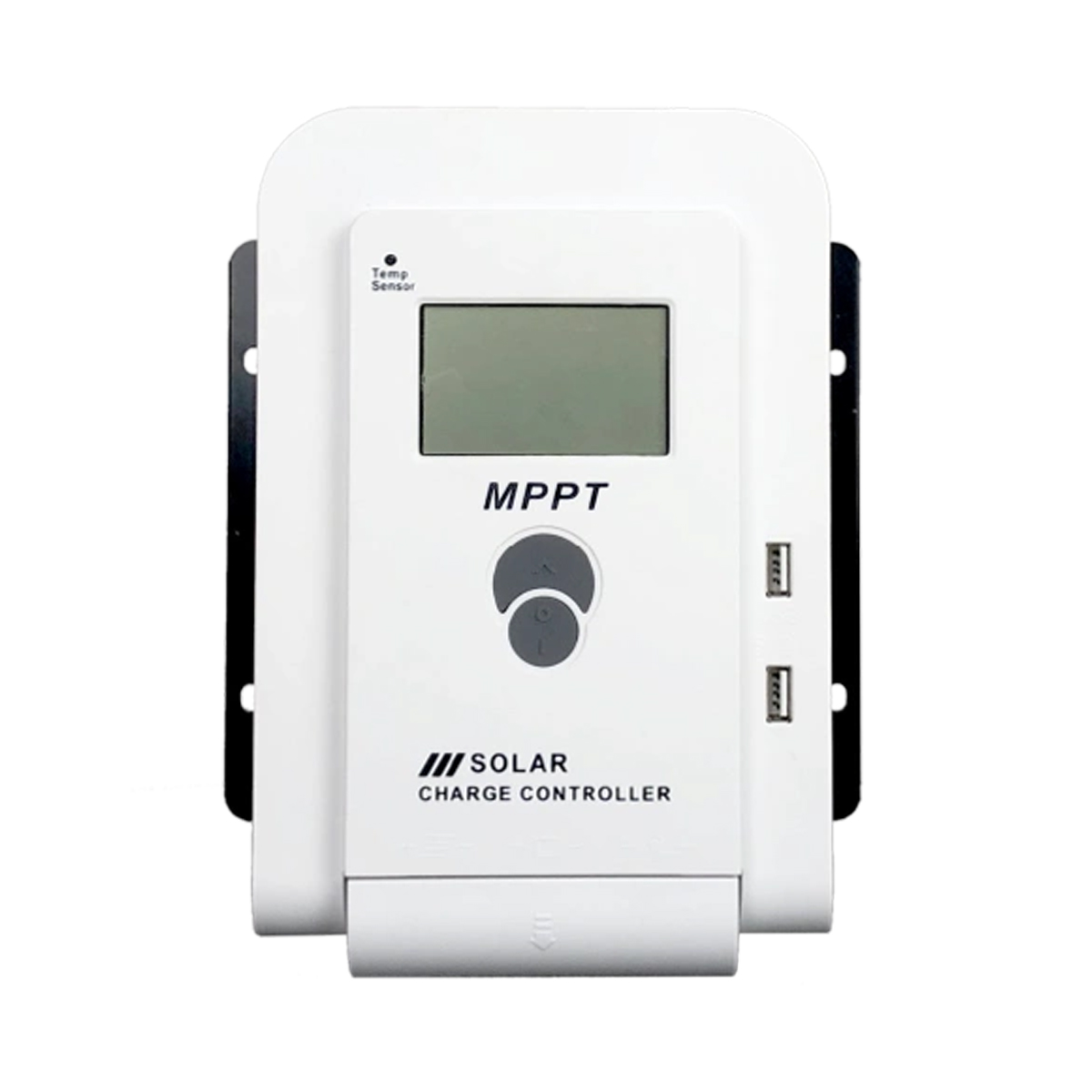
A second image may be archived with the same inspection record to support appearance and assembly comparisons.

Sample-to-Production Comparison Table
| Verification item | Approved sample record | Production acceptance check |
|---|---|---|
| Product identity | Approved Outdoor Working Power Station or 36 48V Solar Charge Controller configuration | Same product name, configuration, and specification documents |
| Components and assembly | Approved bill of materials, enclosure, wiring, interfaces, and assembly details | Production uses the same materials and controlled process |
| Electrical results | Recorded voltage, internal resistance, and charge-discharge performance | Matching results under equivalent inspection conditions |
| Protection and insulation | Verified protection functions and hi-pot result | Protection and insulation tests completed and recorded |
| Durability | Temperature, vibration, drop, and ageing results | Production units pass the corresponding reliability checks |
| Release decision | Written approval of the reference sample | Batch released only after conformity records are complete |
Frequently Asked Questions
Which documents should be frozen after sample approval?
Freeze the approved specification, product configuration, bill of materials, appearance references, inspection requirements, software or control settings where applicable, and all written change approvals. The supplied information does not specify a standard document template.
What tests should be repeated on production units?
The listed procedure includes appearance inspection, voltage and internal-resistance measurement, charge-discharge capacity testing, BMS protection verification, hi-pot insulation testing, high- and low-temperature experiments, vibration testing, drop testing, and ageing burn-in.
Does a CE certificate prove that production matches the sample?
No. The listed CE certificates relate to inverters. Certification documents must be checked against the exact product, configuration, applicable standards, and certification scope. They do not replace sample-to-production inspection.
Conclusion and Supplier Information
Mass production should be approved only when the production configuration matches the reference sample, the bill of materials and manufacturing process are controlled, and all required inspection records demonstrate conformity. Sunvoltx states that it supports integrated industrial and trading cooperation, with a minimum order quantity of 100 pieces, a stated delivery period of 15 days, and monthly capacity exceeding 5,000 units. Technical inquiries can be directed to marketing@sunvoltx.com.
About Us
shenzhen sunvoltx intelligent technology Co., Ltd. focuses on the research, development, production, customization, and wholesale supply of energy-storage power supplies, inverters, chargers, portable power stations, and related products. Its R&D team provides scheme design, hardware commissioning, software development, and performance testing. The company states that its production capacity exceeds 5,000 energy-storage products per month and serves customers in North America, South America, Europe, the Middle East, Africa, and Southeast Asia. Its listed credentials include CE certificates CE-INV-260618-0001 and CE-INV-260618-0002, along with reported cooperation with an overseas power enterprise in Southeast Asia.

REPORT