







-
 Agriculture
-
 Health-Care
-
 Environment
-
 Construction-Real-Estate
-
 Tools-Hardware
-
 Home-Garden
-
 Furniture
-
 Luggage-Bags-Cases
-
 Medical-devices-Supplies
-
 Gifts-Crafts
-
 Sports-Entertainment
-
 Food-Beverage
-
 Vehicles-Transportation
-
 Power-Transmission
-
 Material-Handling
-
 Renewable-Energy
-
 Safety
-
 Testing-Instrument-Equipment
-
 Construction-Building-Machinery
-
 Pet-Supplies
-
 Personal-Care-Household-Cleaning
-
 Vehicle-Accessories-Electronics-Tools
-
 School-Office-Supplies
-
 Packaging-Printing
-
 Mother-Kids-Toys
-
 Business-Services
-
 Commercial-Equipment-Machinery
-
 Apparel-Accessories
-
 Security
-
 Shoes-Accessories
-
 Vehicle-Parts-Accessories
-
 Jewelry-Eyewear-Watches-Accessories
-
 Lights-Lighting
-
 Fabric-Textile-Raw-Material
-
 Fabrication-Services
-
 Industrial-Machinery
-
 Consumer-Electronics
-
 Electrical-Equipment-Supplies
-
 Electronic-Components-Accessories-Telecommunications
-
 Home-Appliances
-
 Beauty
-
 Chemicals
-
 Rubber-Plastics
-
 Metals-Alloys


























































































































































































































































































































































































































































































































































































- Masonry Materials
- Curtain Walls & Accessories
- Earthwork Products
- Fireproofing Materials
- Heat Insulation Materials
- Plastic Building Materials
- Building Boards
- Soundproofing Materials
- Timber
- Waterproofing Materials
- Balustrades & Handrails
- Bathroom & Kitchen
- Flooring & Accessories
- Tiles & Accessories
- Door, Window & Accessories
- Fireplaces & Stoves
- Floor Heating Systems & Parts
- Stairs & Stair Parts
- Ceilings
- Elevators & Escalators
- Stone
- Countertops, Vanity Tops & Table Tops
- Mosaics
- Metal Building Materials
- Multifunctional Materials
- Ladders & Scaffoldings
- Mouldings
- Corner Guards
- Decorative Films
- Formwork
- Building & Industrial Glass
- Other Construction & Real Estate
- Wallpapers/Wall panels
- HVAC System & Parts
- Outdoor Facilities
- Prefabricated Buildings
- Festive & Party Supplies
- Bathroom Products
- Household Sundries
- Rain Gear
- Garden Supplies
- Household Cleaning Tools & Accessories
- Lighters & Smoking Accessories
- Home Storage & Organization
- Household Scales
- Smart Home Improvement
- Home Textiles
- Kitchenware
- Drinkware & Accessories
- Dinnerware, Coffee & Wine
- Home Decor
- Golf
- Fitness & Body Building
- Amusement Park Facilities
- Billiards, Board Game,Coin Operated Games
- Musical Instruments
- Outdoor Affordable Luxury Sports
- Camping & Hiking
- Fishing
- Sports Safety&Rehabilitation
- Ball Sports Equipments
- Water Sports
- Winter Sports
- Luxury Travel Equipments
- Sports Shoes, Bags & Accessories
- Cycling
- Other Sports & Entertainment Products
- Artificial Grass&Sports Flooring&Sports Court Equipment
- Scooters
- Food Ingredients
- Honey & Honey Products
- Snacks
- Nuts & Kernels
- Seafood
- Plant & Animal Oil
- Beverages
- Fruit & Vegetable Products
- Frog & Escargot
- Bean Products
- Egg Products
- Dairy Products
- Seasonings & Condiments
- Canned Food
- Instant Food
- Baked Goods
- Other Food & Beverage
- Meat & Poultry
- Confectionery
- Grain Products
- Feminie Care
- Hair Care & Styling
- Body Care
- Hands & Feet Care
- Hygiene Products
- Men's Grooming
- Laundry Cleaning Supplies
- Travel Size & Gift Sets
- Room Deodorizers
- Other Personal Care Products
- Pest Control Products
- Special Household Cleaning
- Floor Cleaning
- Kitchen & Bathroom Cleaning
- Oral Care
- Bath Supplies
- Yellow Pages
- Correction Supplies
- Office Binding Supplies
- Office Cutting Supplies
- Board Erasers
- Office Adhesives & Tapes
- Education Supplies
- Pencil Cases & Bags
- Notebooks & Writing Pads
- File Folder Accessories
- Calendars
- Writing Accessories
- Commercial Office Supplies
- Pencil Sharpeners
- Pens
- Letter Pad/Paper
- Paper Envelopes
- Desk Organizers
- Pencils
- Markers & Highlighters
- Filing Products
- Art Supplies
- Easels
- Badge Holder & Accessories
- Office Paper
- Printer Supplies
- Book Covers
- Other Office & School Supplies
- Stationery Set
- Boards
- Clipboards
- Stamps
- Drafting Supplies
- Stencils
- Electronic Dictionary
- Books
- Map
- Magazines
- Calculators
- Baby & Toddler Toys
- Educational Toys
- Classic Toys
- Dress Up & Pretend Play
- Toy Vehicle
- Stuffed Animals & Plush Toys
- Outdoor Toys & Structures
- Balloons & Accessories
- Baby Food
- Children's Clothing
- Baby Supplies & Products
- Maternity Clothes
- Kids Shoes
- Baby Care
- Novelty & Gag Toys
- Dolls & Accessories
- Puzzle & Games
- Blocks & Model Building Toys
- Toddler Clothing
- Baby Clothing
- Kids' Luggage & Bags
- Arts, Crafts & DIY Toys
- Action & Toy Figures
- Baby Appliances
- Hobbies & Models
- Remote Control Toys
- Promotional Toys
- Pregnancy & Maternity
- Hygiene Products
- Kid's Textile&Bedding
- Novelty & Special Use
- Toy Weapons
- Baby Gifts
- Baby Storage & Organization
- Auto Drive Systems
- ATV/UTV Parts & Accessories
- Marine Parts & Accessories
- Other Auto Parts
- Trailer Parts & Accessories
- Auto Transmission Systems
- Train Parts & Accessories
- Universal Parts
- Railway Parts & Accessories
- Auto Brake Systems
- Aviation Parts & Accessories
- Truck Parts & Accessories
- Auto Suspension Systems
- Auto Lighting Systems
- New Energy Vehicle Parts & Accessories
- Auto Steering Systems
- Wheels, Tires & Accessories
- Bus Parts & Accessories
- Auto Performance Parts
- Cooling System
- Go-Kart & Kart Racer Parts & Accessories
- Air Conditioning Systems
- Heavy Duty Vehicle Parts & Accessories
- Auto Electrical Systems
- Auto Body Systems
- Auto Engine Systems
- Container Parts & Accessories
- Motorcycle Parts & Accessories
- Refrigeration & Heat Exchange Equipment
- Machine Tool Equipment
- Food & Beverage Machinery
- Agricultural Machinery & Equipment
- Apparel & Textile Machinery
- Chemical Machinery
- Packaging Machines
- Paper Production Machinery
- Plastic & Rubber Processing Machinery
- Industrial Robots
- Electronic Products Machinery
- Metal & Metallurgy Machinery
- Woodworking Machinery
- Home Product Manufacturing Machinery
- Machinery Accessories
- Environmental Machinery
- Machinery Service
- Electrical Equipment Manufacturing Machinery
- Industrial Compressors & Parts
- Tobacco & Cigarette Machinery
- Production Line
- Used Industrial Machinery
- Electronics Production Machinery
- Other Machinery & Industrial Equipment
- Camera, Photo & Accessories
- Portable Audio, Video & Accessories
- Television, Home Audio, Video & Accessories
- Video Games & Accessories
- Mobile Phone & Accessories
- Electronic Publications
- Earphone & Headphone & Accessories
- Speakers & Accessories
- Smart Electronics
- TV Receivers & Accessories
- Mobile Phone & Computer Repair Parts
- Chargers, Batteries & Power Supplies
- Used Electronics
- VR, AR, MR Hardware & Software
- Projectors & Presentation Equipments
- Other Consumer Electronics
- Cables & Commonly Used Accessories
- Computer Hardware & Software
- Displays, Signage and Optoelectronics
- Discrete Semiconductors
- Wireless & IoT Module and Products
- Telecommunications
- Connectors, Terminals & Accessories
- Development Boards, Electronic Modules and Kits
- Circuit Protection
- Sensors
- Isolators
- Audio Components and Products
- Integrated Circuits
- Power Supplies
- Relays
- RF, Microwave and RFID
- Electronic Accessories & Supplies
- Passive Components
- PCB & PCBA
- Air Quality Appliances
- Home Appliance Parts
- Heating & Cooling Appliances
- Small Kitchen Appliances
- Laundry Appliances
- Water Heaters
- Water Treatment Appliances
- Refrigerators & Freezers
- Personal Care & Beauty Appliances
- Major Kitchen Appliances
- Cleaning Appliances
- Second-hand Appliances
- Smart Home Appliances
- Other Home Appliances
- Energy Chemicals
- Inorganic Chemicals
- Basic Organic Chemicals
- Agrochemicals
- Admixture & Additives
- Catalysts & Chemical Auxiliary Agents
- Pigments & Dyestuff
- Coating & Paint
- Daily Chemicals
- Polymer
- Organic Intermediate
- Adhesives & Sealants
- Chemical Waste
- Biological Chemical Products
- Surface Treatment Chemicals
- Painting & Coating
- Chemical Reagents
- Flavor & Fragrance
- Non-Explosive Demolition Agents
- Other Chemicals
- Custom Chemical Services

Identifying Quality Discrepancies: Women's Sunglasses Master Samples vs. Mass Production
Transitioning from an approved prototype to high-volume manufacturing often introduces unexpected quality variances. Evaluating differences between golden samples and bulk women's sunglasses requires a systematic audit focusing on frame balance, mechanical hinge resistance, resin lens optical clarity, and flawless surface finishing. Guaranteeing consistent UV400 protection, clip-on precision, and structural alignment across entire production runs is essential to protect brand integrity and end-user safety.
Key Quality Control Pillars for Wholesale Orders
- Frame Geometry & Fit Consistency: Measure bridge dimensions, temple curvature, and clip-on retention forces against original approved engineering blueprints.
- Optical Integrity & Protection: Verify 100% UV400 efficiency and polarization uniformity across random bulk samples to match pre-production benchmarks.
- Hardware & Joint Durability: Test screw torque, spring hinge elasticity, and rimless mounting stability to ensure batch-wide physical consistency.
- Surface Aesthetics & Edge Finishing: Examine rimless bevels and clip-on attachment joints under magnification for micro-burrs, plating defects, or raw material flaws.
Understanding the Root Causes of Production Discrepancies
Discrepancies between initial prototypes and mass orders generally stem from variations during automated batch molding, lens edging, or secondary surface treatments. Master samples typically receive individual hand-polishing and careful manual checks. In contrast, high-volume production relies on automated machinery where minor tool wear can affect finished quality—particularly in technical designer frames like rimless aviation styles with clip-on elements.
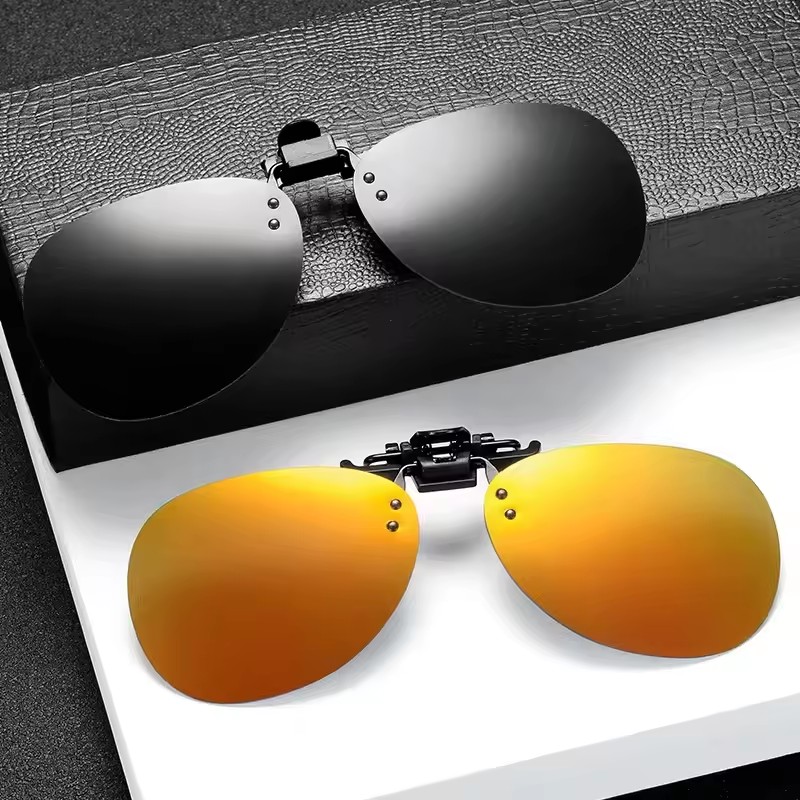
For resin lenses, accurate edging is critical. Miscalibrated grooving machinery during rimless assembly can induce peripheral stress or micro-fractures along lens borders, resulting in refractive distortion or lens detachment. Utilizing a spectrophotometer enables QA teams to verify that light transmission rates, color integrity, and UV filtration remain stable across separate manufacturing lots.
Furthermore, hardware components such as clip-on retention springs and temple screws require exact mechanical tolerances. Inconsistent torque ratings lead to loose attachments or crooked temple arms, compromising wearing comfort and long-term durability. Routine spot checks prevent substandard hardware integration during assembly runs.
Benchmark Criteria: Prototype vs. Mass Production Standard
| Quality Metric | Golden Sample Benchmark | Bulk Production Acceptable Limits | Verification Protocol |
|---|---|---|---|
| UV400 & Polarization | 100% Filter Efficiency | 100% Filter Efficiency (Zero Variance Allowed) | Spectrophotometer & Polarized Test Card |
| Rimless Lens Edge Polishing | Zero micro-fractures, smooth bevel | Smooth bevel without visible edge burrs | Microscopic inspection (10x magnification) |
| Clip-On Clamping Force | Firm snap fit without frame warping | Uniform retention across all mounting prongs | Manual tension & stress testing |
| Frame Balance & Alignment | Parallel temple balance (0° tilt) | Maximum skew variance < 1.0 mm | Surface plate coplanarity measurement |
| Supported Freight & Logistics | Express sample dispatch | Sea Freight, Land Transportation, Air Freight | Commercial shipping documentation |
| Payment Terms | Direct sample transfer | Corporate Wire Transfer / Bank Transfer | Financial bank reconciliation |
Frequently Asked Questions (FAQ)
Q1: Why do mass-produced resin lenses sometimes show optical distortion absent in pre-production samples?
Optical distortion occurs when bulk lens-cutting tools exert uneven perimeter pressure or when curing temperatures vary during mass resin sheet production. Polariscopic inspection reveals internal stress patterns prior to order fulfillment.
Q2: How can buyers test clip-on attachment reliability on aviation frames?
Perform random batch sampling by fitting the clip-on module across multiple production frames. The attachment hooks should engage securely without distorting the primary eyewire or altering temple alignment.
Q3: What standard protocol determines surface finish consistency on bulk sunglasses?
Inspect frames under 1000-lux neutral LED illumination. Examine bridge solder points, frame joints, and temple tips to confirm uniform electroplating depth and freedom from pitting or flaking.
Summary & Inspection Best Practices
Maintaining high consistency between golden samples and bulk shipments requires clear mechanical tolerance specs, standardized receiving procedures, and thorough optical testing. Establishing systematic batch audits for frame balance, lens clarity, and hardware tension minimizes production risks. For detailed technical solutions or purchasing support, please contact us at leoxiao@cngreenshine.com.
About Us
Yiwu Green Shine Arts & Crafts Co., Ltd was established in 2016 and operates from Yiwu, Zhejiang Province. The enterprise houses 10 skilled staff members across a 130-square-meter facility, achieving an annual manufacturing output exceeding 3 million pairs of sunglasses, reading glasses, and optical frames. The company serves global markets including the United States, Spain, Germany, Australia, Italy, France, and Ireland with OEM and ODM production capabilities.

REPORT